Affordable Electric SUVs: What to Buy Now and What to Avoid
Affordable Electric SUVs Guide

Content
The American automotive landscape has shifted beneath our feet in ways that would have seemed nearly impossible just a decade ago. Walk through any suburban parking lot today, and you'll notice something that would have seemed extraordinary just five years ago—electric vehicles have become genuinely commonplace, their silent presence marking a fundamental transformation in how Americans think about transportation. More specifically, electric SUVs have emerged as the category capturing the broadest consumer interest, combining the practicality families demand with the environmental and economic benefits that make electrification compelling. This shift represents not merely a technological curiosity but a genuine sea change in consumer preferences, dealer inventories, and manufacturer strategies that will continue accelerating in the years ahead.
What's particularly remarkable about this moment is that affordable options finally exist in meaningful numbers. The days when electric SUVs meant choosing between a $100,000 luxury vehicle or a compromised econobox have definitively passed. Today's market offers genuinely capable, well-equipped electric SUVs at price points that compete directly with their gasoline counterparts—especially when federal tax incentives, state rebates, and long-term ownership savings enter the calculation. This democratization of electric vehicle technology means that mainstream American families can now seriously consider going electric without stretching their budgets or accepting significant compromises in capability, comfort, or convenience.
According to the U.S. Department of Energy, electric vehicle adoption has accelerated dramatically as battery costs have declined and charging infrastructure has expanded across the nation's highways and urban centers. The convergence of these factors has created a buying environment where the question isn't whether an affordable electric SUV makes sense, but rather which one makes the most sense for your specific circumstances, driving patterns, and financial situation. Making the right choice requires understanding not just the vehicles themselves, but the broader ecosystem of charging, insurance, financing, and long-term ownership costs that determine whether a purchase proves truly economical or merely appears so at the dealership.
This guide examines that question comprehensively and thoroughly. Beyond simple vehicle recommendations, we'll explore the full ownership picture—from car insurance implications to charging realities, from auto finance strategies to long-term depreciation patterns. The goal isn't merely to identify which electric SUV to purchase, but to understand how that purchase fits into your broader financial and lifestyle picture, enabling a decision you'll appreciate for years rather than regret within months.
Defining Affordability in the Electric SUV Market
Before evaluating specific vehicles, establishing what "affordable" actually means in this context proves essential for setting realistic expectations. The sticker price tells only part of the story—and often a misleading part at that. Electric vehicles exist within a unique economic framework that differs substantially from traditional gasoline vehicles, with upfront costs, ongoing expenses, and resale dynamics that all require fresh analysis rather than assumptions carried over from conventional car buying.
The federal clean vehicle tax credit, detailed on the IRS website, can reduce effective purchase prices by up to $7,500 for qualifying vehicles and buyers who meet income requirements. State incentives often add thousands more, with some states offering rebates exceeding $5,000 on top of federal benefits. A vehicle with a $45,000 MSRP might cost $35,000 or less after applicable credits, fundamentally changing the competitive calculus and making vehicles that initially appear expensive into genuine value propositions when analyzed properly. Understanding which credits apply to which vehicles—and which buyers qualify—represents essential homework before shopping.
Beyond purchase price, true affordability encompasses operational costs that accumulate over years of ownership and often dwarf the importance of initial purchase price differences. Fuel savings represent the most obvious factor—charging an electric vehicle costs roughly one-third to one-half what fueling a comparable gasoline vehicle costs, depending on local electricity rates and driving patterns. For a household driving 15,000 miles annually, this difference can exceed $1,500 per year, amounting to more than $10,000 over a typical seven-year ownership period. The EPA's Fuel Economy website provides tools for calculating these comparisons based on specific vehicles and regional energy costs, enabling personalized analysis rather than relying on national averages that may not reflect your situation.
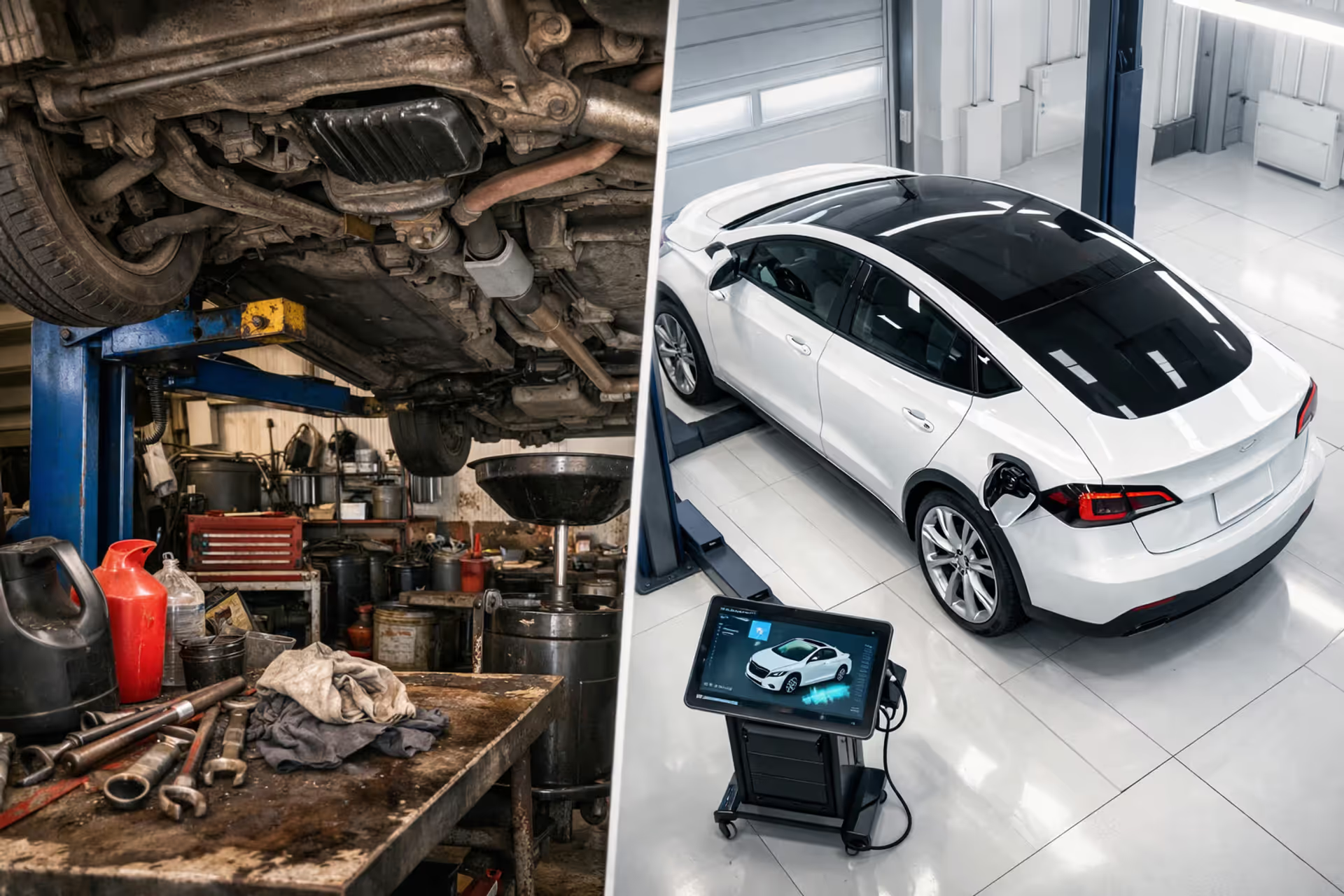
Maintenance savings contribute significantly as well, though they accrue less visibly than fuel savings. Electric vehicles lack oil that needs changing every 5,000 miles, transmissions that require periodic service, and exhaust systems that corrode and fail. Brake systems last dramatically longer because regenerative braking handles most deceleration duties, with many electric vehicle owners reporting original brake pads lasting 100,000 miles or more. These savings accumulate quietly but substantially over ownership periods, often totaling several thousand dollars compared to maintaining a gasoline vehicle over equivalent mileage.
Insurance costs, car loan terms, and depreciation patterns complete the affordability picture and deserve careful attention. Some electric vehicles cost more to insure due to higher repair costs and specialized parts, while others qualify for discounts based on safety ratings and reduced theft risk. Understanding these dynamics helps identify vehicles that prove affordable not just at purchase but throughout the ownership experience that follows. The most affordable electric SUV isn't necessarily the one with the lowest MSRP—it's the one that costs least when all factors are properly accounted for.
The Best Affordable Electric SUVs Worth Buying
Several electric SUVs currently offer compelling combinations of price, capability, and long-term value that merit serious consideration from budget-conscious buyers. Each serves different priorities and use cases, but all represent sound choices for buyers seeking affordable electrification without unacceptable compromises. Understanding the specific strengths of each helps match the right vehicle to your particular needs.
Chevrolet Equinox EV
General Motors' Equinox EV has emerged as perhaps the most significant affordable electric SUV launch in recent memory, representing exactly what mainstream buyers have been waiting for—a normal-looking, practical SUV that happens to be electric, at a price point that competes with gasoline alternatives. Starting around $35,000 before incentives, it offers approximately 319 miles of range in its most efficient configuration—exceptional territory for this price point and sufficient for virtually any daily driving scenario plus occasional road trips without range anxiety. The vehicle's conventional SUV proportions mean familiar practicality without the compromises some electric designs impose, making it an easy transition for buyers coming from traditional gasoline SUVs.
Charging capability proves equally impressive and practical for real-world use. The Equinox EV supports DC fast charging at rates enabling roughly 70 miles of range per 10 minutes of charging at compatible EV charging stations, making highway travel feasible with reasonable stopping intervals. For daily driving, standard home charging overnight easily replenishes typical commute distances, meaning most owners will rarely if ever need public charging for routine use. The combination of long range and fast charging creates a genuinely versatile vehicle that adapts to varied driving demands.
According to Edmunds, the Equinox EV's interior quality exceeds expectations for its price point, with a large central display and Google's built-in infotainment system providing genuinely premium technology experiences that rival vehicles costing significantly more. Safety technology comes standard across the lineup, with GM's Super Cruise hands-free driving available on higher trims for buyers wanting the latest in driver assistance technology. The warranty coverage proves competitive, and GM's extensive dealer network ensures service availability virtually anywhere in the country—an important consideration that some newer electric vehicle manufacturers cannot match.
Hyundai Kona Electric
Hyundai's compact electric SUV has earned consistent praise for delivering substantial capability in an efficient, well-priced package that punches above its weight class. The current generation offers approximately 261 miles of range while starting around $33,000 before incentives, positioning it as one of the most accessible entry points into electric SUV ownership without sacrificing the range needed for confident daily driving. For buyers whose daily driving rarely exceeds 50 miles, this range provides enormous buffer while keeping costs contained—even occasional longer trips fall comfortably within the vehicle's capabilities.
The Kona Electric's relatively compact dimensions suit urban environments where parking comes at a premium, yet interior space proves surprisingly accommodating for a vehicle in this footprint. Clever packaging maximizes usable space, with rear seat and cargo capacity rivaling many larger vehicles and making this an excellent choice for singles, couples, or small families who don't require maximum cargo capacity but appreciate having adequate space when needed. The smaller size also translates to easier maneuverability in tight spaces and lower tire costs compared to larger, heavier alternatives.
Kelley Blue Book notes the Kona Electric's strong resale value projections, partly attributable to Hyundai's comprehensive warranty coverage that includes 10 years or 100,000 miles on the battery and powertrain components. This warranty provides peace of mind that directly impacts long-term ownership costs and vehicle value retention, as subsequent buyers can purchase with confidence knowing significant warranty coverage transfers with the vehicle. The combination of reasonable purchase price, strong warranty, and good resale value creates compelling total cost of ownership.
— Brianna Lowell
Kia Niro EV
Kia's Niro EV shares its platform with the Hyundai Kona Electric but offers a slightly different character that appeals to different buyers with distinct priorities. The wagon-like proportions prioritize cargo utility over compact parking convenience, making this an excellent choice for active lifestyles requiring gear transportation—whether sporting equipment, camping supplies, or the accumulated cargo of daily family life. Starting around $40,000 before incentives, it occupies a slightly higher price point but offers distinctive advantages that justify the premium for buyers who value its particular strengths.
Range reaches approximately 253 miles, providing practical capability for virtually any daily driving scenario plus occasional road trips without the range anxiety that plagued earlier electric vehicles. The Niro EV's charging flexibility includes both CCS fast charging for quick stops during travel and standard Level 2 charging for overnight home replenishment, adapting to whatever charging infrastructure your life provides access to. The vehicle's efficiency means that even modest home electrical service provides adequate charging for typical daily driving patterns.
Interior design emphasizes sustainability throughout, with recycled materials across the cabin aligning with the environmental motivations that draw many buyers to electric vehicles in the first place. This isn't merely marketing—Kia has genuinely invested in reducing the environmental footprint of the vehicle's production and materials, appealing to buyers for whom environmental considerations extend beyond just tailpipe emissions. The technology suite includes advanced driver assistance features that NHTSA rates highly for crash avoidance capability, contributing to both safety and potential insurance savings.
Volkswagen ID.4
Volkswagen's purpose-built electric SUV represents the German automaker's serious commitment to electrification and their determination to bring European electric vehicle engineering to the American market at accessible prices. The ID.4 offers a distinctly European driving character—composed, refined, and confident in a way that differs from domestic alternatives—at prices starting around $39,000 before incentives. Range varies by configuration from approximately 209 to 275 miles depending on battery size and drivetrain, with rear-wheel and all-wheel drive options available to suit different climate and performance preferences.
The ID.4's interior space belies its modest exterior dimensions in ways that continually surprise passengers. The flat floor enabled by the dedicated electric platform creates genuine roominess that passengers accustomed to conventional SUV packaging find remarkable—rear seat legroom approaches that of vehicles in larger size classes. Cargo capacity proves equally generous, with a low load floor and wide opening that accommodate bulky items awkward to fit in many competitors.
Charging infrastructure support deserves particular mention as a significant ownership benefit. Volkswagen provides three years of complimentary charging at Electrify America stations—one of the nation's largest fast-charging networks with locations along major travel corridors—significantly reducing public charging costs during the critical early ownership period when buyers are learning to integrate electric vehicle ownership into their routines. This benefit alone can save hundreds or thousands of dollars depending on how frequently the owner travels and uses public charging.

Author: Brianna Lowell;
Source: shafer-motorsports.com
Electric SUVs to Approach with Caution
Not every affordable electric SUV merits recommendation, and informed buyers should understand which vehicles present challenges that may outweigh their apparent price advantages. Several models present issues that warrant careful consideration before purchasing—not necessarily deal-breakers for every buyer, but factors that require honest evaluation against your specific needs and circumstances.
Models with Limited Range
Some electric SUVs offer ranges under 200 miles that may prove insufficient for buyers without reliable home charging access or whose driving patterns include frequent longer trips. The Mazda MX-30, for instance, offers just 100 miles of range—a deliberate design choice Mazda defends philosophically based on battery sustainability arguments but one that severely limits practical utility for most American buyers accustomed to flexible driving without constant range monitoring.
Limited range creates compounding challenges that extend beyond simply needing to charge more often. Shorter range means more frequent charging stops on trips, adding time and reducing the convenience that makes personal vehicle ownership attractive. More frequent stops mean greater dependence on EV charging stations that may or may not be conveniently located, operational at any given moment, or available without waiting. The anxiety these limitations generate often undermines the ownership experience, creating stress that buyers didn't anticipate when attracted by lower purchase prices.
Consumer Reports reliability data suggests that range-limited vehicles often depreciate faster as used buyers recognize their limitations and discount accordingly. The initial price advantage these vehicles sometimes offer at purchase may not offset their accelerated value loss when selling or trading, making the total cost of ownership higher than initially apparent. Buyers considering range-limited vehicles should honestly assess whether their driving patterns genuinely fit within those constraints or whether they're rationalizing limitations they'll ultimately resent.
Discontinued or Uncertain Production Models
Electric vehicle development moves rapidly, and some models face uncertain futures that create ownership risks extending beyond the vehicles themselves. Vehicles from manufacturers showing signs of financial distress or those already announced for discontinuation present particular concerns that budget-conscious buyers should weigh carefully against any apparent price advantages.
These concerns extend far beyond mere availability of the model for future purchases. Service network support depends on dealer viability and parts availability depends on manufacturer continuity. Software update continuation—increasingly important as vehicles become more connected and software-dependent—requires ongoing manufacturer investment. Warranty backing means nothing if the company backing it may not exist in five years. A compelling purchase price means little if the vehicle becomes difficult to service, support, or sell because the manufacturer supporting it has retreated from the market.
Models with Known Reliability Issues
Some early electric SUV entrants have accumulated troubling reliability records that prospective buyers should research thoroughly. Infotainment glitches that render critical vehicle functions inaccessible, charging inconsistencies that make road trips unpredictable, and quality control issues affecting fit and finish plague certain models at rates exceeding industry norms. While manufacturers typically address problems under warranty, the inconvenience and potential safety implications warrant serious consideration—time spent at service departments is time not spent enjoying the vehicle you purchased.
Research specific model years carefully before purchasing. First-year production runs often exhibit more issues than subsequent years as manufacturers refine assembly processes and component suppliers work through initial production challenges. Waiting for second-year production of new models often yields more reliable vehicles with bugs already identified and resolved. The savings from buying a troubled first-year model rarely justify the frustration of living with its problems.
Understanding the True Cost of Ownership
Purchase price, though significant and attention-grabbing, represents just one component of total ownership cost over typical ownership periods. Several additional factors dramatically influence whether an electric SUV proves genuinely affordable over time or merely appears affordable at the moment of purchase. Understanding these factors enables truly informed comparisons between vehicles and between electric and gasoline alternatives.
Charging Economics: Home Versus Public
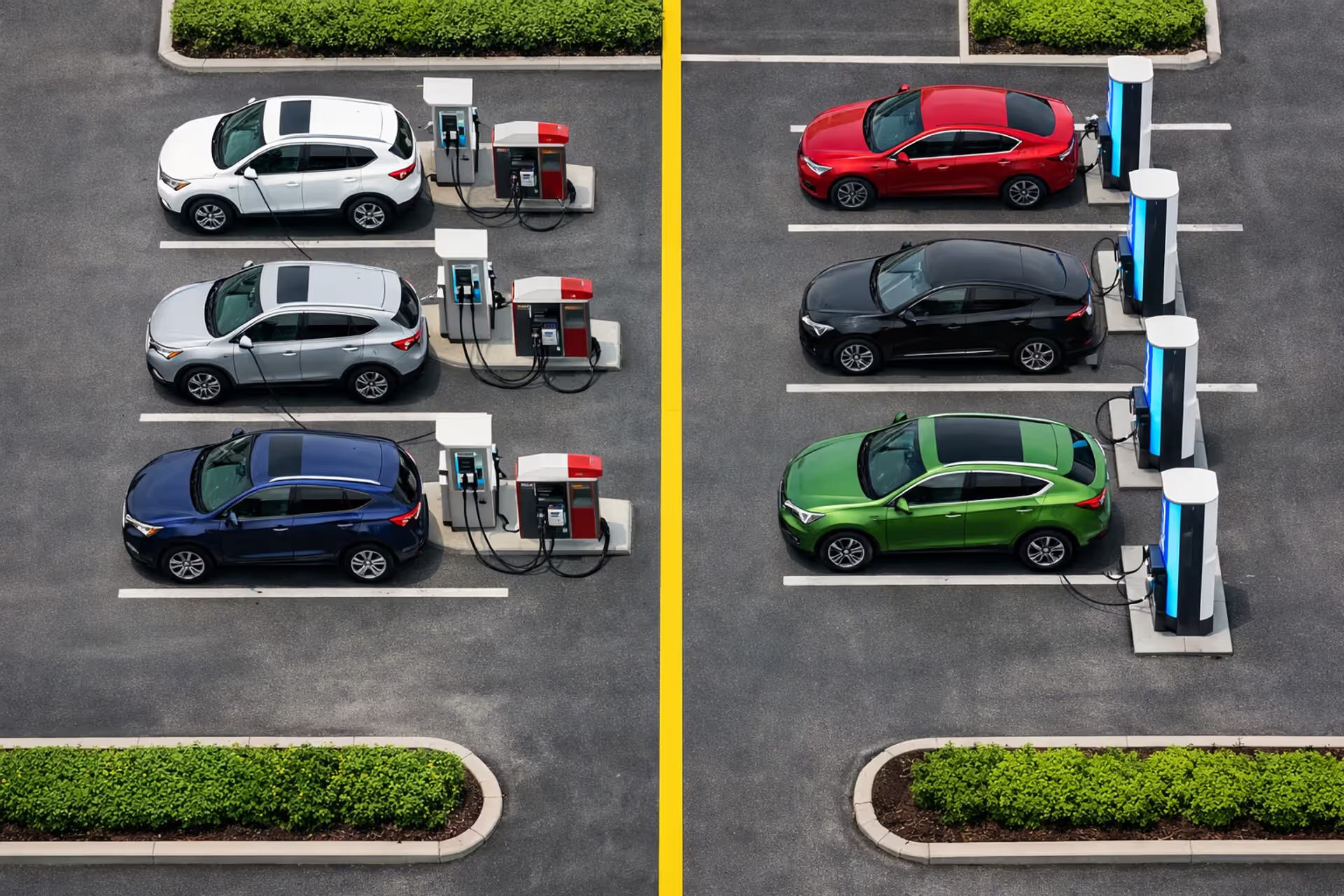
The economics of charging vary enormously based on where and how you charge, creating dramatically different ownership cost profiles for different buyers. Home charging, particularly overnight when many utilities offer reduced time-of-use rates, typically costs the equivalent of $1.00 to $1.50 per gallon of gasoline in energy costs—a fraction of what gasoline costs and the foundation of electric vehicle fuel savings claims. According to the U.S. Energy Information Administration, residential electricity prices average around 16 cents per kilowatt-hour nationally, though rates vary significantly by region from under 10 cents in some areas to over 25 cents in others.
Public charging costs more—sometimes substantially more than home charging—and deserves careful consideration from buyers who will rely on it regularly. DC fast charging, while convenient for travel and necessary for apartment dwellers without home charging, often costs three to four times what home charging costs per mile of range added. Frequent reliance on public charging can significantly erode the fuel savings that make electric vehicles financially attractive compared to gasoline alternatives. Buyers without home charging access should factor these higher ongoing costs into their calculations rather than assuming the dramatic savings that home charging enables.
Key factors affecting charging economics include:
- Local residential electricity rates, which vary dramatically by region and utility
- Availability of time-of-use rates offering discounted overnight charging
- Cost of Level 2 home charger installation if 240-volt service isn't already available
- Proximity and pricing of public charging stations for buyers without home charging
- Frequency of road trips requiring expensive DC fast charging stops
The Alternative Fuels Data Center provides mapping tools showing EV charging stations locations and types nationwide, enabling prospective buyers to assess charging availability along their regular routes and at common destinations. Understanding charging availability before purchasing helps assess whether public charging costs will significantly impact your ownership experience or remain occasional expenses during travel.
Insurance Considerations
Car insurance for electric vehicles often costs more than coverage for comparable gasoline vehicles, though the gap varies significantly by model, location, and insurer in ways that reward careful shopping. Higher repair costs drive much of this difference—electric vehicle components, particularly batteries and specialized electronics, cost more to repair or replace than conventional mechanical parts. Body shops with electric vehicle expertise remain less common than those serving gasoline vehicles, potentially extending repair timelines and costs.
However, safety ratings and theft statistics influence premiums in the opposite direction, partially or fully offsetting repair cost concerns for many vehicles. Many electric SUVs achieve excellent crash test scores thanks to their low centers of gravity and rigid battery structures, potentially qualifying for safety discounts that reduce premiums. Electric vehicles also experience lower theft rates than some popular gasoline vehicles—their tracking capabilities and specialized components make them less attractive to thieves—further moderating premiums for many models.
The Insurance Information Institute recommends comparing quotes from multiple insurers before purchasing any vehicle, and this advice applies doubly to electric vehicles given the premium variation between companies. Some insurers specialize in electric vehicles and offer competitive rates reflecting their actual experience with claim costs. Others apply conservative pricing assumptions that may not reflect reality and produce unnecessarily high quotes. Finding cheap car insurance for an electric SUV often requires broader shopping than conventional vehicles demand, but the effort typically yields meaningful savings.
Strategies for reducing electric vehicle insurance costs include:
- Comparing quotes from at least five insurers, including those specializing in EVs
- Bundling auto coverage with homeowners or renters insurance for multi-policy discounts
- Asking specifically about electric vehicle discounts some insurers offer
- Maintaining clean driving records, which affect EV insurance as significantly as conventional coverage
- Choosing vehicles with strong safety ratings that qualify for safety discounts
Maintenance Savings Over Time
Electric vehicles require dramatically less maintenance than gasoline counterparts, creating savings that accumulate significantly over typical ownership periods. No oil changes every 5,000 miles, no transmission service, no spark plug replacement, no exhaust system repairs. The Department of Energy estimates that electric vehicles cost roughly 40% less to maintain than gasoline vehicles over their lifetimes—savings that compound year after year and offset higher purchase prices over time.
Brake maintenance proves particularly reduced thanks to regenerative braking technology. Regenerative braking, which captures kinetic energy during deceleration to recharge the battery, handles most stopping duties in normal driving conditions. Physical brake pads engage primarily during hard stops or final stopping, experiencing far less wear than in conventional vehicles. Many electric vehicle owners report brake pads lasting 100,000 miles or more—far beyond the 30,000-50,000 mile intervals typical for gasoline vehicles—representing substantial maintenance savings over ownership.
Tire wear represents one area where electric vehicles may cost more than gasoline counterparts due to their unique characteristics. The instant torque electric motors provide, combined with the additional weight batteries add to vehicle mass, can accelerate tire wear compared to lighter gasoline vehicles—particularly for drivers who enjoy the quick acceleration electric vehicles enable. Rotating tires regularly according to manufacturer recommendations and selecting appropriate tire compounds designed for electric vehicle weights and torque characteristics helps manage this cost.
Battery degradation concerns many prospective buyers based on experiences with phone and laptop batteries, but modern electric vehicle batteries prove remarkably durable compared to consumer electronics. Most manufacturers warranty batteries for 8 years or 100,000 miles, and real-world data from high-mileage vehicles suggests the majority of batteries retain 80% or more capacity well beyond warranty periods—sufficient for continued daily use even if range decreases modestly. The catastrophic battery failures some feared during electric vehicles' early days have proven exceptionally rare, and battery replacement costs have declined substantially as production scales.
Financing Your Electric SUV Purchase
How you pay for an electric SUV significantly impacts its true affordability in ways that deserve careful attention beyond simple interest rate comparisons. Auto finance options have evolved to address the specific characteristics of electric vehicle purchases, and understanding these options helps capture maximum value from available incentives.
Applying Tax Credits to Your Purchase
The federal clean vehicle tax credit applies at tax time rather than at purchase, creating a timing consideration for financing that affects how much you actually pay. Buyers who finance the full purchase price pay interest on the entire amount for months before recovering the credit portion—effectively paying interest on money the government will eventually return. For a $7,500 credit with a year between purchase and tax filing, this timing difference can cost several hundred dollars in unnecessary interest.
Some dealers now offer programs effectively advancing the tax credit at purchase, reducing the amount financed from day one and eliminating this timing cost. These arrangements vary in structure—some involve lease-like terms while others truly transfer the credit through complex dealer accounting. Understanding the specific terms matters for calculating actual costs and comparing between dealers offering different structures.
State incentives add complexity but also opportunity for significant additional savings. Some states offer point-of-sale rebates that reduce purchase price immediately at the time of sale, while others provide tax credits similar to the federal program that arrive later. A few generous states offer both types of incentives. Researching available incentives in your specific state before purchasing ensures you capture all available savings—thousands of dollars can depend on knowing what's available and how to claim it.
Loan Versus Lease Considerations
Traditional car loans work essentially identically for electric and gasoline vehicles in their basic structure, with interest rates depending on credit history, loan term, and lender practices. However, the rapid technological advancement in electric vehicles introduces lease considerations that differ meaningfully from conventional vehicles and deserve analysis.
Leasing an electric SUV potentially provides access to newer technology more frequently than purchasing allows. Battery technology, charging speeds, range capabilities, and software features continue improving annually—sometimes dramatically. A three-year lease ensures access to current technology without long-term commitment to specifications that may feel outdated within a few years as the market continues advancing rapidly.
— Brianna Lowell
Additionally, lease structures sometimes capture federal tax credits more efficiently than purchases for certain buyers. Lessors can claim credits and pass savings to lessees through reduced monthly payments, even for buyers whose tax liability wouldn't otherwise support claiming credits directly. This enables lower-income buyers or those with limited tax liability to benefit from incentives they couldn't otherwise access.
However, leasing typically costs more than buying over extended ownership periods for those who keep vehicles long-term. Buyers planning to keep vehicles for five years or longer usually find purchasing more economical despite forgoing access to future technology improvements, as the cumulative lease payments exceed purchase costs. The choice depends heavily on individual preferences regarding ownership duration and tolerance for technology that may not remain cutting-edge.
Manufacturer Incentives and Promotional Rates
Electric vehicle manufacturers frequently offer promotional auto finance rates to stimulate sales and meet regulatory targets, creating opportunities for significant savings beyond standard financing. These offers can provide financing at rates well below market—sometimes at 0% or near-0% interest—dramatically reducing total purchase cost compared to standard financing at prevailing rates.
These promotions typically require strong credit scores and may involve shorter loan terms than buyers would otherwise prefer, requiring higher monthly payments. Running the numbers comparing promotional short-term financing versus standard longer-term financing at market rates reveals which option better suits your budget and priorities—the lower interest rate doesn't always produce lower total cost if it requires payments you struggle to make comfortably.
Author: Brianna Lowell;
Source: shafer-motorsports.com
The Charging Infrastructure Reality
Charging accessibility represents perhaps the most significant practical consideration for electric SUV buyers beyond the vehicle itself. Understanding what infrastructure exists—and doesn't exist—helps set realistic expectations and identify whether your circumstances support electric vehicle ownership comfortably.
Home Charging: The Ideal Scenario
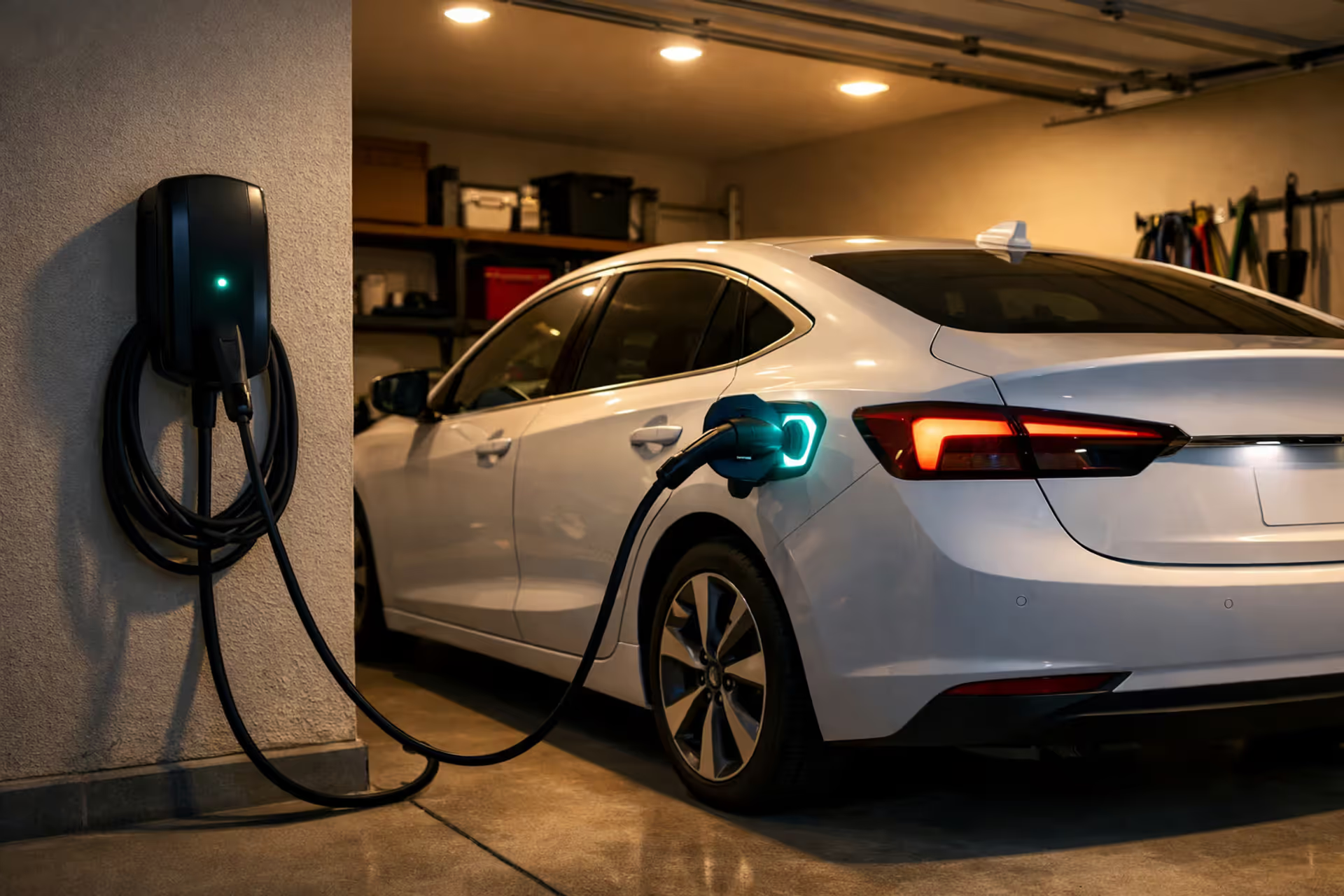
For buyers with access to home charging through a garage, carport, or dedicated parking space with electrical access, daily electric vehicle life proves remarkably convenient—more convenient, in fact, than gasoline vehicle ownership in many ways. The vehicle charges while you sleep, starting each day with a full "tank" without requiring any trip to a gas station or any time spent fueling. A standard 120-volt outlet provides adequate overnight charging for typical daily driving distances under 40-50 miles—though this Level 1 charging proves too slow for heavier usage patterns.
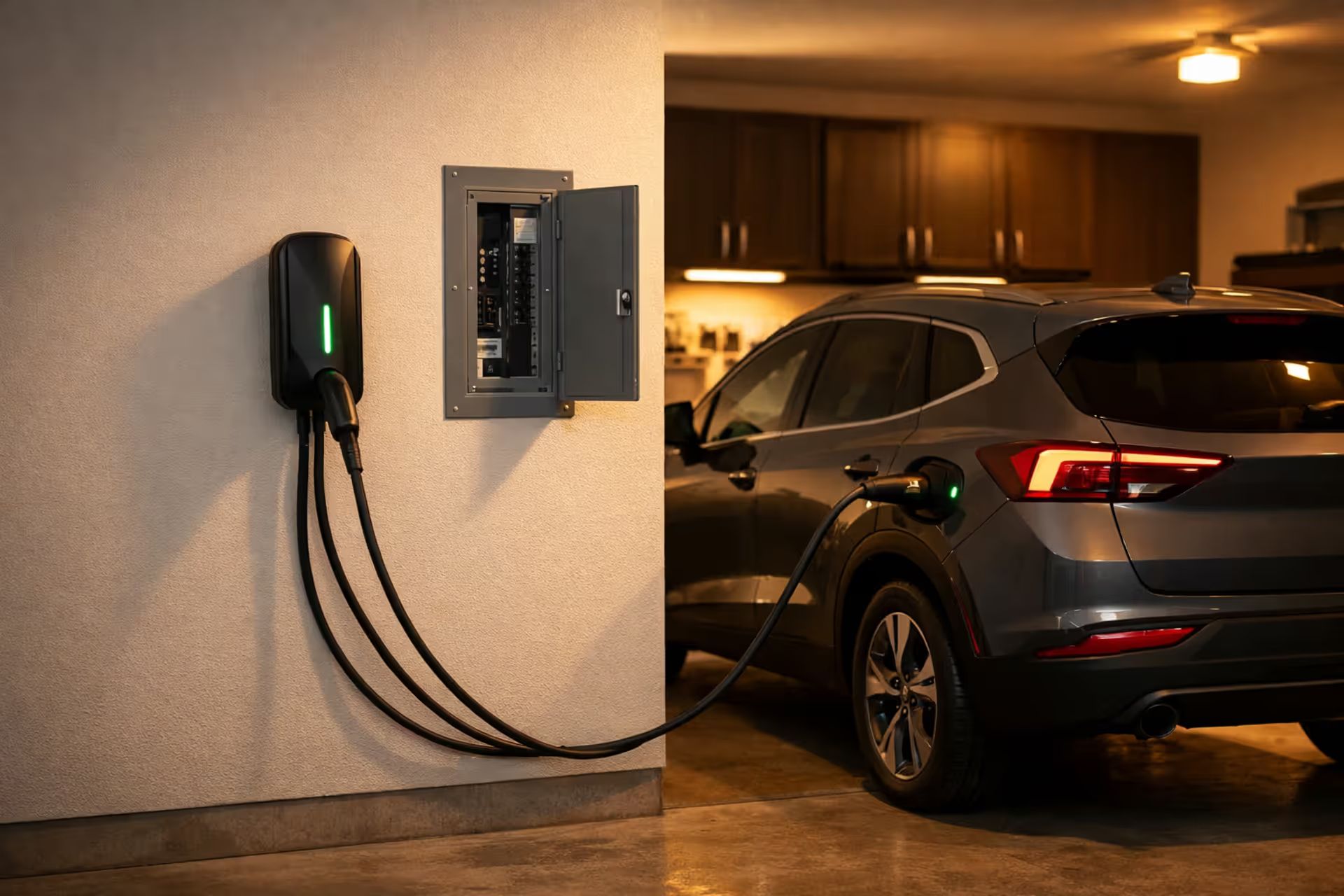
Installing a 240-volt Level 2 charger, similar to the outlet that powers an electric clothes dryer, dramatically accelerates home charging while remaining straightforward for most licensed electricians. Level 2 charging adds 20-30 miles of range per hour, fully replenishing even depleted batteries overnight with time to spare. For most buyers with home charging access, public charging becomes a road trip convenience rather than a daily necessity.
Level 2 home charger installation typically costs $500 to $2,000 including equipment and labor, depending on existing electrical panel capacity and the distance between panel and parking location. Many utilities offer rebates reducing these costs, and some states include charger installation in their electric vehicle incentive programs. Over years of ownership, the convenience and cost savings justify this investment for most buyers who have the option.
Apartment and Renter Challenges
Buyers without dedicated parking face genuine challenges that require honest assessment before purchasing. Street parking rarely offers charging access. Shared parking structures increasingly include charging stations, but availability remains inconsistent and often insufficient for all residents who might want to charge simultaneously. Some apartment complexes have begun installing chargers proactively, but demand often exceeds supply in buildings where they exist.
Workplace charging helps some renters bridge the gap, but requires employer participation and assumes work patterns involving regular, extended time at a workplace with charging available. The shift toward remote and hybrid work has complicated this option for many potential buyers who no longer spend consistent time at offices.
For these buyers, proximity to reliable EV charging stations becomes critical for evaluating whether electric vehicle ownership makes sense. If convenient, affordable public charging exists near home or along daily routes—and remains reliably available when needed—electric vehicle ownership remains viable despite home charging limitations. Without such access, the calculus becomes considerably less favorable. Honestly assessing your specific charging reality before purchasing prevents the disappointment and frustration of discovering limitations after commitment.
Road Trip Considerations
Long-distance travel in electric vehicles has improved dramatically from the early days of limited range and sparse charging but still requires more planning than gasoline travel allows. The major interstate corridors now offer fast charging at reasonable intervals, enabling practical coast-to-coast travel in any electric vehicle with reasonable range. However, routing may constrain destination choices, and charging stops inevitably add time that gasoline refueling doesn't require—typically 20-45 minutes per stop versus 5 minutes at a gas station.
The Alternative Fuels Data Center maintains a comprehensive database of charging locations that helps plan routes before departure, identifying charging stops and estimating whether planned routes work within vehicle range constraints. Multiple smartphone applications provide similar functionality with real-time availability information showing which chargers are currently functional and unoccupied. For occasional road trippers, these planning tools make electric travel practical if somewhat more deliberate. For frequent long-distance drivers covering hundreds of miles regularly, careful consideration of whether charging constraints fit your lifestyle proves essential before committing.
Depreciation Patterns and Resale Value
How electric SUVs retain value significantly impacts their long-term affordability in ways that buyers focused solely on purchase price often overlook. Patterns in this still-maturing market differ from established gasoline vehicle trends and deserve specific attention.
Factors Supporting Strong Resale
Several factors correlate with better electric SUV resale values and help identify vehicles likely to hold their worth over time. Strong brand reputation provides essential foundation—established manufacturers with proven service networks and demonstrated commitment to electric vehicles inspire more used-buyer confidence than newer entrants whose long-term viability remains uncertain. Longer range supports value retention as buyer expectations continue rising with each model year; vehicles with range that remains competitive years after purchase maintain appeal better than those that felt adequate when new but seem limited compared to newer options.
Comprehensive warranty coverage, particularly battery warranties that transfer to subsequent owners, directly enhances resale appeal by reducing used-buyer risk. A used electric vehicle with five years remaining on its battery warranty commands significantly more than an identical vehicle whose warranty has expired. Software update policies matter increasingly as well—vehicles receiving ongoing updates maintain capabilities and security better than those abandoned by manufacturers after initial sale.
According to iSeeCars research, electric vehicle depreciation varies enormously by model—far more than depreciation varies among gasoline vehicles. Some electric SUVs retain value comparably to popular gasoline SUVs, losing perhaps 40-50% over five years. Others lose half their value within three years, representing dramatic capital loss that offsets any operating savings. Researching specific model depreciation patterns before purchasing provides crucial planning information.
Depreciation Risks
Rapid technology advancement creates depreciation pressure unique to electric vehicles that doesn't affect gasoline vehicles comparably. A three-year-old electric SUV with 200 miles of range competes against new models offering 300+ miles at similar or lower prices, creating obvious consumer preference for the newer option. This technological obsolescence accelerates depreciation beyond what conventional vehicles experience and affects budget-conscious used buyers' willingness to pay for older models.
Discontinued models or those from struggling manufacturers face particularly severe depreciation as uncertainty about future support discourages used buyers. News of production ending or manufacturer financial difficulties can cause immediate, significant value drops as current owners rush to sell before values fall further. Avoiding such models when buying new protects against these sometimes dramatic losses.
Making Your Decision: A Framework for Choosing
With so many variables involved in evaluating electric SUV affordability, a structured approach helps identify the right vehicle for your specific circumstances rather than relying on general recommendations that may not apply to your situation.
Begin with honest assessment of your charging situation, as this single factor most strongly determines whether electric vehicle ownership will prove convenient or frustrating. Without reliable home or workplace charging, you'll depend heavily on public EV charging stations for daily needs. Calculate whether this dependence proves practical and affordable for your specific situation—where are the nearest stations, what do they cost, how reliable are they, how often are they occupied when you'd need them? If dependence on public charging doesn't work for your circumstances, waiting until your situation changes may prove wiser than forcing a purchase that creates ongoing daily frustration.
Calculate true total cost of ownership rather than focusing solely on purchase price, which captures only part of the financial picture. Factor in applicable tax credits at both federal and state levels, estimated fuel savings based on your actual driving patterns and local electricity costs, car insurance costs for specific models you're considering obtained through actual quotes rather than assumptions, and realistic maintenance expectations based on manufacturer schedules. This comprehensive view often reveals that higher-priced vehicles prove more affordable over time—or confirms that the lowest-priced option genuinely represents the best value for your circumstances.
Consider how long you plan to own the vehicle, as optimal choices differ substantially based on ownership duration. Buyers keeping vehicles seven years or longer benefit most from purchasing rather than leasing, capturing maximum fuel and maintenance savings while spreading purchase costs across more years of use. Those preferring newer vehicles every three to four years may find leasing more sensible despite higher total costs, gaining access to improving technology and avoiding depreciation uncertainty.
Research specific models thoroughly using resources like Kelley Blue Book, Edmunds, and Consumer Reports that provide professional evaluation and testing. Real-world owner experiences often reveal nuances that official specifications miss—charging speeds that don't match claims, range that varies dramatically with temperature, features that prove less useful than expected. Online forums dedicated to specific models provide unfiltered perspectives from actual owners living with these vehicles daily, complementing professional reviews with extended-use insights.
Test drive seriously before committing, as electric vehicles drive fundamentally differently than gasoline vehicles in ways that must be experienced to evaluate. The instant torque delivery, the regenerative braking feel, the near-silence, the different weight distribution—these characteristics define the daily driving experience and elicit different reactions from different drivers. Most buyers find these differences pleasantly surprising once acclimated, but personal experience confirms whether a specific vehicle's character suits your preferences and driving style.
The Path Forward
Affordable electric SUVs have arrived as legitimate mainstream choices rather than early-adopter experiments requiring compromise and evangelism. The combination of falling battery costs, expanding charging infrastructure, government incentives, and accumulating real-world validation has created a market where electric makes genuine sense for a growing majority of American car buyers—not just environmentalists or technology enthusiasts, but practical consumers seeking reliable, economical transportation.
The specific vehicle that makes sense for you depends on your unique circumstances—your driving patterns, your charging access, your budget, your priorities regarding features and brand reputation. The models highlighted here each excel in different dimensions suited to different buyers. The vehicles cautioned against share common weaknesses worth understanding and avoiding. Matching your circumstances to vehicle strengths positions you to make a choice you'll appreciate for years of ownership rather than regret as limitations become apparent.
Beyond the vehicle itself, remember that ownership experience depends heavily on factors you control. Securing favorable car loans through comparison shopping across multiple lenders, finding cheap car insurance through diligent quoting from multiple insurers, developing efficient charging habits that minimize reliance on expensive public charging, and maintaining the vehicle according to manufacturer recommendations all contribute to making electric SUV ownership genuinely affordable rather than merely theoretically economical. The vehicle provides the foundation, but your choices determine whether that foundation supports satisfying, economical ownership.
The transition to electric vehicles represents one of the most significant automotive shifts in a century, comparable to the transition from horses to automobiles in its ultimate scope. Being part of that transition while making a financially sound decision requires exactly the kind of informed approach this guide supports—understanding not just vehicles but the ecosystem surrounding them. The affordable electric SUV that serves you best is out there, waiting in some dealer's inventory or soon to arrive. Finding it simply requires understanding what to look for, what to avoid, and how to evaluate the complete ownership picture beyond the sticker price.