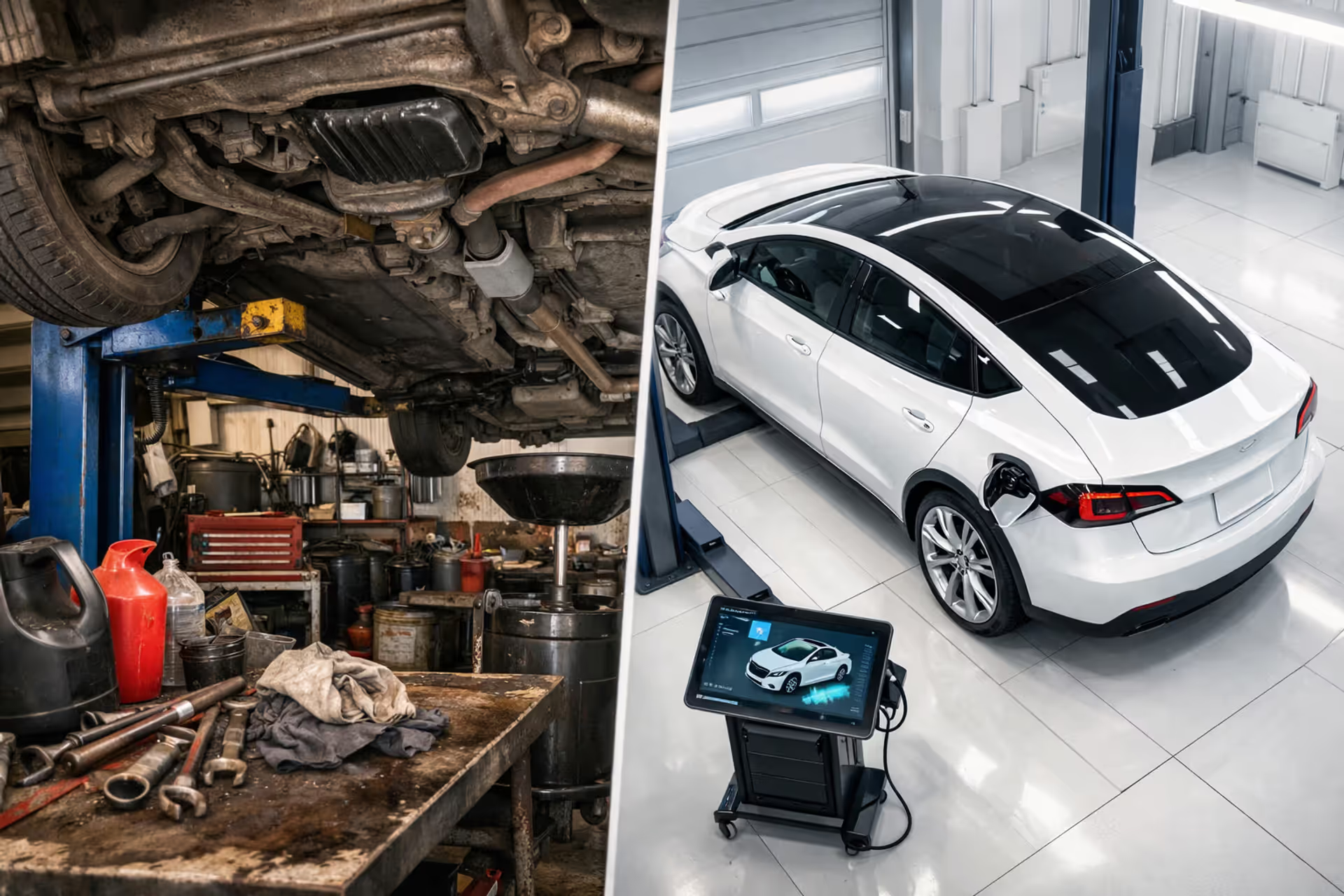
Split view comparing traditional gas car repair shop with cluttered tools and a clean modern EV service bay with digital diagnostics
EV Maintenance Guide

Content
Making the switch from a gas-powered vehicle to an electric one changes more than how you refuel. The entire maintenance relationship shifts—fewer trips to the shop, different service needs, and a learning curve that catches many first-time EV owners off guard.
Understanding these differences matters before you buy, not after. Gas car habits don't translate directly to electric ownership, and the cost savings everyone talks about depend on knowing what actually needs attention and what doesn't.
How Fewer Moving Parts Transform Your Service Schedule
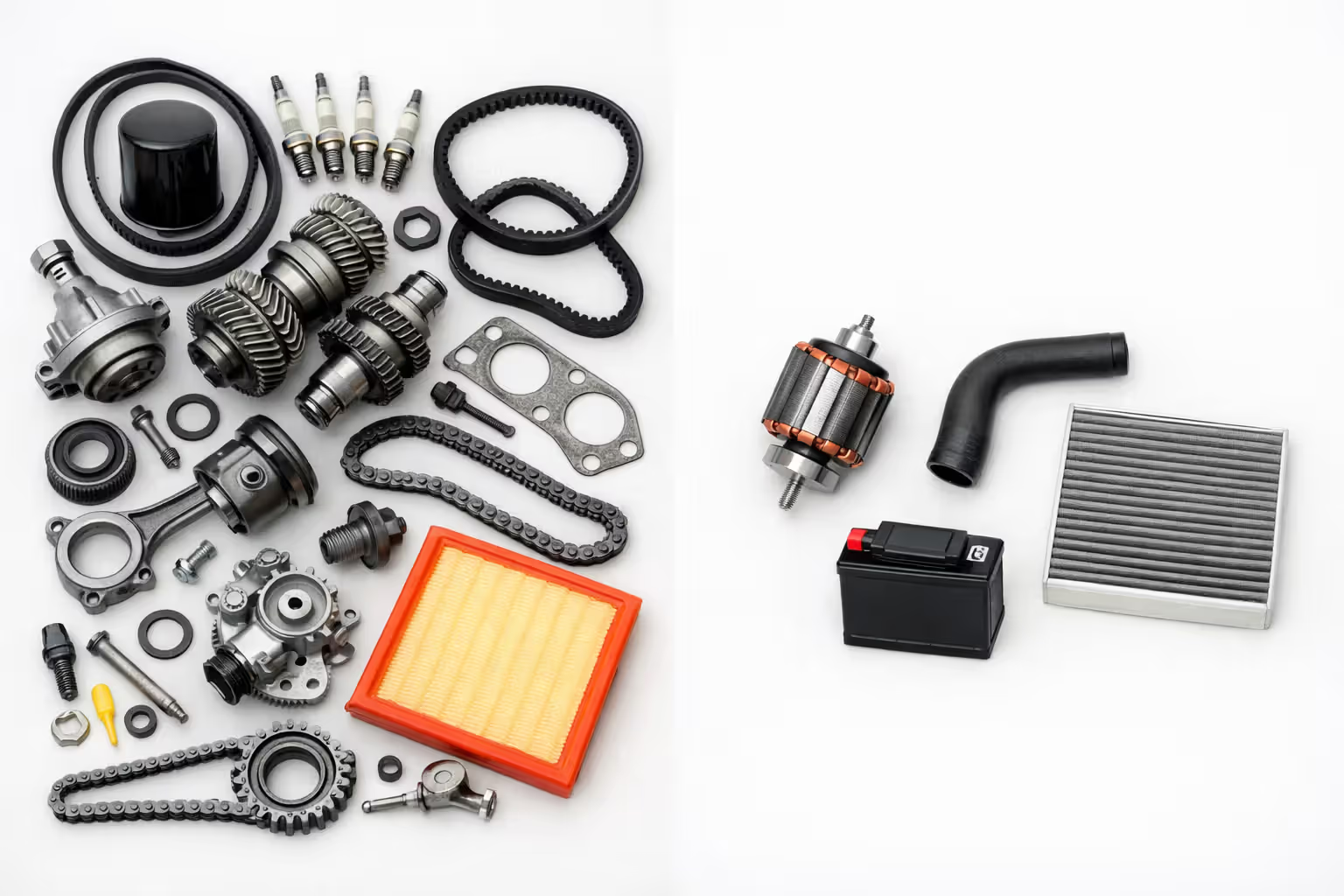
An internal combustion engine contains roughly 2,000 moving components. An electric motor? Around 20.
That difference eliminates entire categories of maintenance. No oil changes mean no oil filters, no degraded engine oil breaking down seals, no disposal fees every 5,000 miles. No transmission fluid changes because most EVs use single-speed reduction gears instead of multi-gear transmissions. No spark plugs, no timing belts, no exhaust systems developing leaks, no catalytic converters to replace.
The ownership servicing differences become obvious within the first year. Where a gas vehicle might need three or four oil changes, an EV needs... tire rotations. Maybe a cabin air filter replacement. That's often it.
But EVs aren't maintenance-free. They still have:
- Coolant systems for battery thermal management (though changes happen every 4-5 years instead of 2-3)
- Brake fluid that absorbs moisture and needs periodic flushing
- Cabin air filters that clog just like any vehicle
- Tire rotations every 5,000-7,000 miles
- Wiper blades and washer fluid
- 12-volt auxiliary batteries (yes, EVs have these too) that typically last 3-5 years
The difference isn't zero maintenance—it's dramatically simplified maintenance. You're not scheduling around oil change intervals or tracking when the transmission service is due. Most EV owners find themselves visiting service centers primarily for tire-related work and the occasional software update.
Author: Lena Prescott;
Source: shafer-motorsports.com
Brake Longevity: Why Your EV's Brakes Can Last 100,000+ Miles
Regenerative braking fundamentally changes how often you'll replace brake pads and rotors. Instead of friction brakes doing all the stopping work, the electric motor reverses function, acting as a generator that slows the vehicle while recovering energy back to the battery.
In typical driving, regenerative braking handles 60-70% of stopping force. Some EVs offer "one-pedal driving" modes where lifting off the accelerator provides enough deceleration that you rarely touch the brake pedal for normal stops.
The result: brake wear drops dramatically. Gas vehicles typically need front brake pad replacement every 25,000-40,000 miles. Many EV owners reach 100,000 miles on original pads, and some manufacturers report brakes lasting the vehicle's lifetime under normal conditions.
Tesla owners frequently report original brakes at 80,000+ miles showing 50% pad life remaining. Chevy Bolt forums document similar experiences. One Nissan Leaf owner in Oregon made headlines reaching 100,000 miles without a brake service beyond fluid changes.
There's a trade-off: when brakes sit unused for extended periods, rotors can develop surface rust. This rarely causes functional problems—the rust scrubs off during the occasional hard stop—but it surprises owners expecting pristine components. Some mechanics recommend periodic moderate brake applications to maintain rotor surface condition.
For cost comparison, a typical gas vehicle might need 2-3 brake service appointments over 100,000 miles at $300-600 each. An EV might need one, or none. That's $600-1,800 in avoided expenses from regenerative braking alone.
The electric motor is inherently a more reliable and simpler machine than the internal combustion engine. Simplicity is the ultimate sophistication in engineering
— Sandy Munro
Service Intervals Compared: Gas vs Electric Maintenance Timelines
The maintenance calendar looks completely different between powertrains. Here's what catches new EV owners off guard: the service reminder light might not illuminate for an entire year.
What EVs Still Need (And How Often)
Tire rotations: Every 5,000-7,500 miles, same as gas vehicles. Some argue EVs need more frequent rotations due to instant torque and heavier weight, though manufacturer recommendations remain similar.
Cabin air filter: Every 15,000-25,000 miles. Identical to gas vehicles. HEPA filters in some EVs cost more ($50-80 vs. $20-30) but filter finer particles.
Brake fluid flush: Every 2-3 years despite minimal brake use. Brake fluid is hygroscopic—it absorbs moisture from the air regardless of how often you press the pedal.
Battery coolant service: Every 4-5 years for most EVs with liquid cooling. Some use air cooling and skip this entirely. Cost runs $100-200.
12-volt battery replacement: Every 3-5 years. These auxiliary batteries power accessories and cost $150-300 to replace, similar to gas vehicles.
Tire replacement: Every 30,000-50,000 miles depending on driving style and tire choice. EVs often wear tires slightly faster due to weight and torque, though careful drivers report normal wear patterns.
Software updates: Varies by manufacturer. Some push over-the-air updates requiring no shop visit. Others need dealer appointments. Frequency ranges from quarterly to annual.
What Gas Cars Require That EVs Don't
The eliminated maintenance list is extensive:
- Oil changes: Every 5,000-7,500 miles, $50-125 each
- Transmission service: Every 30,000-60,000 miles, $150-300
- Spark plugs: Every 30,000-100,000 miles depending on type, $200-400
- Engine air filter: Every 15,000-30,000 miles, $30-60
- Drive belts and tensioners: Every 60,000-100,000 miles, $150-400
- Exhaust system repairs: Varies, often $300-1,200 when needed
- Coolant flushes: Every 30,000 miles, $100-150 (vs. every 100,000+ for EVs)
- Emissions testing: Required in many states, $20-50 annually (EVs exempt)
| Service Item | Gas Vehicle Interval | Gas Vehicle Cost | EV Interval | EV Cost | 5-Year Total (60K mi) Gas | 5-Year Total (60K mi) EV |
| Oil Changes | Every 6,000 mi | $75 | N/A | $0 | $750 | $0 |
| Transmission Service | 60,000 mi | $250 | N/A | $0 | $250 | $0 |
| Brake Pads (front) | 30,000 mi | $400 | 100,000+ mi | $0 | $800 | $0 |
| Spark Plugs | 60,000 mi | $300 | N/A | $0 | $300 | $0 |
| Engine Air Filter | 20,000 mi | $40 | N/A | $0 | $120 | $0 |
| Cabin Air Filter | 20,000 mi | $30 | 20,000 mi | $30 | $90 | $90 |
| Tire Rotation | 6,000 mi | $50 | 6,000 mi | $50 | $500 | $500 |
| Coolant Service | 30,000 mi | $125 | 100,000 mi | $150 | $250 | $0 |
| 12V Battery | 4 years | $200 | 4 years | $200 | $200 | $200 |
| Total | $3,260 | $790 |
This comparison assumes moderate driving and average service costs. Regional variation and driving habits shift these numbers, but the proportional difference remains consistent.
The Real Numbers: Maintenance Cost Analysis Over 5 and 10 Years
AAA's 2023 data shows electric vehicles average $949 annually in maintenance and repair costs over the first five years of ownership. Comparable gas vehicles average $1,279—a difference of $330 per year, or $1,650 over five years.
Consumer Reports tracking of member data found even larger gaps. Their analysis of vehicles with 200,000 miles showed EV owners spent half as much on maintenance and repairs compared to gas vehicle owners over the vehicle's lifetime.
Over 10 years and 120,000 miles, the cost difference compounds:
Author: Lena Prescott;
Source: shafer-motorsports.com
Gas vehicle estimated maintenance: $6,200-8,500 depending on make and model complexity. Luxury brands and European vehicles trend higher. Domestic trucks and sedans trend lower.
EV estimated maintenance: $2,800-4,200 for the same period. Tesla tends toward the lower end due to minimal service requirements. Traditional manufacturers with dealer service networks trend higher.
That's a difference of $3,400-4,300 over a decade—enough to cover several months of car payments or offset higher insurance premiums some EVs carry.
"The maintenance cost advantage of electric vehicles is one of the most underestimated ownership benefits," says Greg Brannon, AAA's Director of Automotive Engineering. "We see members surprised that their first service appointment might be at 10,000 miles just for a tire rotation, when they're mentally prepared for the 3,000-mile oil change habit."
These savings assume normal driving conditions and no major component failures. Battery replacements, though rare within warranty periods, cost $5,000-15,000 if needed outside coverage. Electric motor failures are uncommon but expensive. Most manufacturers warranty EV-specific components for 8 years/100,000 miles, longer than typical gas powertrain warranties.
The maintenance savings comparison shifts when including tires. EVs wear through tires 10-20% faster on average due to instant torque and curb weight 500-1,000 pounds heavier than comparable gas vehicles. An extra tire replacement over 100,000 miles adds $600-1,200 to EV costs but doesn't eliminate the overall advantage.
Debunking Common EV Maintenance Myths
Myth: Battery replacement is inevitable and costs more than the car's value
Battery degradation is real but gradual. Most EVs lose 2-3% capacity in the first year, then about 1% annually after that. A 10-year-old EV typically retains 80-85% of original range. Catastrophic battery failure is rare—warranty claim rates run below 1% for most manufacturers.
When replacement is needed, costs have dropped 90% since 2010. A Nissan Leaf battery replacement now costs around $6,500 installed, down from $30,000+ a decade ago. Many third-party refurbishment options exist for older EVs at $3,000-5,000.
Myth: EVs cost more to maintain than gas cars
Every major study—AAA, Consumer Reports, Department of Energy—shows the opposite. The maintenance myths EV skeptics repeat don't align with actual owner experiences tracked over hundreds of thousands of miles.
Myth: You need specialized mechanics and they're impossible to find
Tire shops handle 80% of routine EV maintenance. Brake work, suspension repairs, and wheel alignments require no EV-specific training. Battery and motor repairs need certification, but these services are rarely needed. Most metro areas have multiple certified EV technicians. Rural areas lag but are catching up as EV adoption grows.
Myth: Tire wear is so much worse it cancels out maintenance savings
Tire wear is marginally higher, not catastrophically different. Proper inflation, alignment, and avoiding aggressive launches keep tire life reasonable. The $200-400 extra over 100,000 miles doesn't negate $3,000-4,000 in other maintenance savings.
Myth: Software updates require dealer visits and cost hundreds
Most modern EVs receive over-the-air updates requiring no shop visit and no cost. Even brands requiring dealer updates typically provide these free during the warranty period. Post-warranty update costs vary but rarely exceed $100-200 annually.
The stone age didn’t end because we ran out of stones. We transitioned to better solutions. The same is happening with transportation
— Tony Seba
What Gas Car Owners Get Wrong About EV Servicing
The shift from scheduled maintenance to condition-based maintenance confuses gas car owners accustomed to rigid service intervals. You're not bringing the EV in every 5,000 miles "just because." Service happens when something actually needs attention.
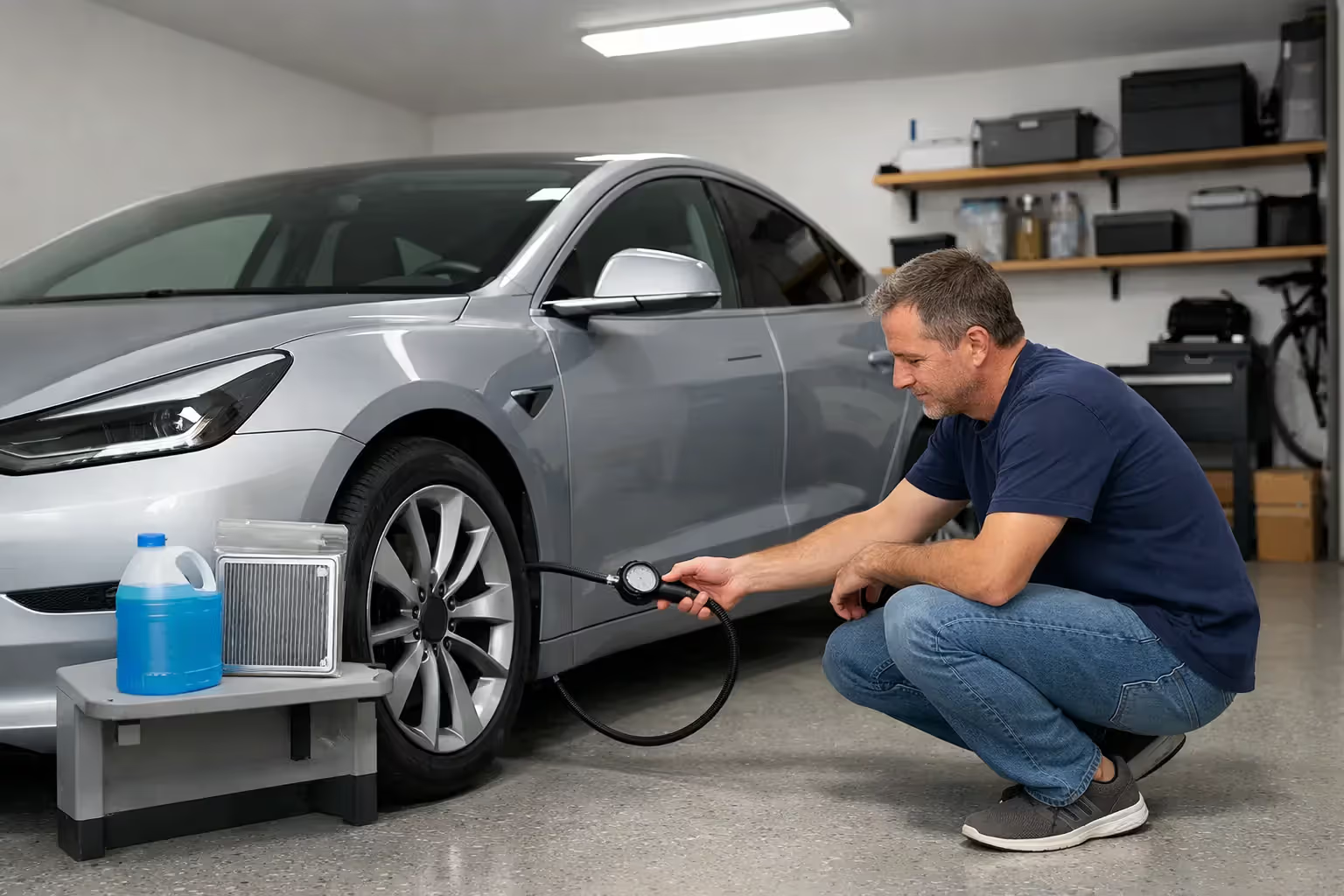
This creates anxiety for owners conditioned to believe their vehicle needs regular professional inspection. The ownership servicing differences mean you're responsible for more monitoring—checking tire pressure, inspecting wiper condition, topping off washer fluid. There's no oil change appointment where a technician does a multi-point inspection every few months.
Many new EV owners schedule unnecessary service appointments out of habit. They bring the vehicle in for a "checkup" when nothing's wrong, paying diagnostic fees for technicians to confirm everything's fine. One Tesla owner reported spending $200 for a service center visit where the technician rotated tires and said "everything else looks perfect"—work he could have done at any tire shop for $50.
The dealer relationship changes too. Gas car owners might visit their dealer 3-4 times yearly for service. EV owners might go once a year, or not at all if they use independent shops for tires and basic maintenance. This reduces opportunities for dealers to identify issues early but also eliminates upselling of unnecessary services.
Warranty structures surprise gas car converts. The 8-year/100,000-mile battery and motor warranty exceeds typical powertrain coverage, but standard components like suspension and HVAC systems carry the same 3-year/36,000-mile basic warranty. Some owners assume the extended EV component warranty covers everything—it doesn't.
Finding qualified technicians for non-routine repairs takes more effort. While tire shops and general mechanics handle most needs, body work on aluminum-intensive EVs or high-voltage system repairs require certification many shops don't have. Insurance networks sometimes lack sufficient certified repair facilities, extending repair times after accidents.
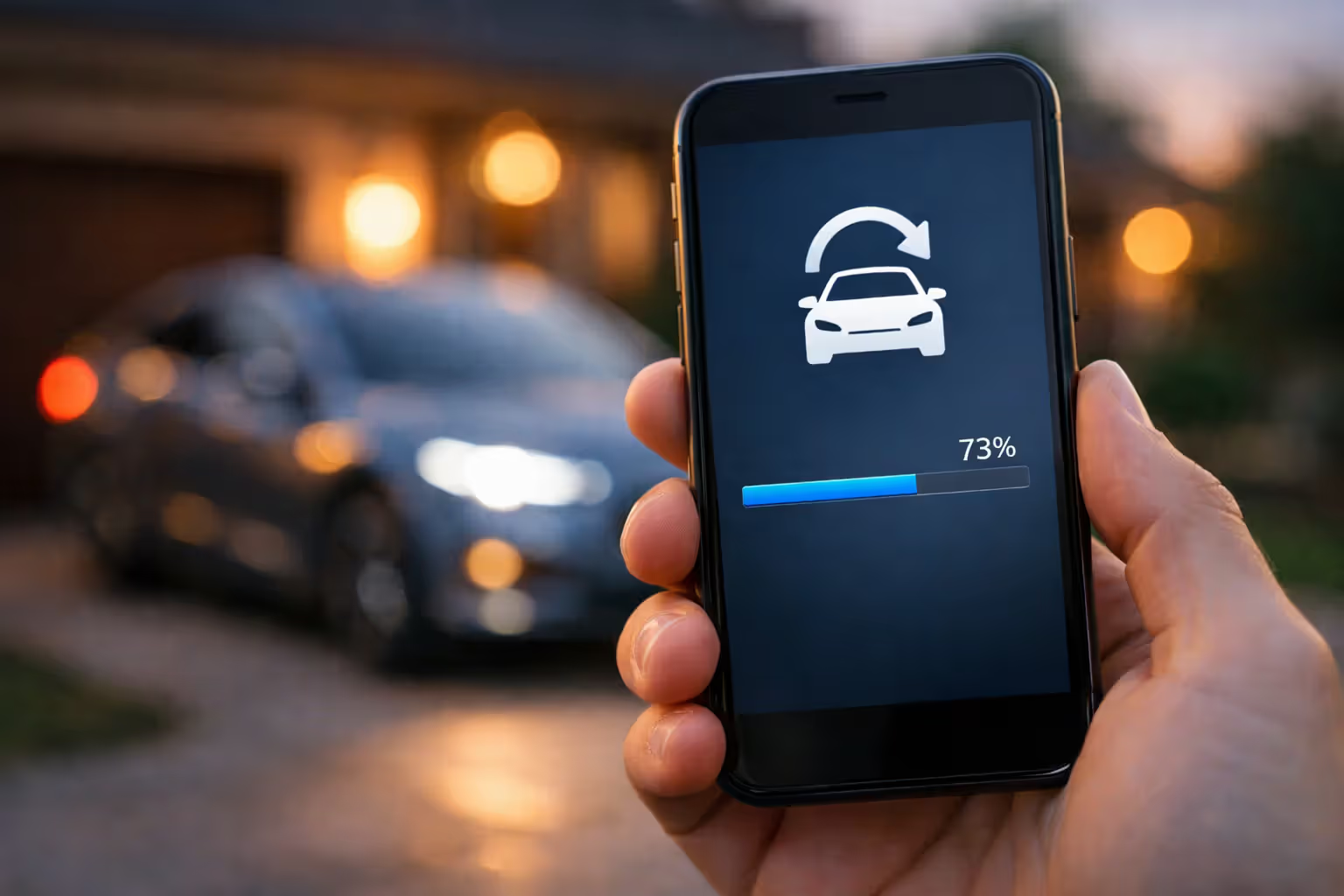
The software-first nature of EVs means some "repairs" happen via code updates rather than parts replacement. A gas car owner expects a grinding noise to require physical repair. An EV might fix the same symptom through a motor controller software update. This feels wrong to people accustomed to mechanical solutions for mechanical problems.
Author: Lena Prescott;
Source: shafer-motorsports.com
Frequently Asked Questions About EV vs Gas Maintenance
The maintenance differences between electric and gas vehicles represent one of EV ownership's clearest advantages. Fewer moving parts translate directly to fewer service appointments, lower costs, and less time spent in waiting rooms.
For gas car owners considering the switch, adjust your expectations around service frequency. You won't need those quarterly oil changes. Your brake pads will outlast your ownership period. The service reminder light becomes an occasional visitor rather than a regular presence.
Budget $400-600 annually for EV maintenance in the first five years—roughly half what you'd spend on a comparable gas vehicle. Set aside tire rotation money, plan for a cabin filter here and there, and don't stress about the 3,000-mile service interval that no longer exists.
The learning curve is real but short. After your first year of EV ownership, the simplified maintenance routine becomes second nature. You'll wonder why you ever accepted monthly oil changes as normal.