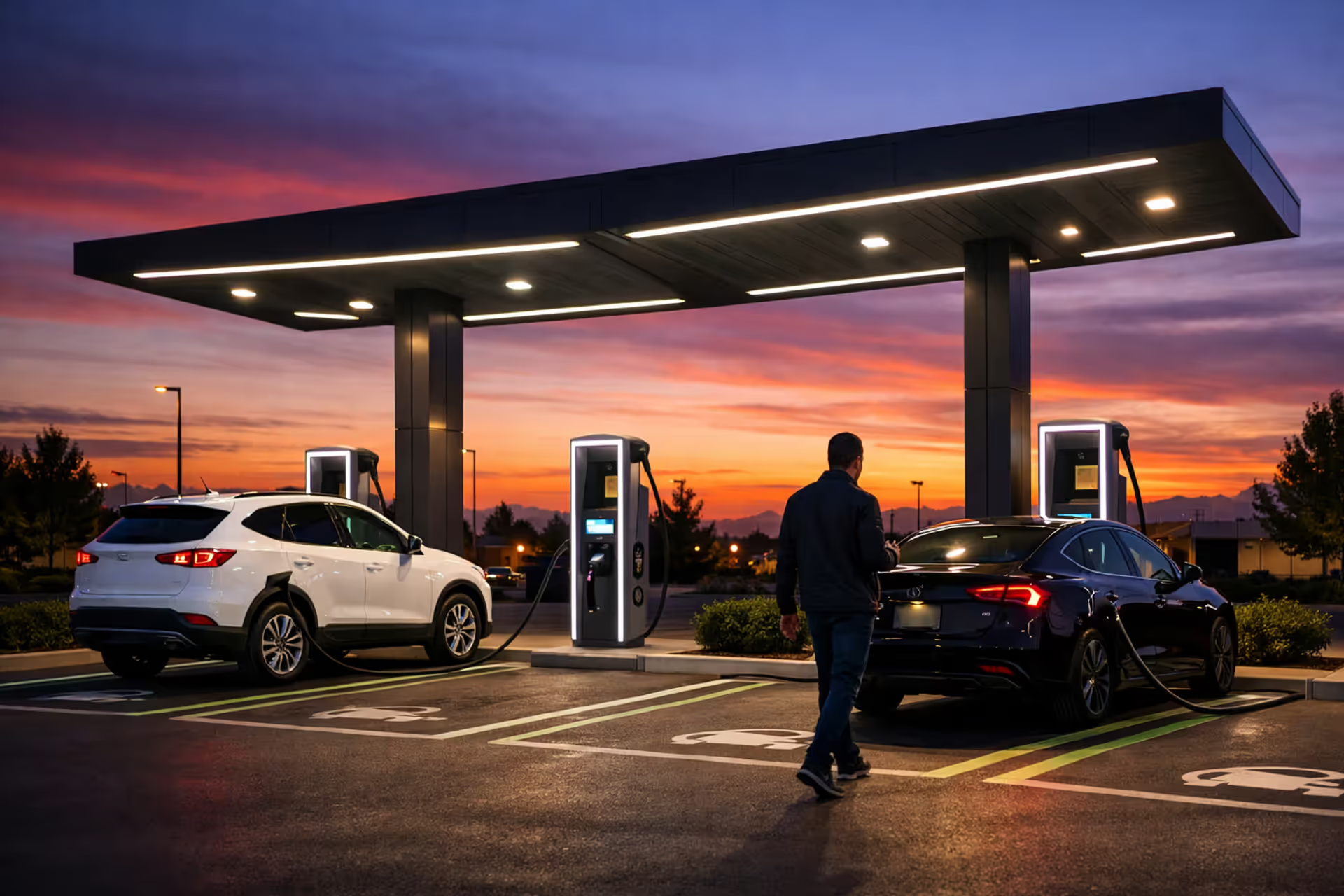
Public EV charging station at sunset with two electric vehicles plugged in and a driver approaching with a smartphone
EV Charging Etiquette Guide

Content
Pull into a charging station with 10% battery left, and you'll quickly discover that the rules of the road don't always apply in parking lots. Unlike gas stations where you're in and out in five minutes, EV charging requires patience, planning, and a surprising amount of social awareness. As electric vehicles multiply on American roads, the friction at charging stations grows with them.
Why Charging Courtesy Matters More Than You Think
The math is simple and unforgiving: EV sales grew by 50% in 2023, but charging infrastructure expansion lagged at roughly 30%. That gap creates real tension. A driver who leaves their Rivian plugged in for three hours after reaching 100% isn't just being inconsiderate—they're potentially stranding someone who needs to reach a hospital, make a job interview, or simply get home.
Public charging behavior directly affects how quickly EV adoption can scale. When new EV owners experience their first charging station conflict—a shouting match over an unplugged cable, a passive-aggressive note on a windshield, or an hour-long wait while a fully charged car sits idle—they remember it. Some return to dealerships asking about hybrid alternatives. The infrastructure problem isn't just about building more chargers; it's about using existing ones intelligently.
Charging networks have started implementing idle fees and time limits, but technology alone won't solve behavioral problems. Most conflicts arise from ignorance rather than malice. Drivers accustomed to gas stations don't instinctively understand that occupying a fast charger for 90 minutes is equivalent to parking at a gas pump through lunch.
The tragedy of the commons is not about the commons — it’s about the failure of individuals to see themselves as part of a community
— Elinor Ostrom
The Core Rules of Public Charging Station Behavior
Move Your Car Promptly After Charging Completes
Set alarms. Enable push notifications. Do whatever it takes to return to your vehicle within 10 minutes of charging completion at a DC fast charger. These stations exist for quick top-ups during travel, not extended parking. Most charging networks now send alerts when your session ends—ignoring them isn't just rude, it's expensive. Idle fees typically start at $0.40 per minute after a grace period, and they can accumulate faster than the charging session itself cost.
At Level 2 chargers in shopping centers or entertainment districts, you have more flexibility, but "more" doesn't mean "unlimited." If you've finished charging and won't return to your car for another two hours, you're using a charging spot as general parking. That's acceptable only when all other parking is full and no other EVs are waiting. Check apps like PlugShare before walking away—if the location shows frequent congestion, move your car even if it means re-parking in a regular spot.
Don't Unplug Someone Else's Vehicle (With One Exception)
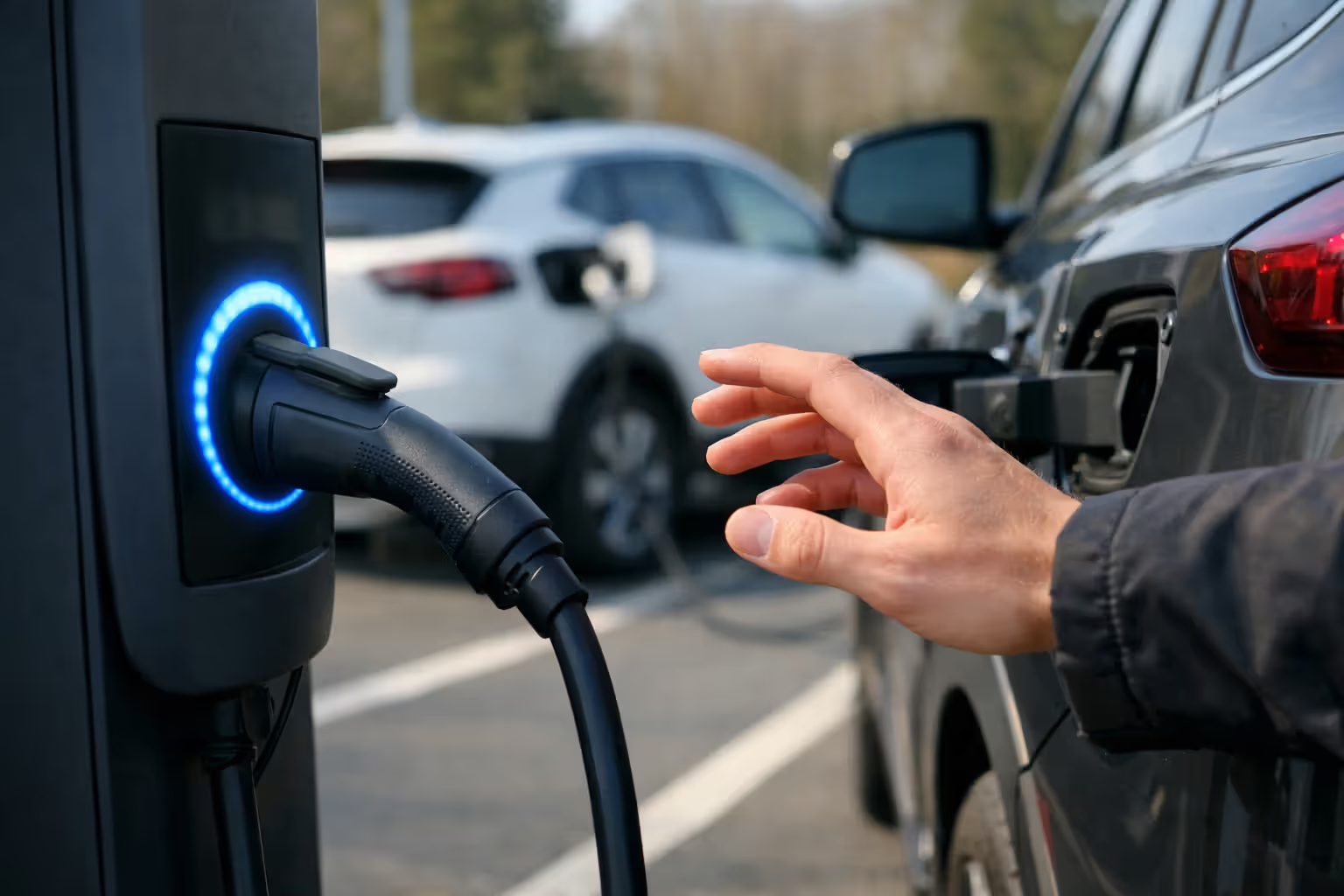
This rule generates more debate than any other aspect of EV charging etiquette. The default position is absolute: never disconnect another driver's car. Even if their charging session completed an hour ago. Even if you're down to 5% battery. Even if they left a note saying "unplug if needed" (more on that exception shortly).
Author: Derek Fulton;
Source: shafer-motorsports.com
The reasoning is practical, not just polite. You don't know their situation. Maybe they're charging slowly due to cold weather battery protection. Maybe they're intentionally using scheduled charging to take advantage of off-peak electricity rates. Maybe their charging port lock is malfunctioning, and unplugging will trigger a security alarm. Maybe they're parked legally within posted time limits and you simply arrived at an inconvenient moment.
The exception: if a car has genuinely finished charging (confirmed via the charging network app showing 100% or session ended), no other chargers are available, you're in a legitimate emergency, and you leave a clear note with your contact information on their windshield explaining the situation. Even then, expect potential confrontation and be prepared to justify your decision.
Respect Posted Time Limits and Charging Speed Tiers
A four-hour limit at a 350kW fast charger doesn't mean you should use all four hours. These limits represent maximum allowable time, not recommended duration. Most EVs complete an 80% fast charge in 20-40 minutes. Staying beyond that point means you're charging at dramatically reduced speeds while preventing others from accessing high-speed charging.
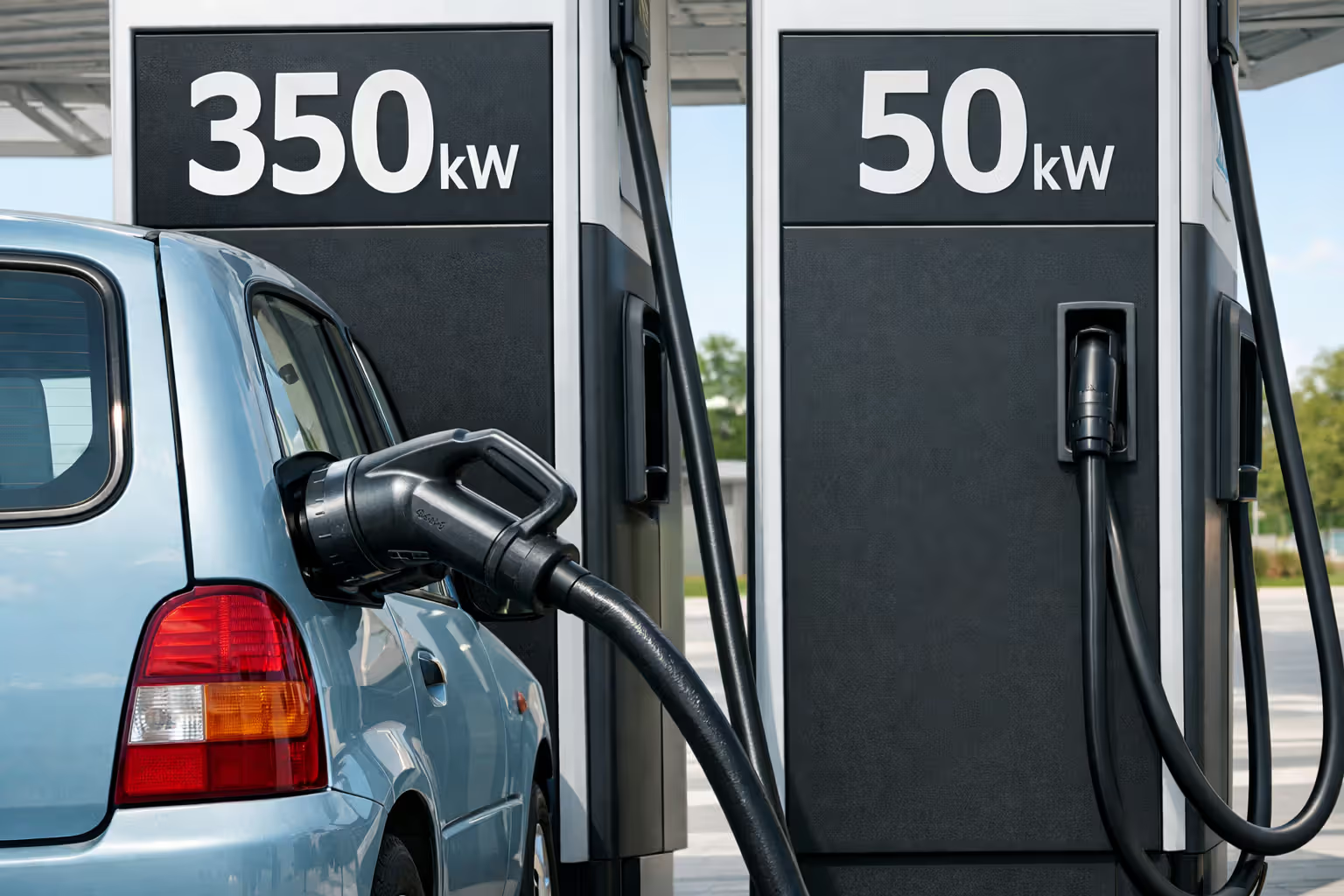
Charging speed tiers matter. If you're driving a vehicle that maxes out at 50kW charging speed, and the station offers both 50kW and 350kW chargers, choose the slower one. Plugging your older Leaf into a state-of-the-art Electrify America charger that could fill a Porsche Taycan in 20 minutes is like taking a tricycle into the fast lane.
Author: Derek Fulton;
Source: shafer-motorsports.com
Common Charging Etiquette Mistakes EV Drivers Make
The overnight Level 2 hog is everywhere. Someone arrives at a hotel or public garage at 8 PM, plugs in their already 60% charged Tesla, and doesn't return until 10 AM. Their car finished charging by midnight, but they've blocked the charger for 10 additional hours. Hotels and workplaces with limited charging infrastructure suffer most from this behavior. The solution is simple: set an alarm for when charging completes and move your car, or accept that you might not get a charging spot at all.
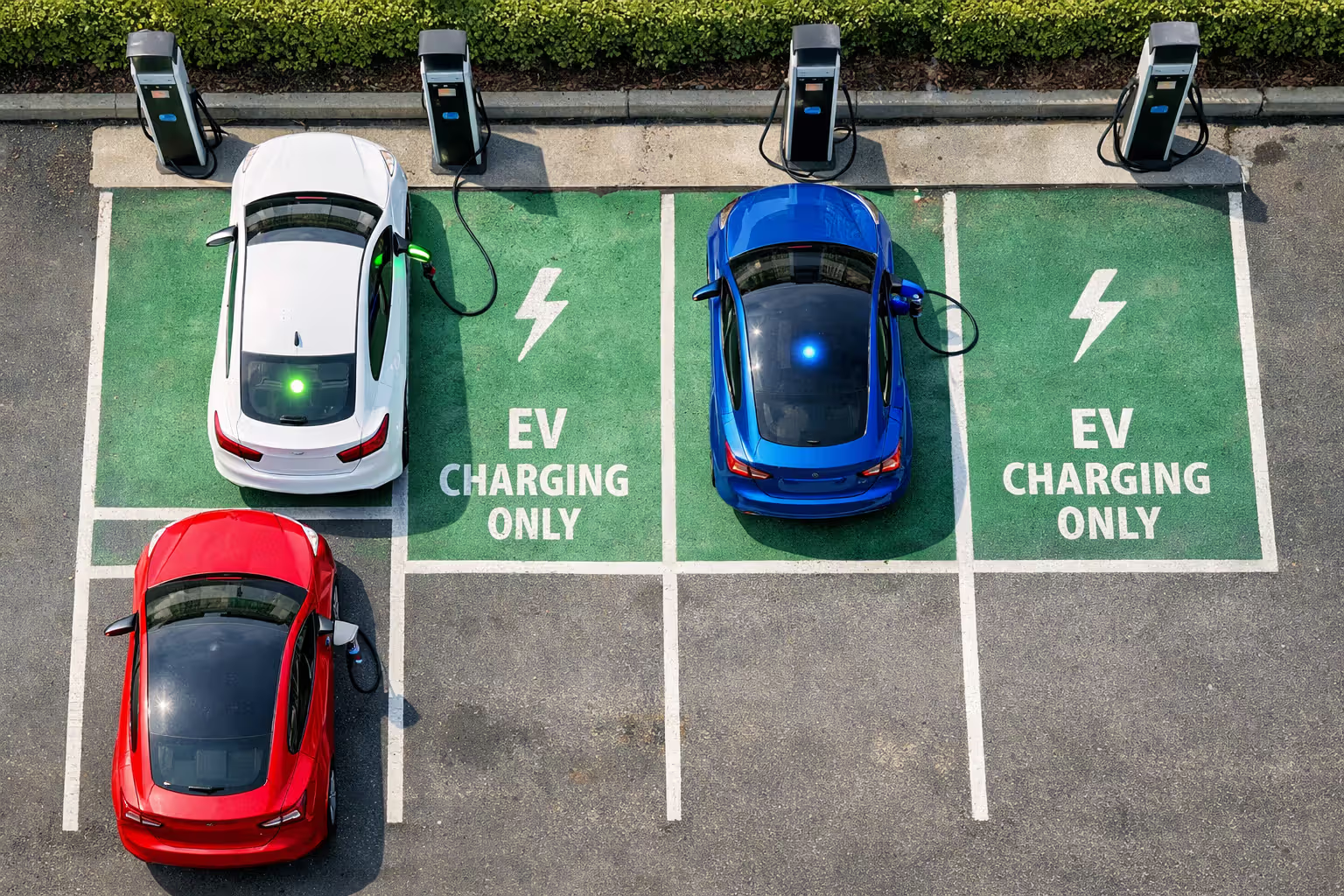
Blocking charger access ranks second. Parking diagonally across two spots, leaving the charging cable stretched across the access path, or parking in the marked access zone rather than the charging spot itself—these mistakes stem from rushing or simple thoughtlessness. Take an extra 30 seconds to park properly. Future you, returning to find an angry note or a blocked-in vehicle, will appreciate it.
The "ICE-ing adjacent" phenomenon is newer: EV drivers parking in charging spots without plugging in. Maybe they tried and the charger malfunctioned. Maybe they intended to charge later. Maybe they assumed the spot was just convenient parking. Whatever the reason, an unplugged EV in a charging space is nearly as problematic as a gas car in the same spot. If a charger doesn't work, report it through the network app and move to a different space.
Phantom charging wastes everyone's time. Drivers who leave cars plugged in after charging completes, even without occupying the spot long-term, create confusion. Other drivers can't tell from a distance whether a plugged-in car is actively charging or sitting idle. They waste time waiting or circling back to check. If you're staying nearby, unplug once charging completes—you can always plug back in later if needed.
Author: Derek Fulton;
Source: shafer-motorsports.com
When Is It Acceptable to Unplug Another EV?
The charging community remains divided on this question, with strong regional variations. West Coast EV drivers, dealing with charging scarcity for years, tend toward more permissive unplugging norms. Midwest and East Coast drivers, where EV adoption is newer, generally maintain stricter "never unplug" standards.
ChargePoint's community guidelines explicitly discourage unplugging others' vehicles under any circumstances, recommending instead that drivers contact customer support or local authorities if they encounter an abandoned vehicle. Electrify America takes a similar position, noting that their idle fees exist specifically to prevent the situations that might tempt someone to unplug another car.
As our network grows, we're seeing charging etiquette evolve from individual courtesy to community standards. The question isn't whether unplugging is technically possible—it's whether it builds or erodes trust in shared infrastructure. Every unauthorized unplug, even well-intentioned ones, makes the next driver more anxious about leaving their vehicle.
— Sarah Martinez, Director of Customer Experience
The "unplug me if needed" note represents an attempt at compromise. Some drivers leave contact information and explicit permission on their dashboard. This works in theory but creates problems in practice. Notes fall off dashboards, become illegible in rain, or get missed entirely. The driver who unplugs based on a note assumes legal and social risk if something goes wrong. Unless you personally know the other driver, treat notes as friendly suggestions rather than binding permission.
Tesla Supercharger etiquette differs slightly because the network historically served only Tesla vehicles, creating stronger community norms. Tesla owners more commonly accept post-completion unplugging, especially at congested urban stations. However, as Superchargers open to non-Tesla vehicles, these informal rules may not transfer. Don't assume permission based on vehicle brand.
How Long Should You Occupy a Public Charger?
Context determines acceptable charging duration more than any single factor. The same 90-minute charging session that's perfectly reasonable at a workplace charger becomes problematic at a highway rest stop.
| Charger Type | Typical Charge Time | Maximum Courteous Stay | Best Use Case |
| DC Fast Charger (highway) | 20-40 minutes | 45 minutes | Road trip top-ups, emergency charging |
| DC Fast Charger (urban) | 20-40 minutes | 60 minutes | Quick charging when running errands |
| Level 2 (shopping center) | 2-4 hours | 3 hours | Charging while shopping or dining |
| Level 2 (workplace) | 4-8 hours | Full work day | Daily commute charging |
| Level 2 (overnight destination) | 6-12 hours | Until departure | Hotel, restaurant, or event charging |
Fast chargers require the most aggressive time management. These stations cost networks significantly more to install and operate, and they serve drivers with immediate range needs. Charging beyond 80% at a fast charger rarely makes sense—charging speed drops dramatically, and you're better off finishing at a Level 2 station or at home.
The 80% rule exists for good reason. Most EVs charge from 10% to 80% in roughly the same time it takes to charge from 80% to 100%. That final 20% might take 30-45 minutes, during which you're monopolizing a high-speed charger for minimal gain. Plan trips around multiple 80% charges rather than single 100% sessions.
Wait time etiquette chargers get complicated when queues form. If you arrive at a station with three cars already waiting, adding yourself to the queue is fine—but only if you genuinely need the charge to reach your destination. Topping off from 70% to 90% while others wait at 15% battery violates basic fairness principles. Check your range, calculate your needs honestly, and consider whether you can reach an alternate charging location.
Best Practices for Sharing Chargers During Peak Times
Communication transforms charging conflicts into cooperative problem-solving. Leave a visible note with your phone number and expected return time. Better yet, use apps that facilitate charger sharing etiquette. PlugShare allows users to check in at stations, message others, and coordinate charging schedules. Some drivers exchange phone numbers in person, agreeing to text when charging completes.
The charging rotation system works well at popular destinations. If you're at a shopping center with two chargers and four EVs, organize a rotation: two cars charge first for 90 minutes, then swap with the waiting cars. This requires minimal coordination but dramatically improves everyone's experience. Approach other drivers proactively rather than waiting for conflict to arise.
Civility costs nothing and buys everything
— Mary Wortley Montagu
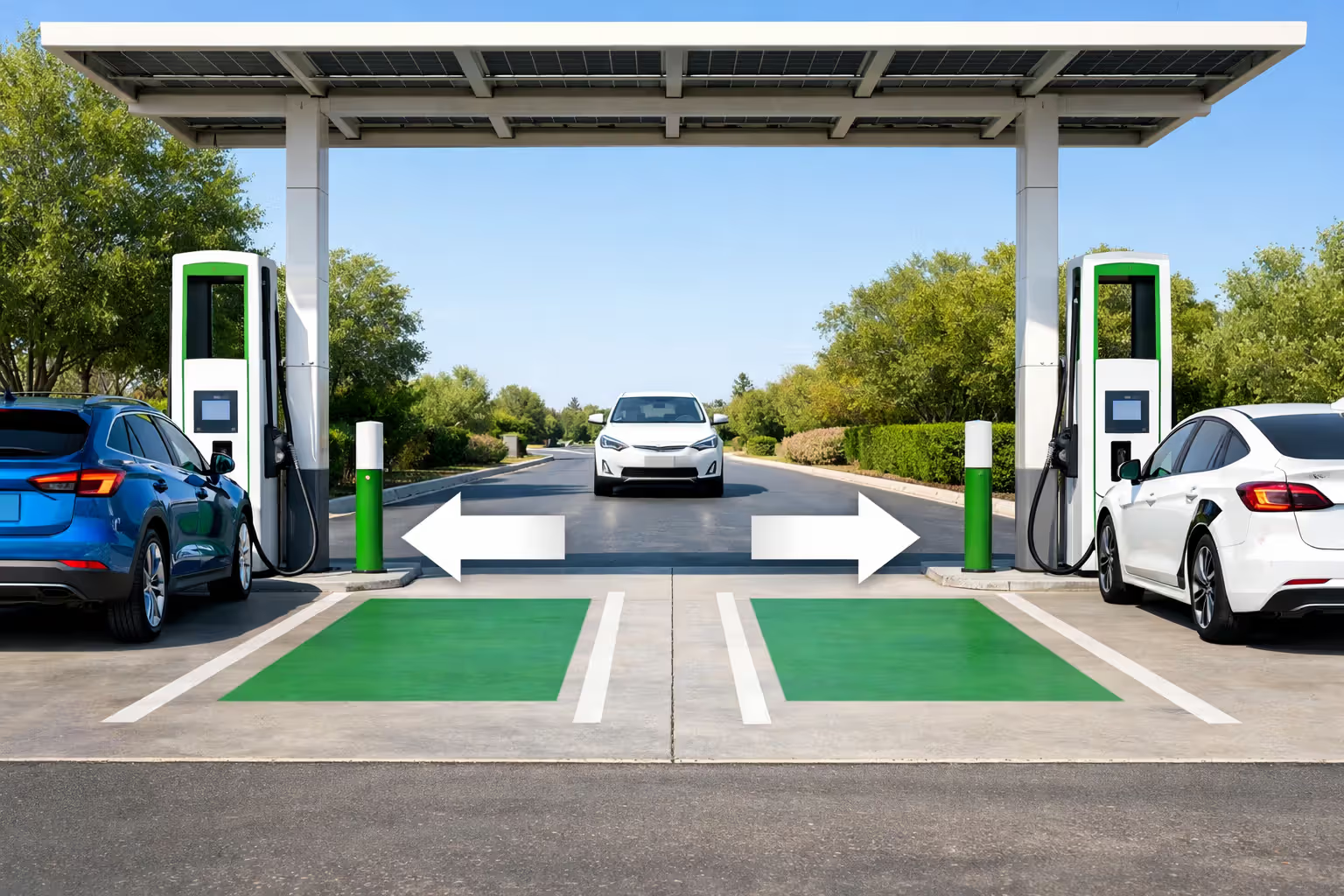
Strategic parking helps during peak times. If you're charging at a four-stall station and only two cars are present, park in stalls 1 and 4 rather than 1 and 2. This gives arriving drivers easier access and clear sight lines to available chargers. Small courtesies like this reduce stress and confusion.
The "charge to enough, not full" principle becomes essential during congestion. If you need 150 miles of range to get home and you're at 100 miles, charge to 160-170 miles rather than maxing out. That extra 30 minutes you save represents 30 minutes someone else gets to charge. Public charger best practices prioritize throughput over individual optimization.
Network apps increasingly offer queue management features. Electrify America's app shows real-time charger availability and estimated wait times. ChargePoint allows users to join virtual waitlists. EVgo sends notifications when chargers become available. Use these tools proactively rather than driving to stations blindly.
Author: Derek Fulton;
Source: shafer-motorsports.com
Frequently Asked Questions About EV Charging Etiquette
EV charging etiquette ultimately reflects a simple truth: shared resources require shared responsibility. The driver who treats a public charger like their personal driveway makes the experience worse for everyone, including themselves when they eventually encounter the same behavior from others.
As charging infrastructure expands, technology will solve some coordination problems through better apps, dynamic pricing, and reservation systems. But technology can't replace basic consideration. The habit of checking your charging status, moving your car promptly, and thinking about the next driver's needs costs nothing and prevents most conflicts before they start.
New EV drivers should observe experienced owners, ask questions in online communities, and err on the side of caution until they understand local norms. Experienced drivers should model good behavior and gently educate newcomers rather than assuming malice. The charging station conflicts that make headlines represent a tiny fraction of daily interactions—most charging sessions happen smoothly because most drivers make reasonable choices.
The infrastructure will improve. Networks will add chargers, apartments will install more Level 2 stations, and workplace charging will become standard. Until then, the courtesies outlined here—moving promptly, respecting time limits, communicating clearly, and prioritizing genuine need over convenience—turn a potential tragedy of the commons into a functional shared resource. Your next charging session might be seamless because another driver followed these guidelines. Return the favor.