
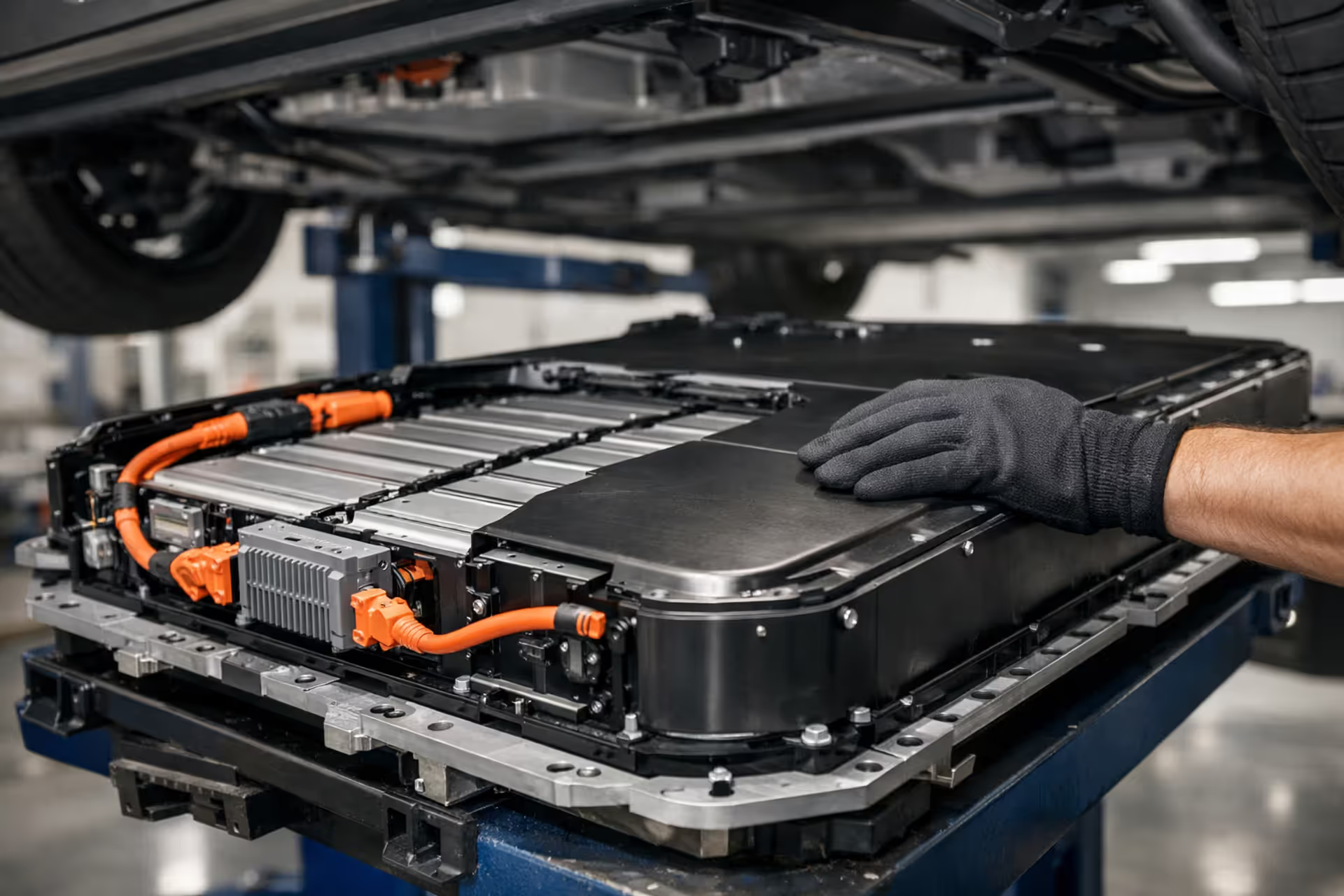
Close-up of an EV battery pack being inspected by a technician on a service lift in a modern dealership bay
EV Battery Warranty Explained: What's Covered and How to Protect Your Investment

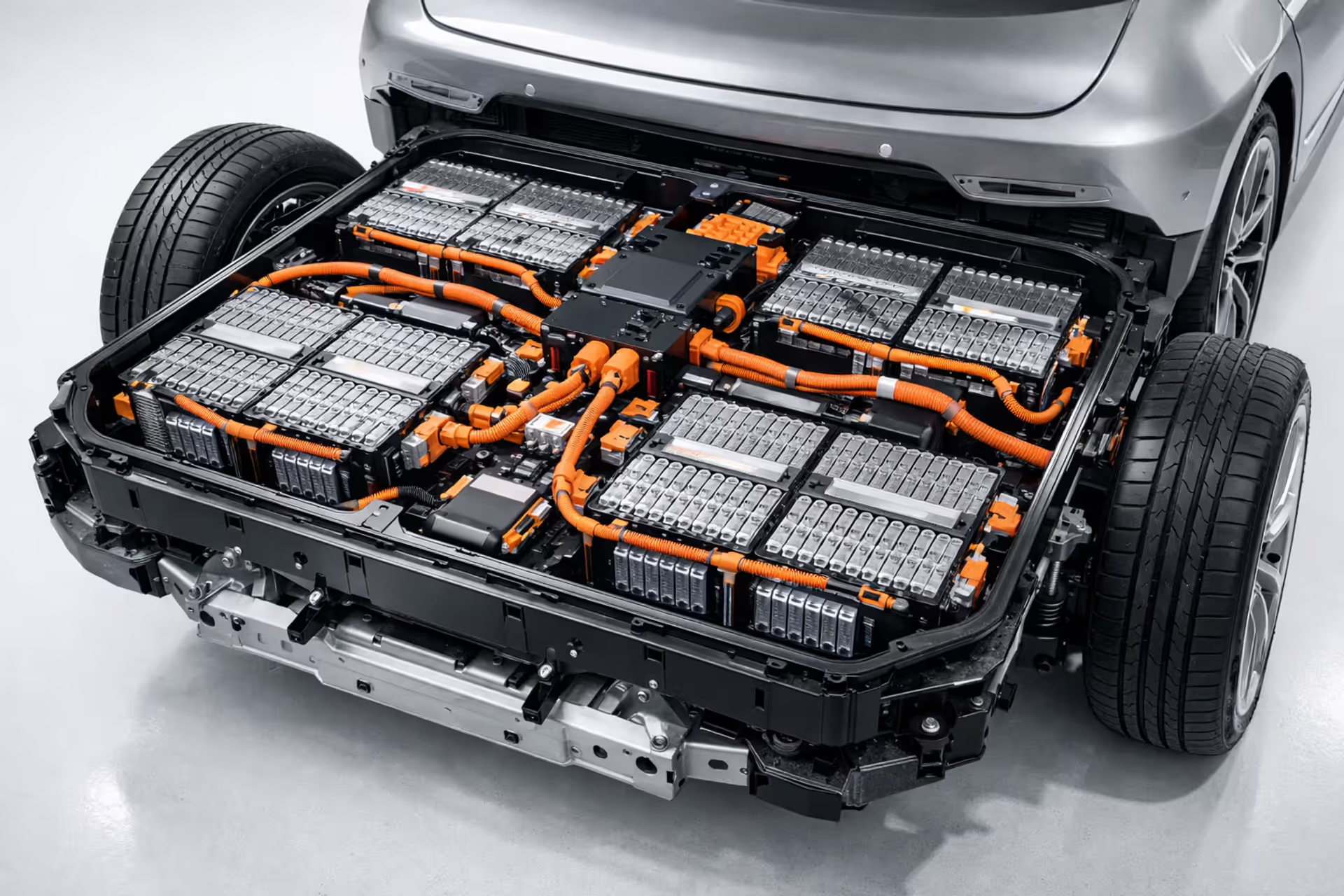
Electric vehicle batteries represent the single most expensive component in your car—often accounting for 30-40% of the vehicle's total cost. Understanding your warranty isn't just about legal protection; it's about knowing whether you'll face a $15,000 replacement bill or a manufacturer-covered repair five years down the road.
Most EV buyers focus on range and charging speed during the purchase process. The warranty terms often get a quick glance at best. That oversight can prove costly when your battery's performance starts declining and you discover certain driving habits have invalidated your coverage.
How EV Battery Warranties Differ From Standard Vehicle Warranties
When you purchase an electric vehicle, you're actually getting two distinct warranty packages. The standard bumper-to-bumper warranty covers most vehicle components for three to five years, similar to conventional cars. Your battery pack, however, operates under a completely separate agreement with significantly longer coverage.
Manufacturers extend battery warranties for two practical reasons. First, federal regulations mandate minimum coverage periods for emission-related components, and EV batteries fall into this category. Second, early battery failures would devastate both the company's finances and consumer confidence in electric vehicles. A single battery replacement outside warranty could cost more than two years of car payments.
Author: Lena Prescott;
Source: shafer-motorsports.com
The dual structure creates confusion at service centers. Your infotainment system failing after four years? You're likely paying out of pocket. Battery capacity dropping below warranty thresholds after seven years? That's covered. The same vehicle, drastically different outcomes depending on which component fails.
This separation also affects how claims get processed. Bumper-to-bumper issues typically get resolved quickly at any authorized dealer. Battery warranty claims trigger diagnostic protocols, data downloads, and sometimes manufacturer-level review before approval. Expect weeks, not days.
What Capacity Guarantees Actually Mean in Your Warranty
Every battery warranty includes a capacity guarantee, but the terminology can mislead buyers. When Hyundai promises your battery will retain "70% capacity" after eight years, they're not talking about your driving range.
Capacity guarantees reference State of Health (SOH)—a measurement comparing your battery's current maximum charge to its original factory specification. A battery that held 75 kWh when new might degrade to 52.5 kWh and still meet a 70% SOH threshold. Your actual driving range, however, depends on dozens of variables: temperature, driving speed, terrain, cabin heating, and tire pressure.
Here's where owners get frustrated. Your EV might have delivered 300 miles per charge when new. After four years, you're getting 215 miles under the same conditions—a 28% range reduction. You file a warranty claim, confident you're below the 70% threshold. The dealer runs diagnostics and reports your battery shows 72% SOH. Claim denied.
The gap exists because efficiency losses affect range beyond pure battery capacity. Motor efficiency, battery management system calibration, and even increased vehicle weight from added features in newer software updates all chip away at your miles per charge.
"Most EV owners don't realize that warranty capacity measurements happen under controlled laboratory conditions, not real-world driving scenarios. We've seen batteries test at 75% SOH that deliver barely 65% of their original real-world range. That's not fraud—it's the difference between theoretical capacity and practical performance." — Dr. Sarah Chen, Senior Battery Testing Engineer, Consumer Reports Automotive Lab
— Lena Prescott
Reading the Fine Print: Minimum Capacity Retention Standards
The 70% threshold has become an industry standard, but it's not universal. Some luxury manufacturers guarantee 75%, while a few budget-focused brands drop to 65%. These differences matter enormously over time.
Consider two vehicles, each with an 80 kWh battery when new. Vehicle A guarantees 70% (56 kWh minimum), while Vehicle B guarantees 65% (52 kWh minimum). That 4 kWh difference translates to roughly 12-16 miles of range—enough to determine whether you make it home or need an emergency charging stop.
Manufacturers also specify how they'll measure capacity. Some use multiple charge-discharge cycles at the dealership. Others pull data from your battery management system's historical records. A few require sending battery data to engineering teams for analysis. The measurement method affects how quickly your claim gets processed and whether borderline cases get approved.
Watch for warranty language about "normal use" conditions. Your battery might test at 68% SOH, but if the manufacturer determines you regularly fast-charged to 100% in extreme heat, they may argue accelerated degradation falls outside normal parameters. The capacity guarantee becomes meaningless if your usage pattern voids the protection.
Coverage Duration: Years vs. Miles in Battery Warranties
Author: Lena Prescott;
Source: shafer-motorsports.com
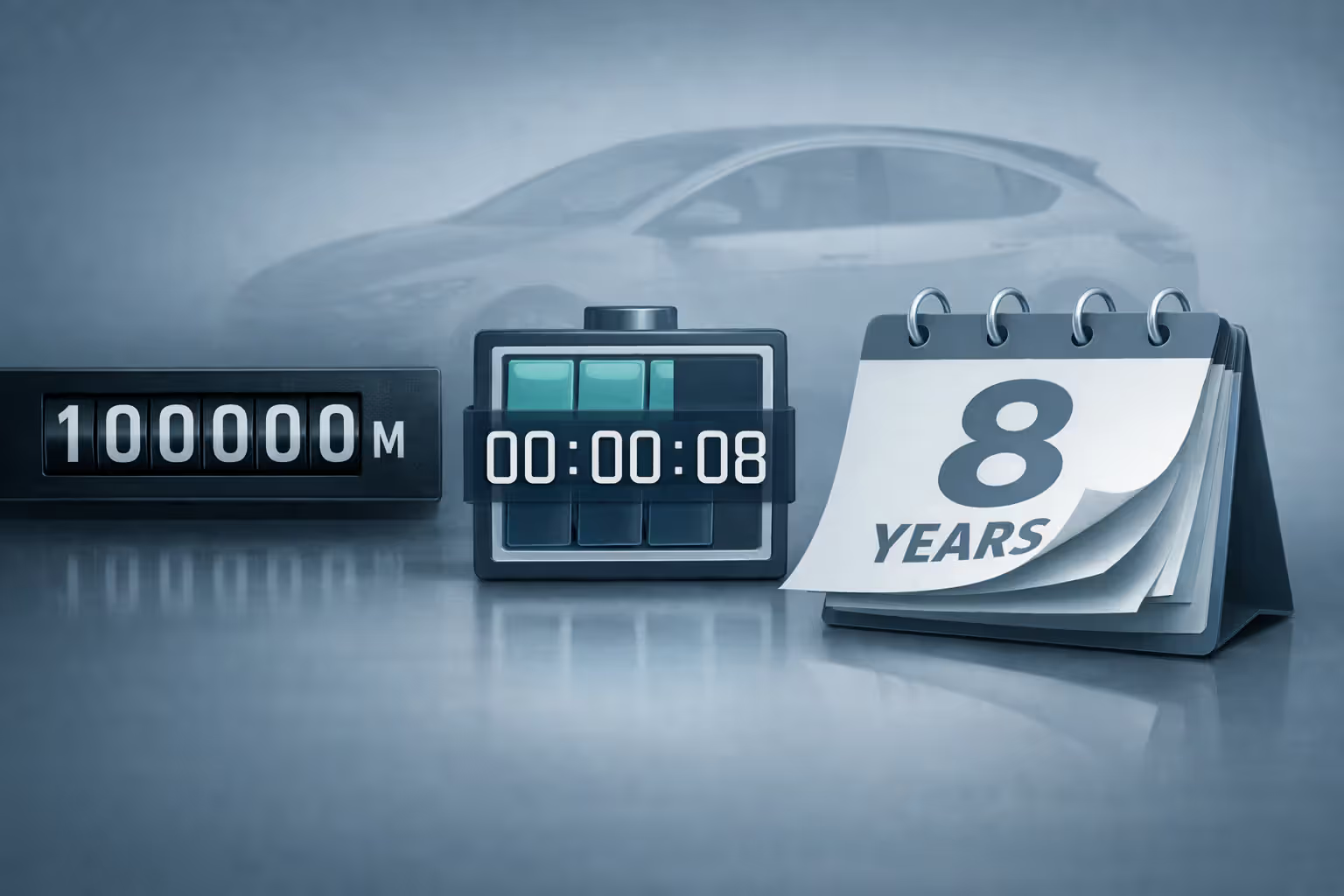
The baseline battery warranty across most manufacturers spans eight years or 100,000 miles, whichever arrives first. This standard emerged from California Air Resources Board regulations requiring minimum coverage for zero-emission vehicle components. Other states adopted similar rules, effectively creating a national baseline.
Some manufacturers exceed minimums significantly. Hyundai and Kia offer lifetime battery warranties on certain models (with conditions). Tesla provides eight years with unlimited mileage on Long Range variants. Nissan, after early Leaf battery issues, now guarantees batteries for eight years/100,000 miles.
State-specific mandates create coverage variations. California requires ten years or 150,000 miles for battery warranties on vehicles sold in-state. If you purchased your EV in California but moved to Texas, your original California-compliant warranty follows the vehicle. Buyers in states without enhanced mandates sometimes travel to California to purchase EVs specifically for better warranty terms.
The years-versus-miles structure penalizes high-mileage drivers. Someone driving 25,000 miles annually hits 100,000 miles in four years—with four years of time-based coverage unused. Meanwhile, a driver covering 8,000 miles yearly reaches eight years with 36,000 miles of mileage-based coverage unused. Manufacturers designed this structure knowing most drivers fall somewhere in the middle.
After warranty expiration, you're facing market rates for battery service. A full pack replacement ranges from $5,000 to $20,000 depending on the vehicle. Some manufacturers offer discounted post-warranty battery programs, but these aren't guaranteed and vary by region.
| Manufacturer | Warranty Period (Years/Miles) | Capacity Retention Guarantee | Transferable to 2nd Owner |
| Tesla | 8 years / 100,000–150,000 mi* | 70% | Yes, remainder of term |
| Chevrolet | 8 years / 100,000 mi | 60% | Yes, full term |
| Ford | 8 years / 100,000 mi | 70% | Yes, full term |
| Hyundai | 10 years / 100,000 mi | 70% | Yes, full term |
| Nissan | 8 years / 100,000 mi | 75%** | Yes, full term |
| Volkswagen | 8 years / 100,000 mi | 70% | Yes, full term |
| Rivian | 8 years / 175,000 mi | 70% | Yes, remainder of term |
| BMW | 8 years / 100,000 mi | 70% | Yes, full term |
Varies by model; Long Range and Performance models include higher mileage limits
*Applies to newer Ariya and updated Leaf models; earlier Leaf models had 66.67% threshold
Common Exclusions That Void Your Battery Warranty
Warranty exclusions represent the most overlooked aspect of EV battery protection. Manufacturers include numerous conditions that can invalidate coverage entirely, often without clear disclosure at purchase.
Salvage or rebuilt titles immediately void most battery warranties. If your EV suffers flood damage, gets stolen and recovered, or experiences structural damage requiring extensive repairs, expect the battery warranty to disappear regardless of the battery's condition. This dramatically affects resale values for EVs with salvage history.
Commercial use creates another exclusion category. Using your personal EV for rideshare services, delivery work, or business purposes beyond occasional commuting can void coverage. The definition of "commercial use" varies by manufacturer. Some allow rideshare with restrictions; others consider any fare-paying passenger transport as commercial operation.
Aftermarket modifications to charging systems, battery cooling, or power management void warranties universally. Installing a third-party battery management system to access additional range might seem appealing, but manufacturers will deny any subsequent warranty claims. Even modifications unrelated to the battery—like suspension lifts or oversized tires—can void coverage if the manufacturer argues they increased battery stress.
Charging habits rarely void warranties outright, but they create gray areas. Repeatedly charging to 100% and depleting to 0% accelerates degradation. If your battery fails prematurely and data logs show extreme charging patterns, manufacturers may deny claims arguing abuse rather than defect. The warranty covers defects, not wear from aggressive use.
Collision damage exclusions seem obvious but create complications. If your EV suffers a front-end collision that doesn't directly impact the battery, but the accident damages cooling systems or battery management wiring, expect warranty disputes. Manufacturers often argue that post-accident battery issues stem from collision damage, not manufacturing defects.
Software update compliance has emerged as a newer exclusion. Some manufacturers require owners to install battery management software updates within specific timeframes. Missing these updates can void warranty coverage, even if the updates were never clearly communicated. Always respond to manufacturer software update notifications promptly.
The warranty is only as good as the owner’s understanding of it. I’ve seen countless cases where people assumed they were covered, only to learn that a single modification or a pattern of misuse gave the manufacturer grounds to deny the claim entirely
— Robert Llewellyn, EV advocate, presenter of Fully Charged Show
When and How to File a Battery Degradation Claim
Filing a successful battery warranty claim requires documentation and patience. The process typically takes three to six weeks from initial complaint to resolution, assuming straightforward approval.
Start by monitoring your battery's performance through the vehicle's onboard systems. Most EVs display State of Health percentages or provide battery health reports through companion apps. When you notice capacity dropping near warranty thresholds, begin documenting charge cycles, range performance, and charging patterns. Screenshot data regularly.
Schedule a diagnostic appointment at an authorized dealer once you suspect warranty-qualifying degradation. Avoid independent mechanics for this initial assessment—manufacturers only accept diagnostics from authorized service centers. Explain your concerns specifically: "My battery appears to have degraded below the warranty threshold" works better than "My range seems lower."
Author: Lena Prescott;
Source: shafer-motorsports.com
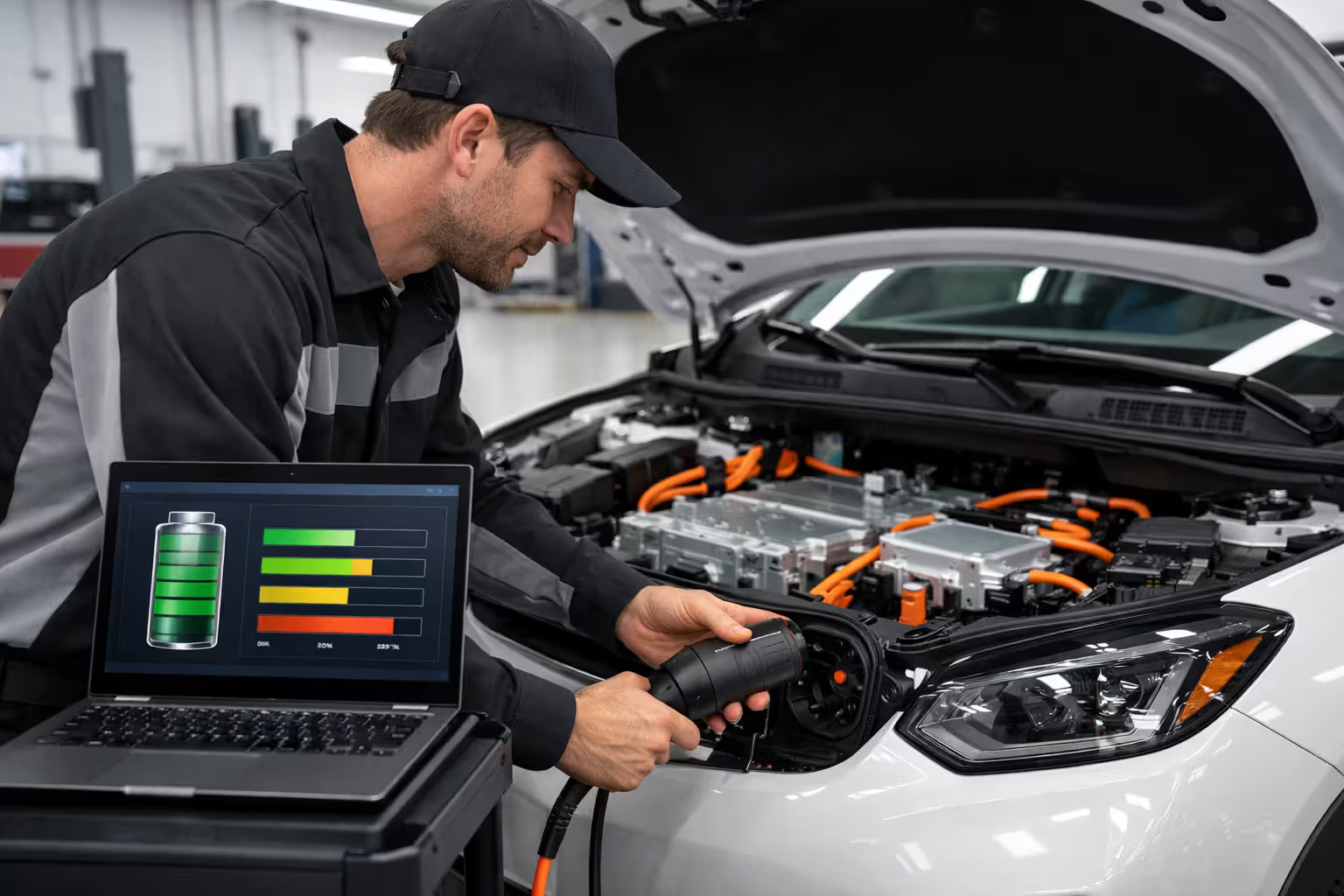
The dealer will connect diagnostic equipment and run battery health tests. This process can take several hours. They'll perform multiple charge-discharge cycles, analyze cell voltage balance, and review historical data from your battery management system. Some manufacturers require uploading this data to engineering teams for remote analysis.
If initial diagnostics show borderline results—say, 71% SOH when the threshold is 70%—request a second test. Battery capacity measurements can vary based on temperature, recent charging patterns, and testing protocols. A battery tested immediately after fast charging might show different results than one tested after a full overnight charge and rest period.
Manufacturers face a repair-versus-replacement decision when approving claims. Full battery pack replacements cost them $8,000-$15,000. If only a few cell modules show degradation, they'll replace individual modules rather than the entire pack. Module replacement restores capacity but creates batteries with mixed-age components, potentially affecting long-term reliability.
Expect rental car coverage during repairs, but confirm this beforehand. Battery replacements require one to three weeks depending on parts availability. Some manufacturers provide loaners; others offer rental reimbursement with daily caps. Get authorization details in writing before approving repairs.
If your claim gets denied, request detailed written explanation of the denial reasons. Manufacturers must specify whether the denial stems from capacity measurements above thresholds, exclusionary conditions, or other factors. This documentation becomes essential if you escalate to manufacturer customer service or pursue arbitration.
Transferability and Protecting Your Warranty During Ownership Changes
Battery warranty transferability significantly affects EV resale values. A three-year-old EV with five years of battery warranty remaining becomes far more attractive to used buyers than one with expired coverage.
Most manufacturers transfer battery warranties to subsequent owners for the full original term. If you purchase a used EV with four years and 60,000 miles remaining on its battery warranty, you receive that full coverage. This differs from some luxury brands' bumper-to-bumper warranties that only apply to original owners.
Transfer processes vary by manufacturer. Some transfers happen automatically with title changes—no action required. Others require formal transfer applications submitted within 30-90 days of purchase. Missing these deadlines can result in warranty loss despite the vehicle technically qualifying for coverage.
In the used EV market, a transferable battery warranty isn’t just a nice bonus — it’s the single biggest factor that separates a smart purchase from a financial gamble
— Sandy Munro, CEO of Munro & Associates, automotive engineering consultancy
Certified pre-owned (CPO) programs often enhance battery warranties beyond original terms. A manufacturer's CPO program might extend battery coverage by two years or add 25,000 miles to remaining limits. These enhancements make CPO EVs significantly more valuable than private-party purchases of identical vehicles.
Documentation becomes critical during ownership transfers. Maintain all service records, software update confirmations, and any battery-related service visits. New owners need this history to demonstrate proper maintenance if filing future warranty claims. Missing service records can lead to claim denials based on unverifiable maintenance history.
Private-party sales create verification challenges. Buyers should request written warranty confirmation from the manufacturer before completing purchase. Some manufacturers provide online VIN lookup tools showing remaining warranty coverage. Others require contacting customer service directly. Never rely solely on seller representations about remaining coverage.
Leased vehicles present unique situations. Lease-end battery condition can affect disposition fees. If your leased EV's battery degrades below warranty thresholds during the lease, file a warranty claim before lease return. Otherwise, the leasing company might charge you for diminished value despite the degradation being warranty-covered.
Frequently Asked Questions About EV Battery Warranties
Protecting Your Investment Beyond the Warranty Period
Battery warranties provide essential protection, but they represent minimum manufacturer obligations, not optimal battery care. Maximizing battery life requires understanding how your daily habits affect long-term health.
Temperature extremes cause more battery degradation than any other factor. Parking in direct summer sun with a full charge accelerates capacity loss. If possible, park in shade or garages during hot months. In winter, precondition your battery while still plugged in rather than using battery power to warm it.
Charge timing matters more than most owners realize. Charging to 100% isn't inherently damaging, but leaving the battery at 100% for extended periods is. If you need a full charge for a long trip, time your charging to complete shortly before departure. For daily use, most manufacturers recommend charging to 80-90% maximum.
Depth of discharge affects cycle life. Regularly depleting your battery to single-digit percentages before recharging causes more wear than keeping it between 20-80%. Plan your charging to avoid routine deep discharges. The occasional road trip that drains your battery won't cause problems, but making it a weekly pattern will.
Your warranty provides a safety net, but treating it as your primary battery protection strategy means you're already accepting significant degradation. The goal isn't to barely stay above warranty thresholds—it's to maintain maximum capacity throughout your ownership period.
Understanding your EV battery warranty transforms it from a legal document you signed at purchase into a practical tool for protecting your largest vehicle investment. Know your thresholds, understand your exclusions, document your maintenance, and recognize when performance drops justify filing a claim. The difference between warranty-covered replacement and a $15,000 out-of-pocket expense often comes down to knowing these details before you need them.
Related Stories
Read more
Read more

The content on Auto Insights is provided for general informational and educational purposes only. It is intended to offer guidance on car buying, vehicle ownership, finance, insurance, EVs, maintenance, accessories, reviews, and related topics, and should not be considered professional financial, legal, insurance, mechanical, or investment advice.
All information, tools, calculators, comparisons, and recommendations presented on this website are for general guidance only. Individual financial situations, driving habits, vehicle conditions, insurance policies, and market factors vary, and actual results or costs may differ from estimates provided.
Auto Insights makes no guarantees regarding accuracy, completeness, or current applicability of the information, as automotive markets, regulations, incentives, interest rates, and vehicle specifications may change over time.