
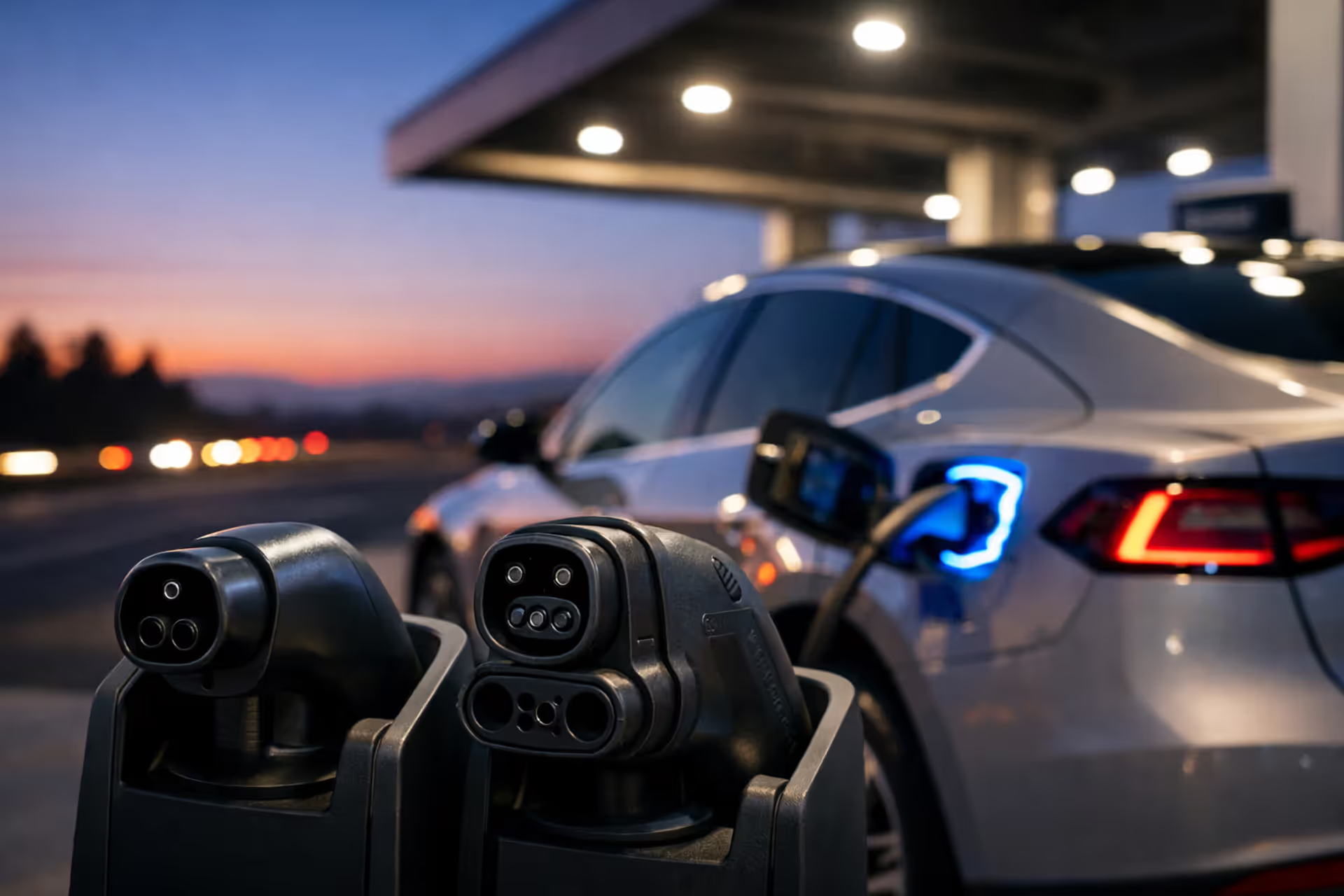
Two EV charging connectors — NACS and CCS1 — side by side at a highway fast-charging station with an electric vehicle plugged in at dusk
EV Charging Standards in the USA: Understanding Connector Types and Compatibility

Pick the wrong charging connector, and you'll watch Tesla drivers zip through Supercharger stations while you wait for the single functioning CCS unit at a highway rest stop. American EV owners faced exactly this scenario throughout 2024 as Ford, GM, and nearly every other automaker announced they'd ditch the Combined Charging System for Tesla's plug design. You're stuck in the middle of this messy switchover—whether you bought last year or you're shopping today.
How EV Charging Connectors Work in America
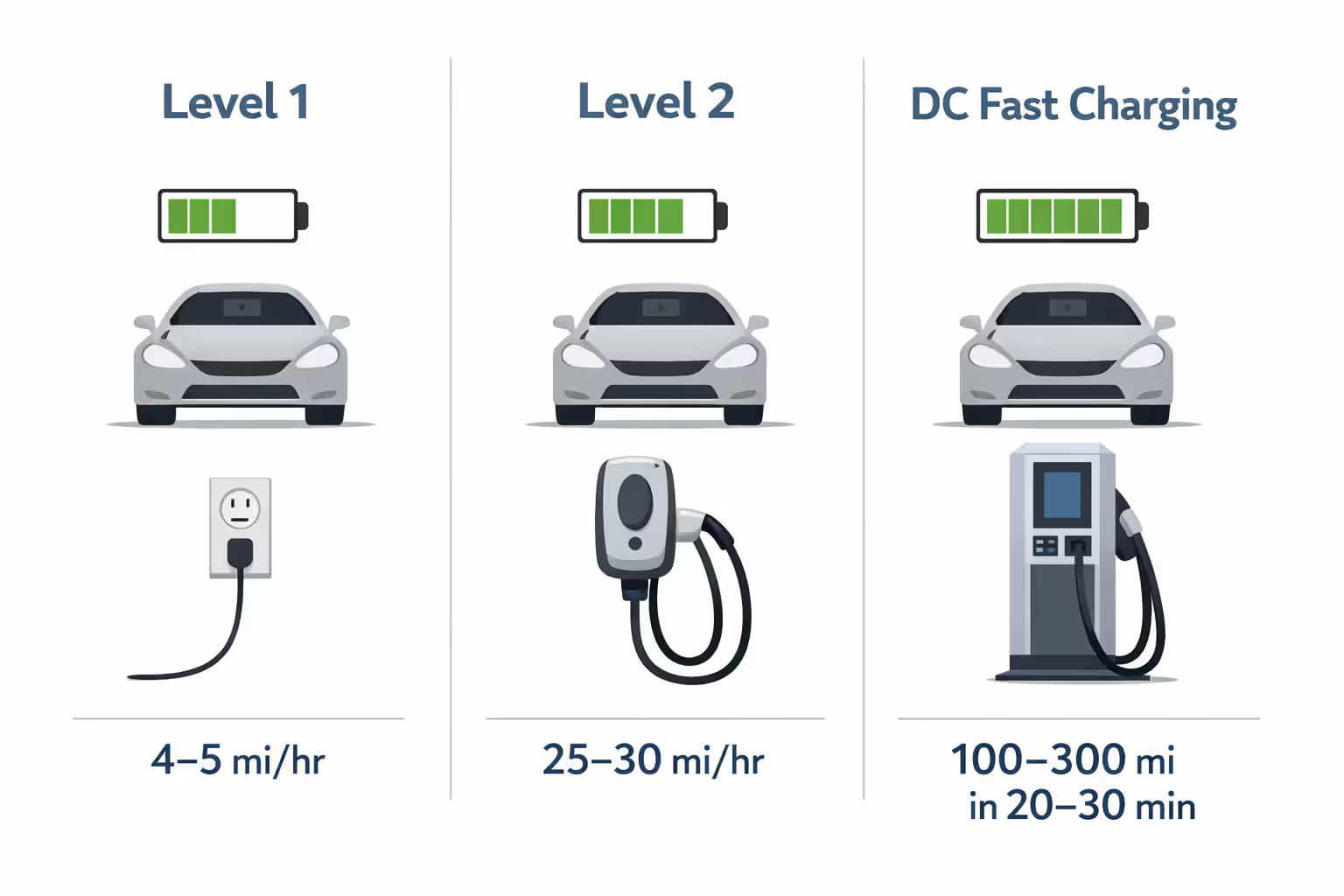
Your EV accepts electricity through three power tiers that work completely differently. Plug into a regular wall outlet (Level 1), and you'll crawl along at 4-5 miles of range per hour. Fine if you drive 30 miles daily and park overnight, useless for almost everyone else.
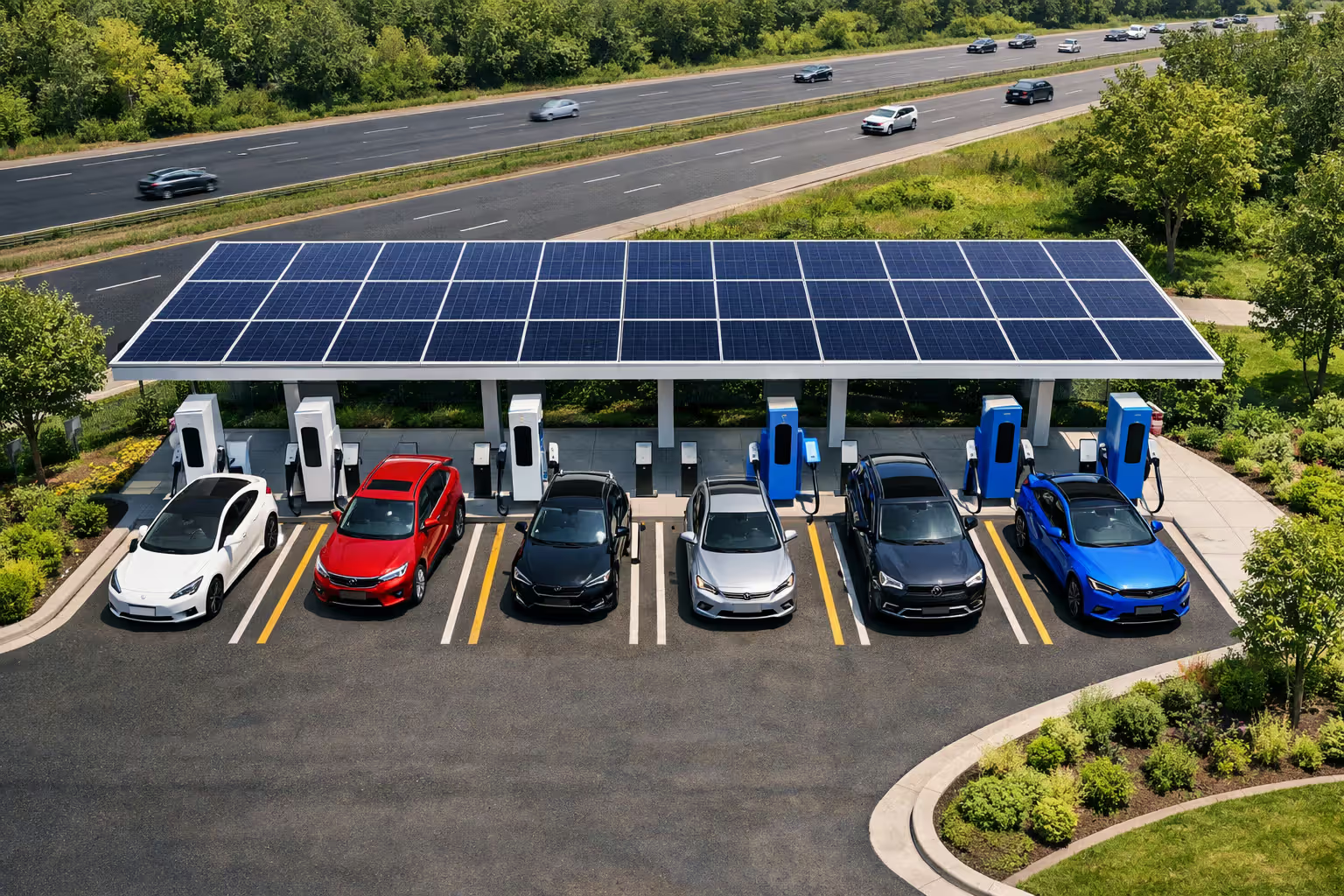
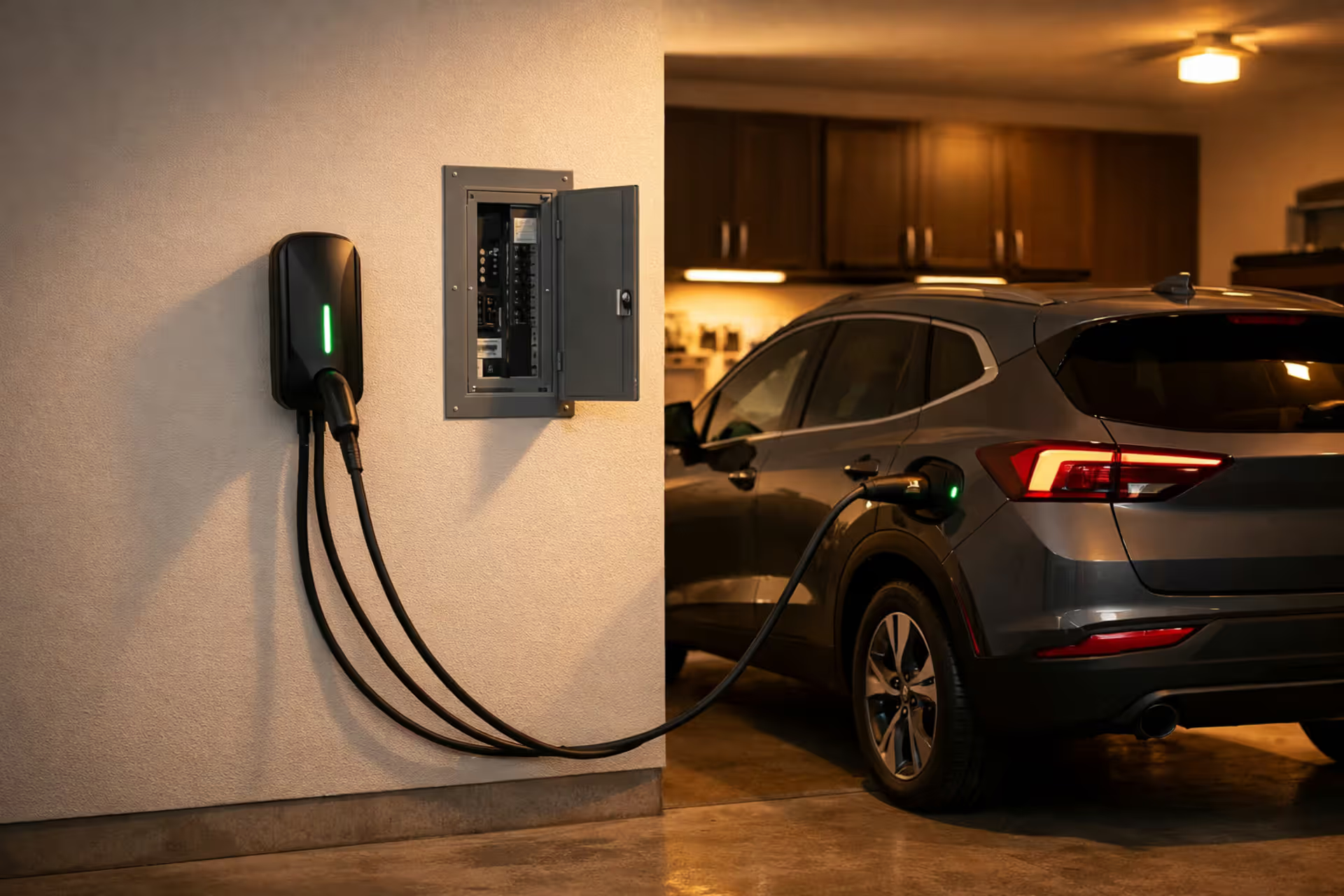
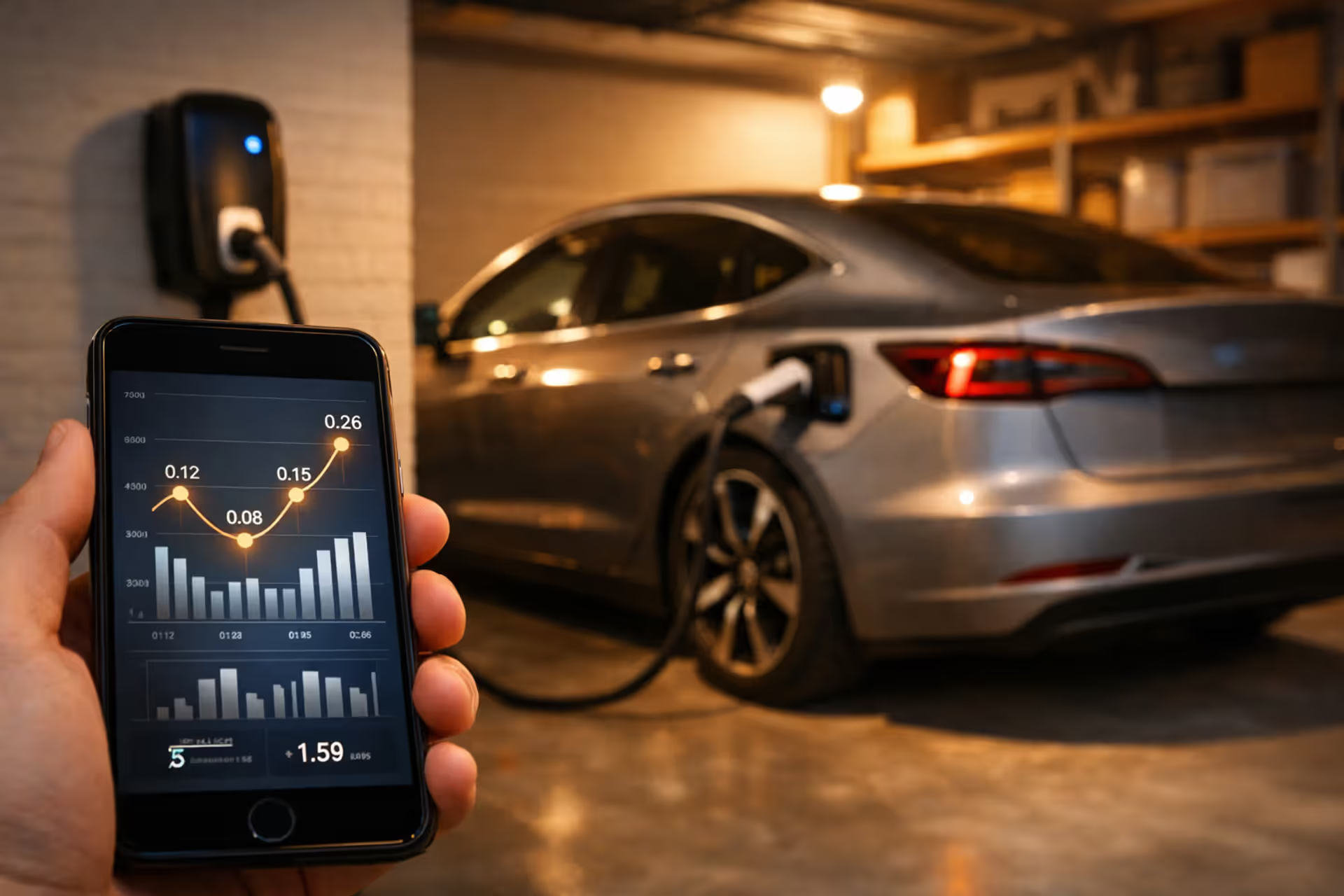
Step up to 240-volt Level 2—same circuit that runs your electric dryer—and you'll grab 25-30 miles per hour. These stations populate mall parking lots, hotel garages, and workplace lots. Install one at home for $500-2,000, and you'll wake up to a full battery most mornings.
Author: Brianna Lowell;
Source: shafer-motorsports.com
DC fast charging abandons your car's built-in converter and shoots high-voltage current directly into the battery. You'll recover 100-300 miles in 20-30 minutes, depending on your vehicle and the station's output. This is where connector wars actually matter. Show up with the wrong plug, and you're walking to the next town.
Why did we end up with competing standards? Nobody coordinated. Tesla built Superchargers starting in 2012 because public fast-charging didn't exist yet. Traditional automakers grouped around CCS as their "open" alternative. Nissan went rogue with CHAdeMO. Everyone assumed their system would win. Nobody won—drivers lost.
The lack of a single charging standard has been the EV industry’s most self-inflicted wound. Consumers don’t care about connector politics — they care about plugging in and driving away
— Tony Seba
CCS vs NACS: Breaking Down the Two Dominant Connector Types
What Is the Combined Charging System (CCS1)?
CCS stacks a standard J1772 plug on top of two extra pins for DC power. One inlet handles both your overnight Level 2 sessions and highway fast charging up to 350 kW—though you'll typically see 50-150 kW at actual stations. The North American CCS1 version differs from Europe's CCS2 (because of course it does).
GM, Ford, VW, Hyundai, Kia, and virtually every non-Tesla brand installed CCS1 from 2012 through 2024. Electrify America, EVgo, and ChargePoint built thousands of CCS-equipped stations to support them. The connector measures about 2 inches wide and 3 inches tall. It's bulky enough that you'll need both hands to wrangle it into place, especially in winter with gloves on.
What Is the North American Charging Standard (NACS/Tesla)?
Tesla's proprietary plug—recently rebranded NACS after the company opened the design—looks like a thick permanent marker. Same compact port handles AC charging and DC fast charging up to 250 kW at V3 Superchargers, with V4 stations pushing 350 kW. Tesla released the connector specs in 2022, and SAE International formalized it as standard J3400 in 2024.
That sleek design isn't just aesthetics. NACS weighs less, clicks in one-handed, and has zero moving parts to jam or corrode. More importantly, Tesla built over 2,000 Supercharger stations nationally—about 60% of all DC fast chargers in America. They've also maintained the most reliable network by uptime percentage and station density.
Technical Differences That Matter to Drivers
Raw power delivery barely differs between standards. Both push enough electrons for modern EVs. What separates them is the surrounding ecosystem. Tesla integrated everything: vehicle, charger, and payment system shake hands automatically. You plug in, charging starts, billing happens silently through your account.
CCS stations demand more work. Open an app. Scan a QR code. Swipe your credit card. Tap the screen. Sometimes all of the above. The most common CCS complaint isn't the connector itself—it's payment terminals that don't work, cars and chargers that won't communicate, and stations showing "available" that refuse to deliver power when you plug in.
Here's how the major standards actually compare when you're standing in a parking lot deciding whether you can make it home:
| Standard | Peak Power Output | Connector Design Features | Compatible Vehicles | Share of US Fast Chargers | Adapter Options |
| CCS1 | 350 kW maximum, usually 50-150 kW at stations | Two-piece design, separate AC and DC pins, requires two-handed operation | Most non-Tesla EVs manufactured 2012-2024 | Roughly 40% of DC fast charging locations | NACS-to-CCS available from some automakers |
| NACS (Tesla) | 250 kW at V3 stations, 350 kW at newer V4 locations | Single compact connector, one-handed operation, no moving parts | All Tesla vehicles, 2025+ models from most brands | About 60% of DC fast charging sites nationwide | CCS-to-NACS widely sold, $150-300 range |
| CHAdeMO | 62.5 kW theoretical, typically 50 kW delivered | Round 10-pin design, bulky cable assembly | Nissan Leaf, discontinued on new vehicles | Under 5% and shrinking fast | Available but rarely needed anymore |
| J1772 | 19.2 kW maximum, Level 2 AC only | Five-pin AC-only design, universal standard | Every EV for Level 2 charging | Nearly all Level 2 public stations | Tesla vehicles include J1772 adapter |
Which EVs Use Which Charging Standard in 2024–2025?
Every Tesla manufactured since 2012—Model S, 3, X, Y, Cybertruck—uses NACS exclusively. Your Tesla ships with a J1772 adapter for Level 2 charging at non-Tesla stations. You don't get a CCS adapter unless you buy one separately.
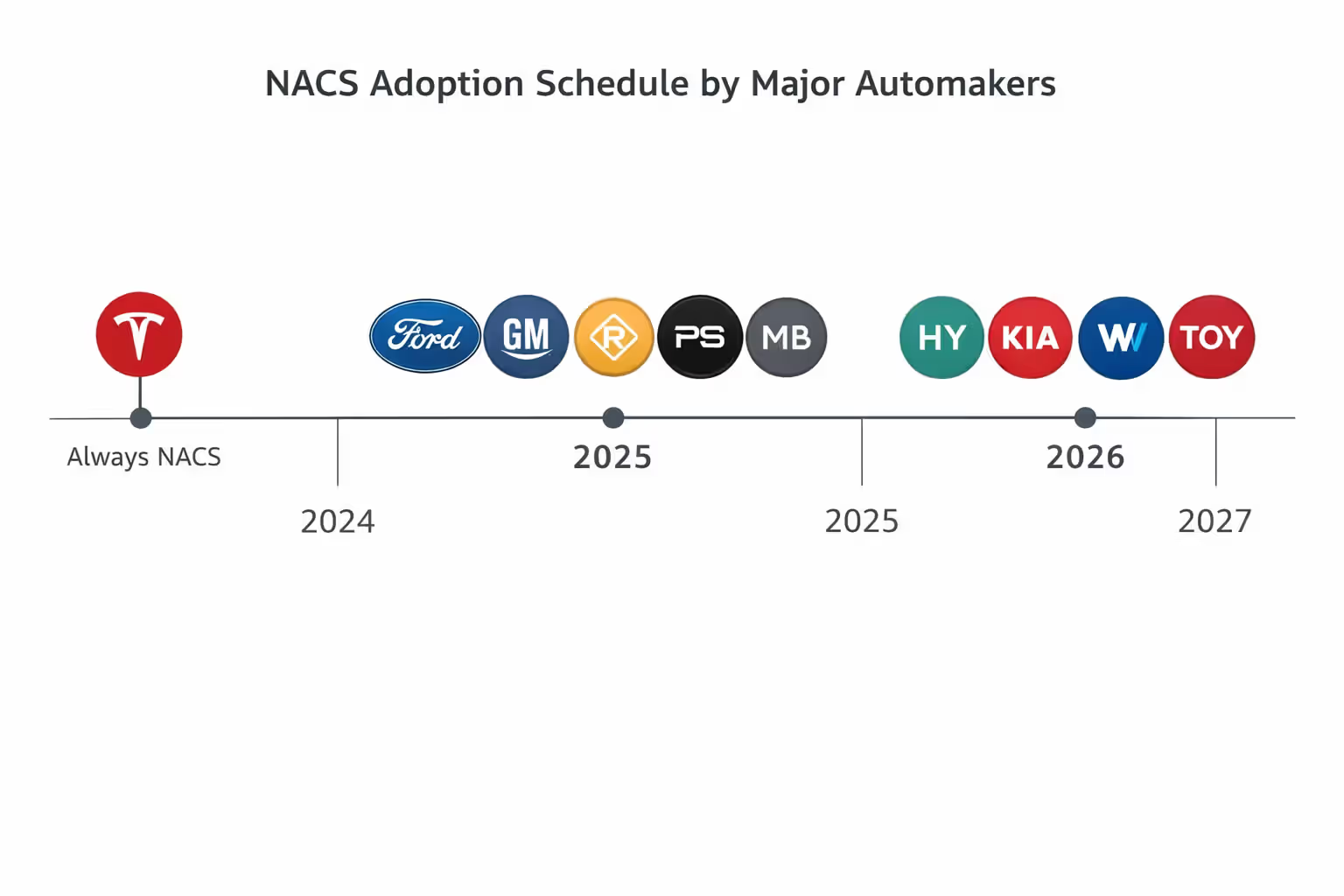
Ford jumped first on NACS adoption. The 2025 F-150 Lightning, Mustang Mach-E, and E-Transit switched mid-production in 2024. Ford promised free NACS adapters to existing CCS vehicle owners starting spring 2024, though shipments dragged for months and some adapters got recalled when they overheated during charging sessions.
GM followed the same pattern. Their 2025 Blazer EV, Equinox EV, Silverado EV, Sierra EV, and Lyriq all feature NACS ports now. GM started distributing adapters to current Ultium-platform owners mid-2024. Rivian, Polestar, Volvo, and Mercedes committed to NACS for their 2025 lineups, with adapter programs covering existing customers.
Hyundai, Kia, BMW, VW, Audi, Porsche, and Toyota pushed NACS adoption to 2026 model years and beyond. They're still selling CCS-equipped vehicles through 2025, creating a messy transition where both standards sit on dealer lots simultaneously.
Author: Brianna Lowell;
Source: shafer-motorsports.com
The Nissan Leaf clings to CHAdeMO, though Nissan confirmed the next-generation model will finally adopt NACS. Shopping used EVs? Check model years carefully—that 2024 crossover likely has CCS, while its 2025 twin might have switched to NACS.
Common Charging Compatibility Problems EV Drivers Face
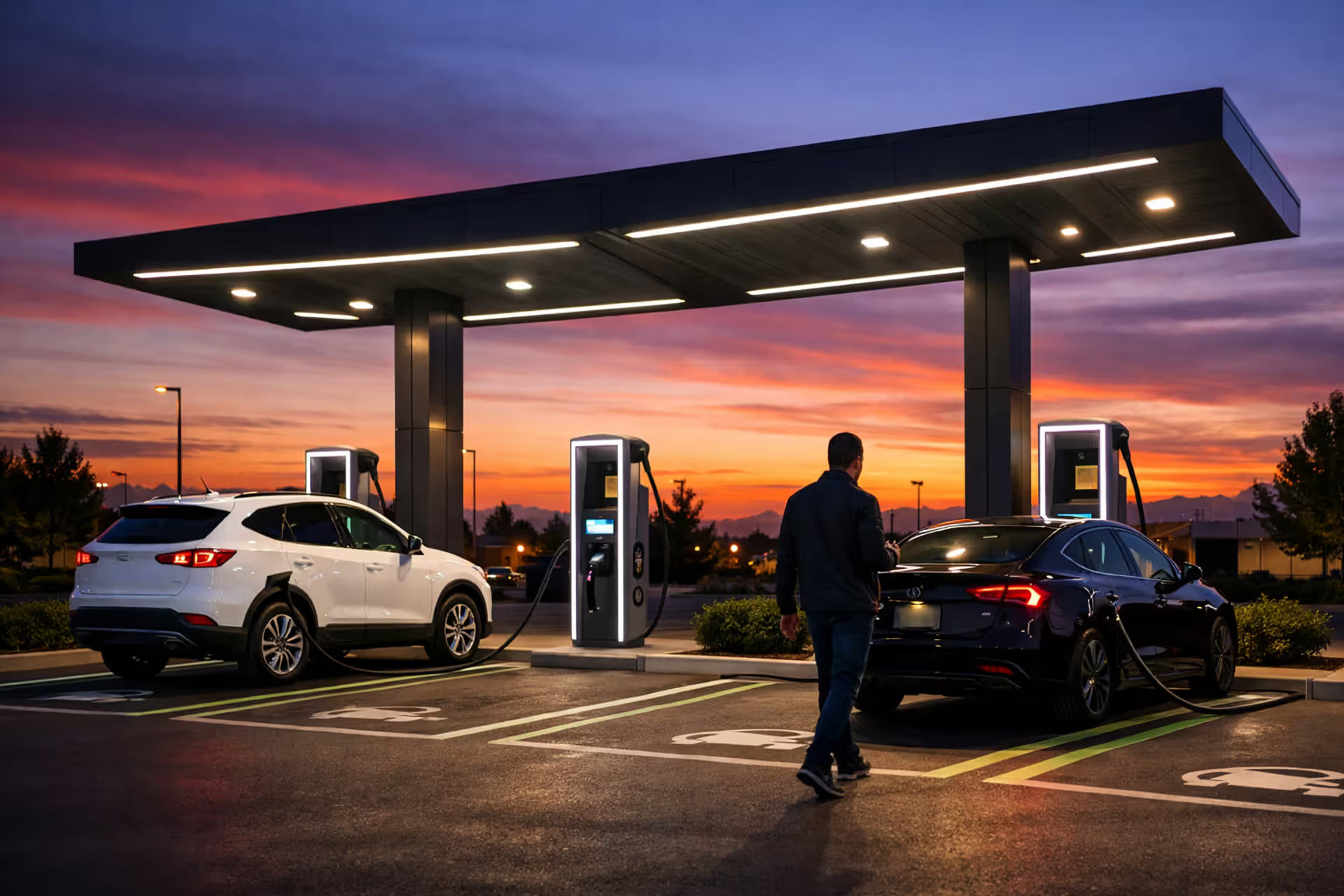
Picture this: you're piloting a 2023 Hyundai Ioniq 5 with CCS through eastern Montana. Your app shows a ChargePoint station 15 miles ahead. You arrive to find both CCS cables occupied while four empty Tesla stalls mock you. You wait 45 minutes for someone to finish. This happens daily across America as Tesla's network dwarfs competitors, yet stays locked away from most non-Tesla vehicles without adapters.
Payment systems create problems that have nothing to do with physical connectors. Some networks force you to download apps and create accounts before your first session. Others accept credit cards at the station but charge premium per-minute rates compared to membership pricing. You'll encounter broken card readers, stations that won't recognize your car, and chargers that authorize payment then fail to deliver electricity.
Regional gaps multiply these headaches. Interstate 70 across Kansas offers sparse CCS coverage while Superchargers appear every 75-100 miles. Northern New England, the Dakotas, and Mountain West states show similar patterns. Drive a CCS vehicle, and route planning means checking multiple apps while building backup options. Tesla drivers punch in their destination and let the car handle charging stops automatically.
Standards don’t win by being technically superior. They win by being everywhere. Tesla understood that infrastructure is the product — the car is just the device that uses it
— Horace Dediu
Cold weather exposes another compatibility gap. Some CCS stations lack battery preconditioning protocols, forcing your vehicle to charge slowly when the pack is cold. Tesla Superchargers communicate with Tesla vehicles to warm the battery while you're driving to the station, maximizing charging speed on arrival. Third-party networks are adding this capability, but implementation varies wildly by station age and operator.
Adapter Solutions: How to Charge Any EV Anywhere
CCS to NACS Adapters (specifications, availability, cost)
Own a CCS vehicle? A CCS-to-NACS adapter unlocks Tesla's Supercharger network—but only at locations Tesla has opened to non-Tesla vehicles. As of early 2025, roughly 25% of Supercharger sites accept non-Tesla EVs through "Magic Dock" systems or open access pilot programs. Tesla keeps expanding this availability, with federal funding rules requiring Supercharger stations built with NEVI grants to accommodate CCS vehicles.
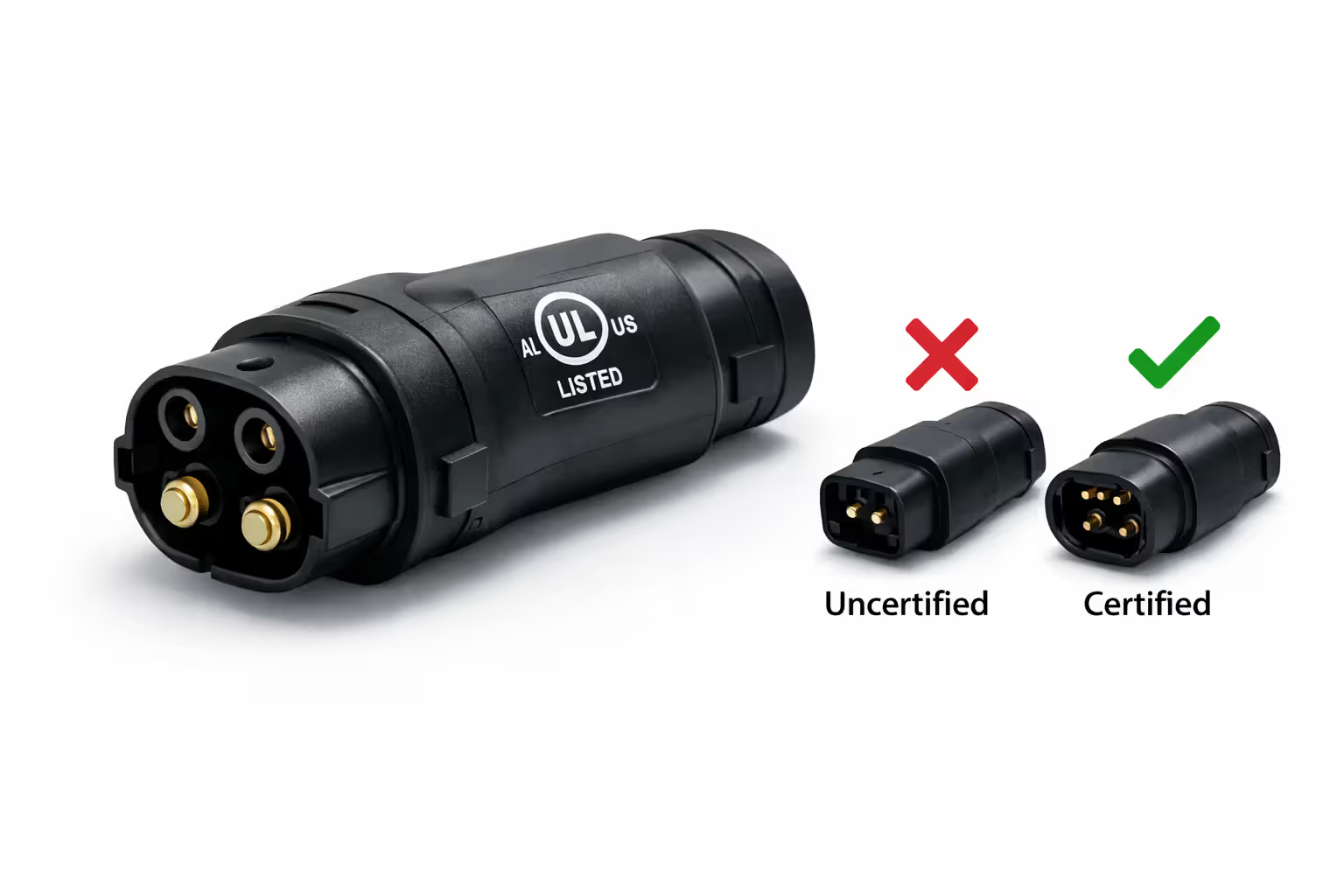
Quality adapters run $150-250 and must safely handle 500+ amps at 1,000 volts. The A2Z Typhoon Pro and Lectron VORTEX are popular third-party options, both rated for 500A continuous current. These adapters weigh 2-3 pounds thanks to heavy-gauge conductors and cooling requirements. Amazon adapters under $100 typically lack proper certification and may overheat during high-power sessions.
Ford, GM, and Rivian distribute their own adapters to current owners—usually free for early adopters or $200-300 for later requests. These OEM adapters get validation testing with your specific vehicle and typically include warranty coverage. Ford's initial adapter batch faced a recall after reports of reduced speeds and overheating, proving why certification actually matters.
Before buying any adapter, verify it carries UL certification or equivalent safety approval. Check your vehicle manufacturer's compatibility list—some older EVs won't support adapter use due to software limitations. The adapter introduces another failure point in the charging system, so inspect contacts regularly for corrosion or damage.
Author: Brianna Lowell;
Source: shafer-motorsports.com
NACS to CCS Adapters (current limitations)
Tesla owners wanting to use CCS stations face a trickier situation. NACS-to-CCS adapters exist, but Tesla's software initially blocked their use to protect battery warranties and prevent damage from poorly maintained third-party chargers. Tesla started enabling CCS charging on newer vehicles through software updates in 2023, though older Model S and Model X vehicles may not support adapters at all.
TeslaTap and A2Z brands sell NACS-to-CCS adapters for $200-300, but functionality depends on your vehicle's software version and production date. Vehicles manufactured after 2021 generally support CCS charging with adapters, while 2012-2020 vehicles require checking Tesla's compatibility documentation. Even when supported, charging speeds may get limited compared to Supercharger rates.
Most Tesla owners rarely need CCS adapters anyway. Supercharger network density and reliability make third-party stations a backup option rather than a necessity. The exception hits during specific regional trips where Superchargers are sparse or road trips through areas with only CCS infrastructure. In those cases, having an adapter provides insurance even if you rarely plug it in.
Safety and Certification Considerations
Uncertified adapters present genuine fire risks. Fast charging pushes hundreds of amps through conductors, generating serious heat. Cheap adapters use inadequate wire gauges, poor contact materials, or lack thermal management. This leads to resistance heating that damages your vehicle's inlet or the adapter itself. Worst case? Thermal runaway fires.
Look for UL 2251 certification or equivalent testing documentation. The adapter should feel substantial—lightweight units definitely cut corners on conductor sizing. Quality adapters include temperature monitoring and will automatically reduce current if overheating occurs. Some communicate with the vehicle to report their presence and capabilities, allowing the car's systems to monitor the charging session.
Never use an adapter showing melting, discoloration, or damaged contacts. Inspect both your vehicle inlet and adapter pins before every use. If charging speeds seem unusually slow or the adapter feels excessively hot, stop the session immediately. The $100 you save on a cheap adapter isn't worth a $15,000 battery pack replacement or vehicle fire.
What the Infrastructure Transition Means for Your Next EV Purchase
Federal funding through the National Electric Vehicle Infrastructure (NEVI) program throws $5 billion at building charging stations along highway corridors. The program initially required CCS connectors, but new guidance allows NACS as well—effectively mandating dual-standard stations. This means charging infrastructure built through 2027 will support both connector types, preventing obsolescence for CCS vehicles purchased through 2025.
Charging networks are adapting to market shifts. Electrify America announced plans to retrofit existing stations with NACS cables starting in 2025. EVgo and ChargePoint are following similar strategies, updating current locations and equipping new stations with both connector types. This dual-standard approach mirrors gas stations offering regular, plus, and premium—inconvenient but functional during transitions.
Tesla's Supercharger network keeps expanding regardless of connector politics. The company plans to add 10,000+ charging stalls by 2027, with new V4 stations featuring longer cables and Magic Dock systems to accommodate non-Tesla vehicles. This expansion, combined with NEVI-funded stations, should eliminate range anxiety for any EV purchased in 2025, regardless of which connector it uses.
Author: Brianna Lowell;
Source: shafer-motorsports.com
"The transition to NACS represents the first time the North American market has consolidated around a single fast-charging standard," says Sam Abuelsamid, principal analyst at Guidehouse Insights. "By 2027, the connector debate becomes irrelevant for consumers because adapters will be commonplace and nearly all stations will support both standards. The real question is whether charging networks can improve reliability and payment experience to match Tesla's integrated approach."
Should you wait to buy an EV until the transition completes? Depends on your charging patterns. If you primarily charge at home and take occasional road trips on major interstates, today's infrastructure supports either connector type. Adapters fill the gaps. If you regularly drive through rural areas or lack home charging, a Tesla or 2025+ vehicle with native NACS offers better access to reliable fast charging.
Don't let connector anxiety prevent you from buying an EV that otherwise meets your needs. A 2024 CCS vehicle purchased today will charge successfully for its entire useful life. Adapters cost less than two tanks of gas in a comparable SUV. The bigger considerations—vehicle range, pricing, features, dealer support—matter more than which connector plugs into the port.
Frequently Asked Questions About EV Charging Standards
Making Sense of the Charging Landscape
The connector transition creates short-term confusion but long-term simplification. By 2027, nearly all public DC fast chargers will support both CCS and NACS through dual-cable installations or widespread adapter availability. Your vehicle purchase today won't leave you stranded tomorrow, regardless of which connector it uses.
Focus on practical factors instead. Does the vehicle's range match your driving patterns? Can you charge at home overnight? Do charging networks cover your regular routes? The connector type ranks below these fundamental questions. An EV with 200 miles of range and a CCS port serves you better than a 300-mile NACS vehicle if you lack home charging and work near a CCS station.
Infrastructure is improving faster than vehicles turn over anyway. Shopping for an EV in 2025? Both connector types offer workable solutions. Adapters bridge the gap during the transition, and charging networks are racing to deploy dual-standard equipment. The real improvements—faster charging speeds, better payment systems, improved reliability—benefit all drivers regardless of connector politics.
Buy the EV that fits your budget and requirements. The charging infrastructure will accommodate your choice.
Related Stories
Read more
Read more

The content on Auto Insights is provided for general informational and educational purposes only. It is intended to offer guidance on car buying, vehicle ownership, finance, insurance, EVs, maintenance, accessories, reviews, and related topics, and should not be considered professional financial, legal, insurance, mechanical, or investment advice.
All information, tools, calculators, comparisons, and recommendations presented on this website are for general guidance only. Individual financial situations, driving habits, vehicle conditions, insurance policies, and market factors vary, and actual results or costs may differ from estimates provided.
Auto Insights makes no guarantees regarding accuracy, completeness, or current applicability of the information, as automotive markets, regulations, incentives, interest rates, and vehicle specifications may change over time.