
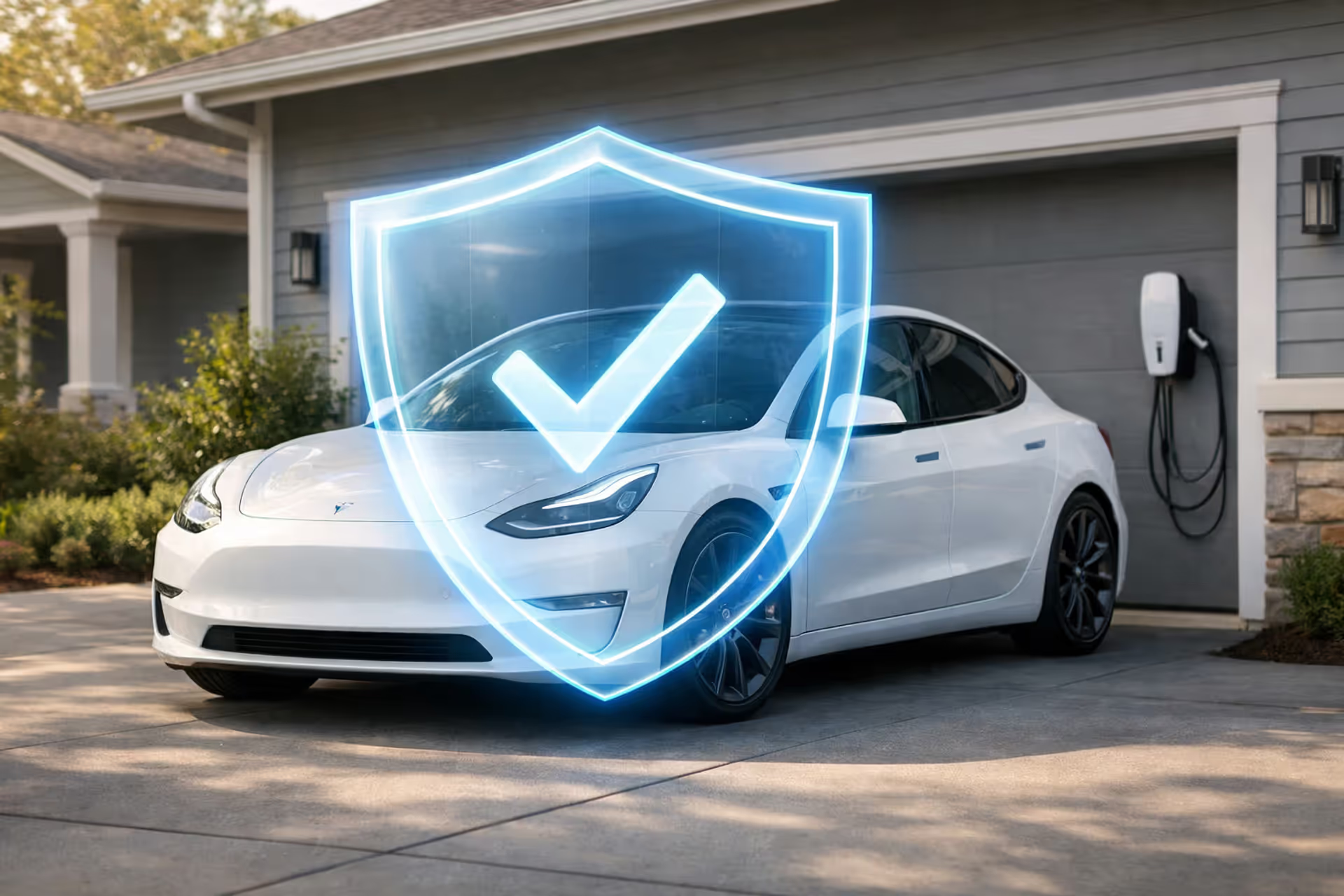
Electric vehicle parked in residential driveway with digital insurance shield overlay and home charging station in background
How EV Insurance Differs from Traditional Auto Coverage: What Drivers Need to Know

You've probably heard that insuring an electric vehicle costs more. What you might not realize is how different the entire claims experience becomes once batteries and high-voltage systems enter the picture.
Here's what typically happens: You're shopping for a Tesla Model 3 or Ford F-150 Lightning. You punch your details into an insurance comparison site. The quote comes back 20-35% higher than what you're paying now for your gas-powered sedan or truck. Your first reaction? Probably that insurers are gouging early adopters.
The reality is more complicated. Battery-powered vehicles break the traditional actuarial models that insurance companies spent decades perfecting. Repair shops need different certifications. Parts come from tightly controlled supply chains. A seemingly minor accident can write off a $50,000 vehicle because nobody wants to risk a damaged battery pack sitting in someone's garage.
Let's dig into what actually drives these costs up—and what coverage mistakes you'll want to avoid.
Why Electric Vehicles Cost More to Insure
Pull up any insurance quote tool and you'll see the pattern immediately. The typical EV owner pays around $2,280 annually for full coverage. Their neighbor with a comparable gas vehicle? About $1,760. That $520 gap represents a 30% premium increase.
Purchase price explains maybe half of this difference. A $55,000 vehicle obviously costs more to replace than a $35,000 one, so comprehensive and collision premiums rise accordingly. But here's the weird part: even budget EVs like the Nissan Leaf carry inflated premiums relative to their sticker price.
The real culprit shows up in claims data. When an EV gets damaged, repairs run 25-40% more expensive than fixing a gas vehicle of similar value. Insurers watched this pattern emerge over the past five years as EV sales climbed and claims accumulated.
Think about what happens after a typical fender-bender. Your gas-powered Honda needs a new bumper, some paint work, maybe a headlight assembly. Three shops can handle the work. Parts arrive in two days. Total damage: $3,500. Repair time: one week.
Now picture the same impact on a Chevy Bolt. The shop needs certified EV technicians because the repair area sits near high-voltage cables. Only one facility within 30 miles has that certification. The bumper must ship from GM—no aftermarket options exist yet. Wait time for parts: three weeks. During those three weeks, you're in a rental car on the insurer's dime. Diagnostic time alone adds $400 because technicians must verify battery system integrity. Final bill: $7,200.
Frequency versus severity creates another pricing puzzle. EV drivers actually file fewer claims overall—about 15% fewer. Advanced driver assistance systems really do prevent accidents. But when accidents happen, the dollar amounts jump 45% higher on average. From an actuarial standpoint, one massive claim outweighs three small ones.
Repair Complexity: The Hidden Cost Behind EV Claims
Your neighborhood auto body shop—the one that's been fixing cars since 1985—probably won't touch your electric vehicle. This isn't stubbornness. It's liability exposure they can't afford.
Specialized Training and Certification Requirements
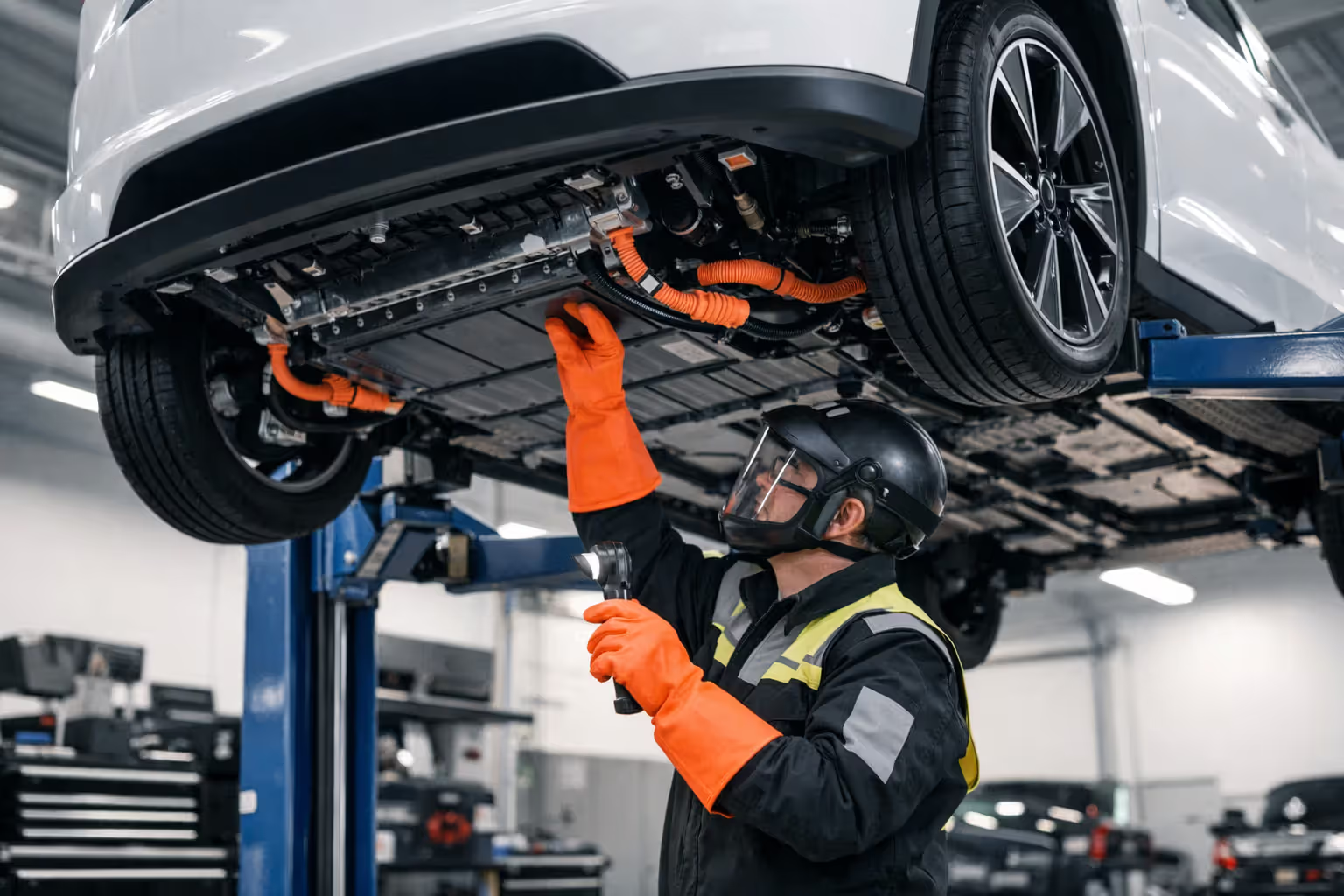
Working around 400-volt battery systems requires specific safety training that goes well beyond standard automotive repair knowledge. We're talking 40-80 hours of coursework per technician. The programs cost shops $2,000-$5,000 for each person they certify.
Here's what catches shops off guard: You'd think battery-related work would be the only concern. Wrong. Replacing rear body panels on a Tesla Model Y means disconnecting high-voltage lines that route through that section. Certain suspension repairs on a Rivian require battery lockout procedures. Even seemingly unrelated jobs trigger EV certification requirements.
The math doesn't work for many smaller operations. If you're a three-person body shop that might see four EV repairs per year, investing $15,000 in training and another $10,000 in specialized equipment makes no financial sense. So they turn away EV work entirely.
This shrinks your repair options dramatically. Big cities might have 30-40% of body shops certified for electric vehicle work. Head out to rural areas? You're looking at 5-10% if you're lucky. Some counties have zero certified facilities within 50 miles.
The biggest challenge in insuring electric vehicles isn’t the technology itself — it’s the infrastructure gap between what these cars need and what the repair industry can currently deliver
— Robert Hartwig
Limited Repair Networks and Longer Wait Times
Tesla built the most restrictive system. Until very recently, structural repairs had to happen at Tesla-owned or Tesla-certified collision centers. They've relaxed these rules slightly under regulatory pressure, but most insurance policies still route Tesla repairs to certified facilities. With roughly 150-200 certified shops nationwide serving hundreds of thousands of Tesla owners, the math gets ugly fast.
Appointment waits stretch 3-6 weeks in many markets. I've heard stories of Tesla owners in Montana driving 180 miles to reach the nearest certified facility. Then they wait five weeks for repair slots to open up.
Rivian owners face similar constraints with only about 100 certified locations. Lucid drivers have it worse. The newer the manufacturer, the thinner the repair network.
Now add proprietary diagnostic requirements into this mess. Most EVs need manufacturer-specific software to read error codes, calibrate sensors after repairs, or verify battery health post-accident. Independent shops can't access these diagnostic platforms without expensive licensing agreements. Tesla charges $3,000+ annually for diagnostic tool access. Many independents look at that cost and decide the EV repair business isn't worth pursuing.
The result? Automakers effectively control repair pricing through these closed ecosystems. No competition means no price pressure.
Author: Derek Fulton;
Source: shafer-motorsports.com
Battery Damage Claims: The Biggest Risk Factor for Insurers
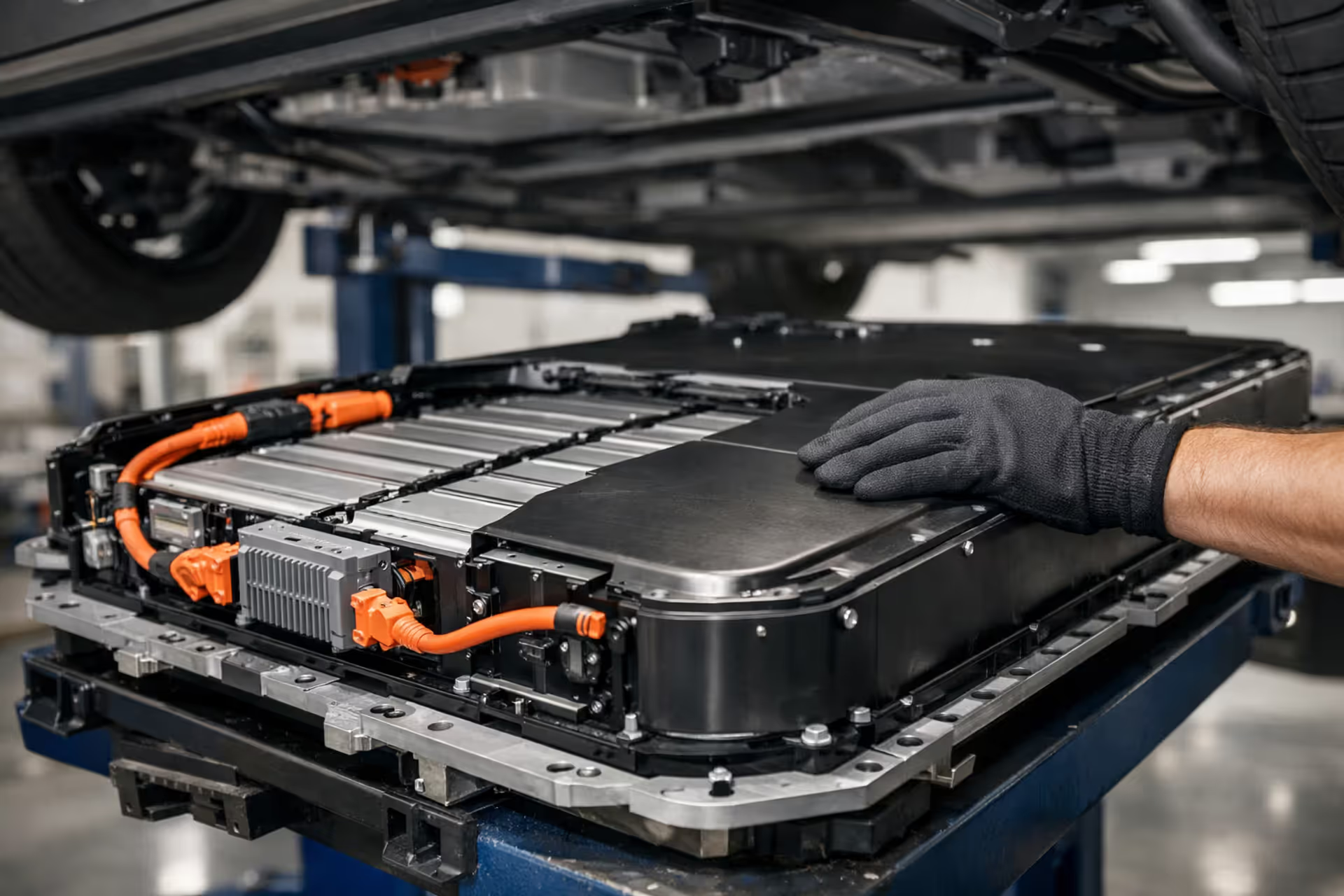
Battery packs are expensive. Like, shockingly expensive. A Tesla Model 3 Long Range battery replacement runs $14,000-$16,000. For a Rivian R1T? Try $20,000-$25,000. When your vehicle's total value sits around $50,000, a damaged battery often means game over.
Insurance adjusters apply conservative thresholds when evaluating battery damage. A side impact that deforms the battery enclosure even slightly? Many insurers automatically declare total loss rather than gamble on future liability. Their nightmare scenario: approving a battery repair, then facing a fire claim six months later when damaged cells develop internal shorts.
This creates bizarre outcomes. A 35 mph side collision barely touches a gas-powered sedan's critical systems. Body damage runs $8,000—straightforward repair work. That same impact on an electric vehicle might show identical body damage plus 2mm of deformation in the battery enclosure. The vehicle drives fine. All systems check out. Doesn't matter. Rather than risk a $16,000 battery replacement down the road, the insurer writes a total loss check.
Fire risk drives a lot of this conservative thinking. News coverage of EV battery fires has created disproportionate fear compared to actual incident rates. The data shows EVs catch fire at about 25 incidents per 100,000 vehicles. Gas vehicles? 1,530 per 100,000. Yet insurers field constant questions about fire coverage and feel pressure to account for "unknown risks" in their pricing.
Battery degradation opens up another coverage nightmare. Normal capacity loss over time—that's wear and tear, not covered. But separating accident damage from pre-existing degradation gets messy fast. You file a claim after a minor collision. The adjuster discovers your battery was already operating at 85% capacity. Now you're arguing about whether the accident caused new damage or just revealed existing issues.
Parts Availability Challenges Driving Up EV Repair Costs
Parts sourcing for gas vehicles offers options. Need a Honda Civic bumper? Choose OEM from the dealer, aftermarket from any auto parts retailer, or used from salvage yards. Three pricing tiers, all readily available.
EV owners get one choice: wait for the manufacturer to ship the original part. Maybe two choices if you're lucky enough to own a high-volume model where aftermarket suppliers have started producing components.
The aftermarket industry hasn't caught up yet because the market remains too fragmented. Dozens of EV models, each with unique parts, none achieving the sales volumes that make tooling investments worthwhile. A company that manufactures aftermarket bumpers needs to spend $100,000+ developing molds for each vehicle. When annual sales of that model total 15,000 units and only 2% need bumper replacements, the business case collapses.
So manufacturers maintain monopoly pricing. A Chevy Bolt front fascia costs $1,800 from GM. A Chevy Malibu front fascia—a larger, more complex part—runs $600-$800 from GM and has aftermarket options at $300-$400. Without competition, manufacturers price parts to recover full development costs plus healthy margins.
Shipping delays multiply the pain. Many EV-specific components come from single-source suppliers. Your charge port door might ship from one facility in South Korea. Battery cooling components could originate from a specialized manufacturer in Germany. What would be a 3-5 day parts wait for conventional vehicles stretches to 3-6 weeks for electric ones.
Every week of delay adds costs beyond the repair itself. Rental car coverage at $40-$50 daily. Storage fees at the body shop. Depreciation while your vehicle sits idle. A claim that closes in two weeks for a gas vehicle might remain open two months for an EV, with time-related expenses adding $1,500-$2,500 to the total cost.
In a world where a single supplier controls the pipeline for a critical component, every disruption becomes a cost event — not just for the vehicle owner, but for the entire insurance ecosystem built around that vehicle
— Warren Buffett
How Insurers Price EV Risk Differently Across Models
Not all electric vehicles drain your wallet equally. Premium variations between different EV models often exceed the gap between EVs and gas vehicles as a category. A Nissan Leaf might run only 10% more than a Sentra. Meanwhile, a Tesla Model S could cost 50% more to insure than a similarly-priced BMW 5 Series.
| Vehicle | Average Annual Premium | Difference ($) | Difference (%) |
| Tesla Model 3 vs. BMW 3 Series | $2,450 vs. $1,920 | +$530 | +28% |
| Ford F-150 Lightning vs. F-150 (gas) | $2,680 vs. $1,950 | +$730 | +37% |
| Chevy Bolt vs. Chevy Trax | $1,890 vs. $1,640 | +$250 | +15% |
| Tesla Model Y vs. Toyota Highlander | $2,720 vs. $1,880 | +$840 | +45% |
| Rivian R1T vs. Ram 1500 | $3,150 vs. $2,100 | +$1,050 | +50% |
| Hyundai Ioniq 5 vs. Tucson | $2,080 vs. $1,720 | +$360 | +21% |
| Nissan Leaf vs. Nissan Sentra | $1,780 vs. $1,590 | +$190 | +12% |
| Porsche Taycan vs. Porsche Panamera | $3,840 vs. $3,200 | +$640 | +20% |
What explains these wild variations? Repair network availability matters enormously. The Chevy Bolt benefits from GM's massive dealer network—most Chevrolet dealers can service Bolts, unlike Tesla's limited certified facilities. More repair options means more competitive pricing and shorter wait times, which translates directly to lower claims costs.
Performance characteristics dramatically affect risk profiles. The Rivian R1T packs 835 horsepower and hits 60 mph in 3.0 seconds. The Nissan Leaf offers a modest 147 horsepower and takes about 8 seconds to reach 60. Insurers have learned that raw acceleration capability correlates strongly with both accident frequency and severity, regardless of how carefully any individual owner drives.
Theft patterns are shifting too. Catalytic converter theft isn't a concern for EVs—no converters to steal. But battery components, charging systems, and electronic modules create new theft vectors. Tesla vehicles face elevated theft risk because their parts command premium prices on secondary markets. Stolen Tesla battery modules can fetch thousands on illicit markets.
"The insurance industry is still in price discovery mode with EVs. We're seeing 15-20% premium adjustments year-over-year as insurers refine their models with better loss data. Early adopters essentially subsidized the learning curve, but we expect pricing to stabilize as repair networks mature and parts availability improves." – Sarah Chen, Senior Automotive Insurance Analyst, J.D. Power
Coverage Considerations Unique to Electric Vehicles
Standard auto insurance policies were written in the 1950s and updated incrementally. They weren't designed for vehicles with $2,000 home charging stations and $15,000 battery packs. Several coverage gaps emerge that you'll need to address deliberately.
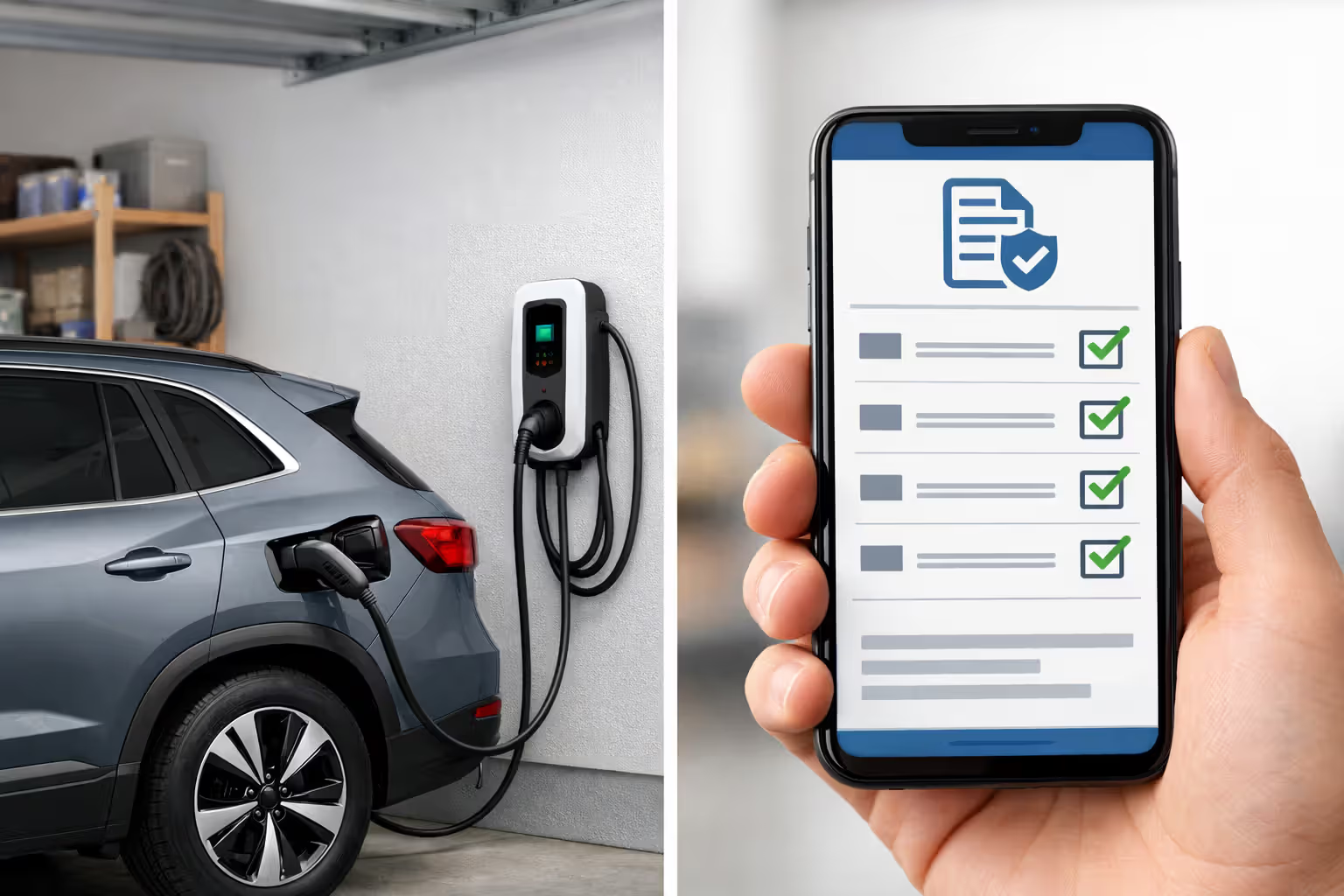
Home charging equipment represents substantial investment—$800-$2,500 for quality Level 2 hardware plus installation running another $500-$1,500. Your auto policy probably doesn't cover this equipment. Might it fall under homeowner's insurance? Depends on whether your policy considers the charger "attached to the dwelling" or "personal property," and that distinction varies by insurer and installation type.
Many owners learn about this gap the hard way. Lightning strikes damage their wall-mounted charger. Or a vehicle collision takes out the charging station in their driveway. They file an auto insurance claim—denied. They file a homeowner's claim—also denied because the charger doesn't clearly fit either policy's equipment definitions.
Battery coverage deserves close scrutiny. Some insurers explicitly exclude battery damage from specific causes. Others cap battery coverage at depreciated actual cash value rather than replacement cost. A three-year-old battery might cost $15,000 to replace but have an "actual cash value" of $9,000 in the adjuster's calculation. Guess who pays the $6,000 difference?
Roadside assistance takes on new dimensions with electric vehicles. Traditional towing works fine, but what happens when you run out of charge 40 miles from the nearest charging station? Some policies include mobile charging services that will bring a portable charger to your location. Others don't, leaving you with a $300-$500 emergency service bill. The coverage difference costs $15-$30 annually—cheap insurance against an expensive tow truck call followed by a flatbed to the nearest charger.
Cybersecurity concerns are emerging as vehicles become rolling computers. What happens when a hacker bricks your vehicle's control systems? What if ransomware locks you out of your own car? Traditional policies don't contemplate these digital-age scenarios. A handful of insurers now offer cyber coverage endorsements, but the market remains in its infancy and definitions of "covered cyber events" vary wildly.
Software updates present another gray area. If an over-the-air update crashes your vehicle's systems and causes an accident, is that a covered loss? What if the update itself damages onboard computers? These questions haven't been tested extensively in real claims yet, but they will be.
Author: Derek Fulton;
Source: shafer-motorsports.com
Premium Trends: What EV Owners Can Expect in 2024–2025
Insurance costs for electric vehicles jumped an average 18% in 2023. Gas vehicles saw increases too—about 12%—but EVs took a bigger hit. This reflects insurers correcting early pricing mistakes as real-world claims data revealed higher costs than initial models predicted.
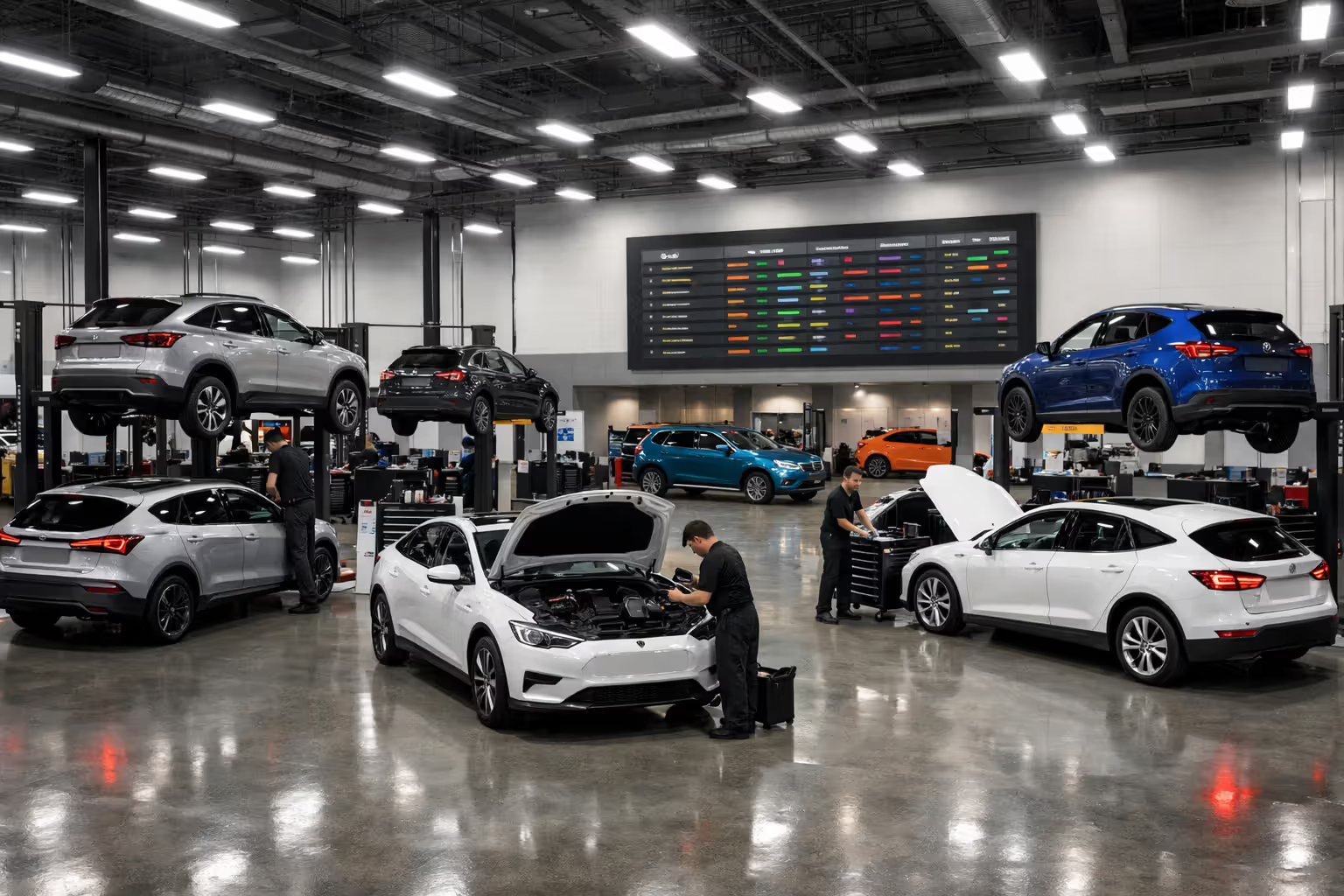
The next 18-24 months should bring more moderate increases. Several positive trends are developing. Repair networks are expanding—Ford certified 3,000 additional dealerships for F-150 Lightning service throughout 2023. GM is pushing similar expansions for their electric vehicle lineup. More shops competing for work means lower prices and shorter wait times, both of which reduce overall claim costs.
Parts availability is improving incrementally. Aftermarket suppliers are finally entering the market for high-volume models like the Tesla Model 3 and Model Y. LKQ Corporation started offering aftermarket body panels for these vehicles in late 2023. While OEM monopolies persist for most components, any competition helps moderate pricing pressure.
Battery technology keeps advancing, which should eventually reduce replacement costs. New manufacturing techniques and chemistry improvements are driving per-kilowatt-hour costs down roughly 8-12% annually. A battery that cost $15,000 in 2022 might run $11,000-$12,000 by 2025. Lower replacement costs mean fewer total loss declarations and reduced claim severity.
Regional variations will persist. California, Texas, and Florida—the three largest EV markets—each show distinct patterns. California benefits from mature repair networks and competitive insurance markets, keeping premium increases relatively modest. Texas sees steeper increases due to weather-related risks and less developed service infrastructure outside major metros. Florida faces the double challenge of hurricane exposure and limited repair networks beyond Miami, Tampa, and Orlando.
Author: Derek Fulton;
Source: shafer-motorsports.com
Some stabilizing factors should help over the next few years. Insurers are developing better data models specifically for EVs rather than treating them as modified gas vehicles. Manufacturers are investing heavily in repair training programs to expand certified networks. Regulatory pressure may force more open access to diagnostic tools and repair information, breaking up current monopolies.
That said, don't expect pricing parity with gas vehicles until 2026 at the earliest. The transition period continues.
FAQ: Common Questions About Insuring an Electric Vehicle
Making Smart Coverage Decisions for Your Electric Vehicle
The insurance landscape for electric vehicles remains somewhat chaotic, but understanding the core cost drivers helps you navigate it intelligently. Repair complexity, battery-related risks, and parts availability constraints aren't temporary issues—they're fundamental characteristics of current EV technology and market maturity levels.
Focus your attention on three key areas when shopping for coverage: finding insurers with substantial EV-specific claims experience, verifying that your policy covers charging equipment and various battery damage scenarios, and understanding repair network limitations in your specific region. The cheapest quoted premium might deliver poor value if it comes with overly restrictive repair requirements or significant coverage gaps.
Factor insurance costs into your vehicle purchase decision. A model with $400 higher annual premiums costs you $2,000 over five years of ownership—potentially enough to shift your decision between otherwise similar vehicles. Include insurance differences in your comparison spreadsheet alongside purchase price, charging costs, and projected maintenance expenses.
The next few years will bring gradual improvements as repair networks expand, parts suppliers diversify, and insurers refine pricing models with better actuarial data. Early adopters pay a premium for being first—that's the nature of emerging technology markets. The key is understanding exactly what you're paying for and structuring coverage that protects you adequately without overpaying for unnecessary endorsements or redundant coverage across multiple policies.
Related Stories
Read more
Read more

The content on Auto Insights is provided for general informational and educational purposes only. It is intended to offer guidance on car buying, vehicle ownership, finance, insurance, EVs, maintenance, accessories, reviews, and related topics, and should not be considered professional financial, legal, insurance, mechanical, or investment advice.
All information, tools, calculators, comparisons, and recommendations presented on this website are for general guidance only. Individual financial situations, driving habits, vehicle conditions, insurance policies, and market factors vary, and actual results or costs may differ from estimates provided.
Auto Insights makes no guarantees regarding accuracy, completeness, or current applicability of the information, as automotive markets, regulations, incentives, interest rates, and vehicle specifications may change over time.