
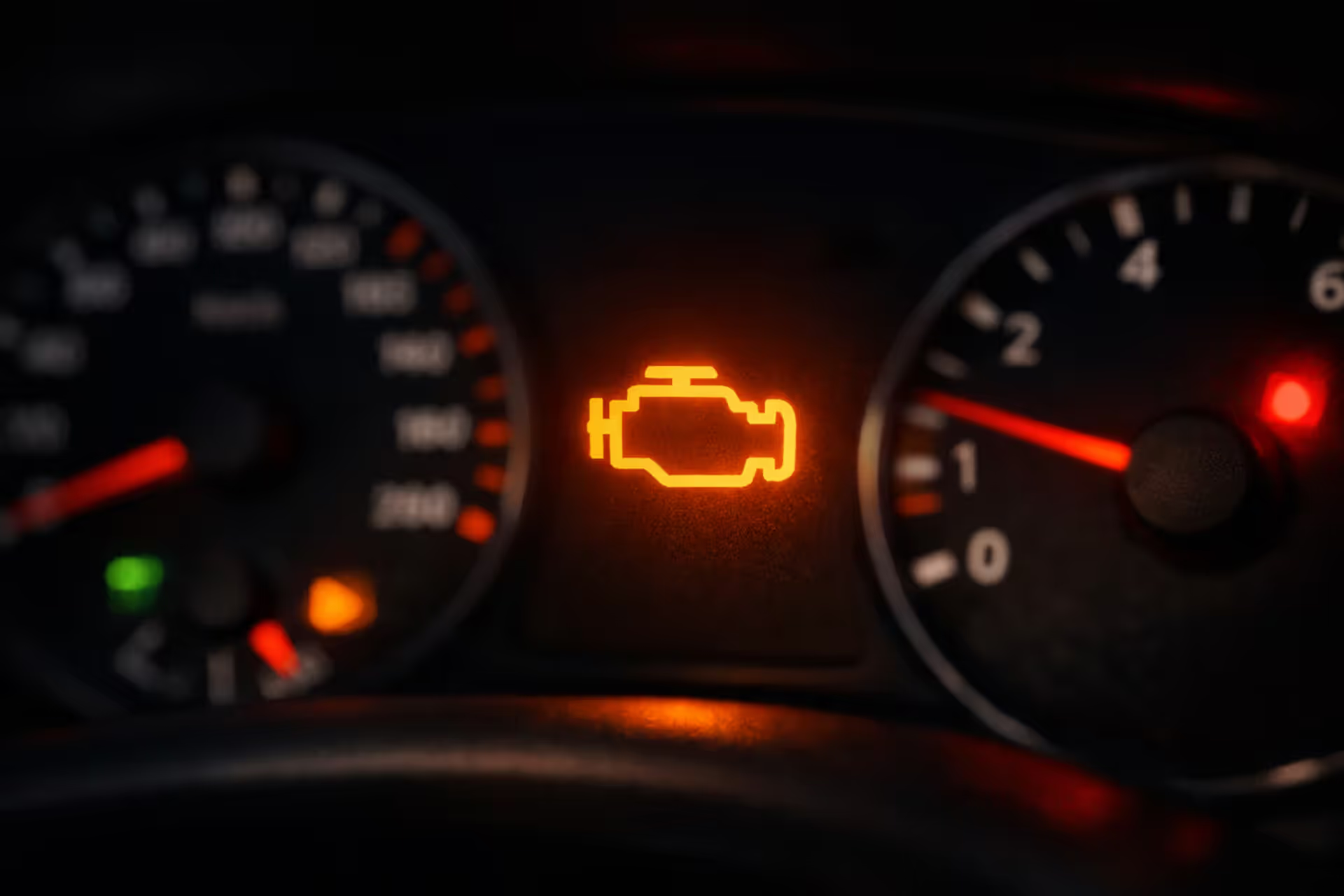
Illuminated amber check engine warning light on a car dashboard in a dimly lit vehicle interior
Check Engine Light Meaning: What Your Dashboard Warning Is Telling You

Content
Content
That amber glow staring at you from the dashboard? It's basically your car's way of saying "we need to talk." Modern vehicles pack in dozens of sensors that constantly monitor everything happening under the hood—from how much oxygen's in your exhaust to whether your engine's burning fuel efficiently. When something falls outside normal ranges, your engine control module flips on that little icon.
Here's what matters: understanding this warning can save you from dropping thousands on repairs you could've prevented with a quick $50 fix. Numbers don't lie—roughly 11% of American cars are cruising around right now with that light on, and most drivers have no clue if they're dealing with a minor hiccup or a ticking time bomb.
Why Your Check Engine Light Turns On (And What It's Actually Monitoring)
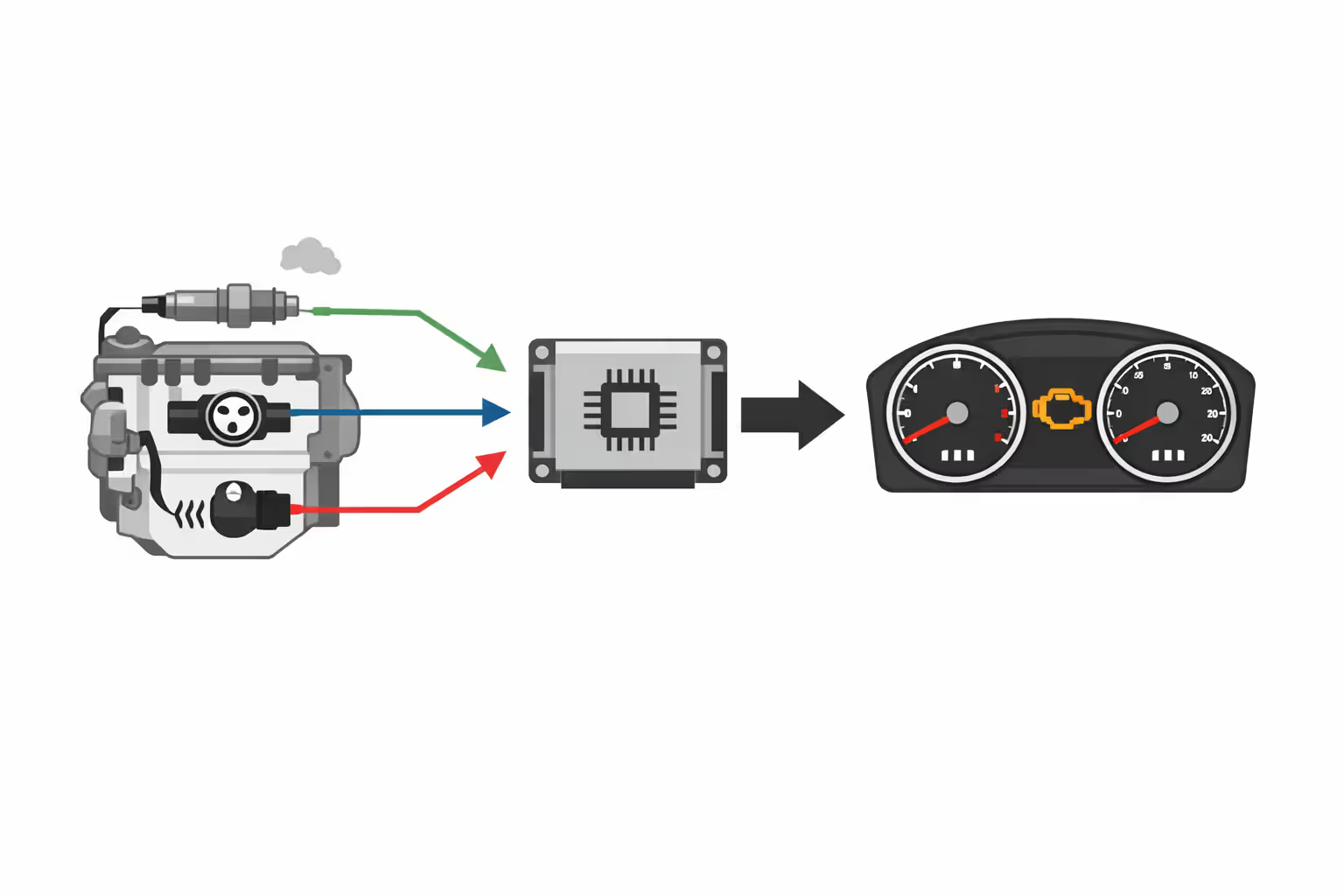
Every car sold in the United States since 1996 runs OBD-II—that's the standardized computer system watching your engine's vital signs. Think of it like a network of tiny doctors inside your engine bay, each one checking specific measurements. When the engine monitoring systems spot readings that don't match what the manufacturer programmed as "normal," the computer saves a fault code and turns on your dashboard light.
Author: Derek Fulton;
Source: shafer-motorsports.com
Now, the diagnostic warning basics really come down to recognizing two completely different behaviors:
Steady glow: You've got a problem, but it's not an emergency. Something's off, and you should get it checked within the next few days or week. Could be anything from a loose gas cap to a sensor going bad. Your car will drive fine to a shop.
Blinking light: Pull over NOW. We're talking within the next mile if possible. A flashing light means your engine is misfiring—fuel's not burning right—and every minute you keep driving is cooking your catalytic converter. Those cost $1,000 to $2,500 to replace, and that's if you haven't damaged anything else.
The whole system works on a pretty straightforward loop: sensors measure stuff, the computer compares those measurements to what's expected, and when things don't match up, boom—light comes on. The tricky part? Figuring out if you've got hours, days, or seconds to deal with it.
The 8 Most Common Engine Light Causes in American Vehicles
Not every dashboard warning means you're about to blow up your engine. Here's what actually triggers that light most often:
| What's Broken | How Urgent? | What You'll Notice | Ballpark Cost |
| Loose or busted gas cap | Not very | Usually nothing, maybe smell gas fumes | Free to $25 |
| Dying oxygen sensor | Moderate | Worse gas mileage, rough idling | $150–$400 |
| Bad catalytic converter | Pretty urgent | Sluggish acceleration, sulfur smell, won't pass emissions | $900–$2,500 |
| Dirty mass airflow sensor | Moderate | Hard to start when cold, jerky acceleration | $250–$450 |
| Old spark plugs or bad ignition coils | Moderate | Engine shakes, loses power, rough idle | $100–$600 |
| Leak in evaporative emissions system | Not very | Might smell gas slightly, drives fine | $150–$600 |
| EGR valve stuck open or closed | Moderate | Rough at idle, fails emissions testing | $300–$650 |
| Something wrong with transmission | Urgent | Shifting feels wrong, slipping, weird vibrations | $500–$3,500+ |
That gas cap issue? You'd be shocked—about 10% of all check engine lights come from gas caps that weren't twisted tight after filling up. After you pump gas, you need to turn that cap until you hear at least three clicks. If it's not sealed, fuel vapors escape and trip the evaporative system sensors. Try tightening it properly first. If that was the culprit, your light should go off after you've driven around normally for a few days.
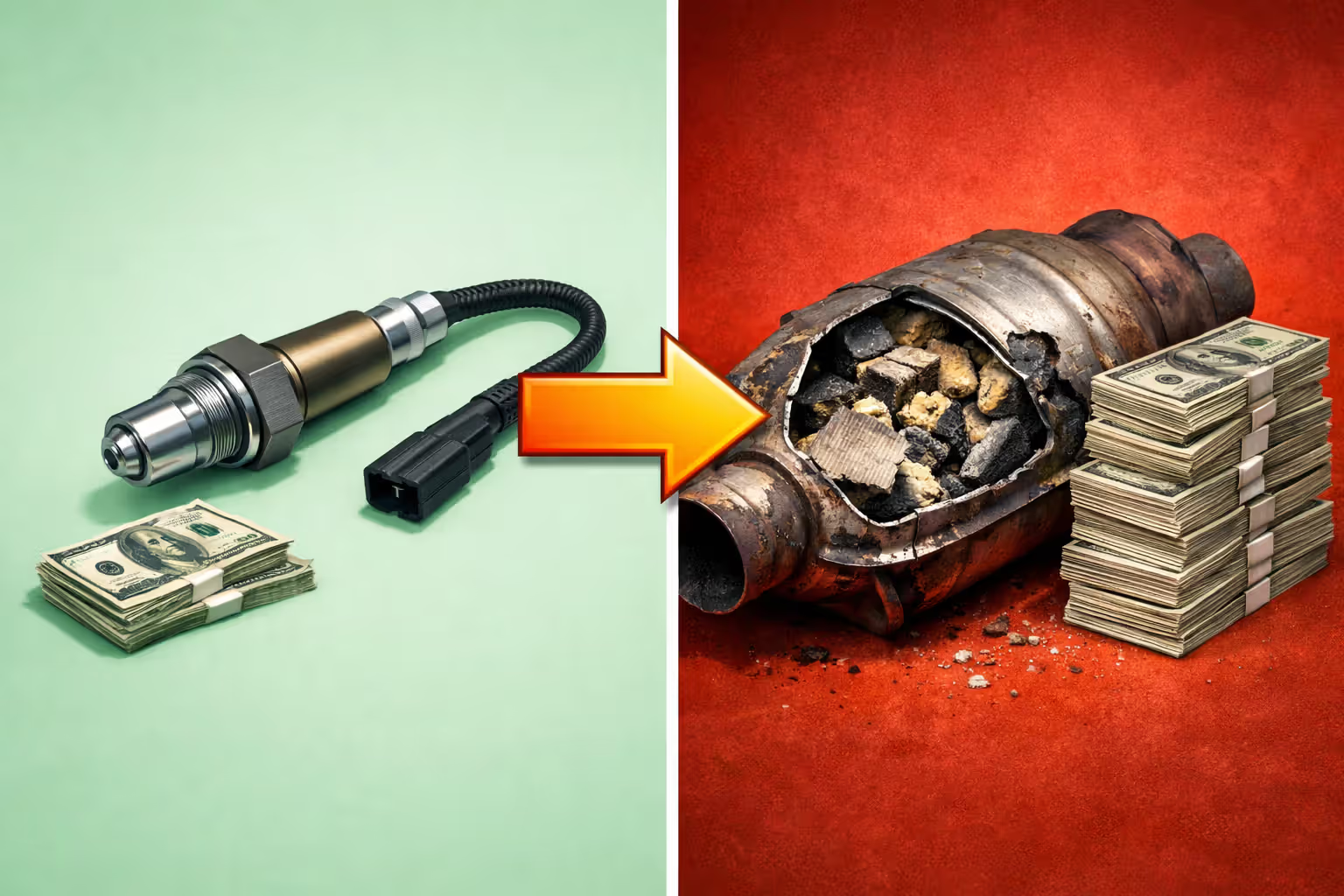
Oxygen sensors wear out. Once you're past 80,000 miles, expect these to start failing. They sit in your exhaust stream measuring oxygen levels so your computer knows if the fuel mixture's right. When they go bad, you'll burn 15-20% more gas and start killing your catalytic converter in the process.
Catalytic converters don't usually just fail on their own. They get destroyed because someone kept driving for months with a misfiring engine or bad sensors. Unburned fuel eventually melts the catalyst inside. This ranks as one of the priciest common engine light causes—definitely not something to ignore.
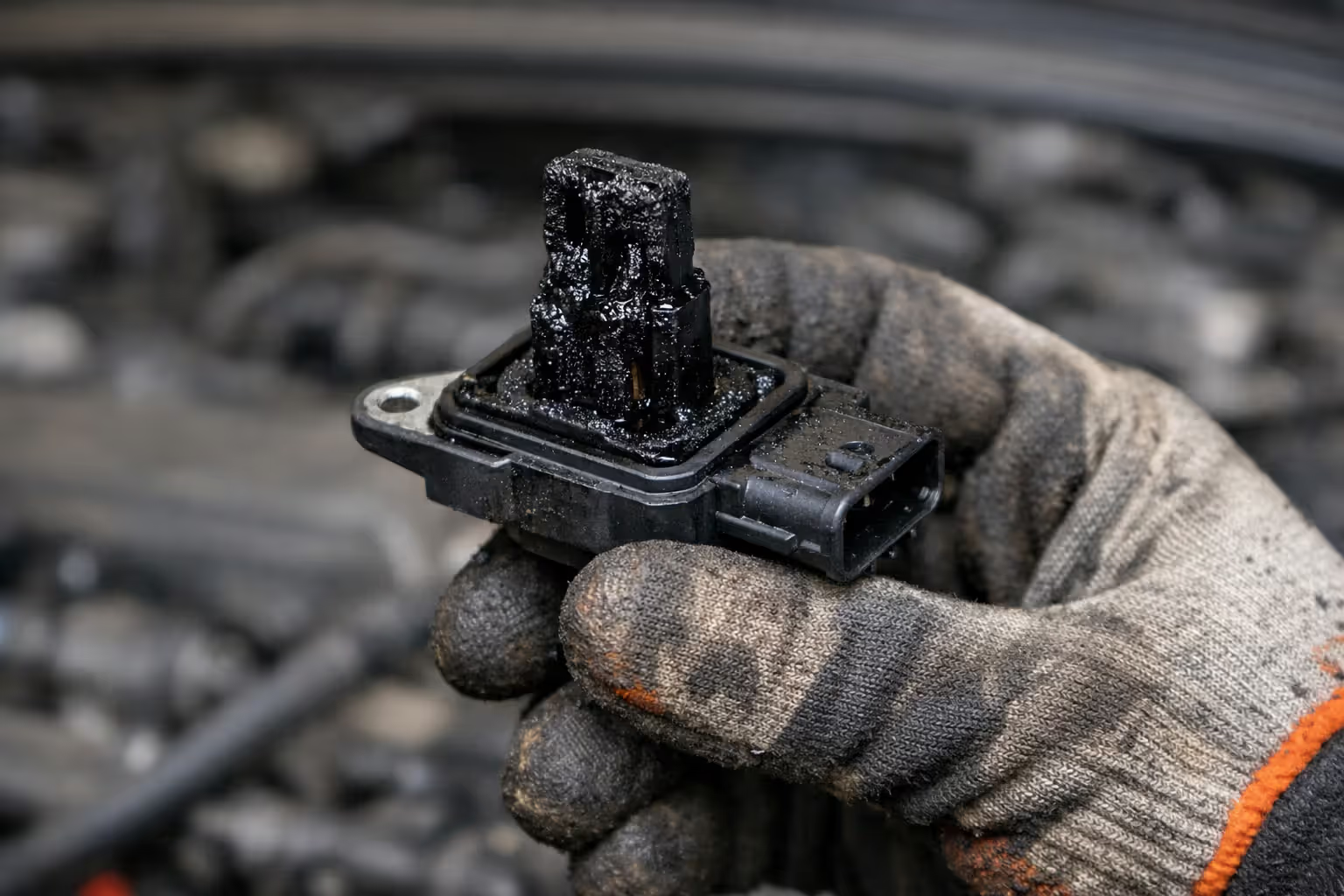
Mass airflow sensors get gunked up over time, especially if you've been using those reusable oiled air filters or skipping air filter changes. When this sensor reads wrong, your engine computer gets confused about how much air's coming in, leading to lousy performance and wasted fuel.
Author: Derek Fulton;
Source: shafer-motorsports.com
Spark plugs and ignition coils eventually give up. Modern plugs typically last 60,000-100,000 miles. Coils can die earlier, particularly in older vehicles or if you live somewhere with extreme temperatures. When these fail, you get misfires—cylinders not firing when they should.
Small leaks in your evaporative emissions system happen when rubber hoses crack with age, purge valves stick, or gas caps deteriorate. Won't hurt your driving, but you'll definitely fail any state emissions inspection.
EGR valves get clogged with carbon deposits, especially in higher-mileage cars. When they stop working right, combustion temps go up and you're pumping out excess nitrogen oxides.
Transmission problems sometimes trip the check engine light instead of (or along with) a dedicated transmission warning. Failed solenoids, slipping clutches, or sensor malfunctions all create codes that light up your dashboard.
How to Read OBD Codes: Breaking Down Your Car's Diagnostic Language
That glowing light on your dash? There's always at least one code stored in your car's computer explaining why. Getting familiar with OBD codes explanation helps you know what you're dealing with before talking to mechanics.
Here's how these codes break down: - First character: P means powertrain/engine stuff, B is body electronics, C covers chassis, U handles network communication - Second character: 0 means it's a universal code that works the same on all cars, 1 means the manufacturer made it up for their vehicles - Third character: Tells you what system—1 or 2 is fuel and air, 3 is ignition, 4 covers emissions, 5 is speed and idle, 6 is computer stuff, 7 and 8 are transmission - Last two characters: The specific problem number
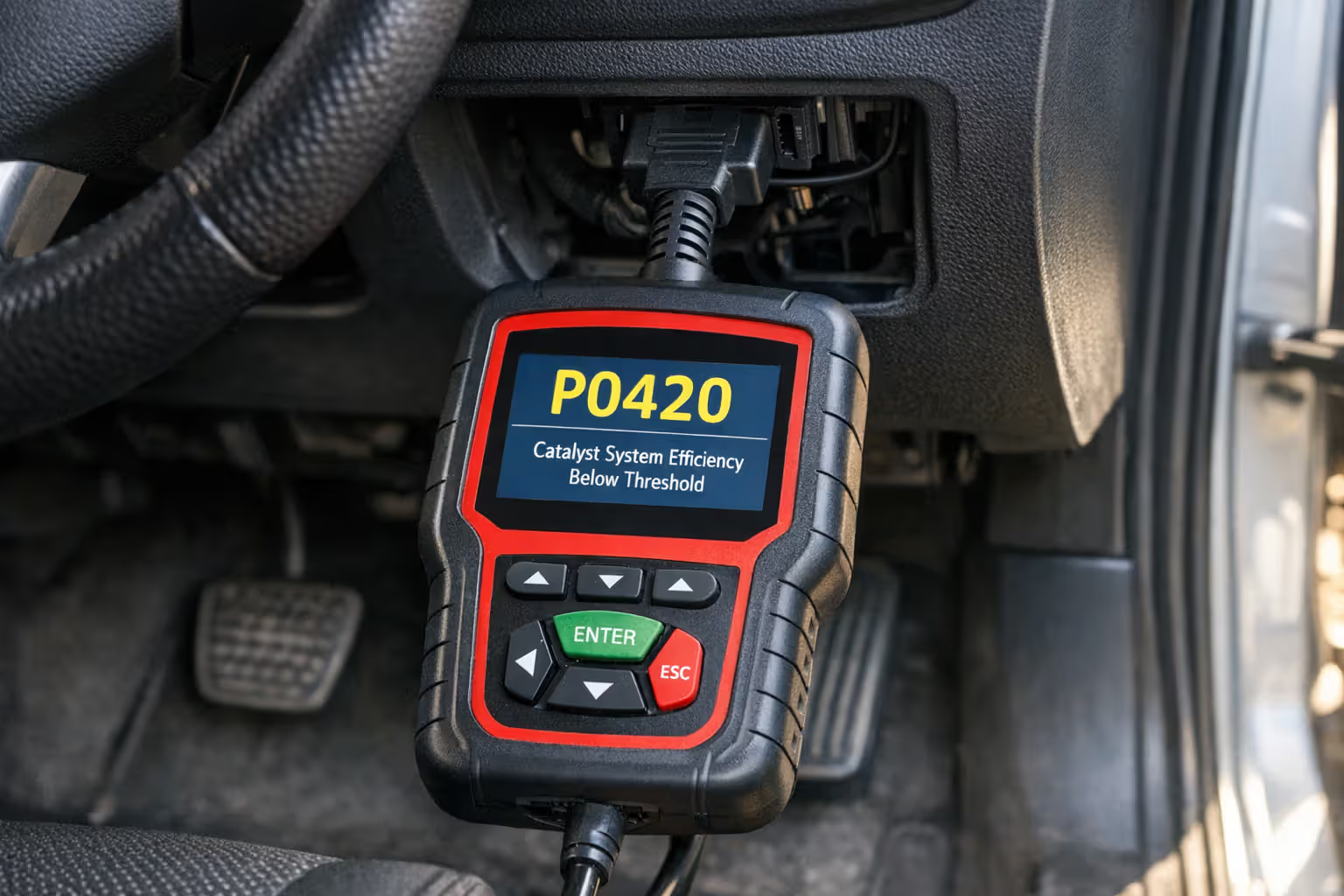
Take P0420 for example. The P says it's engine-related, the 0 means every brand uses this code the same way, the 4 points to emissions systems, and the 20 identifies catalyst efficiency below where it should be—your catalytic converter isn't doing its job properly.
Generic P0 codes work across all brands. P0171 means "System Too Lean (Bank 1)" whether you're driving a Honda, Chevy, or Mercedes.
Manufacturer codes starting with P1 are brand-specific. Ford uses P1000 to show the car hasn't finished running all its self-tests yet. Other companies assign P1000 to completely different problems.
The bitterness of poor quality remains long after the sweetness of low price is forgotten
— Benjamin Franklin
AutoZone, O'Reilly, Advance Auto—they'll all scan your codes for free. Their employees just plug in a basic scanner and print what pops up. But understand what you're getting: these simple tools only grab the code numbers. They can't read live sensor data, freeze-frame information, or dive into manufacturer-specific details that professional tools access.
Those $25-$100 Bluetooth adapters you can buy for your phone? Same limitation. Great for checking codes at home, not so great for actual diagnosis.
Author: Derek Fulton;
Source: shafer-motorsports.com
Is It Safe to Drive With Your Check Engine Light On?
Depends entirely on what triggered it and how your car's acting right now.
Stop immediately if: - That light's flashing rapidly (engine's misfiring badly) - You suddenly lost a ton of power - Weird grinding, knocking, or rattling started - You smell burning oil, coolant, or raw gasoline - Your temperature gauge shoots up into the red - Multiple warning lights just came on together—oil pressure, battery, temperature
You can drive to a mechanic when: - The light's on solid, not flashing - Everything feels totally normal when you drive - No strange sounds, smells, or performance weirdness - All your other dashboard warnings are off
Even when everything seems fine, get it diagnosed soon. Waiting turns that $150 oxygen sensor into a $2,000 catalytic converter job. Same with small EVAP leaks—they seem harmless until inspection time comes and you can't register your vehicle.
The when to drive safely warning really boils down to symptoms. Solid light with normal driving? Monitor it but you're probably okay to get to a shop. Flashing light or weird behavior? You're actively destroying something expensive—find somewhere safe to stop.
An ounce of prevention is worth a pound of cure
— Benjamin Franklin
I've seen people tape over the light or disconnect the battery hoping to make it go away. Spoiler: doesn't work. The problem's still there, you just can't see the warning anymore. Plus, your car has to complete specific readiness tests before passing emissions checks, so clearing codes right before inspection usually means automatic failure.
What Happens During a Professional Diagnostic Scan (And Why It Matters)
Just asking someone to "read the codes" misses about 90% of what actual diagnosis involves. You're not paying for thirty seconds of plugging in a scanner.
The diagnostic scan importance becomes crystal clear when you see what really happens:
Reading codes takes half a minute. Techs connect their professional scanner (way more powerful than those free parts store readers) and pull stored codes, pending codes, and freeze-frame data showing exactly what your car was doing when the problem occurred.
Watching live data reveals what's happening right now. Good technicians watch sensor readings while the engine runs, comparing actual values against what the manufacturer says is normal. Your oxygen sensor might throw a code, but live data shows whether the sensor itself failed or if an exhaust leak is creating false readings.
Bidirectional controls let techs test components. They can force your EVAP purge valve open and closed, activate your EGR valve, or fire individual fuel injectors one at a time to pinpoint problems. Can't do that with a cheap code reader.
Technical service bulletins document known issues. That generic P0420 catalyst code? There might be a TSB explaining that certain model years throw false converter codes fixed with a software update, not a new $1,500 catalytic converter.
Physical inspections catch scanner-invisible problems. Cracked vacuum lines, chewed-up wiring harnesses, loose electrical connectors causing intermittent faults—none of that shows up on a scanner screen.
"Reading diagnostic codes versus performing proper diagnosis compares to checking your temperature versus receiving a complete medical examination. The code reports a symptom—perhaps 'catalyst efficiency low'—but doesn't reveal whether you need catalytic converter replacement, whether exhaust leaks create false readings, or whether failing oxygen sensors represent the actual problem. We've witnessed customers spending $1,500 replacing converters when $200 oxygen sensors were actually faulty." — Mike Chen, ASE Master Certified Technician, Chen's Automotive Diagnostics
Most independent shops charge $80-$150 for diagnostic time. Usually they'll credit that toward the repair if you go ahead with the work. Dealerships run higher—$150-$200—but they've got manufacturer-specific equipment and direct access to engineering databases.
Those free parts store scans? You're getting exactly what you pay for. The teenager working there isn't a trained technician—they're reading you whatever pops up on the screen and guessing what might fix it.

Author: Derek Fulton;
Source: shafer-motorsports.com
5 Mistakes Car Owners Make After Seeing the Check Engine Light
1. Completely ignoring it for months
Something like 30% of drivers just keep going indefinitely with that light on. They figure if the car still runs, it's fine. Meanwhile that failing O2 sensor's killing your gas mileage by 20%, costing you $300+ per year in wasted fuel while slowly destroying your catalytic converter.
2. Clearing the code without fixing anything
Disconnecting your battery or buying a cheap scanner to erase codes accomplishes exactly nothing. The light comes back—sometimes instantly, sometimes after a few trips. Plus you've just deleted valuable diagnostic information like freeze-frame data that helps mechanics track down intermittent problems.
3. Assuming it's always something minor
"Probably just the gas cap" becomes a really expensive assumption when it's actually a dying catalytic converter or failing transmission. Sure, gas caps sometimes cause it. So do $3,000 transmission failures.
4. Taking it to the wrong place
Not all repair shops have the same capabilities. That quick lube place can change your oil just fine, but they probably don't have the training, equipment, or experience to diagnose complex problems. Transmission issues, hybrid system faults, or intermittent electrical gremlins need specialists with proper tools.
5. Putting off diagnosis to "save money"
Skipping that $100 diagnostic fee trying to save cash backfires constantly. Your $200 oxygen sensor repair turns into $1,800 for a new catalytic converter. That $400 mass airflow sensor becomes $1,200 after the lean condition damages other components. Early diagnosis almost always costs way less than fixing compounded damage later.
Author: Derek Fulton;
Source: shafer-motorsports.com
FAQ: Check Engine Light Questions Answered
Taking Control of Your Vehicle's Health
Think of your check engine light as an early warning system designed to catch problems before they blow up into catastrophic failures. The difference between a $200 repair and a $2,000 nightmare often comes down to how fast you respond after that amber light appears.
Today's vehicles communicate pretty clearly through their diagnostic systems—you just need to understand the language. Whether you're dealing with an unsealed gas cap or transmission failure, proper professional diagnosis gives you the information to make smart repair decisions.
Don't panic when you see dashboard warnings, but don't brush them off either. Get the codes read, understand what you're facing, and address issues before they multiply. Your wallet and your car will both thank you for being proactive instead of reactive.
Related Stories
Read more

Read more



The content on Auto Insights is provided for general informational and educational purposes only. It is intended to offer guidance on car buying, vehicle ownership, finance, insurance, EVs, maintenance, accessories, reviews, and related topics, and should not be considered professional financial, legal, insurance, mechanical, or investment advice.
All information, tools, calculators, comparisons, and recommendations presented on this website are for general guidance only. Individual financial situations, driving habits, vehicle conditions, insurance policies, and market factors vary, and actual results or costs may differ from estimates provided.
Auto Insights makes no guarantees regarding accuracy, completeness, or current applicability of the information, as automotive markets, regulations, incentives, interest rates, and vehicle specifications may change over time.