
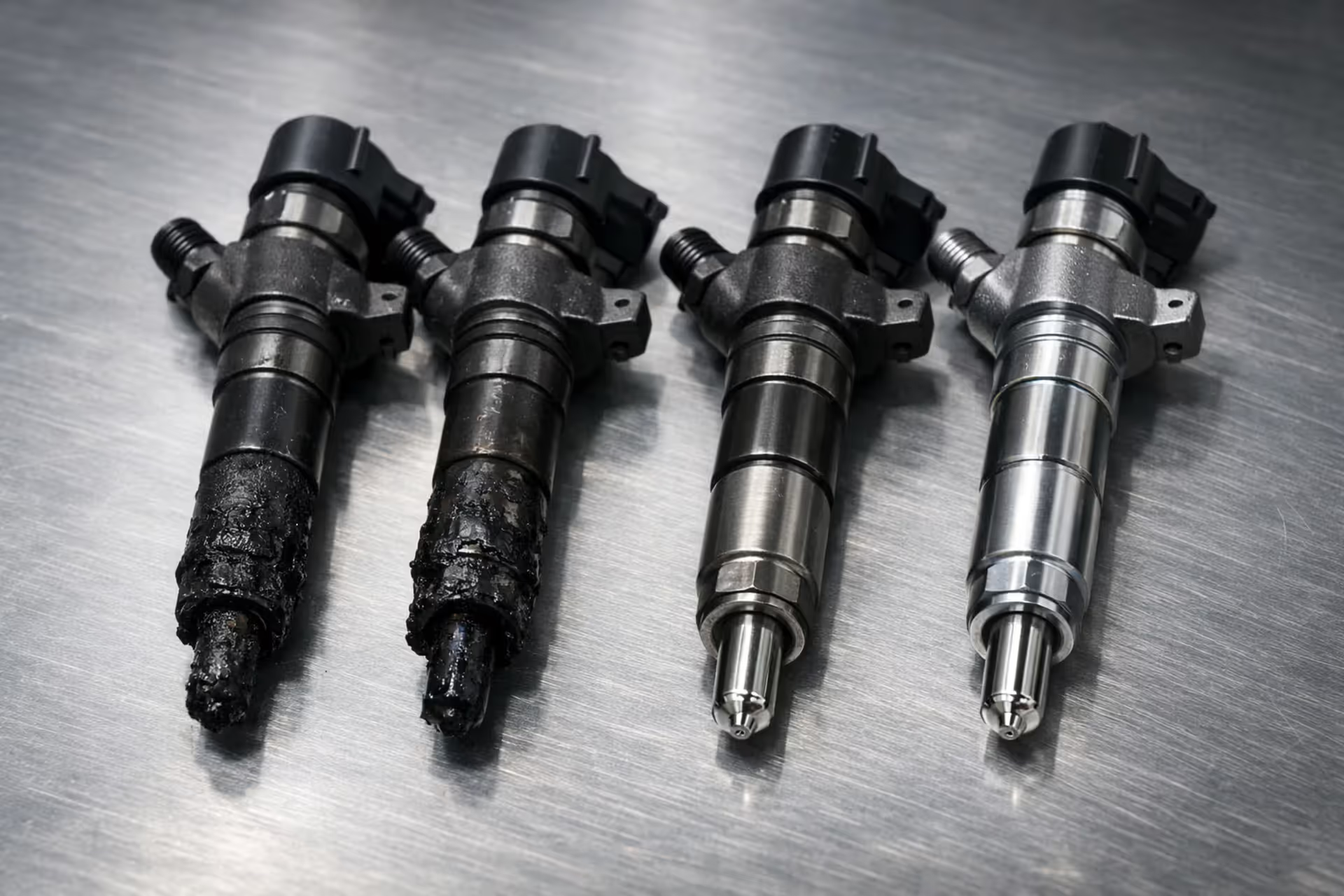
Four fuel injectors on a metal surface — two heavily covered in black carbon deposits and two clean showing before and after fuel system cleaning comparison
Fuel System Cleaning: When Your Engine Needs It and What Actually Works

Your engine runs on a precise mixture of air and fuel, atomized into a fine mist and ignited thousands of times per minute. When carbon deposits interfere with this process, you'll feel it in your wallet and under the accelerator pedal. Modern gasoline contains detergents, but they're not always enough to prevent buildup—especially with today's high-pressure direct injection systems that spray fuel directly into combustion chambers rather than intake ports.
Most drivers ignore their fuel system until something goes wrong. A mechanic mentions "dirty injectors" during an oil change, or the check engine light appears with a misfire code. By then, carbon has already compromised performance. Understanding when and how to address fuel system maintenance prevents expensive repairs and keeps your vehicle running as the engineers intended.
How Carbon Deposits Choke Your Engine's Performance
Carbon buildup happens gradually, starting the moment you drive off the dealer's lot. Incomplete combustion leaves behind microscopic residue—mostly carbon and varnish—that accumulates in three critical areas.
Fuel injectors develop deposits around their spray nozzles. These precision components must atomize gasoline into droplets measuring 20 microns or smaller. Even a thin layer of carbon distorts the spray pattern, creating larger droplets that don't burn completely. This creates more carbon, accelerating the problem.
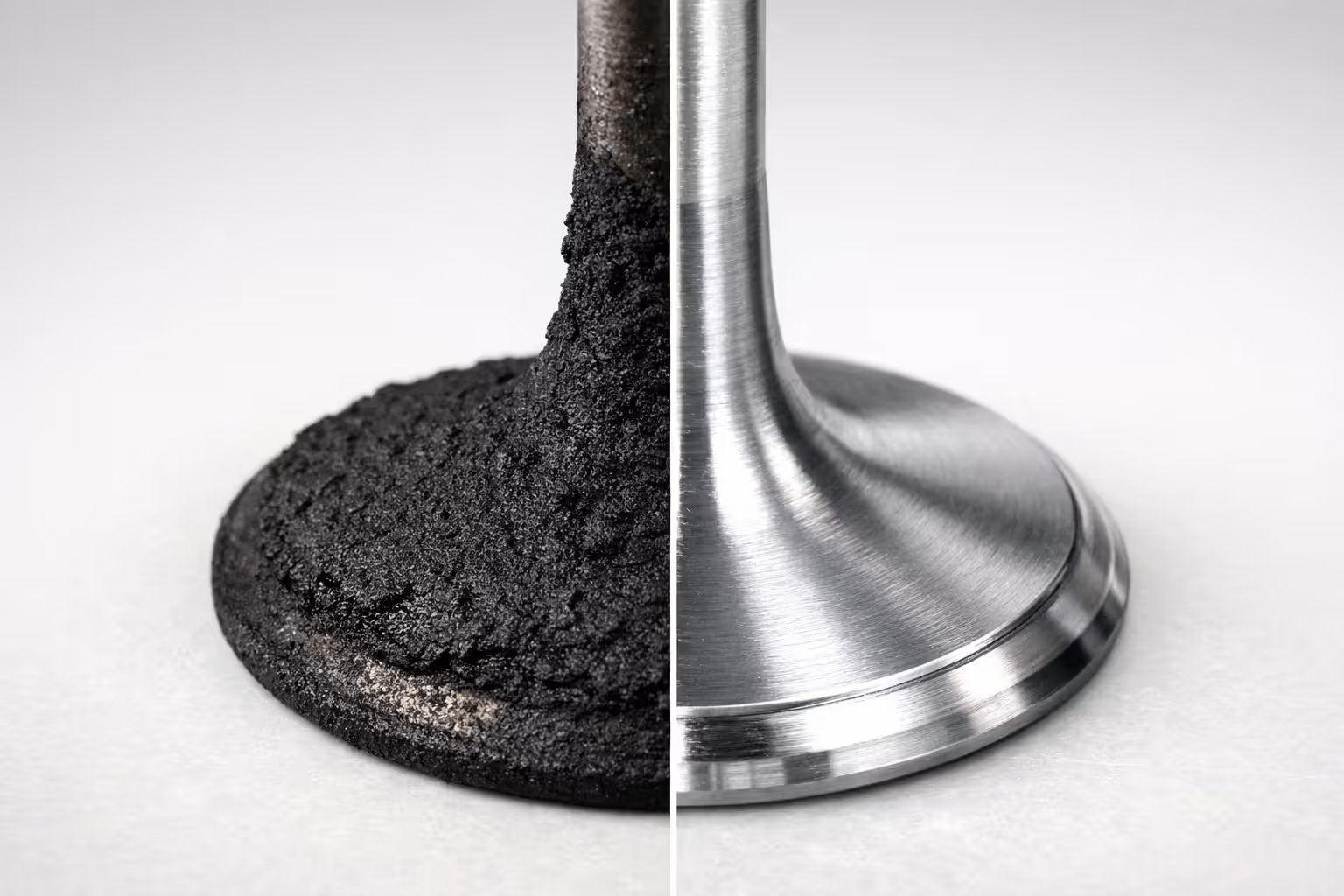
Intake valves in port-injected engines benefit from gasoline washing over them with each cycle. Direct injection engines don't have this advantage. Without fuel contact, intake valves accumulate oil vapor and carbon from the crankcase ventilation system. A valve with heavy deposits can lose 30% of its sealing surface, reducing compression and power.
Combustion chambers—the pistons, cylinder heads, and spark plug electrodes—develop the thickest deposits. Carbon acts like a sponge, absorbing fuel and releasing it unpredictably. This causes pre-ignition (engine knock), increases compression ratios beyond design specifications, and creates hot spots that can damage pistons. A piston crown coated in carbon might carry an extra gram of material per cylinder. That doesn't sound like much until you calculate the thermal insulation effect and the octane requirement increase it creates.
Direct injection vehicles show carbon buildup symptoms faster than older port-injection designs. Turbocharged engines compound the issue because higher combustion pressures and temperatures accelerate deposit formation. If you're driving a turbocharged direct-injection vehicle with a short commute—never reaching full operating temperature—you're creating ideal conditions for carbon accumulation.
The best time to maintain your engine was the day you bought it. The second best time is today. Carbon deposits don’t announce themselves — they accumulate silently until performance is already compromised
— Bob Lutz
Seven Warning Signs Your Fuel System Needs Cleaning
Rough idle appears first. Your engine should hum smoothly at stoplights, with the tachometer needle barely moving. When injectors can't deliver consistent fuel flow, you'll feel a shake through the steering wheel or notice the RPM fluctuating by 50-100 revolutions. This happens because one or more cylinders aren't firing properly.
Hesitation during acceleration feels like the engine stumbles before responding to throttle input. You press the gas pedal, wait a half-second, then the vehicle lurches forward. This delay indicates fuel delivery problems—either from clogged injectors or carbon-choked valves restricting airflow.

Author: Brianna Lowell;
Source: shafer-motorsports.com
Reduced fuel economy sneaks up on you. Most drivers don't notice a gradual decline from 28 MPG to 24 MPG over two years. Check your actual numbers against EPA estimates. A 10-15% drop from your normal average suggests combustion efficiency problems. Carbon deposits force the engine computer to inject more fuel to compensate for incomplete burning, wasting gasoline that exits through the exhaust as emissions.
Hard starts, especially when the engine is cold, point to injector or valve deposits. The engine cranks longer than normal before catching, or requires multiple attempts. Carbon absorbs the initial fuel spray, preventing proper mixture formation. Once the engine warms up and the carbon releases its absorbed fuel, starting becomes easier—but the problem remains.
Check engine lights related to fuel trim, misfires, or oxygen sensor codes often trace back to fuel system contamination. Modern engines constantly adjust fuel delivery based on exhaust oxygen content. When carbon disrupts combustion, the computer sees erratic readings and illuminates the warning light. Codes P0171 (system too lean) or P0300-series (random misfires) frequently indicate cleaning needs.
Failed emissions tests reveal what you can't see. Hydrocarbons and carbon monoxide readings above limits mean unburned fuel is escaping. Clean injectors and valves ensure complete combustion, reducing harmful emissions while improving power.
Loss of power shows up during highway merging or hill climbing. The engine feels sluggish, and you need more throttle to maintain speed. This happens when carbon reduces volumetric efficiency—the engine can't breathe properly, limiting power output regardless of how much you press the accelerator.
What Professional Fuel System Cleaning Actually Includes
Professional services vary widely in scope and effectiveness. Understanding what you're paying for prevents disappointment and wasted money.
Fuel Injector Service vs. Complete System Treatment
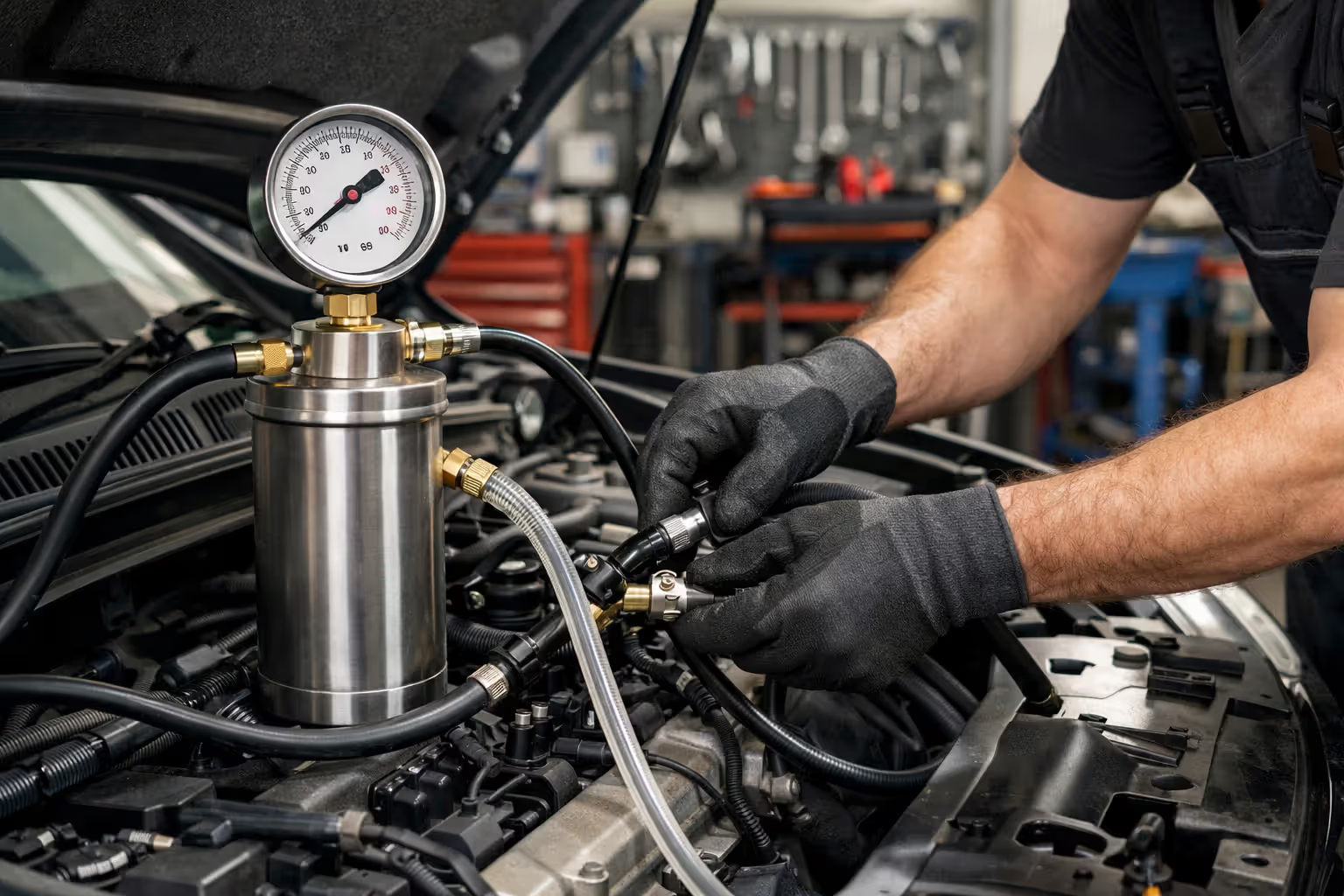
Basic injector cleaning connects a pressurized canister of concentrated detergent to the fuel rail, bypassing the gas tank. The engine runs on this cleaning solution for 15-20 minutes at varying RPMs. This removes soft deposits from injector nozzles but doesn't address intake valves or combustion chambers. Cost runs $80-150, and it works well for newer vehicles with minor buildup.
Complete system treatment adds intake cleaning and combustion chamber service. Technicians introduce cleaning chemicals through the intake manifold while the engine runs, creating a dense fog that scrubs valve surfaces and cylinder walls. Some shops follow this with a fuel additive that treats the tank and injectors simultaneously. This comprehensive approach costs $200-400 but addresses all deposit areas.
The Three-Stage Professional Cleaning Process
Stage one tackles the intake system. With the engine running, technicians feed a measured amount of intake cleaner through a vacuum line or directly into the throttle body. The solution vaporizes, coating intake runners, valves, and combustion chambers. The engine may smoke heavily from the exhaust during this phase—that's carbon burning off and exiting the system. This stage takes 20-30 minutes.
Stage two addresses the fuel system. After the intake cleaning, shops disconnect the fuel pump and connect their pressurized cleaning rig. The engine runs exclusively on high-concentration detergent, forcing it through injectors at operating pressure and temperature. Technicians cycle the RPMs from idle to 3,000, ensuring the cleaner reaches all injector passages. This removes varnish and carbon from nozzles, restoring spray patterns.
Stage three involves a fuel tank additive. Before reconnecting the fuel pump, technicians add a concentrated cleaner to your gas tank. This continues the cleaning process over the next 50-100 miles, maintaining the improvements achieved during the service. Some shops include an oil change recommendation because cleaning loosens deposits that can contaminate engine oil.
Advanced shops with ultrasonic equipment remove injectors entirely and clean them in a sonic bath. Sound waves create microscopic bubbles that implode against metal surfaces, removing stubborn deposits without chemicals. This method costs more ($300-500) but delivers the best results for severely clogged injectors. Shops test each injector's flow rate and spray pattern before and after, providing documentation of improvement.
Author: Brianna Lowell;
Source: shafer-motorsports.com
DIY Fuel Additives vs. Professional Service: Cost and Results Compared
Store shelves overflow with fuel system cleaners promising professional results for $10. Some work; many don't. The difference lies in concentration and application method.
Pour-in bottle additives contain the same chemicals professionals use, but at 1/10th the concentration. You're diluting one bottle into 12-20 gallons of gasoline. This works for maintenance—preventing deposits in a clean engine—but lacks the strength to remove existing buildup. Running a bottle every 3,000 miles costs $40 annually and helps, but won't fix a contaminated system.
Concentrated injector cleaners sold at auto parts stores offer stronger formulations. Products like Techron Concentrate Plus or Liqui Moly Jectron contain higher active ingredient percentages. Used in a nearly empty tank (2-3 gallons), they approach professional strength. Cost per treatment runs $15-25, and results appear after driving 50-100 miles. This middle-ground option works for moderate deposits but can't clean intake valves on direct injection engines.
Professional on-car service delivers the highest chemical concentration directly to affected areas. You're paying for equipment, expertise, and chemicals unavailable to consumers. The immediate results—restored spray patterns and cleaned valves—justify the cost when symptoms appear.
Ultrasonic cleaning provides results impossible to achieve with chemicals alone. Sound energy breaks molecular bonds between carbon and metal, restoring injectors to near-new condition. This makes sense for high-mileage vehicles (100,000+ miles) or engines with severe performance loss.
| Method | Cost Range | Time Required | Effectiveness | Best For |
| Pour-in bottle additives | $8-15 per bottle | Continuous (added to tank) | Preventive maintenance only | New vehicles, regular maintenance schedules |
| Concentrated injector cleaners | $15-25 per treatment | 50-100 miles of driving | Moderate deposit removal | Vehicles with minor symptoms, 30,000-60,000 miles |
| Professional on-car service | $150-400 | 1-2 hours | Comprehensive cleaning of all systems | Noticeable performance loss, failed emissions, 60,000+ miles |
| Professional ultrasonic cleaning | $300-500 | 2-4 hours (injector removal required) | Maximum deposit removal and flow restoration | Severe contamination, high-mileage vehicles, persistent problems |
The smart approach combines both. Use quality fuel additives every 5,000 miles for prevention, and schedule professional service every 50,000-75,000 miles or when symptoms appear. This costs less than repairing damage from neglect.
How Often Should You Clean Your Fuel System?
Manufacturer maintenance schedules rarely mention fuel system cleaning because modern gasoline contains detergents. The EPA mandates minimum additive levels, but "minimum" doesn't mean optimal. Real-world conditions determine actual cleaning intervals.
Mileage provides a baseline. Port-injected engines benefit from service every 60,000-100,000 miles. Direct injection engines need attention sooner—every 30,000-50,000 miles—because intake valves don't receive fuel wash. Turbocharged direct injection vehicles should follow the shorter interval.
Driving patterns matter more than mileage. Short trips under five miles prevent engines from reaching full operating temperature. Carbon and moisture accumulate instead of burning off. If your commute involves 10 minutes of stop-and-go traffic, you need more frequent cleaning than someone driving 30 highway miles daily. Consider professional service every 30,000 miles for predominantly short-trip driving.
Fuel quality varies by region and station. Top Tier gasoline contains higher detergent levels than EPA minimums, helping prevent deposits. Brands like Chevron, Shell, and Costco meet Top Tier standards. If you consistently use discount fuel from questionable sources, schedule cleaning more frequently—every 40,000-50,000 miles.
Vehicle age and design influence intervals. Older port-injection engines tolerate deposits better than modern high-compression, direct-injection designs. A 2010 Honda Civic might run 100,000 miles before needing attention. A 2020 Volkswagen GTI with a turbocharged direct-injection engine shows symptoms by 40,000 miles despite newer technology.
Climate affects deposit formation. Hot, humid environments accelerate varnish and carbon buildup. Ethanol-blended fuels (E10, E15) absorb moisture, creating corrosion and deposits. If you live in the Southeast or use high-ethanol fuels, err toward shorter cleaning intervals.
A practical rule: perform preventive cleaning before symptoms appear. Schedule service at 50,000 miles for direct injection engines, 75,000 miles for port injection. If you notice any of the seven warning signs earlier, don't wait. Addressing deposits early costs less than repairing damage from neglect.
An ounce of prevention is worth a pound of cure. In modern engines, a ten-dollar bottle of fuel additive at the right time can save you a thousand-dollar repair down the road
— Carroll Smith
Measuring Results: Before and After Performance Improvements
Professional fuel system cleaning should produce measurable improvements. Vague promises of "better performance" aren't enough—demand specifics.
Fuel economy improvements range from 5-15% depending on initial contamination severity. Track your MPG for three tanks before service, then three tanks after. Calculate actual improvement rather than relying on the trip computer, which can be optimistic. A vehicle averaging 24 MPG should see 25-27 MPG post-cleaning if deposits were affecting efficiency. Changes appear within 50-100 miles as the engine computer relearns fuel trims with restored injector flow.
Power delivery becomes noticeably smoother. Hesitation during acceleration disappears, and the engine responds immediately to throttle input. You'll feel this subjectively, but a performance shop can measure it objectively with a dynamometer. Expect 3-8% horsepower gains on a contaminated engine. That's 6-16 HP on a 200 HP vehicle—enough to notice during highway merging.
Idle quality improves immediately. Rough vibrations smooth out, and RPM fluctuations stabilize. If your engine shook at stoplights before service, it should hum quietly afterward. This confirms that all cylinders are firing consistently with proper fuel delivery.
Emissions reductions show up on testing equipment. Hydrocarbon readings should drop 30-50% on a previously contaminated engine. Carbon monoxide decreases similarly. If you're preparing for an emissions test, cleaning 100-200 miles beforehand maximizes your chances of passing.
Author: Brianna Lowell;
Source: shafer-motorsports.com
Cold starts become easier. The engine should catch within 1-2 seconds of cranking, even in cold weather. Extended cranking or multiple start attempts indicate remaining problems—possibly beyond fuel system cleaning.
Realistic timeframes matter. Don't expect miracles instantly. The cleaning process continues for 50-100 miles after service as remaining chemicals work through the system. Full benefits appear after this break-in period. If you see no improvement after 150 miles, the problem may not be deposit-related. Mechanical issues like worn piston rings, failing oxygen sensors, or vacuum leaks require different repairs.
Some shops provide before-and-after documentation. Injector flow testing shows exact improvement in milliliters per minute. Spray pattern photos reveal nozzle condition. Pressure testing confirms system integrity. Request this documentation—it proves the service worked and provides baseline data for future comparisons.
"Modern direct injection systems operate at fuel pressures exceeding 2,000 PSI—nearly ten times higher than older port injection designs. These extreme pressures create finer fuel atomization for better efficiency, but they also make injectors more sensitive to deposits. Even a 5% flow restriction can trigger drivability problems and increased emissions. Regular fuel system maintenance isn't optional anymore; it's essential for preserving the performance and longevity these sophisticated engines were designed to deliver." — Michael Torres, ASE-certified Master Technician with 22 years of experience in fuel system diagnostics
— Brianna Lowell
Frequently Asked Questions About Fuel System Maintenance
Fuel system cleaning bridges the gap between regular maintenance and major repairs. Carbon deposits are inevitable—fuel chemistry and combustion physics guarantee their formation. The question isn't whether you need cleaning, but when and how thoroughly.
Pay attention to your vehicle's behavior. Rough idle, hesitation, and declining fuel economy signal problems developing beneath the hood. Address them early with appropriate service—DIY additives for prevention, professional cleaning for symptoms. Match the service level to contamination severity rather than automatically choosing the cheapest or most expensive option.
Direct injection technology delivers impressive power and efficiency, but it demands more attention than older engines. The same high-pressure precision that improves performance makes these systems sensitive to deposits. If you're driving a modern turbocharged vehicle, accept that fuel system maintenance is part of ownership, not an optional extra.
Track your results. Calculate actual fuel economy improvements, note changes in drivability, and keep service records. This data helps you determine optimal cleaning intervals for your specific vehicle and driving patterns. What works for a highway commuter differs from what a city driver needs.
Prevention costs less than correction. Spending $150 every 50,000 miles beats replacing clogged injectors at $800-1,200 or cleaning intake valves requiring cylinder head removal at $1,500-2,500. Fuel system maintenance isn't exciting, but it protects your investment and keeps your engine running as designed.
Related Stories

Read more

Read more



The content on Auto Insights is provided for general informational and educational purposes only. It is intended to offer guidance on car buying, vehicle ownership, finance, insurance, EVs, maintenance, accessories, reviews, and related topics, and should not be considered professional financial, legal, insurance, mechanical, or investment advice.
All information, tools, calculators, comparisons, and recommendations presented on this website are for general guidance only. Individual financial situations, driving habits, vehicle conditions, insurance policies, and market factors vary, and actual results or costs may differ from estimates provided.
Auto Insights makes no guarantees regarding accuracy, completeness, or current applicability of the information, as automotive markets, regulations, incentives, interest rates, and vehicle specifications may change over time.