
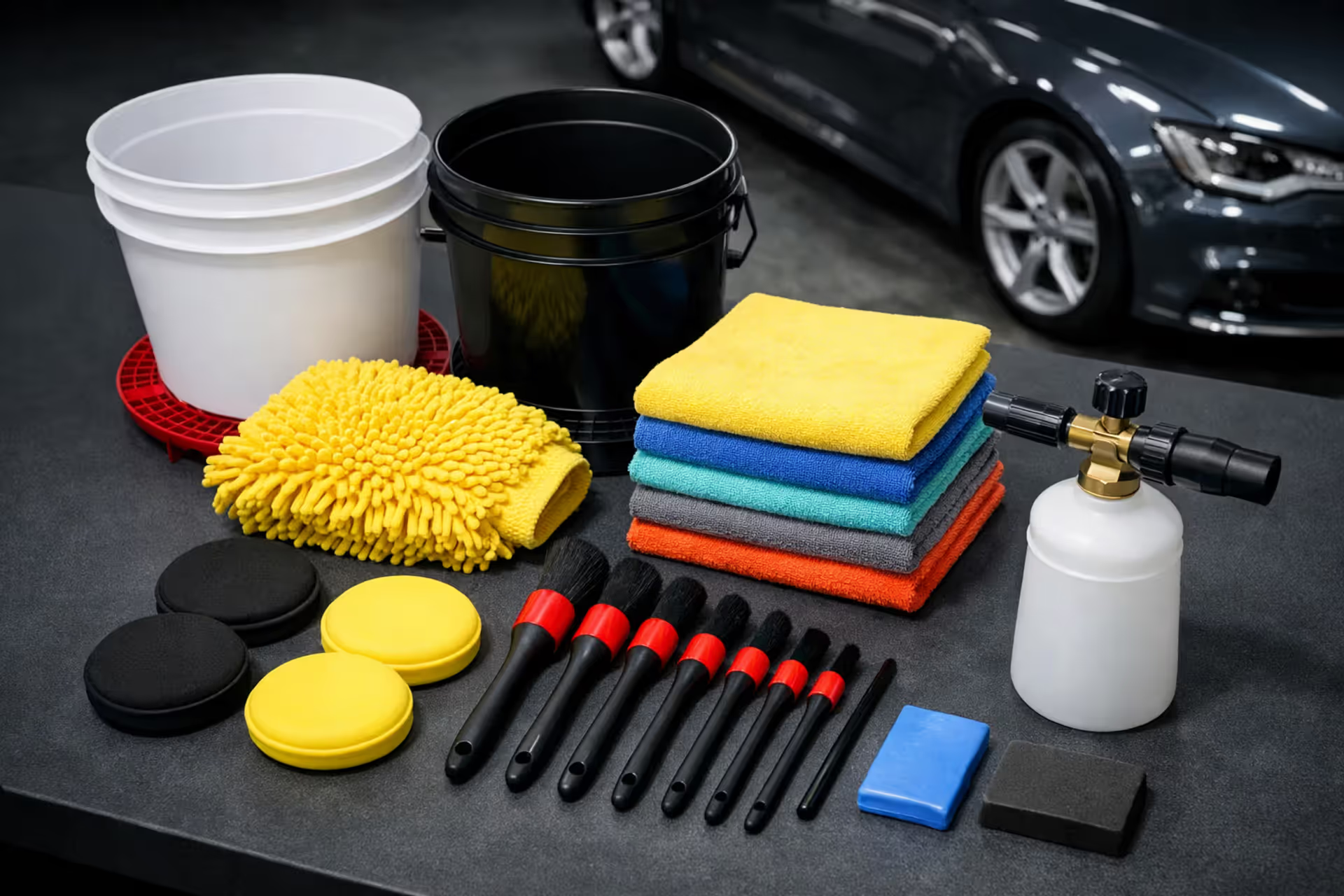
Complete car detailing tool set including buckets with grit guards, microfiber towels, wash mitt, detailing brushes and foam applicators arranged on a table
Car Cleaning Tools Guide: Essential Equipment for Interior and Exterior Detailing

Most car owners waste money on expensive cleaning products while using dollar-store towels that scratch their paint. The truth? A $15 bottle of wax applied with a $2 sponge will deliver worse results than a $10 product used with proper applicators and microfiber cloths. Your tools determine whether you're actually cleaning your vehicle or slowly damaging it with every wash.
Why the Right Tools Matter More Than Expensive Products
Walk into any auto parts store and you'll see shelves packed with premium soaps, waxes, and protectants. Marketing pushes you toward the $30 ceramic spray instead of explaining that the $8 microfiber towel in your hand will make a bigger difference in your results.
Quality tools improve cleaning efficiency in three measurable ways. First, they reduce the time you spend on each task. A proper wash mitt with deep pile fibers holds more soap and water than a flat sponge, cutting your wash time by 10-15 minutes. Second, they prevent damage that costs hundreds to repair. Scratches from improper drying towels or swirl marks from stiff brushes require professional paint correction. Third, they make products work as intended. That tire dressing looks streaky because you're using a paper towel instead of a foam applicator designed to spread it evenly.
Consider the real cost comparison: A complete set of car detailing basics tools—quality wash mitts, microfiber towels, detailing brushes, and applicators—runs $75-120 and lasts 2-3 years with proper care. One paint correction session to remove scratches from poor technique costs $200-500. The math isn't complicated.
"I've seen $50,000 vehicles ruined by $5 brushes. People spend more time researching which soap to buy than understanding that the wrong scrub brush will permanently damage plastic trim and leave scratches no product can hide." — Marcus Chen, Certified Detailer, International Detailing Association
The efficiency factor extends beyond speed. Proper cleaning efficiency tools mean you're not repeating work. When you dry your car with an old bath towel, you're pushing water around and leaving streaks that require a second pass. A dedicated drying towel absorbs water in one motion. That's not luxury—it's basic functionality.
The amateur detailer buys products. The professional buys tools. The difference between a swirl-free finish and a scratched disaster almost always comes down to what touched the paint, not what was sprayed on it
— Jim White, Master Detailer & Founder, Chemical Guys
Essential Exterior Wash Equipment Every Car Owner Needs
Your exterior wash equipment determines whether you're cleaning your car or creating microscopic damage that compounds over time. The goal is removing dirt while protecting the clear coat that gives your paint its shine and protection.
Washing and Drying Tools
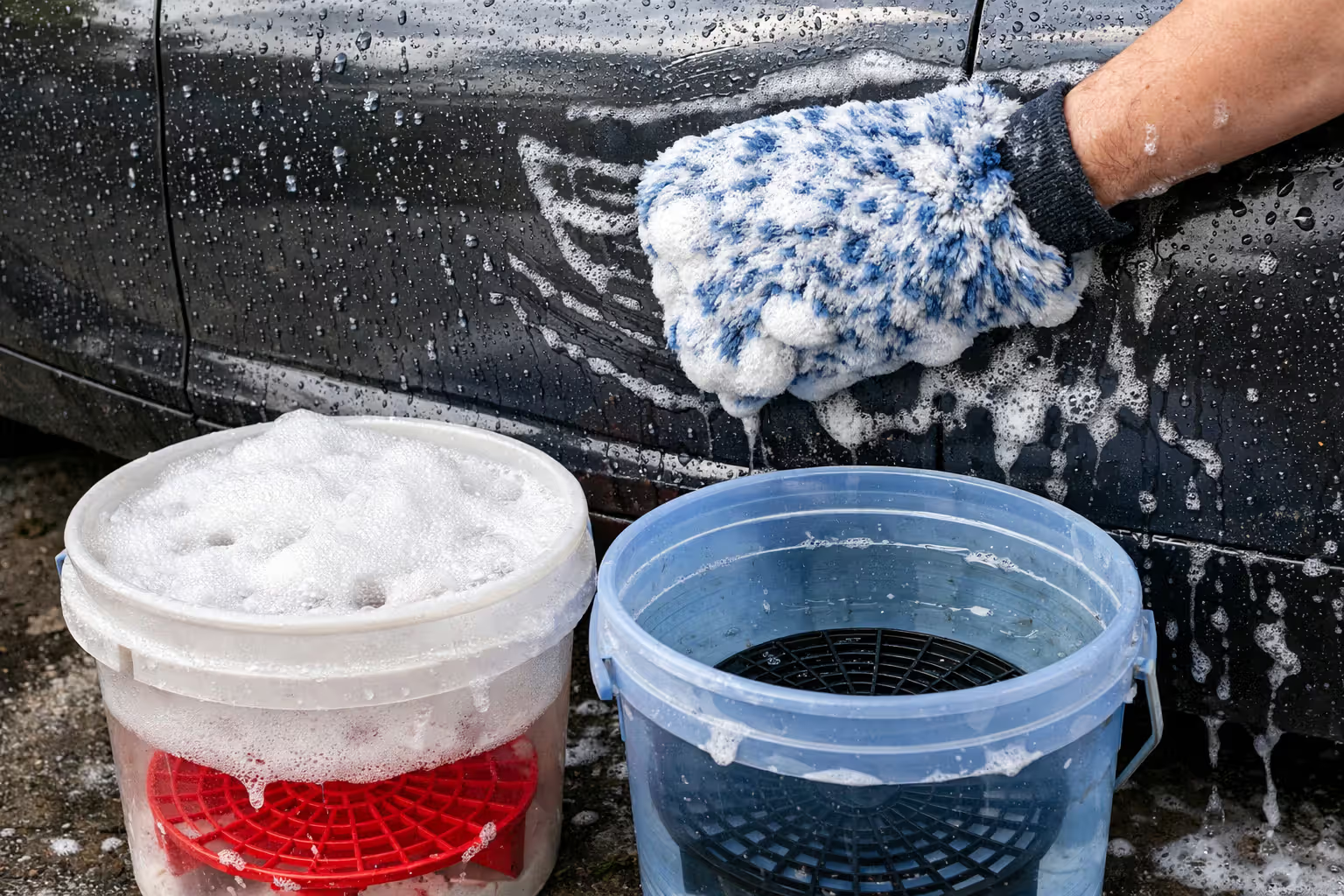
Start with two buckets, not one. The two-bucket method uses one bucket for clean, soapy water and another for rinsing your wash mitt. This simple separation prevents you from reintroducing dirt particles onto your paint. Each bucket should hold at least 3.5 gallons and include a grit guard—a plastic insert that traps sediment at the bottom when you rinse your mitt.
Your wash mitt matters more than your soap choice. Look for chenille or microfiber mitts with fibers at least 1 inch long. These create space between dirt particles and your paint. Avoid sponges entirely—they trap particles against their flat surface and drag them across your clear coat. Plan to replace wash mitts every 20-25 washes or when they lose their softness.
Drying demands specific tools. Waffle-weave microfiber drying towels absorb 7-10 times their weight in water, while standard terry cloth towels push water around and leave lint. You'll need at least two large drying towels (25" x 36" minimum) for a sedan, three for an SUV. Wring them out between panels and never let them touch the ground.
Wheels require dedicated tools you never use on paint. Wheel brushes need soft bristles that reach between spokes without scratching. Buy separate wash mitts for wheels and tires—the brake dust and road grime they collect will scratch paint if cross-contaminated. Mark them clearly or buy different colors.
A foam cannon or foam gun transforms ordinary car soap into thick foam that clings to vertical surfaces, loosening dirt before you touch the paint. These attach to pressure washers (cannon) or garden hoses (gun). While not mandatory, they reduce the mechanical scrubbing needed and make washing faster and safer.
Author: Brianna Lowell;
Source: shafer-motorsports.com
Paint Correction and Protection Tools
Clay bars remove bonded contaminants that washing can't touch—industrial fallout, tree sap, rail dust, and overspray. Your paint feels rough even after washing? That's embedded contamination. Clay bars are available in different grades: fine for new cars with light contamination, medium for most situations, and aggressive for heavily contaminated paint. Use them 2-4 times per year with dedicated clay lubricant.
Foam and microfiber applicator pads apply waxes, sealants, and ceramic coatings evenly without absorbing excessive product. Foam applicators work for traditional paste waxes, while microfiber applicators suit liquid sealants. The $3 you spend on proper applicators prevents the streaky, uneven results from using old t-shirts.
Dual-action polishers (also called DA polishers) oscillate and rotate simultaneously, making them safer for beginners than rotary polishers. They remove light scratches, oxidation, and swirl marks without the heat buildup that burns through clear coat. Entry-level models start around $60-80. If your paint shows visible swirls under direct sunlight, a DA polisher with appropriate pads and compounds will restore clarity.
Detailing brushes in various sizes handle the gaps and crevices where dirt hides. Soft boar's hair brushes clean emblems, trim, and grilles without scratching. You'll want at least three sizes: small (1" wide) for emblems, medium (1.5-2") for trim, and large (2.5-3") for wheel barrels. Natural boar's hair is gentler than synthetic bristles on delicate surfaces.
I tell every new client the same thing: show me your towel drawer, and I’ll tell you the condition of your paint. Microfiber quality is the single most underrated factor in car care
— Larry Kosilla, Founder, AMMO NYC & Professional Detailer
Must-Have Interior Cleaning Accessories for a Spotless Cabin
Interior cleaning accessories face different challenges than exterior tools. You're working with varied materials—fabric, leather, vinyl, plastic, and sometimes wood or metal—often in tight spaces. The wrong tool damages surfaces or simply can't reach where dirt accumulates.
Upholstery and Carpet Tools
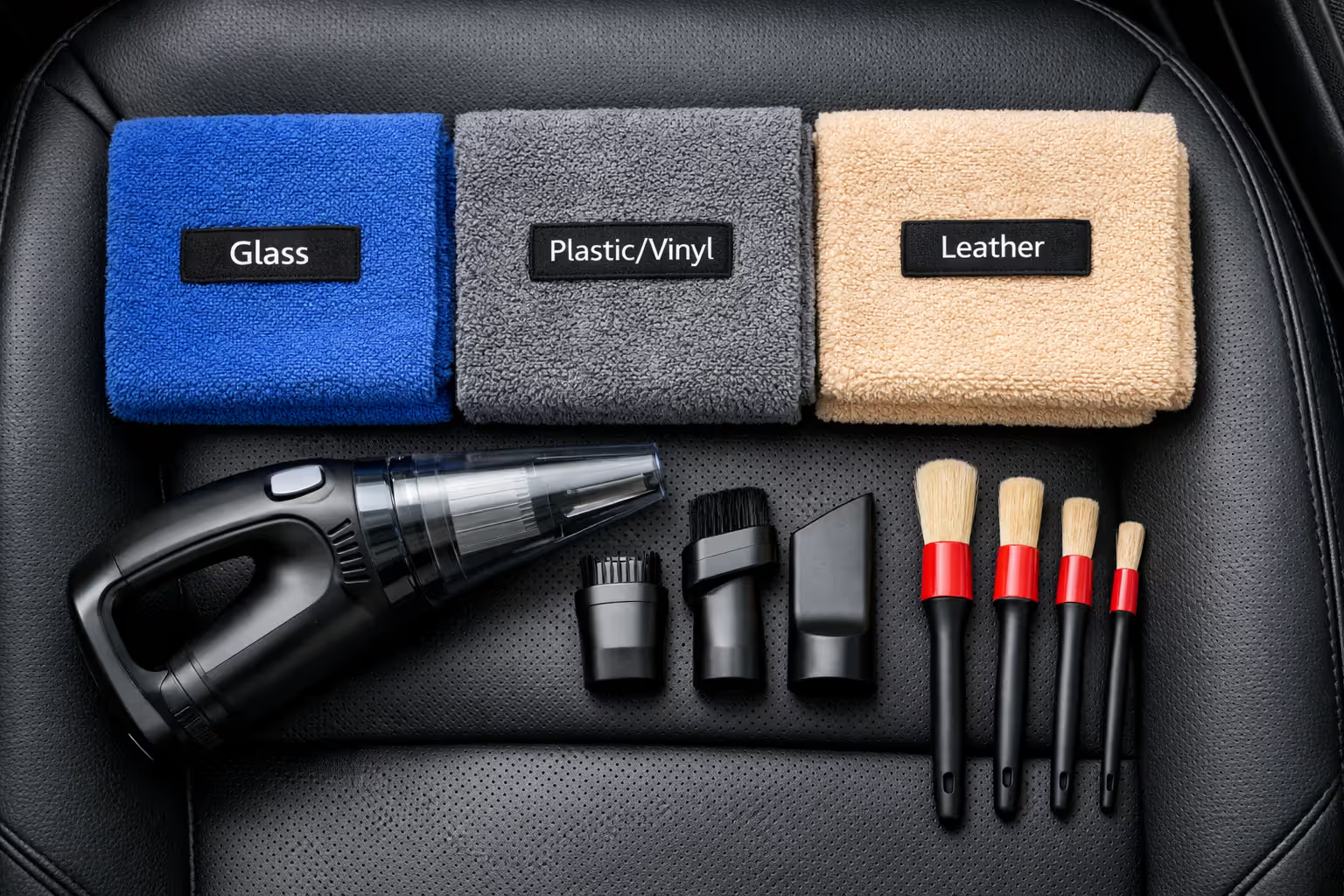
A dedicated car vacuum with strong suction (4+ peak horsepower) and appropriate attachments makes the difference between surface cleaning and deep cleaning. Handheld models work for quick cleanups but lack the power for embedded dirt in carpet fibers. Corded shop vacuums provide consistent suction; cordless models offer convenience but require battery management. Your attachments matter as much as suction power: crevice tools for seat rails and console gaps, brush attachments for carpets, and upholstery tools for seats.
Carpet brushes with stiff bristles agitate fibers before vacuuming, loosening embedded dirt that suction alone can't remove. These work in conjunction with your vacuum, not as replacements. Scrub in multiple directions, then vacuum immediately. For floor mats, rubber-specific brushes prevent damage to textured surfaces while removing ground-in dirt.
Upholstery extractors (wet/dry vacuums with cleaning solution injection) deep clean fabric seats and carpets by injecting cleaning solution and immediately extracting it along with dissolved dirt. Portable extractors designed for auto detailing start around $120. They're not essential for weekly maintenance but become valuable for quarterly deep cleaning or addressing spills and stains.
Microfiber towels for interior use should be separate from your exterior towels. Designate specific colors: one for glass, one for plastic and vinyl, and another for leather. This prevents cross-contamination of products. Interior towels can be thinner (300-350 GSM) than exterior drying towels since you're not absorbing large amounts of water.
Author: Brianna Lowell;
Source: shafer-motorsports.com
Dashboard and Trim Cleaning Equipment
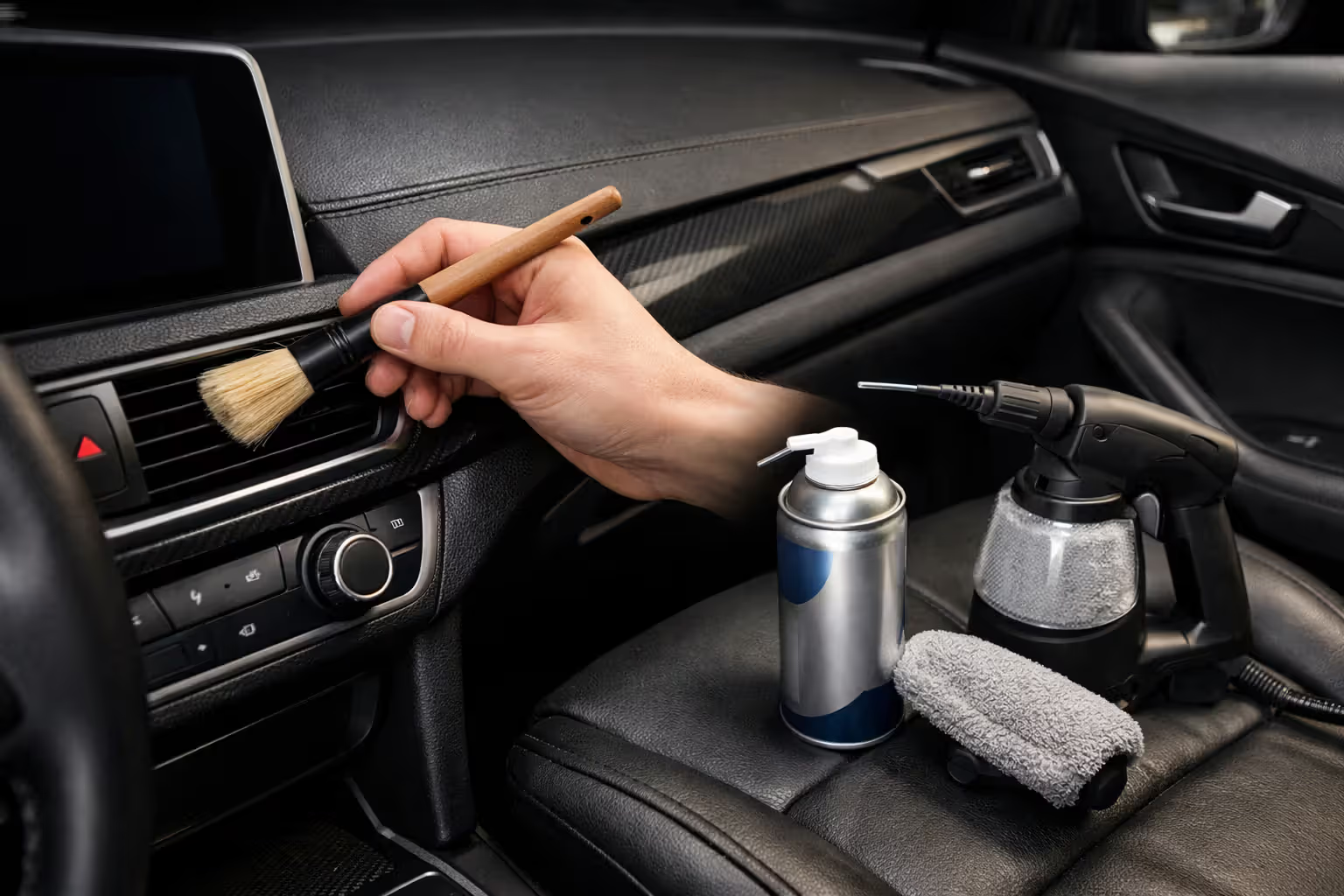
Detailing brushes for interiors differ from exterior brushes. You need ultra-soft bristles that won't scratch piano black trim or glossy surfaces. Boar's hair brushes handle most tasks, while horsehair brushes offer even softer bristles for the most delicate surfaces. Small detail brushes (½" wide) reach air vents, around buttons, and into stitching seams.
Compressed air dusters blow debris from vents, crevices, and electronic controls where brushes can't reach. Canned air works but gets expensive with regular use. Electric air dusters (around $30-50) provide unlimited use and stronger pressure. Hold them at an angle to prevent moisture condensation on sensitive electronics.
Steam cleaners sanitize and clean without chemicals, making them ideal for interiors. They remove stains, kill bacteria, and deodorize fabric and carpet. Entry-level models start around $80, while professional units exceed $300. The investment makes sense if you have kids, pets, or allergies. Use microfiber bonnets on the steam nozzle to capture loosened dirt instead of spreading it.
Foam applicators and detailing swabs apply interior protectants to dashboards, door panels, and center consoles. Foam applicators spread product evenly; detailing swabs (similar to large cotton swabs) handle tight spaces around controls and in seams. Never spray protectants directly onto surfaces—overspray lands on glass and creates hazy film that's difficult to remove.
Glass cleaning requires dedicated microfiber glass towels—tightly woven with a smooth surface that doesn't streak. Use two towels: one to apply cleaner and remove dirt, a second dry towel to buff to clarity. Waffle-weave towels work, but smooth glass-specific towels deliver better results. Replace them when they begin leaving streaks despite washing.
Author: Brianna Lowell;
Source: shafer-motorsports.com
Detailing Tools Beginners Should Buy First (Priority List)
Starting with every tool available overwhelms your budget and storage space. Begin with essentials that handle 80% of cleaning tasks, then expand as you identify specific needs.
Your first purchase should address washing and drying: two buckets with grit guards, one quality wash mitt, and two large drying towels. This $40-50 investment prevents damage while you build your toolkit. Add wheel-specific tools—a wheel brush and dedicated wash mitt—to prevent cross-contamination.
For interiors, start with a good vacuum (or attachments for your existing shop vac) and a basic set of microfiber towels in different colors. Add a set of detailing brushes (small, medium, large) to reach vents and crevices. This covers routine interior maintenance for under $60.
| Tool Category | Beginner Kit | Intermediate Kit | Why Upgrade? |
| Wash Tools | 2 buckets with grit guards, 1 wash mitt ($40) | Add foam cannon, wheel brushes, separate mitt set ($85) | Faster cleaning, better foam coverage, proper separation |
| Drying Tools | 2 waffle-weave towels ($25) | 4 towels plus dedicated glass towels ($55) | More towels = less wringing, specialized glass care |
| Interior Vacuum | Attachments for existing shop vac ($20) | Dedicated car vacuum 5+ HP ($120) | Better suction, more convenient, purpose-built attachments |
| Brushes | 3-piece basic set ($15) | 8-piece variety with ultra-soft options ($45) | Specialized bristles for delicate surfaces, more size options |
| Applicators | 5-pack foam pads ($8) | Foam + microfiber variety pack ($20) | Different applicators optimize different products |
| Storage | Plastic tote ($12) | Organized caddy with dividers ($35) | Prevents tool damage, easier access, better organization |
| Total | $120 | $360 | Professional results, faster work, better protection |
The intermediate kit adds efficiency and specialization. A foam cannon cuts wash time by 10-15 minutes. Additional towels mean less time wringing and drying. Specialized brushes protect delicate surfaces while cleaning more effectively.
Budget-conscious detailers should prioritize tools that prevent damage over those that add convenience. A $25 set of quality microfiber towels prevents scratches that cost $200+ to repair. A $50 foam cannon saves time but won't damage your car if you skip it. Make protection your first priority, efficiency your second.
Avoid "complete kits" marketed to beginners. They bundle low-quality tools with a few decent items, and you'll replace most pieces within months. The $80 "ultimate detailing kit" contains $30 worth of tools you'll actually use. Buy individual quality items even if it takes longer to build your collection.
Detailing isn’t about having every tool ever made. It’s about mastering five essential ones. A beginner with the right wash mitt, two quality towels, and proper technique will outperform someone with a garage full of gadgets and no discipline
— Todd Cooperider, Owner, Esoteric Detail & Automotive Educator
How to Build Maintenance Cleaning Kits for Different Vehicle Types
Your vehicle type, usage patterns, and storage options determine your ideal maintenance cleaning kits. A sedan used for commuting needs different tools than a truck used for hauling or an SUV that carries kids and dogs.
Sedans with smaller interiors and less ground clearance need compact tools. Standard-size wash mitts and brushes work fine. Your vacuum needs strong suction but not extra-long hoses. Storage is easier—a medium-size plastic tote (18" x 12" x 10") holds everything. Focus on paint protection tools since sedans often have more exposed painted surfaces relative to their size.
SUVs and trucks require scaling up. You'll need longer-handled brushes to reach roof panels without a step stool. Extra drying towels cover more surface area. Trucks with bed liners need stiff brushes and all-purpose cleaners that handle heavy dirt. If you regularly haul cargo, keep a separate "heavy-duty" cleaning kit with stronger chemicals and more aggressive brushes that you wouldn't use on paint.
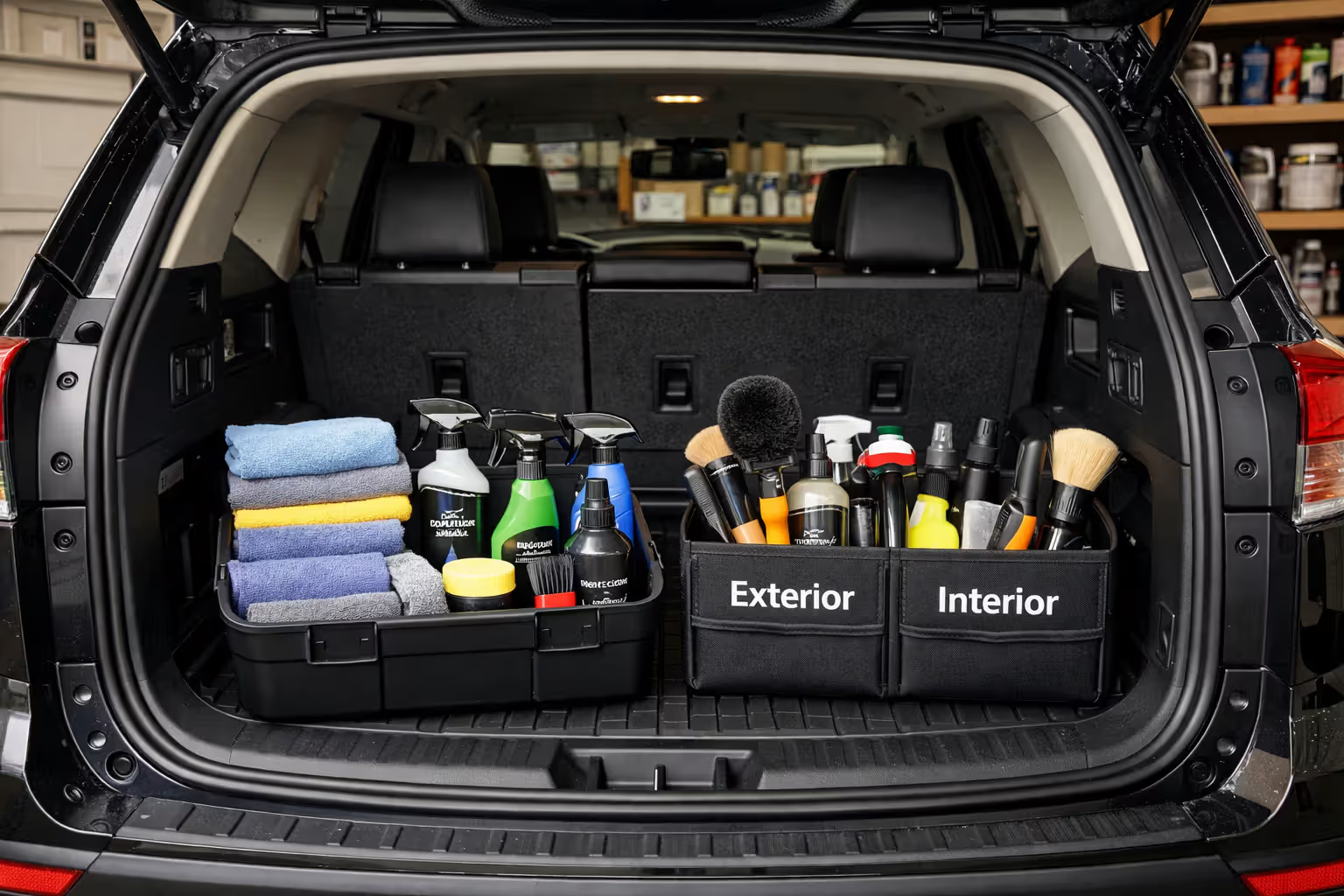
Families with kids should add carpet extractors and steam cleaners to their maintenance cleaning kits. Spills and stains happen weekly, not monthly. Keep a small emergency kit in the vehicle: microfiber towels, all-purpose cleaner, and a small brush. Addressing spills immediately prevents permanent stains.
Author: Brianna Lowell;
Source: shafer-motorsports.com
Pet owners need dedicated tools that never touch human-contact surfaces. Separate vacuum attachments for pet areas prevent spreading allergens. Rubber grooming gloves remove pet hair from upholstery more effectively than vacuuming alone. Add an enzymatic cleaner specifically formulated for pet accidents.
Storage solutions prevent tool damage and contamination. Dirty tools stored in sealed containers grow mold and smell terrible. Wash mitts and towels must dry completely before storage. Use mesh bags or open bins that allow airflow. Store brushes bristle-up to maintain their shape. Keep interior and exterior tools in separate containers—clearly labeled—to prevent cross-contamination.
Seasonal considerations affect your toolkit. Winter requires additional tools: snow brushes with soft bristles, ice scrapers with brass blades (won't scratch glass), and spray bottles of quick detailer for removing road salt between washes. Summer demands sun protection: work in shade and have extra water available since panels dry quickly in heat.
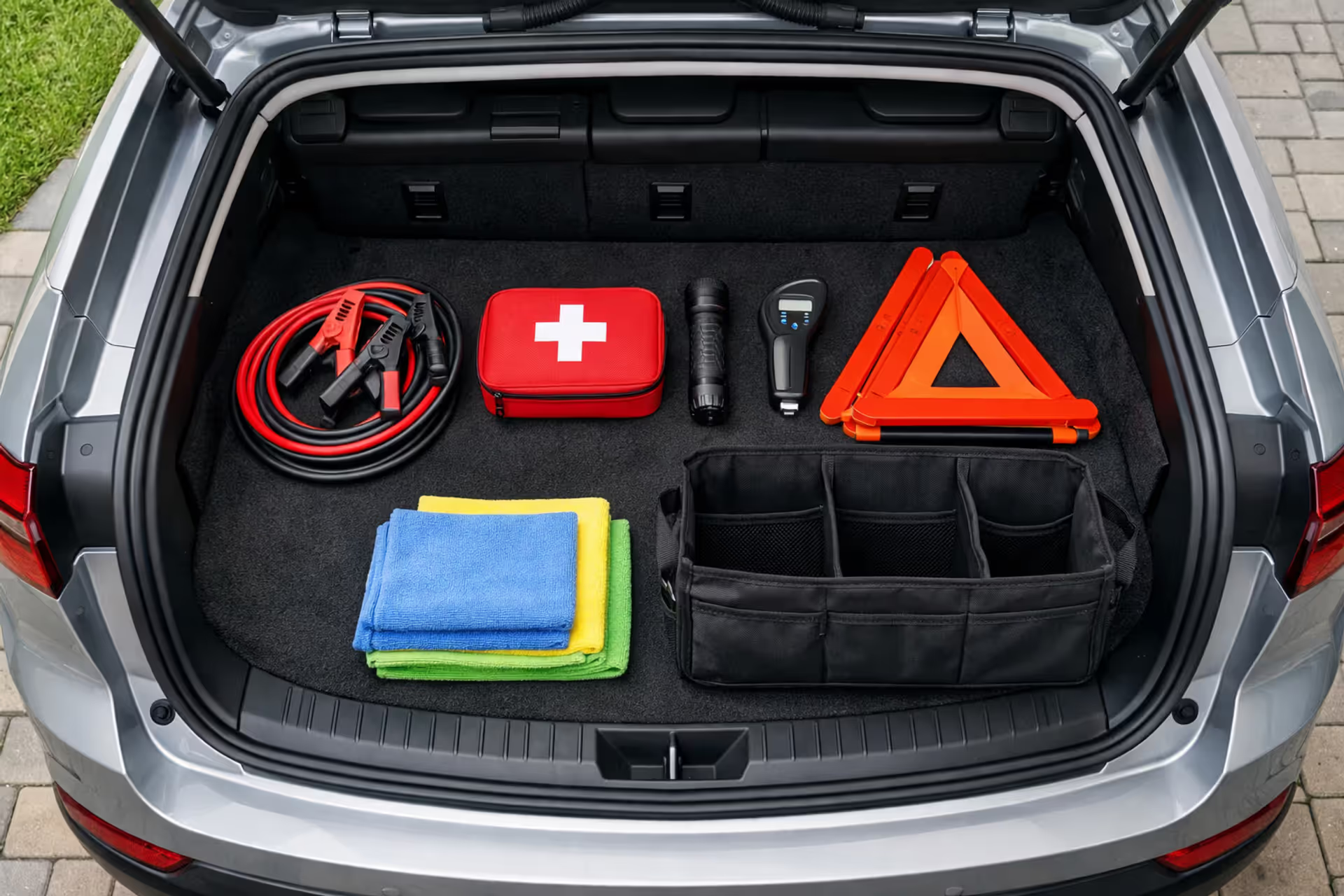
Create a "quick clean" kit for weekly maintenance separate from your deep-clean tools. Include waterless wash spray, a few microfiber towels, interior detailer, and a small brush. This 10-minute kit handles light dust and maintains appearance between thorough cleanings. Store it in your garage or trunk for easy access.
Mobile detailing setups need everything in portable containers with handles. Rolling tool bags or caddy organizers with compartments keep tools accessible. Cordless vacuums and battery-powered blowers eliminate the need for power outlets. Plan your kit around water access—foam guns work with garden hoses if pressure washers aren't available.
Common Tool-Related Mistakes That Damage Your Car's Finish
Even quality tools cause damage when used incorrectly. These mistakes are common among beginners and experienced detailers who develop bad habits.
Using the same wash mitt for wheels and paint is the fastest way to scratch your clear coat. Brake dust contains metal particles that act like sandpaper when dragged across paint. Always use separate, clearly marked tools for wheels. If you accidentally use your paint mitt on wheels, retire it immediately—no amount of washing removes embedded metal particles.
Pressure washers set above 1,500 PSI and held closer than 12 inches strip wax, damage trim, and force water into door seals and electronics. The "more pressure equals cleaner" mindset causes hundreds in damage. Use a 25-40 degree nozzle, never a 0-degree "pencil" jet. Keep the wand moving and maintain proper distance. For delicate areas like emblems and trim, reduce pressure or switch to hand washing.
Scrubbing with dry towels scratches paint even if the towel is clean. Always use proper lubrication—quick detailer spray, waterless wash solution, or soapy water. The lubricant creates a barrier between the towel and paint, allowing dirt particles to glide rather than scratch. This applies to both exterior paint and interior glossy surfaces.
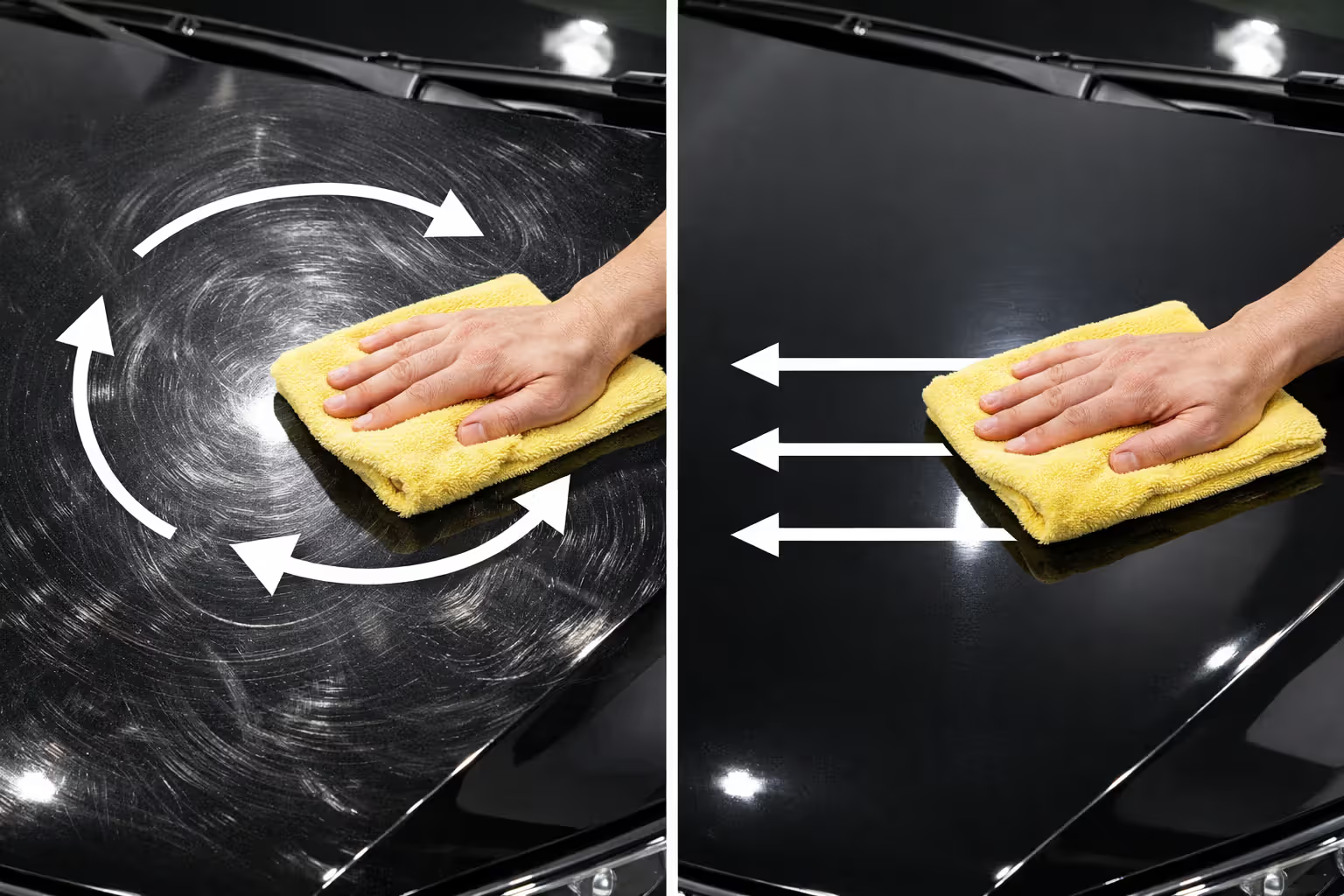
Circular scrubbing motions create swirl marks—those circular scratches visible under direct light. Use straight, overlapping passes instead. This applies to washing, drying, applying wax, and buffing. If scratches occur, straight-line scratches are less visible and easier to remove than circular swirls.
Author: Brianna Lowell;
Source: shafer-motorsports.com
Letting products dry on surfaces before buffing creates residue that's difficult to remove and may require additional chemicals or polishing. Work in small sections—2' x 2' panels—and buff immediately after application. In hot weather, work in shade and use less product to prevent premature drying.
Using stiff-bristled brushes on soft surfaces damages vinyl, leather, and plastic. Match brush stiffness to surface hardness. Soft boar's hair for paint and interior plastics, medium synthetic for rubber and vinyl, stiff synthetic for wheel barrels and tires. Label your brushes to prevent grabbing the wrong one.
Cross-contaminating interior and exterior tools spreads harsh chemicals and contaminants. Wheel cleaners and tire dressings contain chemicals that stain fabric and damage leather. Exterior wash soap leaves residue on glass that creates haze. Keep tools completely separate and label them clearly. Different colored towels and mitts make visual identification instant.
Storing wet tools in sealed containers creates mold, mildew, and permanent odors. Wash mitts, towels, and brushes must dry completely before storage. Hang them or lay them flat in open air. Once dry, store in breathable bags or open bins. If tools develop odors, they're contaminated and should be replaced—washing won't fully remove bacterial growth.
Applying too much pressure during any cleaning task causes damage. Let tools and products do the work. Firm, consistent pressure suffices for most tasks. Excessive force damages fibers in carpets and upholstery, scratches paint and plastic, and wears out tools faster. If you're pressing hard and not getting results, you need different tools or products, not more pressure.
Frequently Asked Questions About Car Detailing Basics Tools
Conclusion
Building an effective collection of car cleaning tools requires understanding that quality tools prevent damage while improving efficiency. Start with essentials that protect your vehicle—proper wash mitts, microfiber towels, and dedicated brushes for different surfaces. Expand your toolkit as you identify specific needs rather than buying complete kits filled with low-quality items.
The investment in proper tools pays for itself by preventing damage that costs hundreds to repair and by making products work as intended. A $15 microfiber drying towel delivers better results than a $30 quick detailer applied with paper towels. Your technique and tools matter more than premium products.
Maintain your tools properly—wash them after use, dry them completely, and store them in breathable containers. Replace them when they lose effectiveness rather than continuing to use worn tools that scratch and damage surfaces. Keep interior and exterior tools completely separate to prevent cross-contamination.
Whether you're maintaining a daily driver or detailing a show car, the right tools make the difference between cleaning your vehicle and slowly damaging it. Start with the basics, develop proper techniques, and expand your collection as your skills and needs grow.
Related Stories

Read more
Read more


The content on Auto Insights is provided for general informational and educational purposes only. It is intended to offer guidance on car buying, vehicle ownership, finance, insurance, EVs, maintenance, accessories, reviews, and related topics, and should not be considered professional financial, legal, insurance, mechanical, or investment advice.
All information, tools, calculators, comparisons, and recommendations presented on this website are for general guidance only. Individual financial situations, driving habits, vehicle conditions, insurance policies, and market factors vary, and actual results or costs may differ from estimates provided.
Auto Insights makes no guarantees regarding accuracy, completeness, or current applicability of the information, as automotive markets, regulations, incentives, interest rates, and vehicle specifications may change over time.