
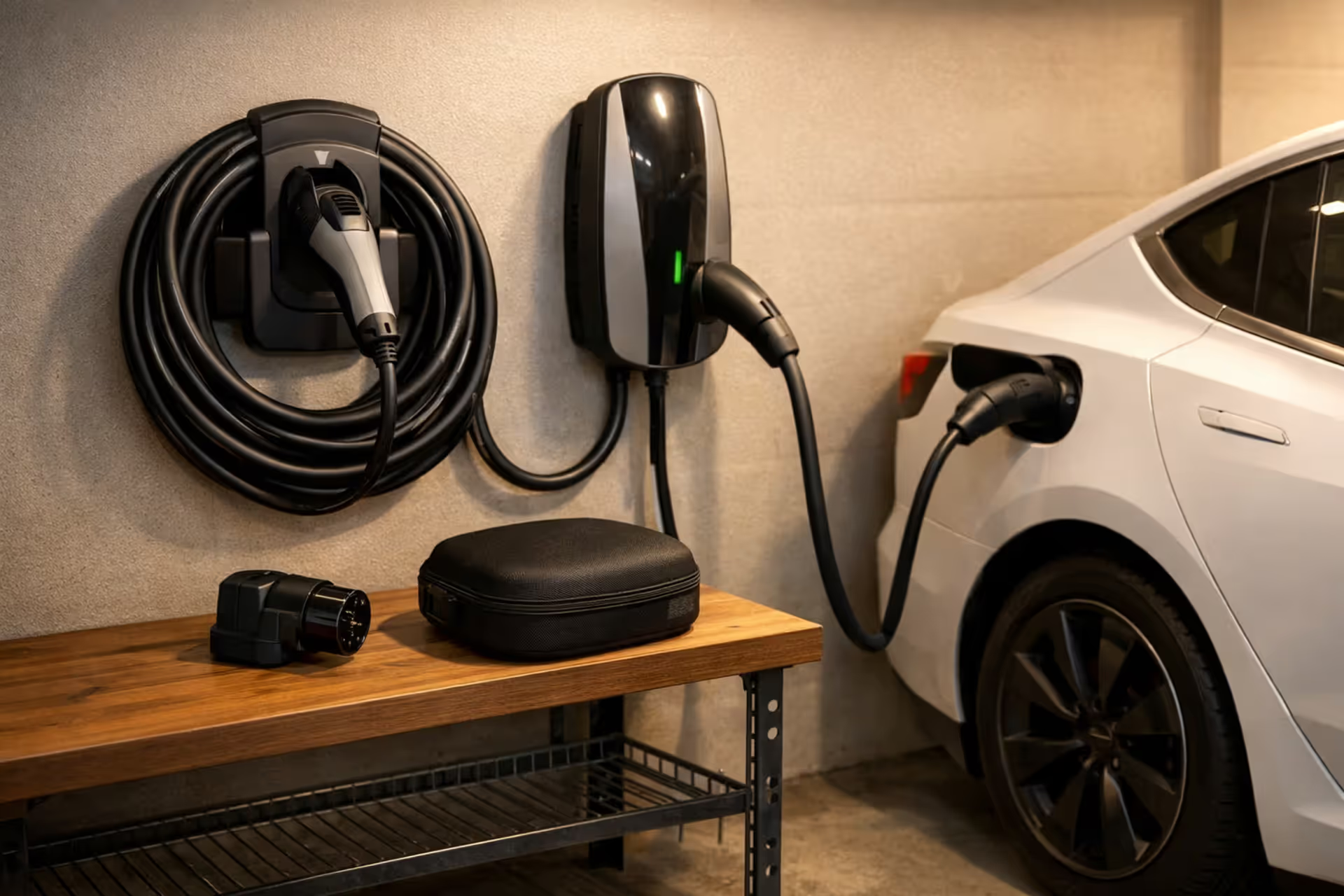
Electric vehicle in a home garage plugged into a wall-mounted charging station with a neatly organized cable and charging accessories on a nearby shelf
EV Charging Accessories: Essential Add-Ons for Home and Public Charging

You just bought an EV, and the charging cable that came with it is already driving you crazy. It's either six inches too short to reach your parking spot comfortably, or you've got ten feet of excess cord creating a tangled mess on your garage floor. The connector gets left sitting in puddles. You show up to a public charger only to discover your plug doesn't fit their socket.
Sound familiar? Factory charging equipment gets electricity into your battery—that's it. Everything else is on you to figure out. The weather protection, the organization, the compatibility problems, the cable that keeps getting run over by your spouse's car—none of that comes solved out of the box.
Which accessories actually help, though? The market's packed with products that range from legitimately useful to potentially dangerous. A thirty-dollar adapter might save your road trip, while that cheap extension cord could burn down your garage. Let's separate what works from what doesn't.
Why Standard EV Chargers Need Supplemental Accessories
Your EVSE does one job: push electrons from wall to battery. It won't keep that cable from turning into a dirt-collecting trip hazard across your garage floor. It won't stop UV rays from baking the connector housing. And if you park three feet farther from the outlet than the manufacturer anticipated? Good luck.
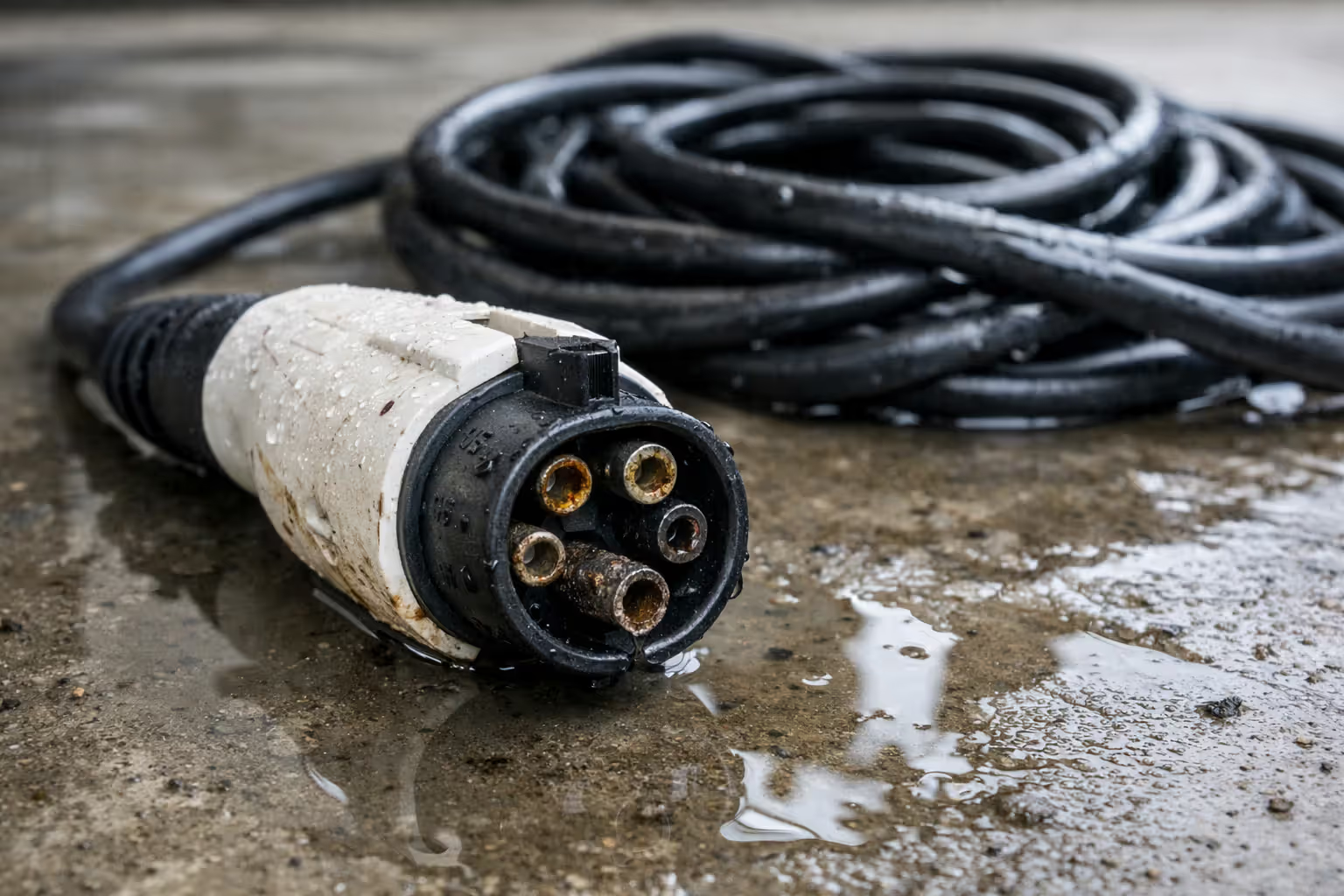
Consider weather damage. Sure, most charging stations claim weatherproof ratings. But "weatherproof" means it won't immediately fail when wet—not that daily exposure to rain, snow, and temperature swings won't gradually destroy it. A Michigan driver learned this expensive lesson when corroded J1772 pins cost her $400 in repairs after one winter. A twenty-five-dollar weather cover would've prevented the whole thing.
Then there's the cable situation. A 25-foot charging cable weighs about as much as a car tire and has roughly the same flexibility. Leave it piled on the floor, and you're asking for damage from being driven over, chewed by pets, or snagged by lawn equipment. Those garden hose reels you already own? They'll sag and fail under the weight within months.
Public charging creates different headaches. You need 50 miles of range to get home. You find a charging station. Their connector doesn't match yours. Without an adapter in your trunk, that station's as useful as a gas pump when you're driving electric—which is to say, completely useless.
Author: Derek Fulton;
Source: shafer-motorsports.com
Charging Adapters: Solving Connector Compatibility Issues
Adapters let you connect incompatible plugs and sockets. They're especially valuable for Tesla drivers using non-Tesla networks, and for everyone else hoping to tap into Tesla destination chargers where access is permitted.
NACS to J1772 and Other Common Adapter Types
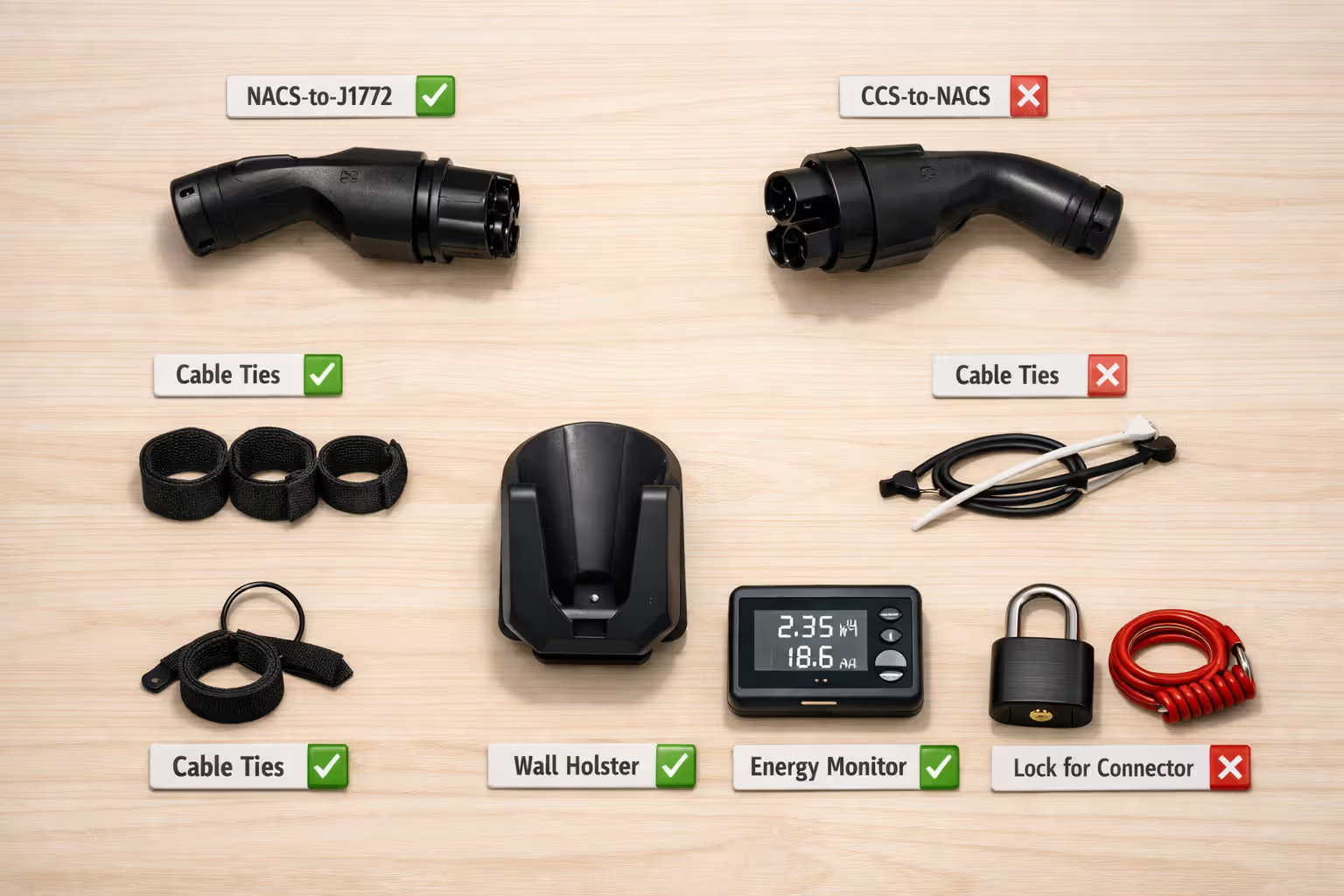
Tesla owners need a Tesla-to-J1772 adapter (officially NACS-to-J1772 now that the industry's standardizing on Tesla's connector name) to access thousands of J1772 charging stations nationwide. Every Tesla includes one in the box, but plenty of owners buy a second backup to keep in the vehicle. Third-party versions from Lectron and A2ZEV run $30-60 and typically match Tesla's factory quality.
The reverse direction—J1772-to-Tesla adapters for accessing Tesla destination chargers with a non-Tesla EV—costs more at $100-150. These only work with Tesla's Level 2 destination chargers, never Superchargers (which require vehicle authentication). With Ford, GM, and others adopting NACS for upcoming models, these adapters serve as temporary bridges until vehicles ship with Tesla-compatible inlets.
CHAdeMO adapters occupy a different category entirely. These enable DC fast charging between incompatible standards, most commonly letting Tesla vehicles use CHAdeMO stations. At $400-500 they're neither cheap nor compact, but for road trips through areas with sparse Supercharger coverage, they dramatically expand your options. Expect charging speeds around 50 kW—slower than your native fast charging but substantially faster than any Level 2 alternative.
CCS-to-Tesla adapters recently hit the market, with Tesla's official version at $250. These unlock the extensive CCS fast-charging network for Tesla drivers, though some vehicles need software updates for full compatibility.
Standards are what make the modern world work. Without them, every connection becomes a negotiation, every interface a potential failure point. The power of a universal standard is that it turns complexity into simplicity
— Vint Cerf
When Adapters Compromise Charging Speed or Safety
Here's what many people miss: not every adapter maintains full charging speeds. Most Level 2 adapters handle the full 80 amps from residential charging stations, but budget models sometimes limit current to 40 or 50 amps. The adapter's amperage rating needs to match or exceed your EVSE's output. Pair a 48-amp charger with a 40-amp adapter and you've created a bottleneck that stretches charging time by 20% or more.
Safety certifications matter more with adapters than practically any other EV accessory. Poor designs overheat, fail to communicate charging parameters accurately, or arc during connection. UL listing (specifically UL 2251 for EV charging equipment) or ETL certification indicates independent verification of safety standards. Non-certified adapters from random Amazon sellers have caused fires—documented case in Oregon involved an uncertified NACS adapter that melted during what should've been routine charging.
Quality adapters include temperature monitoring. During normal operation, they'll be warm to your hand but never uncomfortably hot. If an adapter becomes hot enough to smell of burning plastic or the housing discolors, stop using it immediately. Some include LED indicators that change color during overheating—worth the slight price increase.
Physical construction tells you a lot. Housings should be solid with precise fits and no gaps for moisture intrusion. Pins should be smooth, evenly plated, and spring-loaded for firm contact. Loose or wiggling connections generate heat and resistance, degrading both performance and safety with continued use.
Cable Management Solutions That Actually Work
Nobody's 20-pound charging cable organizes itself. Ground storage guarantees dirt accumulation, potential damage, and a messy garage. Effective cable management protects equipment, maintains accessibility, and gets everything out of the way between charging sessions.
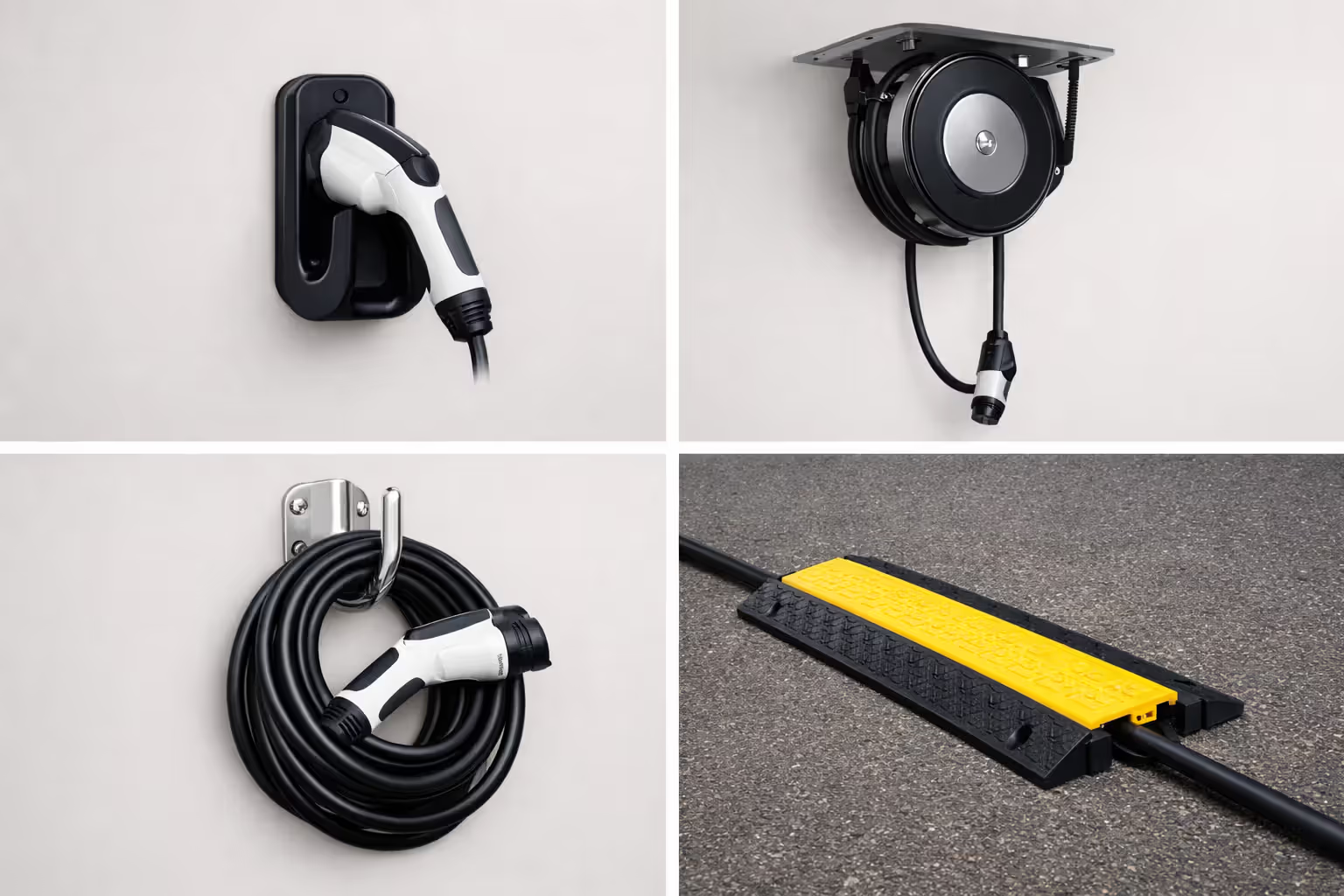
Wall-mounted holsters are the straightforward approach. These J-shaped or cradle-style brackets attach to garage walls and hold connectors when you're not charging. Basic versions cost $15-30 and work fine if your parking spot stays consistent. Look for drainage holes—trapped water accelerates corrosion. Some designs add hooks for coiling excess cable, though this works better with shorter cables than longer ones.
Retractable reels provide the most sophisticated option but involve trade-offs. Spring-loaded reels ($150-300) automatically retract cables after use, similar to garden hose reels. They mount to walls or ceilings and eliminate ground contact entirely. The downside? Added mechanical complexity means more potential failure points, and constant coiling and uncoiling might stress cables over time. Heavy-duty models rated specifically for EV cable weights outlast repurposed industrial cord reels.
Ceiling-mounted retractable systems work particularly well in garages with limited wall space. These suspend cables from above for vertical extension and retraction. They're ideal when parking situations offer minimal wall clearance. Installation requires locating ceiling joists or installing backing boards—drywall anchors alone won't handle the cable weight.
Weatherproof hooks and cable wraps suit outdoor installations better. Marine-grade stainless steel hooks ($10-20) resist corrosion better than coated steel alternatives. Mount them high enough that coiled cables clear the ground by 12+ inches to avoid standing water. Velcro cable wraps or silicone bands maintain neat coils without the pinching damage zip ties cause. Plan on replacing wraps annually—UV exposure degrades even high-quality materials eventually.
Cable protectors solve a specific problem: preventing drive-over damage. When charging cables must cross driveways or pathways, rubber cable ramps ($40-80) shield them from vehicle tires. These bright yellow or black ramps also reduce pedestrian trip hazards. They're overkill for permanent installations but essential when cables temporarily cross traffic areas.
Author: Derek Fulton;
Source: shafer-motorsports.com
Price correlates with durability more in cable management than most accessory categories. That $15 plastic holster might crack after one winter's temperature cycling, while a $40 fiberglass-reinforced model delivers years of service. For equipment you'll use daily, upfront quality saves replacement costs and aggravation.
Extension Cords and Reach Extenders: What's Safe and What's Not
This question appears constantly in EV forums: "Can I just use an extension cord with my charger?" Short answer—it's almost always dangerous. Long answer explains why this seemingly simple solution creates serious hazards.
Level 2 EV chargers pull 30-50 amps continuously for hours. That vastly exceeds typical household appliance current, and sustained high-amperage loads generate heat in electrical connections. Every additional connection point—the extension cord's plug, its socket, its internal wiring—introduces resistance and potential failure spots.
Standard outdoor extension cords aren't rated for continuous duty at EV charging amperages. A 12-gauge cord rated for 20 amps will overheat when carrying 40 amps from a charger. Even if the cord's gauge seems adequate on paper, plug and socket connections create high-resistance points that heat up under load. This heat melts insulation, creates arcing, and starts fires. The National Electric Code prohibits using extension cords with permanently installed equipment for exactly these reasons.
Some companies manufacture heavy-duty "EV charging extension cords" with 6-gauge or 8-gauge wire, industrial-grade plugs, and continuous-duty ratings. These cost $200-400 and include thermal monitoring. While technically safer than hardware-store extensions, they still void most EVSE warranties and violate electrical codes in many jurisdictions. Insurance companies have denied fire claims when investigations discovered extension cords in charging circuits.
If your outlet sits too far from your parking spot, the correct solution involves relocating the outlet or installing a longer permanent cable on your EVSE. Many charging stations offer cables up to 25 feet long, and electricians can relocate outlets for $300-600 depending on wire run complexity. This one-time expense eliminates ongoing fire risk while maintaining warranty and insurance coverage.
One exception exists: Level 1 charging (120V, 12-amp) can sometimes safely use a heavy-duty extension cord rated for continuous outdoor use at 15+ amps. The much lower amperage reduces heat generation, though you should still monitor connections for warmth during initial uses. This is a compromise solution when Level 1 is your only option and outlet access is limited—never attempt this with Level 2 equipment.
| Adapter Style | Connector Compatibility | Maximum Speed | Typical Cost | Required Certifications |
| NACS to J1772 | Tesla vehicles at J1772 stations | 80A (19.2 kW) | $30-60 | UL 2251, ETL |
| J1772 to NACS | Non-Tesla vehicles at Tesla destination chargers | 80A (19.2 kW) | $100-150 | UL 2251 |
| CHAdeMO to NACS | CHAdeMO DC fast charging to Tesla | 50 kW | $400-500 | UL 2251 |
| CCS1 to NACS | CCS DC fast charging to Tesla | 250 kW | $250 | UL listed |
| Dual J1772/NACS | Universal Level 2 compatibility | 48A (11.5 kW) | $80-120 | UL 2251, ETL |
Must-Have Accessories for Home Charging Stations
After handling adapters and cable management, certain accessories address specific residential charging challenges. What you need depends on indoor versus outdoor charging and how much you value monitoring and security.
Protective Enclosures and Weather Shields
Outdoor charging equipment battles UV degradation, temperature extremes, precipitation, and physical impacts. Most EVSEs carry NEMA 3R or NEMA 4 weatherproof ratings, but these standards ensure function when wet—not that equipment thrives long-term in harsh conditions.
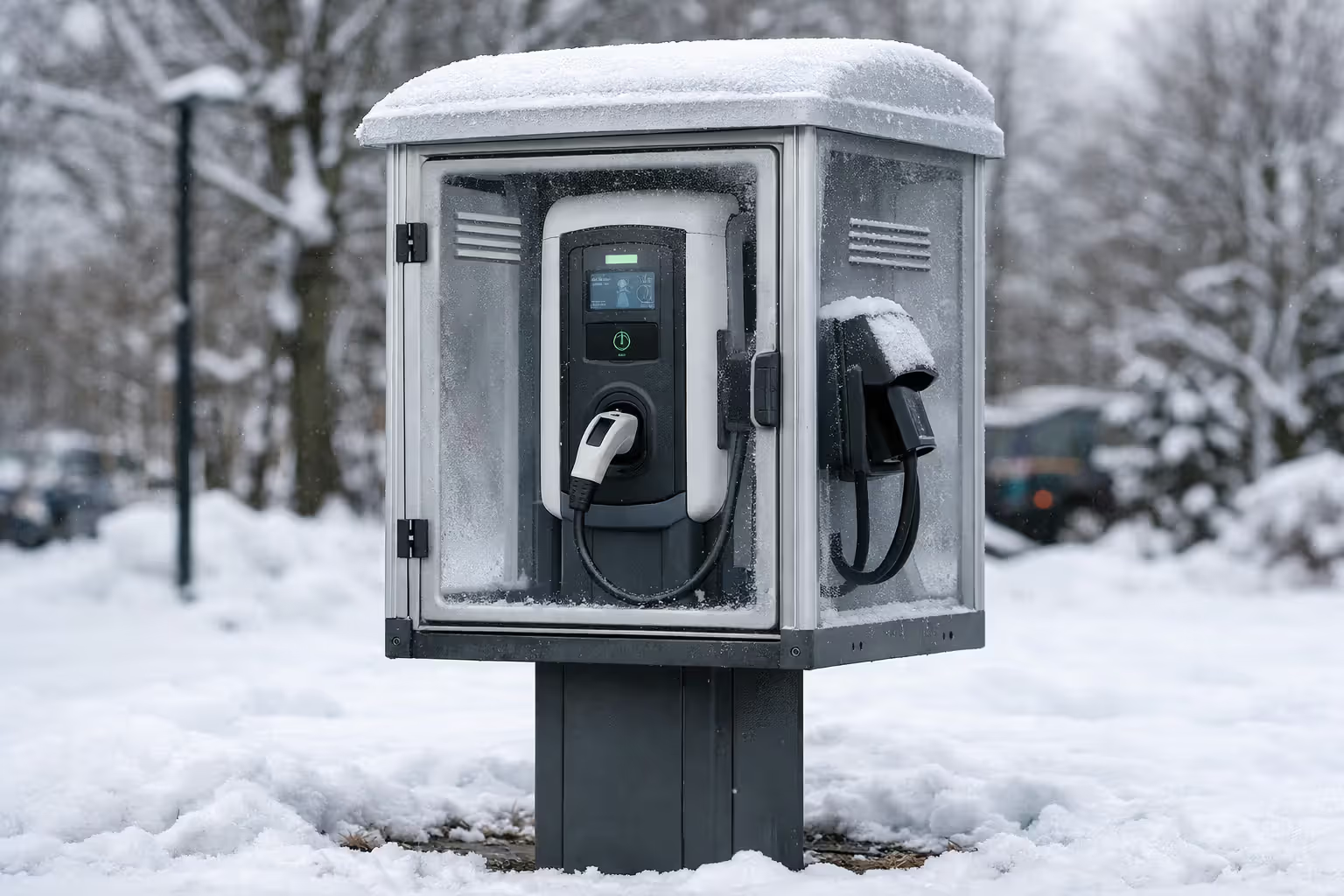
Charging station enclosures ($100-250) add extra protection layers. These metal or polycarbonate cabinets mount to walls and house entire EVSEs, shielding them from direct sun and rain. Vented designs prevent heat buildup while excluding moisture. For installations in high-traffic areas, enclosures also deter tampering and theft. Lockable versions add security, though access management for legitimate users becomes necessary.
Connector holsters with integrated covers protect plugs themselves. The connector often proves more vulnerable than EVSE housing since it sits exposed between charging sessions. Holsters with flip-down or sliding covers keep rain, snow, and insects away from connector pins. Some integrate heating elements preventing freezing in extreme cold—valuable if you've struggled with a frozen connector on subzero mornings.
Pedestal mounting systems suit installations where wall mounting isn't feasible. These free-standing posts ($200-400 for the pedestal alone) anchor to concrete pads and position EVSEs at convenient heights. They work well for parking areas away from buildings or multi-vehicle households where centrally-located chargers serve several parking spots. Verify the pedestal's rated for your EVSE's weight—lighter-duty models sway in wind or lean over time.
Author: Derek Fulton;
Source: shafer-motorsports.com
Smart Monitoring Tools and Energy Meters
Understanding charging costs and patterns helps optimize charging timing and catch problems early. Many modern EVSEs include built-in monitoring via smartphone apps, but older models lack this functionality. Standalone monitoring accessories bridge the gap.
Plug-in energy monitors ($40-100) install between outlets and EVSEs, measuring kilowatt-hours consumed, real-time power draw, and cumulative costs. Models like Kill A Watt work for Level 1 charging but can't handle Level 2 amperages. Heavy-duty versions rated for 40-50 amps cost more but deliver accurate data for high-power charging. These help verify electric bill charges match actual usage and identify if your EVSE draws more power than expected (a potential fault indicator).
Circuit-level monitors integrate with home electrical panels, tracking dedicated circuits feeding EVSEs. These professional-grade systems ($150-300 plus installation) provide the most accurate data and can integrate with home energy management systems. They're worthwhile with time-of-use electricity rates when you want automated charging during off-peak hours.
Smart plugs rated for high amperage ($80-150) add scheduling and remote control to basic EVSEs. They let you set charging windows for cheaper overnight rates without upgrading to smart charging stations. Verify any smart plug you use is rated for continuous duty at your EVSE's full amperage—most consumer smart plugs max out at 15 amps and will fail catastrophically with Level 2 loads.
Security accessories matter in semi-public installations like apartment parking or workplace charging. Locking connector holsters prevent cable theft (replacements cost $200-400). Some charging stations accept padlocks blocking connector unplugging during charging. For installations where entire EVSEs might be stolen, security cables and tamper-resistant mounting hardware add deterrence.
Comparing Top-Rated EV Charging Accessory Brands
Quality varies dramatically across accessory manufacturers. A few brands established reputations for safety, durability, and customer support, while others flood markets with cheap products of questionable reliability.
Lectron dominates adapter markets with UL-certified products across most common connector combinations. Their NACS-to-J1772 adapters cost slightly more than generic alternatives but include two-year warranties and responsive customer service. Lectron's cable management products are less distinguished—adequate but not exceptional compared to specialty manufacturers.
TurboCord focuses on portable charging solutions and accessories. Their cable management systems are overbuilt in the best way, featuring marine-grade materials and thoughtful design details. Prices run 30-40% higher than competitors, but failure rates are correspondingly lower. Their extension-style portable EVSEs are among the few that safely provide additional reach, though they're technically portable chargers rather than true extensions.
Mumc produces weather protection and mounting solutions. Their connector holsters integrate cable wraps and drainage features many competitors overlook. Build quality is good but not exceptional—expect 3-5 years of service rather than the decade-plus premium brands deliver. Pricing sits in market middle, making them reasonable value choices.
JuiceBox and ChargePoint offer accessories designed specifically for their own charging stations, including mounting pedestals, cable management hooks, and smart monitoring add-ons. These work best within their ecosystems but often cost more than universal alternatives. The advantage is guaranteed compatibility and unified aesthetics if you value cohesive installations.
Generic Amazon brands present gambles. Some deliver surprising quality at low prices, while others fail within months or lack basic safety features. When buying from unfamiliar brands, verify UL or ETL certification, check for detailed specifications (not just marketing claims), and read reviews mentioning long-term use rather than just initial impressions. The $15 saved on cheap adapters isn't worth risking $5,000 in fire damage claims.
Warranty terms reveal manufacturer confidence. Quality brands offer 2-3 year warranties on adapters and mounting hardware. Shorter warranties or "satisfaction guarantees" instead of defect coverage suggest manufacturers expect higher failure rates. Factor replacement costs into decisions—a $40 adapter with three-year warranty often costs less over time than a $25 adapter requiring annual replacement.
Author: Derek Fulton;
Source: shafer-motorsports.com
Common Mistakes When Buying EV Charging Accessories
Even experienced EV owners make purchasing errors costing money or creating safety hazards. These mistakes appear repeatedly in owner forums and support calls.
Assuming all adapters are universal. Connector types have subtle variations. Not all J1772 plugs are identical—some older stations use slightly different pin configurations. Tesla's NACS connector changed slightly between Model S/X and Model 3/Y generations. An adapter working perfectly with one vehicle might fit poorly or not at all with another. Check manufacturer compatibility lists before buying, not just general connector types.
Ignoring amperage ratings. An adapter or cable management system rated for 32 amps will eventually fail when used with 48-amp charging stations. The failure might be gradual (reduced charging speeds, increased heat) or sudden (melted housings, arcing). Always match or exceed your EVSE's maximum output rating. If you plan future charging station upgrades, buy accessories rated for higher amperage now.
Buying non-certified products to save money. UL and ETL certifications cost manufacturers money to obtain, which explains why certified products cost more. That premium buys independent verification meeting safety standards. Non-certified accessories have higher failure rates and create liability issues. Your insurance company can deny claims if fire investigations reveal non-certified equipment in charging circuits.
Over-extending cable length. Adding adapters, extensions, or extra-long cables increases electrical resistance and voltage drop. While one adapter usually proves fine, stacking multiple adapters or using long extensions can reduce charging efficiency by 10-15%. You'll pay for electricity becoming heat in connections rather than charge in your battery. More importantly, voltage drop can confuse charging communication protocols, causing charging sessions to terminate unexpectedly.
Neglecting weather ratings. Indoor-rated accessories fail quickly outdoors. Even "water-resistant" products aren't always suitable for direct rain exposure. Match NEMA ratings to installation environments: NEMA 3R for protected outdoor locations, NEMA 4 for direct weather exposure, NEMA 4X for coastal areas with salt air. Using indoor-rated products outside voids warranties and creates shock hazards as seals degrade.
Choosing aesthetics over function. Sleek, minimalist cable management looks great in product photos but may not withstand daily use. A slim wall hook might not accommodate your cable's actual diameter when coiled. A compact holster might crack when you force a stiff, cold cable into it. Prioritize functional design—secure mounting, appropriate sizing, durable materials—then consider appearance.
Forgetting about future vehicle changes. When buying adapters for current vehicles, consider whether your next EV might use different connectors. With the industry transitioning to NACS, J1772 adapters may become obsolete for new vehicles within a few years. This doesn't mean avoid buying what you need now, but factor in that some accessories have limited useful lifespans as standards evolve.
"The biggest safety issue we see with EV charging accessories is consumers treating high-amperage equipment like household appliances. A Level 2 charger draws as much current as a kitchen range or central air conditioner—it demands the same respect in terms of wire gauge, connection quality, and circuit protection. Extension cords, loose adapters, or undersized cable management hardware can create fire hazards that develop slowly over weeks or months of use."
— Marcus Chen, Electrical Engineering Manager, SAE International EV Charging Standards Committee
— Derek Fulton
Frequently Asked Questions
Making Your Charging Setup Work Better
The accessories you choose should solve actual problems in your charging routine, not just add complexity. Start with basics—proper cable management prevents damage and keeps spaces organized. If you regularly encounter connector compatibility issues, invest in certified adapters from reputable manufacturers. For outdoor installations, weather protection extends equipment life and maintains safety.
Resist temptation to over-accessorize or cut corners on safety. That cheap adapter or makeshift extension cord might work initially, but risks compound over months of daily use. Electrical fires from charging equipment are rare but devastating—and almost always preventable through proper equipment selection and installation.
As EV charging infrastructure evolves and connector standards consolidate around NACS, some accessories will become obsolete while new ones emerge. Stay informed about changes affecting your vehicle, but don't let future uncertainty prevent addressing current needs. A well-chosen adapter or cable management system will serve you well for years, even as the broader landscape shifts.
Your charging accessories should fade into your routine's background—reliable, safe, and requiring minimal attention. When you can plug in without thinking about tangled cables, compatibility issues, or weather damage, you've built the right setup. That's when EV ownership delivers on its convenience promise, and charging becomes as unremarkable as it should be.
Related Stories
Read more
Read more



The content on Auto Insights is provided for general informational and educational purposes only. It is intended to offer guidance on car buying, vehicle ownership, finance, insurance, EVs, maintenance, accessories, reviews, and related topics, and should not be considered professional financial, legal, insurance, mechanical, or investment advice.
All information, tools, calculators, comparisons, and recommendations presented on this website are for general guidance only. Individual financial situations, driving habits, vehicle conditions, insurance policies, and market factors vary, and actual results or costs may differ from estimates provided.
Auto Insights makes no guarantees regarding accuracy, completeness, or current applicability of the information, as automotive markets, regulations, incentives, interest rates, and vehicle specifications may change over time.