
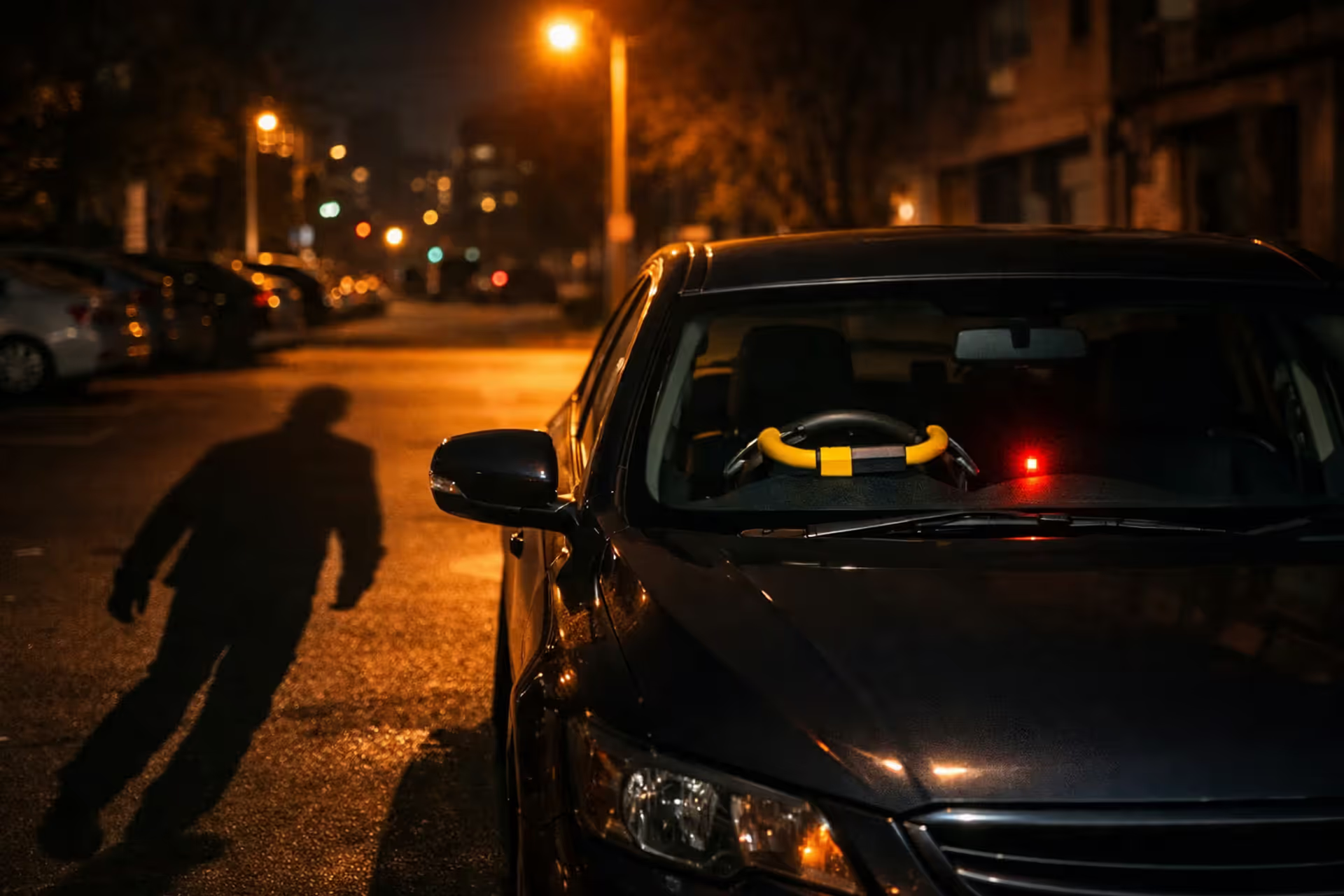
Car parked at night with yellow steering wheel lock visible through windshield and alarm LED blinking on dashboard — comprehensive vehicle theft protection
Car Security Devices: How to Choose the Right Protection for Your Vehicle

Someone's breaking into a car right now—probably within a few miles of where you're reading this. Your vehicle needs protection, but the real question is which combination of devices actually works for your specific parking situation and budget.
Why Investing in Vehicle Security Matters More Than Ever
Here's what happened in 2022: The National Insurance Crime Bureau documented 1,001,100 vehicle thefts across America—roughly one disappearing every 31 seconds if you calculate the math. But raw numbers don't capture the real headache you'll face.
Your comprehensive insurance might cover the theft. Great. Now subtract your $500-$1,000 deductible. Then prepare for your premiums to jump 25-40% and stay elevated for the next three to five years. That single incident will cost you $3,000-$6,000 in extra insurance payments alone. Add rental car expenses while you wait for the claim to process, the down payment on a replacement vehicle, and the hours you'll spend at the DMV getting new registration and licenses.
Only about half of stolen vehicles get recovered. The lucky ones that do? They usually come back missing wheels, stereos ripped out, interiors trashed. One acquaintance got his Toyota Tacoma back after three weeks—with the catalytic converter gone, transmission damaged from joyriding, and the entire bed spray-painted orange. Insurance totaled it anyway.
Where you park changes everything. Bakersfield, California has a theft rate nearly three times the national average. Meanwhile, Boston and New York City have surprisingly low rates despite their size. Texas, California, and Washington lead in total thefts, but smaller cities in these states often face worse per-capita problems than the major metros.
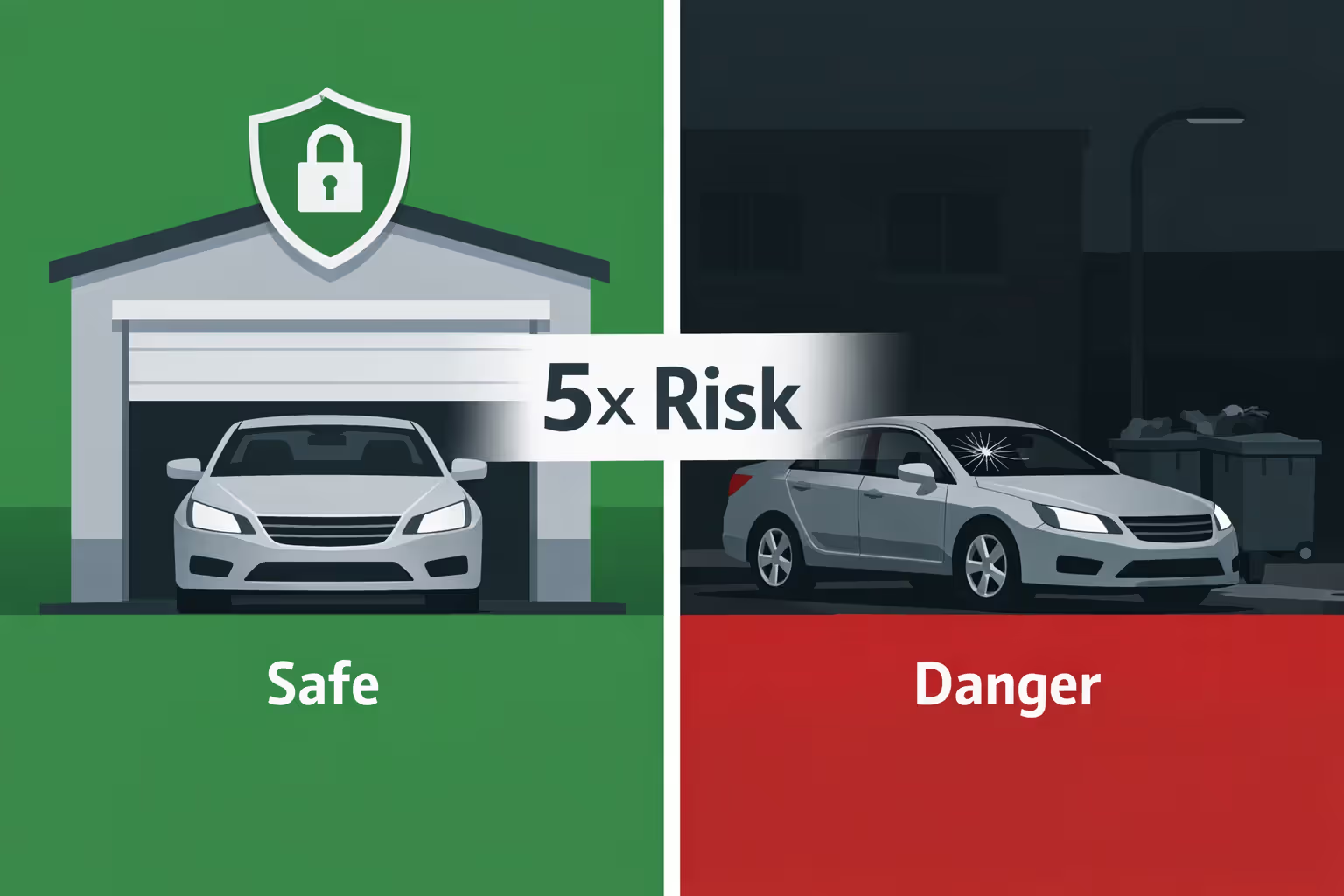
Street parking multiplies your risk by five compared to a locked garage. That's not guesswork—it's what insurance actuaries use to set your rates.
Author: Derek Fulton;
Source: shafer-motorsports.com
"Thieves operate on a 60-second rule. If they can't access and start your vehicle in under a minute, most move on. A visible lock plus one hidden system stops nine out of ten attempts before they start." — Michael Ramirez, Certified Automotive Security Specialist, National Auto Theft Prevention Council
Think of security devices as reverse insurance: you pay $200-$800 upfront to avoid a $30,000 loss plus years of inflated premiums. The real question isn't whether to protect your vehicle—it's figuring out which tools match your situation.
Physical Barriers: Steering Wheel Locks and Immobilizers Explained
Mechanical barriers work when batteries die, subscriptions lapse, or electronics fail. They're also impossible to miss, which matters more than you might think.
How Steering Wheel Locks Deter Thieves
The classic steering wheel lock—The Club being the most recognized brand—stretches across your wheel's full diameter and physically prevents turning. High-quality models use hardened steel that resists sawing, bolt cutters, and hammer strikes. The bright yellow or red color matters as much as the lock itself.
You'll spend about 15 seconds installing it: extend the bar, hook one end around the left side of your steering wheel, compress slightly, then lock the other end in place. That's it. You're done.
Can a thief defeat it? Sure. They could saw through your steering wheel (not the lock), then slip the device through the gap. Takes about 30 seconds with the right saw. But that's noisy. It requires carrying a hacksaw. And it attracts attention—exactly what criminals avoid.
Former car thieves interviewed by law enforcement consistently rank steering wheel locks as adding 3-5 minutes to a theft attempt. In the risk-reward calculation criminals make, that's often enough to find an easier target down the street.
The catch: steering wheel locks work best as one layer in a system. A professional who's committed to stealing your specific vehicle will defeat it. But that same pro will usually walk away when they discover you've also installed a kill switch they can't locate quickly.
Security is always going to be a cat and mouse game because there’ll be people out there that are hunting for the zero-day award. Companies just need to make sure that they have layers of security in place
— Kevin Mitnick, cybersecurity consultant and former hacker
Expect to pay $30 for basic models or up to $150 for heavy-duty versions with pick-resistant locks. Check yours every few months for rust or play in the locking mechanism. Once the fit loosens or the coating chips off, replace it.
Brake and Tire Lock Options
Brake locks clamp over your brake pedal and make it impossible to press down—critical for both automatic and manual transmissions. They work well but lack exterior visibility, so thieves don't know you've installed one until they're already inside your car. That reduces the deterrent effect.
Tire locks (essentially the same boots parking enforcement uses) create maximum visual impact. These heavy-duty clamps attach to your wheel and prevent any rotation. You literally cannot move the vehicle even an inch. A thief sees this from 50 feet away and keeps walking.
The downside? Installation takes 2-3 minutes and requires bending down. You'll need to kneel or squat. That makes them inconvenient for daily use but perfect for vehicles parked for days or weeks at a time—think airport parking or seasonal storage.
| Security Device Type | Average Cost | Installation Difficulty | Deterrent Visibility | Effectiveness Rating | Best For |
| Steering Wheel Lock | $30-$150 | Easy (30 seconds) | High | 7/10 | Daily commuters, visible parking areas |
| GPS Tracker | $50-$300 + $10-$30/month | Moderate (1-2 hours) | None | 9/10 | All vehicles, especially high theft targets |
| Kill Switch | $20-$200 | Difficult (2-4 hours) | None | 8/10 | Older vehicles, DIY-friendly owners |
| Alarm System | $100-$600 | Difficult (3-6 hours) | Medium | 6/10 | Parking lots, residential streets |
| Brake Lock | $40-$120 | Easy (1 minute) | Low | 6/10 | Manual transmissions, extended parking |
GPS Trackers and Real-Time Monitoring Systems
GPS trackers accept that theft might happen anyway. Instead of preventing it, they focus on rapid recovery—ideally before thieves strip valuable parts or torch the evidence.
Active vs. Passive GPS Tracking
Active trackers transmit your vehicle's location through cellular networks continuously. You'll get instant phone alerts when your car moves outside preset boundaries or operates during hours you've designated as off-limits. Most update position every 10-60 seconds, creating a breadcrumb trail you can follow in real-time while coordinating with police.
Passive trackers save location information internally. You physically retrieve the device later and download the stored data. This saves money—no monthly cellular fees—but offers zero help during an actual theft. By the time you discover the theft, pull the tracker, download the data, and alert police, your vehicle might be stripped or moved three times. Passive systems work for monitoring teenage drivers or company fleets, but they're nearly useless for theft recovery.
Installation methods vary widely. OBD-II port trackers plug directly into the diagnostic port beneath your dashboard. No tools needed. Five-second installation. But any moderately informed thief checks that port first and tosses the tracker out the window.
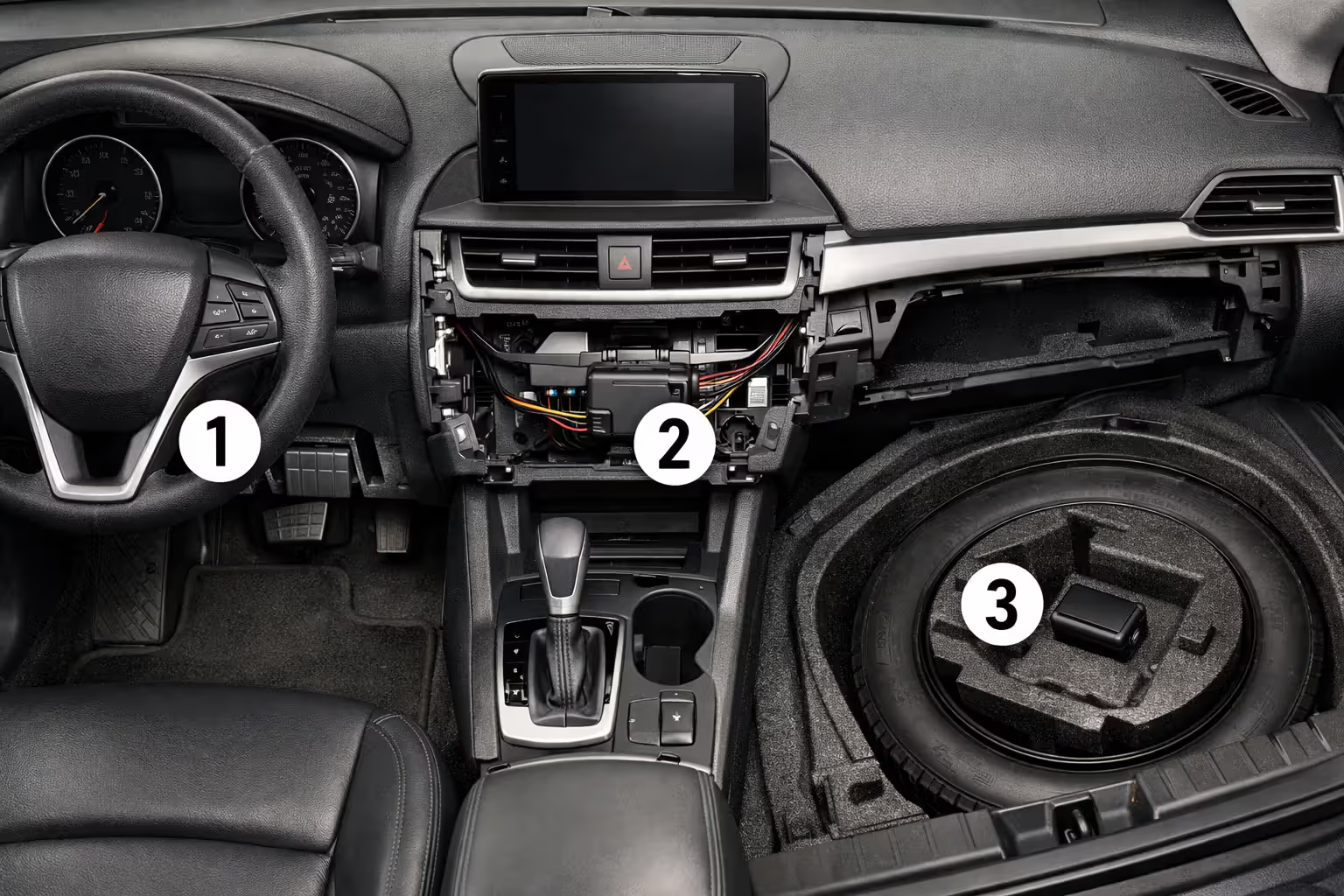
Hardwired models splice into your vehicle's electrical system and hide behind dash panels, under seats, or inside door frames. Installation takes 1-3 hours depending on your mechanical skill. Professional installation costs $100-$200 but ensures the tracker stays hidden and maintains reliable power.
Battery-powered trackers offer maximum flexibility—hide them anywhere without wiring. Behind the rear bumper. Inside the spare tire. Under floor mats. The limitation: batteries last 2-4 weeks before needing recharge or replacement. Some experienced owners install two trackers: one obvious unit in the OBD-II port for thieves to find and discard (feeling clever), and a second battery unit hidden elsewhere as backup.
Author: Derek Fulton;
Source: shafer-motorsports.com
Monthly Subscription Costs and Features to Compare
Most active GPS systems require cellular data plans running $10-$30 monthly. Budget tiers provide basic location updates and simple geofencing. Premium services add features like complete route history, speed alerts, harsh braking notifications, and data retention beyond 30 days.
Recovery statistics reveal the value: vehicles equipped with GPS trackers get recovered 85-90% of the time compared to 50-60% for unprotected vehicles. More importantly, tracked vehicles recovered within 24 hours typically show minimal damage. Thieves haven't had time to strip parts or remove the VIN yet.
Technology is a useful servant but a dangerous master. The key is knowing how to make it work for you — not assuming it will do all the work on its own
— Christian Lous Lange, Nobel Peace Prize laureate and historian
Compare these factors across systems: How often does it update location? Every 10 seconds matters when you're tracking a moving vehicle versus every minute. Does it include battery backup that continues working if thieves disconnect the main power? Do you receive alerts if someone removes or disables the device? Will local law enforcement prioritize your case if you provide real-time tracking data? (Many departments will.)
Popular options include LandAirSea 54, Spytec GL300, and Vyncs GPS Tracker. Apple AirTags and Samsung SmartTags work as budget alternatives—$25-$30 with no subscription—but they lack true real-time tracking. They depend on nearby iPhones or Samsung devices to relay location, making them spotty in rural areas or if thieves park your vehicle in a warehouse.
Modern Anti-Theft Technology: Kill Switches, Alarms, and Smart Systems
Electronic security interrupts vehicle operation through multiple methods. These anti-theft technologies range from simple circuit interrupters to sophisticated smart systems controlling multiple protection layers simultaneously.
Kill switches cut electrical power to critical components: fuel pump, ignition system, or starter motor. A hidden toggle switch, key-operated switch, or wireless remote activates the device. Thieves who successfully bypass your ignition discover the engine won't start—or dies immediately after starting. The entire system depends on concealment. If thieves spot your switch quickly, it's worthless. Professional installation hiding the switch behind panels or beneath carpet works best.
DIY installation attracts mechanically-minded owners comfortable with automotive electrical systems. Basic kill switches cost $20-$50. You'll need to identify the correct wire to interrupt (usually the fuel pump circuit), splice in the switch, and route it to a hidden but accessible location. Mistakes risk damaging vehicle electronics or creating fire hazards. If you've never worked with automotive wiring, pay someone who has.
Car alarms have evolved considerably beyond the obnoxious sirens everyone learned to ignore in the 1990s. Modern systems integrate shock sensors, door/hood/trunk triggers, and glass break detection. Two-way remotes notify you of alerts up to a mile away. Smartphone-connected systems push notifications anywhere you have cellular coverage.
The persistent challenge: false alarms destroy effectiveness. Your neighbors learn to ignore your alarm after the third wind-triggered activation. You need sensitivity adjustment that detects actual break-in attempts without reacting to passing trucks, shopping carts, or strong winds. Quality systems use progressive alerts: a chirp for minor disturbances, full alarm for serious threats.
OEM vs. Aftermarket Security Upgrades
Factory-installed security systems integrate seamlessly with your vehicle's electronics but typically provide minimal actual protection. Many manufacturer "security systems" amount to power door locks and a basic immobilizer that thieves bypass in under two minutes. Automakers prioritize convenience over security—remote start and keyless entry create vulnerabilities that professional thieves exploit routinely.
Aftermarket upgrades deliver superior protection through multiple integrated layers. Compustar, Viper, and Avital manufacture systems combining alarms, remote start, GPS tracking, and smartphone control in one package. Professional installation runs $300-$800 depending on complexity. Integration with existing electronics requires expertise—poor installation triggers check engine lights, drains batteries, or creates intermittent electrical problems that are nightmares to diagnose.
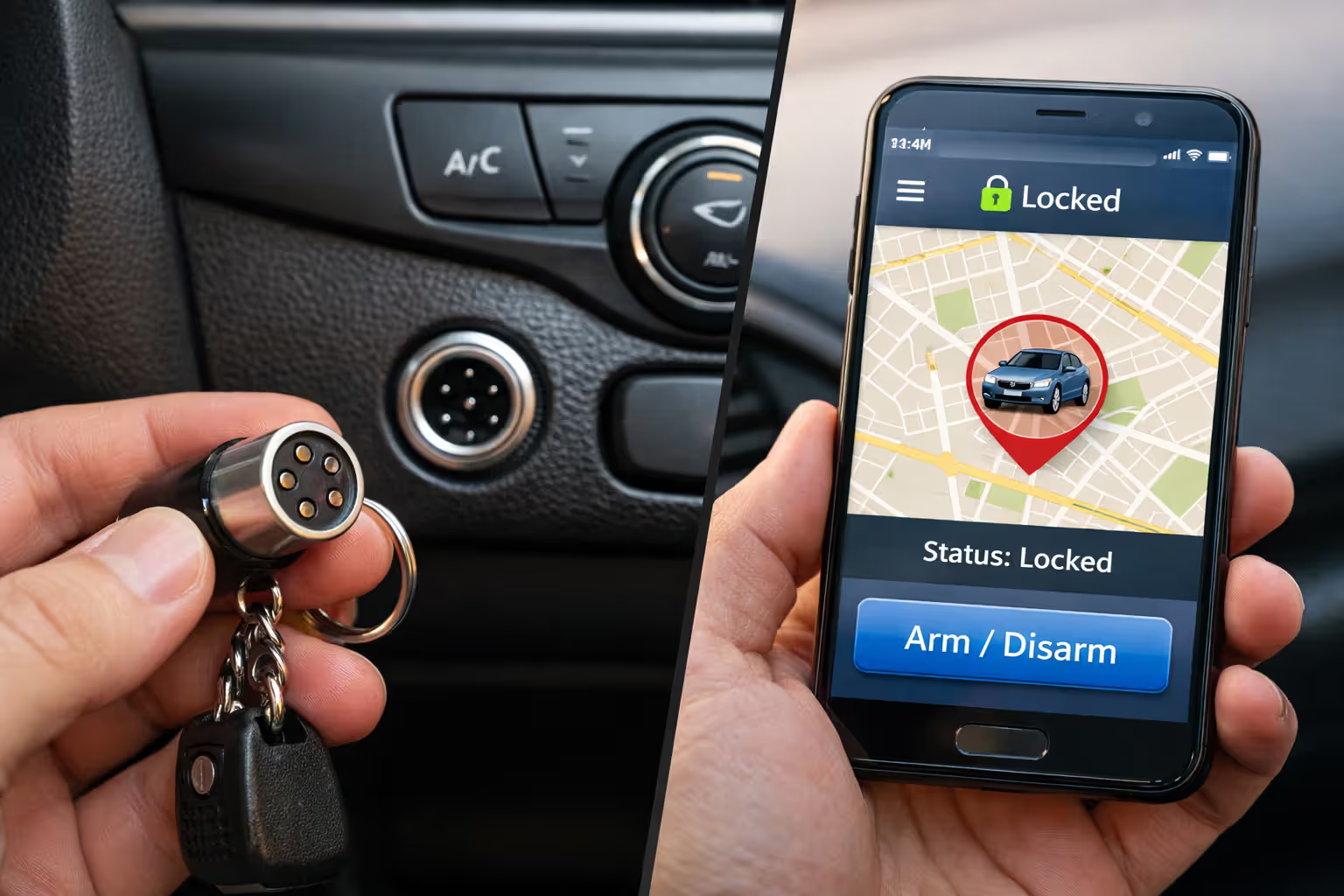
High-end systems like Ravelco or IGLA use proprietary plugs you must insert before the vehicle starts. Without the plug (which you remove and carry with your keys), the vehicle remains completely inoperable. No amount of hot-wiring helps. These systems cost $600-$1,500 installed but provide near-absolute protection. Thieves simply cannot bypass what they cannot access or understand.
Author: Derek Fulton;
Source: shafer-motorsports.com
Smart systems from companies like Drone Mobile add remote monitoring and control through smartphone apps. Check if your car is locked from your office. Start it remotely on cold mornings. Receive instant alerts for any security events. Track location in real-time. All controlled through one interface. Expect to pay $200-$400 for the module plus installation, with optional monthly subscriptions ($5-$15) for premium features.
Matching Security Devices to Your Vehicle and Risk Profile
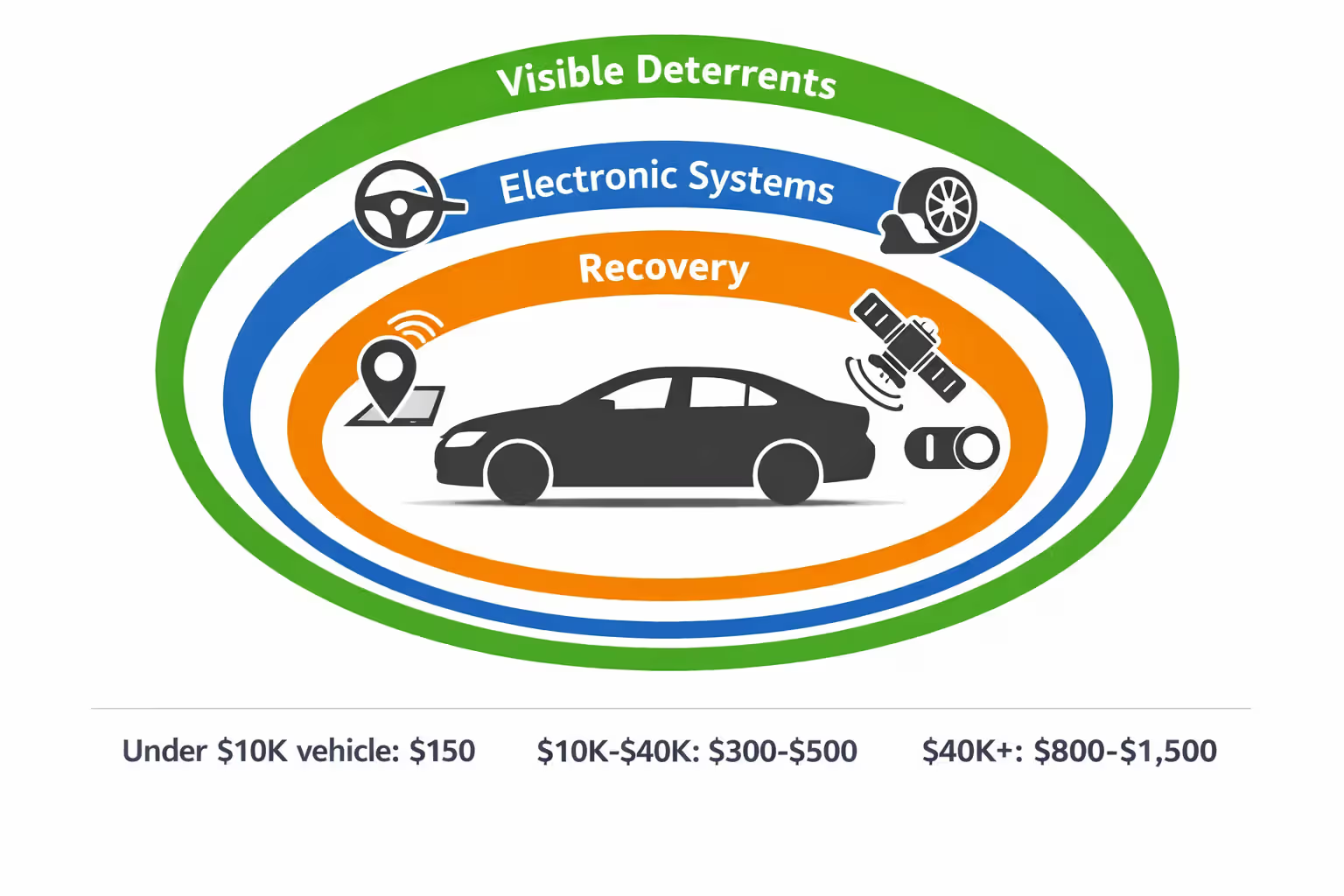
Effective protection requires tailoring your security approach to match your specific circumstances. A layered defense combining visible deterrents with hidden systems provides optimal coverage without overspending.
For vehicles valued under $10,000 parked in low-crime neighborhoods: a quality steering wheel lock ($50-$100) combined with a hidden kill switch ($50 installed) creates adequate protection. Total investment under $150 establishes multiple obstacles without overprotecting a lower-value target.
Mid-value vehicles ($10,000-$40,000) in moderate-risk areas benefit from three distinct layers: steering wheel lock for visible deterrence, GPS tracker with cellular service for recovery capability, and either a kill switch or alarm system for hidden protection. Budget $300-$500 for comprehensive coverage that addresses multiple theft scenarios.
High-value vehicles or frequently-stolen models demand maximum protection: GPS tracker with backup battery, alarm system featuring two-way remote, kill switch or smart immobilizer, and visible steering wheel lock. Plan to invest $800-$1,500. Vehicles appearing on the National Insurance Crime Bureau's "Hot Wheels" most-stolen list—Honda Accord, Honda Civic, Ford F-150, Chevrolet Silverado, Toyota Camry—justify this expense through reduced insurance premiums and substantially lower theft risk.
Author: Derek Fulton;
Source: shafer-motorsports.com
Your parking environment dramatically affects security requirements. Garage-kept vehicles face minimal exposure; a GPS tracker alone might suffice. Street parking in urban areas demands visible deterrents combined with hidden protections. Apartment complexes with open parking lots represent high-risk environments requiring full layered security implementation.
Regional theft patterns significantly impact your risk profile. Review the National Insurance Crime Bureau's annual reports covering your metropolitan area. Cities with organized theft rings systematically targeting specific models need more comprehensive protection than areas experiencing only opportunistic crime. Most local police departments maintain neighborhood-specific theft data—call the non-emergency line and ask.
Your daily routine matters too. Frequent short trips make complex security systems genuinely inconvenient. You're constantly arming and disarming devices. A steering wheel lock becomes tedious when you're parking six times daily for 15-minute errands. Balance security against usability, or you'll eventually stop using the devices altogether—rendering them worthless.
The best lock is the one you actually use. The most sophisticated security system in the world is worthless if inconvenience causes you to leave it disarmed.
— Gavin de Becker, security specialist and author of The Gift of Fear
Common Mistakes When Choosing Vehicle Protection Tools
The single biggest error: depending entirely on one security method. Visible deterrents alone won't stop a thief who's committed to your vehicle. Hidden systems without visible warnings mean thieves invest time attempting entry before discovering your protections. Layer different security types for maximum effectiveness—each layer stops different theft methods.
Choosing the absolute cheapest option usually backfires badly. That $20 steering wheel lock with a tubular lock? Thieves pick it in 15 seconds using a Bic pen (look up the YouTube videos if you don't believe this). Budget GPS trackers lose cellular signal, drain batteries within days, or simply stop working after a few months. Buy reputable brands with documented reliability and strong warranty support.
Improper installation undermines even the best devices. GPS trackers placed in obvious locations—glove box, center console, behind the rearview mirror—get discovered and tossed within seconds. Kill switches installed on easily-accessed wires under the dash get bypassed quickly. Alarm sensors adjusted to excessive sensitivity trigger from passing motorcycles, training you to ignore all alerts. Follow manufacturer instructions exactly or pay for professional installation that ensures proper function.
Maintenance neglect reduces effectiveness dramatically over time. Steering wheel locks develop looseness in the locking mechanism. GPS tracker batteries die. Alarm remote batteries weaken, reducing signal range. Test every system monthly. Replace worn components immediately before they fail during an actual theft attempt.
Assuming your insurance coverage eliminates the need for physical protection. Yes, comprehensive insurance covers theft. But you'll still pay the deductible ($500-$1,000), face premium increases for years, and endure the substantial hassle of vehicle replacement. Most policies include coverage gaps—custom wheels, aftermarket stereos, and personal items left in the vehicle often aren't covered. Prevention costs dramatically less than filing claims.
Over-reliance on technology alone creates dangerous false confidence. GPS trackers help recovery but don't prevent the initial theft. Once you're tracking your stolen vehicle, it might already be damaged or partially stripped. Smart systems fail completely if thieves use signal jammers (readily available online for $50) or simply disconnect your battery. Physical barriers provide essential backup when electronics fail or get defeated.
Ignoring key security undermines all other protections. Leaving spare keys hidden inside the vehicle, using magnetic hide-a-key boxes under bumpers, or storing keys near entry doors at home (where thieves use signal amplifiers to capture and relay keyless entry codes from outside) bypasses every security device you've installed. Secure your keys as carefully as you secure your vehicle itself.
Frequently Asked Questions About Car Security Devices
Protecting Your Investment
Vehicle security demands matching your protection approach to specific personal circumstances. Begin by honestly assessing your risk level based on your vehicle's make and model, typical parking situation, and local theft statistics. Layer visible deterrents with hidden protections—criminals who bypass one obstacle frequently abandon attempts when encountering a second unexpected barrier.
Physical barriers provide reliable first-line defense without depending on batteries, cellular service, or subscription payments. GPS trackers fundamentally shift the equation from preventing theft to enabling rapid recovery, dramatically improving outcomes when theft actually occurs. Electronic systems add sophisticated multi-layer protection but absolutely require proper professional installation and regular maintenance to remain effective.
The most successful security approach combines multiple device types working together synergistically. A steering wheel lock warns potential thieves before they even attempt entry. A hidden kill switch stops hot-wiring attempts cold. A GPS tracker with battery backup enables recovery if the other two layers somehow fail. This comprehensive approach costs $300-$500 but protects investments worth tens of thousands while reducing insurance premiums enough to recover costs within a few years.
Review your security setup once annually at minimum. As vehicles age and personal circumstances change, adjust protection levels accordingly. Test all devices quarterly to ensure they're still functioning properly—dead batteries and loose connections defeat the purpose. Replace worn or damaged components the moment you notice problems. A broken security device provides exactly zero security.
Install protection now, before you need it desperately. Once your vehicle disappears, your options shrink to hoping for unlikely recovery and filing stressful insurance claims. Spending 15 minutes installing a steering wheel lock or investing one hour setting up a GPS tracker provides years of reliable protection and substantial peace of mind
Related Stories
Read more
Read more

The content on Auto Insights is provided for general informational and educational purposes only. It is intended to offer guidance on car buying, vehicle ownership, finance, insurance, EVs, maintenance, accessories, reviews, and related topics, and should not be considered professional financial, legal, insurance, mechanical, or investment advice.
All information, tools, calculators, comparisons, and recommendations presented on this website are for general guidance only. Individual financial situations, driving habits, vehicle conditions, insurance policies, and market factors vary, and actual results or costs may differ from estimates provided.
Auto Insights makes no guarantees regarding accuracy, completeness, or current applicability of the information, as automotive markets, regulations, incentives, interest rates, and vehicle specifications may change over time.