
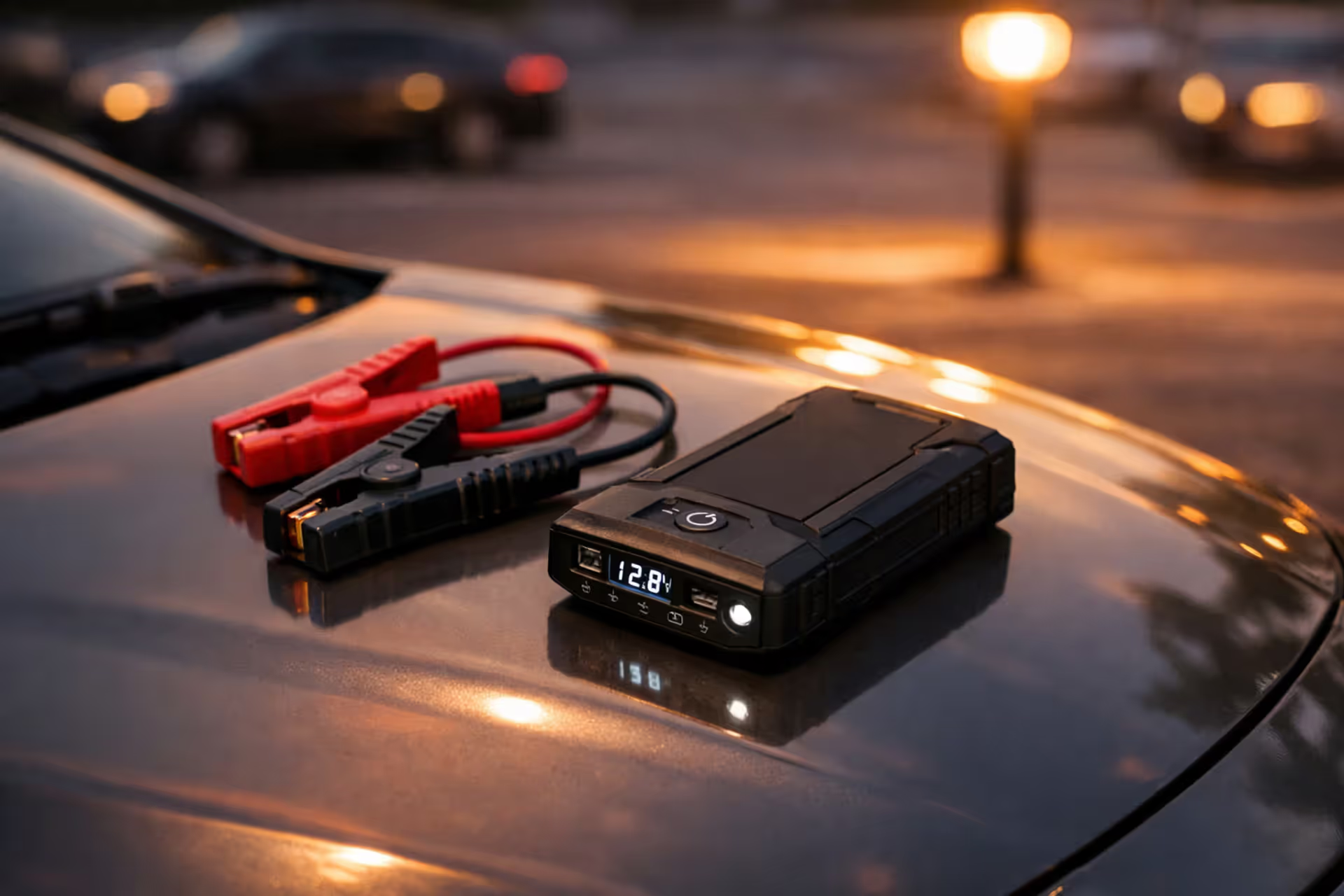
Portable lithium-ion jump starter with red and black clamps on a car hood in an evening parking lot
Portable Jump Starters: How to Choose and Use Battery Emergency Starter Devices

A dead battery doesn't announce itself. One moment you're running errands; the next, your dashboard is dark and your engine won't turn over. Traditional jumper cables require another vehicle and a willing stranger—not always available at 11 PM in a grocery store parking lot. Battery emergency starter devices have changed that equation entirely.
These compact units store enough power to crank your engine multiple times without another car present. Unlike the bulky lead-acid jump boxes mechanics used decades ago, modern lithium-ion models weigh less than two pounds and fit in a glove compartment. They've become standard equipment for drivers who value self-sufficiency, but choosing the right one requires understanding specifications that manufacturers don't always explain clearly.
What Makes Portable Jump Starters Different from Traditional Jumper Cables
Traditional jumper cables transfer power from a working battery to your dead one. They're passive conductors—copper wire wrapped in rubber insulation. You need another vehicle, correct cable gauge for your engine size, and someone who knows which clamp goes where. If either battery has a weak cell or the cables are undersized, the jump fails.
The best technology is the technology that disappears. It does its job without demanding your attention, your expertise, or your patience
— The best technology is the technology that disappears. It does its job without demanding your attention, your expertise, or your patience
Portable jump starters function as standalone power sources. Inside the case, lithium-ion cells store electrical energy at 12 volts (or 24 volts for commercial models). When you connect the clamps to your battery terminals, the unit delivers a surge of current directly to your starter motor. No second vehicle required.
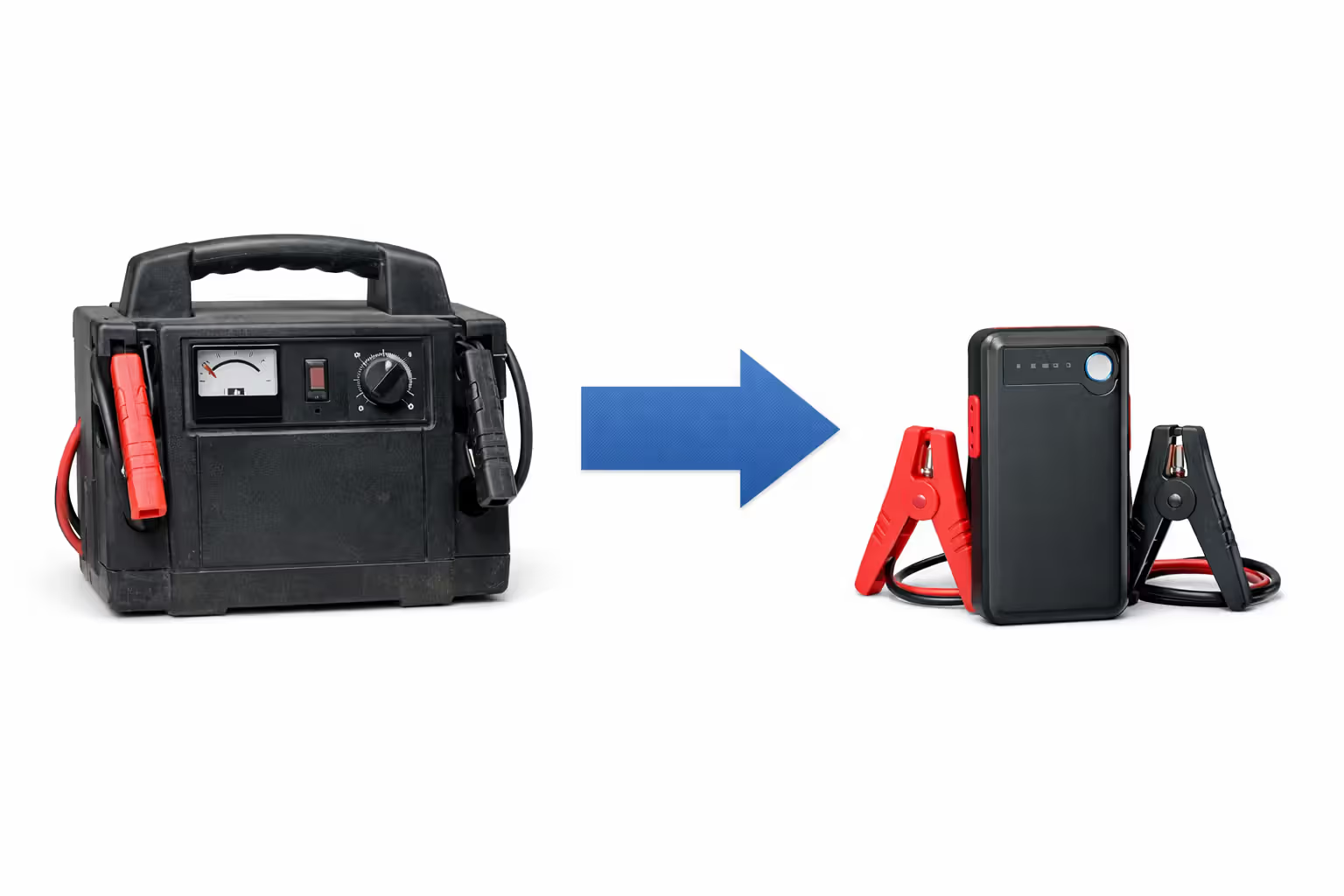
The technology split happened around 2012 when lithium-ion cells became affordable enough for consumer products. Before that, portable "jump boxes" used sealed lead-acid batteries—the same chemistry as car batteries, just smaller. Those units weighed 15–30 pounds and needed recharging after sitting unused for a month. Lithium models hold their charge for 3–6 months and weigh 1–3 pounds for the same output.
Most current models include reverse-polarity protection. Connect the clamps backward and the unit refuses to operate rather than sending current the wrong direction through your electrical system. Spark-proof technology prevents arcing when you touch the clamps together. Overcharge protection stops the unit from pushing too much current into your battery once the engine starts. These safeguards weren't standard on older lead-acid jump boxes, which could damage alternators or fry control modules if misused.
Built-in USB ports turn these devices into phone chargers and laptop power banks. Some include LED flashlights with strobe modes for roadside visibility. The air compressor attachments on premium models inflate tires to 35 PSI in about four minutes. Whether those extras justify higher prices depends on whether you'll actually use them or just want reliable jump-starting capability.
Author: Brianna Lowell;
Source: shafer-motorsports.com
Key Features to Compare When Shopping for Battery Backup Tools for Your Vehicle
Manufacturer spec sheets throw around numbers that sound impressive but don't always correlate with real-world performance. A unit advertising "2000 peak amps" might struggle with a cold V8 engine if its cranking amps are inadequate. Understanding which specifications actually matter prevents buying underpowered equipment.
Peak Amps vs. Cranking Amps: What Actually Matters
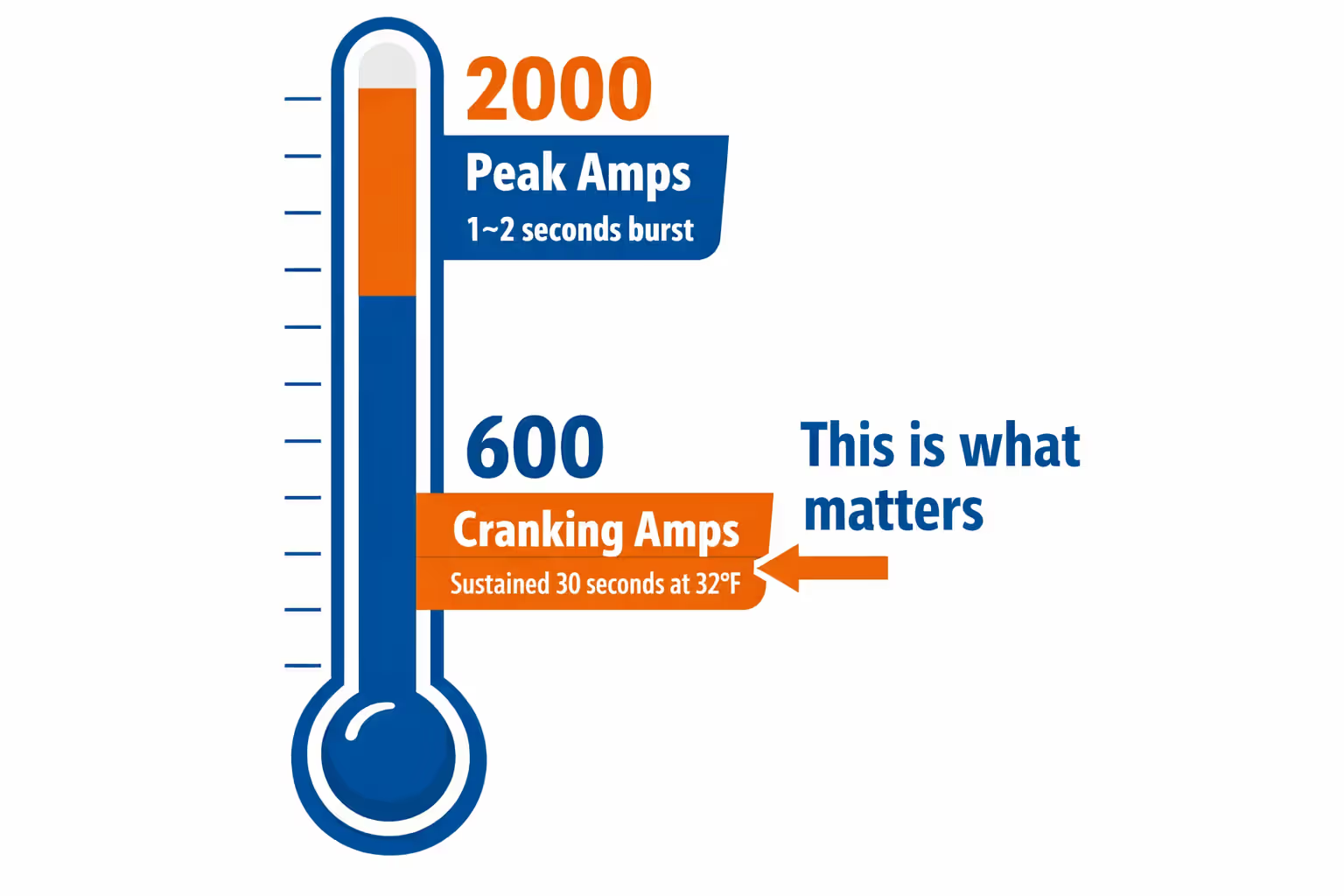
Peak amps measure the maximum current the unit can deliver for 1–2 seconds—a brief spike. Cranking amps (sometimes called "continuous amps") measure sustained output over 30 seconds at 32°F. Your starter motor needs sustained power, not just a momentary jolt.
A four-cylinder sedan typically needs 150–200 cranking amps. V6 engines want 250–350. V8 trucks and SUVs require 350–500. Diesel engines, which use higher compression ratios, demand 400–600 cranking amps even for mid-size models. Cold weather increases these requirements by 20–40% because engine oil thickens and batteries lose capacity.
Marketing materials emphasize peak amps because bigger numbers sell units. A jump starter rated for "1500 peak amps" might deliver only 300 cranking amps—adequate for most cars but marginal for trucks. Look for the cranking amp specification, which manufacturers sometimes bury in fine print or omit entirely. If only peak amps are listed, assume cranking amps are roughly 20–30% of that figure.
Battery capacity, measured in milliamp-hours (mAh) or watt-hours (Wh), determines how many jumps you get per charge. A 10,000 mAh unit might start a four-cylinder car 15–20 times. That same unit might manage only 3–5 starts on a V8 truck because each attempt drains more power. Capacity matters less than having adequate cranking amps for your specific engine, but higher capacity provides more attempts if the first jump doesn't work.
Author: Brianna Lowell;
Source: shafer-motorsports.com
Additional Functions Worth Paying For
USB charging ports are nearly universal now. Quick Charge 3.0 or USB-C Power Delivery ports charge phones faster than standard USB but add $15–25 to the price. Whether that matters depends on whether you already carry a separate fast charger.
Built-in air compressors add convenience for drivers who check tire pressure monthly. They increase unit weight to 3–5 pounds and raise prices by $40–60. Standalone tire inflators cost $25–35 and often work faster, so the integrated option mainly benefits drivers who want fewer devices cluttering their trunk.
LCD screens display battery charge level, voltage readings, and error codes. They're easier to read than four-dot LED indicators, especially in bright sunlight, but they drain the internal battery slightly faster. Units without screens use LED lights to show charge status—simpler and more durable but less precise.
Some premium models include 12V accessory outlets (cigarette lighter sockets) for running portable coolers or other vehicle accessories. This feature sees limited use since most drivers don't need to power accessories when their engine won't start. It's a nice-to-have rather than essential.
| Vehicle Type | Minimum Peak Amps | Engine Size | Recommended Features | Price Range |
| Compact cars | 400–600 | 1.5L–2.5L 4-cyl | USB charging, LED light | $50–$80 |
| Mid-size sedans/SUVs | 600–1000 | 2.5L–3.6L V6 | Reverse polarity protection, LCD screen | $80–$130 |
| Full-size trucks/diesel engines | 1200–2000 | 5.0L+ V8, 3.0L+ diesel | Heavy-duty clamps, 400+ cranking amps | $150–$250 |
| Motorcycles/ATVs | 200–400 | 0.5L–1.2L | Compact size, low-amp mode | $40–$70 |
How Cold Weather Affects Battery Performance and Jump Starter Effectiveness
Battery chemistry hates cold. At 32°F, a fully charged lead-acid car battery delivers about 65% of its rated capacity. At 0°F, that drops to 40%. Meanwhile, thick cold oil forces your starter motor to work 2–3 times harder. This double penalty—less available power and higher demand—explains why cars that start fine in summer fail on January mornings.
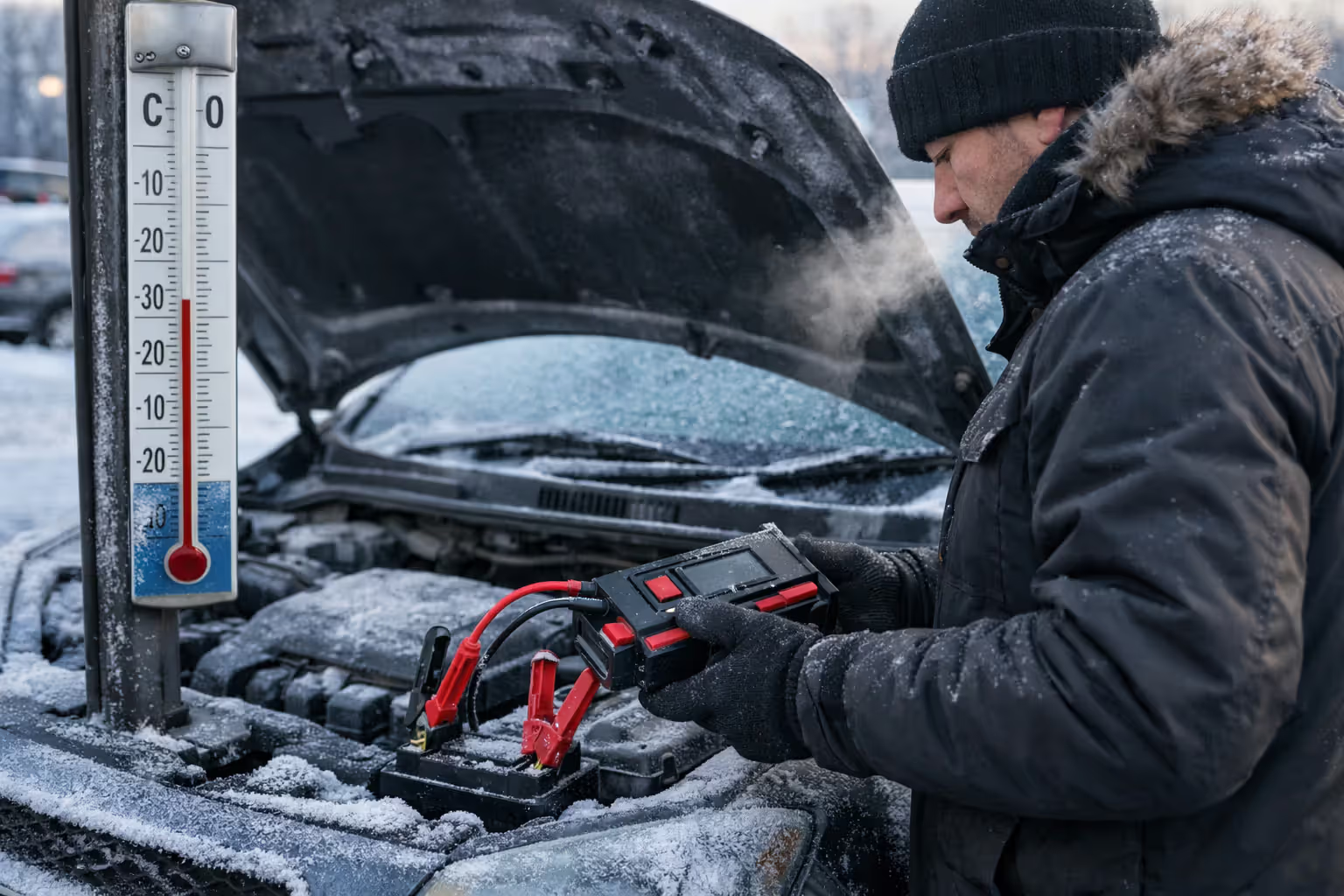
Lithium-ion jump starters face similar challenges. Their internal cells lose 10–15% of output capacity for every 20°F drop below freezing. A unit that easily starts your car in September might struggle in February if stored in an unheated garage. The chemical reactions that release electrical energy slow down at low temperatures, reducing the current the unit can deliver.
Storage location matters more than most owners realize. Keeping your jump starter in the trunk exposes it to the same cold that weakened your battery. When you need it most, it's at reduced capacity. Store the unit indoors at room temperature and bring it to your vehicle only when needed. If that's impractical, choose a model rated for cold-weather operation—some manufacturers design units with heating elements or special lithium formulations that tolerate sub-zero temperatures better.
Cold Climate Amplification (CCA) ratings indicate how many amps a battery can deliver at 0°F for 30 seconds while maintaining at least 7.2 volts. Car batteries display CCA ratings on their labels; jump starters rarely do. If you live where winter temperatures regularly drop below 20°F, add 25–30% to the cranking amp requirement for your engine size. A V6 SUV that needs 300 cranking amps in moderate weather wants 375–400 in Minnesota winters.
Before attempting a cold-weather jump, warm the starter unit if possible. Keep it inside your coat for 5–10 minutes to bring it closer to body temperature. Some drivers keep a small insulated lunch bag in their trunk specifically for transporting the jump starter from house to car. These small steps can mean the difference between a successful start and a call to roadside assistance.
Author: Brianna Lowell;
Source: shafer-motorsports.com
Step-by-Step: Safe Jump Starting Procedure to Avoid Battery and Electrical Damage
Connecting clamps in the wrong order can create sparks near battery gases, damage sensitive electronics, or send voltage spikes through your vehicle's computer systems. The procedure takes less than five minutes when done correctly.
Before connecting anything: Turn off your vehicle's ignition, headlights, radio, and all accessories. Disable automatic headlights if your car has them. Open the hood and locate the battery—in some vehicles it's under the rear seat or in the trunk. Identify the positive terminal (marked with "+" or red plastic cover) and negative terminal (marked "−" or black).
Inspect the battery: Look for cracks in the case, white crusty deposits on terminals, or a swollen appearance. Any of these signs indicate a failing battery that might not hold a charge even after jumping. Smell near the battery—a rotten egg odor suggests internal damage and possible hydrogen gas buildup. If present, don't attempt a jump; call for professional service.
Connection sequence matters: Attach the red (positive) clamp to your battery's positive terminal first. Ensure solid metal-to-metal contact—if the terminal is corroded, scrape it with the clamp edge or a wire brush. Next, attach the black (negative) clamp to an unpainted metal surface on your engine block, at least 12 inches from the battery. The alternator bracket, engine mount bolt, or a thick metal strut work well. Never clamp directly to the negative battery terminal—any spark created when you make the connection could ignite hydrogen gas venting from the battery.
Power on the jump starter: Most units have a power button or switch. Turn it on and check for indicator lights confirming proper connection. Wait 30 seconds before attempting to start the engine—this allows a small amount of charge to flow into your dead battery, which helps with the initial crank.
Start your engine: Turn the ignition key (or press the start button) and hold for no more than 5–6 seconds. If the engine doesn't start, wait 2–3 minutes before trying again. The jump starter needs time to recover between attempts, and your starter motor needs time to cool. Three failed attempts usually means a problem beyond a dead battery—a failed starter motor, bad alternator, or other mechanical issue.
Disconnect in reverse order: Once the engine runs, remove the black clamp from the engine ground point first, then the red clamp from the positive terminal. Don't let the clamps touch each other or any metal surface while one is still connected. Turn off the jump starter and store it away from the engine—vibration and heat degrade lithium batteries.
Run the engine: Drive for at least 20 minutes to allow your alternator to recharge the battery. Avoid short trips for the next day or two—repeatedly starting the engine without sufficient drive time can drain the battery again.
"The most common mistake I see is people clamping the negative cable directly to the battery terminal instead of a ground point on the engine block. Modern vehicles have dozens of sensitive electronic modules, and the voltage spike from making that final connection can damage control units that cost hundreds to replace. Always make that last connection away from the battery itself." — Michael Torres, ASE Master Certified Automotive Technician, 18 years experience
— Brianna Lowell
When to call for help instead: If your battery is less than three years old and fails repeatedly, the problem likely isn't the battery. Parasitic electrical drains, failing alternators, or corroded ground connections require diagnostic equipment to identify. If your engine cranks but won't start, you have a fuel or ignition problem, not a battery issue—a jump starter won't help.
What to Keep in Your Roadside Recovery Kit Besides a Jump Starter
A jump starter handles dead batteries but not the dozen other failures that strand drivers. Building a comprehensive kit takes 30 minutes and costs $80–120 beyond the jump starter itself.
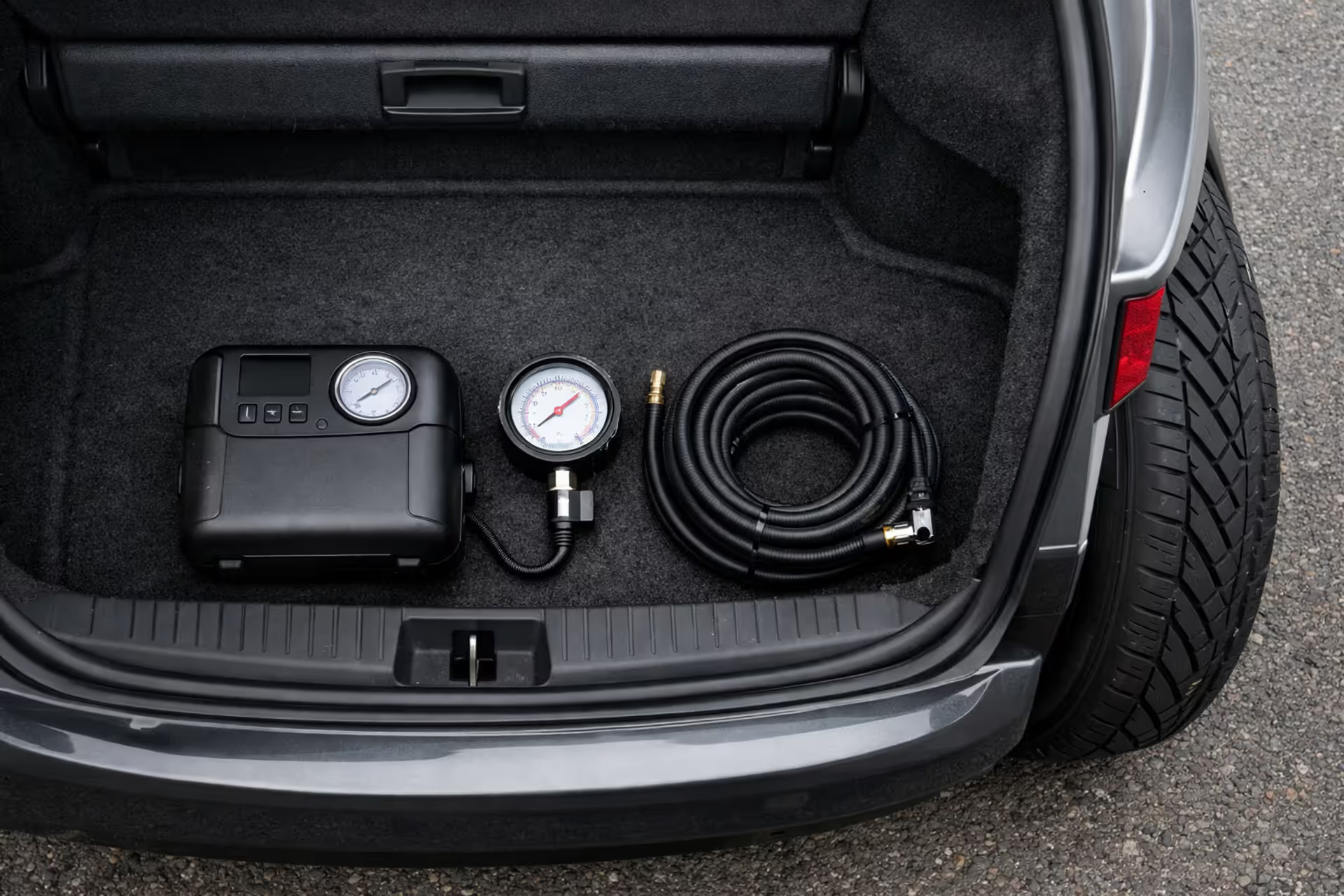
Tire repair supplies: A plug kit with reamer, insertion tool, and five plugs fixes punctures in 10 minutes. Add a tire pressure gauge (digital gauges are more accurate than stick types) and a 12V air compressor if your jump starter doesn't include one. These items handle the most common roadside failure—tire problems account for 35% of breakdown calls according to roadside assistance data.
Basic tools: A multi-bit screwdriver, adjustable wrench, and needle-nose pliers fit in a small pouch. They're sufficient for tightening loose battery terminals, removing debris stuck under the hood, or retrieving items dropped into engine compartments. Full socket sets are overkill unless you perform your own repairs.
Lighting and visibility: A magnetic LED work light attaches to your hood or fender, freeing both hands. Reflective warning triangles or LED road flares alert other drivers if you're stopped on the shoulder—especially critical at night or in poor weather. A headlamp works better than a flashlight because it keeps your hands free.
Fluids and consumables: A quart of motor oil, bottle of coolant, and gallon of water address the most common fluid emergencies. Windshield washer fluid improves visibility when you encounter road spray. A roll of duct tape and zip ties provide temporary fixes for loose components.
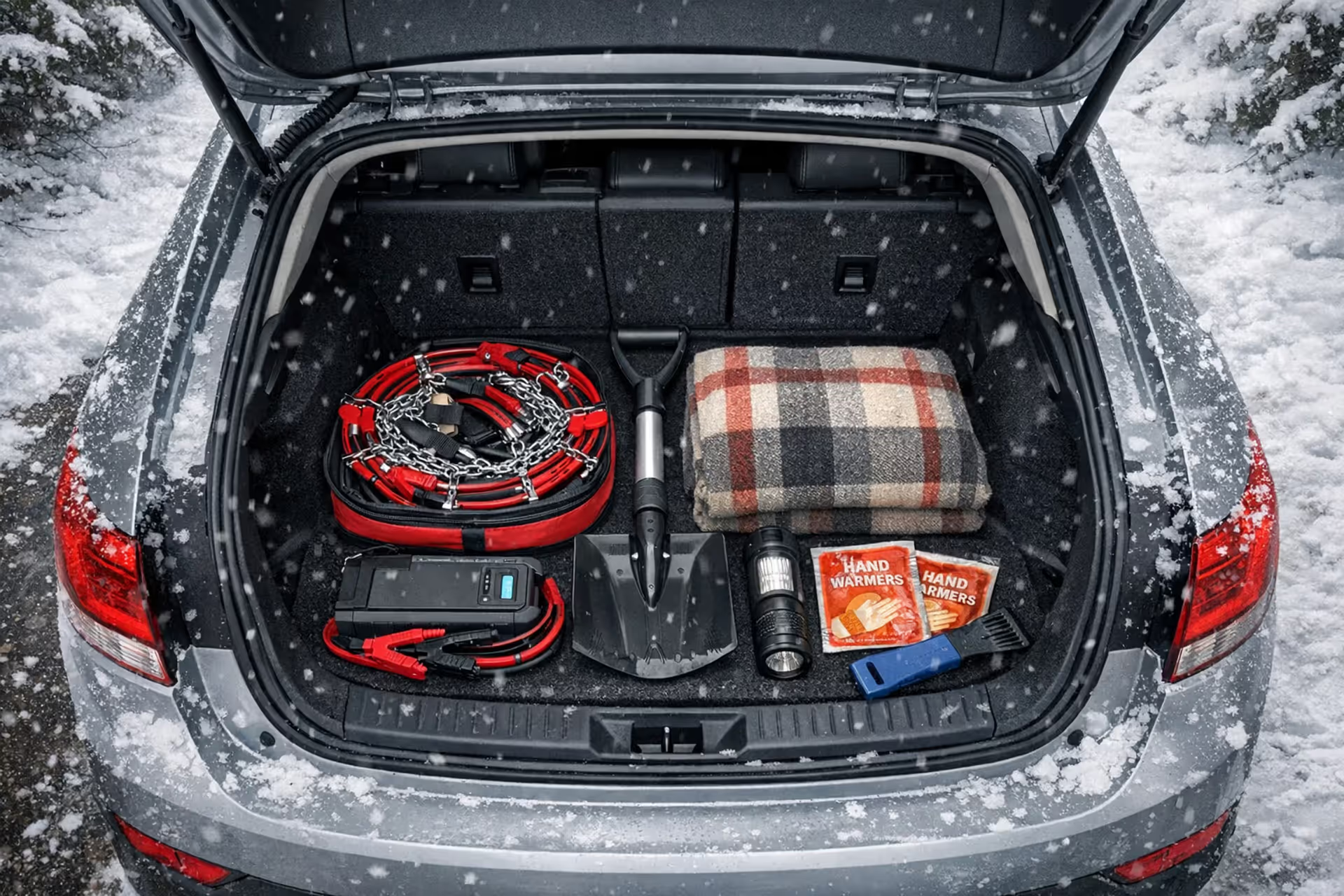
Seasonal additions: Winter kits need an ice scraper, small shovel, sand or kitty litter for traction, and an emergency blanket. Summer kits benefit from extra water (for drinking, not just the radiator), sunscreen, and a battery-powered fan. Adjust contents twice a year when you change clocks for daylight saving time.
Documentation: Keep a printed copy of your insurance card, roadside assistance number, and emergency contacts in a waterproof bag. Phone batteries die; paper doesn't. Include a pen for exchanging information after minor accidents.
Store everything in a plastic bin or soft-sided bag that won't slide around in your trunk. Check the kit every six months—batteries corrode, fluids evaporate, and tools disappear when borrowed for other purposes. Replace expired items and restock used supplies immediately so the kit is ready when needed.
Maintenance Schedule: Keeping Your Portable Power Pack Ready for Emergencies
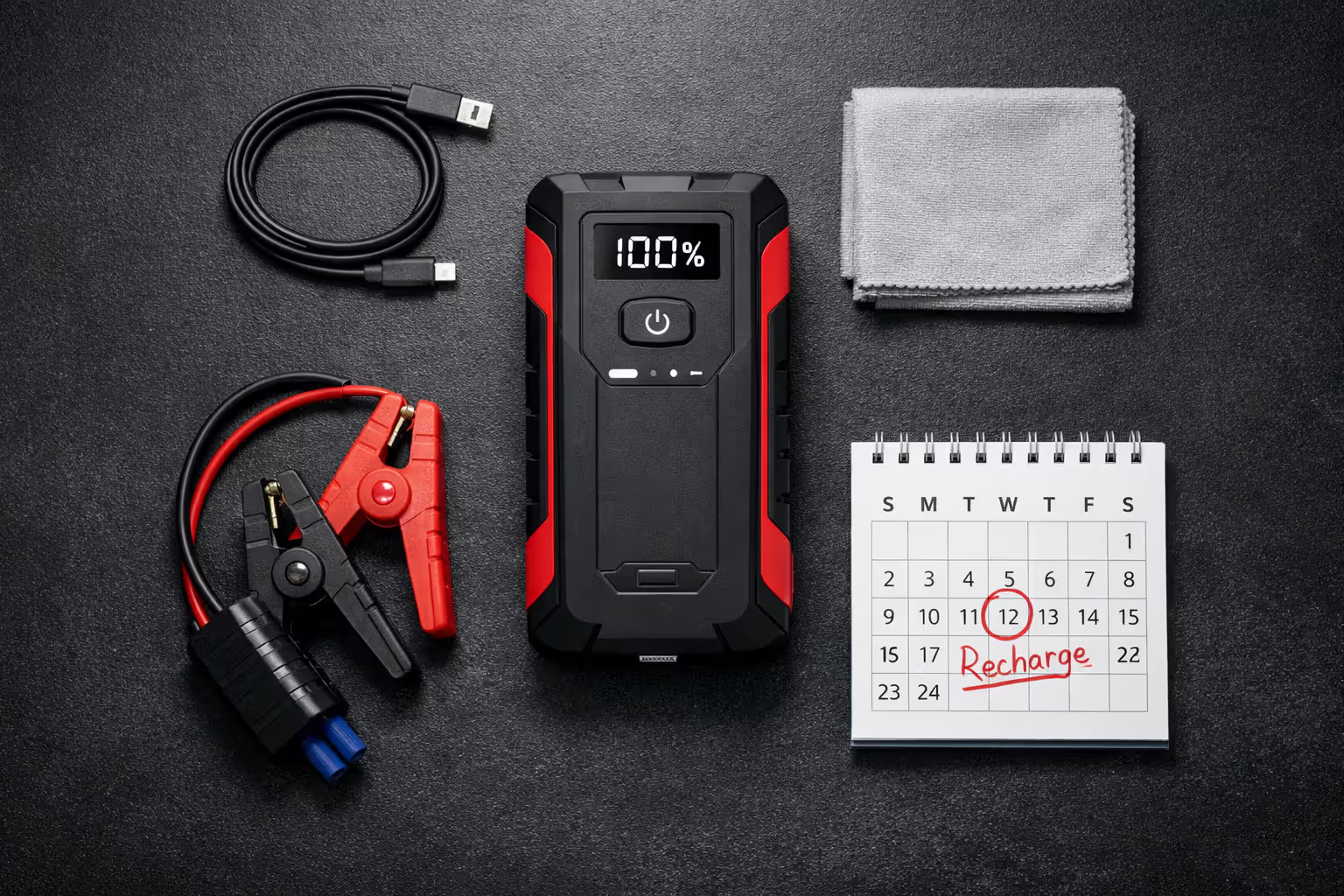
Jump starters don't require much maintenance, but neglect turns them into expensive paperweights. Lithium-ion batteries degrade whether you use them or not—proper care extends their useful life from 3–4 years to 6–8 years.
Charging frequency: Recharge every 3–4 months even if unused. Lithium batteries self-discharge at roughly 2–3% per month at room temperature, faster in heat. Letting the charge drop below 20% repeatedly shortens overall lifespan. Most units include LED indicators showing charge level—check monthly and recharge when you see two bars or fewer.
After using the jump starter, recharge it within 24 hours. Don't store it depleted. The battery management system inside the unit needs a minimum voltage to function; if the battery drains completely, the protection circuit may lock out and prevent recharging entirely. This "bricked" condition sometimes requires manufacturer service to reset.
Storage temperature: Keep the unit between 50°F and 80°F when possible. Heat accelerates chemical degradation inside lithium cells. Storing a jump starter in a hot attic or vehicle glove compartment during summer can reduce capacity by 20% in a single season. Cold doesn't cause permanent damage but reduces available power when you need it.
If you must store the unit in a vehicle, insulate it. A small cooler or insulated bag buffers temperature extremes. Park in shade during summer and bring the unit indoors during winter cold snaps.
Lifespan expectations: Quality units typically deliver 300–500 full charge cycles before capacity drops to 80% of original. That's 5–8 years for most drivers who use the jump starter occasionally. Budget models might manage only 150–200 cycles. Capacity loss is gradual—you'll notice the unit takes longer to charge or provides fewer jumps per charge.
When to replace: If your jump starter won't hold a charge for more than 4–6 weeks, struggles to start engines it previously handled easily, or takes more than 6–8 hours to fully recharge, the internal cells are wearing out. Physical damage—cracked cases, corroded clamp cables, or non-functioning indicator lights—also signals replacement time. Don't trust a marginal unit in an emergency; the cost of a tow exceeds the price of a new jump starter.
Author: Brianna Lowell;
Source: shafer-motorsports.com
Clamp and cable care: Wipe the clamps with a dry cloth after each use to remove battery acid residue and corrosion. Check cables for fraying or exposed wire every few months. Damaged cables create resistance that reduces current flow—the jump starter works harder and may overheat. Most manufacturers sell replacement cables for $15–25; third-party cables work but may not include the safety features of original equipment.
Frequently Asked Questions About Jump Starters and Vehicle Battery Emergencies
Dead batteries will happen. Winter mornings, dome lights left on overnight, aging alternators—dozens of scenarios drain batteries faster than you expect. Portable jump starters eliminate the uncertainty of finding help and the awkwardness of flagging down strangers. They work at 2 AM in empty parking lots, on rural roads without cell service, and during storms when tow trucks are backlogged for hours.
Choosing the right unit means matching cranking amps to your engine size and climate, not chasing the highest peak amp numbers in marketing materials. Proper maintenance—quarterly recharging, moderate storage temperatures, periodic inspection—keeps the device ready for years. Pair it with basic roadside tools and you've handled the most common breakdown scenarios without waiting for assistance.
The $60–150 investment pays for itself the first time you're running late for work and your car won't start. Every driver should own one; every vehicle should carry one. The technology is mature, reliable, and simple enough for anyone to use safely. Don't wait until you need it to realize you should have bought one months ago.
Related Stories
Read more
Read more



The content on Auto Insights is provided for general informational and educational purposes only. It is intended to offer guidance on car buying, vehicle ownership, finance, insurance, EVs, maintenance, accessories, reviews, and related topics, and should not be considered professional financial, legal, insurance, mechanical, or investment advice.
All information, tools, calculators, comparisons, and recommendations presented on this website are for general guidance only. Individual financial situations, driving habits, vehicle conditions, insurance policies, and market factors vary, and actual results or costs may differ from estimates provided.
Auto Insights makes no guarantees regarding accuracy, completeness, or current applicability of the information, as automotive markets, regulations, incentives, interest rates, and vehicle specifications may change over time.