
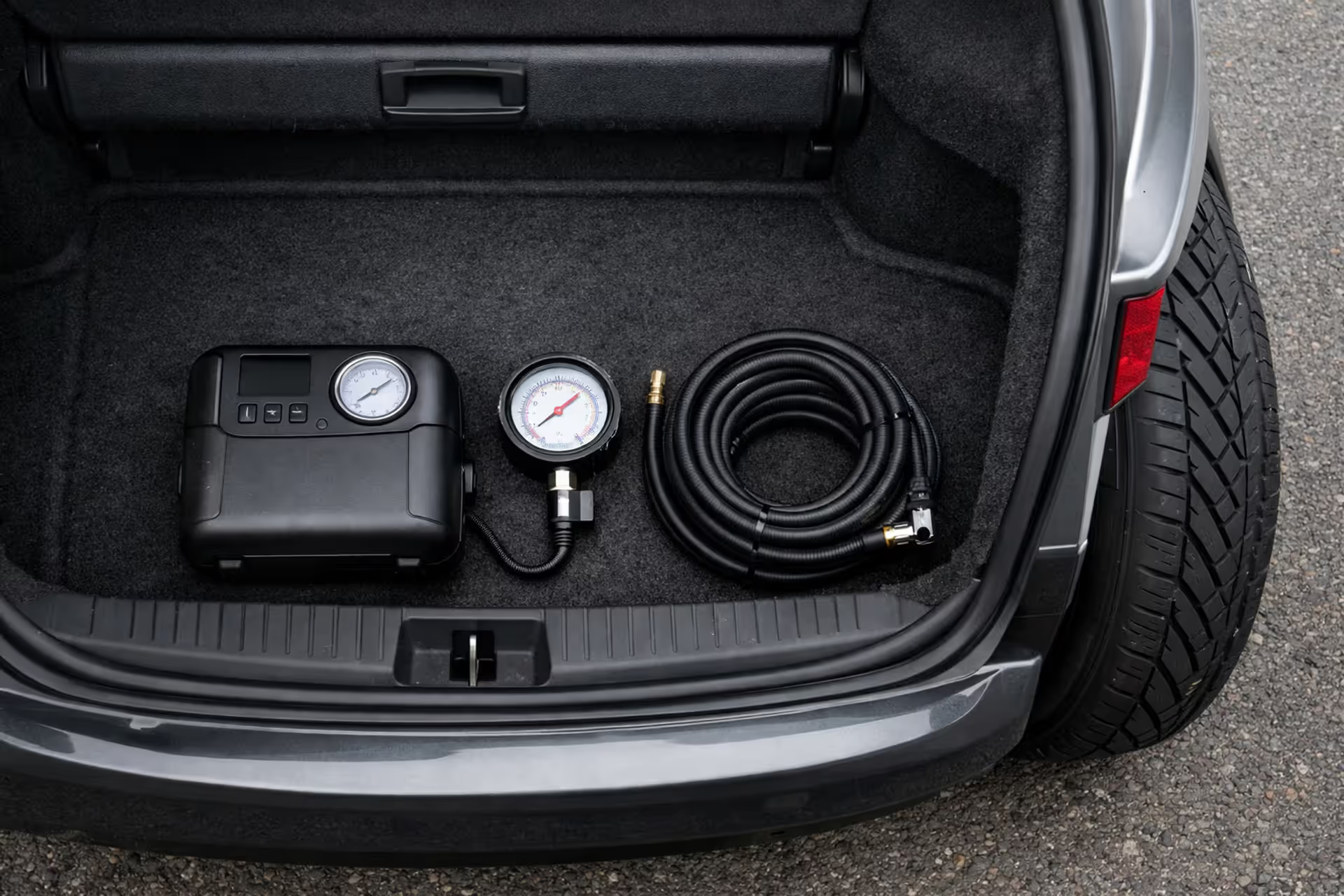
Portable tire inflator with pressure gauge stored in a car trunk next to a rear wheel
Complete Tire Inflators Guide: Choosing the Right Equipment for Your Vehicle

Picture this: compressed air gets pushed into your tire's valve stem, building up pressure inside until you hit that magic number on your door jamb sticker. Simple, right? The mechanical bits involve a piston or diaphragm that sucks in regular air, squeezes it down, then forces it through a hose. Your typical consumer unit maxes out somewhere between 100-150 PSI—way more than the 32-35 PSI your sedan actually needs.
Here's something that'll make you think twice about skipping tire checks. NHTSA data shows roughly 11,000 crashes happen each year because of underinflated tires. Even more eye-opening? The Rubber Manufacturers Association discovered over half the cars driving around America right now are rolling on at least one low tire. We're talking about real people stranded on I-95 in July heat, not abstract numbers.
Let's talk money for a second. Called AAA lately? Non-members shell out anywhere from $50 to $150 for a single service call depending on where they're stuck. Even with a membership (starting around $64 yearly), you're paying for access to help that might take 45 minutes to arrive. Meanwhile, a decent inflator costs $30-$120 once. Handle just two tire situations yourself across three years and you've already saved money. Plus there's the time factor—ten minutes versus an hour waiting roadside makes the choice pretty obvious.
Types of Tire Inflators: Comparing Power Sources and Performance
12V DC Inflators (Cigarette Lighter Models)
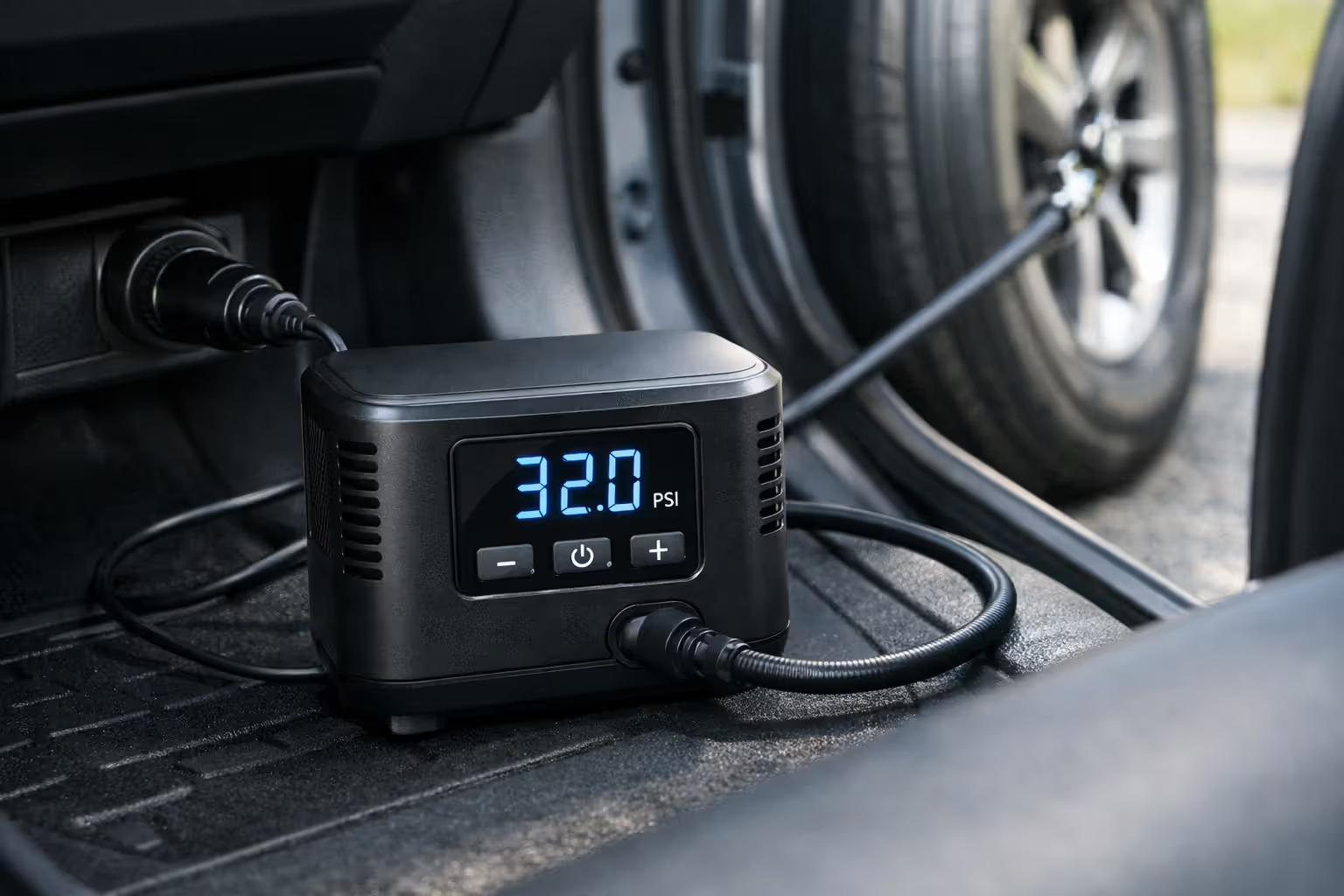
Your car's 12-volt socket (yeah, the old "cigarette lighter" spot) powers these workhorse units. They're the go-to choice for trunk storage because they'll function wherever you've parked. Power draw runs about 10-15 amps while inflating. Expect around 10 feet of power cable plus another 2-3 feet of air hose—just barely enough to reach all four corners without playing musical parking spots.
Here's what makes them great: zero dependence on finding an outlet. The downside? Speed isn't their strong suit. Taking a completely deflated sedan tire from flat to 35 PSI will eat up 8-12 minutes of your time. Those bargain-bin models under $25? They'll quit on you after ten minutes straight to avoid cooking their motors—something called duty cycle that we'll dig into later.
120V AC Home Inflators
These need a standard wall socket, which immediately tells you their ideal habitat: your garage or driveway. The power boost over DC models is substantial—we're talking 3-5 minutes to inflate that same flat tire. Professional versions push 1.5-2.5 CFM (cubic feet per minute) compared to the 0.8-1.2 CFM you get from cigarette lighter models.
Author: Brianna Lowell;
Source: shafer-motorsports.com
The obvious catch? Highway breakdown with no outlet nearby? You're out of luck. Smart drivers sometimes run both—AC model for weekend maintenance routines, DC backup in the trunk for when Murphy's Law strikes. Makes sense especially if you're maintaining a small fleet or prepping vehicles seasonally.
Cordless Battery-Powered Units
Lithium-ion technology flipped the script on portable inflation over the last five years. Modern cordless models can top off 3-4 regular car tires per charge while staying small enough to stuff in your door pocket. No cables to untangle at midnight on a dark roadside.
Battery capacity varies wildly, though. Entry models with 2000mAh might barely handle two tires before needing juice. Premium units packing 6000mAh or better? Eight-plus tires easy, perfect for the neighbor who's always asking for help. Count on 2-4 hours to recharge via USB-C or wall adapter.
The reality check: batteries don't last forever. After 300-500 charge cycles—figure 2-3 years if you're using it regularly—you'll notice declining performance. And you're paying a 40-60% premium versus similar corded 12V performance.
Dual-Power Hybrid Models
Why choose when you can have both? These versatile units accept 12V DC and 120V AC, letting you plug into whatever's convenient. Home garage work? Use the wall socket for speed. Stuck on the shoulder? Switch to your car's power. Some even throw in a rechargeable battery as option three, though that convenience costs $40-$70 extra.
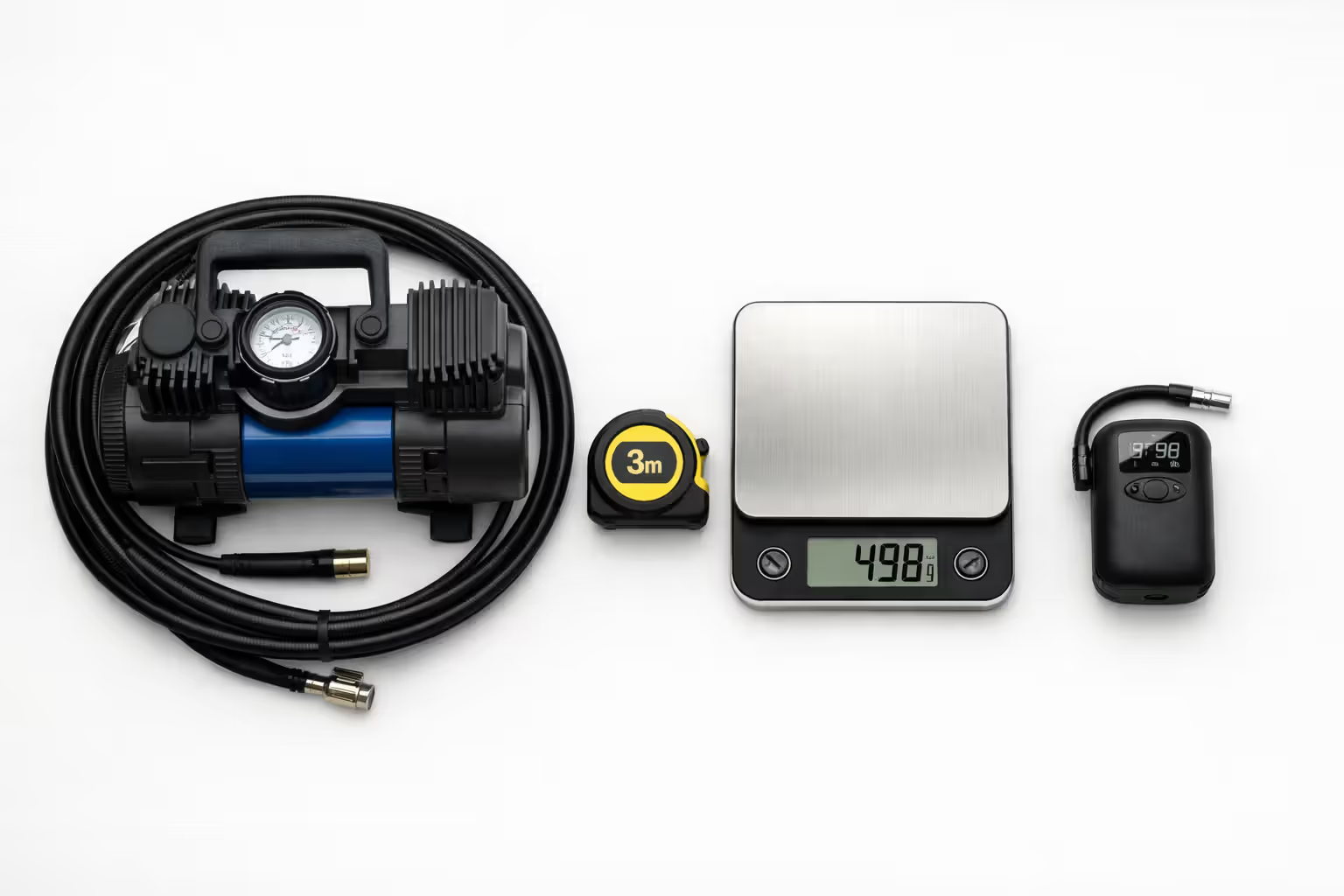
RV owners and contractors love this flexibility. The tradeoff? Weight creeps up to 5-6 pounds compared to 2-3 pounds for single-power designs.
Inflator Type Comparison
| Power Type | Max PSI | Time to Inflate Standard Tire (Empty to 35 PSI) | How Portable | Typical Cost | Works Best For |
| 12V cigarette lighter | 100-150 | 8-12 min | Very easy to carry | $25-$80 | Emergency trunk kit |
| 120V wall plug | 120-150 | 3-5 min | Needs outlet access | $40-$150 | Driveway maintenance |
| Battery cordless | 100-150 | 6-10 min | Extremely portable | $60-$180 | Ultimate convenience |
| Dual-power combo | 120-150 | 3-12 min (depends which mode) | Moderately portable | $80-$200 | RVs, multiple vehicles |
What to Look for When Buying a Portable Air Compressor for Your Car
Maximum PSI sounds impressive on the box, but CFM actually determines how fast you'll finish the job. Think of it this way: 150 PSI with only 0.6 CFM is like filling a swimming pool through a coffee straw. You want minimum 1.0 CFM for regular cars. Driving a truck or SUV with beefier tires? Aim for 1.5+ CFM or prepare to wait around.
Auto shut-off changes everything. Dial in 35 PSI, hit start, then go check your email. The unit stops automatically when it hits your target—no babysitting required. Without this feature? You're stuck repeatedly checking the gauge and trying to stop at exactly the right moment. Usually you overshoot. Annoying and potentially harmful.
Cord and hose length seems minor until you're hunched awkwardly behind your rear wheel cursing. Measure the distance from your 12V socket to your furthest valve stem. Most sedans need at least 12-13 combined feet to reach everywhere comfortably. Bigger vehicles—trucks, SUVs—benefit from 15+ total feet. Trust me, discovering insufficient reach at 11 PM on a dark street is no fun.
Duty cycle specs reveal how long you can run before mandatory cooldown. "10 minutes on, 10 off" means ten minutes of operation, then a ten-minute rest before resuming. Cheaper models with 5-minute cycles become frustrating fast, especially when you're starting from completely flat or handling multiple tires. Thermal overheating protection automatically kills the motor if temperatures spike dangerously—critical for preventing permanent damage.
Noise levels span 60 dB (basically conversation volume) to 85+ dB (like standing in heavy traffic, potentially damaging your hearing). Planning to inflate tires in your suburban driveway at 6 AM? Check those decibel ratings. Budget models with universal motors tend to scream. Brushless DC motors run quieter but cost more upfront.
Weight and form factor determine whether your inflator actually stays in your trunk or gradually migrates to garage shelf purgatory. A 12-pound beast with a bulky case sounds great until you need that trunk space for groceries. Compact models under 3 pounds actually stay put because they're not consuming valuable real estate.
Author: Brianna Lowell;
Source: shafer-motorsports.com
Step-by-Step: Using Your Inflator Safely During Roadside Emergencies
Before touching any equipment, inspect the tire itself. Run your palm around the entire tread and sidewall hunting for punctures, nails, or suspicious bulges. Found a screw embedded there? Leave it alone—yanking it out transforms a slow leak into a gushing hole. Inflators can't fix sidewall blowouts or gaping punctures anyway. Those need professional repair.
Pull completely off the road if possible, find level ground, and set that parking brake. Hazards on, always. Highway shoulder situation? Place warning triangles or flares at least 100 feet behind your vehicle. More people get clipped by passing traffic than hurt by tire failures.
Unscrew the valve stem cap and test the valve core by pressing gently with your fingernail. Should hear a small hiss. If the core feels loose or wonky, tighten it clockwise with your fingers before starting. A damaged valve core leaks air as fast as you're pumping it in—total waste of time and battery.
Connect the chuck to the valve stem with firm pressure. You'll encounter either screw-on designs or lever-lock mechanisms. Screw-on versions need 3-4 full clockwise turns until snug—cranking too hard damages the valve. Lever-lock chucks press straight on, then flip the lever to secure. Quick test: start the inflator briefly and listen for air escaping around the connection point. Hear hissing? Reposition and try again.
Watch that gauge constantly during inflation, even with auto shut-off. Gauges fail. You want to catch problems before accidentally hitting 50 PSI. For reference, passenger car tires should never see 40-42 PSI during normal inflation. If your gauge rockets from 20 to 35 PSI in under a minute on a basic 12V unit, something's wrong with the reading.
Mistakes that wreck tires or equipment: running the inflator past its duty cycle limit (burns out the motor), overinflating by 10+ PSI (stresses sidewalls, reduces tread contact), and ripping the chuck off while the inflator's still running under pressure (damages valve stems). Always stop the inflator first, release residual hose pressure using the bleeder valve, then remove the chuck carefully.
"Proper tire inflation isn't about pumping air until the tire looks full enough. Each vehicle has specific pressure requirements calculated for weight distribution and tire engineering. I've personally witnessed hundreds of cases where drivers inflate to whatever 'feels right' or they match the maximum PSI stamped on the tire sidewall—which actually represents the tire's structural failure point, not your target operating pressure. That information lives on the placard stuck to your driver's door jamb or printed in your owner's manual, nowhere else." — Michael Chen, Lead Technician, Tire Industry Association
— Brianna Lowell
Essential Tire Pressure Maintenance: When and How Often to Check
Temperature swings cause pressure changes at roughly 1 PSI per 10°F shift. When Minnesota transitions from 70°F October days to 20°F January mornings, your tires lose around 5 PSI without any actual leak. This explains those annoying TPMS lights that always seem to illuminate during seasonal changes. Monthly pressure checks represent the bare minimum, with extra checks after any temperature swing exceeding 20 degrees.
TPMS sensors trigger warnings when pressure drops 25% below spec—helpful, sure, but that's already dangerously low territory. A tire rated for 35 PSI lights up the dashboard around 26 PSI, which means extended stopping distances, 3-5% worse fuel economy, and accelerated uneven wear patterns. Manual checking with a quality gauge catches problems earlier, ideally keeping you within 2 PSI of specification.
Loaded vehicle scenarios require pressure adjustments most drivers completely ignore. Hauling camping equipment? Towing a trailer? Stuffed with four adults plus luggage? Your owner's manual lists "loaded" pressure specifications—often 3-5 PSI higher in the rear. Skipping this adjustment causes excessive sidewall flexing, heat buildup, and potential blowout risk on long highway stretches in summer.
Store your inflator somewhere actually accessible during emergencies. Burying it beneath golf clubs, emergency kits, and random trunk junk defeats the entire purpose. Designate a specific spot—small plastic bin secured with velcro straps prevents sliding around. Pack your inflator, pressure gauge, spare valve caps, and flashlight together in one grab-and-go container. Run the inflator briefly every three months just to confirm it still works. Motors can seize from sitting idle too long.
An ounce of prevention is worth a pound of cure
— Benjamin Franklin
Troubleshooting: Why Your Tire Inflator Isn't Working Properly
Motor running but inflation crawling along? You've got air leaking at connection points. Disconnect the chuck and block the hose end with your palm—should feel strong pressure building within seconds. Weak pressure? Check for split hoses or loose fittings somewhere. Pressure feels normal? The problem's in your chuck-to-valve connection. Try repositioning the chuck or replacing that rubber seal inside, which gets hard and cracked over time.
Unexpected shutdowns usually mean you've exceeded duty cycle limits or you're operating in brutal heat. Touch the motor housing—too hot to hold comfortably? You triggered thermal protection. Let it cool completely, we're talking 20-30 minutes minimum, before attempting again. Repeatedly overheating shortens motor lifespan considerably. If you're regularly inflating multiple or oversized tires, consider upgrading to a model with longer duty cycles.
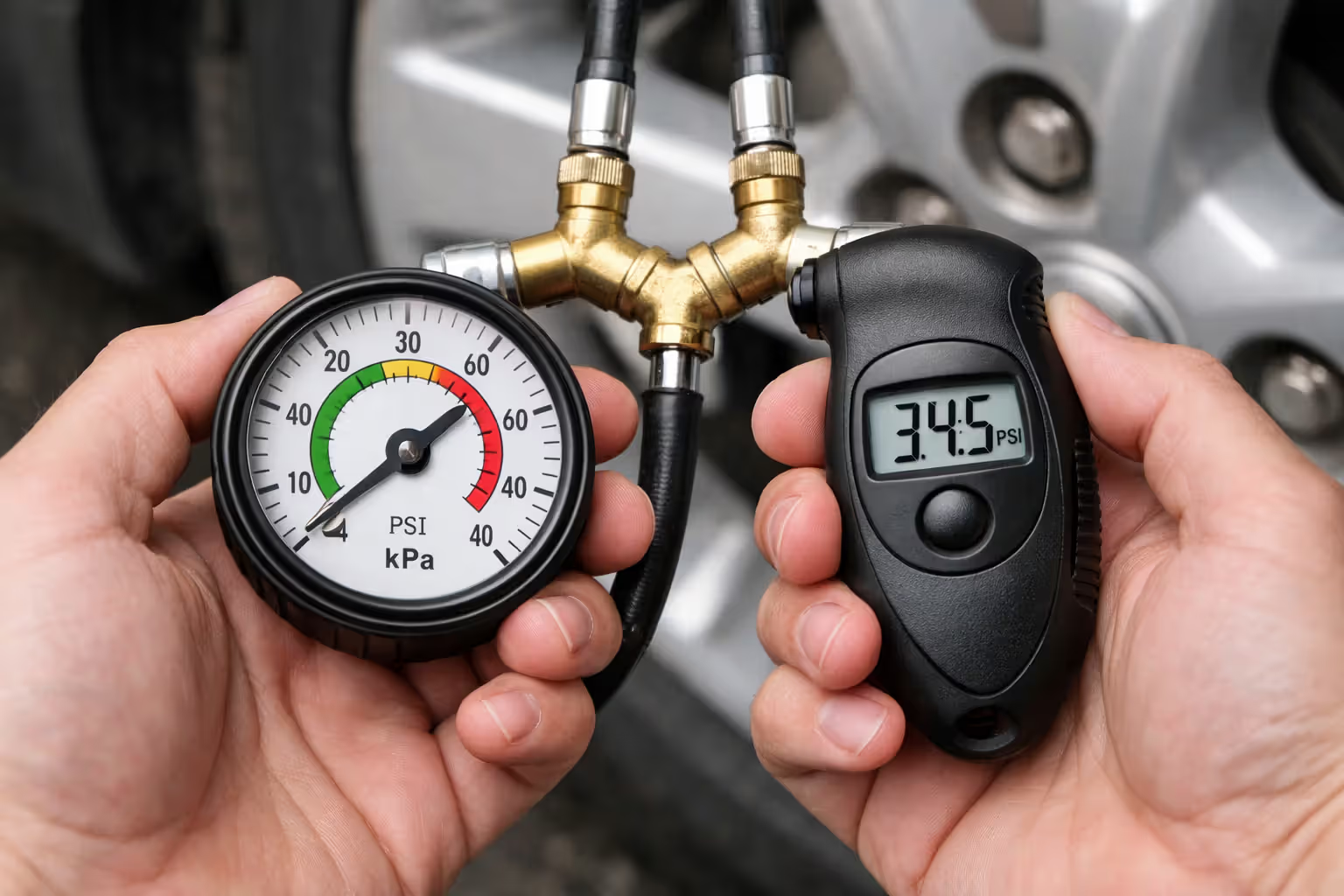
Inaccurate gauges plague cheaper inflators constantly. Cross-check your inflator's gauge monthly against a known-accurate handheld gauge. Discrepancies of 3+ PSI mean replacement time or recalibration if that's even possible. Digital gauges drift less than analog versions but can fail catastrophically when internal sensors die. Keep a quality standalone gauge as backup—a $10 pencil gauge from a reputable manufacturer often outperforms the built-in gauge on a $30 inflator.
Author: Brianna Lowell;
Source: shafer-motorsports.com
Power connection failures on 12V models usually trace back to blown fuses or corroded socket contacts. Inflator won't power on? First check your vehicle's accessory port fuse location in the owner's manual. Many vehicles use 15-20 amp fuses that blow when inflators draw peak startup current. Inspect the inflator's plug for bent or corroded contacts that don't make solid connection. Some vehicles have deeply recessed 12V sockets that won't accommodate bulkier plugs properly—a 6-inch extension adapter solves this for about $5.
Frequently Asked Questions About Tire Inflators
Conclusion
Owning a reliable tire inflator transforms tire pressure from that nagging chore you keep postponing into a quick two-minute task you can handle anywhere. Your ideal choice depends on specific needs: 12V models deliver roadside versatility, AC units provide home garage efficiency, cordless options offer ultimate portability, or hybrid systems cover everything comprehensively. Prioritize CFM output over flashy maximum PSI numbers, verify adequate cord length for your vehicle's size, and seriously consider auto shut-off convenience.
Regular pressure monitoring prevents the cascade of problems underinflation triggers—worse fuel economy, premature tire wear, degraded handling characteristics, and genuine safety risks. Monthly checks, temperature-based adjustments, and keeping your inflator genuinely accessible rather than buried beneath trunk chaos makes the difference. A $50 investment plus five minutes monthly attention can prevent hundreds in premature tire replacement costs and potentially save you from dangerous roadside situations nobody wants to experience.
Related Stories
Read more

Read more


The content on Auto Insights is provided for general informational and educational purposes only. It is intended to offer guidance on car buying, vehicle ownership, finance, insurance, EVs, maintenance, accessories, reviews, and related topics, and should not be considered professional financial, legal, insurance, mechanical, or investment advice.
All information, tools, calculators, comparisons, and recommendations presented on this website are for general guidance only. Individual financial situations, driving habits, vehicle conditions, insurance policies, and market factors vary, and actual results or costs may differ from estimates provided.
Auto Insights makes no guarantees regarding accuracy, completeness, or current applicability of the information, as automotive markets, regulations, incentives, interest rates, and vehicle specifications may change over time.