
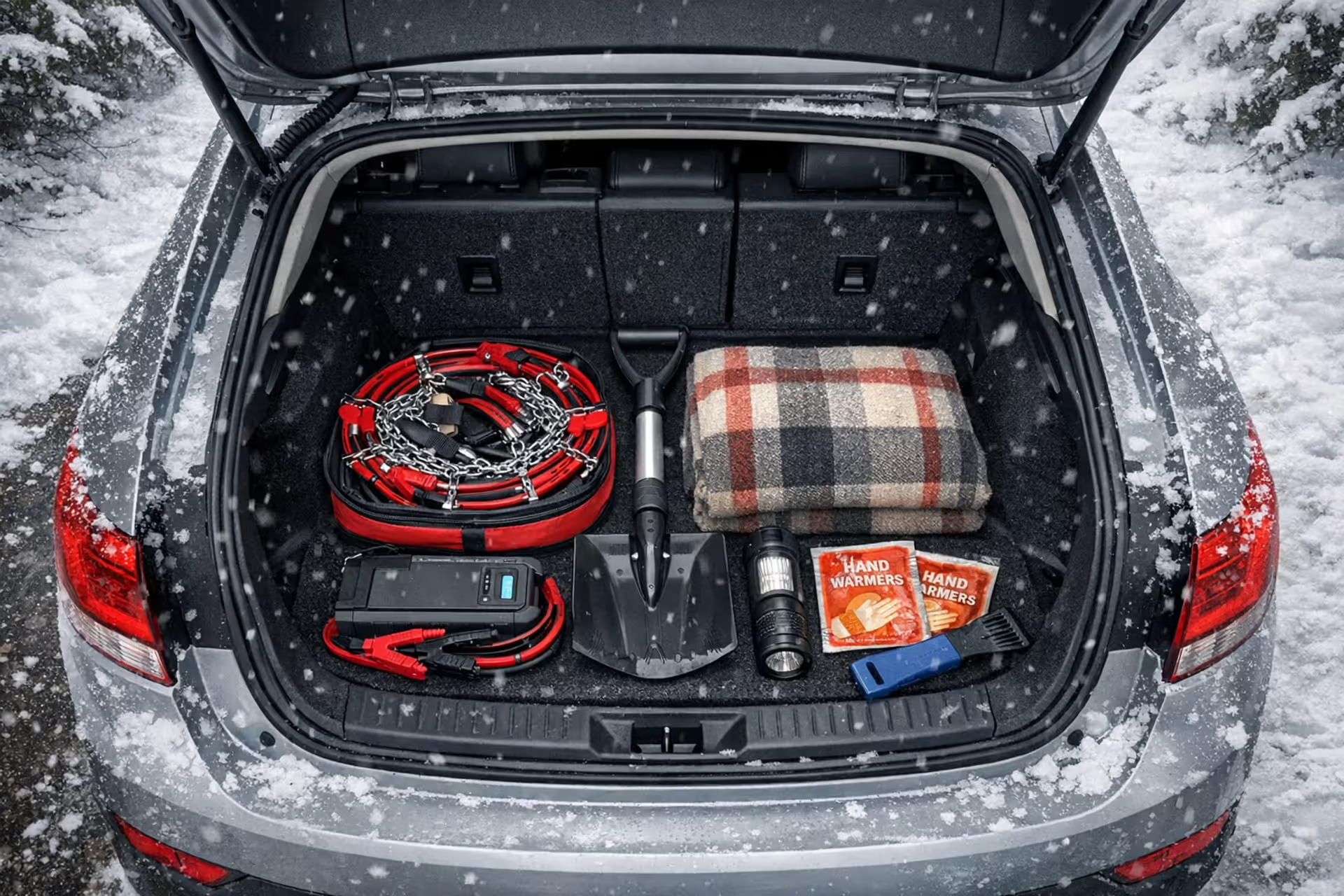
Open car trunk packed with winter emergency supplies including tire chains, blanket, shovel, jump starter, and flashlight on a snowy roadside
Winter Car Accessories That Could Save Your Life This Season
Last December, a woman in upstate New York spent 18 hours stranded in her sedan after sliding into a ditch during a whiteout. She had a phone charger but no blanket. Her gas tank sat at a quarter-full—not enough to idle the engine safely through the night. Rescuers found her hypothermic but alive, wrapped in floor mats and her own coat turned inside-out.
Stories like this happen every winter across the northern United States. The difference between an inconvenience and a life-threatening emergency often comes down to what you keep in your trunk.
"Most drivers think their vehicle's standard emergency kit is sufficient year-round, but winter conditions create survival scenarios that require specialized equipment," says Robert Sinclair, spokesperson for AAA's automotive safety division. "We see a direct correlation between preparedness and outcomes in cold-weather stranding incidents."
Winter driving demands more than good tires and cautious speed. The accessories you choose—and how you deploy them—can prevent accidents, help you escape dangerous situations, and sustain you if you're stuck waiting for help.
Why Your Standard Emergency Kit Won't Cut It in Winter
Your basic roadside kit probably contains jumper cables, a flashlight, and maybe a first-aid pouch. Those items matter, but they weren't designed for 15-degree temperatures and blowing snow.
Cold weather creates compound problems. Batteries lose 60% of their strength at 0°F, meaning your car is more likely to fail exactly when help is hardest to reach. Visibility drops to near-zero during snow squalls, making you invisible to other drivers. Wet clothing loses its insulating properties, and hypothermia can set in within 30 minutes if you're stranded without heat.
Standard emergency kits also assume quick rescue times. In winter storms, response times stretch from minutes to hours—sometimes longer if roads are impassable. State police in Montana reported average wait times exceeding four hours during a January 2023 blizzard. Your safety accessories for winter driving need to account for extended exposure.
The terrain matters too. Rural highways offer no nearby shelter. Mountain passes close without warning. Even suburban drivers face risk: a minor fender-bender in a snowstorm can leave you sitting roadside in freezing wind while waiting for a tow truck that's handling 40 other calls.
Winter preparedness for your vehicle isn't about paranoia. It's about matching your equipment to the actual conditions you'll face between November and March.
It is better to look ahead and prepare than to look back and regret
— Jackie Joyner-Kersee
Must-Have Winter Car Accessories for Snow and Ice Conditions
These accessories address the immediate challenges of driving on winter roads: maintaining traction, clearing your sight lines, and staying visible to other vehicles.
Traction Aids: Chains, Cables, and Tire Socks
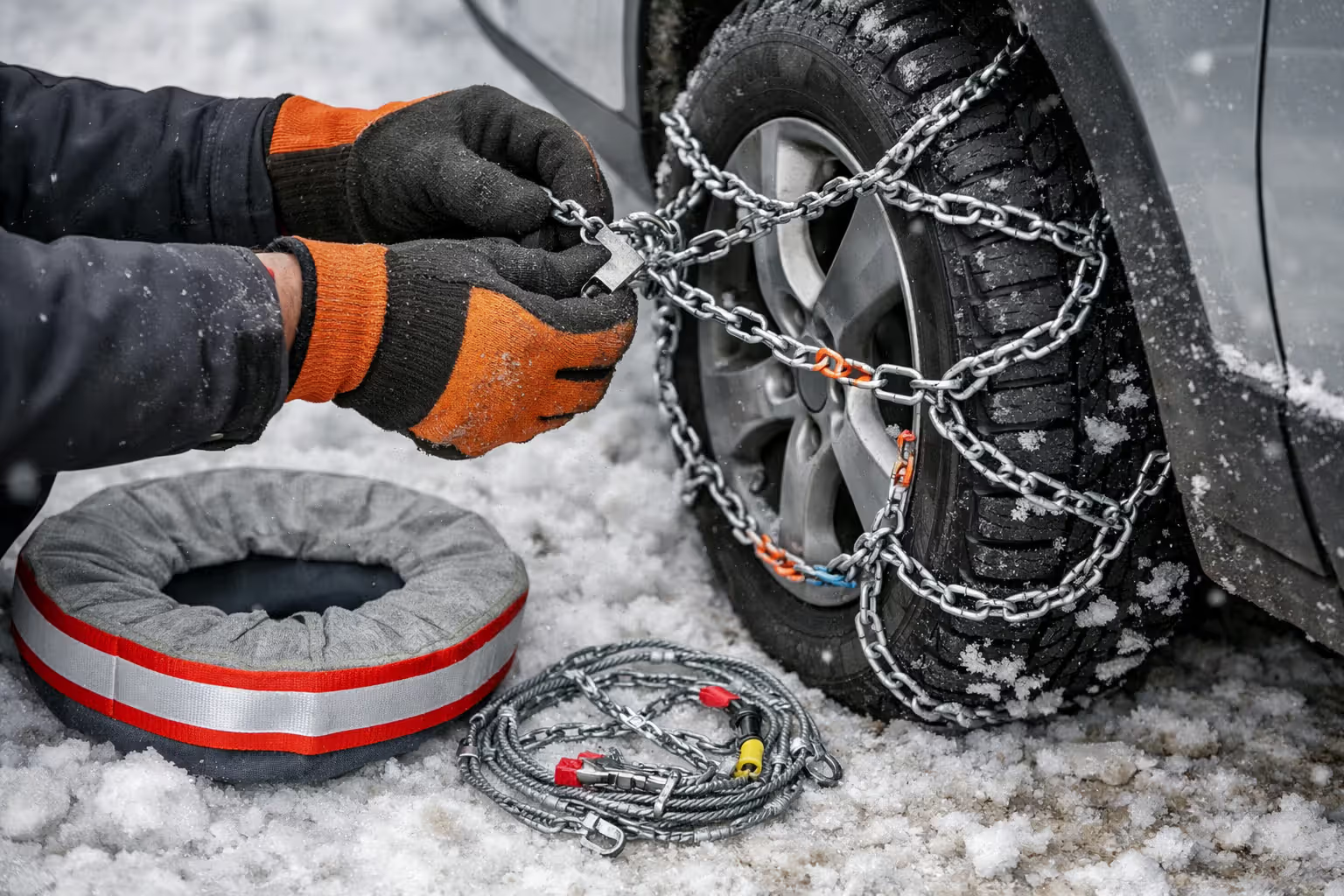
Tire chains remain the gold standard for severe snow and ice, but they're loud, difficult to install, and illegal on bare pavement in many states. Modern alternatives include cable chains—lighter and easier to fit—and textile tire socks that slip over your drive wheels.
Chains work best for sustained mountain driving or unplowed roads. Cables offer a middle ground for occasional use. Tire socks excel in sudden snowstorms where you need quick traction to reach plowed roads, but they wear out fast on bare asphalt.
Whatever you choose, practice installation in your driveway before you need them. Fumbling with frozen metal in a blizzard is miserable and dangerous. Keep work gloves in the same bag as your traction aids.
One rule of thumb: if your state requires chains during certain conditions (California and Colorado have traction laws), carry them even if you have all-wheel drive. Enforcement is strict, and you'll be turned back at checkpoints without proper equipment.
Author: Brianna Lowell;
Source: shafer-motorsports.com
Ice Scrapers and Snow Removal Tools
A credit-card-sized scraper won't clear your windshield after an ice storm. You need a full-length scraper with a brush on one end and a sturdy blade on the other. Look for models with foam grips that won't freeze to your hand.
Consider adding a collapsible snow broom for clearing your roof. Twelve inches of snow sliding off your roof onto your windshield at 50 mph causes temporary blindness and panic braking. It's also illegal in several northeastern states to drive with snow-covered vehicles.
Keep a small bottle of de-icer spray as backup. When ice is too thick for scraping, spray breaks the bond between ice and glass. Avoid pouring hot water on frozen windows—the thermal shock can crack the glass.
Emergency Lighting and Visibility Equipment
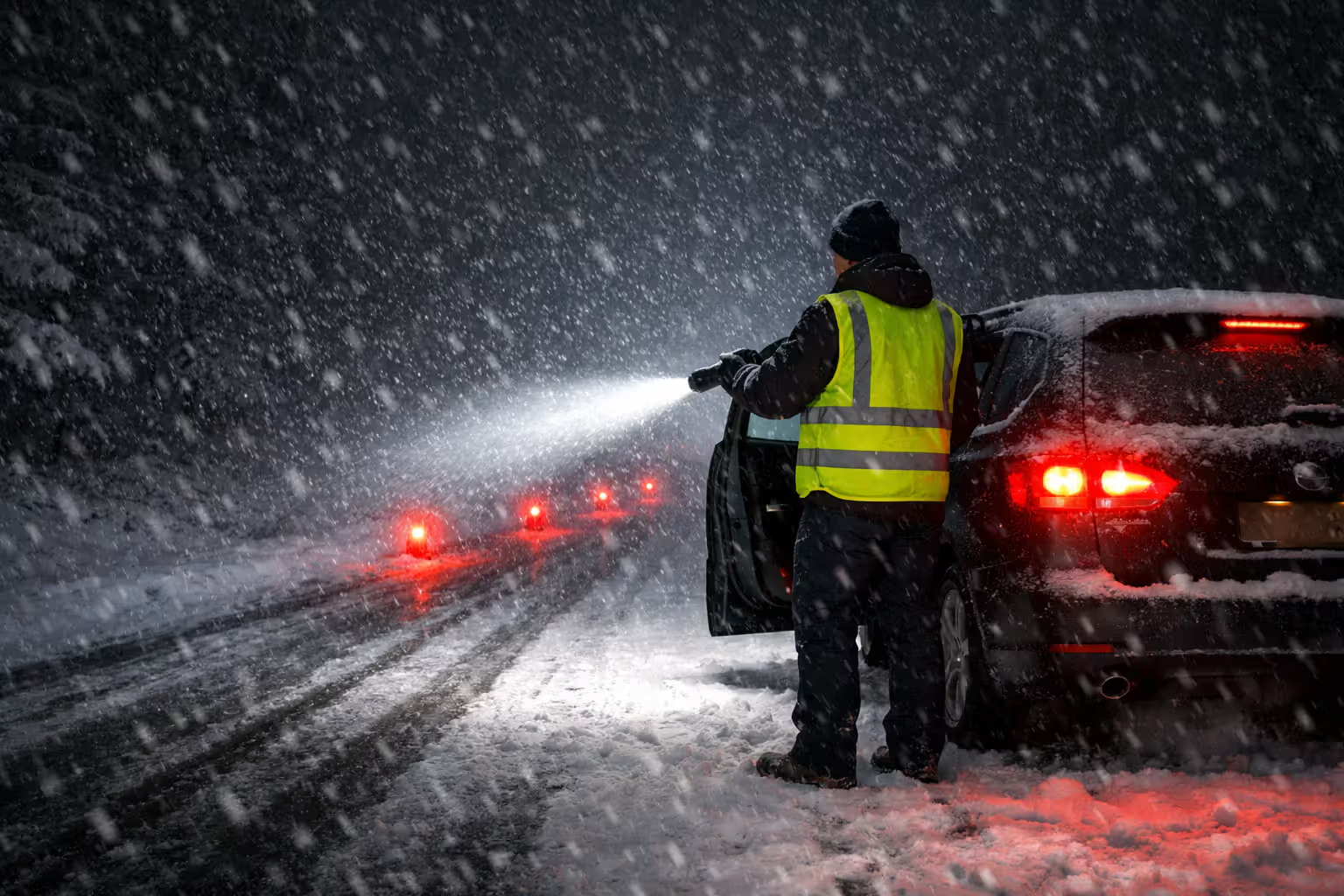
LED road flares have replaced old-style pyrotechnic flares in most winter car accessories lists. They're waterproof, won't ignite leaking fuel, and last for hours on a single battery. Place them 50 feet behind your vehicle to warn approaching traffic.
Add a high-visibility vest—the kind construction workers wear. If you need to exit your vehicle to install chains or assess damage, that reflective yellow makes you visible to drivers whose attention is divided between the road and their fogging windshield.
A rechargeable spotlight helps you signal for help and inspect your vehicle's undercarriage for damage. Smartphone flashlights drain batteries quickly in cold weather, so carry a dedicated light source.
Author: Brianna Lowell;
Source: shafer-motorsports.com
Cold Weather Survival Gear to Keep in Your Vehicle
Once you've addressed mobility and visibility, focus on survival gear. These items protect you if you're stranded and waiting for rescue.
Thermal Blankets and Warming Accessories
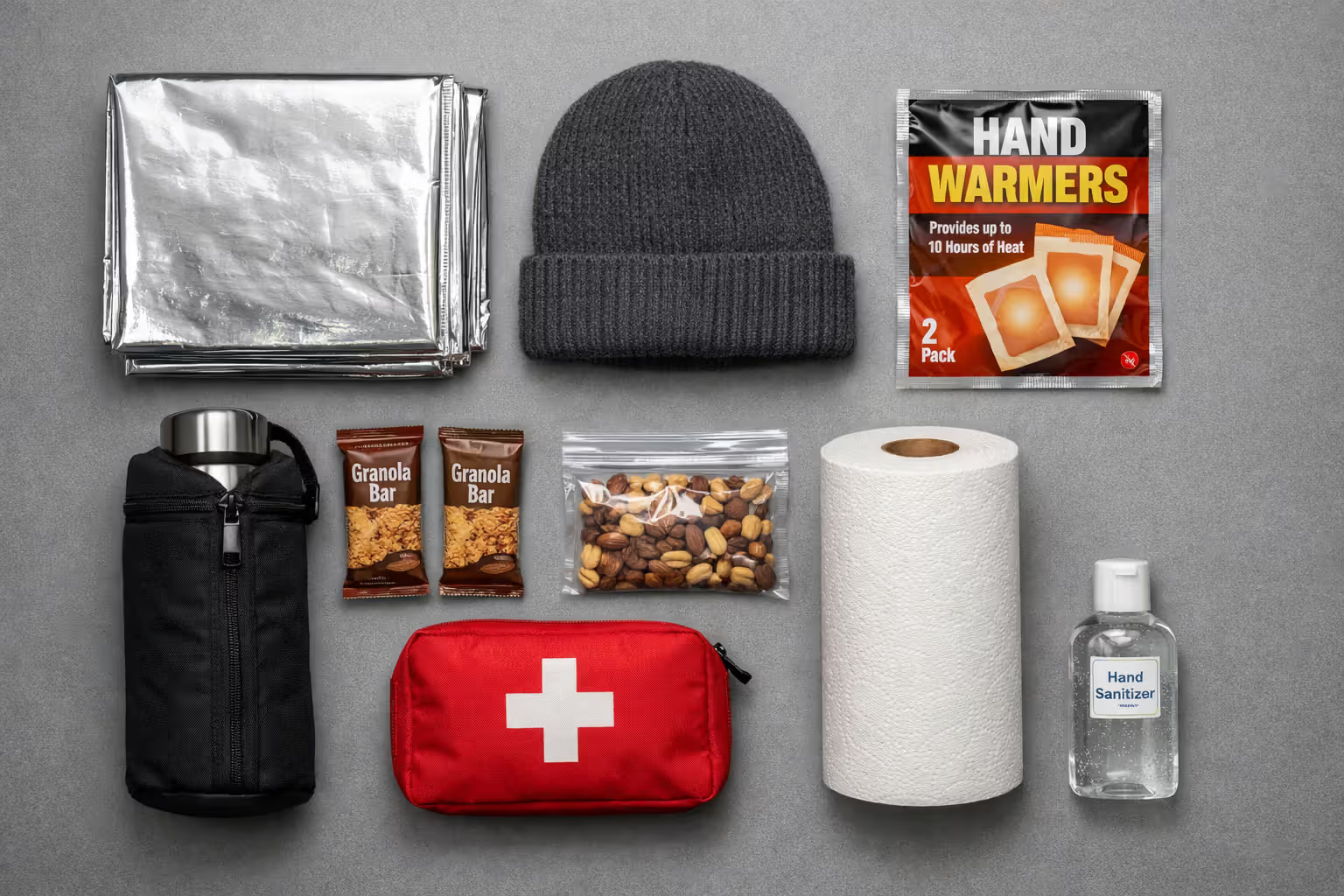
Space blankets (those crinkly metallic sheets) weigh nothing and reflect body heat, but they're fragile and noisy. For serious winter emergency tools for your car, add at least one wool or fleece blanket per passenger. Wool retains warmth even when damp, which matters if snow blows into your vehicle.
Hand and foot warmers—the disposable kind activated by shaking—provide supplemental heat for up to 10 hours. Tuck a box of them in your kit. They're cheap, compact, and genuinely comforting when you're sitting in a dead car at 2 a.m.
A knit hat is non-negotiable. You lose 30% of body heat through your head. Even if you're wearing a coat, hypothermia risk increases dramatically without head coverage.
Some drivers keep a sleeping bag rated for 20°F or lower in their trunk from November through March. It takes up space, but if you drive long distances through remote areas, it's worth the storage trade-off.
Survival is not about being fearless. It is about making a decision, getting on and doing it, because I want to see my kids again, or whatever the reason might be
— Bear Grylls
Food, Water, and First Aid Considerations
Cold weather driving gear should include non-perishable, high-calorie snacks. Granola bars, nuts, and dried fruit provide energy without refrigeration. Avoid chocolate—it freezes solid and becomes difficult to eat.
Water is tricky. Bottles freeze and burst in sub-zero temperatures. Some drivers use insulated bottles or store water inside the passenger cabin rather than the trunk. Another option: keep water in flexible containers that can expand as ice forms without rupturing.
Your first-aid kit needs cold-weather additions: instant cold packs (ironically useful for treating frostbite correctly), blister treatment (winter boots cause friction), and any prescription medications you might need if stranded overnight.
Pack a roll of paper towels and hand sanitizer. Winter stranding often involves messy situations—changing a tire in slush, cleaning up spills, or dealing with illness while waiting for rescue.
Author: Brianna Lowell;
Source: shafer-motorsports.com
Smart Technology and Diagnostic Tools for Winter Driving
Modern cold weather driving gear includes electronic tools that would have seemed like science fiction 20 years ago.
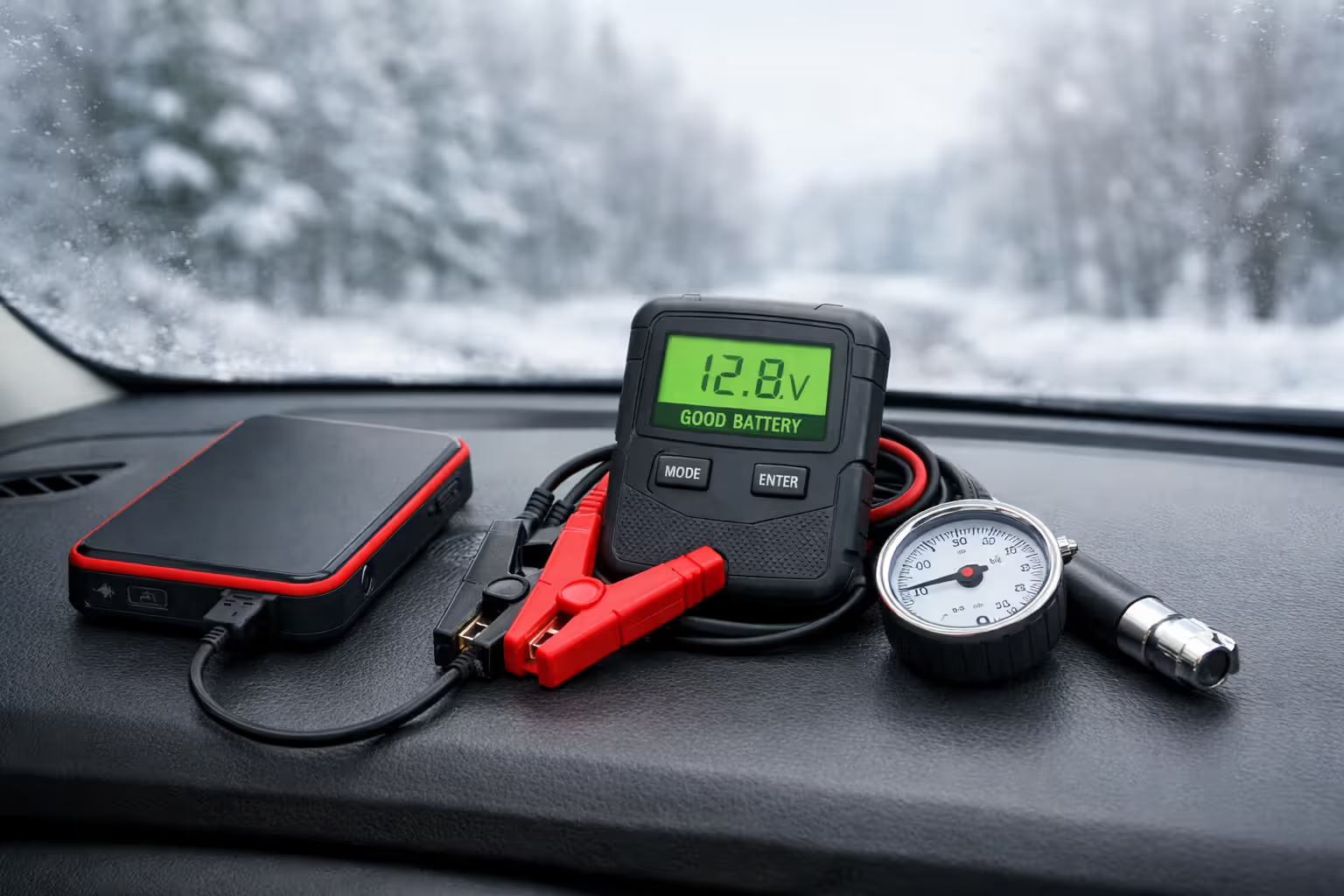
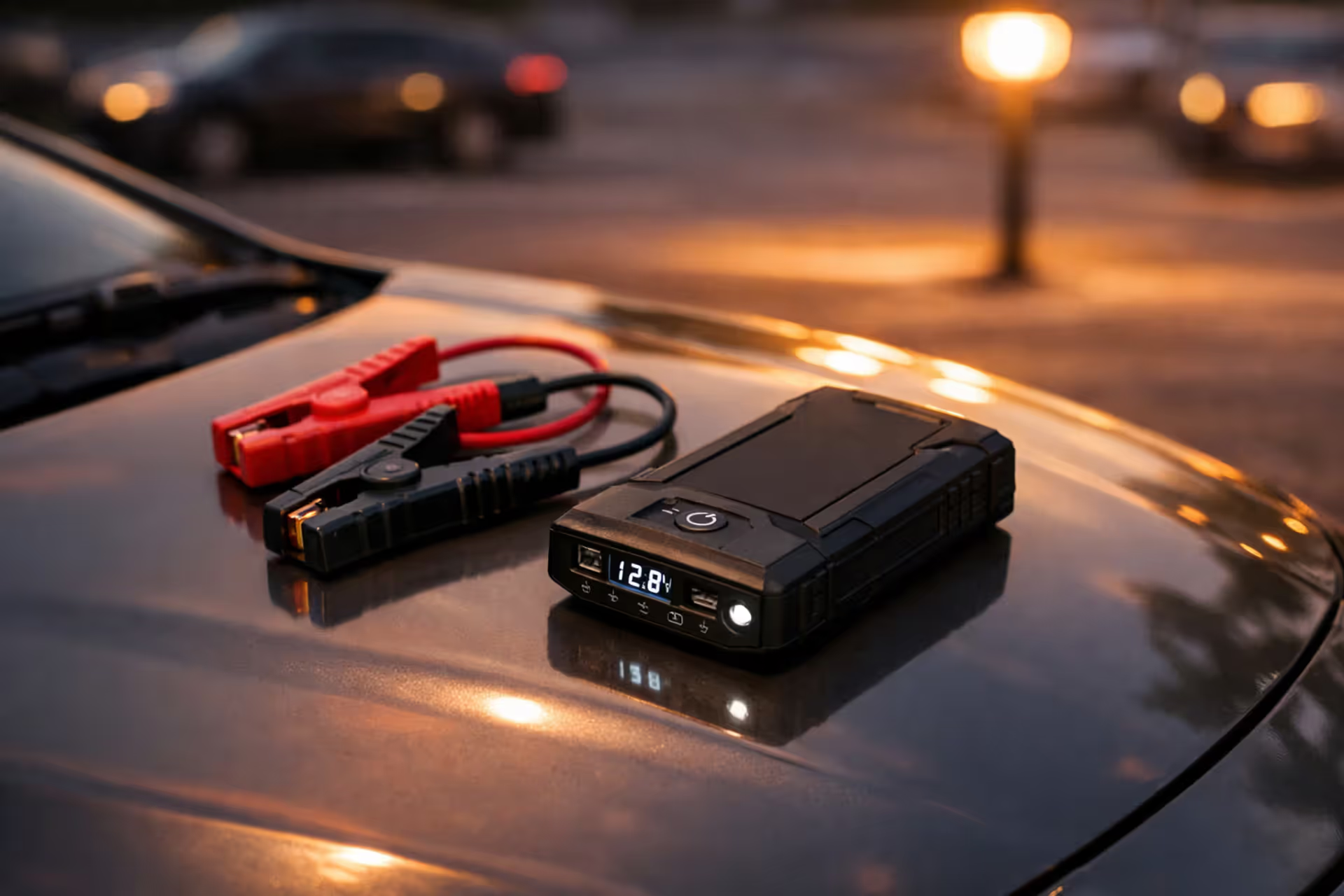
Portable jump starters have replaced traditional jumper cables for many drivers. These lithium-ion battery packs fit in a glove box and deliver enough power to start most vehicles multiple times on a single charge. They also include USB ports for charging phones—critical when you're coordinating rescue.
Check the operating temperature range before buying. Cheap models fail below 20°F, which defeats the purpose. Quality units function down to -20°F or lower.
Tire pressure monitoring systems (TPMS) are standard on newer vehicles, but aftermarket sensors help older cars avoid dangerous under-inflation. Cold air causes tire pressure to drop roughly 1 PSI for every 10-degree temperature decrease. A tire that's properly inflated in September may be dangerously low by January.
A car battery tester—a small device that plugs into your 12V outlet—gives advance warning when your battery is weakening. Replace batteries proactively in October rather than waiting for a failure on the coldest morning of the year.
Consider a plug-in phone charger with multiple cables. Smartphones die quickly in cold weather, and your phone is your primary emergency communication tool. Keep it charged and warm (inside your coat, not on the dashboard).
Author: Brianna Lowell;
Source: shafer-motorsports.com
How to Build a Winter Emergency Kit That Fits Your Climate Zone
Snow driving equipment essentials vary dramatically based on where you live. A driver in Duluth, Minnesota faces different risks than someone in Richmond, Virginia.
Extreme winter climates (northern tier states, mountain regions): You need the full arsenal. Chains or cables, multiple blankets, 72-hour food supply, emergency lighting, shovel, and sand or kitty litter for traction under wheels. Consider adding a portable camp stove (with proper ventilation precautions) for melting snow into drinking water.
Moderate winter climates (mid-Atlantic, lower Midwest): Focus on ice management and short-term stranding. Quality scraper, emergency blanket, 24-hour food and water, jumper cables or battery pack, and visibility equipment. Snow chains are usually overkill, but keep tire socks as insurance.
Mild winter climates with occasional severe weather (Pacific Northwest, southern plains): Your risk comes from being unprepared when the rare ice storm hits. Keep a basic winter kit from December through February: blanket, flashlight, snacks, phone charger. Add a scraper and de-icer even if you only use them once every three years.
Mountain drivers: Elevation changes everything. Carry chains regardless of your vehicle type, pack extra layers (temperature drops 3-5°F per 1,000 feet of elevation), and always fill your gas tank before ascending. Keep a detailed paper map—cell coverage is spotty, and GPS fails when you need it most.
Adjust your kit seasonally. In October, move winter accessories from storage to your vehicle. In April, rotate them back out. Leaving emergency food in your trunk through summer leads to melted chocolate bars and rancid nuts.
Common Mistakes When Choosing Winter Driving Equipment
Drivers waste money on unnecessary items and skip critical ones. Here are the patterns that emerge every winter.
Mistake #1: Buying cheap scrapers. That $3 scraper will snap the first time you encounter real ice. Spend $15-20 on a commercial-grade tool with a brass blade. It'll last five seasons.
Mistake #2: Ignoring expiration dates. Hand warmers, first-aid supplies, and even batteries degrade over time. Check your kit each fall and replace expired items. Those hand warmers from 2019 won't activate when you need them.
Mistake #3: Storing everything in the trunk. If you slide into a ditch and your trunk is jammed shut or buried in snow, you can't access your emergency gear. Keep critical items (blanket, flashlight, phone charger, snacks) in the passenger cabin where you can reach them from the driver's seat.
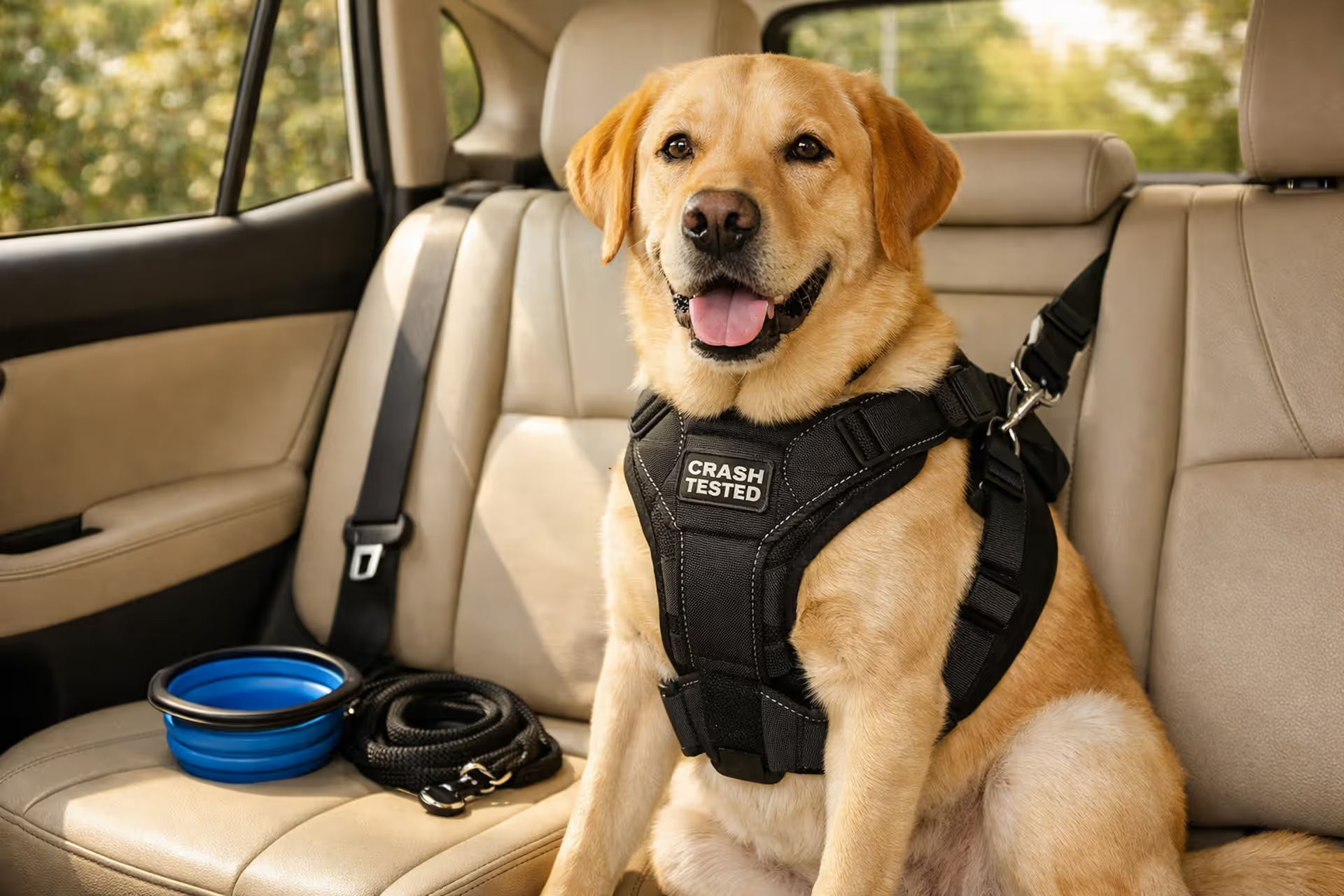
Mistake #4: Forgetting about pets. If you travel with dogs, pack extra water and a blanket for them too. Pets suffer from hypothermia faster than humans due to their higher surface-area-to-volume ratio.
Mistake #5: Relying solely on all-wheel drive. AWD helps you start moving and maintain speed, but it doesn't help you stop or steer on ice. Drivers with AWD vehicles often skip winter preparedness because they feel invincible, then find themselves in worse trouble than two-wheel-drive vehicles that approached conditions more cautiously.
Mistake #6: Buying items you don't know how to use. Tire chains are useless if you've never practiced installation. A fire extinguisher doesn't help if you don't know how to operate it. Read instructions and practice with your equipment before you're in an emergency.
By failing to prepare, you are preparing to fail.
— Benjamin Franklin
FAQ: Winter Car Accessories
Winter weather doesn't wait for you to be ready. The accessories you keep in your vehicle represent a simple calculation: a few hundred dollars and an hour of preparation against the potential cost of injury, hypothermia, or worse.
Start with the essentials for your climate zone and driving patterns. Add items gradually as budget allows. Practice using equipment before you're in an emergency—install chains in your driveway on a sunny Saturday, not on a dark mountain pass during a blizzard.
Check your kit each October. Replace expired items. Refresh your memory on where everything is stored and how it works. These small actions create a buffer of safety that transforms winter driving from anxious to confident.
The next time snow starts falling harder than forecast and traffic slows to a crawl, you'll know you're prepared for whatever the season brings.
Related Stories
Read more
Read more

The content on Auto Insights is provided for general informational and educational purposes only. It is intended to offer guidance on car buying, vehicle ownership, finance, insurance, EVs, maintenance, accessories, reviews, and related topics, and should not be considered professional financial, legal, insurance, mechanical, or investment advice.
All information, tools, calculators, comparisons, and recommendations presented on this website are for general guidance only. Individual financial situations, driving habits, vehicle conditions, insurance policies, and market factors vary, and actual results or costs may differ from estimates provided.
Auto Insights makes no guarantees regarding accuracy, completeness, or current applicability of the information, as automotive markets, regulations, incentives, interest rates, and vehicle specifications may change over time.