
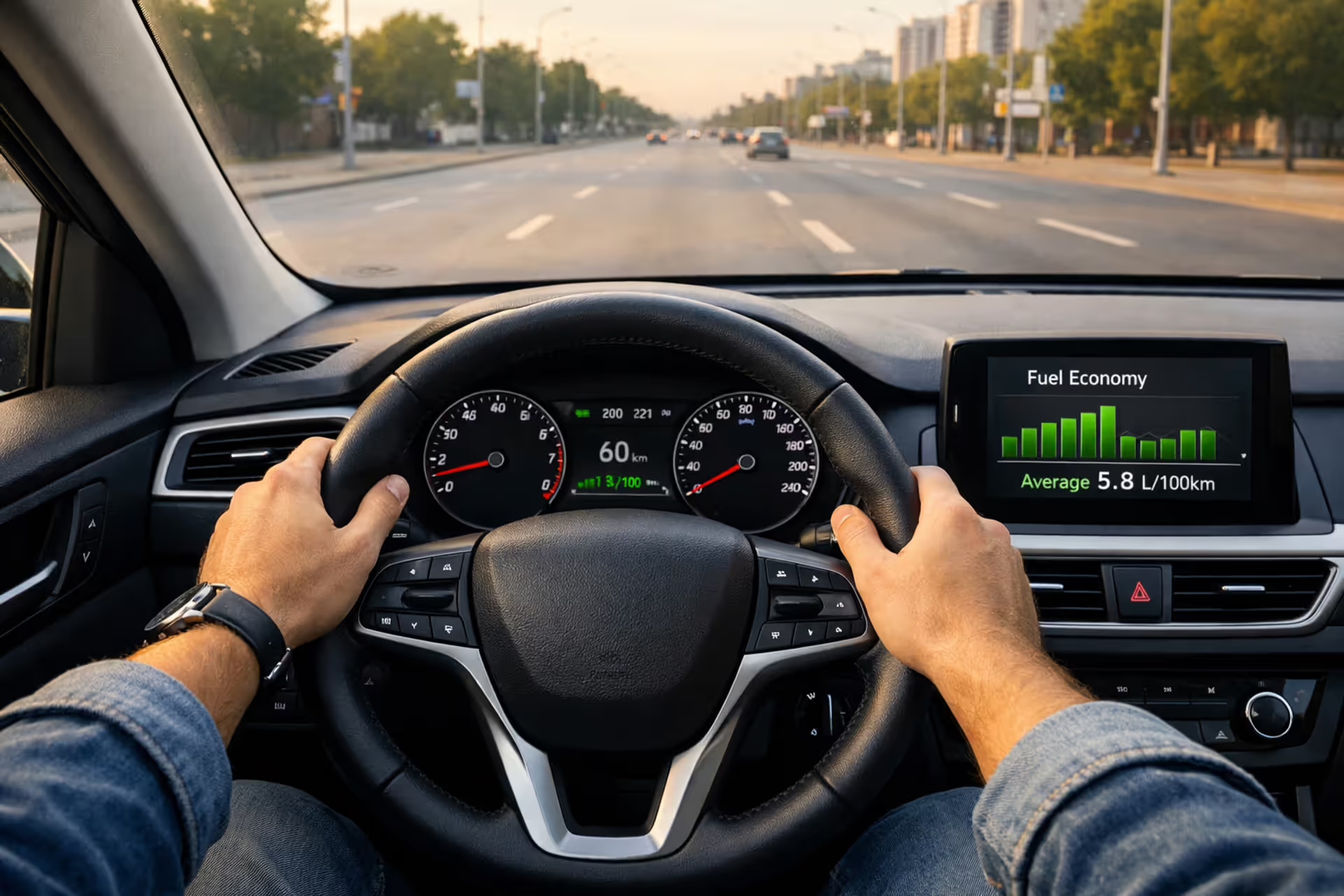
Calm driver hands on steering wheel with fuel economy display on dashboard during smooth city driving
Driving Habits That Save Money: Cut Your Vehicle Costs by Up to 40%

Every time you slide behind the wheel, you're making financial decisions—whether you realize it or not. The problem? Most of those decisions are costing you money. Not just the obvious stuff like gas and insurance, but the silent killers: brake dust settling on your wheels after another hard stop, microscopic particles of rubber leaving your tires during aggressive lane changes, heat building in your transmission when you shift before coming to a complete stop. These aren't abstract concerns. They're budget destroyers that show up as $800 brake jobs, $1,200 tire replacements, and $3,500 transmission repairs.
AAA calculated that Americans spent an average of $10,728 yearly on vehicle ownership in 2023. Fuel represented about 17% of that figure, while maintenance and repairs grabbed a significant additional slice. Here's what changes the game: how you handle the steering wheel, gas pedal, and brake pedal determines whether you'll land closer to $8,000 or $12,000 for the exact same car. Multiply that $4,000 annual difference across seven years of ownership, and you're looking at $28,000—more than enough to buy your next vehicle outright.
How Your Acceleration and Braking Patterns Directly Impact Your Wallet
That pedal under your right foot? It's connected directly to your bank account. Each time you mash it or stomp on the brake, you're triggering a cascade of mechanical stress and fuel waste that either preserves your car's components or grinds them into expensive dust.
The Real Cost of Aggressive Driving (fuel + brake wear calculations)
Punching the accelerator from a dead stop doesn't just feel powerful—it literally burns money. Each jackrabbit start wastes between fifteen and thirty cents in extra fuel. Stomp the gas to hit 40 mph as fast as possible, and your engine chugs fuel at 40% above the rate of a gradual 12-15 second acceleration to that same speed. Make this mistake 15 times during your commute (about average for city driving with frequent lights), and you've torched $2.25 in gas. That's $562.50 yearly just from impatient starts.
Now layer on brake damage. When you slam the brakes, friction temperatures spike above 500°F. This heat doesn't just slow you down—it crystallizes brake pad material and warps rotors through uneven expansion. Drivers who consistently hammer the brakes replace pads every 25,000 miles instead of the 50,000 miles that smooth drivers achieve. At $300 per brake service, you're throwing away an extra $300 every two years. Factor in rotor damage, and that number climbs to $700 in additional costs over four years.
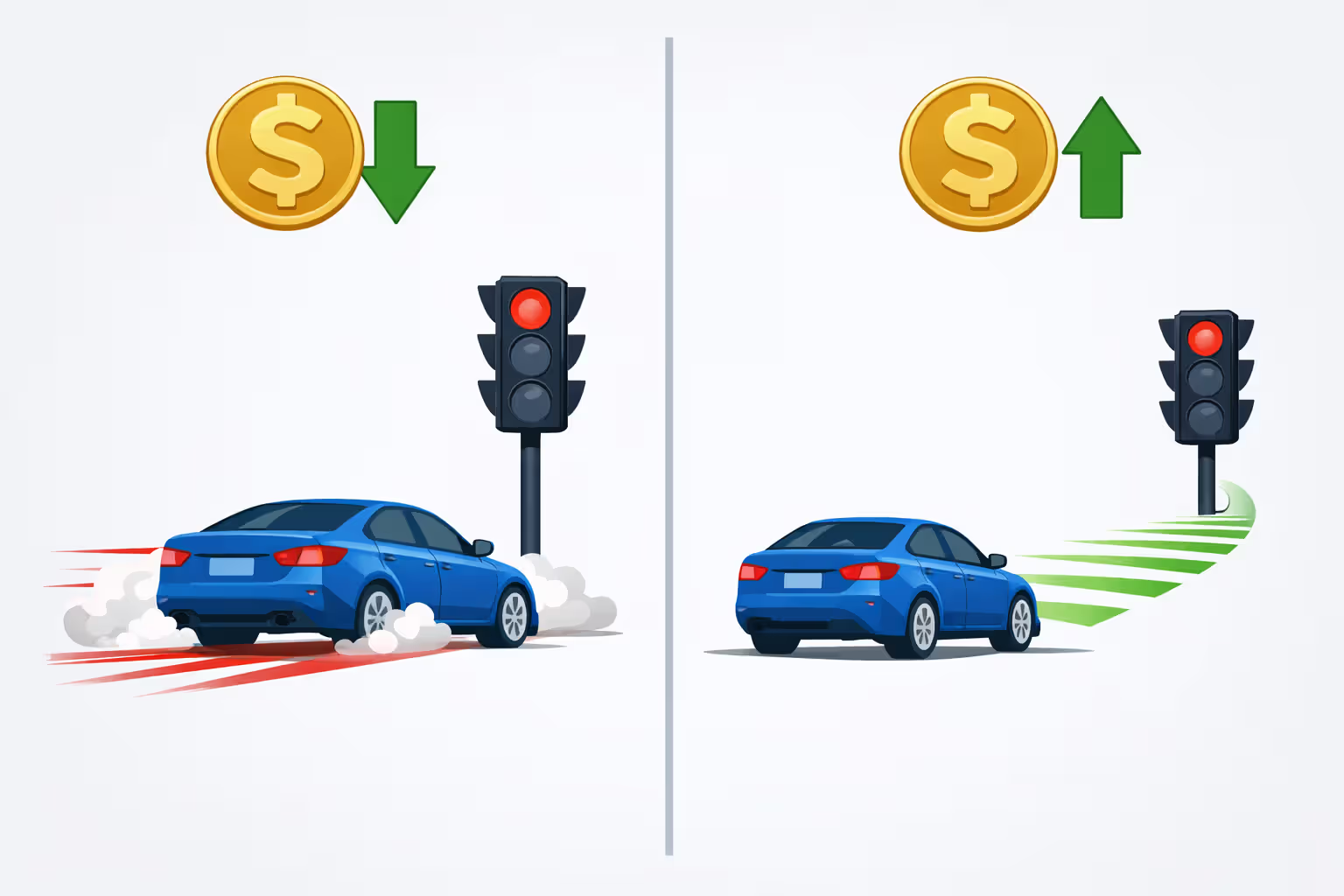
Picture this: you're rolling toward a red light 500 feet away. The impatient driver holds speed until 100 feet out, then stands on the brakes. The smart driver? They ease off the gas at 500 feet, letting physics and engine compression do the work, then applies gentle brake pressure only for the final 50 feet. That first driver just converted expensive fuel into worthless heat. The second driver never created that waste in the first place.
Author: Kevin Thornton;
Source: shafer-motorsports.com
Smooth Driving Techniques That Reduce Fuel Consumption by 15-30%
Smooth driving fuel savings start with reimagining your accelerator pedal as a precision instrument, not an on-off switch. Try this three-second counting method: from a complete stop, count "one-Mississippi, two-Mississippi, three-Mississippi" while gradually building speed to your target (typically 25-35 mph in the city). This rhythm keeps your engine spinning between 1,500-2,500 RPM—the sweet spot where modern engines deliver power most efficiently.
Progressive pressure makes the difference. Your engine's computer injects extra fuel during sudden throttle stabs to prevent hesitation. Steady, measured pressure maintains a lean, efficient air-fuel mixture. Think of it like a volume knob, not a light switch.
For braking, develop scanning vision. Look 12-15 seconds ahead—roughly a city block, or the distance to that curve on the highway. Spot brake lights early? Yellow signal timing out? Stop sign approaching? Start lifting off the accelerator right then. This technique alone can slash your brake applications by 40% and drop city fuel consumption by 15-20%.
Real-world numbers back this up. Oak Ridge National Laboratory ran tests in 2022 where they trained drivers in gradual acceleration and early coasting techniques. Same cars, same routes, different techniques. Result? Fuel economy jumped from 24.1 mpg to 31.3 mpg—a 30% improvement. For someone covering 12,000 miles annually with gas at $3.50 per gallon, that's $750 staying in their wallet instead of burning up in the engine.
The individual who says it is not possible should move out of the way of those doing it.
— Tricia Cunningham
Tire Longevity: Driving Behaviors That Add Thousands of Miles
You'll spend $600-$1,200 every few years replacing tires. Whether those tires last 30,000 miles or 60,000 miles doesn't depend on the brand you bought—it depends on how you drive. The difference between those two numbers represents pure savings or waste.
Cornering and Lane Changes That Preserve Tread
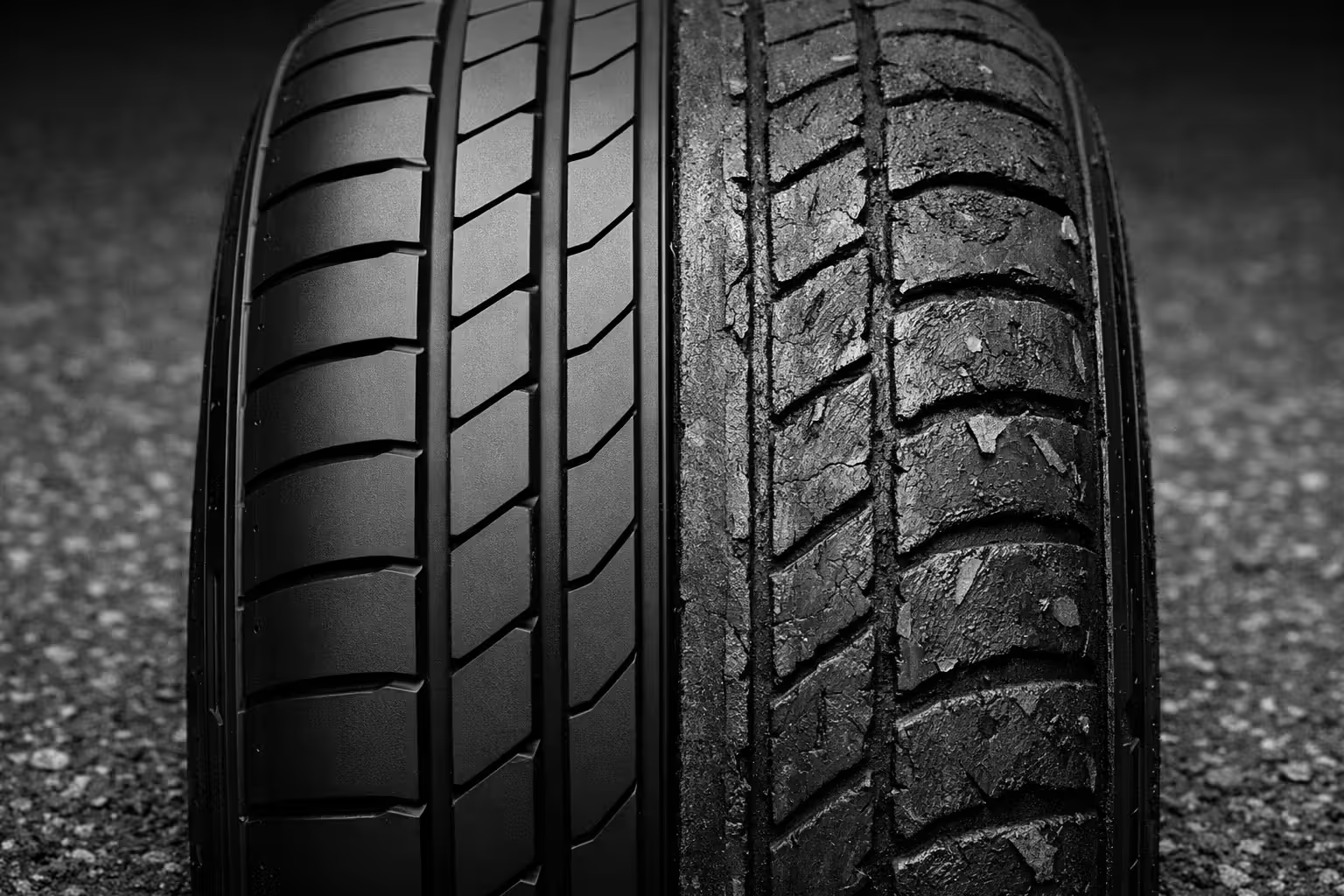
Tire wear reduction habits begin with physics. When you turn, your tires don't simply roll in their pointed direction—they slide sideways while rolling forward. This sideways slip creates the lateral force needed to change direction, but it also grinds rubber particles off the tread surface. Sharp turns mean greater slip angles, which means faster rubber loss.
You don't need to crawl around corners. You need to enter them at your intended speed. Braking mid-turn loads weight unevenly onto your front tires, creating flat spots and feathered edges that can shorten tire life by 20-30%. Instead, brake before the turn, then maintain steady throttle through it.
Lane changes deserve the same respect. Count two full seconds while moving from one lane to another on the highway. Quick lane changes at 70 mph generate lateral forces around 0.4-0.5g—equivalent to that highway exit ramp you take at 40 mph. Gentle lane changes produce only 0.1-0.2g of force, cutting tire scrubbing by more than half.
Want a simple test? Put a half-full coffee mug in your center console tomorrow. Drive your normal route. If the coffee stays put, your cornering and lane changes are smooth enough to maximize tire longevity. Coffee sloshing everywhere? You're grinding thousands of miles off your tires unnecessarily.
Author: Kevin Thornton;
Source: shafer-motorsports.com
Parking Habits That Prevent Sidewall Damage
Smacking a curb at even 5-10 mph can separate internal steel belts from the sidewall rubber, creating a dangerous bulge that demands immediate replacement. At $150-$300 per tire, one careless parallel parking attempt costs as much as 2,000 miles of normal tire wear.
Just as damaging: cranking the steering wheel when you're sitting still. This "dry steering" creates flat spots on the contact patch and twists sidewall rubber against the tread, building internal heat that degrades rubber compounds. Always let your car roll forward—even just a few inches—before turning the wheel to full lock. This one adjustment can add 5,000-7,000 miles to your tire set's lifespan.
Here's another one most people miss: where you position your tires when parking. Avoid jamming them against curbs or parking blocks. That constant pressure point creates uneven wear patterns—mechanics call it cupping or scalloping. Once these irregular patterns develop, they're permanent. You'll be replacing tires with plenty of remaining tread depth simply because they vibrate or howl at highway speeds.
Speed and RPM Management for Maximum Fuel Economy
Your speedometer and tachometer tell you exactly how much fuel you're burning in real-time—if you know how to read them. Understanding this relationship unlocks hundreds of dollars in annual savings.
The Optimal Speed Range for Highway Driving
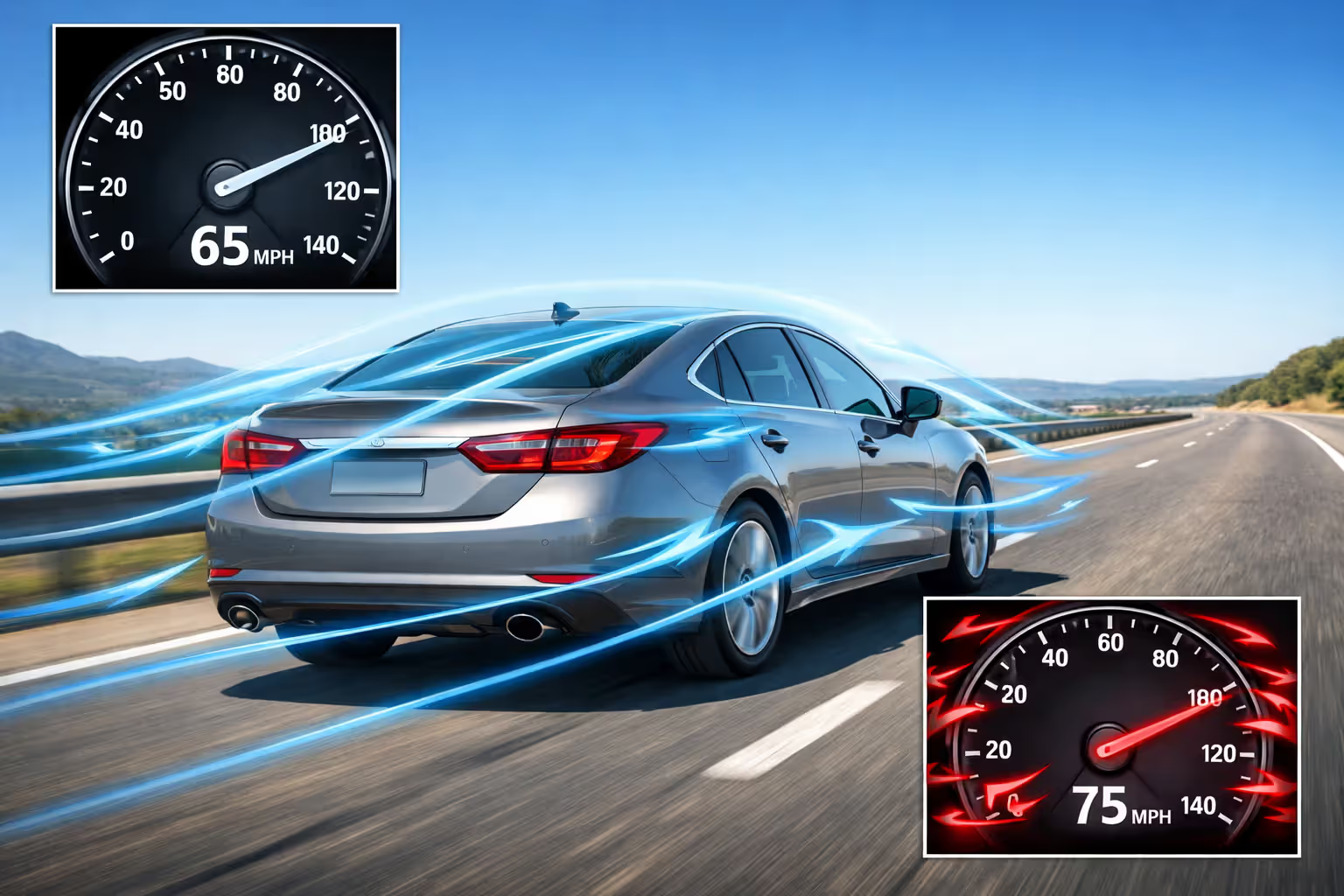
Wind resistance increases exponentially with speed. Drive 75 mph instead of 65 mph, and you're not fighting 15% more drag—you're fighting 32% more. Your engine has to work 32% harder to push through that air, gulping proportionally more gas. Most vehicles hit peak fuel economy somewhere between 45-62 mph, then efficiency falls off a cliff above 65 mph.
The EPA calculated that each 5 mph over 50 mph costs you about $0.18 per gallon in wasted fuel. Let's say you cover 500 highway miles weekly at 75 mph when you could cruise at 65 mph. That's $468 in unnecessary fuel costs over a year—enough for a nice weekend getaway.
But there's nuance here. Crawling along at 50 mph in a 70 mph zone creates traffic disruptions and safety hazards. The ideal balance for fuel efficiency driving techniques means cruising slightly below the limit in the right lane. On 70 mph highways, settle into 65 mph. On 65 mph highways, aim for 60-62 mph. You'll save fuel without becoming a rolling roadblock.
Cruise control helps maintain this efficiency on flat terrain by eliminating the unconscious speed fluctuations that waste fuel. However—and this matters—turn it off in hilly areas. Cruise control maintains your set speed by adding throttle uphill, often forcing downshifts and high RPMs. Better to manually accept a 5-7 mph speed drop on long climbs, using momentum rather than engine power. You'll naturally regain that speed coasting downhill.
Author: Kevin Thornton;
Source: shafer-motorsports.com
When to Shift Gears (Manual) or Let the Transmission Work (Automatic)
If you drive a manual transmission, your shift point directly controls fuel consumption. General guideline: shift when the tachometer reaches 2,500 RPM for gasoline engines, 2,000 RPM for diesels. Revving to 4,000 RPM before each shift might sound sporty, but you're burning 40% more fuel than necessary to reach identical speeds.
Short-shifting—moving to the next gear below the engine's power peak—works beautifully for economical driving behavior. Most engines produce maximum power at 5,000-6,500 RPM, but maximum efficiency lives at 60-70% of that range. You don't need maximum power for normal driving. You need adequate power delivered efficiently.
Automatic transmission owners have it easier—mostly. Modern 8-10 speed automatics optimize fuel economy better than most human drivers can—but only when you stop confusing the computer. Erratic throttle inputs make the transmission "hunt" between gears, constantly upshifting then downshifting. This hunting burns extra fuel and wears internal clutch packs.
The solution? Steady, moderate throttle pressure. The transmission will smoothly climb through the gears, reaching top gear by 45-50 mph. Once at cruising speed, maintain consistent pressure. The transmission stays in top gear, spinning the engine at 1,500-1,800 RPM—right in the efficiency sweet spot.
One exception applies: when merging onto highways or passing on two-lane roads, use decisive throttle. Timid acceleration on entrance ramps forces the transmission to hold lower gears longer, actually consuming more fuel than a moderately aggressive sprint to highway speed followed by steady cruising.
Five Preventable Driving Mistakes That Lead to Expensive Repairs
Some driving behaviors skip right past normal wear-and-tear and directly assault expensive components. Avoid these repair prevention habits and you'll dodge four-figure repair bills that were completely preventable.
Mistake #1: Shifting to Reverse Before Complete Stop
Still rolling forward at 2 mph when you jam the shifter into reverse? You just forced your transmission to instantly absorb all that forward momentum. Automatic transmissions suffer shock loading on the parking pawl and internal clutch packs. Make this mistake twice daily throughout the year, and you've potentially cut your transmission's lifespan by 30,000-50,000 miles. Considering transmission rebuilds run $2,500-$4,500, the fix is simple: count "one-Mississippi" after pressing the brake before moving the shifter. That single second ensures complete stop and saves thousands.
Mistake #2: Ignoring Engine Warm-Up Needs
Fire up your car and immediately floor it? You're grinding cold oil through your engine. At 32°F outside, engine oil becomes ten times thicker than at normal operating temperature (195°F). This thick oil crawls through narrow passages, essentially starving bearings and camshafts of proper lubrication. Studies suggest that 75% of total engine wear happens during cold operation—particularly the first 60 seconds after starting.
Don't idle for 10 minutes like your grandfather did (that wastes fuel and pumps out excess emissions). Instead, drive gently for the first 5 minutes after starting. Keep RPMs below 3,000 and skip aggressive acceleration. Watch your temperature gauge—once it hits the normal range, your engine has proper protection.
Mistake #3: Blasting Over Potholes and Speed Bumps
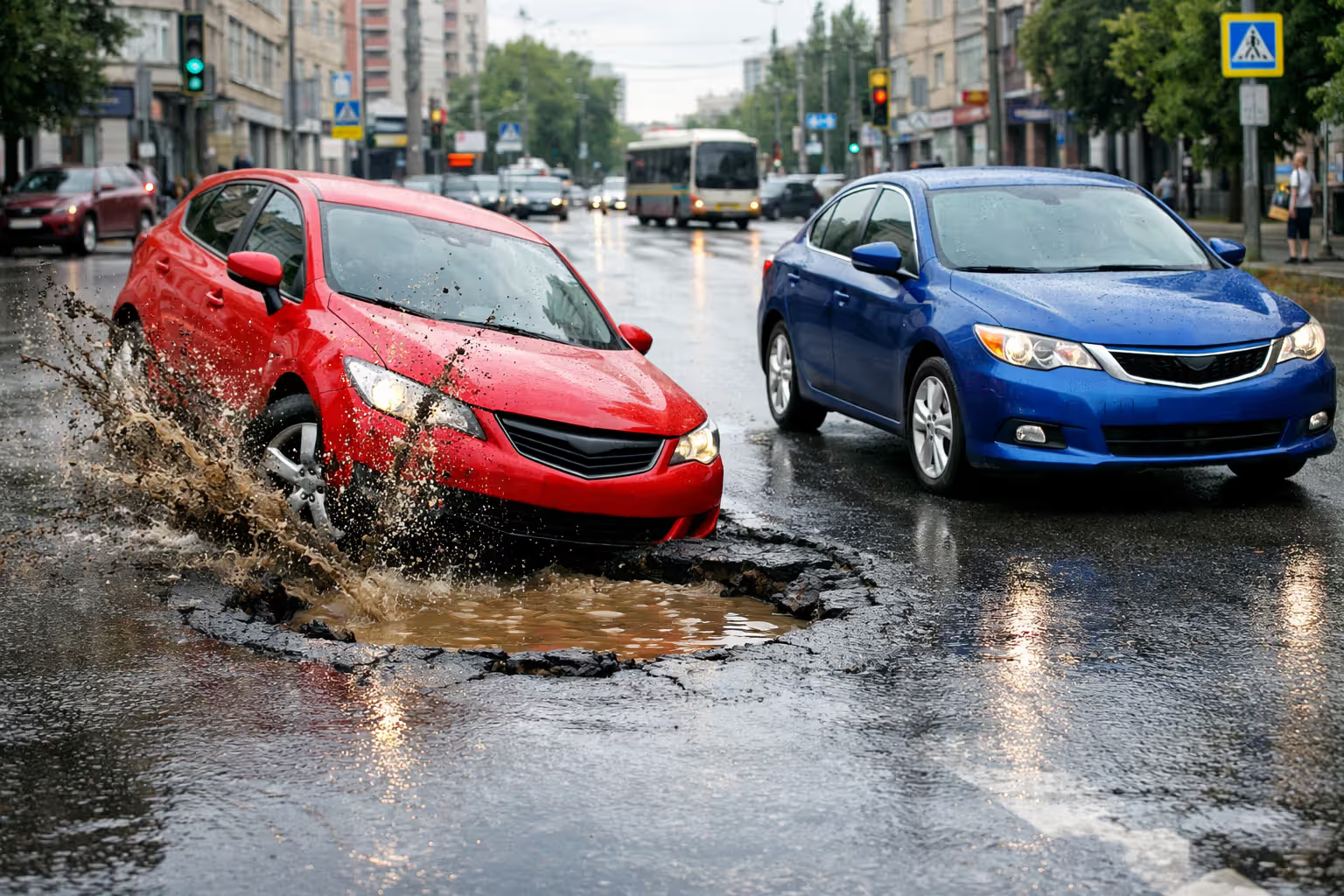
Slam into a pothole at 40 mph and you're generating impact forces exceeding three times your vehicle's weight—all concentrated on one suspension corner. The damage potential? Cracked wheels ($200-$400 each), blown tires ($150-$300), bent control arms ($400-$800), or wrecked shock absorbers ($600-$1,000 per pair). One major pothole strike can trigger $1,500 in cascading suspension damage.
Speed bumps demand equal respect. Approach at 5-10 mph maximum. Better yet, angle your vehicle so one front tire crosses before the other. This technique cuts peak impact force by roughly 40% compared to hitting the bump head-on with both front tires simultaneously.
Author: Kevin Thornton;
Source: shafer-motorsports.com
Mistake #4: Riding the Clutch (Manual Transmissions)
Rest your foot on the clutch pedal while driving—even light contact—and you're partially disengaging the clutch. The clutch disc spins at one speed while the flywheel and pressure plate spin at another, creating friction and heat. This constant slippage can slash clutch life from 100,000 miles down to 40,000 miles. With clutch replacement running $1,200-$1,800, this lazy habit costs $0.03 per mile in premature wear.
Also avoid holding the clutch pedal down at long traffic lights. This wears the throwout bearing unnecessarily. At lights lasting more than 30 seconds, shift to neutral and release the clutch completely.
Mistake #5: Overloading and Unbalanced Cargo
Your vehicle's payload capacity lives in the owner's manual—typically 850-1,200 pounds for sedans, 1,400-2,200 for trucks. Exceed this limit by 500 pounds and you've increased brake wear by 25% and suspension wear by 40%. Across 50,000 miles, this accelerated wear costs $800-$1,200 in premature component replacement.
The best time to repair the roof is when the sun is shining
— John F. Kennedy
Unbalanced loads cause asymmetric wear too. Loading heavy landscaping supplies on only one side of your truck bed overloads that side's suspension and tires, creating premature wear and compromising handling safety. Distribute weight evenly side-to-side and front-to-back.
Route Planning and Trip Consolidation Strategies
Starting your cold engine costs between $0.75 and $1.25 in excess fuel consumption and accelerated wear every single time. The engine runs rich until warming up, catalytic converters operate inefficiently when cold, and thick oil increases internal friction. String your errands together to minimize cold starts and cut total mileage.
Here's the consolidation principle: group errands geographically, not chronologically. Instead of three separate trips (grocery store Monday afternoon, pharmacy Wednesday morning, dry cleaner Friday evening), plan one efficient route hitting all three in sequence. Most households cut weekly mileage by 15-25% using this strategy—translating to $300-$450 in annual fuel savings alone.
Google Maps and Waze provide real-time traffic data, but use them intelligently. A route stretching 2 miles longer but avoiding 15 minutes of stop-and-go gridlock actually saves fuel. City driving at 15 mph in bumper-to-bumper traffic consumes 40% more fuel per mile than flowing traffic at 35 mph. Take the longer route.
Timing matters enormously. Running errands at 10 AM instead of 5 PM can slash drive time by 30% while improving fuel economy by 20-25%. For weekly errand runs, that represents 15 saved minutes and $1.50 in fuel costs—seemingly small individually, but $78 annually.
Consider walking or biking for destinations within one mile. Short trips under 2 miles rank as the least efficient because engines never reach proper operating temperature. You'll burn 60% more fuel per mile on a cold 1-mile trip compared to a 10-mile trip where the engine fully warms. For nearby errands, walking saves $2-$3 in fuel and wear per trip while providing free exercise.
Seasonal Driving Adjustments That Protect Your Investment
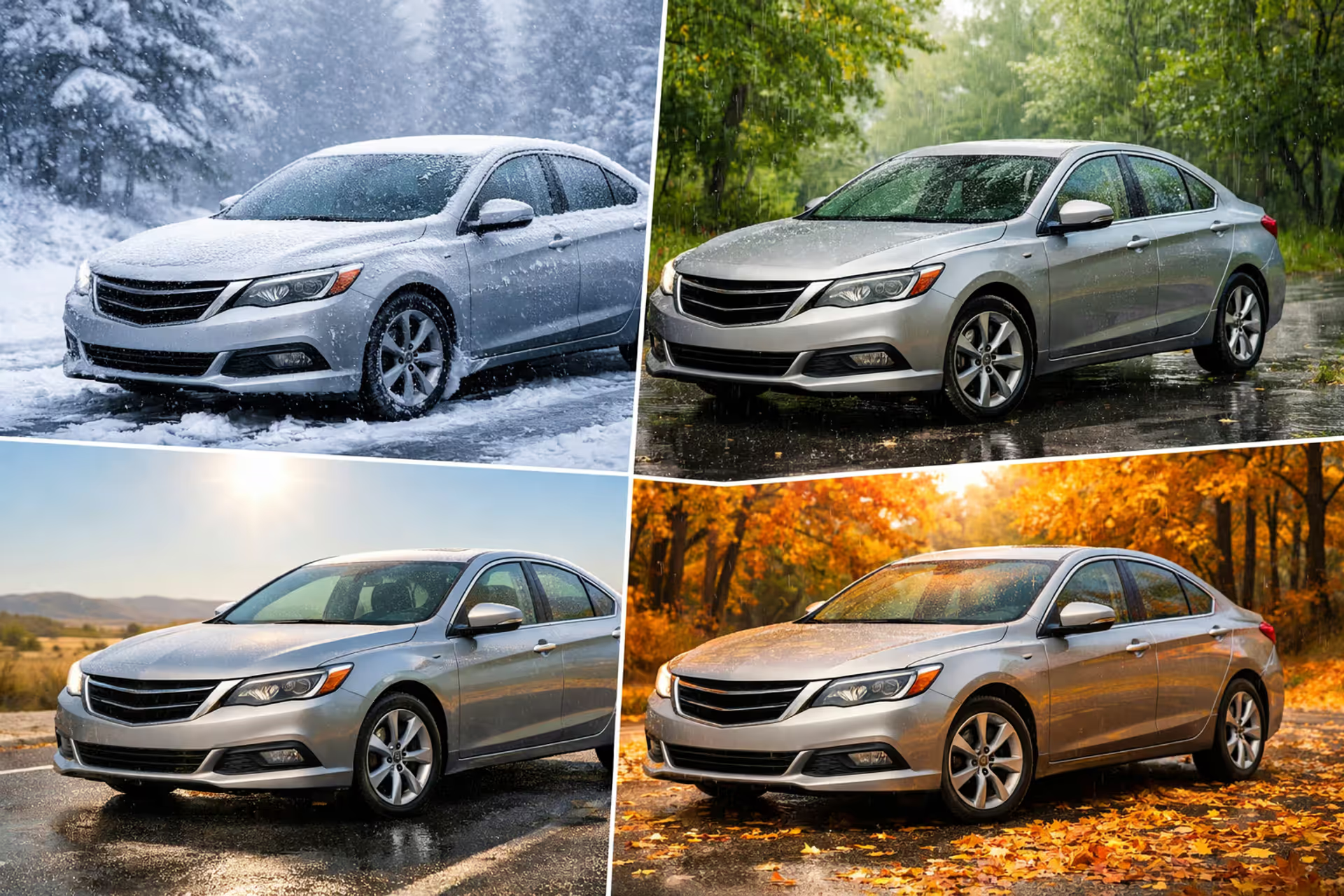
Temperature extremes stress vehicle components in different ways. Adapting your technique to seasonal conditions prevents damage and maintains efficiency year-round.
Winter Habits That Prevent Component Failure
Cold temperatures make rubber components brittle. Suspension bushings, motor mounts, and weatherstripping lose flexibility below 20°F, becoming vulnerable to cracking. Aggressive maneuvers in extreme cold—hard acceleration, sharp cornering, slamming over bumps—can fracture these components, triggering $400-$800 in repair bills.
The smart winter warm-up: start your engine, wait 30 seconds for oil pressure to stabilize, then drive gently for 3-5 minutes. This approach warms the engine faster than idling (because it's working under load) while still protecting components during the vulnerable cold phase.
Black ice and snow demand different throttle control. On slippery surfaces, aggressive acceleration breaks traction, spinning tires and creating flat spots that cause annoying vibration even after roads clear. Gentle throttle—taking 8-10 seconds to reach 25 mph—maintains traction and prevents tire damage.
Winter fuel economy typically drops 15-25% due to denser air, thicker fluids, and extended warm-up periods. You can't eliminate these losses entirely, but you can minimize them by combining trips, parking in garages when available (keeping the engine 20-30°F warmer for easier starts), and using remote start strategically. Remote starting 2-3 minutes before departure warms the cabin without excessive idling.
Summer Driving Techniques for Engine and AC Efficiency
Air conditioning loads your engine, cutting fuel economy by 10-25% depending on outside temperature and how much you're running it. The ownership cost optimization approach: use AC efficiently rather than suffering through sweltering drives (which damages interior materials and destroys resale value).
Below 40 mph, open windows create less aerodynamic drag than AC consumes in power. Above 40 mph, wind resistance from open windows exceeds the AC fuel penalty. While the exact crossover point varies by vehicle design, 40 mph serves as a practical guideline.
When your car's been sitting in 95°F sunshine, interior temperatures can hit 140-160°F. Immediately blasting AC at maximum to cool this superheated air strains the compressor and guzzles fuel. Better approach: open all windows and drive for 2-3 minutes with windows down. This naturally purges the superheated air. Then close windows and activate AC. You'll reach comfortable temperature 40% faster while consuming less fuel.
AC maintenance prevents expensive failures. Run your AC for 10 minutes every month—even in winter. This circulates refrigerant and lubricates seals, preventing $800-$1,200 compressor failures. This 10-minute monthly habit costs maybe $0.50 in fuel but heads off a $1,000 repair.
Summer heat affects tire pressure significantly. Tires gain 1-2 PSI for every 10°F temperature increase. Tires correctly inflated at 32 PSI during 40°F spring weather will measure 38-40 PSI on 90°F summer days—creating harsh ride quality and accelerated center tread wear. Measure and adjust tire pressure monthly, always checking when tires are cold (before driving or at least 3 hours after your last trip).
| Driving Behavior | Aggressive Driver Annual Cost | Economical Driver Annual Cost | Annual Savings |
| Fuel consumption (12,000 mi/yr, $3.50/gal) | $2,100 (averaging 20 mpg) | $1,400 (averaging 30 mpg) | $700 |
| Brake replacement | $450 (replacing every 25k miles) | $225 (replacing every 50k miles) | $225 |
| Tire replacement | $900 (replacing every 30k miles) | $450 (replacing every 60k miles) | $450 |
| Transmission/clutch service | $650 (from premature wear) | $250 (at normal intervals) | $400 |
| Total ownership cost difference | $4,100 | $2,325 | $1,775 |
John Nielsen, AAA's Managing Director of Automotive Engineering, puts it bluntly: "Most drivers never connect their right foot to their maintenance schedule. We've analyzed thousands of vehicles with identical mileage, and the component wear difference between aggressive and smooth drivers is shocking. A transmission engineered for 150,000 miles might fail at 90,000 miles purely because of driving habits. That's a $3,500 repair bill that was 100% preventable through better technique."
Frequently Asked Questions
Conclusion
Your driving habits represent one of the few vehicle expenses you control completely. Unlike fluctuating fuel prices, rising insurance premiums, or inevitable depreciation, your behind-the-wheel behavior sits entirely within your power to modify—and the financial impact shows up immediately and substantially.
The techniques outlined here aren't about timid driving or sacrificing convenience. They're about intelligent operation: smooth acceleration getting you to speed efficiently, anticipatory braking preserving expensive components, strategic route planning minimizing wasted mileage, and seasonal adjustments protecting your investment throughout the calendar year.
Start with one technique this week. Practice smooth acceleration for three days straight, focusing on that three-second counting rule from stops. Watch your fuel economy display—you'll see the difference in real-time. Once that becomes automatic, layer in anticipatory braking. Then tackle tire-preserving cornering techniques. Build these habits gradually, and within 30 days, economical driving will feel more natural than your old patterns ever did.
The $1,775 average annual savings from these habits compounds into genuine financial flexibility: an extra mortgage payment, fully funding a vacation, or accelerated debt payoff. More significantly, you'll extend your vehicle's functional lifespan by years, delaying the single largest expense most people face: purchasing the next car. Drive intelligently, and your current vehicle might deliver 10-12 years of service instead of 7-8, potentially saving you an entire vehicle purchase cycle during your lifetime.
Your right foot controls thousands of dollars in annual expenses. Make it work for you, not against you.
Related Stories
Read more
Read more

The content on Auto Insights is provided for general informational and educational purposes only. It is intended to offer guidance on car buying, vehicle ownership, finance, insurance, EVs, maintenance, accessories, reviews, and related topics, and should not be considered professional financial, legal, insurance, mechanical, or investment advice.
All information, tools, calculators, comparisons, and recommendations presented on this website are for general guidance only. Individual financial situations, driving habits, vehicle conditions, insurance policies, and market factors vary, and actual results or costs may differ from estimates provided.
Auto Insights makes no guarantees regarding accuracy, completeness, or current applicability of the information, as automotive markets, regulations, incentives, interest rates, and vehicle specifications may change over time.