
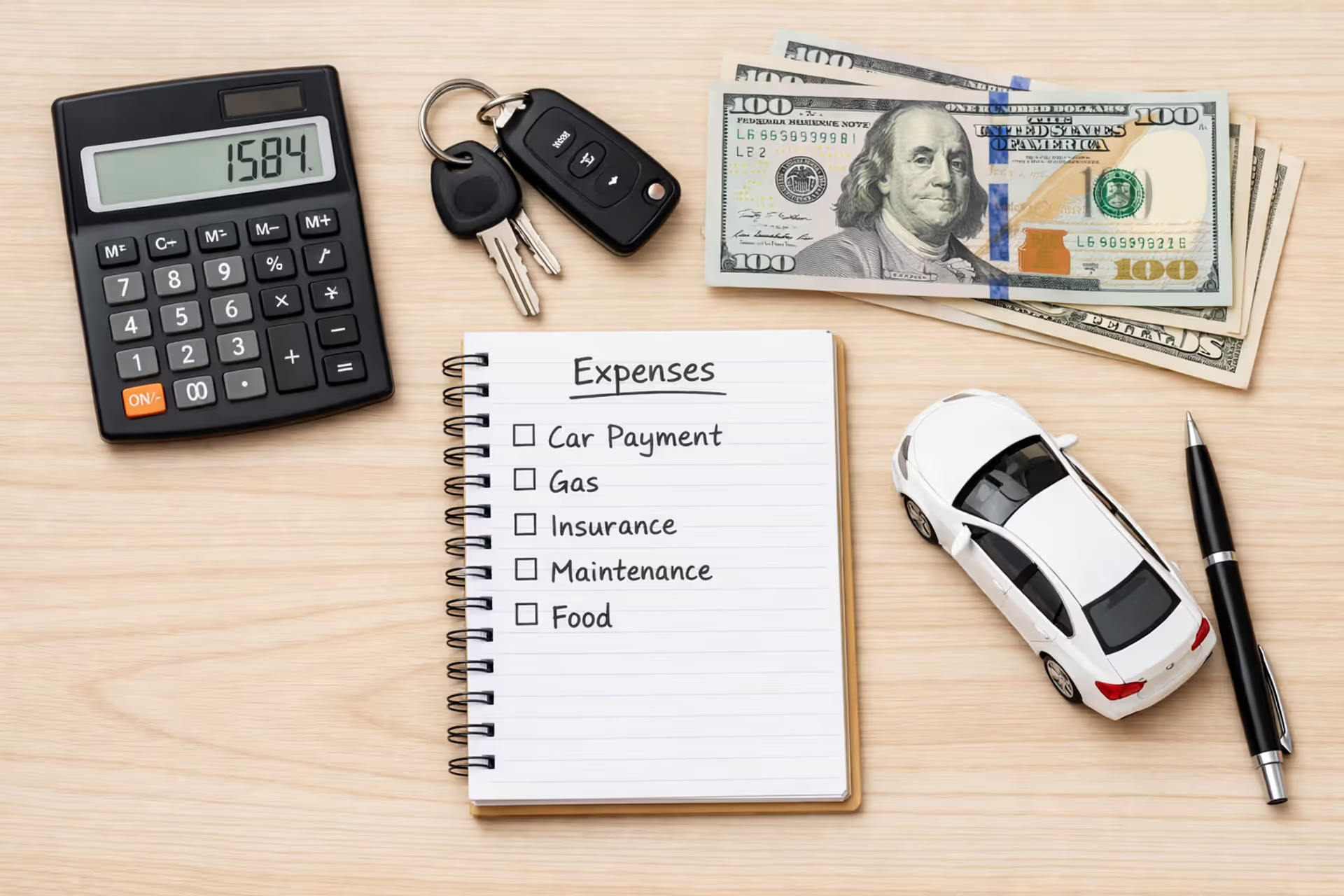
Flat lay of car keys, calculator, dollar bills, expense notebook, and miniature white sedan on wooden desk representing vehicle ownership cost planning
Minimal Cost Car Ownership: How to Cut Your Vehicle Expenses Without Cutting Corners

Americans spend an average of $10,728 per year on vehicle ownership according to AAA's 2023 data, yet many of these costs are either avoidable or significantly reducible through strategic planning. The difference between reactive ownership and a calculated approach can mean tens of thousands of dollars over a decade.
What Actually Drives Your Total Cost of Ownership
Most car buyers fixate on the monthly payment while ignoring the financial iceberg lurking beneath. That $30,000 sedan doesn't cost $30,000 to own—it costs somewhere between $45,000 and $60,000 over five years when you account for everything that happens after you drive off the lot.
Beyond the Sticker Price: Hidden Expenses Most Owners Miss
Depreciation alone consumes 20-30% of a new vehicle's value in the first year. A $35,000 car becomes a $25,000 car before you've made twelve payments. Registration fees in states like California can exceed $500 annually for newer vehicles, while comprehensive insurance on that same car might run $1,800 per year in urban areas.
Fuel costs vary wildly based on your commute. A 40-mile daily round trip at 25 mpg with $3.50 gas costs roughly $2,000 annually. Switch to a vehicle averaging 35 mpg and you've saved $570 without changing your driving pattern. Finance charges add another layer—a $30,000 loan at 7% over 60 months costs nearly $4,800 in interest alone.
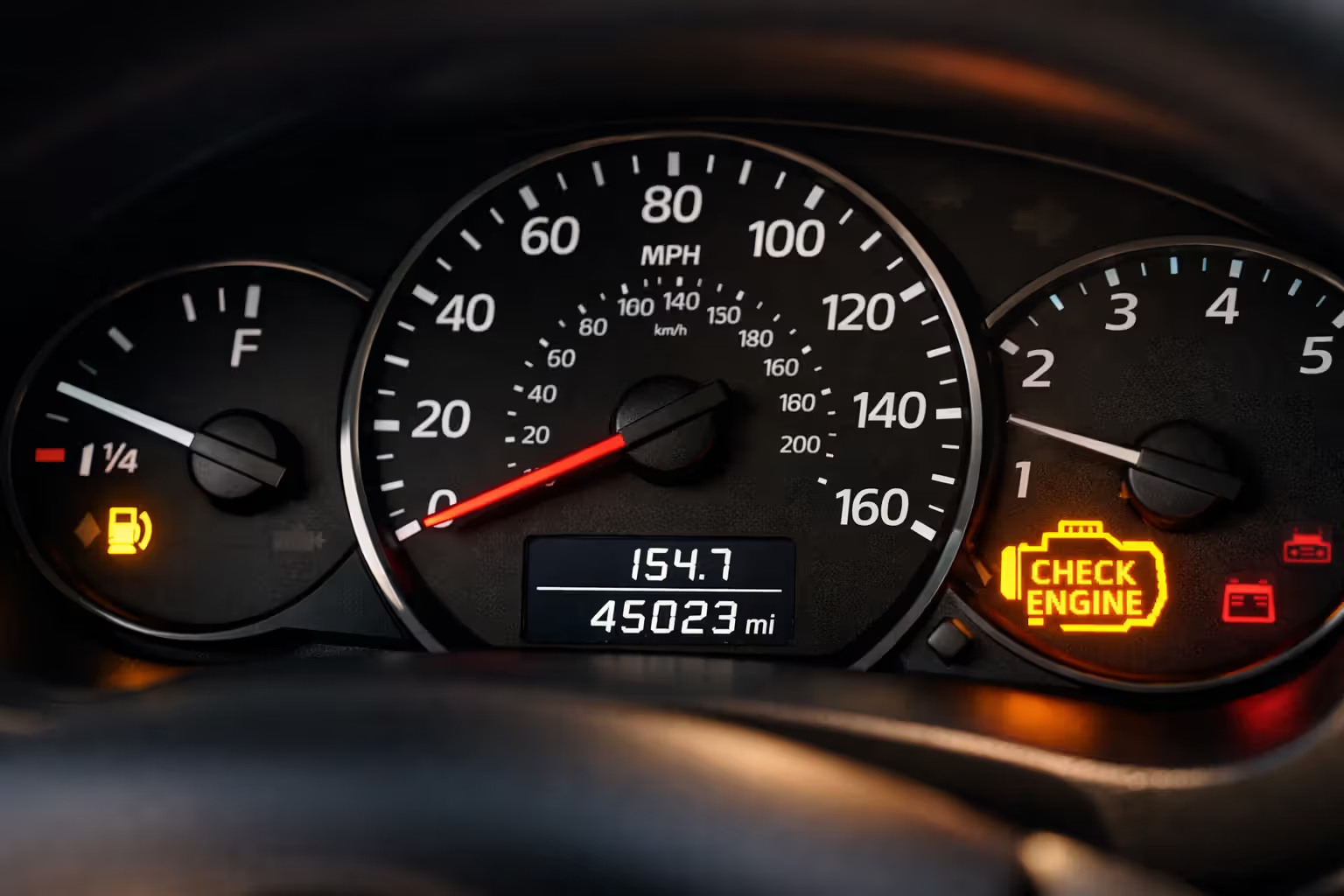
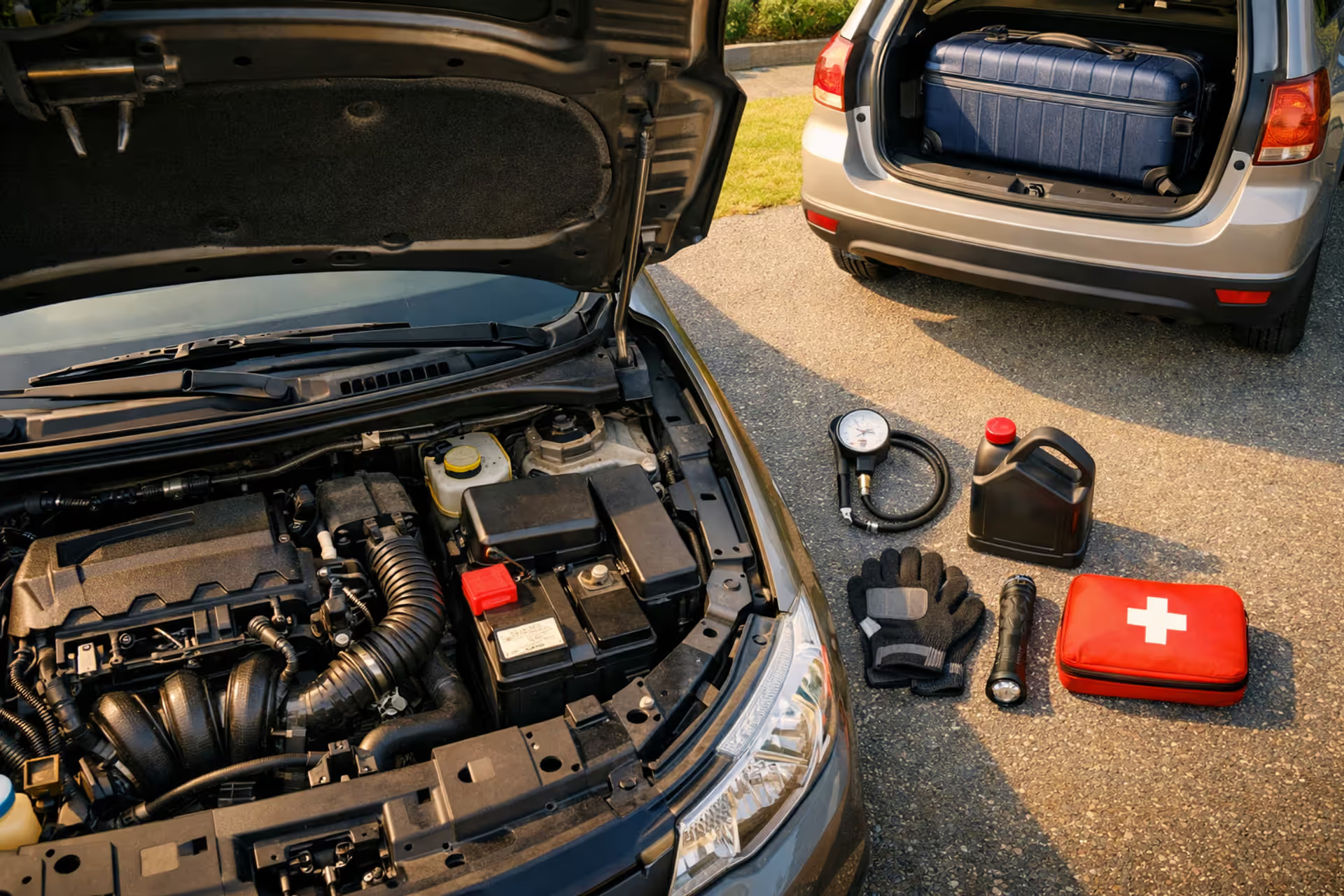
Then there's the maintenance schedule. Oil changes every 5,000 miles, tire rotations, air filter replacements, brake pad changes around 40,000 miles, transmission fluid at 60,000 miles—these aren't optional expenses. They're the price of keeping your investment functional.
Author: Brianna Lowell;
Source: shafer-motorsports.com
The 5-Year Cost Reality Check
Understanding the true expense structure helps you make smarter choices before and after purchase. Here's what ownership actually costs across popular vehicle categories:
| Vehicle Category | Purchase Price | Fuel (5yr) | Insurance (5yr) | Maintenance (5yr) | Repairs (5yr) | Total Cost |
| Compact Sedan | $24,000 | $8,200 | $6,500 | $3,800 | $2,100 | $44,600 |
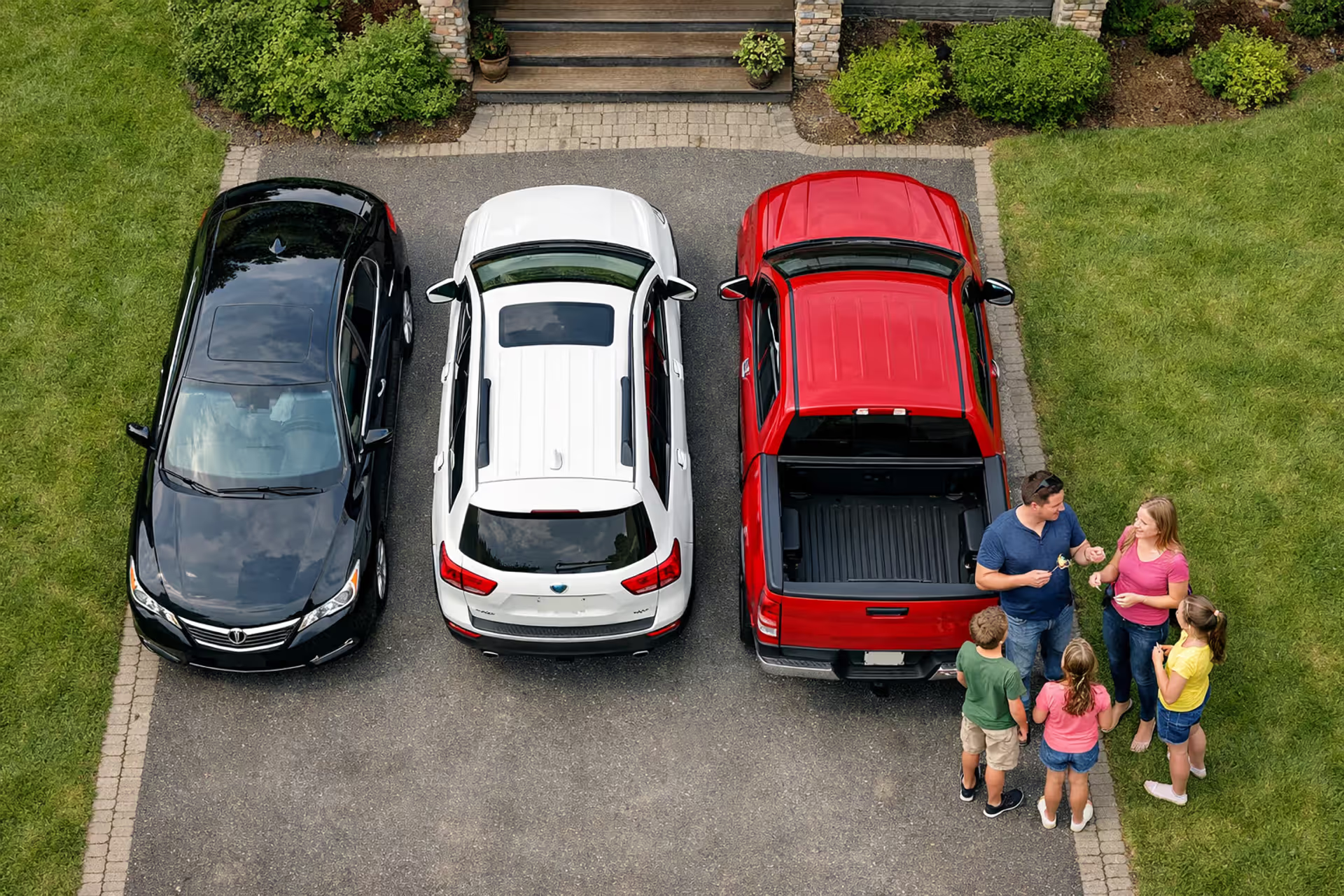
| Midsize SUV | $35,000 | $12,400 | $8,200 | $4,600 | $3,200 | $63,400 |
| Pickup Truck | $38,000 | $14,800 | $7,900 | $5,200 | $3,800 | $69,700 |
| Hybrid Sedan | $28,000 | $5,600 | $6,800 | $4,200 | $2,600 | $47,200 |
These figures assume 12,000 miles annually, moderate driving conditions, and no major accidents. The compact sedan saves you $25,100 compared to the pickup over five years—enough for a down payment on your next vehicle or a substantial emergency fund.
Notice how the hybrid's higher purchase price gets offset by dramatically lower fuel costs. That $4,000 premium over a standard compact pays for itself in fuel savings by year four, then continues delivering value. This is ownership efficiency planning in action: looking beyond today's price tag to tomorrow's total cost.
Building Your Budget Ownership Strategy From Day One
The cheapest car to own is the one that matches your actual needs without exceeding them. A contractor hauling equipment needs that pickup's capability. A suburban commuter doesn't, regardless of what feels appealing on the lot.
New vs. Used: The Break-Even Analysis
New cars offer warranty protection, known history, and the latest safety features. Used cars offer immediate depreciation savings—someone else absorbed that brutal first-year value drop. The sweet spot for minimal cost car ownership typically sits in the 2-4 year old range where vehicles have depreciated 30-40% but still have substantial life remaining.
A three-year-old certified pre-owned vehicle with 36,000 miles might cost $19,000 versus $32,000 new. You've saved $13,000 upfront. Even if you spend an extra $1,500 in repairs over the next five years compared to a new car, you're still $11,500 ahead. The CPO warranty often covers major components for another 2-3 years, bridging much of the risk gap.
However, buying too old or too high-mileage introduces risk that overwhelms the savings. A $4,000 car with 180,000 miles might seem economical until the transmission fails at $3,200 to replace. You've now spent $7,200 on a vehicle worth maybe $1,500 after repair. This is where budget ownership strategy separates from penny-wise, pound-foolish decisions.
The best time to buy a car is when you don’t need one. Desperation is the most expensive emotion in a dealership
— Dave Ramsey
Which Vehicle Types Cost Least to Own Long-Term
Reliability data from Consumer Reports and J.D. Power consistently shows certain manufacturers and models outlasting others. Toyota Corollas, Honda Civics, and Mazda3s routinely exceed 200,000 miles with proper maintenance. Their parts are widely available and relatively inexpensive. Insurance rates stay moderate because they're not performance vehicles or theft magnets.
Luxury brands carry premium repair costs. That BMW might feel aspirational, but when the water pump fails at 70,000 miles, you're paying $1,200 versus $450 for a comparable repair on a mainstream brand. Multiply these differences across dozens of repairs over a decade and the gap becomes enormous.
According to automotive expert Lauren Fix, ASE-certified technician and author: "The most cost-effective ownership strategy isn't buying the cheapest car—it's buying the most reliable car you can afford with the lowest operating costs for your specific driving needs. A $2,000 difference in purchase price is meaningless if it costs you $500 more per year to maintain."
Vehicle size matters too. Larger vehicles consume more fuel, wear through tires faster, and stress brake components more. That midsize SUV might seat seven, but if you rarely use the third row, you're hauling extra weight and paying for capability you don't need.
Repair Prioritization: When to Fix, When to Wait, When to Walk Away
Not every check engine light demands immediate action, and not every fluid leak requires a tow truck. Developing judgment about repair urgency prevents both catastrophic failures and unnecessary spending.
The $500 Rule and Other Decision Frameworks
When facing a major repair, compare the cost to your vehicle's current value. If the repair exceeds 50% of what you could sell the car for, and other systems are also deteriorating, replacement often makes more financial sense than repair. A $3,500 transmission replacement on a car worth $5,000 that also needs $1,200 in suspension work leaves you $4,700 into a $5,000 vehicle—and you still own a high-mileage car.
But context matters. If that same car has a recently replaced engine, new tires, and fresh brakes, the transmission repair might be justified because everything else is solid. You're essentially buying another 80,000 miles of transportation for $3,500—much cheaper than any replacement vehicle.
The repair-to-value ratio works differently for newer cars. A $2,000 repair on a vehicle worth $15,000 is only 13% of value. Unless you're experiencing multiple expensive failures in quick succession, fixing it makes sense.
Safety-Critical vs. Convenience Repairs
Author: Brianna Lowell;
Source: shafer-motorsports.com
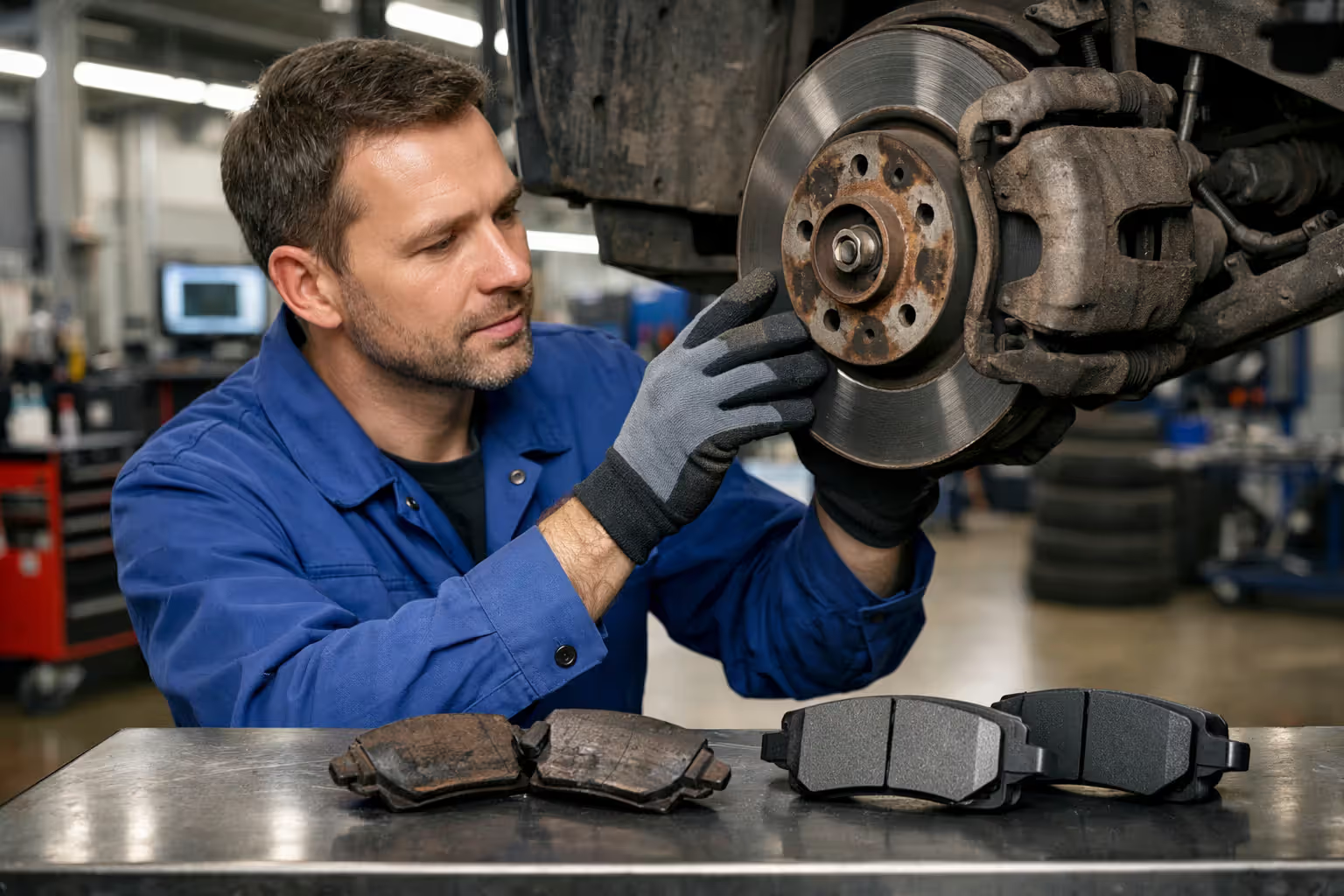
Some repairs cannot wait. Brake failure, steering problems, structural rust, leaking fuel systems, and non-functioning safety equipment demand immediate attention. These aren't budget decisions—they're life-and-death issues. Driving with worn brake pads until they damage the rotors transforms a $300 pad replacement into a $700 pad-and-rotor job, plus you've compromised your ability to stop safely.
Other repairs can be scheduled strategically. A slow coolant leak that requires topping off every two weeks isn't ideal, but it gives you time to shop for competitive repair quotes and save up if necessary. A minor exhaust leak that makes your car slightly louder but doesn't affect performance can wait until you have the budget, though you shouldn't ignore it indefinitely—exhaust leaks can allow dangerous fumes into the cabin.
Here's a practical framework for repair prioritization planning:
| Repair Type | Urgency | Timeline | Examples |
| Safety-Critical | Fix immediately | Within 24-48 hours | Brake failure, steering issues, significant fluid leaks, broken suspension components, non-functioning lights |
| Performance/Reliability | Schedule within 30 days | 2-4 weeks | Check engine light (non-flashing), minor oil leaks, worn belts, aging battery, transmission slipping |
| Preventive/Moderate | Monitor and plan | 1-3 months | Tire wear approaching limits, minor exhaust leaks, worn shocks, cosmetic rust, window regulators |
| Optional/Cosmetic | Address when convenient | 3-6+ months | Door dings, scratched paint, interior wear, non-essential accessories, minor squeaks/rattles |
Understanding this hierarchy prevents panic-spending while keeping you safe. When a mechanic says something needs attention, ask: "Is this affecting safety or will it cause more expensive damage if I wait two weeks?" Honest shops will tell you the truth. Shops that pressure every repair as urgent probably aren't acting in your interest.
Maintenance Habits That Actually Save You Thousands
Preventive maintenance feels like spending money unnecessarily—until you skip it and face the consequences. An $80 coolant flush every 60,000 miles prevents a $2,500 head gasket failure caused by corroded, ineffective coolant. That's a 3,000% return on investment.
Oil changes remain the single most important maintenance task. Modern synthetic oils can go 7,500-10,000 miles between changes in many vehicles, but you need to actually change them at those intervals. Skipping changes or extending them "just a little longer" allows sludge buildup that chokes engine components. The $50 you save by postponing an oil change can cost you a $6,000 engine replacement.
An ounce of prevention is worth a pound of cure — and in automotive terms, a $50 oil change is worth a $6,000 engine replacement
— Tom Magliozzi
Tire rotation every 5,000-7,000 miles evens out wear patterns and extends tire life by 20-30%. Tires cost $600-1,200 per set. Rotating them adds maybe $25-40 to your oil change. That's $100-160 over the tire's life to get an extra 10,000-15,000 miles from them. The math is obvious.
Air filter replacement seems trivial but affects fuel economy. A clogged filter restricts airflow and reduces efficiency by up to 10%. On a vehicle consuming $2,000 in fuel annually, that's $200 lost to a $25 filter you should have changed. Cabin air filters affect comfort but not cost—replace them when airflow weakens or odors develop, typically every 15,000-20,000 miles.
Transmission fluid changes divide opinions. Some manufacturers claim "lifetime" fluid, but independent mechanics see the failures this causes. Changing transmission fluid every 60,000-80,000 miles costs $150-250 but can prevent $3,000-5,000 transmission failures. Given these stakes, the conservative approach wins for long term savings ownership.
Document everything. Keep receipts, note mileage, record dates. This serves three purposes: proving maintenance history increases resale value, helping you track patterns and predict upcoming needs, and protecting warranty claims if something fails prematurely. A $35,000 vehicle with complete maintenance records sells for $1,500-2,500 more than an identical vehicle with no documentation.
Daily Driving Strategies That Reduce Wear and Operating Costs
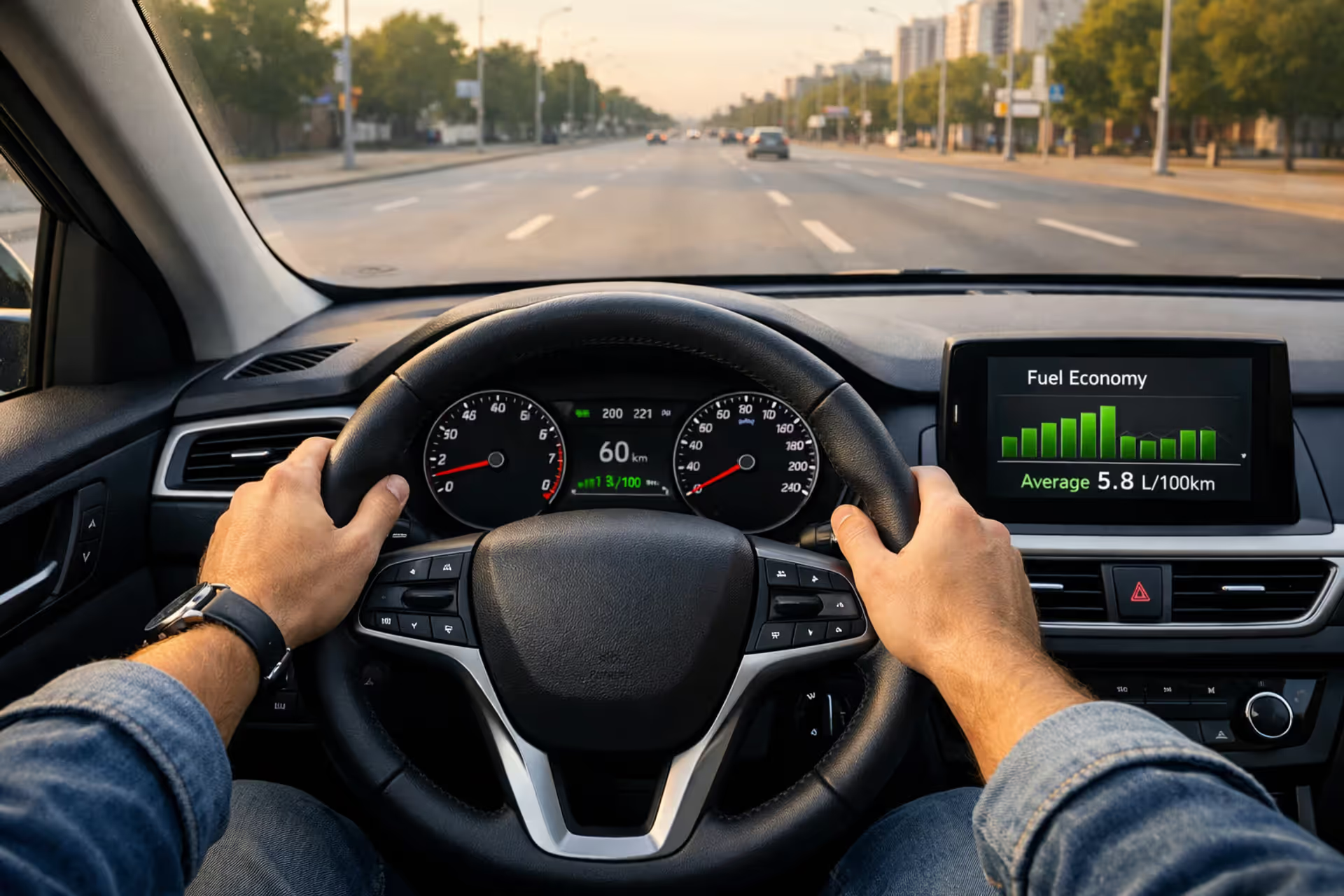
How you drive matters as much as what you drive. Aggressive acceleration and hard braking waste fuel and wear components faster. Smooth, anticipatory driving—accelerating gradually, coasting to stops, maintaining steady highway speeds—improves fuel economy by 15-30% according to the Department of Energy.
That translates to real money. If aggressive driving drops your efficiency from 28 mpg to 24 mpg, you're burning an extra 143 gallons per year at 12,000 miles. At $3.50 per gallon, that's $500 annually—$5,000 over a decade—just from poor driving habits. This low cost driving strategy requires no investment, just awareness.
Tire pressure affects both fuel economy and tire life. Under-inflated tires increase rolling resistance, cutting efficiency by 3% for every PSI below optimal. They also wear faster and unevenly. Check pressure monthly—it takes five minutes and costs nothing. Properly inflated tires last 10,000 miles longer and improve fuel economy by 3-5%.
Reduce unnecessary weight. Every 100 pounds decreases fuel economy by about 1%. That roof cargo box you used once last summer but left on all year? It's costing you money through added weight and aerodynamic drag. Remove it when not needed. Clean out the trunk—those golf clubs, spare parts, and random items add up.
Combine trips when possible. A cold engine uses significantly more fuel than a warm one. Three separate trips to the grocery store, bank, and pharmacy consume more fuel than one planned route hitting all three. This also reduces start-stop wear on your battery, starter, and engine.

Author: Brianna Lowell;
Source: shafer-motorsports.com
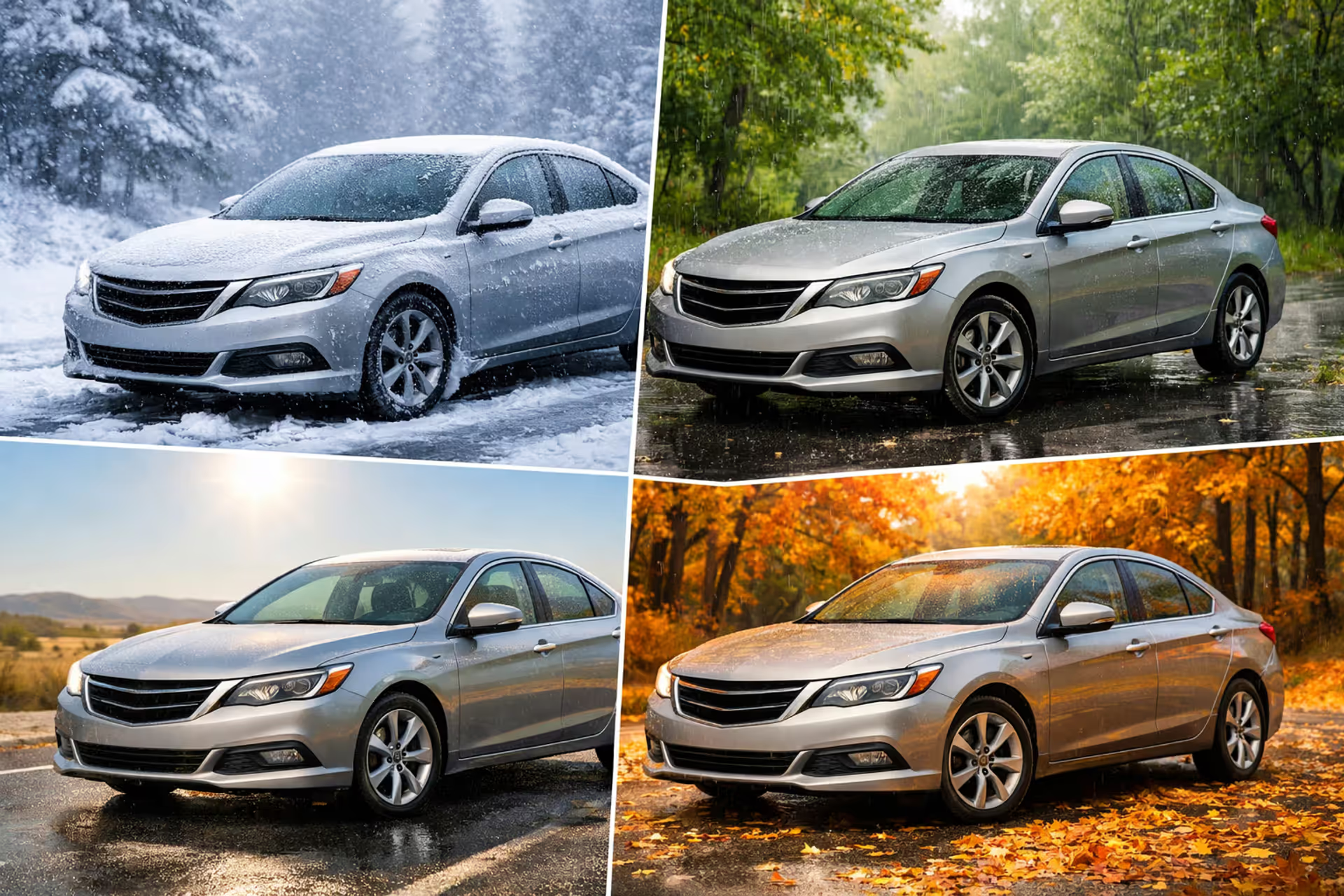
Seasonal considerations matter too. Winter fuel blends reduce economy by 2-3%. Cold temperatures thicken fluids and increase resistance. Budget for slightly higher winter fuel costs. Summer heat stresses cooling systems—ensure coolant is fresh and the system is functioning properly before hot weather arrives. Prevention costs less than roadside breakdowns.
Creating Your 10-Year Ownership Efficiency Plan
Most people react to car problems rather than planning for them. This guarantees maximum stress and expense. A proactive approach transforms ownership from a series of crises into a managed, predictable process.
Tracking and Adjusting Your Vehicle Budget
Set up a vehicle expense account separate from your regular checking. Contribute monthly based on expected costs. If your annual expenses average $4,500 (insurance, fuel, maintenance, repairs), deposit $375 monthly. When insurance comes due or your car needs service, the money is already there. No scrambling, no emergency credit card charges with interest.
Track actual spending against estimates. If you're consistently over budget, either your estimates were too optimistic or you're making poor decisions. Under budget? Great—that surplus builds a replacement fund. After 2-3 years, you'll have solid data showing your true costs, allowing accurate future planning.
Major maintenance items follow predictable schedules. Brakes last 40,000-70,000 miles depending on driving style. Tires last 40,000-60,000 miles. Batteries last 4-6 years. Knowing these patterns lets you anticipate expenses. When your tires hit 35,000 miles, start setting aside $100 monthly. By 45,000 miles when you need new ones, you've saved $1,000—enough to cover most tire purchases without financial stress.
This approach exemplifies ownership efficiency planning. You're not avoiding costs, you're distributing them across time so they never become emergencies. The car still costs the same, but your experience of that cost changes dramatically.
When Replacement Makes More Financial Sense Than Repair
Every vehicle reaches a point where continued ownership costs more than replacement. Recognizing this moment prevents throwing good money after bad. Warning signs include:
Multiple expensive repairs within 12 months suggesting systemic deterioration. One major repair is normal. Three or four indicates the vehicle is cascading toward failure.
Repair costs exceeding $3,000-4,000 annually. At this point, you're making car payments without getting a newer, more reliable vehicle. That $300 monthly in repairs could finance something better.
Safety systems failing. When airbag lights stay on, ABS fails, or structural rust compromises crash protection, the vehicle has become dangerous regardless of running condition.
Fuel costs becoming prohibitive. If your 15-year-old SUV gets 14 mpg and you drive 15,000 miles annually, you're spending $3,750 on fuel at $3.50 per gallon. A newer vehicle averaging 30 mpg would cost $1,750—a $2,000 annual savings that helps justify a newer purchase.
The replacement calculation requires honest assessment. What's your current vehicle worth? What would a suitable replacement cost? What's the monthly payment difference? If you can sell your current car for $3,000, and a reliable replacement costs $15,000, you need to finance $12,000. At 6% over 48 months, that's $282 monthly. If you're currently spending $250+ monthly on repairs and your old car could fail catastrophically any time, replacement makes sense.
However, if your car is worth $8,000, runs well, but needs a $1,500 repair, absolutely fix it. You're not finding a replacement for $6,500 that's more reliable than what you already own.
Common Mistakes That Sabotage Low-Cost Ownership
Even well-intentioned owners undermine their budget ownership strategy through predictable errors. Recognizing these patterns helps you avoid them.
Over-maintaining wastes money as surely as under-maintaining. Changing oil every 3,000 miles when your manufacturer specifies 7,500 miles with synthetic oil means you're doing more than twice as many changes as necessary. At $60 per change over 100,000 miles, that's $2,000 versus $800—a $1,200 waste. Follow the manufacturer's maintenance schedule, not outdated rules from the 1970s.
Conversely, ignoring warning lights and unusual symptoms turns minor issues into major failures. That slight grinding noise when braking? That's your brake pad wear indicator telling you it's time for new pads. Ignore it for another month and you're grinding metal-on-metal, damaging rotors and potentially calipers. A $250 pad replacement becomes $700+ in comprehensive brake work.
Poor documentation creates problems when selling or trading. Buyers discount vehicles with no maintenance history because they assume the worst. You might have religiously maintained your car, but without proof, you get the same trade-in value as someone who never changed the oil. Keep every receipt, even for minor services.
Choosing repair shops based solely on price often backfalls. The cheapest quote might use inferior parts, skip important steps, or misdiagnose the problem. A $400 brake job using quality parts from a reputable shop beats a $280 job using cheap pads that wear out in 15,000 miles. Get multiple quotes, but evaluate on value, not just price. Check reviews, ask about parts quality, and verify certifications.
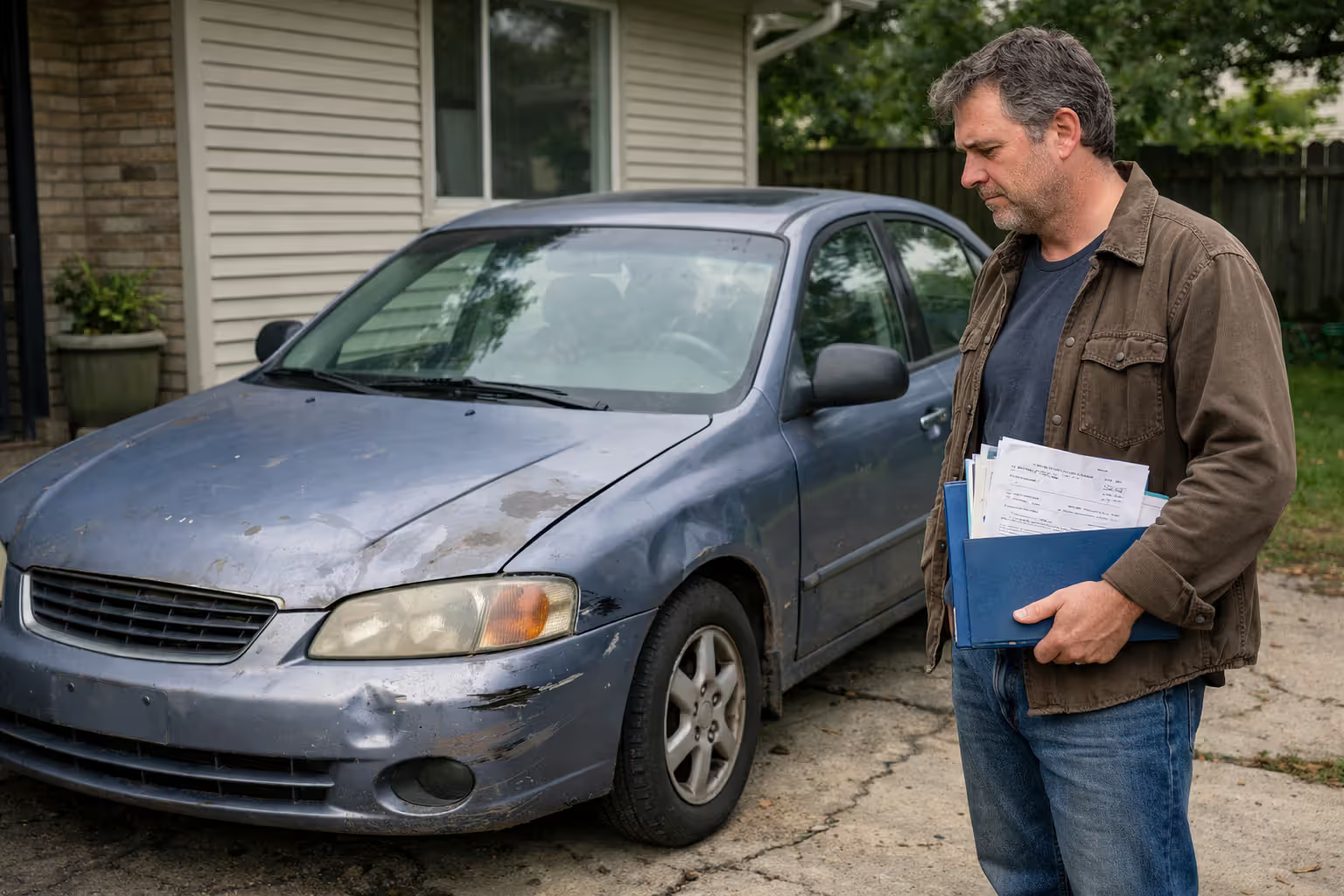
Emotional attachment clouds judgment. Your first car, the vehicle you drove your kids home from the hospital in, the truck you've had for 15 years—these emotional connections make it hard to recognize when a vehicle has become a money pit. If you're spending more to keep memories alive than the car is worth, you're not being practical. Take photos, keep a memento, but move on financially.
Author: Brianna Lowell;
Source: shafer-motorsports.com
Financing mistakes multiply costs. Rolling negative equity from your trade-in into your new loan, extending terms to 72 or 84 months to afford the payment, or buying more car than you need because "the payment is only $50 more per month" all sabotage minimal cost car ownership. That extra $50 monthly is $600 annually, $3,000 over five years, plus interest. It's not "only" anything—it's real money.
Frequently Asked Questions
Building a Sustainable Ownership Mindset
Achieving minimal cost car ownership isn't about extreme frugality or accepting an unreliable vehicle. It's about making informed decisions at every stage—purchasing the right vehicle for your needs, maintaining it properly, driving it sensibly, and knowing when to repair versus replace.
The difference between an expensive ownership experience and an economical one rarely comes down to luck. It comes down to planning, knowledge, and discipline. The driver who buys a reliable used vehicle, follows the maintenance schedule, drives smoothly, tracks expenses, and addresses problems promptly will spend 40-50% less over a decade than someone who buys impulsively, neglects maintenance, drives aggressively, and reacts to problems only when they become crises.
Your vehicle represents one of your largest expenses after housing. Treating it strategically rather than emotionally puts thousands of dollars back in your pocket over time. That money can fund retirement savings, reduce debt, or provide financial security—all more valuable than a fancier car or deferred maintenance that seems cheaper in the moment.
Start with one change. Track your expenses for three months. Follow your maintenance schedule exactly. Get three quotes for your next major repair. Each small improvement compounds over time, transforming your ownership experience from a financial burden into a managed, predictable expense that serves your transportation needs without dominating your budget.
Related Stories
Read more
Read more


The content on Auto Insights is provided for general informational and educational purposes only. It is intended to offer guidance on car buying, vehicle ownership, finance, insurance, EVs, maintenance, accessories, reviews, and related topics, and should not be considered professional financial, legal, insurance, mechanical, or investment advice.
All information, tools, calculators, comparisons, and recommendations presented on this website are for general guidance only. Individual financial situations, driving habits, vehicle conditions, insurance policies, and market factors vary, and actual results or costs may differ from estimates provided.
Auto Insights makes no guarantees regarding accuracy, completeness, or current applicability of the information, as automotive markets, regulations, incentives, interest rates, and vehicle specifications may change over time.