
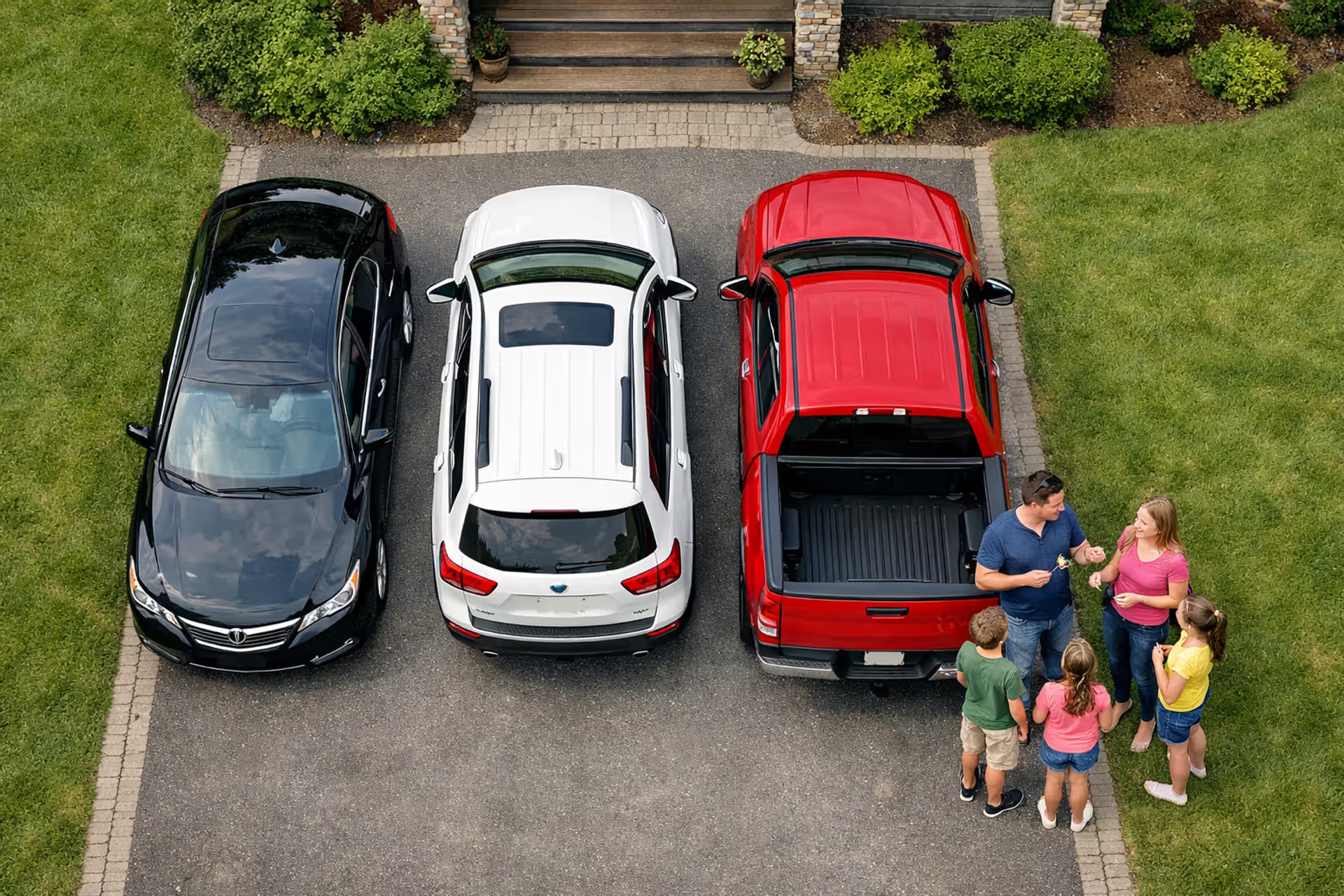
Family of four standing in suburban driveway with three different vehicles — sedan, SUV, and pickup truck — discussing car keys
Multi Car Household Planning: How to Manage Multiple Vehicles Efficiently

Managing two, three, or even four vehicles under one roof creates complexity most families don't anticipate until they're juggling renewal notices, maintenance appointments, and arguments over who gets the reliable sedan. The average American household with multiple cars spends roughly $12,000 annually per vehicle on insurance, fuel, maintenance, and depreciation—costs that compound quickly without deliberate coordination.
Unlike single-vehicle ownership, multi-car households face unique challenges: overlapping insurance coverage that wastes money, maintenance schedules that conflict with family calendars, and vehicles sitting idle while others rack up excessive mileage. These inefficiencies drain thousands annually from household budgets while creating unnecessary stress around something that should simplify life: mobility.
Strategic planning transforms vehicle ownership from a constant source of friction into a well-oiled system. Families who implement coordinated approaches typically reduce their combined transportation costs by 15-25% while eliminating the daily hassles of poor coordination.
Why Managing Multiple Vehicles Requires a Strategic Approach
Most households acquire vehicles sequentially—buying a second car when a teenager starts driving, adding a truck for weekend projects, or keeping an older sedan as a backup. This reactive approach creates three predictable problems.
First, insurance policies multiply without optimization. Each vehicle gets added to existing coverage or written as a separate policy, often with duplicate coverages or missed discount opportunities. A family paying $1,800 annually for their first vehicle might add $1,600 for a second, when bundled coverage could bring both under $2,800 total.
Second, maintenance becomes chaotic. One vehicle needs an oil change, another requires tire rotation two weeks later, and a third has inspection due next month. Without centralized tracking, families miss service intervals, pay rush fees for forgotten deadlines, or waste time on multiple service center visits that could have been consolidated.
Third, usage patterns emerge haphazardly. The fuel-efficient sedan sits in the driveway while someone takes the gas-guzzling SUV on a solo commute. The truck with expensive insurance stays parked six days weekly. One vehicle accumulates 18,000 miles annually while another barely reaches 6,000—an imbalance that accelerates depreciation on the overused vehicle while the underutilized one loses value to age.
These inefficiencies aren't inevitable. They result from treating multiple vehicles as separate entities rather than as a household fleet requiring coordinated management.
Insurance Bundling: The Fastest Way to Cut Multi-Vehicle Costs
Insurance represents the largest controllable expense in multi-vehicle ownership. While you can't avoid coverage requirements, you can dramatically reduce premiums through strategic bundling.
How Multi-Car Discounts Actually Work
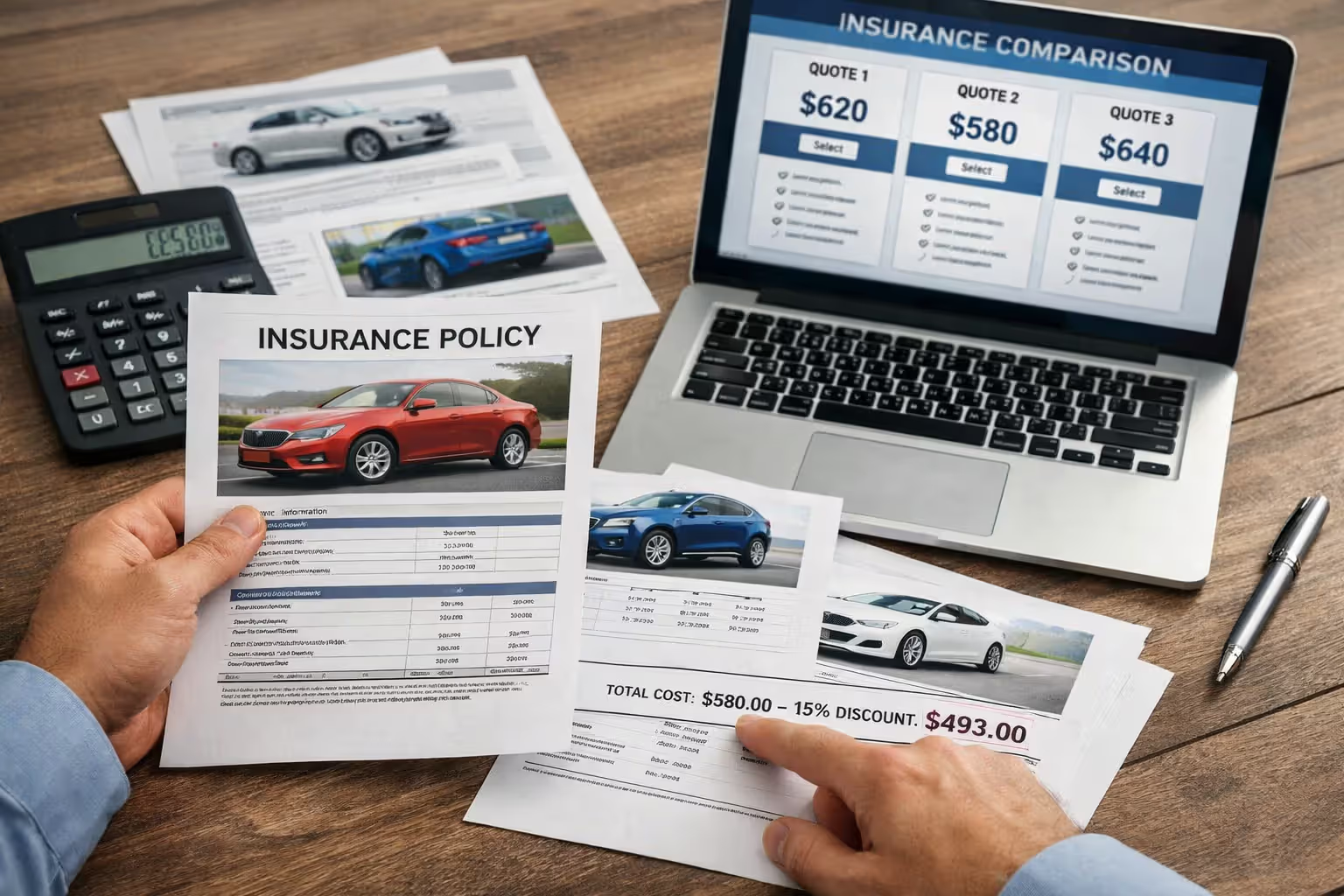
Insurers offer multi-car discounts because households with multiple vehicles present lower administrative costs per policy and demonstrate stability—characteristics associated with fewer claims. When you insure multiple vehicles with one carrier under a single policy, you typically receive 10-25% off the combined premium compared to insuring vehicles separately.
The discount structure usually works on a sliding scale. Your second vehicle might receive a 15% discount, your third 20%, and your fourth 25%. Some carriers cap discounts at three vehicles; others extend savings across larger fleets.
Eligibility requires all vehicles to be garaged at the same address and all drivers to be listed on the policy. This includes household members even if they primarily drive only one vehicle—insurers need accurate risk assessment across your entire household.
Author: Derek Fulton;
Source: shafer-motorsports.com
Beyond the multi-car discount itself, bundling creates opportunities for additional savings. Many insurers offer further reductions when you combine auto insurance with homeowners or renters policies, potentially adding another 10-15% in savings. Some carriers provide loyalty discounts that increase over time, defensive driving course discounts that apply across all vehicles, and low-mileage discounts for vehicles driven under 7,500 miles annually.
Comparing Bundled vs. Separate Policies
| Number of Vehicles | Average Annual Cost (Separate) | Average Annual Cost (Bundled) | Potential Savings (%) | Additional Benefits |
| 2 vehicles | $3,400 | $2,890 | 15% | Single renewal date, one deductible for multi-vehicle accidents |
| 3 vehicles | $5,100 | $4,080 | 20% | Simplified claims process, household discount eligibility |
| 4 vehicles | $6,800 | $5,240 | 23% | Fleet management tools, bulk payment discounts |
| 5+ vehicles | $8,500 | $6,375 | 25% | Dedicated agent support, priority claims handling |
Note: Figures represent national averages for standard coverage with $500 deductibles. Actual costs vary significantly by location, driver history, and vehicle types.
The savings extend beyond premiums. Single-policy households manage one renewal date instead of multiple scattered throughout the year, reducing the chance of coverage lapses. When accidents involve multiple household vehicles, you typically pay only one deductible rather than separate deductibles for each vehicle.
Top insurers for multi-car discounts include State Farm, which offers up to 20% off and strong local agent networks for households preferring in-person service; Geico, known for competitive rates on three-plus vehicle policies and straightforward online management; and Progressive, which provides name-your-price bundling tools and snapshot programs that can yield additional discounts for safe driving across all household vehicles.
According to Jennifer Martinez, Senior Insurance Analyst at Consumer Auto Alliance, "Families who consolidate multiple vehicles under a single carrier typically save $800 to $1,500 annually compared to maintaining separate policies. The real value isn't just the discount percentage—it's the simplified management and the leverage you gain when negotiating rates or handling claims."
Creating a Household Mobility Strategy That Works for Everyone
Insurance savings mean nothing if family members constantly argue over vehicle access or if cars sit unused while others get overworked. Effective household mobility requires matching vehicles to needs and establishing clear usage protocols.
Matching Vehicles to Driver Needs and Schedules
Start by mapping regular transportation requirements. Create a simple weekly grid showing who needs to be where, when. Include work commutes, school schedules, recurring appointments, and typical errand patterns.
Assign primary drivers based on actual usage patterns rather than preference or seniority. The family member with the longest commute should get the most fuel-efficient, comfortable vehicle—they're spending ten-plus hours weekly behind the wheel. The person making short local trips can use the older sedan or the truck that's less pleasant for highway driving.
Consider vehicle characteristics beyond just availability. Teenage drivers might get assigned to the vehicle with the best safety ratings and most conservative performance characteristics, even if it's not the newest. The household member who frequently transports clients or colleagues needs the well-maintained vehicle with clean interior, not the cargo hauler with dog hair and construction debris.
Weather and seasonal factors matter in many regions. In snow-prone areas, assign the all-wheel-drive vehicle to whoever has the most critical schedule—the person who absolutely cannot miss work or has early-morning obligations when roads are worst.
A budget is telling your money where to go instead of wondering where it went
— Dave Ramsey
Avoiding Conflicts: Usage Calendars and Communication Tools
Even with primary assignments, conflicts arise. Doctor appointments, evening events, and special circumstances create competing demands for specific vehicles.
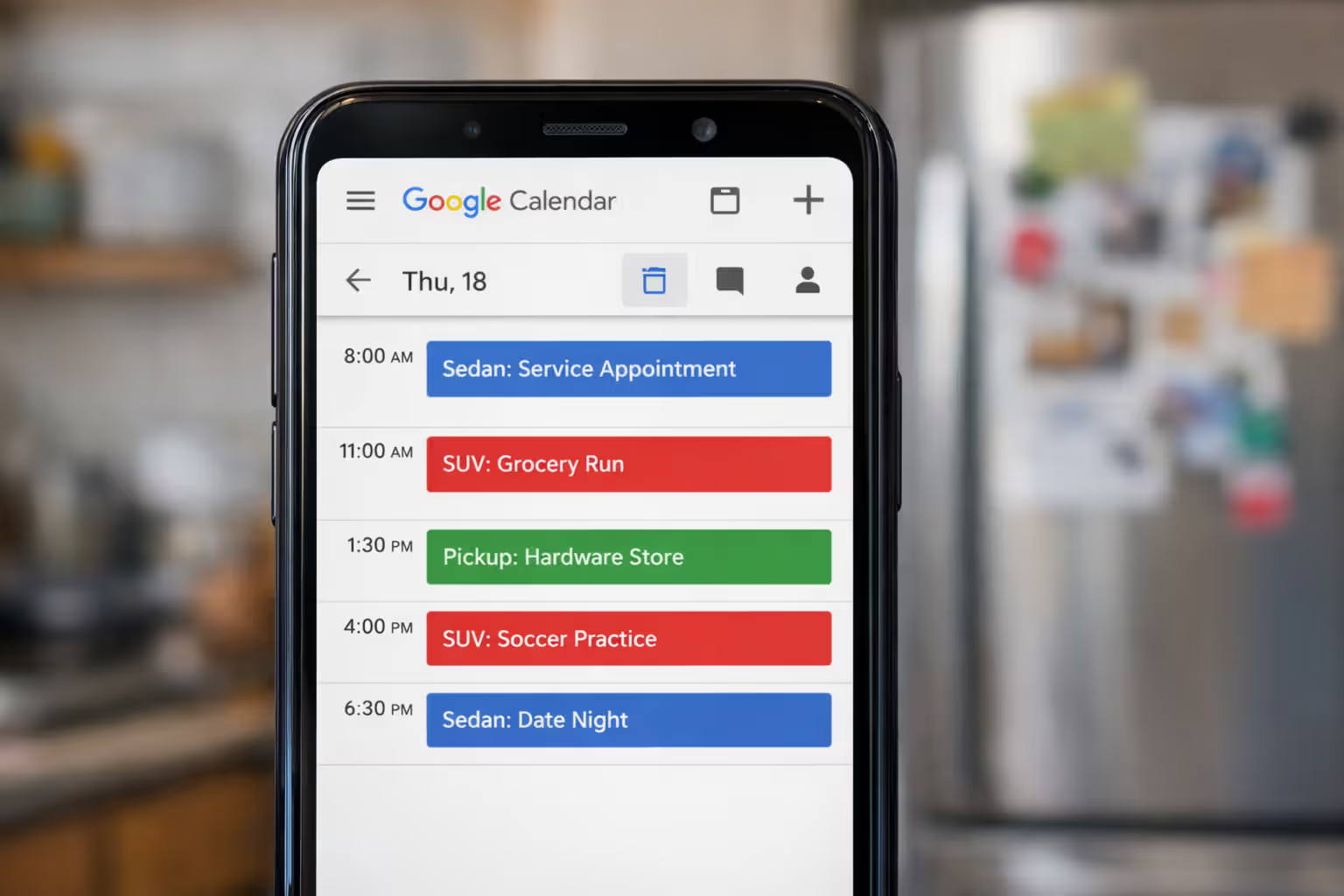
Implement a shared digital calendar specifically for vehicle usage. Google Calendar works well—create a separate calendar for each vehicle, color-coded for easy visualization. Family members request vehicles by adding events to the appropriate calendar, visible to everyone. When conflicts appear, the household can see them immediately and negotiate solutions before the day arrives.
For households resistant to digital tools, a physical wall calendar in a central location (kitchen, mudroom, garage entry) serves the same purpose. Use different colored markers for each family member and note who needs which vehicle when.
Establish clear priority rules for conflict resolution. Medical appointments typically trump social events. Work obligations generally outrank errands that can be rescheduled. Time-sensitive commitments beat flexible activities. Having predetermined guidelines eliminates arguments and hurt feelings when two people need the same vehicle simultaneously.
Build in flexibility through backup plans. Identify which trips could use rideshare services in a pinch. Determine which family members can carpool for specific situations. Know which errands can shift by a day without consequence. This flexibility prevents one person's unexpected need from derailing everyone's plans.
Author: Derek Fulton;
Source: shafer-motorsports.com
Some households implement rotation systems for desirable vehicles. If two family members both prefer the newest car, alternate weeks or months as primary driver. This approach works particularly well with teenage or young adult drivers learning to share household resources fairly.
Maintenance Scheduling Systems for Multiple Cars
Keeping three or four vehicles properly maintained requires systems that prevent both neglect and inefficient service scheduling.
Tracking Service Intervals Across Your Fleet
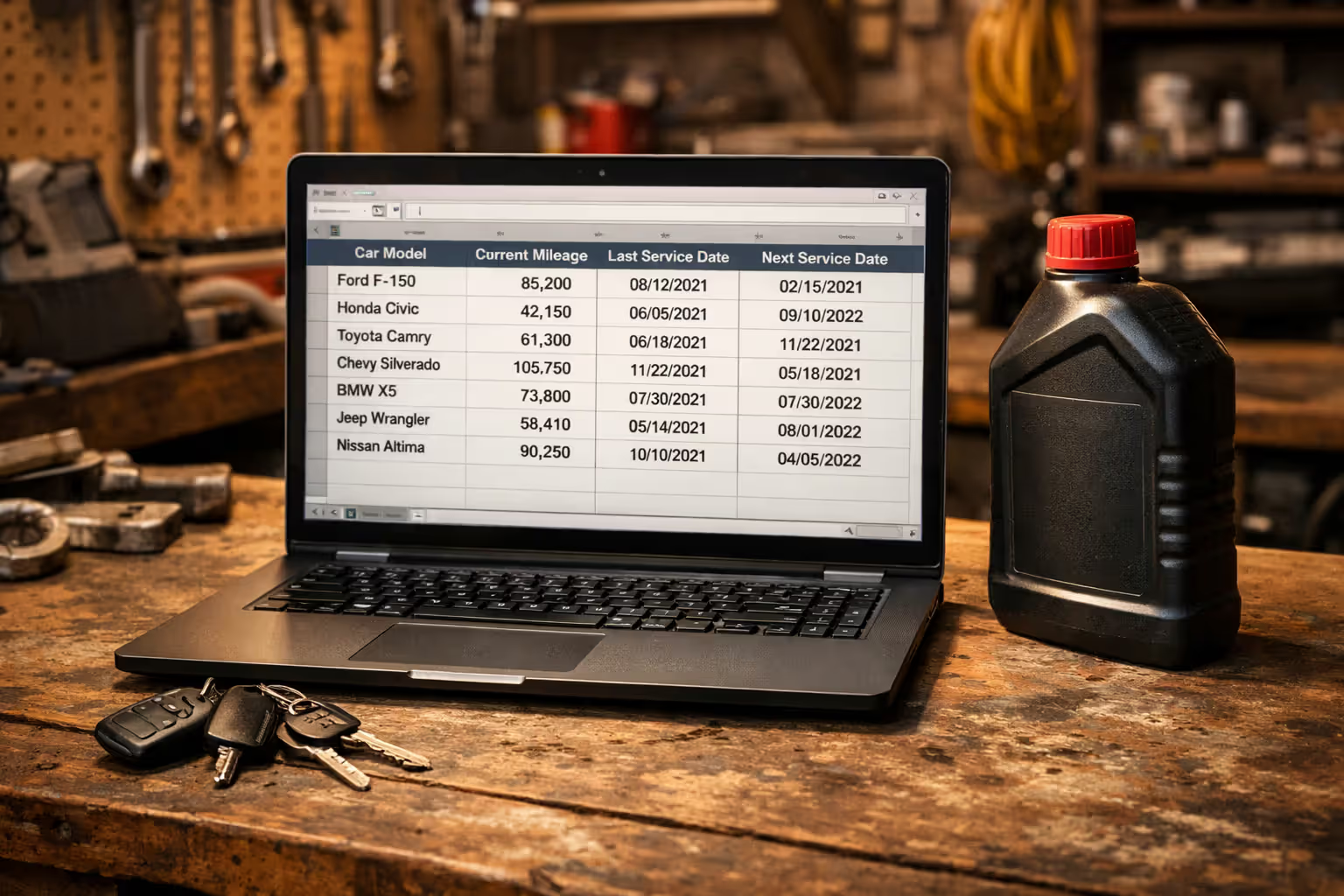
Create a master maintenance spreadsheet or use fleet tracking apps designed for small vehicle groups. Record each vehicle's current mileage, last service date, and upcoming maintenance needs. Include routine items (oil changes, tire rotations, air filter replacements) and longer-interval services (transmission fluid, coolant flushes, brake inspections).
Set calendar reminders three weeks before service due dates, giving you time to schedule appointments during convenient periods rather than scrambling at the last minute. Most vehicles need oil changes every 5,000-7,500 miles or six months—whichever comes first—but different vehicles in your household likely have different intervals based on age, engine type, and manufacturer recommendations.
Many modern vehicles offer maintenance tracking through connected car apps, but relying solely on these creates problems when you need to see all vehicles at once. Consolidate information into a single household view, whether that's a shared spreadsheet, a dedicated app like Driveroo or AUTOsist, or even a physical binder kept in a common area.
Track more than just routine maintenance. Note when tires were last replaced (they typically last 40,000-60,000 miles), when batteries were installed (expect 3-5 year lifespans), and when major services like timing belt replacements are due. These big-ticket items require budget planning, and tracking helps you avoid surprise expenses.
Author: Derek Fulton;
Source: shafer-motorsports.com
Bulk Maintenance: When to Service Multiple Vehicles Together
Service centers often provide discounts when you bring multiple vehicles for the same appointment. A shop might offer $10-15 off per additional vehicle for oil changes, or waive inspection fees on second and third vehicles serviced together.
Coordinate oil changes when possible. If two vehicles are within a few weeks or a few hundred miles of needing service, schedule them together. The time saved—one trip instead of two—often exceeds any slight efficiency loss from servicing one vehicle slightly early.
However, don't force coordination when it creates problems. Delaying necessary maintenance to batch services risks engine damage or safety issues. Similarly, performing maintenance significantly early wastes money and provides no benefit.
Tire rotations and seasonal tire swaps present ideal bulk opportunities. Schedule all household vehicles for tire service on the same day if your service center can accommodate multiple vehicles. Many tire shops offer shuttle services or loaner vehicles, making it feasible to drop off multiple cars even if you need transportation during the service.
Annual inspections in states requiring them create natural coordination points. Schedule all household vehicles for inspection during the same week or two, ensuring you don't forget one vehicle and face registration issues.
Consider building relationships with service centers that cater to fleet customers. While your three or four vehicles don't constitute a true fleet, shops accustomed to fleet work often provide better coordination, more flexible scheduling, and volume pricing that benefits multi-vehicle households.
The secret of getting ahead is getting started
— Mark Twain
Smart Ownership Logistics: Buying, Keeping, or Selling Vehicles
The right number of vehicles for your household changes as circumstances evolve. Strategic planning means regularly evaluating whether your current fleet matches your actual needs.
Apply the 80% rule: if a vehicle sits unused more than 20% of the time, you're likely over-invested in vehicles. Calculate total ownership costs—insurance, registration, depreciation, maintenance—for that underutilized vehicle. Could rideshare services, occasional rentals, or better coordination of existing vehicles cover those infrequent needs for less money?
Conversely, if household members frequently need to coordinate schedules, decline opportunities, or feel constrained by vehicle availability, you might benefit from adding another vehicle. Calculate the cost of an additional vehicle against the value of increased flexibility and reduced conflict.
For second or third vehicles that see limited use, leasing often makes more financial sense than buying. Lease payments on a vehicle driven 7,500 miles annually run significantly lower than purchase payments, and you avoid depreciation losses on a car that ages faster in years than in mileage. Insurance costs remain similar, but you eliminate concerns about long-term maintenance on a lightly-used vehicle.
Right-sizing works both directions. Empty-nesters whose children have moved out might discover they're maintaining three or four vehicles when two would suffice. Selling excess vehicles eliminates insurance, registration, and maintenance costs while freeing up garage or driveway space.
Cost-sharing arrangements make sense when adult children live at home or when unrelated adults share housing. Establish clear written agreements covering insurance responsibility, maintenance cost splits, and usage rights. Decide whether the arrangement involves actual co-ownership (both names on the title) or if one person owns the vehicle while others contribute toward costs in exchange for usage rights.
Co-ownership creates complications if relationships sour or living situations change, but it can provide better insurance rates and clearer legal standing for all parties. Usage-right arrangements offer more flexibility but require explicit documentation to avoid disputes.
For households with young drivers, consider keeping an older, fully-paid vehicle as a "learning car" rather than adding a teenager to the policy on a newer vehicle. Insurance costs less on older vehicles with lower values, and inevitable minor accidents or wear-and-tear from inexperienced drivers impact a $4,000 car differently than a $30,000 one.
Common Multi-Car Household Mistakes and How to Avoid Them
Even well-intentioned households fall into predictable traps that waste money and create unnecessary complications.
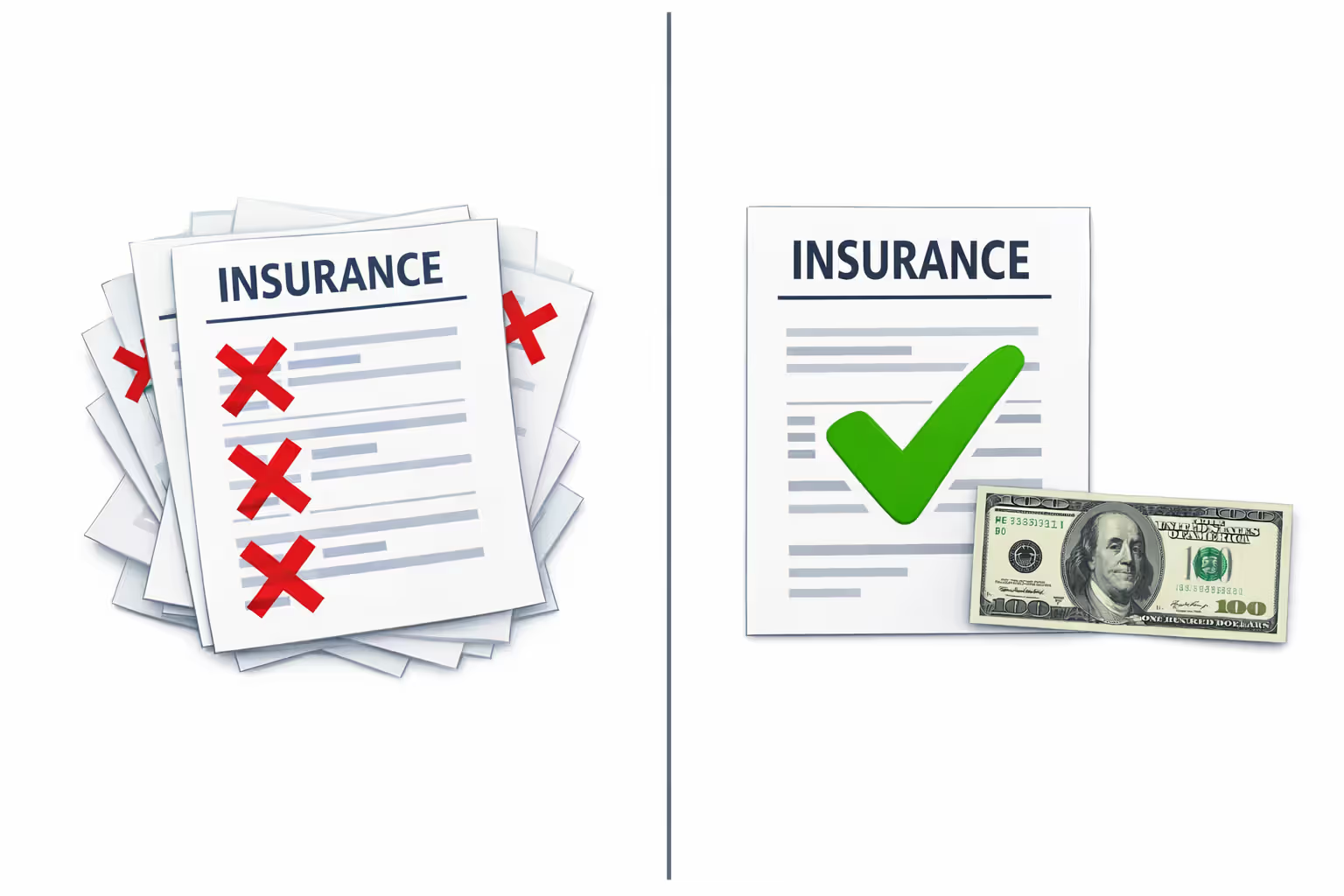
Over-insuring remains the most expensive mistake. Many households maintain collision and comprehensive coverage on older vehicles worth less than $3,000-4,000. When your annual premium for full coverage approaches 10% of the vehicle's value, you're essentially self-insuring anyway—the deductible plus a year or two of premium savings would replace the vehicle. Drop to liability-only coverage and bank the savings.
Author: Derek Fulton;
Source: shafer-motorsports.com
Duplicate coverage wastes money without providing additional protection. If you have roadside assistance through your insurance policy, you don't need separate AAA memberships for multiple drivers. If your credit card provides rental car insurance, you don't need to purchase it from insurers for all vehicles. Review all coverage carefully to eliminate redundancies.
Ignoring usage patterns leads to mismatched vehicle assignments. Families often default to "newest equals best" without considering actual needs. The newest vehicle might have features wasted on short commutes while the person driving 25,000 miles annually suffers in an older, less efficient car. Reassign vehicles based on who benefits most from specific characteristics.
Poor title and registration planning creates problems during sales or after accidents. Vehicles titled solely in one spouse's name can complicate insurance claims or create issues if that person is incapacitated. In community property states, both spouses should typically appear on titles. In other states, consider the implications of single versus joint ownership for your specific situation.
Neglecting resale value costs thousands when you eventually sell or trade vehicles. The car that never gets washed, develops interior stains, or skips maintenance loses significantly more value than well-maintained alternatives. Even if a vehicle is the "work truck" or "kid's car," basic care preserves value. Spending $150 on professional detailing before sale often returns $500-800 in higher sale prices.
Failing to document vehicle history hurts resale value and creates disputes. Keep service records for all vehicles in organized files—digital or physical. When selling, comprehensive maintenance records justify asking prices and build buyer confidence. If disputes arise about who was responsible for damage or neglect, documentation provides clarity.
FAQ: Multi Car Household Planning
Making Multi-Vehicle Management Work Long-Term
Effective multi-car household planning isn't a one-time project—it's an ongoing system that adapts as your family's needs change. The teenager who needs a ride everywhere today will be a licensed driver next year. The adult child living at home temporarily will eventually move out. The vehicle that's perfect for your current commute might become excessive if you start working remotely.
Review your household mobility strategy every six months. Check whether vehicle assignments still match usage patterns. Evaluate if your insurance bundle remains competitive—carriers change rates, and switching providers every few years often yields savings even with multi-car discounts. Assess whether you have the right number of vehicles for your current situation.
The households that manage multiple vehicles most successfully treat their cars as an integrated system rather than individual possessions. They communicate openly about needs and conflicts, maintain organized tracking systems, and make decisions based on overall household benefit rather than individual preference. This approach transforms vehicle ownership from a source of daily friction into a smooth-running system that supports family life without constant attention.
Start with the quick wins: bundle your insurance, create a basic maintenance tracking system, and implement a shared calendar for vehicle usage. These three steps typically take less than a week to establish but immediately reduce costs and eliminate common conflicts. From that foundation, refine your approach based on your household's specific patterns and priorities.
Related Stories

Read more
Read more


The content on Auto Insights is provided for general informational and educational purposes only. It is intended to offer guidance on car buying, vehicle ownership, finance, insurance, EVs, maintenance, accessories, reviews, and related topics, and should not be considered professional financial, legal, insurance, mechanical, or investment advice.
All information, tools, calculators, comparisons, and recommendations presented on this website are for general guidance only. Individual financial situations, driving habits, vehicle conditions, insurance policies, and market factors vary, and actual results or costs may differ from estimates provided.
Auto Insights makes no guarantees regarding accuracy, completeness, or current applicability of the information, as automotive markets, regulations, incentives, interest rates, and vehicle specifications may change over time.