
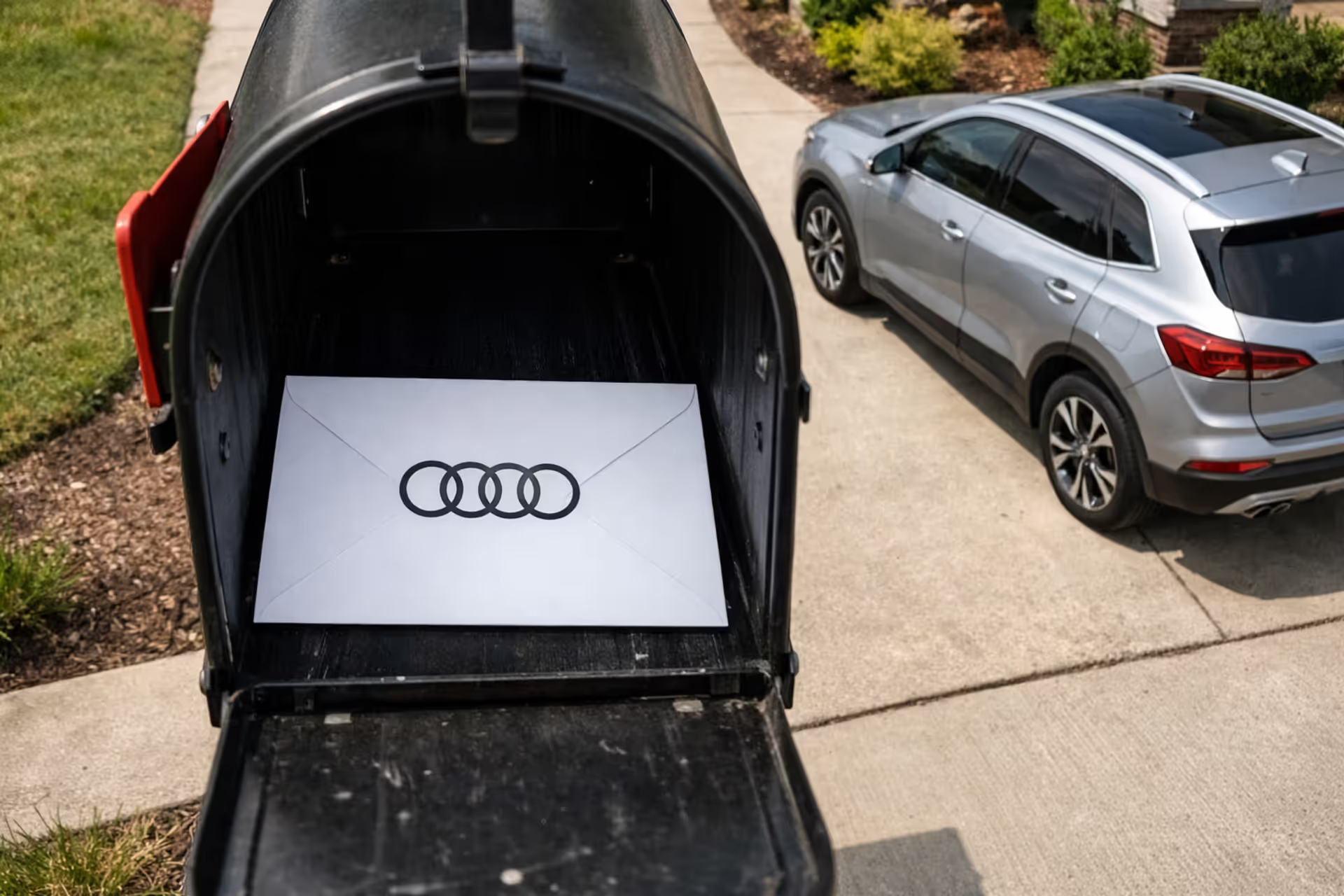
Official vehicle recall notice envelope inside a residential mailbox with a silver crossover SUV parked in the driveway
Understanding Recalls: Your Complete Guide to Vehicle Safety Defects and Repair Rights

Last Tuesday, my neighbor Sarah found a thick envelope wedged in her mailbox. Honda's logo stamped across the front. Inside? A recall notice about her CR-V's fuel pump potentially failing without warning on the highway.
She called me panicking. "Do I need to pay the dealer? Can I still drive to work tomorrow?"
Around 30 million American vehicles get recalled annually. That's roughly one in ten cars currently on the road. Sarah's confusion? Totally normal. Most drivers have no clue how this system actually functions—or that manufacturers foot every single dollar of the repair bill.
I've watched friends waste money on repairs they should've gotten free. Others ignored critical notices for months, then acted shocked when their cars caught fire. The recall system provides serious protection, but only when you understand what you're entitled to and don't miss the tight windows for reimbursement claims.
We're walking through everything: which problems actually trigger recalls versus normal maintenance, how federal investigators build cases against automakers, the specific rights protecting you from shady dealer tactics, and the exact deadlines that'll cost you money if you miss them.
What Qualifies as a Safety Defect in Vehicles
Your brake pads wearing down after 60,000 miles? That's called normal operation. Your battery dying after five winters in Minnesota? Expected wear and tear. Paint fading after a decade parked outdoors in Arizona? Cosmetic aging that manufacturers never promised to prevent.
These normal failures don't qualify for recalls because they're predictable deterioration, not manufacturing screw-ups.
The safety defect meaning centers on unexpected failures caused by design errors or production mistakes. NHTSA looks for patterns where identical vehicles fail in identical ways at unexpected times—clear evidence something left the factory wrong.
Think about the difference: brake pads gradually thinning over years versus brake lines corroding completely through after eighteen months because engineers specified the wrong metal alloy for winter climates. First situation? Routine maintenance. Second? Textbook recall territory.
Several defect categories dominate recall announcements:
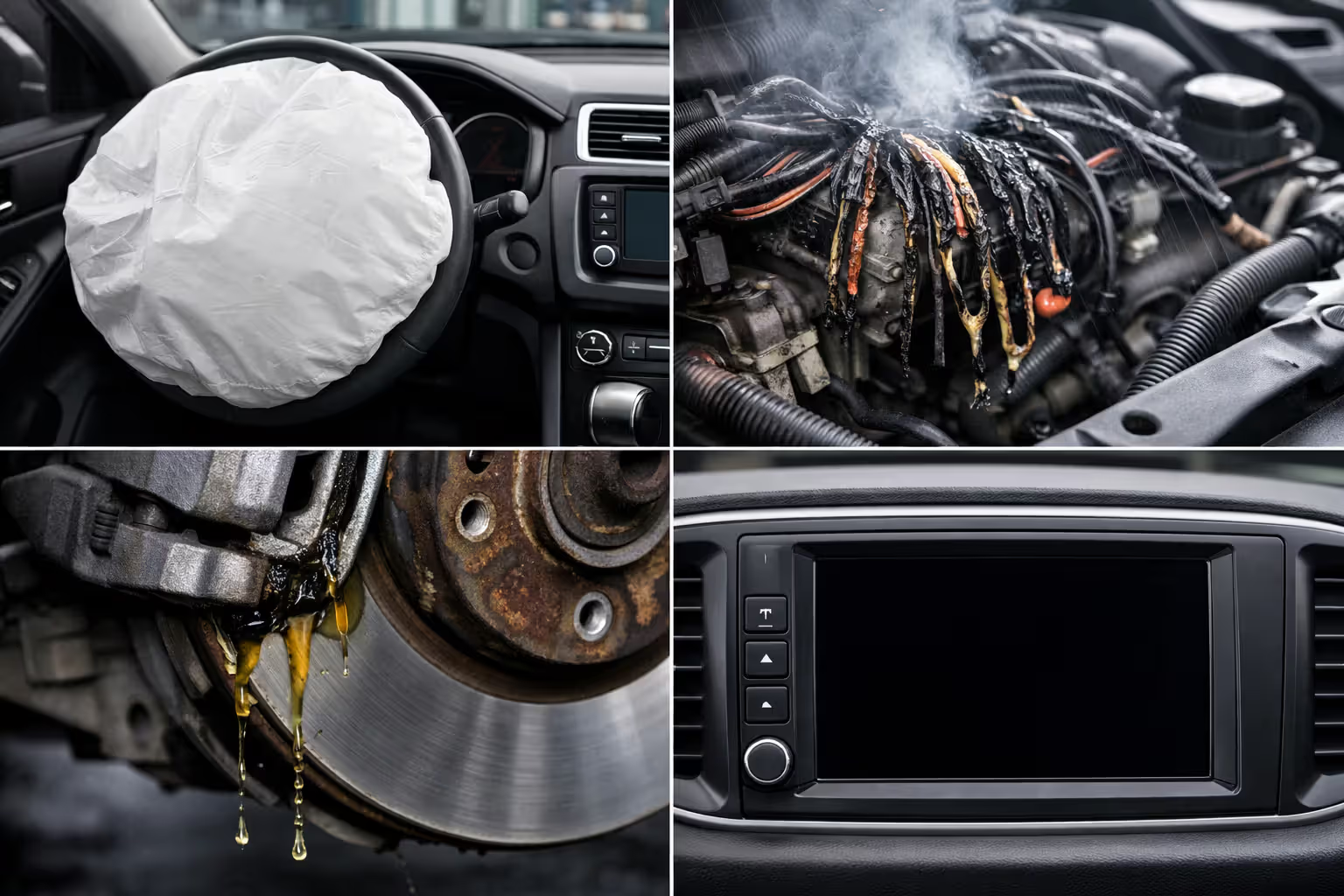
Airbag failures: Properly functioning airbags deploy during actual crashes, then stay put the rest of the time. When systems either refuse to inflate during collisions or randomly explode while you're driving peacefully down residential streets, that's a massive problem. Takata's inflator disaster involved devices that launched metal fragments through passenger cabins like shrapnel grenades. That specific nightmare ultimately touched 67 million American vehicles across practically every brand selling cars here.
Fire risks from fuel or electrical components: Gasoline leaking onto exhaust manifolds glowing at 800 degrees. Wiring harnesses shorting out and melting through dashboard plastic. Battery packs overheating spontaneously. People's vehicles have literally burned to skeletal frames sitting in their own driveways overnight because of these exact defects.
Steering component fractures: Ball joints shouldn't snap while you're merging onto the highway at 65 mph. When engineers discover thousands of vehicles from specific model years experiencing identical joint fractures at unusually low mileage, that pattern screams premature failure—the clearest sign of a manufacturing defect requiring nationwide recalls.
Brake failures: Master cylinders leaking fluid across garage floors. Electronic stability systems cutting out randomly during panic stops. Anti-lock brake computers failing when roads turn wet. Your stopping system matters more than practically any other vehicle function. When components don't perform according to their design specifications, the risks escalate fast.
The safety of the people shall be the highest law
— Marcus Tullius Cicero
Vision system breakdowns: Windshield wipers stopping mid-storm on the interstate. Backup cameras displaying black screens precisely when you're reversing near your toddler's tricycle. Headlight assemblies dimming to near-darkness without warning. Anything compromising your ability seeing hazards or making you invisible to other drivers qualifies as a legitimate safety concern.
Emissions cheating software: Volkswagen's diesel scandal involved programming specifically designed to detect testing conditions, temporarily clean up emissions while connected to government equipment, then revert to illegal pollution levels once you drove away. While excessive exhaust doesn't immediately crash your vehicle, federal regulations treat emissions violations as serious defects demanding recalls.
What doesn't qualify? Transmissions dying after 200,000 hard miles. Clear coat peeling after a decade. Leather seats cracking from regular use. Collision damage from accidents you caused. Modifications you installed yourself in your garage. Manufacturers carry zero responsibility for these issues.
Author: Derek Fulton;
Source: shafer-motorsports.com
How the Recall Process Works from Investigation to Repair
The recall process explained for vehicles involves way more complexity than most people realize. Months or even years often separate the first warning signs from completed repairs across every affected vehicle.
NHTSA Investigation Triggers
Multiple pathways can launch recall investigations. Sometimes patterns emerge from NHTSA's consumer complaint database first. When eighty different owners of 2022 model-year crossovers independently report steering wheels locking during highway driving, investigators start connecting dots between seemingly unrelated incidents.
Other times manufacturers catch issues internally before government watchdogs notice anything unusual. Warranty claim tracking systems flag anomalies. Four hundred engine compartment fires concentrated in a single product line? That doesn't happen randomly. Factory quality control testing occasionally reveals problems that somehow escaped earlier development phase evaluation.
Early Warning Reporting requirements force manufacturers submitting quarterly statistics covering deaths, injuries, warranty claims, property damage reports, and customer complaints organized by specific vehicle models. Unusual spikes in any category immediately trigger NHTSA scrutiny.
Consumer advocacy organizations, plaintiff attorneys, safety researchers, or frustrated individual owners can file defect petitions requesting formal investigations. Most petitions lead nowhere, but they occasionally surface legitimate problems government databases hadn't flagged yet.
Manufacturer Decision and Reporting Requirements
Once manufacturers confirm an actual safety defect exists—whether through internal analysis or NHTSA pressure—federal regulations demand filing reports within exactly five business days. Required documentation must identify the specific problem, list every affected vehicle by VIN range, and outline the proposed remedy.
Some recalls happen voluntarily before NHTSA applies enforcement pressure. Manufacturers launch these preemptive campaigns for various strategic reasons: limiting legal liability exposure, protecting brand reputation, or occasionally genuine safety commitment. Other recalls become "voluntary" only after NHTSA publicly announces investigations and threatens enforcement actions, making cooperation the manufacturer's only practical option.
Remedy Development Phase
Announcing recalls takes one afternoon of paperwork. Developing remedies that actually fix the underlying problem? That process can stretch across months of engineering analysis and parts production.
Software patches addressing electronic glitches can deploy relatively quickly. Complex mechanical problems requiring redesigned replacement parts might take six months or longer from announcement to available inventory. Manufacturers must demonstrate their proposed remedies genuinely resolve the defect before rolling out repairs across millions of vehicles. NHTSA reviews these proposals and frequently demands modifications when initial solutions prove inadequate.
How long repairs actually take varies wildly:
| Defect Category | Owner Notification Speed | Parts Manufacturing Window | Actual Repair Time |
| Airbags and structural threats | Two to four weeks after filing | Three to six months, often rolled out regionally | One to three hours |
| Fire and thermal dangers | One to two weeks after filing | One to three months | Two to four hours |
| Mechanical breakdowns | Four to eight weeks after filing | Two to six months based on production | One to five hours depending on access |
| Emissions and compliance | Six to twelve weeks after filing | Three to twelve months for software or hardware | Thirty minutes to two hours |
Life-threatening defects get rushed through parts manufacturing. Lower-urgency problems might see staggered campaigns as production capacity permits.
Your Rights When Your Vehicle Is Recalled
Federal safety regulations establish specific protections for vehicle owners during recalls. Knowing these owner rights for recall repair prevents dealers or manufacturers from pushing you around or denying benefits you're legally guaranteed.
Completely free repairs—zero exceptions: Manufacturers must repair recall defects without charging anything. Vehicle age doesn't matter. Odometer reading doesn't matter. Whether you bought new from a dealer or used from your cousin doesn't matter. Parts cost zero. Labor cost zero. Diagnostics cost zero. Any dealer attempting to bill you for recall work gets reported immediately to NHTSA. The sole exception? Defects you caused through obvious abuse, neglect, or improper modifications you performed yourself.
Reimbursement for repairs completed before announcements: Maybe you spent $850 fixing a problem four months before learning the manufacturer issued a recall addressing that exact issue. You're legally entitled getting that money back. Mail your repair invoices to the manufacturer's customer service address printed in your recall notification. Critical timing detail: most manufacturers impose reimbursement claim deadlines ranging from twelve to twenty-four months after recall announcements. Waiting around costs you money. File claims within weeks of receiving notices.
Loaner vehicles during repairs: Federal regulations don't mandate manufacturers providing loaner cars during recall work. However, many automakers voluntarily supply loaners or reimburse rental costs when repairs require overnight storage or parts remain unavailable but the defect makes driving genuinely unsafe. These policies vary dramatically between manufacturers and sometimes depend on defect severity. Always ask about loaner options when scheduling appointments—you might get surprisingly generous assistance.
Used vehicle buyer protections: Purchasing pre-owned cars means open recalls transfer directly to you along with the title. Previous owners ignoring recall notices doesn't eliminate your right to free fixes. Before signing purchase agreements on any used vehicle, run the VIN through NHTSA.gov's lookup system. Some state regulations now force used car dealers disclosing open recalls, but private party sellers face no similar requirements in most jurisdictions.
Recalls never expire: Recalls remain valid permanently. That recall announced in 2008? Still completely valid today, assuming the manufacturer hasn't declared bankruptcy. You can get a fifteen-year-old recall addressed at zero cost if replacement parts remain in stock. Federal law requires manufacturers maintaining recall remedy parts for minimum ten-year periods following recall dates, though many continue stocking components considerably longer.
Buyback and replacement offers: When defects prove impossible to repair adequately, manufacturers occasionally offer vehicle buybacks or replacements. This typically surfaces when remedies repeatedly fail or parts shortages drag into years-long delays. Buyback amounts usually reflect current fair market value rather than original purchase prices.
What Manufacturers Must Do Under Federal Recall Law
Manufacturer recall obligations under federal vehicle safety regulations are detailed, specific, and enforceable. These requirements ensure recalls actually reach affected owners instead of vanishing into corporate bureaucracy.
Owner notification requirements: Within 60 days after filing defect reports with NHTSA, manufacturers must notify every registered owner using first-class postal mail. Not email blasts. Not automated phone calls. Actual physical letters delivered by postal carriers. These notices must use plain language and include specific required information:
- Clear descriptions of the defect and risks it creates
- Conditions that might trigger failures
- Instructions for scheduling free repairs
- Expected parts availability dates
- Explicit statements confirming zero-cost repairs
- The manufacturer's internal campaign tracking number plus NHTSA's campaign identifier
Manufacturers can't simply mail letters to outdated addresses in their databases then claim they fulfilled notification duties. They must make reasonable efforts locating owners even when registration records show old information. This means querying updated state DMV databases and following up when mail returns undeliverable.
Dealer network duties: Every franchised dealer representing that brand must repair recalled vehicles upon request—regardless of where you originally purchased the car. Dealers receive technical service bulletins containing detailed repair procedures and must complete work within reasonable timeframes once parts ship.
Manufacturers must compensate dealers for recall repairs using identical labor rates paid for standard warranty work. This financial structure ensures dealers have actual motivation prioritizing recall repairs instead of constantly bumping them for paying customer jobs.
Parts supply obligations: Manufacturers must supply adequate remedy parts within reasonable periods. What qualifies as "reasonable" varies based on defect severity and manufacturing complexity. Fire hazards demand much faster parts production than minor compliance violations.
When parts shortages create repair delays, manufacturers must offer interim remedies where technically possible. Example: during fuel pump recalls with severe parts constraints, manufacturers sometimes instruct owners maintaining fuel levels above half tanks to prevent pump overheating until replacement inventory arrives.
Record-keeping and progress reporting: Manufacturers must maintain comprehensive documentation covering all notifications mailed, repairs performed, and reimbursement requests processed. These records help NHTSA track completion rates and identify problems with notification effectiveness or remedy adequacy.
Author: Derek Fulton;
Source: shafer-motorsports.com
Every quarter, manufacturers submit completion statistics to NHTSA showing what percentage of affected vehicles received repairs. Unusually low completion rates often trigger agency investigations into notification failures or remedy availability problems.
The Recall Notification Process: What to Expect and When
The recall notification process follows reasonably predictable timelines, though actual delivery varies based on how current manufacturers keep owner records and whether your vehicle registration information reflects recent address changes.
Timeline from official announcement to your mailbox: NHTSA publishes recall announcements on its website immediately when manufacturers file defect reports. VIN-searchable information appears online within one or two days. Your personal notification letter? That arrives considerably later.
Manufacturers typically begin mailing owner notices 4-8 weeks after officially announcing recalls. All notifications must finish within 60 days of NHTSA filing dates. Recently moved without updating DMV records? Just bought the car last month? Your notice might arrive late or miss you completely.
Notification methods: First-class postal mail to your registered address remains the standard notification approach. Some manufacturers additionally send email alerts if you registered for owner communications through their websites. A handful of automakers have begun using text message notifications for especially severe safety recalls.
Don't count on your dealer calling you personally. While some proactive dealerships contact regular service customers about recalls, most won't. Monitor recalls yourself instead of waiting for someone to hunt you down.
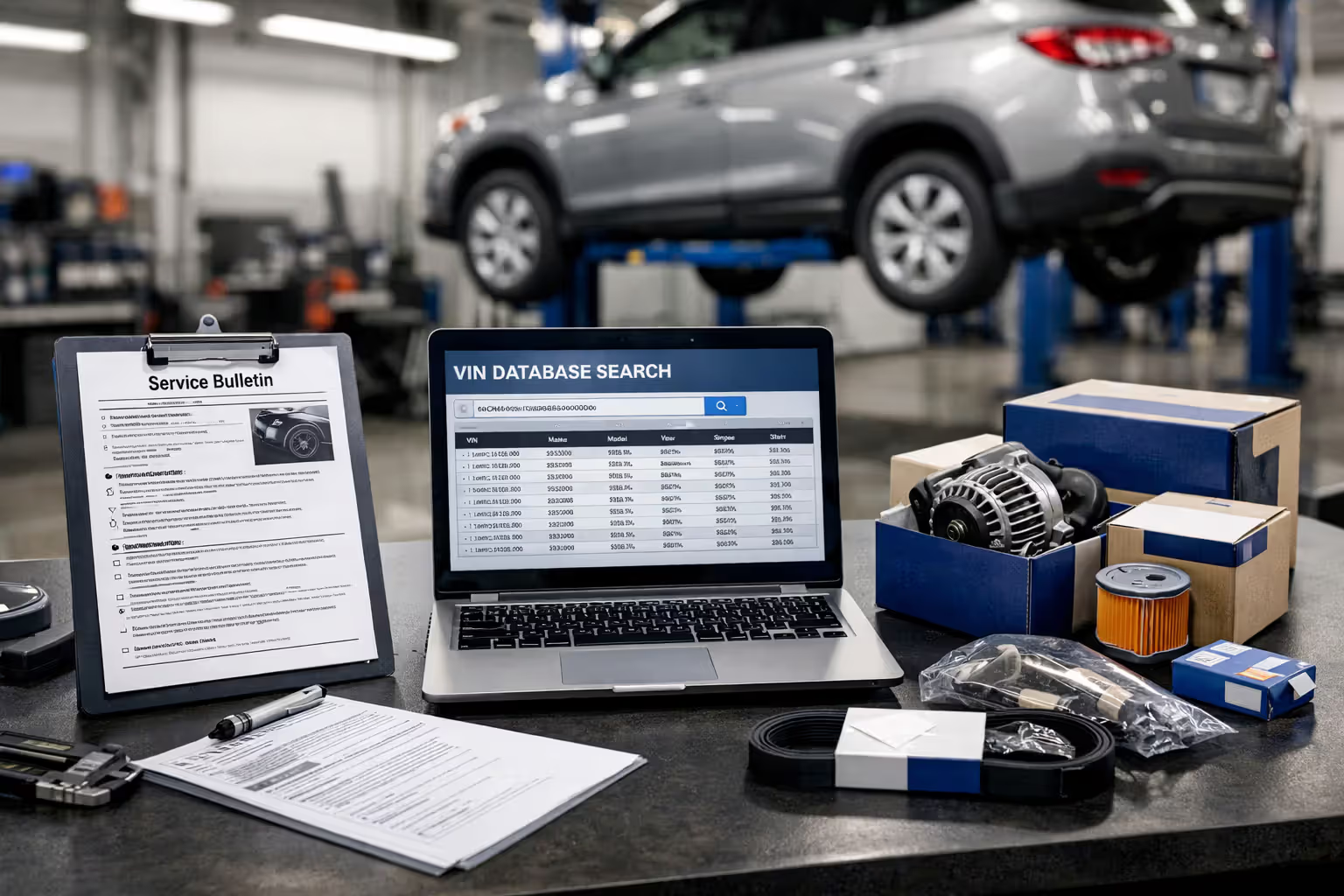
VIN lookup tools: The most reliable method checking for recalls involves NHTSA's VIN lookup utility at nhtsa.gov/recalls. Enter your 17-character vehicle identification number (located on your dashboard near the windshield base, on the driver's door jamb sticker, or printed on your registration) to view every open and completed recall affecting your specific vehicle.
Run these checks every couple months since manufacturers announce new recalls throughout the year. Before taking any long road trips, spend thirty seconds verifying no critical safety recalls have appeared since your last service visit.
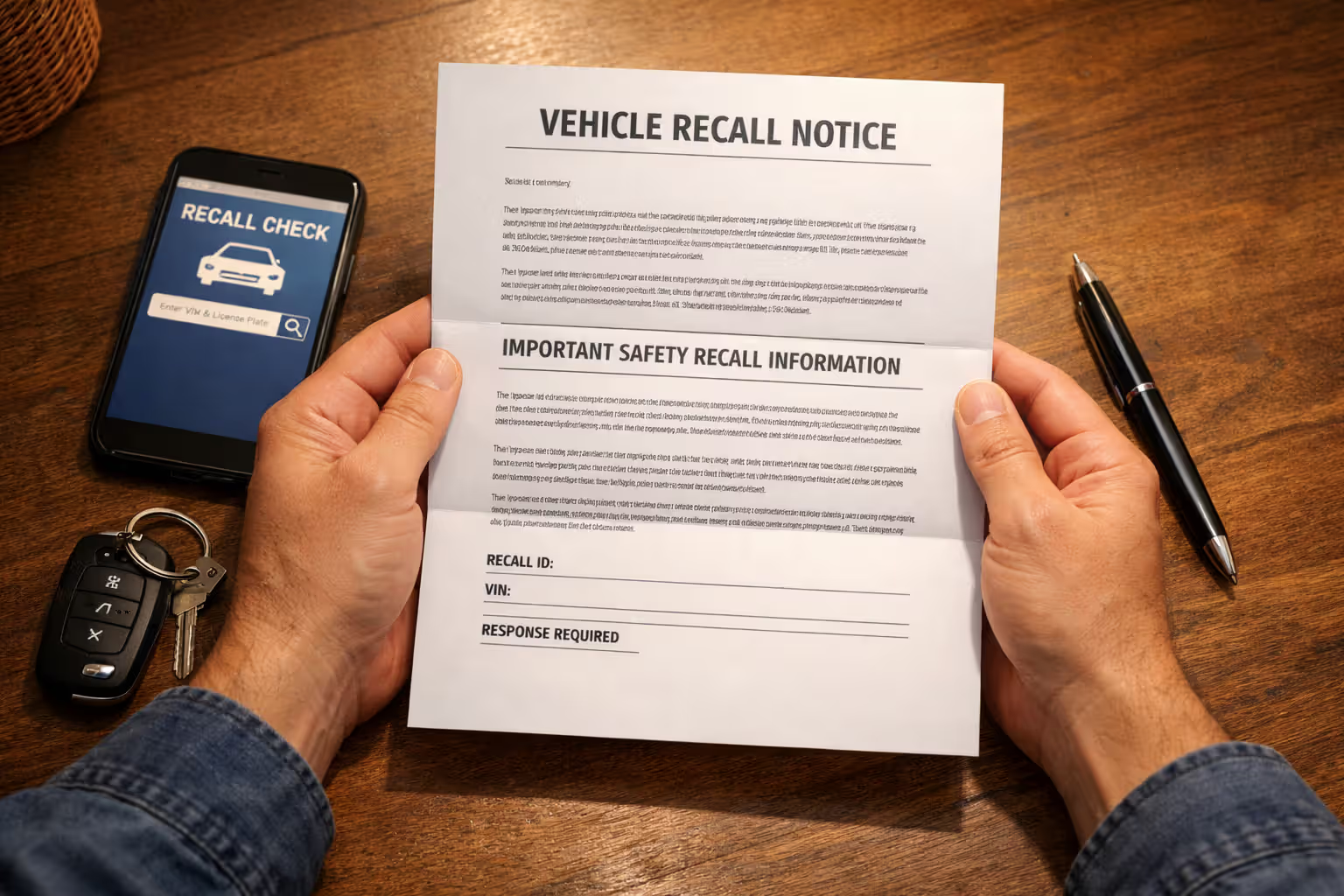
What notification letters contain: Your recall notification letter includes legally mandated information. You'll find:
- Your vehicle's year, make, model, and VIN
- Plain-language explanation of the safety defect
- Potential consequences if the defect manifests
- Whether remedy parts are currently available or when they're expected
- Instructions for scheduling free dealer repairs
- The manufacturer's campaign tracking number
- Explicit confirmation covering free parts and labor
If parts aren't ready yet, expect a second letter (called an "availability notice") once remedy inventory ships to dealers. Keep both letters with your vehicle documentation.
Author: Derek Fulton;
Source: shafer-motorsports.com
Common Mistakes Vehicle Owners Make During Recalls
Despite straightforward notification letters and zero-cost repair guarantees, plenty of vehicle owners stumble through recalls, missing benefits or creating unnecessary complications.
Ignoring recall notices completely: The most dangerous mistake involves tossing recall letters into junk mail piles and continuing to drive unsafe vehicles. Some owners mistakenly assume recalls represent optional maintenance suggestions rather than serious safety warnings. Others figure they'll "handle it eventually" then completely forget about it.
Certain defects create immediate, life-threatening risks. When your recall notice warns about fire hazards or sudden steering failures, schedule repairs that same week. Even recalls seeming relatively minor deserve prompt attention—that minor wiring issue could strand you or cause accidents.
Paying dealers for recall work: Dealers occasionally attempt charging diagnostic fees or bundling unrelated repairs alongside recall work. Unless you're addressing separate damage or routine maintenance items, recall repairs must cost absolutely nothing. Some unethical service advisors claim certain components aren't covered or insist your vehicle needs additional work qualifying it for the recall remedy.
If any dealer demands payment for recall work, refuse immediately and contact the manufacturer's customer service department. Report the dealer to NHTSA if they continue pushing. Legitimate additional repairs should be clearly explained and documented completely separately from recall work.
Missing reimbursement windows: Owners who paid fixing problems before recall announcements often fail seeking reimbursement within manufacturer deadlines. These deadlines don't always appear prominently in notification letters, and by the time you discover them, filing windows may have closed.
The bitterness of poor quality remains long after the sweetness of low price is forgotten
— Benjamin Franklin
Immediately after recall notices arrive, dig through your maintenance records. Did you pay for repairs matching the recall description within the past two years? Submit reimbursement claims that same week with receipt copies and repair order documentation. Don't procrastinate—some manufacturers process claims first-come-first-served and may exhaust allocated reimbursement budgets.
Skipping VIN checks on used vehicle purchases: Buying used vehicles without running VIN checks for open recalls can saddle you with someone else's neglected safety problems. While you'll still receive free repairs, you might discover serious defects making the vehicle unsafe to drive until fixed—potentially leaving you without transportation for weeks or months.
Always check nhtsa.gov/recalls before finalizing any used vehicle purchase. Open recalls exist? Verify parts are available and request the seller complete repairs before you take delivery. Some recalls face parts shortages lasting months or years.
Never confirming repairs were actually completed: Some owners schedule appointments but never verify work was performed correctly. Occasionally dealers mark recalls as "complete" in their computer systems without performing all required repairs—sometimes from parts confusion, sometimes from sloppy paperwork.
After recall repairs, request documentation showing the specific recall campaign number and confirming all required work was done. Keep this paperwork permanently with your vehicle records. Selling the vehicle later? Provide copies to buyers as proof the recall was addressed.
Panicking unnecessarily: While most recalls deserve prompt attention, not all pose immediate danger. Emissions compliance recalls, for instance, might not affect your daily driving safety whatsoever. Some owners panic and stop driving their vehicles unnecessarily while waiting for repair appointments.
Read your recall notice carefully to understand actual risk levels. Uncertain? Call the manufacturer's customer service line and ask directly whether it's safe continuing to drive while awaiting repairs. For truly critical safety recalls, manufacturers usually include explicit "stop driving immediately" warnings.
Frequently Asked Questions About Vehicle Recalls
Conclusion
Vehicle recalls protect millions of Americans from driving cars with dangerous defects. Understanding how the system actually operates—from NHTSA investigations through manufacturer obligations to your rights as an owner—empowers you navigating recalls confidently and ensuring your vehicle gets repaired properly at zero cost.
The most important actions? Run periodic VIN checks at nhtsa.gov/recalls. Respond within days when recall notices arrive. Never pay for recall repairs. Keep documentation of completed work. These simple steps protect both your safety and your legal rights.
Recalls aren't annoying inconveniences to brush aside. They're opportunities fixing serious problems before they cause crashes or injuries. Manufacturers must provide free repairs regardless of your vehicle's age or mileage, and these obligations don't expire. Take advantage of these protections by staying informed about recalls affecting your vehicle and scheduling repairs as soon as parts ship to dealers.
Related Stories

Read more
Read more



The content on Auto Insights is provided for general informational and educational purposes only. It is intended to offer guidance on car buying, vehicle ownership, finance, insurance, EVs, maintenance, accessories, reviews, and related topics, and should not be considered professional financial, legal, insurance, mechanical, or investment advice.
All information, tools, calculators, comparisons, and recommendations presented on this website are for general guidance only. Individual financial situations, driving habits, vehicle conditions, insurance policies, and market factors vary, and actual results or costs may differ from estimates provided.
Auto Insights makes no guarantees regarding accuracy, completeness, or current applicability of the information, as automotive markets, regulations, incentives, interest rates, and vehicle specifications may change over time.