

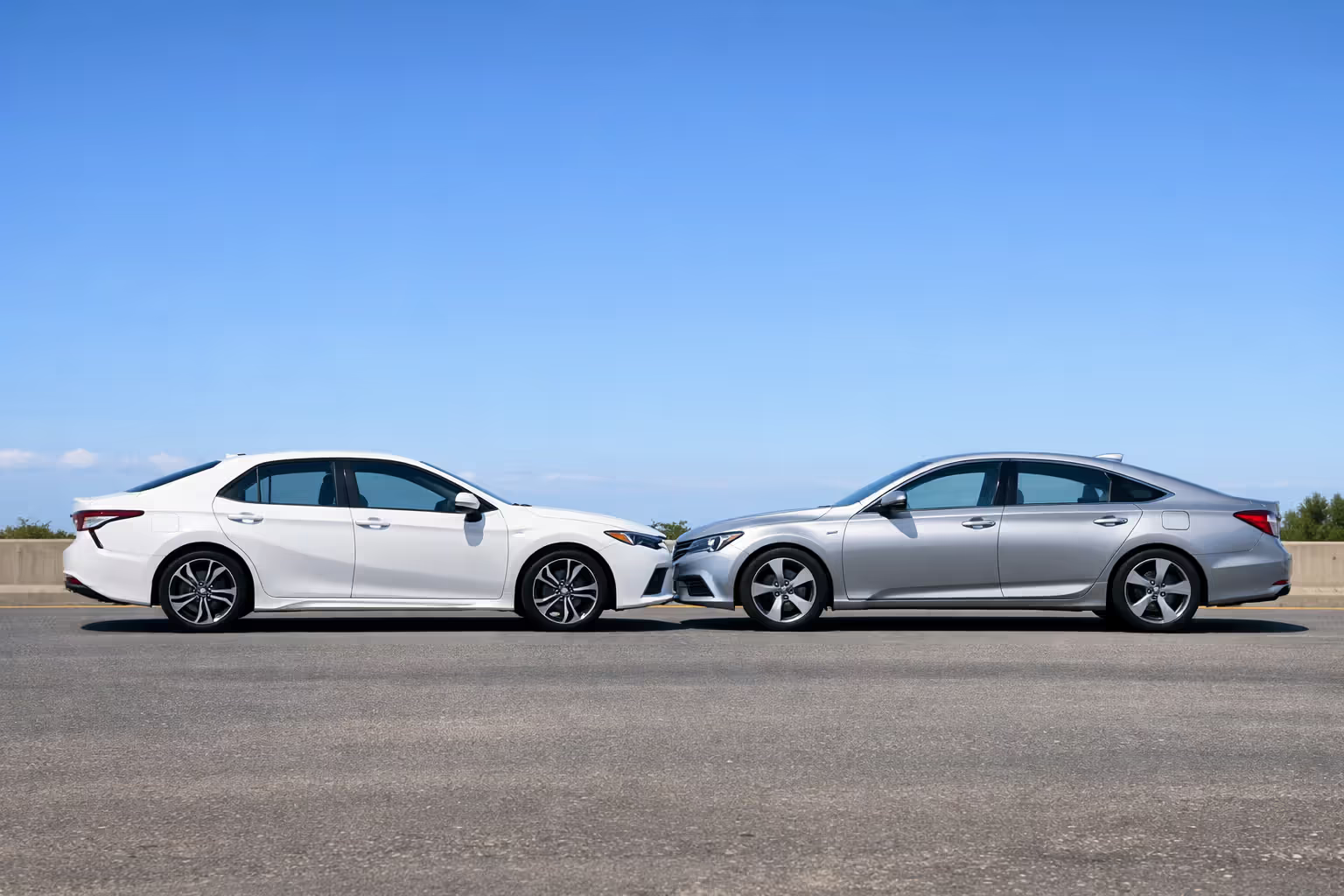
Car buyer comparing two SUVs in a modern dealership showroom while making a purchase decision
Vehicle Reliability Explained: What the Ratings Really Tell You About Your Next Car

You walk into a dealership, and the sales rep assures you the SUV you're eyeing "never has problems." Your uncle insists his 15-year-old pickup runs like new without a single repair. Then you check online, and three reviews call it a nightmare while two others claim it's bulletproof.
So what's the truth about vehicle reliability, and how do you figure out what actually matters?
Here's what most people miss: reliability directly controls how much you'll spend beyond your monthly payment. We're talking $400 annually versus $1,200. It determines whether you're walking into your boss's office explaining why you're late again because your car wouldn't start. And five years from now when you want to sell or trade, reliability records either boost your resale value or tank it.
Over a typical five-year ownership period, choosing wrong can cost you $4,000 to $6,000 extra in repairs alone—not counting the aggravation.
What Vehicle Reliability Actually Measures
Think of reliability as keeping score of how often your vehicle forces you to visit a repair shop for things you didn't plan on fixing. A busted infotainment touch screen counts. A failed transmission definitely counts. An oil change doesn't—that's expected maintenance.
Three main things get tracked: how frequently problems pop up, how serious those problems are, and when they typically happen during the vehicle's life. If your crossover needs its engine rebuilt at 48,000 miles, that's a massive red flag. If it runs smoothly past 180,000 miles, you've got a winner.

Author: Kevin Thornton;
Source: shafer-motorsports.com
Here's something that confuses lots of buyers: safety and reliability measure completely different things. Safety ratings tell you how well a vehicle protects you during a crash and whether it helps you avoid accidents through features like blind-spot monitoring. The 2015 Jeep Wrangler got respectable safety marks while simultaneously ranking among the least reliable vehicles you could buy that year. Great at protecting you in a crash, terrible at not leaving you stranded.
Jake Fisher, who runs auto testing at Consumer Reports, puts it this way: "Reliability is about whether your car will start tomorrow morning and get you where you need to go without unexpected trips to the mechanic. For most families, it's the single most important factor in long-term satisfaction, even more than performance or features."
When people talk about long-term durability, they mean vehicles that keep running strong past 10 years or 200,000 miles. These aren't just cars that survive the first 36 months. They're the ones still going without major headaches a decade later. Toyota and Honda built their entire reputations on this specific capability—you'll find plenty of 2008 Camrys and Accords still running great with just routine maintenance.
How Reliability Ratings Are Calculated and Reported
Different organizations measure reliability through different lenses, which explains why the same vehicle might score a 4 out of 5 in one rating system but rank in the middle elsewhere.
Consumer Reports polls its membership every year, gathering information on roughly 300,000 vehicles. Members report specific failures across 17 problem categories—everything from engine troubles to body integrity issues. CR crunches these numbers into predicted reliability scores, weighing both how many people reported issues and how severe those issues were. Their rating system spans five levels, from vehicles performing much worse than competitors to those performing much better.
J.D. Power runs two separate studies. Their Initial Quality Study catches problems during the first 90 days of ownership—basically the honeymoon period when manufacturing defects and design flaws show up. Their Vehicle Dependability Study examines three-year-old vehicles, which reveals whether early quality holds up. Both report issues per 100 vehicles, so a score of 150 means owners reported 150 problems across 100 vehicles. Lower numbers mean fewer headaches.
RepairPal takes a completely different approach by analyzing actual repair invoices from thousands of independent shops across the country. They calculate what owners actually spend annually and how often they're bringing vehicles in for fixes. This gives you real-world cost data rather than just problem counts.
Initial Quality vs. Long-Term Dependability Scores
Early quality ratings capture those first impressions and new-vehicle teething problems. A vehicle might score poorly here because the infotainment system confuses people, minor trim pieces rattle, or controls work differently than owners expect. These ratings spot manufacturing defects and design mistakes, but they won't tell you whether the transmission will last 150,000 miles.
Dependability scores after three to five years matter way more for most buyers. Take the 2018 Chevrolet Equinox—initial quality looked decent, but by year three, transmission complaints started piling up. That pattern only shows up in longer-term tracking. If you're planning to keep your next vehicle past the factory warranty (and most people do), focus your research on these dependability numbers instead of initial quality scores.
Here's an interesting pattern: vehicles often get better as manufacturers fix early issues. The first model year after a complete redesign typically shows more problems than years two or three of that same generation, after engineers have identified what went wrong and corrected it.
What Repair Frequency Statistics Actually Track
Frequency statistics count how many times vehicles need repairs beyond routine stuff like oil changes. But the details matter more than the average. Five vehicles each needing one repair looks different from one vehicle needing five repairs, even though both average to one repair per vehicle.
Most studies break problems down by system: engine, transmission, electrical, heating and cooling, brakes, suspension, and so forth. These breakdowns reveal weak spots. The 2016-2018 Honda Civic had more air conditioning complaints and infotainment gripes than expected, but its engine and transmission proved rock-solid. Knowing that helps you weigh whether the trade-off makes sense.
Timing tells you a lot too. Problems showing up in the first 12 months usually point to manufacturing defects or design mistakes. Issues emerging in years four through six might be normal wear on components or signs the engineers didn't build things to last. Problems appearing at all ages suggest fundamental design weaknesses that never got fixed.
The Real-World Factors That Impact Your Vehicle's Reliability
Even vehicles with stellar reliability ratings can become problematic under certain circumstances, while careful owners can coax good performance from less reliable models. Several factors beyond what came from the factory make huge differences.
Sticking to the maintenance schedule matters more than almost anything else. Skip oil changes, ignore transmission fluid replacements, or put off that timing belt replacement, and you'll create problems that have nothing to do with how well the vehicle was designed. Even a Toyota Tacoma with top reliability ratings will destroy its engine if you run it 20,000 miles without an oil change.

Author: Kevin Thornton;
Source: shafer-motorsports.com
Where and how you drive creates different stress patterns. Stop-and-go city commutes beat up transmissions and brakes more than highway cruising. Really short trips—under 10 minutes—prevent engines from getting fully warm, which accelerates wear. Northern drivers deal with road salt eating away at metal. Arizona and Nevada residents watch heat destroy batteries and stress cooling systems to their limits.
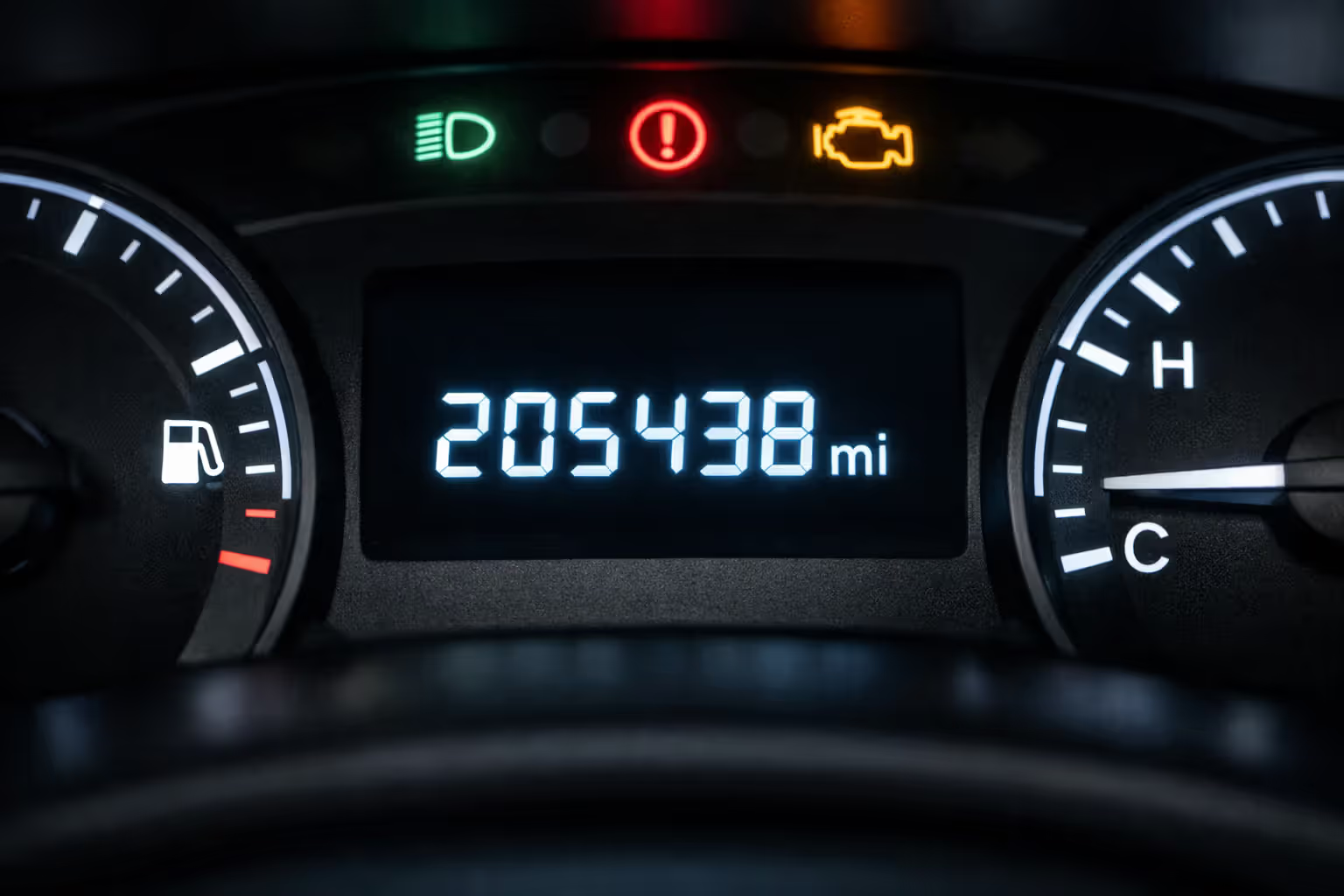
How many miles you rack up annually matters differently than just total age. A five-year-old car with 22,000 miles faces different issues than one with 140,000 miles. Low-mileage vehicles develop problems from sitting around—batteries die, rubber seals dry and crack, fluids break down. High-mileage vehicles wear out mechanical parts faster from constant use. The sweet spot runs somewhere around 10,000-15,000 miles per year with regular use.
When you're buying used, previous ownership creates hidden risks that rating systems can't account for. A used car might carry excellent reliability scores for its model, but if the last owner ignored maintenance, drove aggressively, or cheaped out on collision repairs, your experience won't match the statistics. This makes individual vehicle history reports just as important as model-level reliability data.
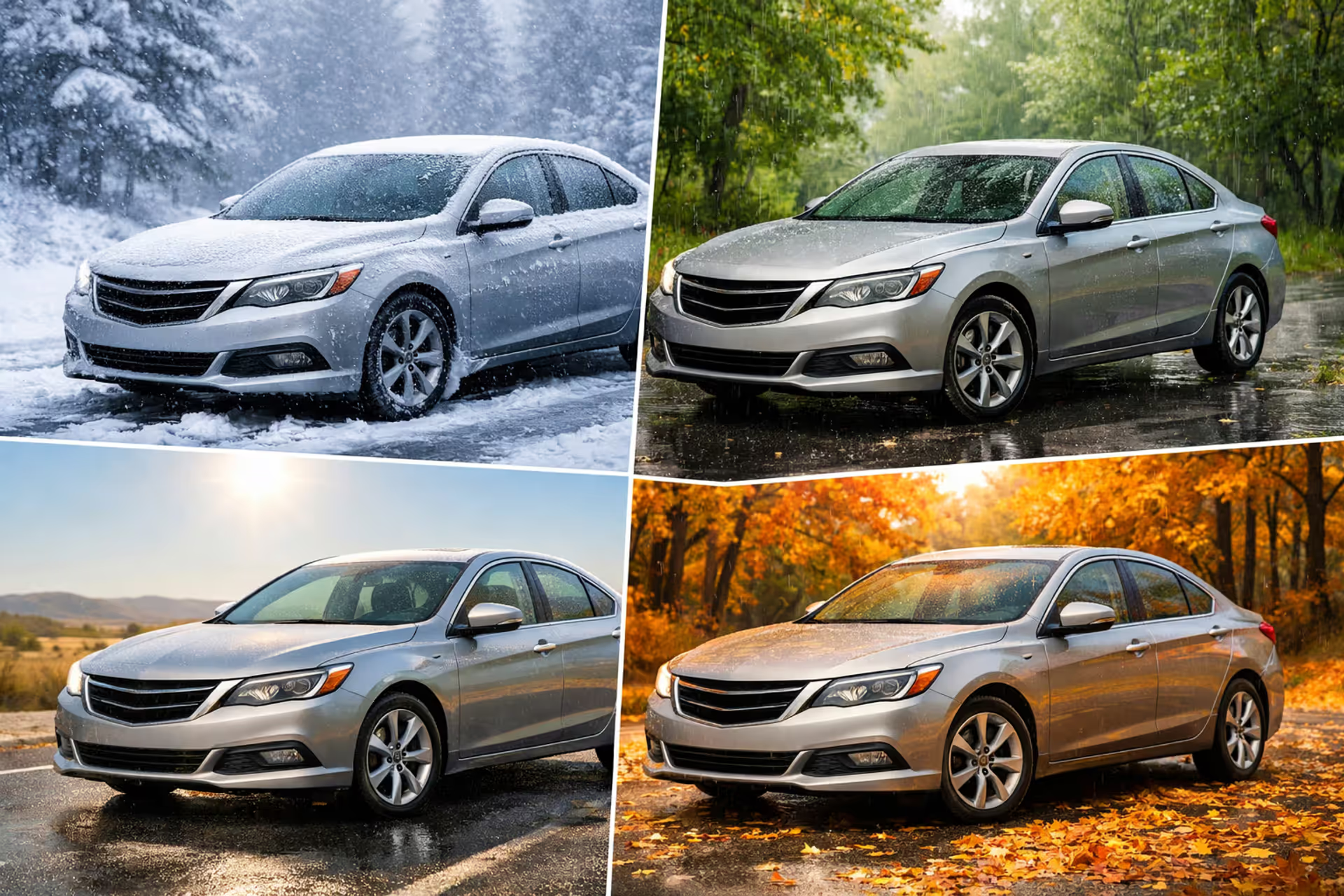
Extreme weather tests different vehicle systems. Phoenix summers kill batteries and air conditioning compressors at shocking rates. Minnesota winters challenge starters, batteries, and heating systems. Coastal humidity promotes rust and corrodes electrical connections. A vehicle rated "average" might perform above average in Seattle but below average in Phoenix, just from climate differences.
Quality is not an act, it is a habit
— W. Edwards Deming
Reliability vs. Maintenance: Why They're Not the Same Thing
Lots of owners confuse these two concepts, leading to frustration and unfair judgments about their vehicles. They're fundamentally different things.
Maintenance covers predictable, scheduled services: oil changes every 5,000-7,500 miles, tire rotations, brake pad replacements around 40,000-50,000 miles, air filter swaps, fluid flushes. Every single vehicle needs maintenance—it's just part of owning a car. Nobody should call a vehicle "unreliable" because it needs new brake pads at 45,000 miles. That's normal wear. Reliability ratings specifically exclude routine maintenance when calculating scores.
Unexpected repairs signal actual reliability problems: a transmission dying at 58,000 miles, an alternator failing at 32,000 miles, a water pump leaking at 41,000 miles. Under normal circumstances, these components should last considerably longer. When they don't, it points to design weaknesses, manufacturing defects, or components that weren't engineered to last.
Things get murky with wear items that fail too early. If brake pads normally last 45,000 miles but yours need replacement at 18,000 miles, is that reliability or maintenance? Context determines the answer. If hundreds of owners report similar premature wear, that's a reliability problem worth noting. If it's just you, maybe you ride the brakes hard or drive mountainous terrain daily.
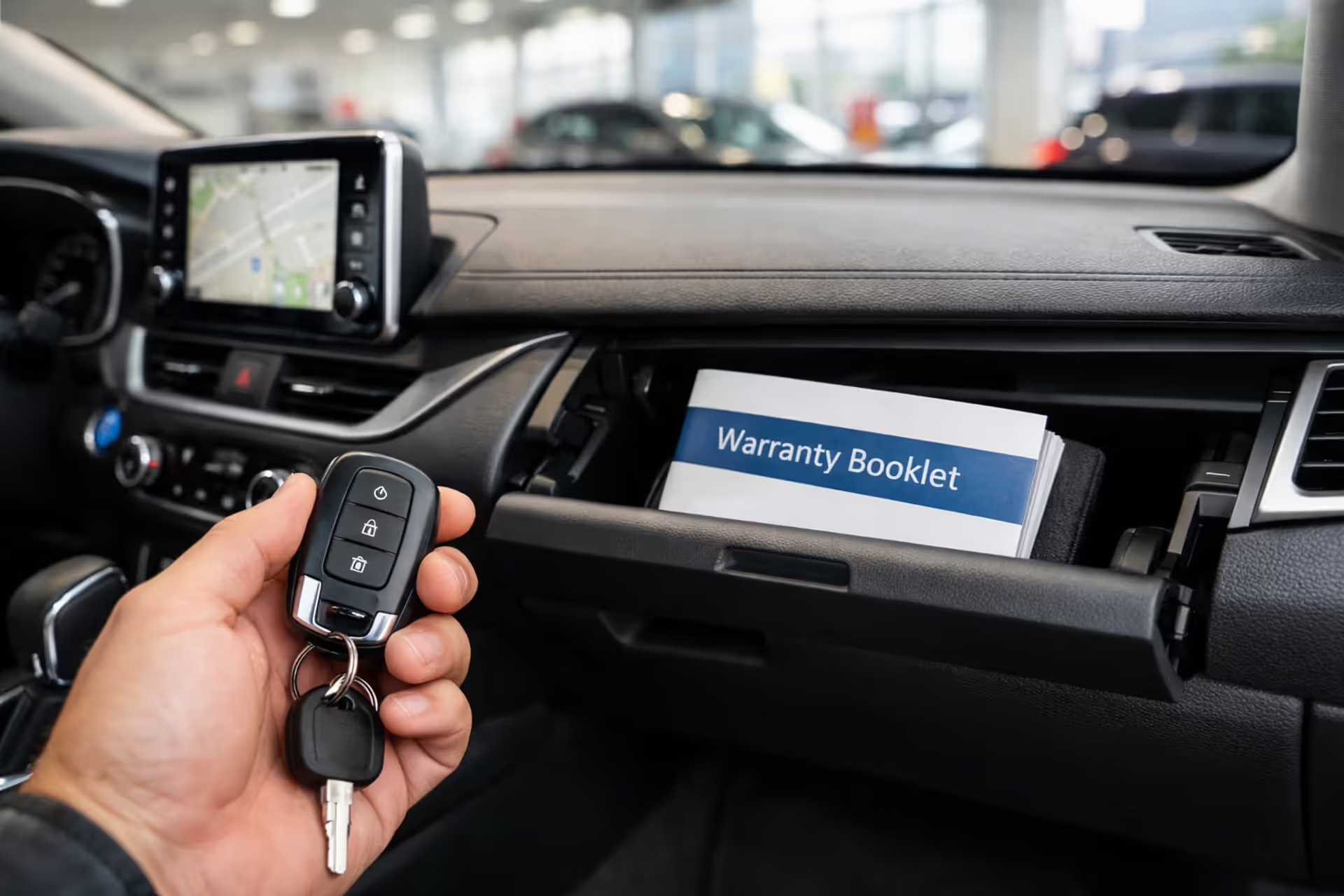
Warranty coverage provides another useful lens. Most manufacturers cover defects for 36 months or 36,000 miles, with powertrain warranties often extending to 60 months or 60,000 miles. Repairs needed during the warranty period almost always indicate reliability issues. Post-warranty repairs might signal reliability problems or just normal aging, depending on what failed and when.
Proper maintenance dramatically extends vehicle life. A Honda Accord might have fantastic reliability ratings, but ignore the recommended timing belt replacement at 105,000 miles, and belt failure can destroy the entire engine—a $4,500 repair that wouldn't appear in reliability statistics because it resulted from maintenance neglect rather than a design flaw.
Certain vehicles demand more frequent maintenance by design, particularly European luxury brands. BMW and Mercedes-Benz often specify synthetic oil changes every 10,000 miles and more frequent inspections than Toyota or Honda require. That doesn't make them less reliable in the technical sense, but it definitely increases your ownership costs. Understanding this distinction prevents unfair apples-to-oranges comparisons.
Brand and Model Reliability Patterns: What the Data Shows
Reliability patterns aren't random. When you examine years of data, clear trends emerge showing which manufacturers consistently build dependable vehicles and which ones repeatedly struggle.
| Brand | 5-Year Avg Score (CR) | Most Common Issues | Avg Annual Repair Cost | % Models Above Avg |
| Toyota | 4.2/5 | Minor electrical glitches, infotainment bugs | $441 | 78% |
| Lexus | 4.4/5 | Electronics, minor trim rattles | $551 | 83% |
| Honda | 3.9/5 | Transmission (specific models), A/C compressors | $428 | 71% |
| Mazda | 4.0/5 | Infotainment freezing, paint/trim fit | $462 | 69% |
| Subaru | 3.7/5 | CVT transmission judder, windshield cracking | $567 | 64% |
| Ford | 3.2/5 | Transmission shudder, electrical gremlins, engine issues | $652 | 47% |
| Chevrolet | 3.1/5 | Transmission failures, electrical problems | $649 | 43% |
| Ram | 2.9/5 | Electrical nightmares, transmission troubles | $734 | 38% |
| Tesla | 2.8/5 | Body panel gaps, electronics malfunctions | $832 | 35% |
| Land Rover | 2.3/5 | Electronics failures, suspension issues, engine problems | $1,174 | 22% |
Note: Scores and costs represent aggregated data from Consumer Reports and RepairPal covering 2018-2023 model years
Japanese manufacturers—especially Toyota, Lexus, Honda, and Mazda—dominate the top of reliability rankings year after year. This pattern has held steady for decades, rooted in manufacturing philosophies that emphasize durability over bleeding-edge technology. These brands typically wait to adopt new features until engineers have thoroughly tested them, which avoids early-adopter problems.
Luxury brands reveal an interesting contradiction. Lexus (Toyota's upscale division) sits at the top of reliability rankings, while European luxury marques like BMW, Mercedes-Benz, and Land Rover consistently cluster near the bottom. The assumption that "you get what you pay for" doesn't hold up under scrutiny. Luxury vehicles pack tremendously complex technology—air suspension systems, intricate electronics, sophisticated engine management—creating exponentially more components that can malfunction. A Mercedes S-Class has dozens of systems that a Toyota Camry simply doesn't include, and each one represents a potential failure point.
American brands show wildly mixed results. Buick often scores surprisingly high, benefiting from shared platforms with more reliable Chevrolet and GMC models while keeping feature sets simpler. Ford and Chevrolet hover around average, with certain models (Ford F-150, Chevrolet Silverado) significantly outperforming others (Ford Explorer, Chevrolet Equinox). Chrysler, Dodge, and Ram typically land below average, particularly struggling with electrical gremlins and transmission durability.
Electric vehicle reliability remains a developing story without enough long-term data for confident predictions. Tesla ranks poorly because of build quality complaints, body hardware problems, and electronic glitches, though their electric powertrains prove generally durable. Traditional manufacturers' EVs show better initial quality, but we lack the 5-10 year track records needed for solid conclusions. The Chevrolet Bolt demonstrated strong reliability until a massive battery recall, illustrating how single catastrophic issues can obliterate otherwise solid records.
Significant model-to-model variation exists even within brands. Honda's Accord and CR-V rank among the most reliable vehicles you can buy, but the Passport and Pilot show notably more problems. Ford's F-150 vastly outperforms the Explorer. This variation underscores why researching specific models matters more than just evaluating brand reputation.
Author: Kevin Thornton;
Source: shafer-motorsports.com
How to Use Reliability Data When Buying or Owning a Vehicle
Reliability data only helps if you know how to apply it to your specific situation. Here's how to turn ratings into smart decisions.
Always check the specific model year you're considering, not just the current generation. The 2020 Honda CR-V might score excellent reliability marks, but 2017-2018 models suffered from oil dilution issues that required fixes. When shopping used, research that exact year. Manufacturers often implement "running changes" mid-generation that fix problems without triggering official recalls or announcing updates.
Match reliability data to your ownership timeline. Planning to buy a three-year-old vehicle and keep it another five years? Focus your research on 4-8 year reliability patterns. Leasing for three years? Initial quality matters more than decade-long dependability. Aligning data timeframe with your ownership plan prevents focusing on irrelevant information.
Figure out total costs, not just sticker prices. A $25,000 vehicle averaging $850 in annual repairs over five years costs $29,250 total. A $28,000 vehicle averaging $425 annually in repairs costs $30,125—only $875 more despite the higher purchase price. When you factor in better resale value for more reliable vehicles, the gap often disappears or reverses. Reliability directly impacts total ownership economics, frequently outweighing initial price differences.

Author: Kevin Thornton;
Source: shafer-motorsports.com
Balance reliability against your other requirements. Need three-row seating plus 5,000-pound towing capacity? You might accept slightly lower reliability scores to get the right capability. A Colorado family needing all-wheel drive might choose a Subaru despite CVT transmission concerns because Subaru's AWD systems perform exceptionally well in mountain snow. Reliability matters tremendously, but it's one factor among many in your decision.
Examine patterns in specific problem categories. If a model shows infotainment issues but you can tolerate occasional screen freezes, that might be acceptable. But engine or transmission problems—repairs that cost $2,500-$5,000—should disqualify most vehicles from consideration. Prioritize reliability in expensive systems (powertrain, transmission, suspension) over minor irritations (trim rattles, infotainment quirks, paint issues).
Factor in warranty coverage and transferability. A certified pre-owned vehicle with manufacturer-backed extended warranty reduces reliability risks. If a model has known issues but strong warranty protection, you're shielded from repair costs during coverage. However, many problems emerge right after warranties expire—engineers at some manufacturers joke about designing to warranty specifications—so don't rely exclusively on warranty coverage as your reliability strategy.
Check whether common problems have technical service bulletins (TSBs) or special coverage programs. Manufacturers sometimes address recurring issues through extended coverage without issuing official recalls. A model with known problems but manufacturer-backed repair programs presents less financial risk than one where you're paying everything out-of-pocket.
Price is what you pay. Value is what you get
— Warren Buffett
Common Reliability Misconceptions Car Buyers Should Ignore
Several persistent myths about reliability steer buyers toward poor decisions. Recognizing these misconceptions helps you focus on factors that actually matter.
"High mileage automatically means unreliable." A well-maintained 110,000-mile Toyota Camry frequently proves more dependable than a neglected 35,000-mile Chrysler 200. Mileage matters, but maintenance history and model reputation matter more. Modern vehicles routinely exceed 200,000 miles with appropriate care. Focus on service records and model reputation rather than fixating on odometer readings.
Author: Kevin Thornton;
Source: shafer-motorsports.com
"Manufacturing location determines reliability." Some buyers assume vehicles built in Japan outperform those assembled in Tennessee or Mexico. Reality proves more nuanced. A Honda Accord built in Marysville, Ohio uses identical parts, follows the same processes, and undergoes the same quality control as one built in Japan. Manufacturing location matters far less than engineering design and corporate quality culture. Many "American" brands build vehicles in Mexico, while many "Japanese" brands manufacture in the US—with reliability following brand patterns regardless of factory location.
"Newer model years always improve on older ones." First-year models after complete redesigns often have more problems than year two or three of that generation. Manufacturers work through bugs during initial production runs. If you're buying a totally redesigned model, waiting until year two or three typically yields better reliability. The 2022 Nissan Pathfinder (all-new design) showed notably more issues than the refined 2023 version.
"My brother-in-law's experience proves the model's quality." Your friend's great experience with a Jeep Wrangler doesn't override 15,000 data points showing below-average reliability. Similarly, your coworker's nightmare with a Honda doesn't invalidate decades of strong performance. Individual experiences reflect specific circumstances—maintenance habits, driving conditions, random luck—not statistical reality. Trust aggregated data spanning thousands of vehicles over personal anecdotes.
"Manufacturers pay for favorable reliability ratings." Some skeptics dismiss ratings as biased or manipulated. Consumer Reports maintains strict independence by refusing all advertising and funding research through membership fees. J.D. Power sells data to manufacturers but maintains research integrity to preserve credibility—biased ratings would destroy their business model. While no system achieves perfection, major reliability sources employ sound methodologies. Conspiracy theories about "rigged" ratings ignore the statistical rigor and independent funding behind these studies.
"Every luxury vehicle is unreliable." Lexus disproves this assumption, consistently ranking as the most reliable brand overall—luxury or otherwise. The actual correlation isn't luxury versus economy—it's complexity versus simplicity. Luxury vehicles pack more features, creating more potential failure points, but brands engineering for durability (Lexus, Acura) achieve both luxury and reliability simultaneously. The problem is that many European luxury brands prioritize performance, cutting-edge technology, and driving dynamics over long-term durability.
Author: Kevin Thornton;
Source: shafer-motorsports.com
Frequently Asked Questions About Vehicle Reliability
Understanding vehicle reliability transforms it from vague marketing speak into actionable information you can actually use. Reliability measures how frequently vehicles require unexpected repairs, captured through owner surveys, quality studies, and repair invoices from thousands of real vehicles. These ratings reveal clear patterns showing which brands and models consistently perform well and which ones struggle with recurring headaches.
The distinction between reliability and routine maintenance matters enormously—reliable vehicles still need regular oil changes and brake pads, while unreliable ones force you into the shop for unexpected failures. Your driving conditions, maintenance discipline, and usage patterns influence your individual experience, but starting with a statistically reliable model dramatically improves your odds.
When shopping for your next vehicle, dig beyond brand reputation into specific model-year data. Balance reliability against your other requirements, calculate total ownership costs including probable repairs, and ignore the myths that steer buyers wrong. Spending a few hours researching reliability can save you $3,000-$6,000 and countless frustrations over years of ownership.
Reliability isn't everything—sometimes you need specific capabilities or features that come with reliability trade-offs. But making that choice consciously, understanding the risks, and deciding based on solid data rather than dealer promises or neighbor stories gives you the best shot at a satisfying, cost-effective ownership experience. The ratings really do reveal something valuable about your next car—once you know how to interpret them.
Related Stories

Read more
Read more


The content on Auto Insights is provided for general informational and educational purposes only. It is intended to offer guidance on car buying, vehicle ownership, finance, insurance, EVs, maintenance, accessories, reviews, and related topics, and should not be considered professional financial, legal, insurance, mechanical, or investment advice.
All information, tools, calculators, comparisons, and recommendations presented on this website are for general guidance only. Individual financial situations, driving habits, vehicle conditions, insurance policies, and market factors vary, and actual results or costs may differ from estimates provided.
Auto Insights makes no guarantees regarding accuracy, completeness, or current applicability of the information, as automotive markets, regulations, incentives, interest rates, and vehicle specifications may change over time.