
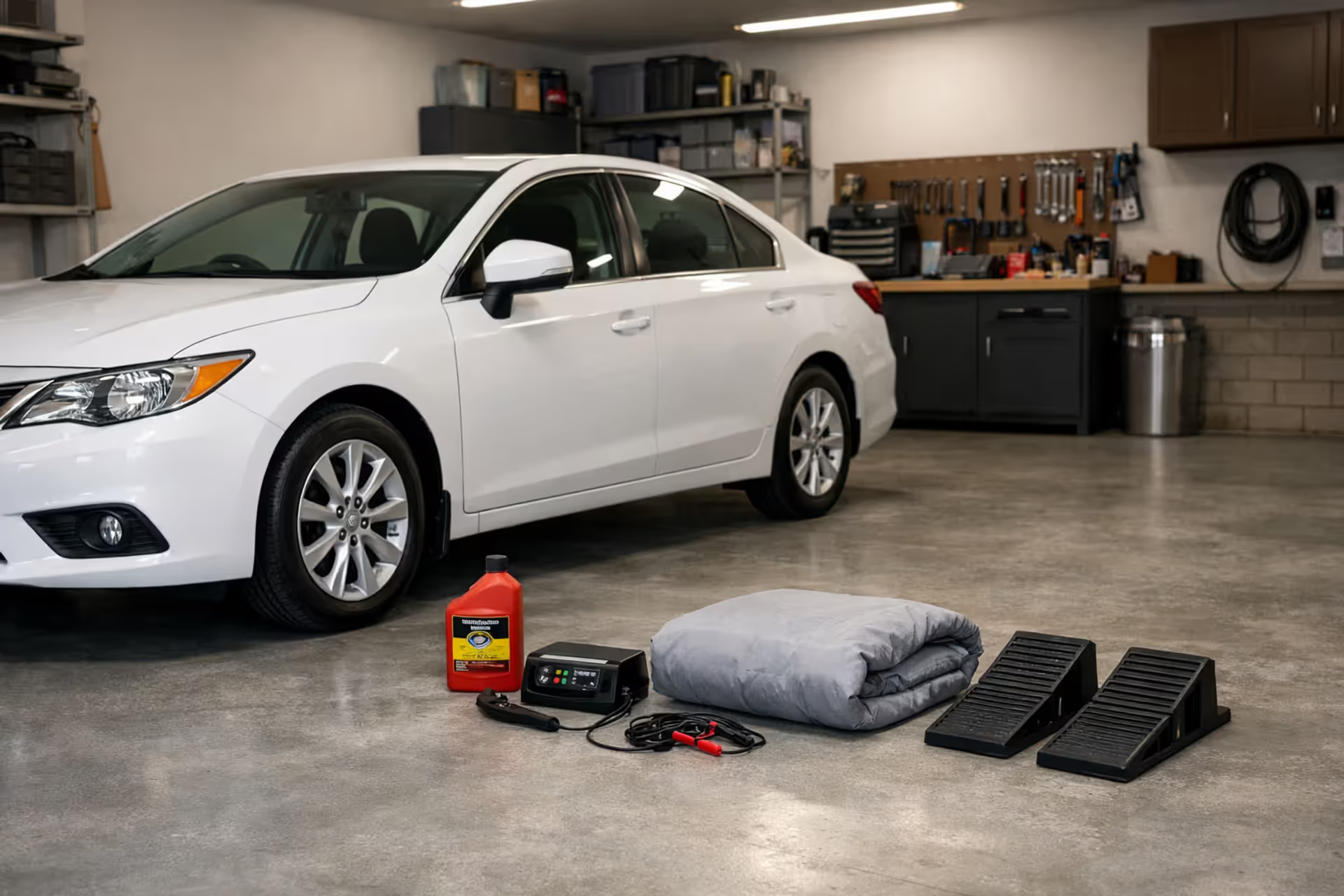
Car parked inside a clean home garage with fuel stabilizer, battery tender, car cover, and wheel chocks laid out on the floor for long-term storage preparation
How to Store Your Car Long Term Without Damaging It

Whether you're deploying overseas, spending winter in a warmer climate, or simply have a vehicle you won't drive for several months, proper storage makes the difference between finding your car ready to drive or facing expensive repairs. Storing a vehicle for weeks or months requires more than just parking it and walking away—inactivity causes unique problems that regular driving prevents.
How Long Is "Long-Term" Car Storage?
Storage duration determines how much preparation your vehicle needs. Short-term storage typically means two to four weeks. At this timeframe, you can get away with basic steps: a full tank of gas, proper tire pressure, and a clean interior. The battery might drain slightly, but most healthy batteries handle this period without issue.
Long-term storage begins around the one-month mark and extends to several months or even years. This is where long term ownership care becomes critical. After 30 days of sitting, gasoline begins oxidizing more rapidly, battery discharge accelerates, tire flat spots can become permanent, and seals start drying out. Fluids settle, moisture accumulates in unexpected places, and rodents discover your engine bay makes an excellent winter home.
The six-month threshold represents another inflection point. Beyond this, even well-prepared vehicles need more aggressive protection strategies. Classic car collectors storing vehicles for years use techniques that might seem excessive for a three-month storage period but become essential for longer durations.
Your preparation level should match your timeline. Planning to store a car for two months requires different steps than parking it for a year. Underestimating storage duration is a common mistake—people assume they'll drive the car "soon" but months pass, and preventable damage accumulates.
Pre-Storage Preparation: What to Do Before Parking
Vehicle storage preparation starts days before you park the car. Begin with a thorough wash and wax. This isn't about aesthetics—it's about protection. Road salt, bird droppings, and tree sap contain acids that etch paint over time. What seems like a minor spot becomes a permanent blemish after months of contact. Clean the undercarriage too, especially if you've driven on salted winter roads.
Detail the interior completely. Remove all food items, even that forgotten granola bar in the glove box. Vacuum thoroughly, including under seats. Food residue and crumbs attract mice and insects. Empty the trunk entirely—you'd be surprised how many people store vehicles with cases of water bottles or emergency supplies that become rodent attractants.
Inspect every fluid reservoir in your vehicle and bring levels to their maximum marks. Your coolant reservoir, for instance, should reach the "full" line to minimize air pockets where corrosion forms. The brake fluid reservoir needs proper levels to prevent moisture absorption in the hydraulic lines. Don't forget windshield washer solution—even though you won't use it, an empty reservoir can crack in freezing temperatures. Power steering systems benefit from complete fluid levels that prevent air from entering the system. This comprehensive approach to fluid maintenance creates a protective barrier throughout your vehicle's systems.
Document your vehicle's condition with photos from multiple angles, including close-ups of any existing damage. This helps with insurance claims if something happens during storage and provides a reference point when you return. Note the odometer reading and date.
Fuel System: Fill or Drain?
The fuel tank debate confuses many car owners. The correct answer: fill the tank completely and add fuel stabilizer. Filling your tank completely serves a specific purpose: reducing the interior surface area exposed to air prevents moisture accumulation. When temperatures drop overnight and rise during the day, humid air inside a partially empty tank condenses water droplets on the metal walls, which eventually mix with your gasoline.
Empty or half-full tanks allow humid air to enter as temperatures fluctuate. This air deposits moisture on tank walls, which drips into the fuel. After several months, you might have enough water to cause starting problems or injector damage.
Add fuel stabilizer before filling the tank, then drive the car for 10-15 minutes to circulate treated fuel throughout the system. Stabilizer prevents gasoline from breaking down and forming varnish deposits in carburetors, injectors, and fuel lines. Modern ethanol-blended fuels start breaking down and separating in as little as four weeks, creating gummy residues that clog precision fuel delivery components.
Some mechanics recommend draining fuel for multi-year storage, but this approach requires careful execution and isn't practical for most situations. For storage periods under a year, the fill-and-stabilize method works better.
Oil Change Timing Before Storage
Schedule an oil and filter change immediately before storing your vehicle, regardless of whether your maintenance interval suggests it's due. Here's why this matters: as your engine runs, combustion creates acidic compounds and moisture that contaminate the lubricant. These contaminants don't disappear when you park the car—they continue attacking metal surfaces, bearing materials, and gasket compounds throughout the storage period. What would normally flush out during regular operation instead sits in contact with expensive engine components for months.
New, clean lubricant creates a protective film that resists corrosion formation. The anti-wear additives and detergents in fresh oil remain active, continuing to protect internal surfaces even when the engine isn't running. Think of it as applying a preservative coating from the inside out.
For storage exceeding six months, plan to change the oil again before driving, regardless of the oil's age. Oil degrades from time alone, and you want optimal lubrication when starting an engine that hasn't run in months.
The best time to maintain your car is before it needs repair. Prevention is the foundation of preservation
— Jay Leno
Protecting Critical Components During Extended Storage
Certain vehicle systems suffer disproportionately from inactivity. Focusing protection efforts on these vulnerable components prevents the most common and expensive storage-related damage.
Battery Maintenance and Trickle Chargers
Car batteries self-discharge even when disconnected, losing about 1% of charge daily. After a month, a fully charged battery might drop below the threshold needed to start your engine. After three months, it could be completely dead. Deep discharge permanently damages battery plates, reducing capacity and lifespan.
Following proper battery protection storage tips starts with understanding your options. The simplest approach: disconnect the negative battery cable. This prevents parasitic drain from vehicle electronics like alarm systems and computers. However, disconnecting the battery causes some vehicles to lose radio presets, seat memory, and other settings. Some modern cars throw error codes or require dealer resets after battery disconnection.
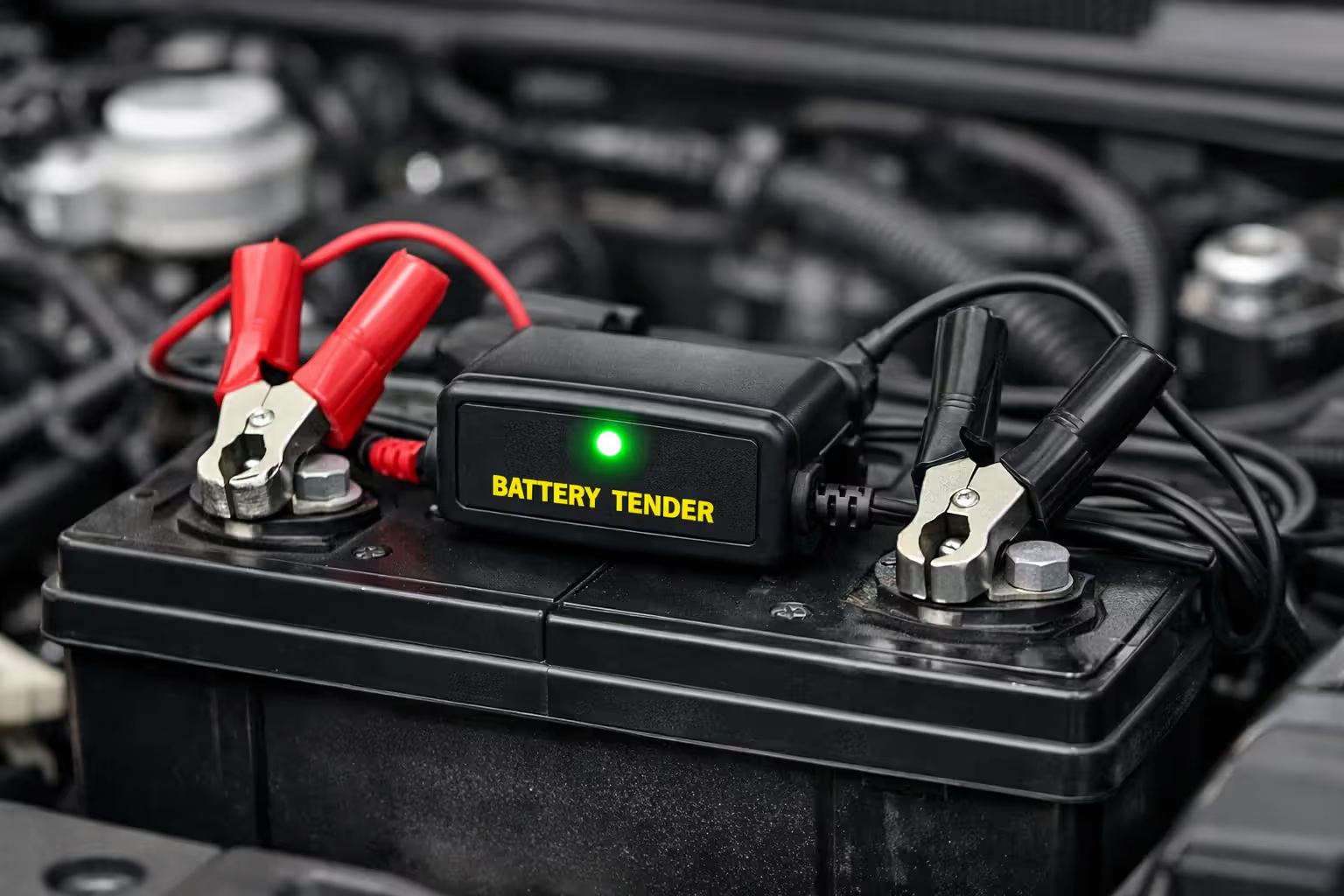
A better solution for most situations: use a battery tender or trickle charger. Unlike traditional chargers that continuously pump current regardless of battery state, these smart devices monitor voltage levels and automatically switch to float mode once the battery reaches full capacity, preventing the overcharging that damages plates and boils away electrolyte.
Install the tender according to instructions, ensuring proper polarity. Some people connect tenders to the battery directly; others use the cigarette lighter port if the circuit remains powered with the key off. Verify your specific vehicle's configuration.
For vehicles stored without electricity access, disconnect the battery and store it indoors in a cool, dry location. Use a multimeter to measure voltage every 30 days, and connect a standard charger if readings fall to 12.4 volts or lower. Batteries self-discharge faster in hot conditions—a battery in a 90°F garage drains nearly twice as fast as one stored at 60°F.
Author: Kevin Thornton;
Source: shafer-motorsports.com
Preventing Tire Flat Spots and Sidewall Damage
Tires develop flat spots when a vehicle sits in one position for extended periods. The weight of the car compresses the tire's contact patch, and the rubber's memory begins conforming to this flattened shape. Short-term flat spots disappear after driving a few miles as the tire warms and flexes. Long-term flat spots become permanent, causing vibration and requiring tire replacement.
Tire flat spot prevention starts with proper inflation. Inflate tires to the maximum pressure listed on the sidewall—typically 50-51 PSI for passenger cars, higher than the normal operating pressure. This higher pressure reduces contact patch deformation. Remember to adjust back to normal pressure before driving.
The ideal solution: remove the wheels and store the vehicle on jack stands. This eliminates tire contact entirely. Position jack stands under the vehicle's designated lift points—consult your owner's manual. Never use the jack stands alone; place blocks under the frame as backup safety supports.
If jack stands aren't practical, move the car slightly every few weeks, rolling it forward or backward about a foot. This changes the contact patch position, preventing any single spot from deforming permanently. However, this requires access to the vehicle and adds complexity to your storage routine.
Tire sidewalls also deteriorate during storage. Rubber compounds contain oils that migrate to the surface and evaporate, causing dry rot and cracking. UV exposure accelerates this process. If storing outdoors, use tire covers or position the vehicle to minimize direct sunlight on tires. Indoor storage naturally protects against UV damage.
Fuel Stabilizers: Why and How to Use Them
Modern gasoline contains ethanol, typically 10% in regular pump gas. Ethanol absorbs water from humid air, and this water separates from gasoline over time, settling to the tank bottom. Water causes rust in steel tanks and damages fuel pumps and injectors. Ethanol itself degrades faster than pure gasoline, forming gums and varnishes.
Fuel stabilization storage requires adding the correct stabilizer product at the proper ratio. Popular brands include STA-BIL and Star Tron. Follow label instructions carefully—typically one ounce treats 2.5 gallons of fuel. Add stabilizer before filling the tank so the incoming fuel mixes it thoroughly.
After adding stabilizer, drive the vehicle for 10-15 minutes. This circulates treated fuel through the entire system: fuel lines, rail, injectors, and any fuel remaining in the carburetor bowl if you have an older vehicle. Without this step, untreated fuel in the system still degrades.
Stabilizer effectiveness has limits. Most products protect fuel for 12-24 months. Beyond that, even stabilized gasoline degrades. For multi-year storage, consider draining the tank or plan to siphon out old fuel and refill with fresh gas before starting the engine.
"The most expensive storage damage I see comes from neglected fuel systems and dead batteries. People underestimate how quickly gasoline goes bad and how thoroughly it gums up injectors and fuel pumps. A $15 bottle of stabilizer prevents a $1,200 fuel system cleaning or replacement." — Marcus Chen, Master Technician, Heritage Auto Restoration, Austin, TX
— Kevin Thornton
Choosing the Right Storage Environment for Your Vehicle
Where you store your vehicle matters as much as how you prepare it. The storage environment vehicle experiences determines exposure to temperature swings, humidity, UV radiation, theft risk, and pest access.
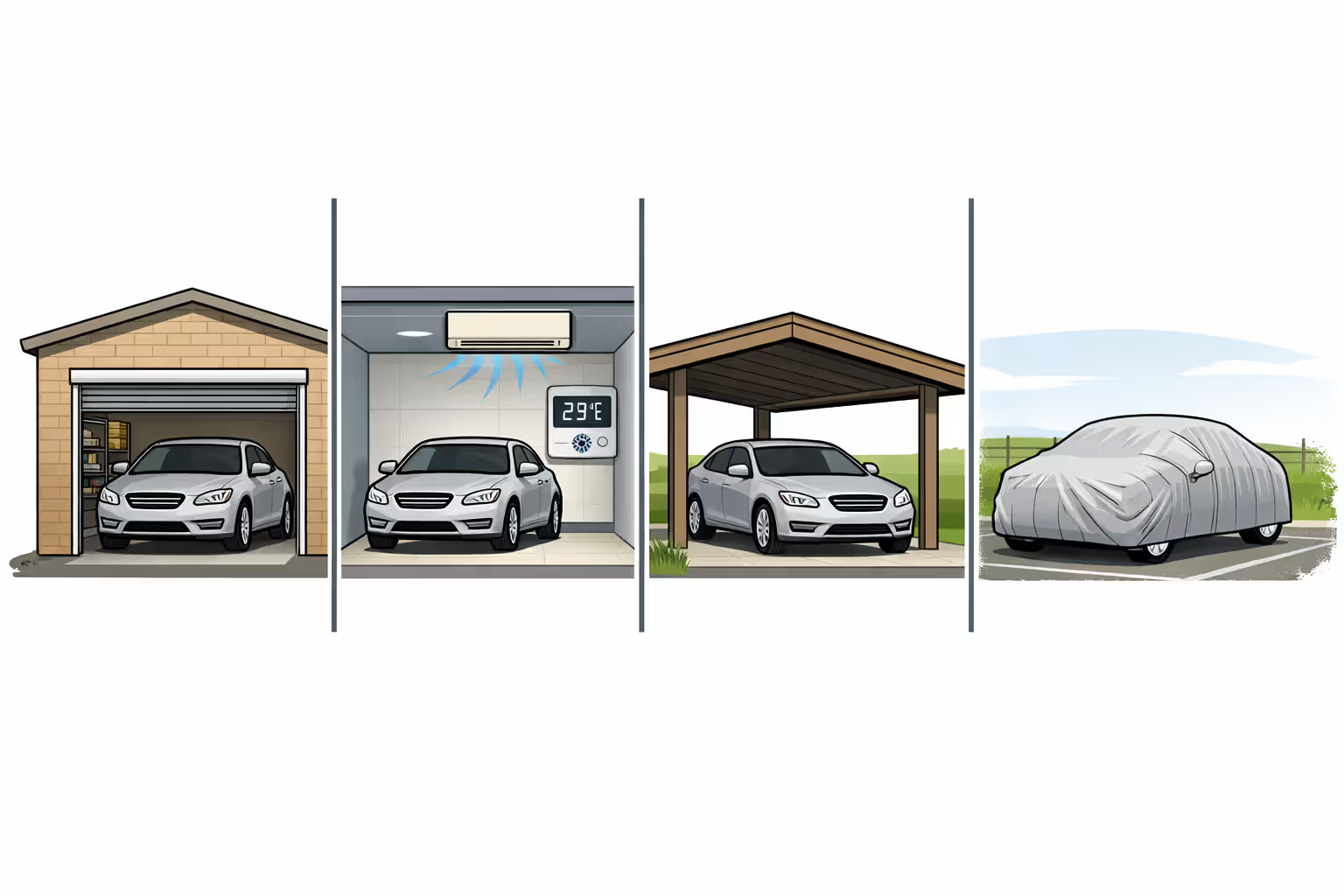
Indoor storage in a climate-controlled facility offers the best protection. Stable temperatures prevent condensation cycles that deposit moisture on metal surfaces. Humidity control stops rust formation. Protection from UV rays prevents paint fading and interior deterioration. Security systems deter theft and vandalism.
The downside? Cost. Climate-controlled storage facilities charge $100-$400 monthly depending on location and amenities. For valuable, classic, or collectible vehicles, this investment makes sense. For a daily driver stored temporarily, it might exceed your budget.
Author: Kevin Thornton;
Source: shafer-motorsports.com
A home garage provides excellent protection at no additional cost. It shields against weather, UV exposure, and reduces theft risk. However, most garages aren't climate-controlled. Temperature and humidity fluctuate with outdoor conditions. In humid climates, garages trap moisture, potentially accelerating rust. Ensure adequate ventilation—crack a window or door slightly to allow air circulation. Don't run a dehumidifier unless the garage is well-sealed; otherwise, you're just dehumidifying the outdoors.
Outdoor covered storage—a carport or portable shelter—protects against precipitation and direct sunlight but offers no climate control or security. It's better than leaving a car completely exposed but significantly worse than indoor storage. Use a quality car cover for additional protection, but ensure the cover is breathable. Non-breathable covers trap moisture underneath, creating a greenhouse effect that promotes rust.
Outdoor uncovered storage is the last resort. If this is your only option, invest in a high-quality, multi-layer car cover designed for outdoor use. Position the vehicle away from trees (sap, falling branches, and bird droppings cause damage) and on level ground. Check the cover regularly to ensure it hasn't blown off or collected water pools.
Consider accessibility needs. If you might need the vehicle occasionally, home storage or a nearby facility makes sense. Distant storage saves money but complicates access. Balance cost against convenience and protection level based on your vehicle's value and storage duration.
Common Car Storage Mistakes That Cost Owners Money
Even well-intentioned owners make errors that cause preventable damage when storing car long term. Understanding these pitfalls helps you avoid expensive lessons.
Engaging the parking brake for long-term storage is a frequent mistake. Brake pads can fuse to rotors after months of constant contact, especially in humid environments. Instead, use wheel chocks or leave the vehicle in gear (manual transmission) or Park (automatic). If your storage location requires the parking brake for safety, plan to release and reset it monthly.
Inadequate pest prevention leads to shocking damage. Mice and rats view your engine bay as prime real estate—warm, sheltered, and often filled with convenient nesting materials. They chew wiring insulation, air filters, and upholstery. A single rodent family can cause thousands in damage.
Prevent pest intrusion by blocking entry points. Stuff steel wool (not copper, which rodents chew through) in the exhaust pipe and air intake—just remember to remove it before starting the engine. Place dryer sheets, peppermint oil-soaked cotton balls, or commercial rodent repellents throughout the interior and engine bay. Check and replace these monthly as their effectiveness fades. Some people place snap traps around (not inside) the vehicle as an early warning system.
Using the wrong car cover causes more harm than no cover. Cheap covers made from non-breathable materials trap moisture against paint, creating ideal conditions for rust and mildew. They also scratch paint as wind moves the cover. Invest in a quality, breathable cover specifically sized for your vehicle. Indoor covers differ from outdoor covers—don't use an indoor cover outside, as it won't handle weather exposure.
Neglecting insurance adjustments wastes money. Many insurance companies offer reduced rates for stored vehicles since they're not driven. Some policies provide "comprehensive only" coverage that protects against theft, vandalism, fire, and weather damage while eliminating liability and collision coverage you don't need for a parked car. Contact your insurer before storage to explore options. Never cancel insurance entirely—an uninsured vehicle damaged by fire or theft leaves you with total loss.
Skipping documentation creates problems. Take dated photos showing the vehicle's condition and your storage setup. Record the odometer reading. Document what maintenance you performed. If something goes wrong—storage facility damage, insurance claim, or you simply forget what you did—this documentation proves invaluable.
Take care of your car in the garage, and the car will take care of you on the road
— Mate Rimac
Monthly Maintenance Checklist for Stored Vehicles
If you can access your stored vehicle periodically, monthly check-ins catch developing problems before they become serious. This ongoing long term ownership care extends your vehicle's storage life.
Start the engine and let it run for 10-15 minutes. This circulates oil, charges the battery, and prevents seals from drying out completely. However, starting without driving creates its own issues—the engine never reaches full operating temperature, so combustion moisture doesn't evaporate from the oil. If possible, drive the car a few miles to fully warm everything. If you can't drive it, accept that monthly starts are a compromise with trade-offs.
Author: Kevin Thornton;
Source: shafer-motorsports.com
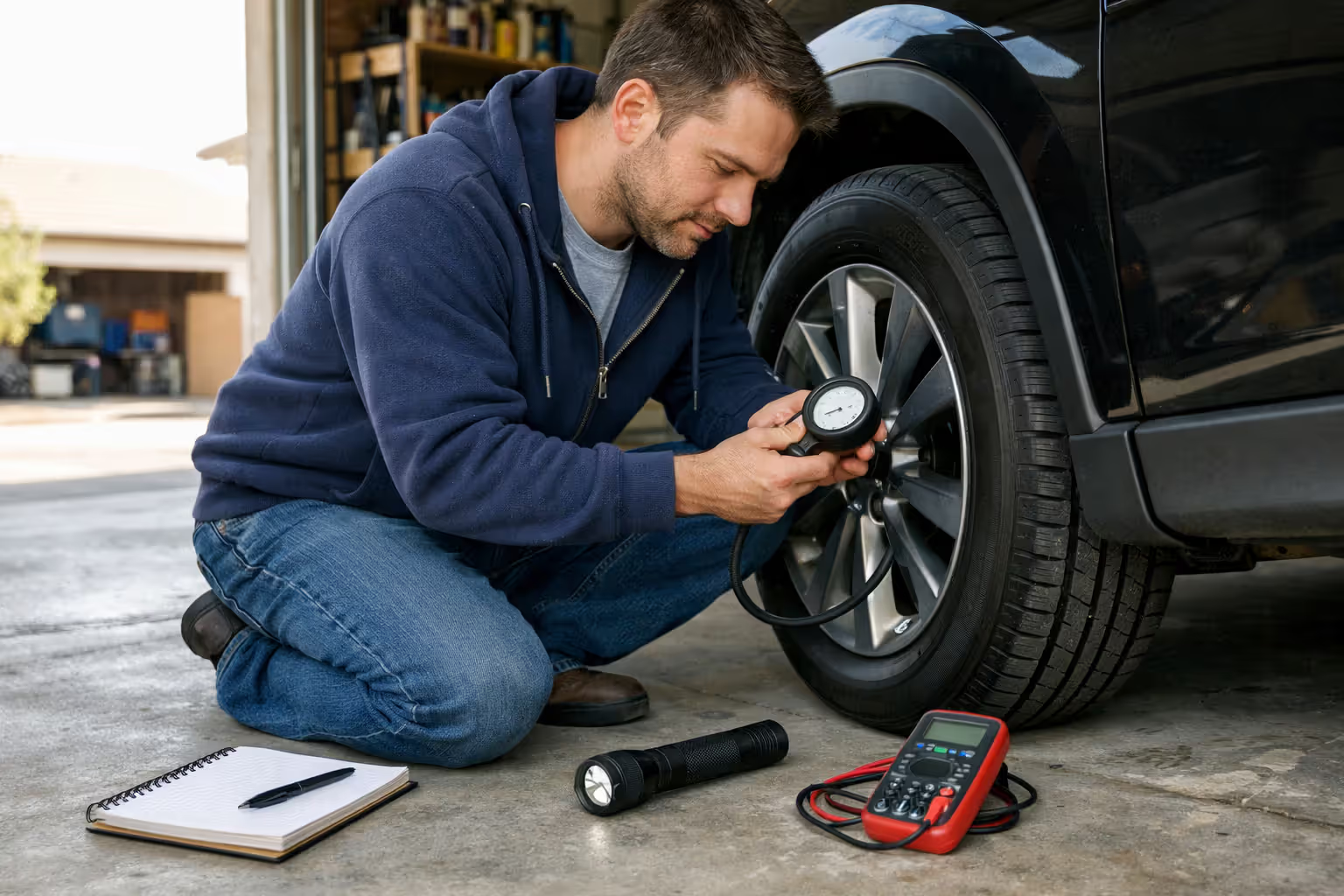
Examine tire pressure levels. Tires lose approximately 1 PSI monthly through normal permeation. Add air as needed to maintain the elevated storage pressure. Inspect tires for visible damage, cracking, or unusual wear patterns.
Inspect for leaks. Look under the vehicle for fluid spots. Check fluid levels and top off as needed. New leaks during storage often indicate deteriorating seals or gaskets.
Examine the battery. If using a tender, verify it's functioning—check the indicator lights. Without a tender, measure voltage with a multimeter and connect a charger if readings show 12.4 volts or less.
Look for pest evidence. Check for droppings, nesting materials, or chewed items. Inspect wiring and hoses for gnaw marks. Replace deterrents like dryer sheets or peppermint sachets.
Move the vehicle slightly if it's not on jack stands. Roll it forward or backward about a foot to change the tire contact patch. This prevents flat spot formation.
Check the cover if you're using one. Ensure it's secure, hasn't torn, and isn't collecting water. Adjust or dry as needed.
Inspect the storage area itself. Look for water intrusion, especially after heavy rain. Check that doors and windows remain secure. Verify climate control systems (if applicable) are functioning.
These monthly checks take 20-30 minutes but dramatically reduce the risk of discovering major problems when you're ready to drive again.
Frequently Asked Questions About Long-Term Car Storage
Protecting Your Investment Through Proper Storage
Storing a vehicle properly requires upfront effort and attention to detail, but the alternative—discovering expensive damage when you return—makes preparation worthwhile. The steps outlined here prevent the most common storage-related problems: dead batteries, flat-spotted tires, degraded fuel systems, rust, and pest damage.
Match your preparation intensity to your storage duration. A two-month absence requires less aggressive measures than a year-long storage period. Focus protection efforts on the most vulnerable systems: battery, tires, fuel, and access points for pests.
Choose the best storage environment your budget allows, understanding that climate control provides significant benefits for valuable vehicles or extended storage. Even if you're limited to outdoor storage, proper covering and preparation minimize damage.
If you can access your vehicle during storage, monthly check-ins catch developing problems early. If access isn't practical, thorough preparation before storage becomes even more critical.
The money and time invested in proper storage pays dividends when you return to find your vehicle ready to drive rather than facing repair bills that exceed what storage preparation would have cost. Whether you're storing a daily driver temporarily or preserving a classic car long-term, these practices protect your investment and ensure your vehicle emerges from storage in the condition you left it.
Related Stories

Read more
Read more



The content on Auto Insights is provided for general informational and educational purposes only. It is intended to offer guidance on car buying, vehicle ownership, finance, insurance, EVs, maintenance, accessories, reviews, and related topics, and should not be considered professional financial, legal, insurance, mechanical, or investment advice.
All information, tools, calculators, comparisons, and recommendations presented on this website are for general guidance only. Individual financial situations, driving habits, vehicle conditions, insurance policies, and market factors vary, and actual results or costs may differ from estimates provided.
Auto Insights makes no guarantees regarding accuracy, completeness, or current applicability of the information, as automotive markets, regulations, incentives, interest rates, and vehicle specifications may change over time.