
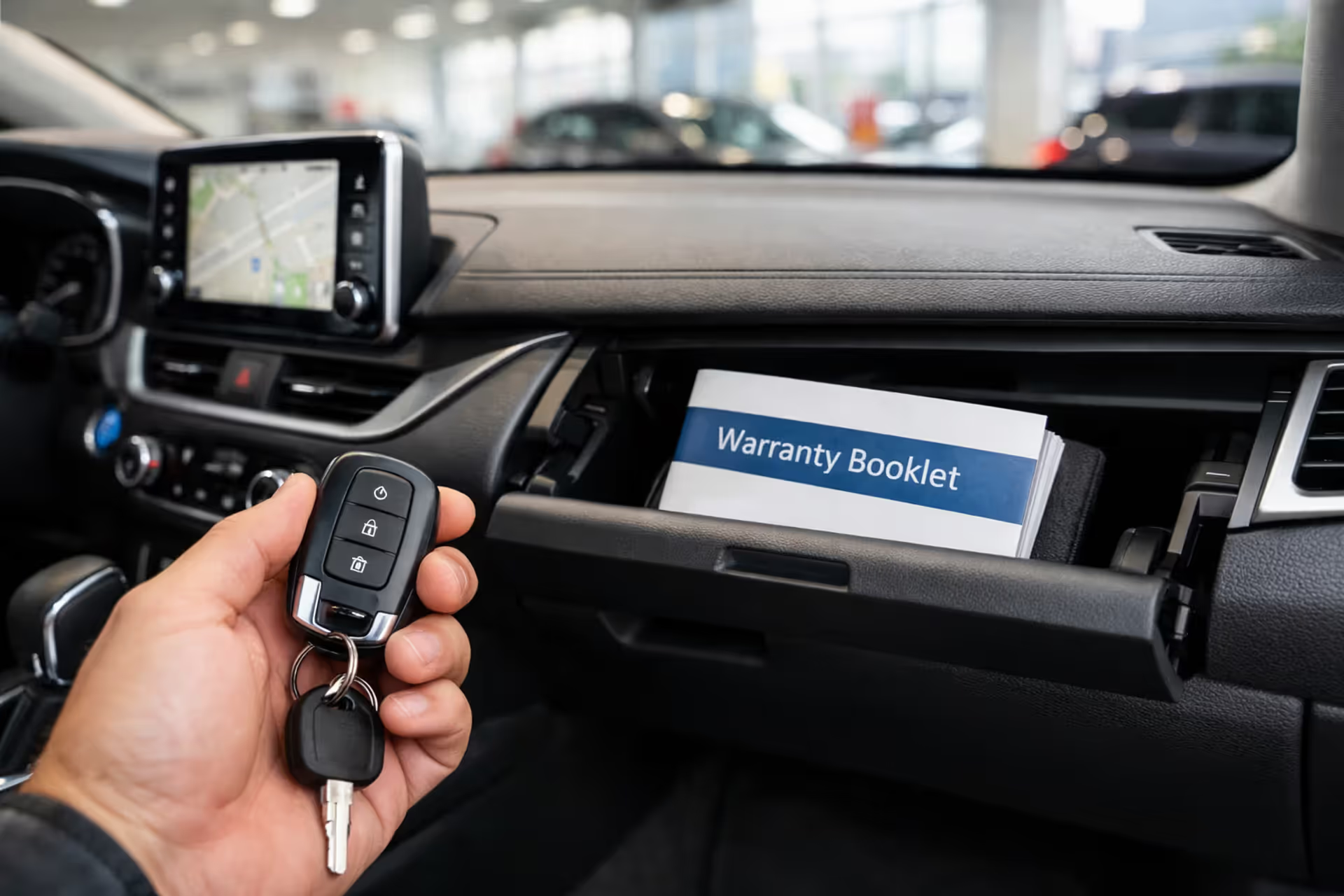
New car dashboard with warranty booklet visible in open glove compartment and car keys in driver hand at dealership
Understanding Car Warranties: A Complete Guide to Vehicle Coverage and Protection

Mile 36,400. That's when my friend Sarah's infotainment screen died—completely black, no response, nothing. The service desk pulled up her records and gave her the number: twelve hundred dollars for replacement parts and labor. Her comprehensive warranty? Expired at 36,000 miles, about three weeks earlier.
Sarah was positive she'd bought complete protection. The finance guy had used "bumper-to-bumper" at least five times during signing. But digging through that warranty packet she'd stuffed in the center console revealed something different: her electronics carried a three-year cap while powertrain components stayed covered for two more years. Nobody had mentioned she was juggling three separate warranty agreements with staggered end dates.
Variations of Sarah's story happen in service bays across America every single day. We initial the purchase documents, shove the warranty booklet somewhere in the car, and figure we're covered until the repair bill arrives. That's usually when we discover "comprehensive" carried a different definition than we assumed. The parts we thought were definitely included—yes, including actual bumpers—frequently aren't protected. And powertrain coverage? It leaves out roughly half the components that make powertrains function.
What we believe our warranties cover versus what automakers actually pay for creates a multi-billion-dollar gap annually. Most of those dollars fund repairs that should've been free—if we'd grasped the limitations before needing them. Here's what your warranty paperwork actually means.
What Types of Car Warranties Protect Your Vehicle?
Drive home in a new vehicle and you're carrying multiple warranty agreements simultaneously. Different components get different protection timelines. Your air conditioning might have three years of coverage, the engine block gets five, rust protection lasts ten years—all active at once with completely separate terms.
Factory vs. Extended Warranties
Factory coverage arrives with your purchase, baked into the vehicle price. You don't pay separately. No extra forms beyond standard delivery paperwork. The automaker backs it directly, so their franchise locations honor claims without pushback. Coverage begins the second you complete the purchase—not when you register plates or reach your driveway.
Most brands use the 3/36 plus 5/60 structure: three years or 36,000 miles of comprehensive protection alongside five years or 60,000 miles protecting the powertrain. Premium manufacturers compete by stretching these numbers. Genesis offers ten years or 100,000 miles on powertrains. Jaguar matches them. These extended guarantees exist because manufacturers need to counter reliability concerns.
Extended plans work differently—you're purchasing insurance. Could originate from the manufacturer (factory extensions) or third-party companies. Dealers mark up these plans aggressively. That $4,200 service contract your finance manager pushed during closing? Online research finds the same coverage for half that price.
Third-party plans carry real risk. The company must survive five to ten years to pay your claims. Some providers maintain solid reputations and process claims smoothly. Others fight every repair or vanish completely. Before purchasing extended protection, check your state insurance commissioner's complaint records and examine their BBB history.
These contracts typically charge deductibles—$50 to $200 each visit. Factory warranties never charge deductibles. Read every page thoroughly. Some contracts cap annual claim totals, require specific repair facilities, or exclude components you'd naturally expect covered.

Author: Kevin Thornton;
Source: shafer-motorsports.com
Certified Pre-Owned Coverage Differences
CPO programs extend manufacturer warranties to qualifying used vehicles passing thorough inspections. Vehicles typically need under six years age with fewer than 75,000 miles and clean damage reports.
Brands diverge dramatically here. Toyota adds merely twelve months of comprehensive coverage beyond remaining factory protection. Honda flips the script—they extend powertrain coverage to seven years or 100,000 miles from original retail date, regardless of elapsed time. Purchase a three-year-old Accord showing 40,000 miles and you've secured four additional years of powertrain protection.
Mercedes CPO warranties practically duplicate new-car protection, including roadside assistance and trip interruption reimbursement. This comprehensive approach costs upfront—CPO vehicles command $2,000 to $4,000 premiums versus identical non-certified examples.
The genuine advantage? Manufacturer backing. CPO warranties flow directly from automakers, not third parties. Claim denials decrease substantially. Every franchise dealer accepts the coverage without hesitation.
Bumper-to-Bumper vs. Powertrain: Breaking Down Coverage Differences
"Bumper-to-bumper" sounds comprehensive until you realize it excludes brake pads, tires, wiper blades, and often the actual bumpers when they're damaged. Understanding what each coverage type truly protects requires reading past marketing language into actual contract terms.
| Coverage Type | What Gets Protected | Duration | Components Included | Always Excluded | Transfers to Next Owner? |
| Comprehensive (Bumper-to-Bumper) | Factory-installed components and systems | Typically 36 months/36,000 miles | Electronics, climate control, entertainment systems, power accessories, suspension parts | Brake pads/rotors, tires, wiper blades, filters, fluids, routine maintenance, cosmetic issues | Yes, complete transfer |
| Powertrain | Components creating and transmitting power to wheels | 60 months/60,000 miles up to 120 months/100,000 miles | Engine block/internals, cylinder heads, transmission case/internals, driveshafts, axles, differentials | Water pumps (often), fuel pumps, starters, alternators, most seals/gaskets | Transfers but some brands reduce terms for subsequent owners |
| Corrosion/Perforation | Sheet metal rust penetration only | 60 to 144 months/unlimited miles | Body panels with interior-to-exterior rust holes, frame/unibody structural corrosion | Surface rust, paint blistering, stone chip oxidation, accident-related corrosion | Usually transfers completely |
Bumper to bumper coverage meaning extends to nearly everything the factory installed—except items classified as maintenance or wear components. Power window motor fails at 28,000 miles? Covered. Window switch stops working from repeated use? The dealer might call that wear and deny your claim. The line between manufacturing defect and normal deterioration gets fuzzy, and service writers make judgment calls that don't always benefit you.
Powertrain warranty basics focus exclusively on expensive components: engine, transmission, and parts delivering power to wheels. These systems run $4,000 to $12,000 for rebuilds or replacements, making extended coverage genuinely valuable. Here's the catch—many essential components don't qualify as "powertrain" under warranty definitions. Your water pump circulates coolant through the engine but gets excluded from powertrain coverage by several manufacturers. Starter motor? Not powertrain. Alternator? Also excluded. You'd naturally assume components essential to powertrain operation would qualify, but warranty writers disagree.
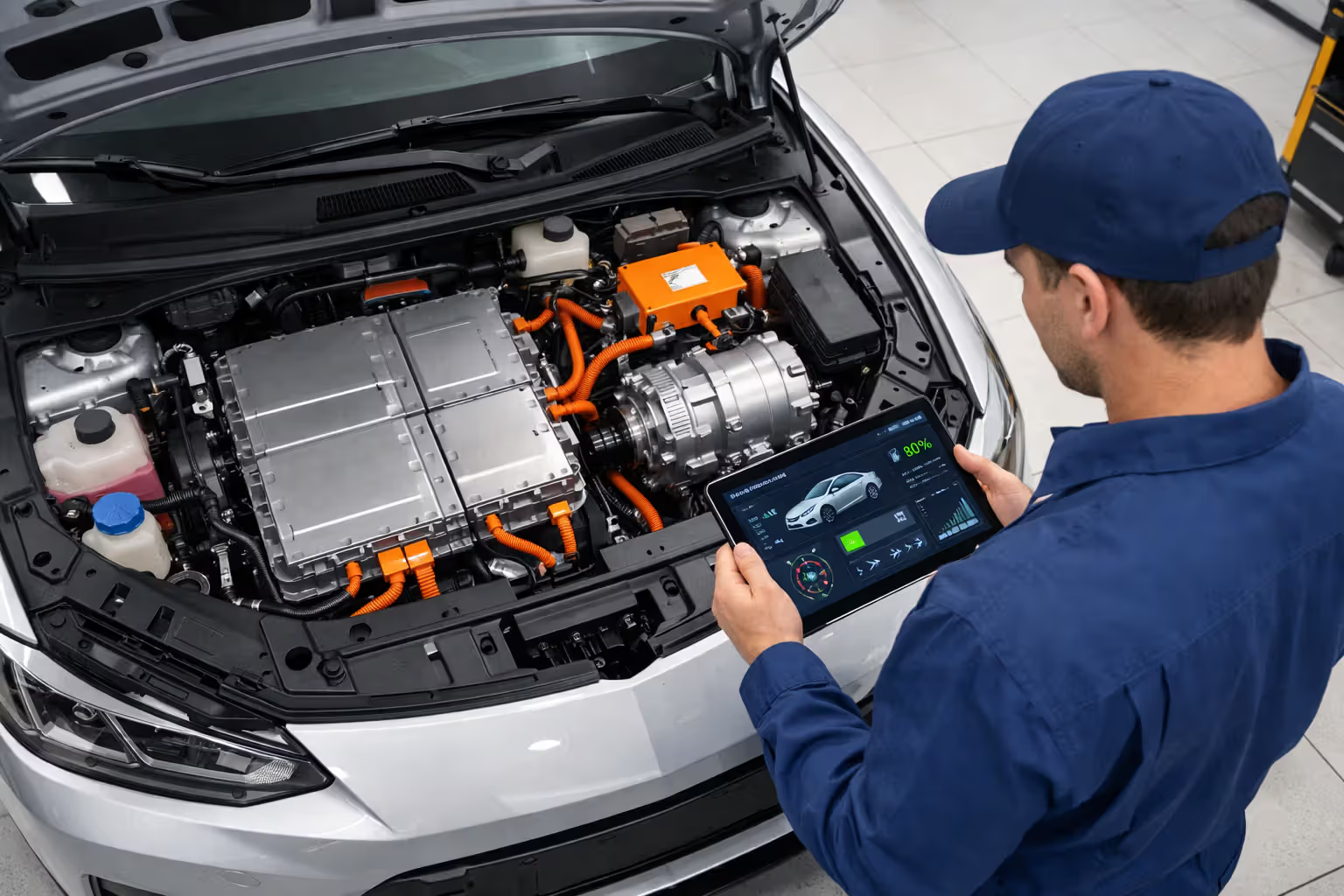
Electric vehicles introduced dedicated coverage categories. Battery packs receive separate warranties, typically eight years or 100,000 miles, with specific capacity retention guarantees. Most manufacturers promise batteries won't degrade below 70% original capacity during coverage. Drop below that threshold and you get a replacement pack worth $8,000 to $15,000 at no charge. Hit 69% degradation one month post-expiration? You're funding the replacement yourself.
Author: Kevin Thornton;
Source: shafer-motorsports.com
What Your Warranty Won't Cover: Common Exclusions That Catch Owners Off Guard
Flip to your warranty booklet's exclusions section—usually three to four dense pages—and reality emerges. Automakers design warranties addressing manufacturing flaws and premature failures, not predictable deterioration from regular use.
Wear-and-Tear Items Always Excluded
Brake pads wear during every stop. That's not defective—that's friction working as designed. Tires lose tread with accumulated miles. Wiper blades crack under UV exposure and streak your windshield. Every consumable part falls outside warranty boundaries because they're performing exactly as engineered—wearing through normal operation.
Additional exclusions include:
- Engine air filters and cabin filters
- Spark plugs, ignition coils, plug wires
- Clutch discs and pressure plates in manual transmissions
- Struts and shocks after initial break-in
- All belts (serpentine, timing, accessory drive)
- Light bulbs except complete HID/LED assemblies
- Battery (typically carries separate 2-3 year coverage)
Problems emerge when parts fail much sooner than expected. Clutch dies at 22,000 miles? The dealer might approve warranty coverage for defective components. Same clutch fails at 48,000 miles? They'll call it normal wear even if you barely touch the pedal. These gray-area decisions fall to service advisors, whose training emphasizes controlling manufacturer costs over protecting customer budgets.
Interior degradation represents another exclusion zone. Seat fabric fading, leather cracking, plastic trim scratching—all cosmetic concerns falling outside coverage unless you prove a manufacturing flaw accelerated deterioration. Meanwhile, the heated seat element that stops warming your backside? That's electrical system failure covered under comprehensive terms.
Maintenance vs. Repair: Why the Distinction Matters
Your warranty requires servicing your vehicle per the manufacturer's published schedule. Skip services or use incorrect fluids and you've potentially voided coverage for related systems. This creates documentation requirements most owners underestimate until facing rejection.
Engine seizes at 44,000 miles and you can't produce oil change receipts? Denied—even when failure clearly resulted from defective piston rings. The manufacturer claims you failed maintaining proper lubrication, making failure your responsibility. Whether you actually performed oil changes becomes irrelevant without documentation.
The flip side: routine servicing costs money during warranty periods. Oil changes, tire rotations, filter replacements, fluid exchanges—all your financial responsibility. Some manufacturers bundle complimentary maintenance for two to three years as purchase incentives, but that's separate from warranty coverage itself.
Confusion intensifies when maintenance neglect triggers component failure. Skip coolant flushes and your water pump fails from contaminated coolant? Denied—warranties exclude failures from poor maintenance. But when your water pump fails from a defective seal that subsequently contaminates your coolant system, complete repairs should be covered including coolant service.
Bottom line: treat every oil change receipt like it's worth $5,000. Because that's what engine replacements cost, and that receipt might prevent you from funding one.
The bitterness of poor quality remains long after the sweetness of low price is forgotten
— Benjamin Franklin
How Long Does Your Coverage Actually Last? Warranty Timelines Decoded
Every warranty follows both time limits and mileage caps. Whichever threshold you cross first terminates coverage—no extensions, no exceptions. Understanding warranty timeline vehicles prevents discovering your protection expired last month.
| Vehicle Type | Basic Comprehensive | Powertrain | Battery (EVs/Hybrids) | CPO Added Terms |
| Mainstream Brands (Toyota, Honda, Ford, Chevy, Nissan) | 36 months/36,000 miles | 60 months/60,000 miles | 96 months/100,000 miles | 12-24 months added or powertrain extended to 84 months/100,000 miles |
| Premium Brands (BMW, Mercedes, Audi, Lexus) | 48-50 months/50,000 miles | Matches comprehensive | 96 months/100,000 miles | 12-24 month extensions typical |
| Warranty Leaders (Hyundai, Kia, Genesis, Mitsubishi) | 60 months/60,000 miles | 120 months/100,000 miles | 120 months/100,000 miles | Reduces to 60 months/60,000 miles for later owners |
| EV Specialists (Tesla, Rivian, Lucid) | 48-50 months/50,000 miles | Not applicable | 96-120 months/150,000-175,000 miles | Rarely offered |
Coverage timers start from original retail delivery date—not your purchase date when buying used. Purchase a two-year-old car originally sold with three-year comprehensive coverage and you've got twelve months remaining maximum. The odometer reading when you buy doesn't reset anything.
High-mileage drivers exhaust limits faster than time allows. Drive 25,000 miles yearly and you'll consume 60,000-mile powertrain coverage in 2.4 years despite the five-year time allowance. Use your vehicle for rideshare, delivery routes, or sales work and you'll burn through mileage limits while time coverage remains—and face additional restrictions or complete exclusions for commercial applications.
Certain parts receive pro-rated coverage declining over time. Battery warranties often provide full replacement for failures in years one through three, then 50% coverage in years four and five, then nothing. Paint warranties sometimes operate identically—full coverage initially, then declining percentages as years accumulate.
Step-by-Step: Filing a Warranty Claim Without Getting Denied
How you navigate the claim process warranty determines whether your covered repair gets approved or rejected on technicalities. Mistakes cost thousands in repairs that should've been free.
Step 1: Document problems immediately when they appear. That subtle transmission shudder at 32,000 miles needs attention now, not at 67,000 miles when the transmission completely fails after powertrain coverage expired. Early documentation establishes symptoms appeared during your coverage window.
Step 2: Schedule service at a franchised dealer for your brand. Your trusted independent mechanic cannot touch warranty repairs, regardless of skill level or certifications. Factory and powertrain coverage require authorized dealer service departments exclusively. Extended warranties vary—some allow independent shops while others enforce restricted networks.
Step 3: Describe symptoms with precise detail. "It's making noise" gives technicians nothing useful. Try instead: "Grinding sound from front passenger wheel well when turning left between 15 and 30 mph, worse on cold starts, began three weeks ago." Specific descriptions help technicians replicate problems and diagnose accurately.
Step 4: Demand written diagnosis before authorizing repairs. The service department must document what's wrong, which parts need replacement, associated labor costs, and whether warranty covers the work. Get this estimate written before they touch your vehicle. Once work begins, you've authorized charges.
Step 5: Challenge denials with pointed questions. When they reject your claim, request the exact warranty manual section excluding your repair. Review that section yourself. Service advisors sometimes deny coverage incorrectly, and persistence combined with maintenance records often reverses initial rejections.

Author: Kevin Thornton;
Source: shafer-motorsports.com
Documentation You Must Keep
Your warranty protection equals your ability to prove proper maintenance. Create a dedicated file holding:
- Every service receipt showing date, mileage, and work performed
- All receipts showing correct oil viscosity and specification
- Tire rotation documentation per maintenance schedule
- Recall completion certificates
- Previous warranty repair invoices
- Photos or videos of problems when relevant
Self-maintenance demands extra diligence. Buy your own oil and filters? Keep those receipts plus a logbook noting dates and mileage for each service. Some manufacturers demand oil analysis proving correct specification if you self-maintain and later file powertrain claims.
For significant concerns, document everything before visiting the dealer. Record video of grinding noises. Photograph dashboard warning lights. Note when symptoms occur, under what driving conditions, and how frequently. This evidence proves problems existed during coverage windows even when your appointment falls after expiration.
Authorized vs. Independent Repair Shops
Factory warranties lock you into franchise dealers for all repairs—zero exceptions. That independent shop specializing in your vehicle brand, staffed with master technicians using modern diagnostic equipment? They cannot perform warranty work regardless of qualifications. This restriction lets manufacturers control repair processes and parts quality while eliminating your choices.
Extended warranties vary dramatically. Some accept any licensed repair facility. Others enforce approved networks requiring pre-authorization before work begins. Before purchasing extended coverage, verify which local shops participate. A plan forcing you to drive 90 miles to the nearest authorized facility becomes practically worthless.
Good news: federal consumer protection laws let you use independent shops for maintenance without voiding coverage. Getting oil changes at quick-lube operations or having your trusted mechanic rotate tires doesn't void warranties—provided they perform services correctly using proper fluids and parts. However, when that independent shop makes mistakes causing damage, warranties exclude resulting repairs. The mistake itself falls outside warranty boundaries.
"I've processed warranty claims for 18 years. The number one denial reason isn't questionable failures—it's missing maintenance documentation. Customer brings in a vehicle with obvious manufacturing defects. Engine failed at 39,000 miles from faulty piston rings. Should be covered, no question. Except they can't prove regular oil changes. Claim denied, customer pays $7,800. I watch this happen hundreds of times annually. Photograph every receipt. Maintain a dedicated folder. Your warranty means absolutely nothing without proof you maintained your vehicle."
— Marcus Chen, ASE Master Technician and Warranty Claims Administrator
— Kevin Thornton
5 Costly Mistakes That Void Your Warranty Coverage
Certain actions immediately terminate warranty protection, leaving you responsible for all repair expenses regardless of fault:
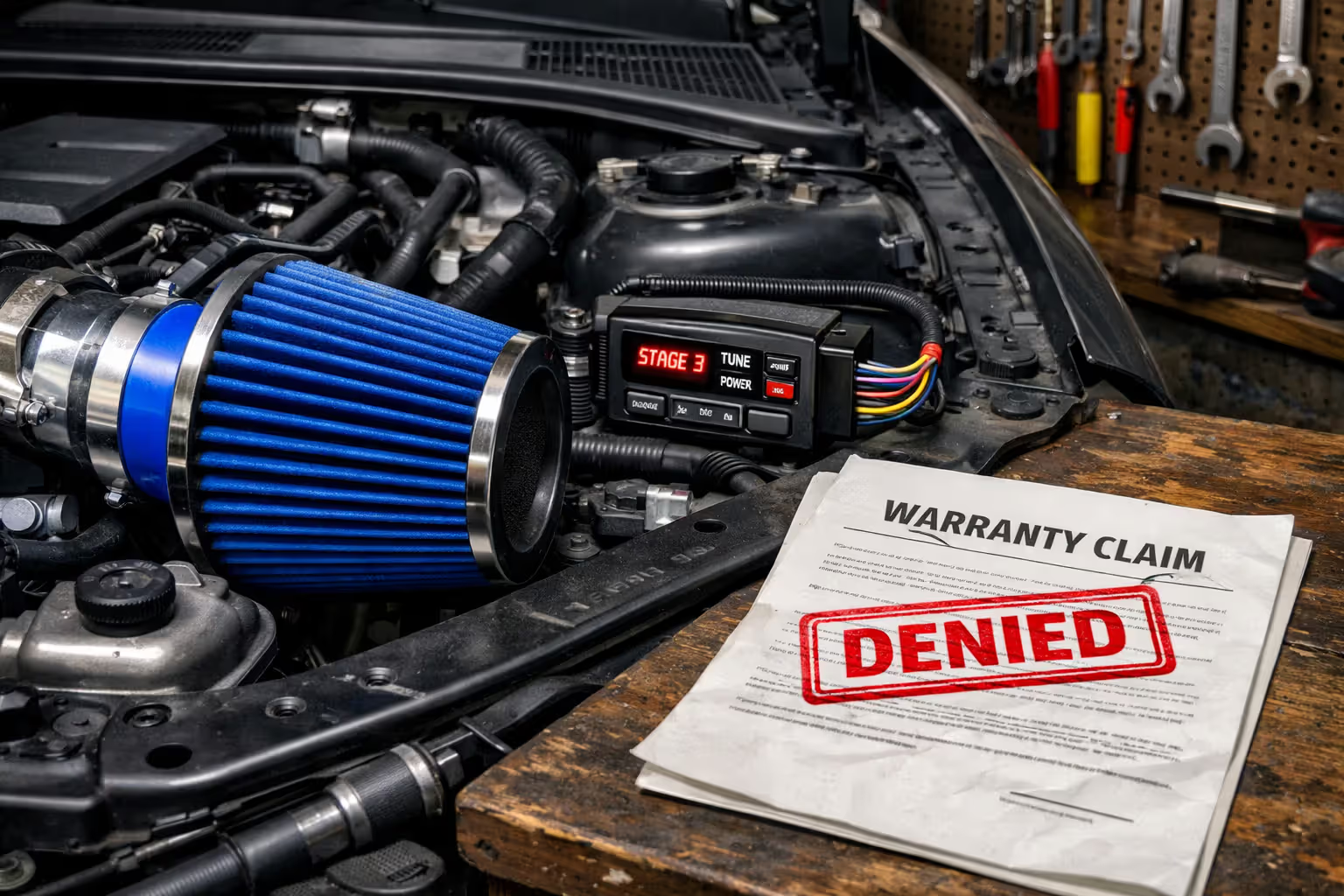
1. Installing aftermarket performance modifications to engine or exhaust. Bolt on a cold air intake, performance chip, or cat-back exhaust and manufacturers gain grounds to deny your entire powertrain coverage. Even when your modification clearly didn't cause the failure—say your transmission fails after installing an intake—they'll argue modifications stressed components or altered operating parameters. Some states offer protection against blanket denials, but you'll spend months fighting for coverage you should've received automatically.
Author: Kevin Thornton;
Source: shafer-motorsports.com
2. Using your vehicle for commercial purposes without commercial coverage. Standard warranties exclude delivery work, ridesharing, rental applications, and commercial use. Drive for Uber three nights weekly and your transmission fails? Manufacturers can access your vehicle's computer logs, identify high idle hours and usage patterns consistent with rideshare operation, and reject your claim. That "personal use only" clause in your warranty just cost you $6,000.
3. Ignoring recall notices and letting unrepaired defects damage additional components. When manufacturers issue recalls, federal law requires them to repair defects free of charge—and requires you to complete those repairs promptly. Ignore a recall and the unrepaired defect damages other parts? Coverage won't extend to damage resulting from the defect you chose not to fix. The recall repair itself costs nothing. Damage from avoiding it costs everything.
4. Letting unauthorized repair shops work on systems your warranty covers. Your neighbor offers to fix that check engine light by swapping the oxygen sensor. Generous gesture, but you've potentially voided coverage for your entire emissions system. Subsequent failures in related components get denied because unauthorized work on the system introduces unknown variables. Dealers use this reasoning to reject claims even when previous work clearly didn't cause the current failure.
5. Exceeding maintenance intervals by extreme margins. Most manufacturers provide grace periods. Running 800 miles over on your oil change won't void coverage. But when your schedule calls for 5,000-mile changes and you go 18,000 miles between services, you've demonstrated neglect. Any engine or transmission problems following that neglect become your financial responsibility. The manufacturer argues—reasonably—that you didn't maintain the vehicle per requirements, so warranty terms no longer apply.
Risk comes from not knowing what you’re doing.
— Warren Buffett
FAQ: Your Warranty Questions Answered
Making Your Warranty Work for You
Vehicle warranties deliver genuine financial protection—but only when you understand restrictions and meet requirements. Comprehensive coverage protecting your investment during years one through three differs dramatically from powertrain coverage extending through year five. Knowing which systems each plan covers, which parts fall outside coverage, and how to properly document maintenance transforms your warranty from vague promises into concrete financial security.
The costliest repair? Always the one you assumed was covered until the service advisor delivers different news. Spend a few hours reading your warranty manual before problems surface. Highlight the maintenance schedule and follow it consistently, preserving every receipt. Remember that wear items, scheduled services, and damage from neglect or modifications never qualify for coverage. When problems emerge, address them immediately—symptoms appearing during coverage periods but worsening after expiration create claim complications.
Your warranty represents thousands in potential repair coverage, but accessing that coverage demands meeting specific conditions. Treat warranty documentation as carefully as your title and registration. These hours spent understanding your coverage today could save you $5,000 to $10,000 in unexpected repairs tomorrow.
Related Stories

Read more
Read more


The content on Auto Insights is provided for general informational and educational purposes only. It is intended to offer guidance on car buying, vehicle ownership, finance, insurance, EVs, maintenance, accessories, reviews, and related topics, and should not be considered professional financial, legal, insurance, mechanical, or investment advice.
All information, tools, calculators, comparisons, and recommendations presented on this website are for general guidance only. Individual financial situations, driving habits, vehicle conditions, insurance policies, and market factors vary, and actual results or costs may differ from estimates provided.
Auto Insights makes no guarantees regarding accuracy, completeness, or current applicability of the information, as automotive markets, regulations, incentives, interest rates, and vehicle specifications may change over time.