
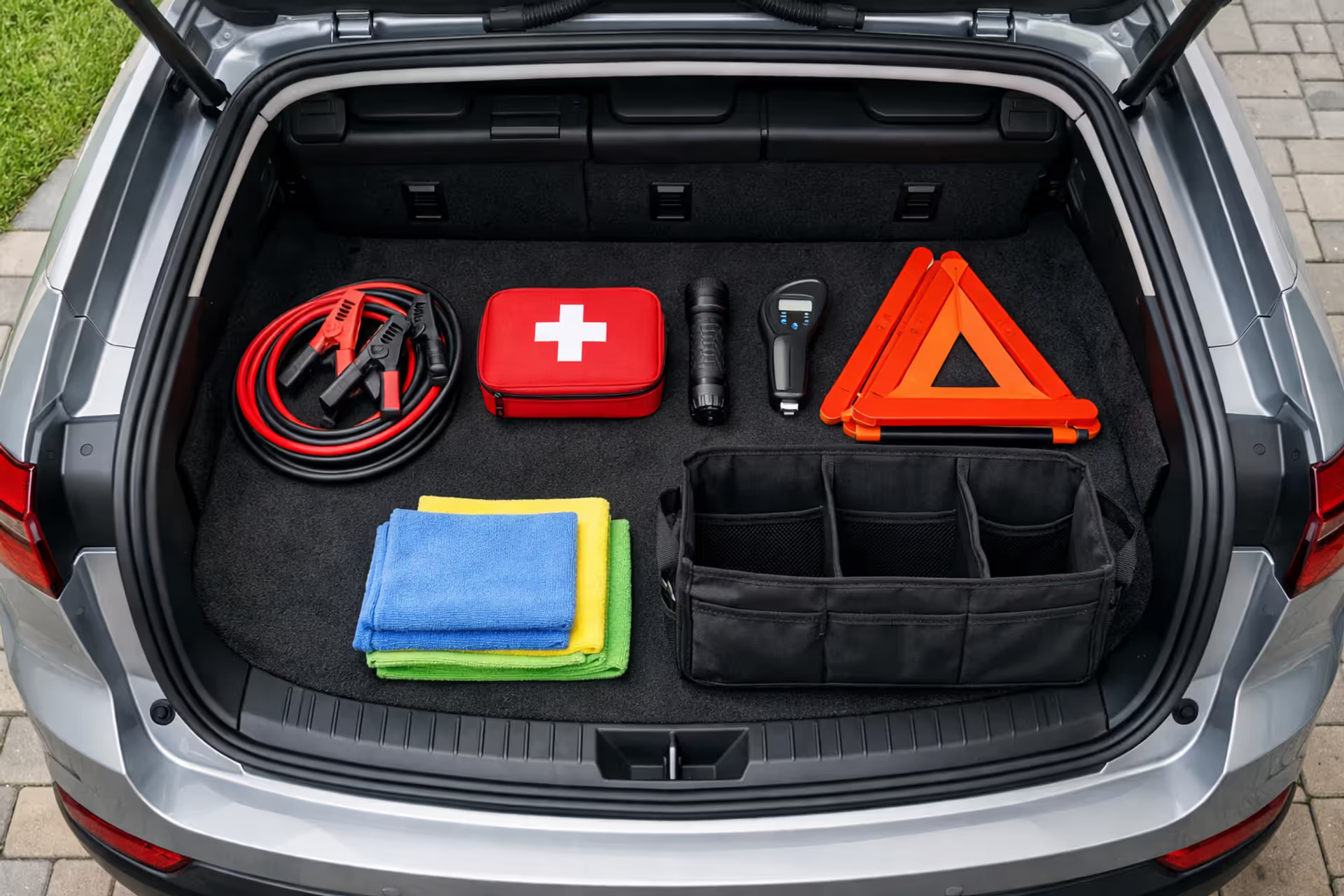
Open car trunk with neatly organized essential accessories including jumper cables, first aid kit, LED flashlight, warning triangles, tire gauge, and trunk organizer
Essential Car Accessories Every Driver Should Own in 2024

When you drove your new car off the lot, it had seats, wheels, and an engine—the bare minimum to get you moving. What it didn't have? The stuff that makes the difference when your battery dies at 11 PM in a Walmart parking lot or when your toddler spills an entire juice box on the back seat.
Here's the reality: Automakers strip out anything that isn't legally required or absolutely necessary. They do this to hit price points that look good in commercials. That $28,000 sedan could've included a $40 emergency kit, but then it wouldn't be a sub-$30K vehicle anymore.
The right accessories do three things. They catch minor issues before your wallet takes a beating—think about finding a tire leak with a $12 gauge instead of buying a shredded tire for $180. They keep you safe when things go sideways on the highway. And they stop those irritating daily problems that make you want to sell your car and start taking the bus.
You've seen the junk: glow-in-the-dark valve caps, fuzzy dice, steering wheels that look like they belong in a cartoon. None of that appears in this guide. We're covering stuff that actually matters when you're late for work or stranded on the shoulder.
Safety-First Accessories You Can't Afford to Skip
Emergency and Breakdown Essentials
Something quits working. You're stuck. That's how it always goes down. According to NHTSA data, more than 2,000 people die each year in roadside incidents, with many of those deaths happening because other drivers couldn't see the disabled vehicle soon enough to stop.
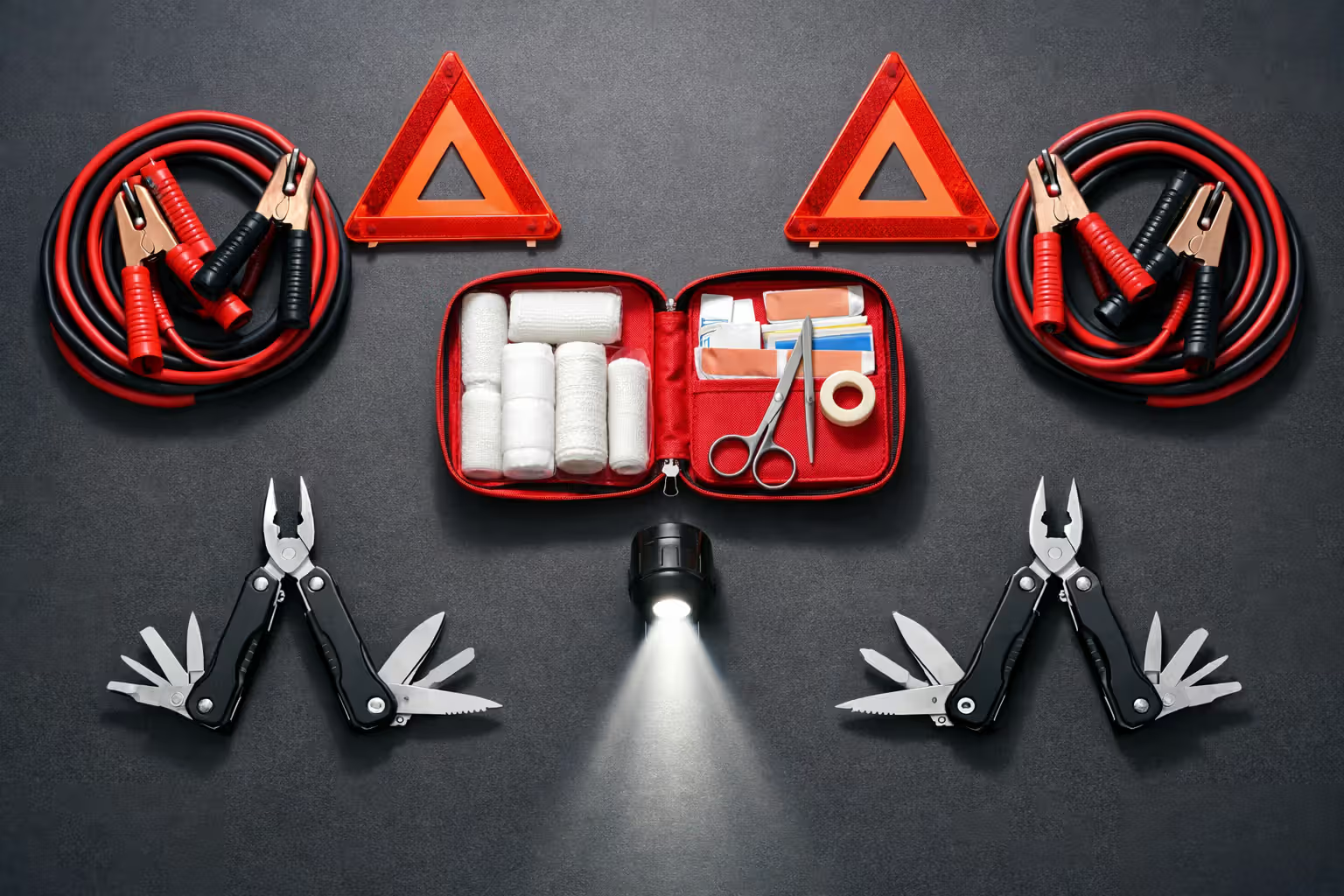
You need jumper cables that won't turn into melted plastic the moment you clamp them onto a dead battery. Get ones rated for 400 amps minimum—bump that to 600 if you're driving anything bigger than a sedan. Those pathetic little cables at the QuikTrip checkout? They'll fail you immediately. Spend the extra $30 on cables with thick gauge wiring, and keep them in their storage bag so the metal clamps don't scratch up your interior panels.
Warning triangles need weight to them, or they'll blow into traffic the second a semi passes by. Set them at 10 feet, 100 feet, and 200 feet behind your car on highways. LED flares beat the old-school pyrotechnic ones—they work in downpours and won't accidentally ignite dry grass next to the road.
Your first-aid kit needs more than cartoon character bandages. Get one with gauze pads (the kind that actually stop bleeding), medical tape that sticks, sharp scissors, antiseptic wipes, basic pain medication, and a CPR barrier. The American Red Cross sells pre-configured kits around $25 that include everything you'd need before paramedics arrive.
The best car safety device is a rear-view mirror with a cop in it
— Dudley Moore, actor and comedian
Get an LED flashlight, not whatever's been rolling around in your junk drawer since 2017. Modern ones put out serious light and run for hours. Add a multi-tool with pliers, a knife blade, and screwdrivers—you'll use it to tighten battery terminals, cut away something tangled in your undercarriage, or pry open a stuck compartment.
Visibility and Weather Protection Tools
If you live anywhere that gets winter weather (that's 38 states, by the way), those little credit-card-sized ice scrapers are torture devices. You'll spend 15 minutes scraping while your arm goes numb. Get the long-handled version with a brush on the back end. The foam grip matters when it's 12 degrees and you're not wearing gloves.
Rain-repellent treatments make your windshield shed water like you wouldn't believe. Instead of a blurry smeared mess, water beads up and rolls right off. Hit your windshield with this stuff twice a year—once after spring pollen season, once before winter hits.
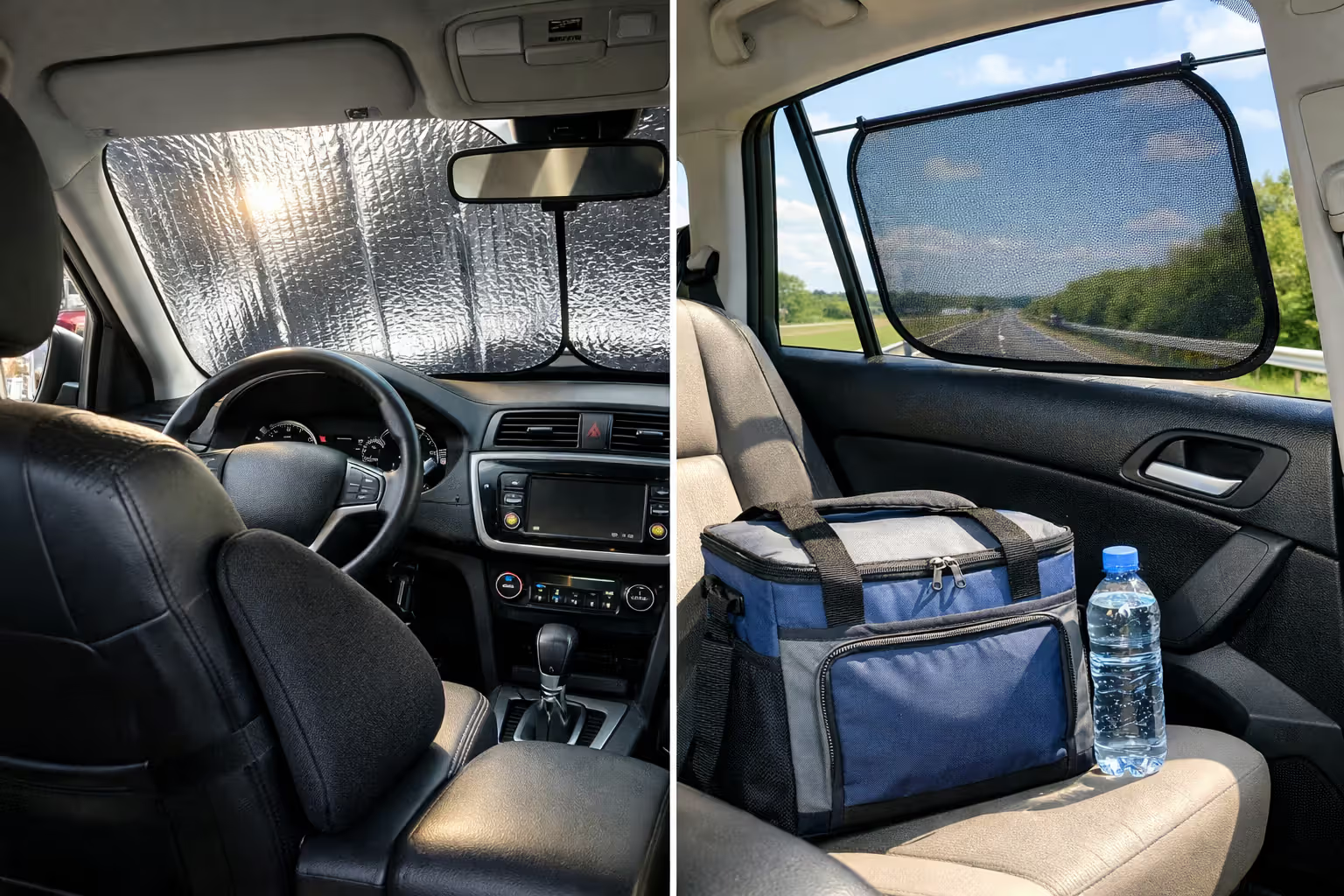
Windshield sunshades aren't just about comfort. They prevent your interior from hitting 140°F on summer afternoons, which cracks dashboards, ruins leather, and turns your steering wheel into something that'll burn your hands. The accordion-style ones take up less space than those twisted circular things that never fold back correctly.
Author: Lena Prescott;
Source: shafer-motorsports.com
Daily Convenience Accessories That Make Driving Easier
Your phone does everything now—navigation, music, calls, texts. Holding it while you drive? Illegal in most places, and a great way to rear-end someone. You need a mount that actually works.
Magnetic mounts are slick until summer heat melts the adhesive or you hit a pothole and watch your phone fly into the footwell. Clamp-style grips hold better but might cover your air vents. Dashboard mounts stay reliable but need clear real estate. Whatever you pick, test the angle before you drive—you shouldn't have to turn your head more than 15 degrees from the road to see your screen.
Trunk organizers stop your groceries from becoming a produce avalanche every time you take a corner. The collapsible style stores flat after you unload. Look for multiple sections and a waterproof bottom that'll contain the inevitable spilled milk situation. Some have insulated compartments that keep frozen food from melting on your 20-minute drive home.
Seat covers protect your original upholstery from coffee spills, dog hair, and the wear pattern your butt creates over five years. Neoprene versions resist moisture and wipe clean easily. Universal-fit covers save money but bunch up and look cheap. Custom-fit covers made for your exact vehicle install smoothly but cost twice as much.
USB cables die faster than any other accessory. The connection point at the plug gets loose from yanking it in and out 500 times. Buy three extras, keep them in your glove box. Braided cables outlast the plastic-coated ones. Get a dual-port adapter so your passenger isn't glaring at you because their phone's dying.
Cup holder inserts eliminate the rattle from half-empty water bottles and adapt to different container sizes. Some try to incorporate phone slots, but those position your screen down by your knees—terrible viewing angle. Stick with simple rubber inserts that grip containers, survive the dishwasher, and cost about eight bucks.
The car has become the carapace, the protective and aggressive shell, of urban and suburban man
— Marshall McLuhan, philosopher and media theorist
Maintenance Tools Every Car Owner Should Keep On Hand
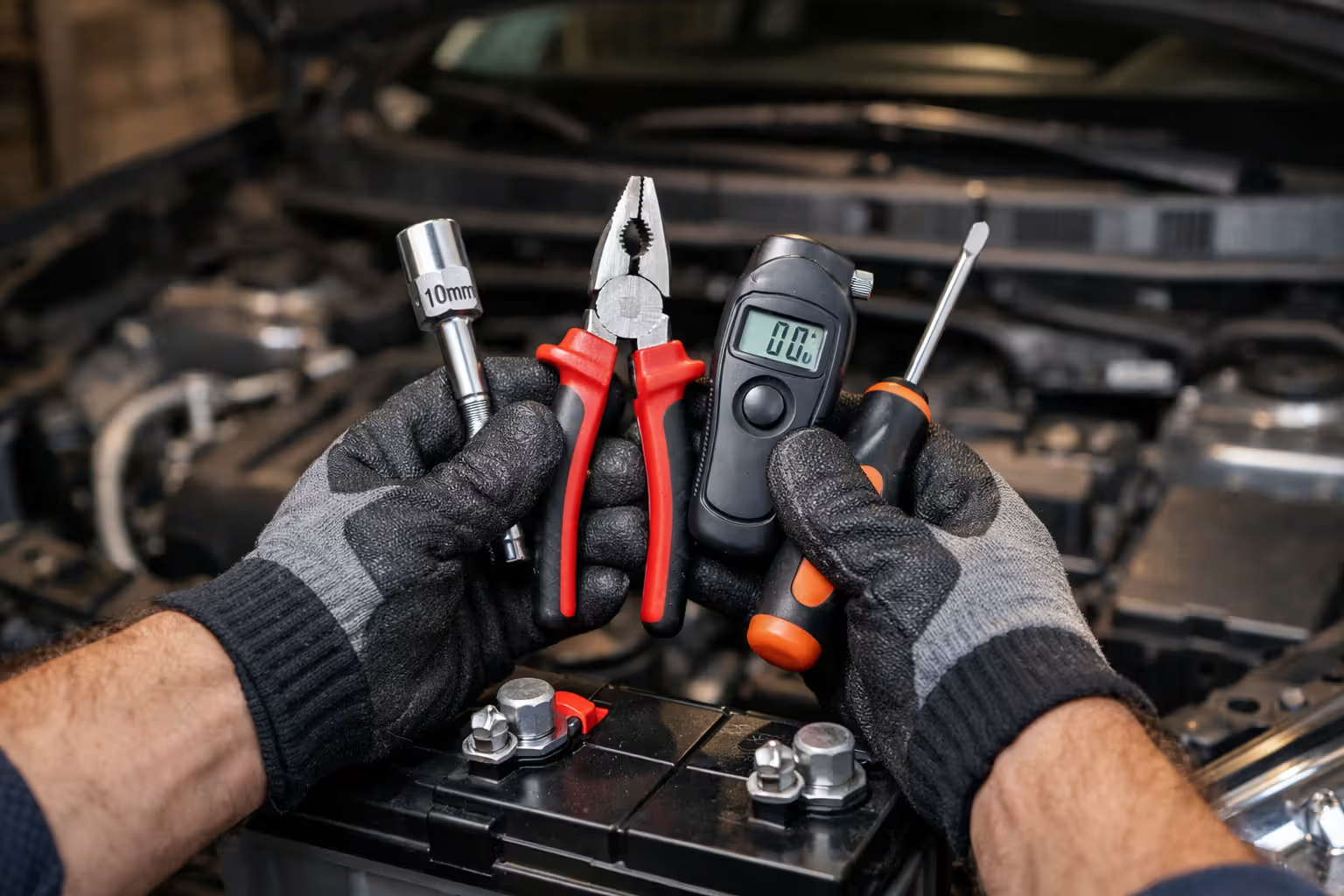
Those tire pressure gauges at gas station air pumps lie constantly—they're often 3-5 PSI off in either direction. A digital gauge costs $12 and prevents uneven tire wear that kills your tires 25% faster. Underinflated tires also tank your fuel economy by 3%. Set a recurring phone reminder to check pressure every four weeks.
Microfiber cloths clean without scratching. Buy three: one exclusively for glass, one for interior surfaces, one for exterior touch-ups. Your glass cloth should never touch anything else, or it'll start smearing instead of cleaning. Wash them separately from your regular laundry, or they'll collect lint that defeats the whole purpose.
Car vacuums used to be pathetic—weak suction, died after 10 minutes. Current cordless models run 20-30 minutes and generate enough suction to actually pull sand out of your floor mats. The crevice attachment gets into that space between seats where French fries hide for six months before you discover them.
A basic toolkit prevents situations where you need a mechanic for something you could've handled yourself. Get a socket set with metric and standard sizes, flathead and Phillips screwdrivers, an adjustable wrench, and needle-nose pliers. This covers tightening loose bolts, swapping wiper blades, and changing your cabin air filter.
James Patterson, an ASE-certified master technician who's been fixing cars for 22 years at Denver Auto Care, puts it this way: "I've watched people spend $2,000 fixing engine damage that started with a loose battery terminal they could've tightened with a 10mm wrench. The basic tools that prevent most breakdowns cost less than one tow truck call."
Author: Lena Prescott;
Source: shafer-motorsports.com
How to Choose Accessories Based on Your Driving Habits
City Commuters vs. Long-Distance Drivers
City driving creates different problems than highway cruising. You're sitting still more often, idling in traffic jams, parked in exposed lots. Your sunshade becomes critical equipment. Air fresheners matter more when you're stuck behind a diesel truck for 30 minutes.
Highway warriors need comfort gear for marathon sessions behind the wheel. A lumbar support cushion prevents that lower back ache that kicks in around hour three. Neck pillows help your passengers sleep without waking up unable to turn their heads. A cooler bag means drinks and snacks stay accessible without stopping at gas stations every 90 minutes.
Taking regular road trips? Carry an extra gallon of washer fluid, especially if you're driving through areas with heavy bug populations. Your windshield will look like someone threw a bucket of insects at it. A gallon jug costs $4 and prevents the nightmare scenario of trying to see through smeared bug guts at 70 mph.
Author: Lena Prescott;
Source: shafer-motorsports.com
Climate-Specific Considerations
People in snow states need gear that southerners can ignore completely. A compact shovel digs you out when unexpected snow traps your car. Kitty litter or sand provides traction when your tires just spin on ice. A wool blanket lives in your trunk for the worst-case scenario—being stranded overnight when it's -15 degrees outside.
Desert drivers face opposite problems. Extra water isn't just for drinking—your overheated engine might need coolant immediately. A wide-brimmed hat protects you if you're walking two miles to find cell service. Reflective windshield shades shift from "nice to have" to "absolutely mandatory."
Coastal humidity causes different headaches. Moisture-absorbing products prevent foggy windows and that musty smell. Rechargeable dehumidifiers or silica gel bags pull moisture from your car's air. This protects your electronics and stops mold from growing in hidden crevices.
It is amazing how many drivers, even experienced ones, fail to prepare for the unexpected on the road
— Mario Andretti, legendary racing driver
Common Mistakes When Buying Car Accessories
Bargain-bin jumper cables might be the most dangerous way to save $30. Thin wire overheats and melts mid-jump. The clamps crack after two uses. Spending $45 on quality cables instead of $15 on garbage might literally save your life when you're stranded in a dark parking lot at night.
Vehicle compatibility gets ignored constantly, leading to frustrated returns. That phone mount designed for smooth surfaces won't stick to your textured dashboard. Those seat covers sized for a sedan won't fit your truck's wider seats. Actually read the product descriptions and reviews from people who drive your specific make and model.
Checkout lane impulse purchases count on you thinking "more stuff equals more prepared." You don't need a steering wheel desk for your laptop. You don't need a backseat tablet mount. You definitely don't need that device claiming it'll boost your fuel economy by 40% just by plugging into your OBD port. Build from a proven list of essentials, not whatever catches your eye.
Buying duplicates of features you already have wastes money. Your car already has navigation? You don't need a standalone GPS. Factory USB ports work fine—you don't need a cigarette lighter adapter. Actually assess what your vehicle lacks before purchasing anything.
Storage space runs out faster than you'd think. Every item needs a designated home. Emergency kit goes in the trunk. Phone mount attaches to dash or vent. Sunshade stores behind your visor or in the door pocket. If you can't figure out where something will live permanently, you probably don't need it.
Comparison Table: Budget vs. Premium Versions of 8 Essential Accessories
| Accessory Type | Budget Option | Premium Option | Key Differences | Our Recommendation |
| Jumper Cables | Cartman 10ft 8-Gauge ($18) | Energizer 25ft 1-Gauge ($55) | Cable thickness, clamp construction, reach distance | Spring for premium if you use them often; budget works as backup |
| Phone Mount | Beam Electronics Universal ($9) | iOttie Easy One Touch ($25) | Stability over bumps, adjustment range, longevity | Premium makes sense—you'll interact with it twice per drive |
| First Aid Kit | Generic 90-piece ($12) | AAA 121-piece ($28) | Component quality, container durability, refill options | Premium worth it—don't cheap out on safety gear |
| Tire Gauge | Tekton Analog ($8) | JACO Digital ($13) | Reading precision, backlight feature, ease of use | Premium justified—accuracy matters, price gap is minimal |
| Emergency Flashlight | Eveready LED ($6) | Anker Rechargeable ($20) | Light output, battery longevity, build quality | Premium smart—dead batteries render cheap lights useless |
| Ice Scraper | Hopkins SubZero 16" ($7) | Snow Joe 48" ($18) | Handle reach, blade effectiveness, brush quality | Premium for regular winter drivers; budget fine for occasional use |
| Car Vacuum | ThisWorx Corded ($20) | Black+Decker Cordless ($65) | Suction strength, cordless convenience, attachments included | Budget handles quick cleanups; premium if you detail thoroughly |
| Trunk Organizer | FORTEM Collapsible ($25) | Trunkcratepro ($70) | Material thickness, compartment count, weight limit | Budget adequate—premium features don't justify the price jump |
Frequently Asked Questions About Car Accessories
Building Your Complete Accessory Collection
Start with the four foundational safety items experts universally recommend: jumper cables, first-aid kit, flashlight, and warning triangles. These handle the most common roadside emergencies you'll encounter. Add them to your trunk this week, not "eventually."
Next, tackle whatever drives you crazy on your daily commute. Fumbling with your phone constantly? Get a proper mount. Trunk looks like a tornado hit it? Add an organizer. Windows fog up every single morning? Buy a defogger cloth. Address one specific annoyance at a time instead of ordering 20 things from Amazon in a single session.
Wait on seasonal items until you actually need them. Don't buy an ice scraper in July or a sunshade in December. Purchase winter gear in late fall when retailers run sales, not during the first snowstorm when everyone panics and inventory vanishes.
Maintenance tools prevent expensive repairs down the road. That $12 tire gauge saves you hundreds by catching problems before you're buying new tires. The $8 microfiber cloth prevents scratched paint that happens when you use abrasive paper towels. Small investments in the right tools protect your much larger investment in the vehicle.
Fight the urge to turn your car into a mobile storage unit packed with 47 different gadgets. You don't need that many accessories. You need 12-15 carefully chosen items that match your actual driving patterns, your local climate, and your daily routine. A well-considered collection transforms your vehicle from basic transportation into a prepared, comfortable, and genuinely safer space for however many hours you spend commuting each week.
Related Stories
Read more
Read more


The content on Auto Insights is provided for general informational and educational purposes only. It is intended to offer guidance on car buying, vehicle ownership, finance, insurance, EVs, maintenance, accessories, reviews, and related topics, and should not be considered professional financial, legal, insurance, mechanical, or investment advice.
All information, tools, calculators, comparisons, and recommendations presented on this website are for general guidance only. Individual financial situations, driving habits, vehicle conditions, insurance policies, and market factors vary, and actual results or costs may differ from estimates provided.
Auto Insights makes no guarantees regarding accuracy, completeness, or current applicability of the information, as automotive markets, regulations, incentives, interest rates, and vehicle specifications may change over time.