
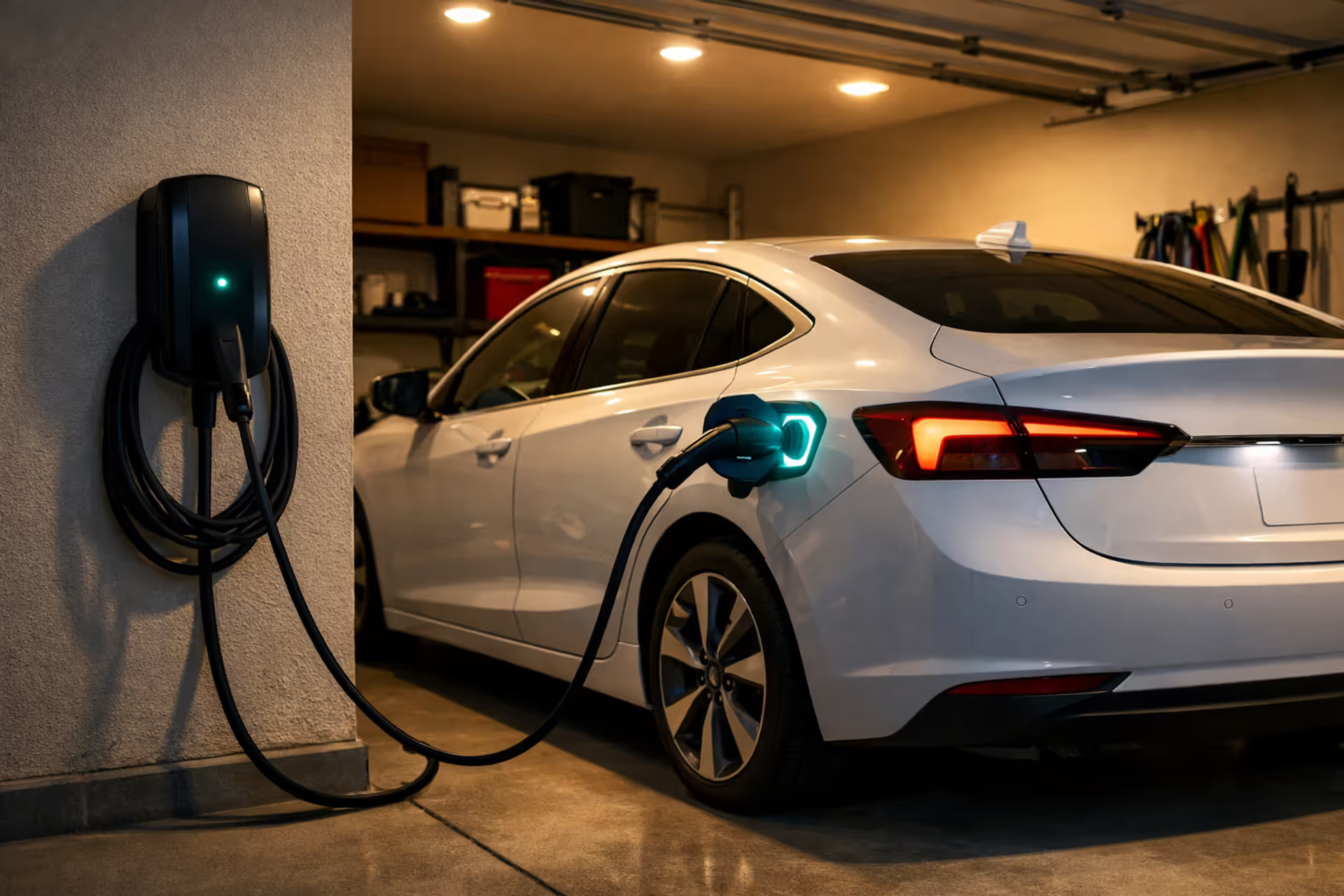
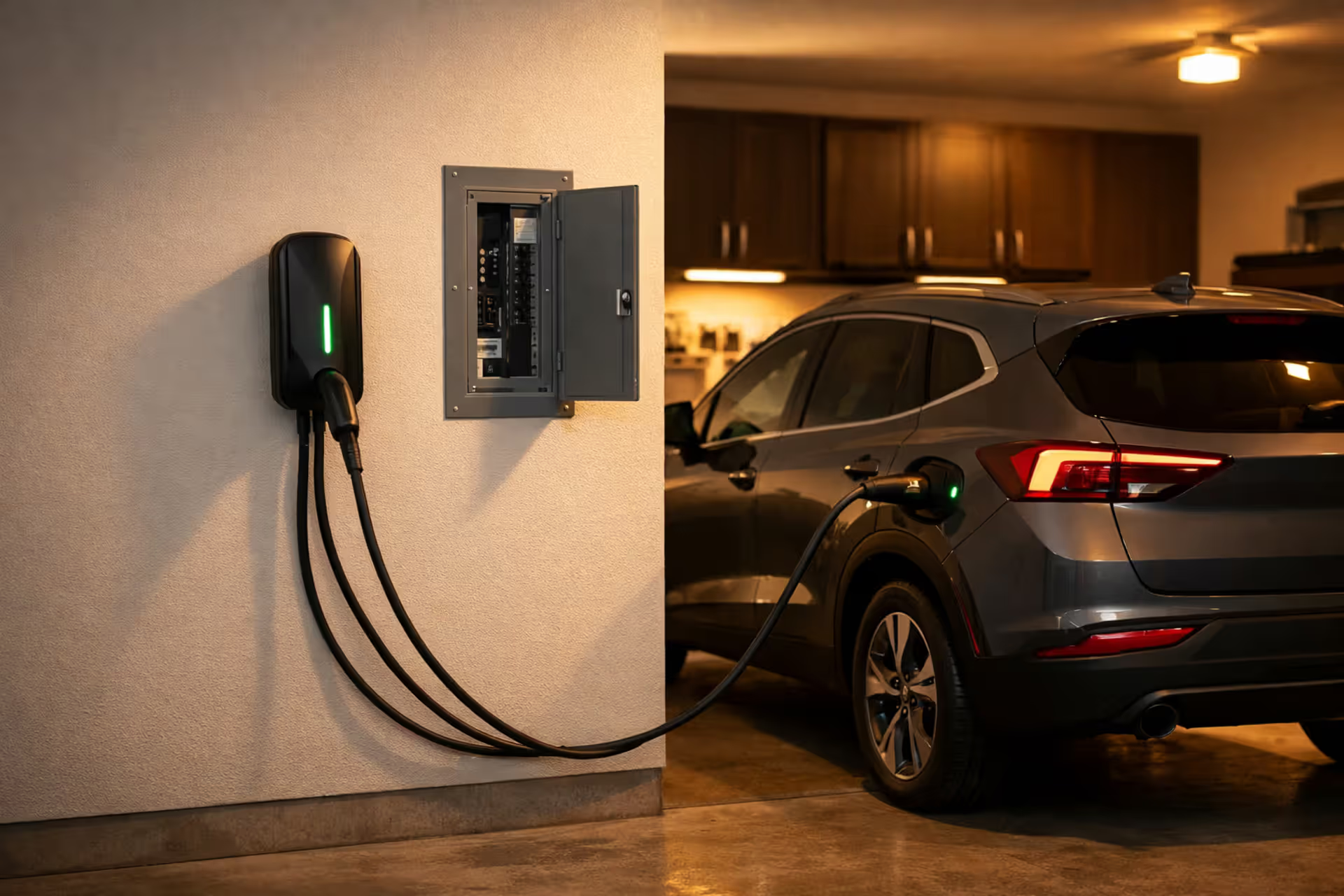
Electric vehicle plugged into a wall-mounted Level 2 home charger in a residential garage at night with glowing charge port indicator
How EV Charging Works: From Your Outlet to Your Battery

Electric vehicles don't refuel—they recharge. But what actually happens when you plug a charging cable into your car? The process involves more than just pushing electrons into a battery. Understanding how electricity flows from your home's grid connection through various conversion stages and into your vehicle's battery pack helps you make smarter decisions about charging equipment, installation costs, and daily charging habits.
The Basic Science Behind Electric Vehicle Charging
When you plug in an electric vehicle, you're initiating a carefully managed electricity flow from the grid into a high-voltage lithium-ion battery pack. The grid delivers alternating current (AC) power to your home at 120 or 240 volts. Your EV's battery, however, stores energy as direct current (DC). This fundamental mismatch means conversion must happen somewhere in the charging process.
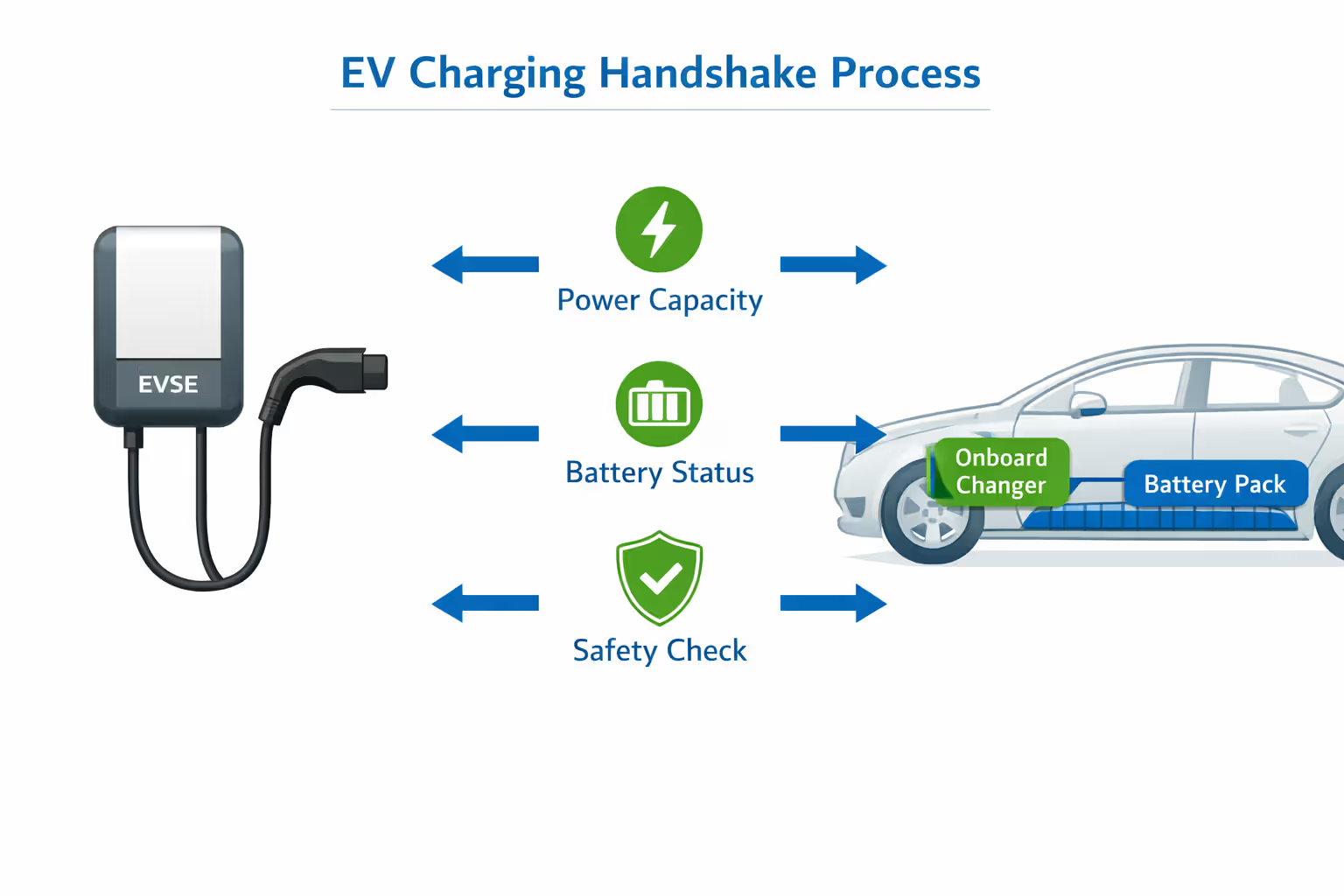
Most residential charging involves your vehicle's onboard charger—a power electronics unit that converts incoming AC electricity into DC power the battery can accept. This conversion generates heat, which is why you might hear cooling fans running during charging sessions. The onboard charger also communicates with the battery management system to control voltage, current, and temperature throughout the charging cycle.
What Happens When You Plug In Your EV
The moment you connect a charging cable, a digital handshake occurs. The Electric Vehicle Supply Equipment (EVSE)—what most people call the "charger"—and your vehicle exchange information about maximum power capacity, current battery state, and safety status. Only after this verification completes does electricity begin flowing.
Your vehicle's battery management system constantly monitors individual cell voltages, overall pack temperature, and charge state. As the battery fills, the system gradually reduces charging current to prevent overheating and extend battery life. This explains why the final 20% of charging takes disproportionately longer than the first 80%.
Author: Derek Fulton;
Source: shafer-motorsports.com
The Role of Your Vehicle's Onboard Charger
The onboard charger's power rating determines how quickly your EV can accept AC power. A vehicle with a 7.2 kW onboard charger can't take advantage of a 19.2 kW Level 2 station—it will still charge at only 7.2 kW. This specification varies widely: some economy EVs include 3.3 kW onboard chargers, while luxury models may feature 11 kW or even 19.2 kW units.
Size and cost constraints limit onboard charger capacity. Automakers balance charging speed against vehicle weight, interior space, and component costs. This trade-off is why DC fast charging exists—it bypasses the onboard charger entirely.
AC vs DC Charging: Understanding the Two Power Pathways
The distinction between AC and DC charging fundamentally changes where power conversion happens and how quickly your battery fills.
With AC charging, your vehicle's onboard charger performs the AC-to-DC conversion. This limits charging speed to whatever your onboard charger can handle—typically 3.3 kW to 19.2 kW. AC charging happens at home, at workplace parking structures, and at many public parking lots.
DC fast charging moves the conversion equipment off the vehicle and into much larger, more powerful charging stations. These stations convert grid AC power to DC before sending it to your vehicle, delivering 50 kW to 350 kW directly to the battery pack. Your onboard charger sits idle during DC charging sessions.
"The onboard charger limitation is actually a feature, not a bug," explains Tom Moloughney, Senior Editor at InsideEVs and EV infrastructure consultant. "It allows automakers to optimize for the 95% of charging that happens slowly at home or work, while still giving drivers fast-charging capability for road trips through external DC infrastructure."
| Charging Type | Power Conversion Location | Typical Speed | Common Locations | Cost per kWh Range |
| AC (Level 1 & 2) | Vehicle's onboard charger | 3–19 kW | Home, workplace, parking lots | $0.10–$0.30 |
| DC Fast Charging | External charging station | 50–350 kW | Highway corridors, urban hubs | $0.25–$0.60 |
The cost difference reflects infrastructure investment. A DC fast charging station requires high-voltage grid connections, power electronics cabinets the size of refrigerators, and liquid cooling systems. Your home Level 2 charger costs $500–$800 and mounts on a garage wall.
The Three Charging Levels Every EV Owner Should Know
The charging levels system categorizes charging speed and power delivery. Each level serves different use cases and requires different electrical infrastructure.
Level 1: Standard Household Charging
Level 1 charging uses a standard 120-volt household outlet—the same receptacle that powers your vacuum cleaner. Most EVs include a Level 1 charging cable that plugs directly into any three-prong outlet.
Power delivery typically ranges from 1.3 to 2.4 kW, adding roughly 4–5 miles of range per hour. This charges a completely depleted 60 kWh battery in about 40–50 hours. Level 1 works for plug-in hybrids with small batteries or for EV owners with short daily commutes who can charge overnight.
The advantage: zero installation cost. The disadvantage: painfully slow charging that can't keep up with high daily mileage. A driver covering 100 miles daily would need 20–25 hours of charging to replenish that range.
Level 2: The Home and Public Charging Sweet Spot
Level 2 charging operates at 240 volts—the same voltage as your electric dryer or oven. Charging speeds range from 3.3 kW to 19.2 kW depending on the EVSE and your vehicle's onboard charger capacity.
At 7.2 kW (the most common home installation), you'll add about 25–30 miles of range per hour. That same 60 kWh battery charges from empty in 8–9 hours—perfect for overnight charging. A 40-amp, 9.6 kW installation delivers 35–40 miles per hour, fully charging most EVs in 6–7 hours.
Level 2 requires professional electrical installation. Your electrician will install a dedicated 240-volt circuit from your electrical panel to your garage or parking area, then connect an EVSE. Total costs range from $1,200 to $2,500 including equipment and labor.
The best fuel station is the one in your own garage. Charging overnight on Level 2 means you wake up every morning with a full tank — something gasoline cars never offered
— Sandy Munro
Level 3: DC Fast Charging for Road Trips
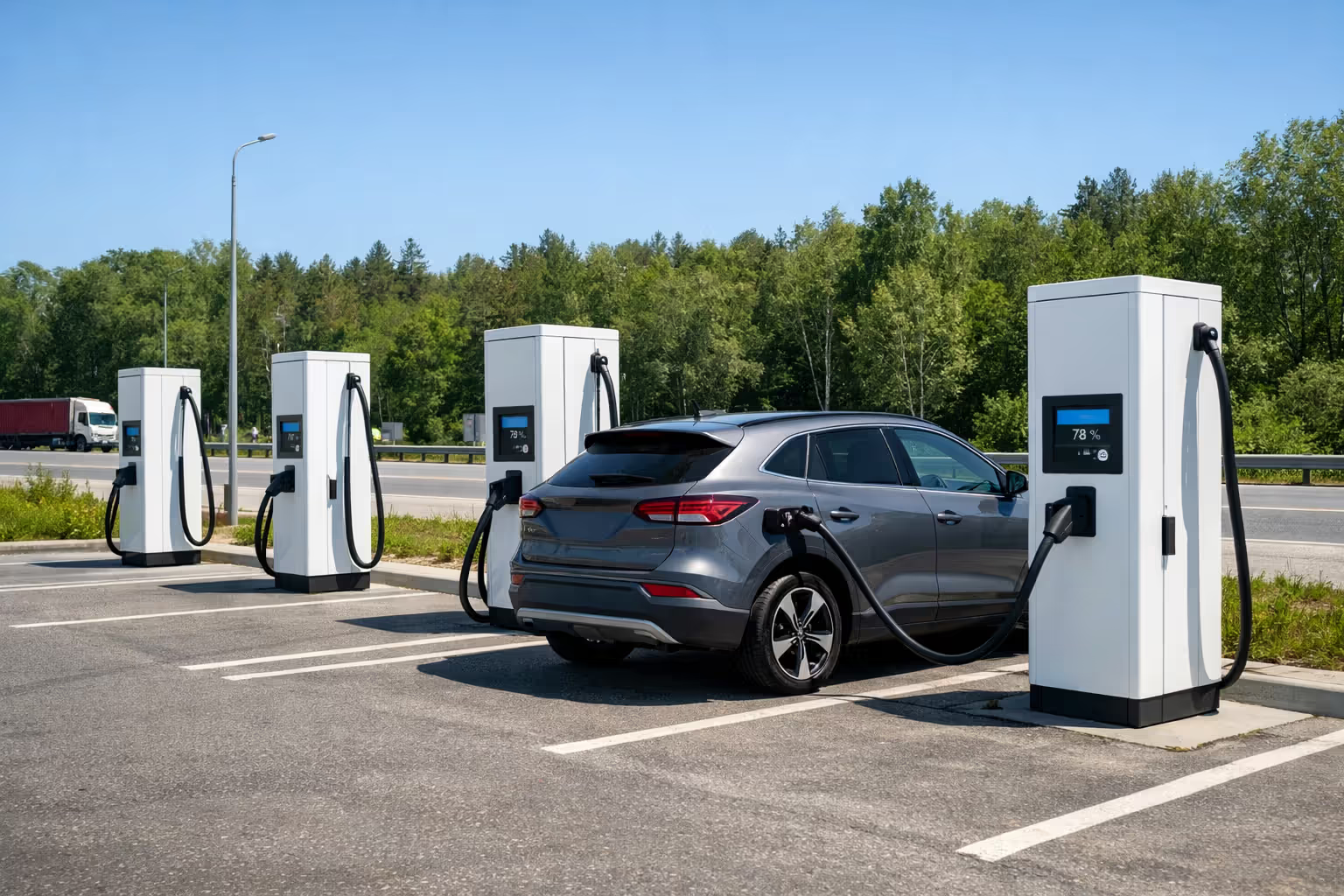
Level 3 charging—also called DC fast charging or DCFC—delivers 50 kW to 350 kW directly to your battery. Modern EVs can add 100–200 miles of range in 15–30 minutes at these stations.
Charging speed depends on three factors: the station's maximum output, your vehicle's maximum DC charging rate, and your current battery state. A 2024 Hyundai Ioniq 6 accepts up to 240 kW under ideal conditions, while a 2020 Nissan Leaf maxes out at 50 kW. Even vehicles capable of 250 kW charging rarely sustain that rate—power delivery drops as the battery fills.
DC fast charging costs more per kWh and should be reserved for road trips rather than daily use. Frequent DC charging may accelerate battery degradation compared to slower AC charging, though modern battery thermal management systems minimize this effect.
Author: Derek Fulton;
Source: shafer-motorsports.com
Setting Up Home Charging: What Your Electrical System Does
Installing home charging equipment means understanding your electrical panel's capacity and your vehicle's charging requirements.
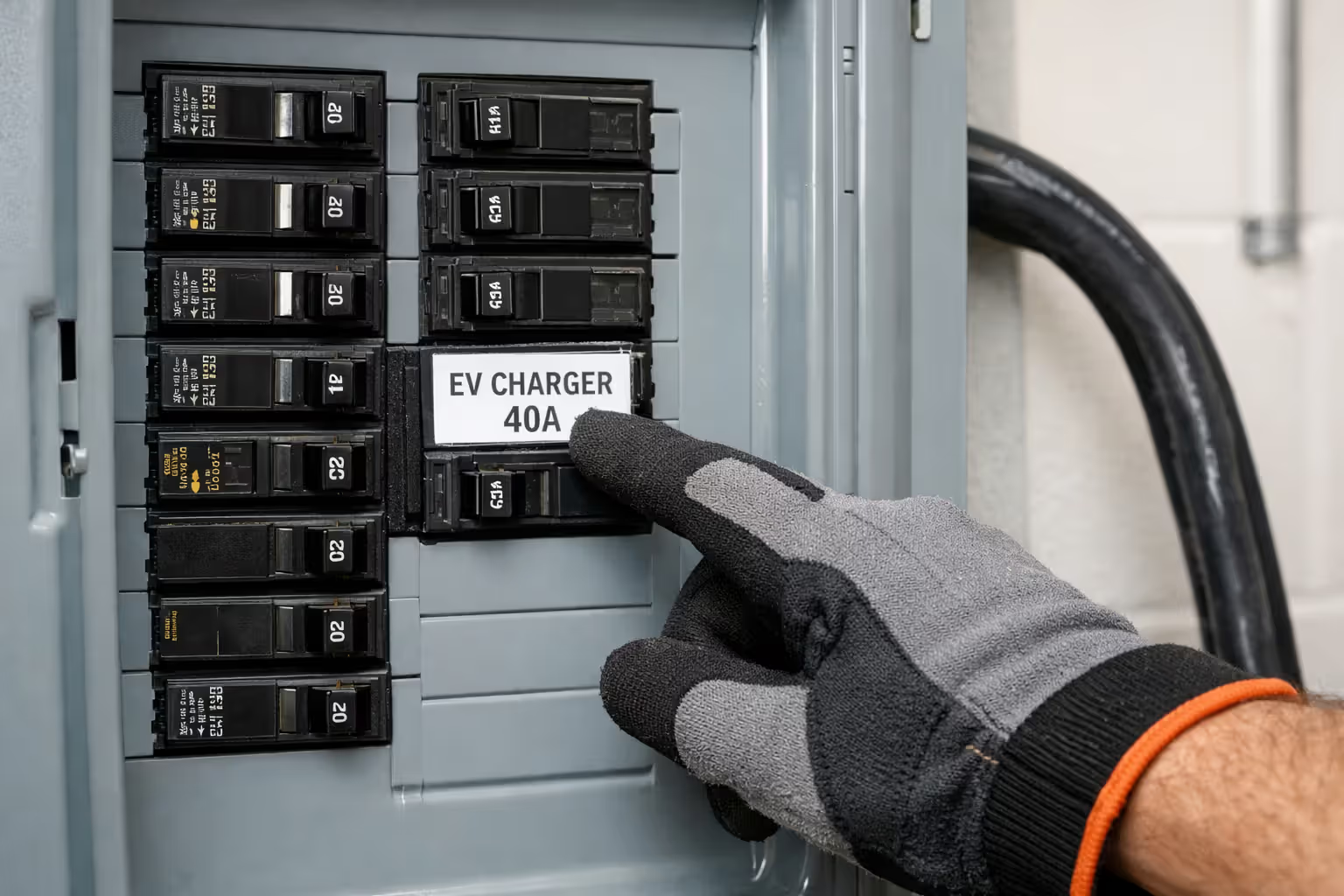
Your home's electrical service delivers a total amperage—typically 100, 150, or 200 amps for modern houses. Your main panel distributes this capacity across individual circuits. Adding an EV charger means adding a new dedicated circuit, which requires available capacity in your panel.
A 40-amp circuit (supporting a 32-amp, 7.7 kW charger) draws significant power. If your panel is already near capacity with air conditioning, electric heating, and appliances, you may need a panel upgrade before installing Level 2 charging. An electrician can perform a load calculation to determine available capacity.
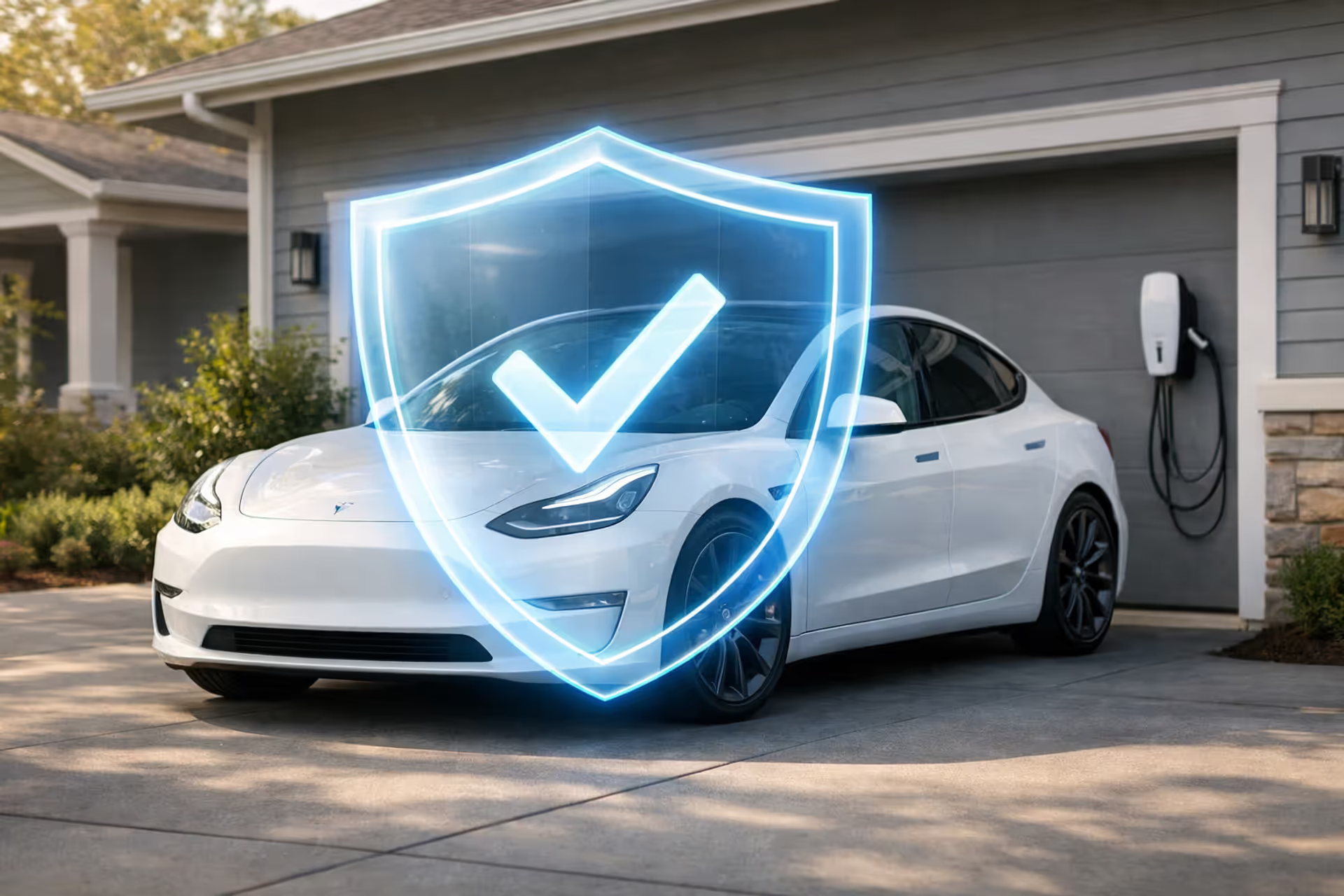
The EVSE itself is not actually a charger—it's a smart switch that safely delivers power to your vehicle. It monitors ground faults, verifies proper connection, and stops power flow if it detects problems. Some models include Wi-Fi connectivity for scheduling charging during off-peak electricity rates or monitoring energy usage.
Hardwired installations permanently connect the EVSE to your electrical system. Plug-in models use a NEMA 14-50 outlet (like an RV plug) or NEMA 6-50 outlet, offering portability if you move. Hardwired installations typically support higher power levels and cost slightly less since they eliminate the outlet and plug.
Outdoor installations require weatherproof enclosures and conduit for electrical wiring. Cable management matters—you want enough length to reach your charge port from various parking positions without excess cable cluttering your garage.
Author: Derek Fulton;
Source: shafer-motorsports.com
EV Charging Connectors and Compatibility in the US
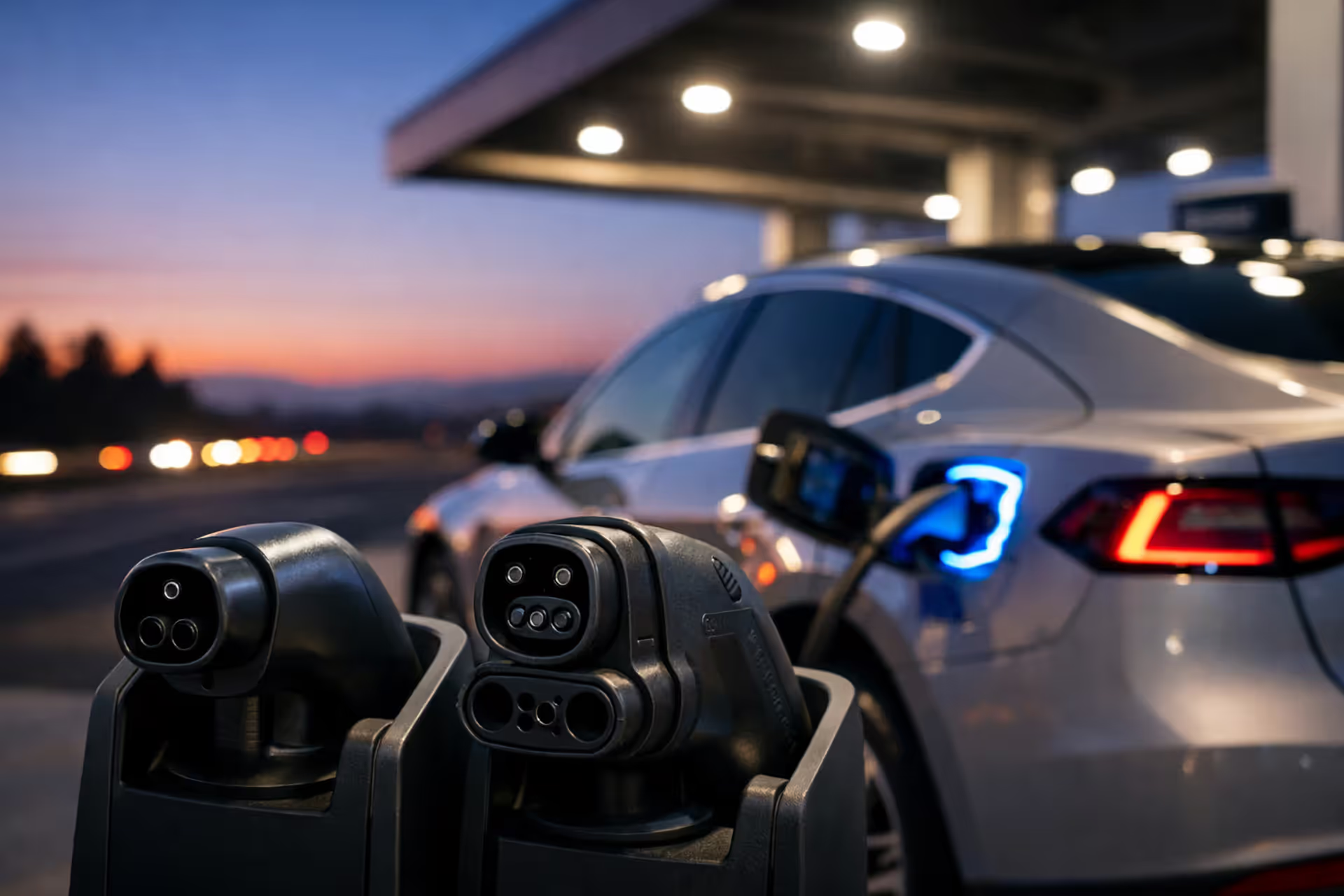
The charging connectors overview reveals a landscape that's consolidating but still fragmented. Four main connector types serve different charging levels and vehicle brands.
J1772 is the universal North American standard for Level 1 and Level 2 AC charging. Every electric vehicle sold in the US (except older Teslas) includes a J1772 port or comes with an adapter. The connector features five pins: two for AC power, one for ground, and two for communication between vehicle and EVSE.
CCS (Combined Charging System) adds two large DC pins below a J1772 connector, creating a combination port that accepts both AC and DC charging. Most non-Tesla EVs sold in the US since 2019 use CCS for fast charging. The same port handles Level 2 charging (using the upper J1772 portion) and DC fast charging (using all pins).
NACS (North American Charging Standard), previously called the Tesla connector, is smaller and more elegant than CCS. Tesla's proprietary design worked exclusively with Tesla vehicles until 2023, when Tesla opened the standard and major automakers announced adoption plans. Ford, GM, Rivian, and others will switch to NACS ports starting in 2025, and Tesla is opening its Supercharger network to other brands using adapters.
CHAdeMO is a Japanese DC fast charging standard used primarily by Nissan and Mitsubishi. This connector is being phased out in the US market as newer models switch to CCS. CHAdeMO stations are becoming harder to find outside major metropolitan areas.
| Connector Type | Charging Level | Compatible Brands | Adoption Status |
| J1772 | Level 1 & 2 (AC) | All non-Tesla EVs (Tesla with adapter) | Universal standard |
| CCS | Level 3 (DC) | VW, GM, Ford, Hyundai, BMW, others | Dominant DC standard (transitioning) |
| NACS/Tesla | Level 2 & 3 | Tesla, Ford (2025+), GM (2025+) | Emerging universal standard |
| CHAdeMO | Level 3 (DC) | Nissan Leaf, Mitsubishi Outlander PHEV | Being phased out |
The connector landscape is shifting toward NACS as the unified North American standard. By 2026, most new EVs will likely feature NACS ports, with CCS adapters available for older charging infrastructure.
Common Charging Mistakes That Slow Down Your EV or Damage Equipment
Author: Derek Fulton;
Source: shafer-motorsports.com
Understanding the EV charging process means avoiding practices that reduce efficiency or create safety hazards.
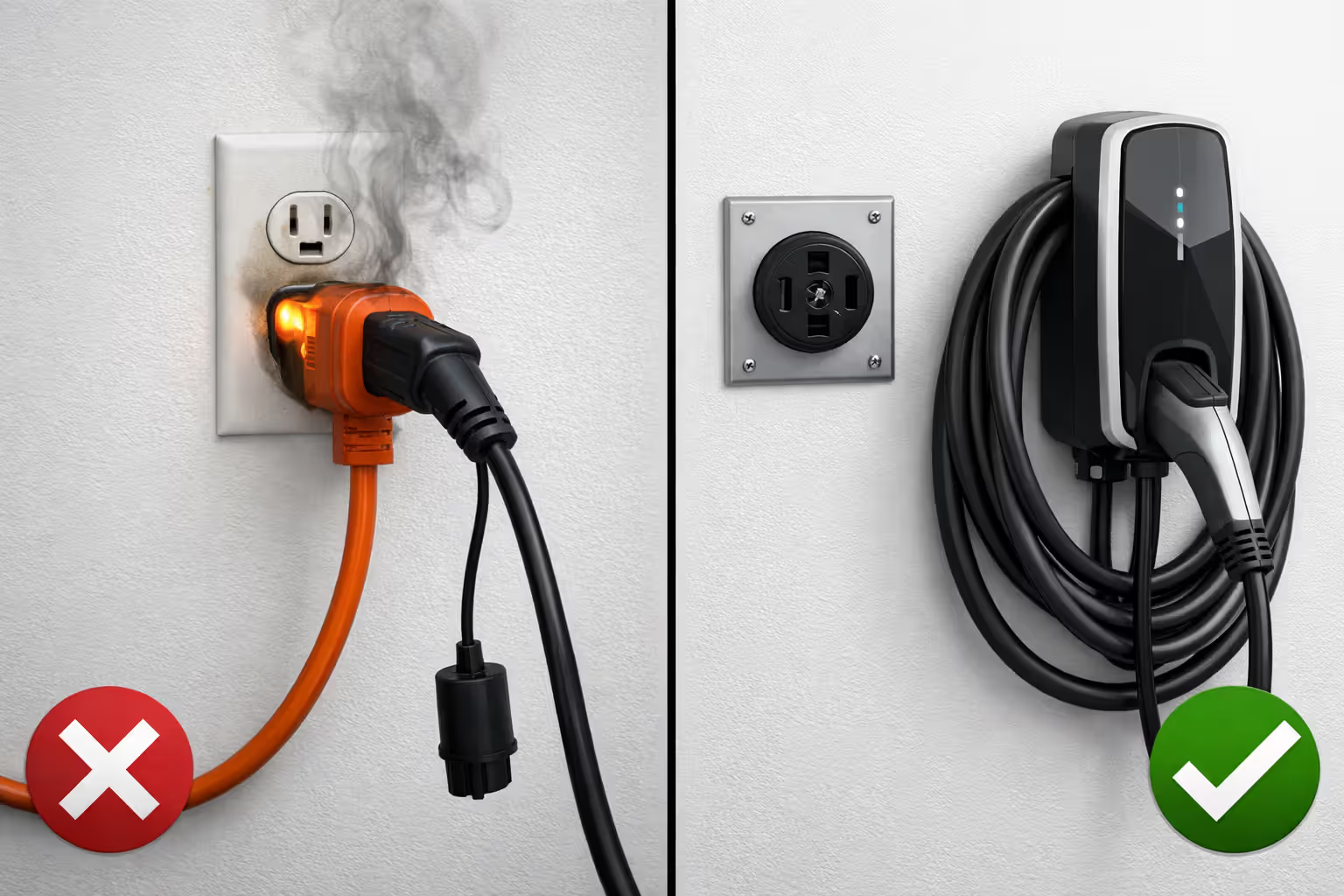
Using extension cords with Level 1 charging ranks among the most common mistakes. Standard household extension cords can't safely handle sustained 12-amp loads for 8–10 hours. The cord heats up, creating fire risk and voltage drop that slows charging further. If you must extend reach, use a dedicated 12-gauge or heavier outdoor-rated extension cord rated for continuous duty—but a proper outlet installation is always safer.
Ignoring circuit capacity leads to nuisance breaker trips. If you set your EVSE to maximum power on a shared circuit, running other appliances simultaneously may overload the circuit. Many EVs and EVSEs let you adjust charging current—dropping from 32 amps to 24 amps prevents tripping breakers when your garage refrigerator or power tools are running.
Poor connector maintenance degrades charging performance. Dirt, moisture, or corrosion on connector pins increases resistance, generating heat and potentially damaging your charge port. Wipe connectors with a dry cloth monthly, and never force a connector that doesn't seat smoothly.
Temperature extremes affect charging speed more than most owners expect. Lithium-ion batteries charge slower in cold weather because the battery management system limits current to prevent lithium plating. In freezing temperatures, expect 20–30% longer charging times. Similarly, charging immediately after hard driving while the battery is hot may trigger thermal limits that reduce charging speed until cooling systems bring temperatures down.
Battery longevity is not about avoiding use — it’s about avoiding extremes. Keep the charge between 20 and 80 percent, manage heat, and the battery will far outlast the car’s warranty
— Jeff Dahn
Waiting until completely empty isn't necessary and may inconvenience you. Unlike gasoline vehicles, EVs charge most efficiently between 20% and 80% state of charge. Regularly charging from 5% to 100% provides minimal benefit while spending extra time at reduced charging speeds at both extremes of the charging curve.
FAQ: How EV Charging Works
Making Charging Work for Your Needs
How EV charging works comes down to matching power delivery to your daily driving patterns. Most EV owners charge at home overnight using Level 2 equipment, treating their vehicle like a smartphone that tops up while they sleep. This covers 90% of charging needs without ever visiting a public station.
The remaining 10%—road trips and unexpected high-mileage days—relies on DC fast charging networks that continue expanding across highway corridors. Understanding charging levels, connector types, and your vehicle's specific charging capabilities helps you plan routes and estimate charging stops accurately.
Your home electrical system's capacity, local electricity rates, and typical daily mileage determine the optimal charging setup. A plug-in hybrid owner driving 30 miles daily does fine with Level 1 charging, while a long-range EV owner commuting 80 miles needs Level 2. The upfront installation cost pays back through lower fuel costs and the convenience of starting each day with a full charge.
The charging infrastructure landscape continues evolving rapidly. Connector standards are consolidating, charging speeds keep increasing, and station availability improves monthly. What remains constant is the fundamental principle: electricity flows from your grid connection through conversion and management systems into your battery pack, controlled by sophisticated software that balances charging speed against battery longevity.
Related Stories
Read more
Read more

The content on Auto Insights is provided for general informational and educational purposes only. It is intended to offer guidance on car buying, vehicle ownership, finance, insurance, EVs, maintenance, accessories, reviews, and related topics, and should not be considered professional financial, legal, insurance, mechanical, or investment advice.
All information, tools, calculators, comparisons, and recommendations presented on this website are for general guidance only. Individual financial situations, driving habits, vehicle conditions, insurance policies, and market factors vary, and actual results or costs may differ from estimates provided.
Auto Insights makes no guarantees regarding accuracy, completeness, or current applicability of the information, as automotive markets, regulations, incentives, interest rates, and vehicle specifications may change over time.