
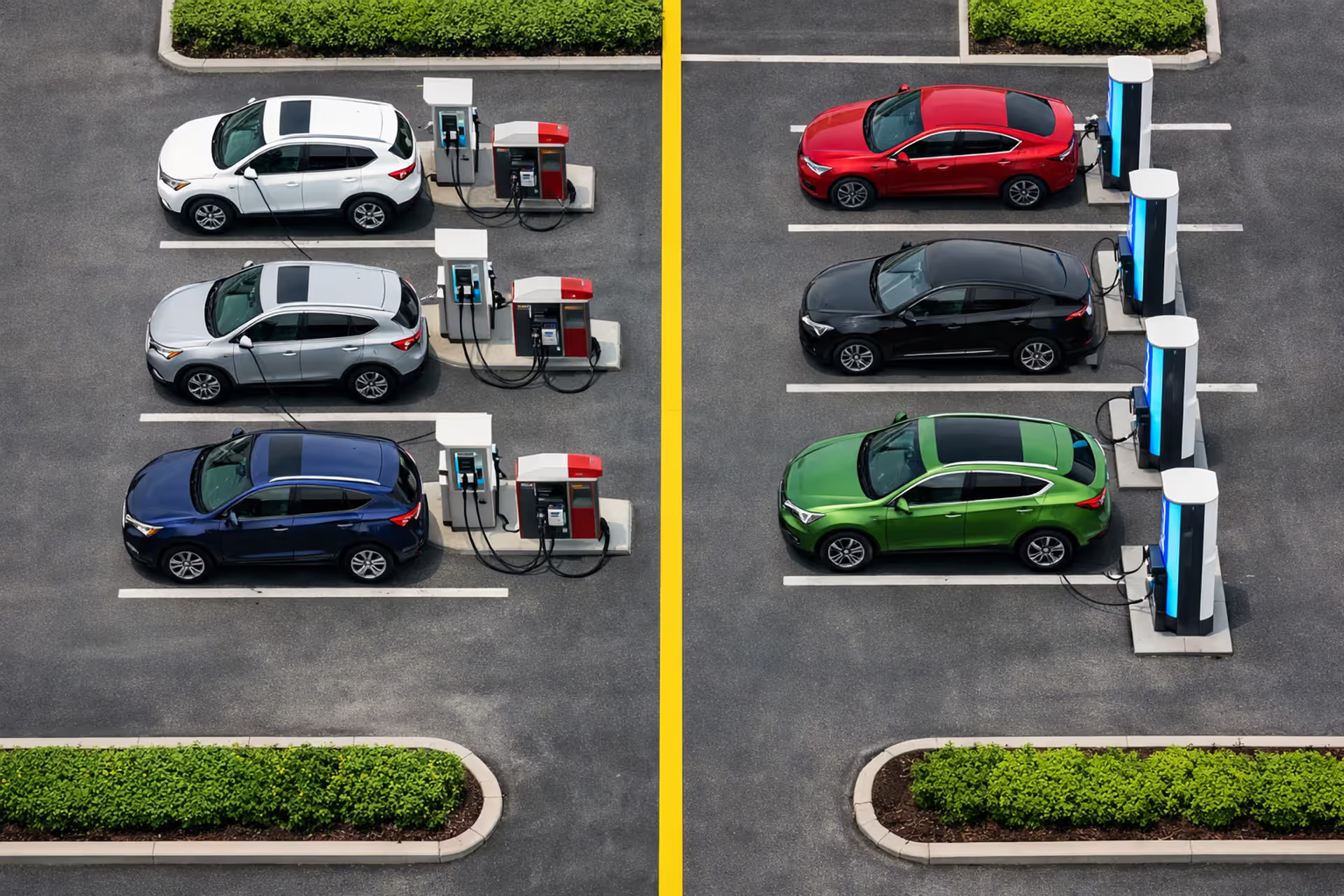
Aerial view of parking lot with plug-in hybrids near gas pumps on left and electric vehicles at fast charging stations on right
Plug In Hybrid vs EV: Which Electrified Vehicle Fits Your Driving Life

Choosing between a plug-in hybrid and a fully electric vehicle isn't about picking the "better" technology—it's about matching a powertrain to how you actually drive. A software engineer with a 90-mile round-trip commute and a garage charger faces different constraints than a sales rep covering three states weekly or a renter with only street parking.
Both vehicle types reduce tailpipe emissions and lower fuel costs compared to conventional cars, but they demand different compromises in charging habits, upfront investment, and long-term planning. Understanding these ownership differences helps you avoid buyer's remorse when your daily routine clashes with your vehicle's capabilities.
How PHEVs and EVs Work Differently Under the Hood
The Dual-Power System in Plug-In Hybrids
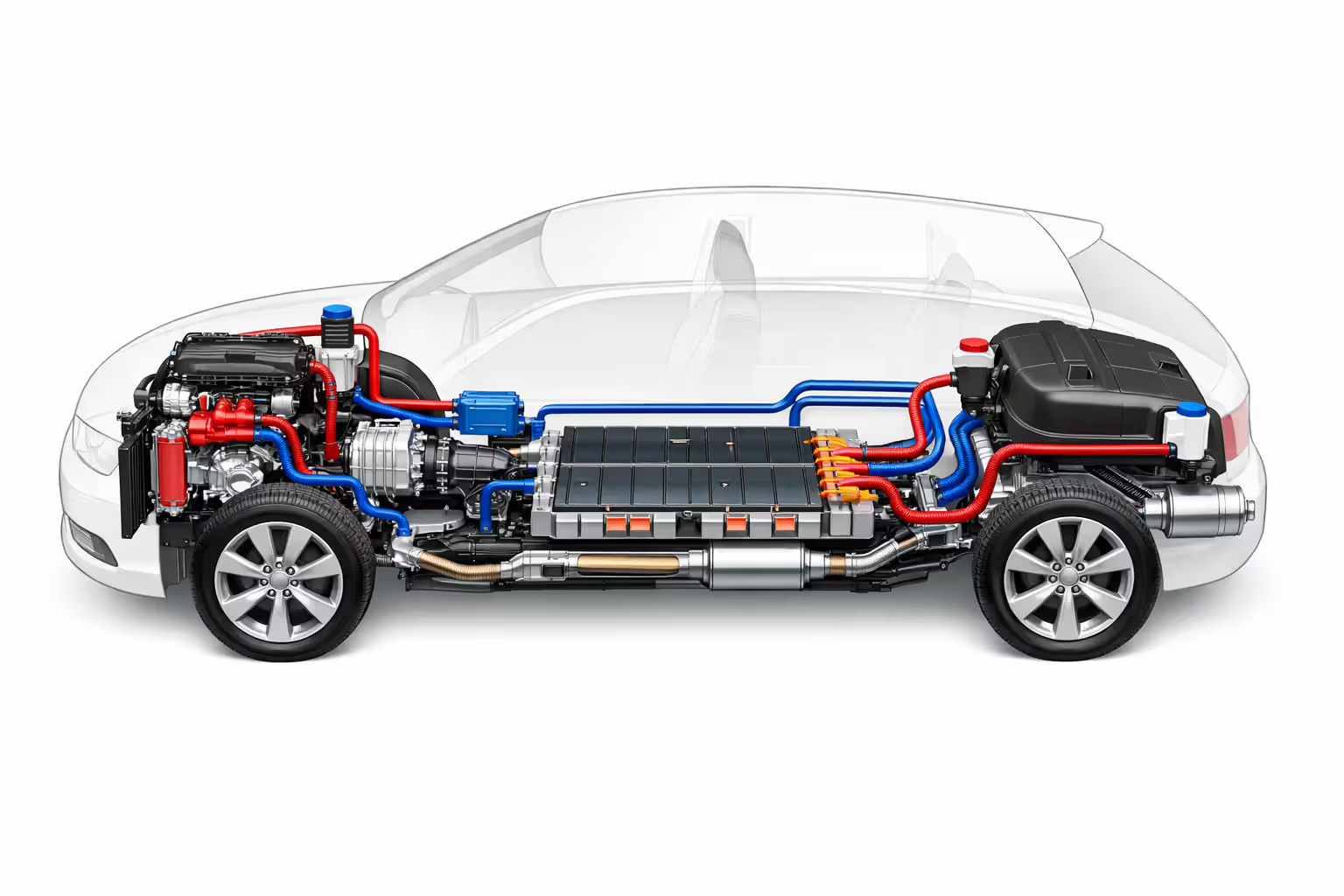
A PHEV carries two complete propulsion systems: a battery pack powering an electric motor for 20-50 miles of zero-emission driving, plus a gasoline engine that activates when the battery depletes. Most models prioritize electric mode until you exceed the battery's charge, then seamlessly switch to hybrid operation where the gas engine handles highway cruising while the electric motor assists during acceleration.
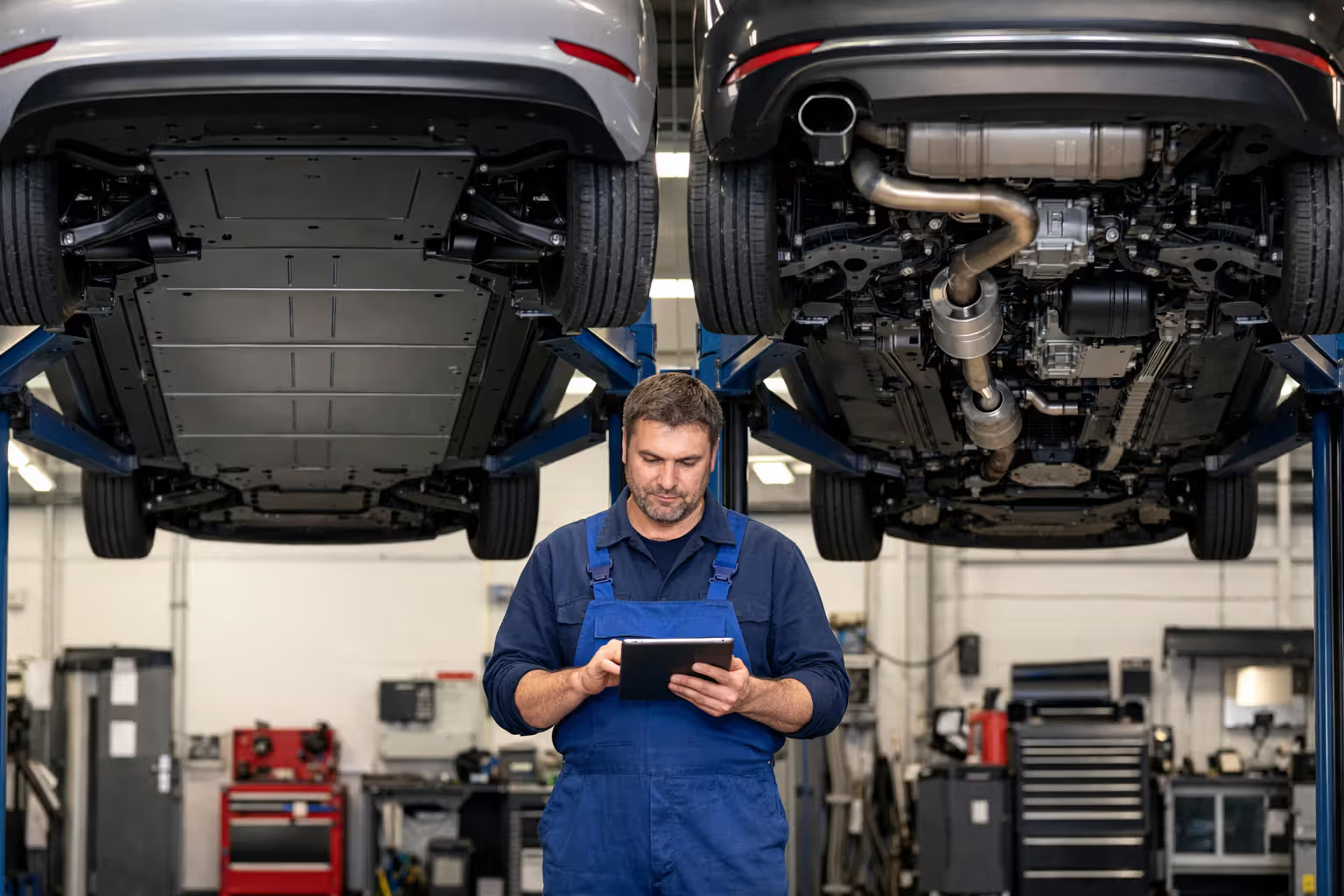
This dual setup adds mechanical complexity. You'll find a traditional transmission, exhaust system, cooling loops for both powertrains, and fuel delivery components alongside the battery pack and electric drive unit. The Toyota RAV4 Prime, for example, squeezes a 18.1 kWh battery, 2.5-liter four-cylinder engine, and electric motors into the same chassis as the standard RAV4.
Author: Brianna Lowell;
Source: shafer-motorsports.com
The practical benefit: your PHEV operates like a pure EV for short trips—school runs, grocery shopping, daily commutes—but transforms into a conventional hybrid for that spontaneous weekend trip to the mountains without requiring charging station planning.
Pure Battery-Electric Architecture Explained
An EV strips away the entire gasoline infrastructure. No engine, no transmission (most use single-speed reduction gears), no exhaust, no oil pan. A large battery pack—typically 60-100 kWh in modern models—feeds one or more electric motors that directly drive the wheels.
This simplified powertrain creates a spacious cabin and front trunk (frunk) where the engine would normally sit. The Hyundai Ioniq 5 and Ford Mustang Mach-E showcase this packaging advantage with flat floors and extra cargo cubbies.
The trade-off appears when the battery hits 10% charge. Unlike a PHEV that switches to gasoline, an EV requires a charging stop. Fast chargers restore 80% capacity in 25-40 minutes under ideal conditions, but that's still longer than a five-minute gas station visit. Cold weather compounds this: battery chemistry slows in freezing temperatures, reducing both range and charging speed by 20-40%.
Real-World Charging: What Each Vehicle Demands from Your Daily Routine
Home Charging Setup Costs and Requirements
Most PHEV owners manage fine with a standard 120-volt household outlet—what the industry calls Level 1 charging. Plugging in overnight delivers 3-5 miles of range per hour, enough to fully recharge a RAV4 Prime's 42-mile electric range in about 12 hours. This works if you're not depleting the battery twice daily.
EV owners typically need Level 2 charging: a 240-volt circuit identical to what powers your electric dryer. Professional installation runs $800-2,500 depending on your electrical panel's capacity and the distance from the panel to your garage. Homes built before 2000 often require panel upgrades ($1,500-3,000) to handle the additional 40-50 amp load.
A Level 2 charger adds 25-30 miles of range per hour, replenishing a depleted EV battery overnight. The Chevrolet Bolt EUV with a 65 kWh battery charges from empty to full in roughly 7 hours on a 240-volt, 32-amp circuit.
Apartment dwellers face steeper hurdles. Only 6% of US rental properties offered EV charging as of 2023, according to the National Multifamily Housing Council. Installing a charger in a shared parking garage requires landlord approval, electrical infrastructure upgrades, and cost-sharing negotiations with property management—barriers that make PHEVs more practical for renters who can rely on gasoline backup.
Public Charging Station Compatibility
PHEVs accept Level 1 and Level 2 charging but typically lack DC fast charging capability. This rarely matters since the gasoline engine eliminates charging urgency. You might top off at a workplace Level 2 charger during an eight-hour shift, but you're never stranded.
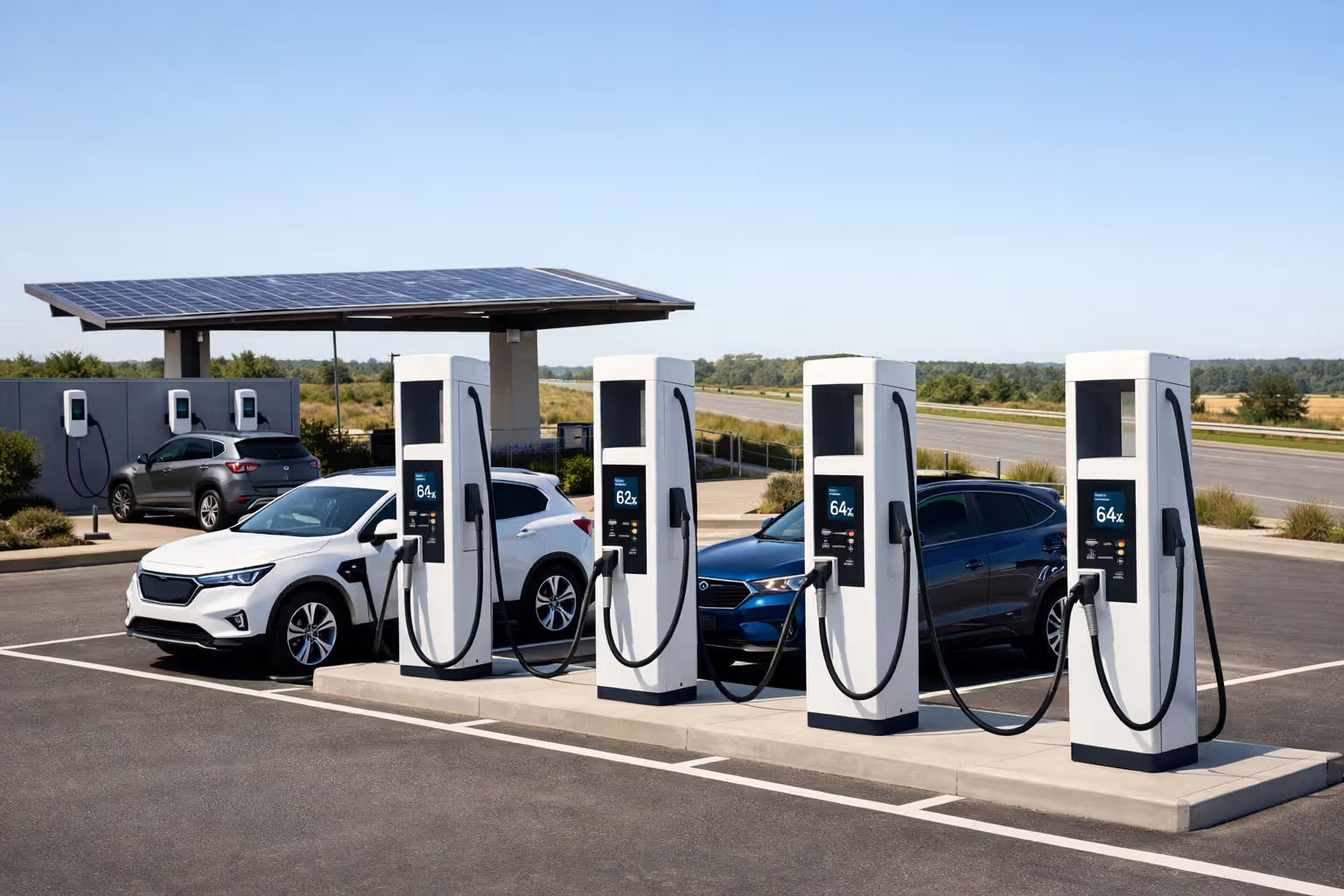
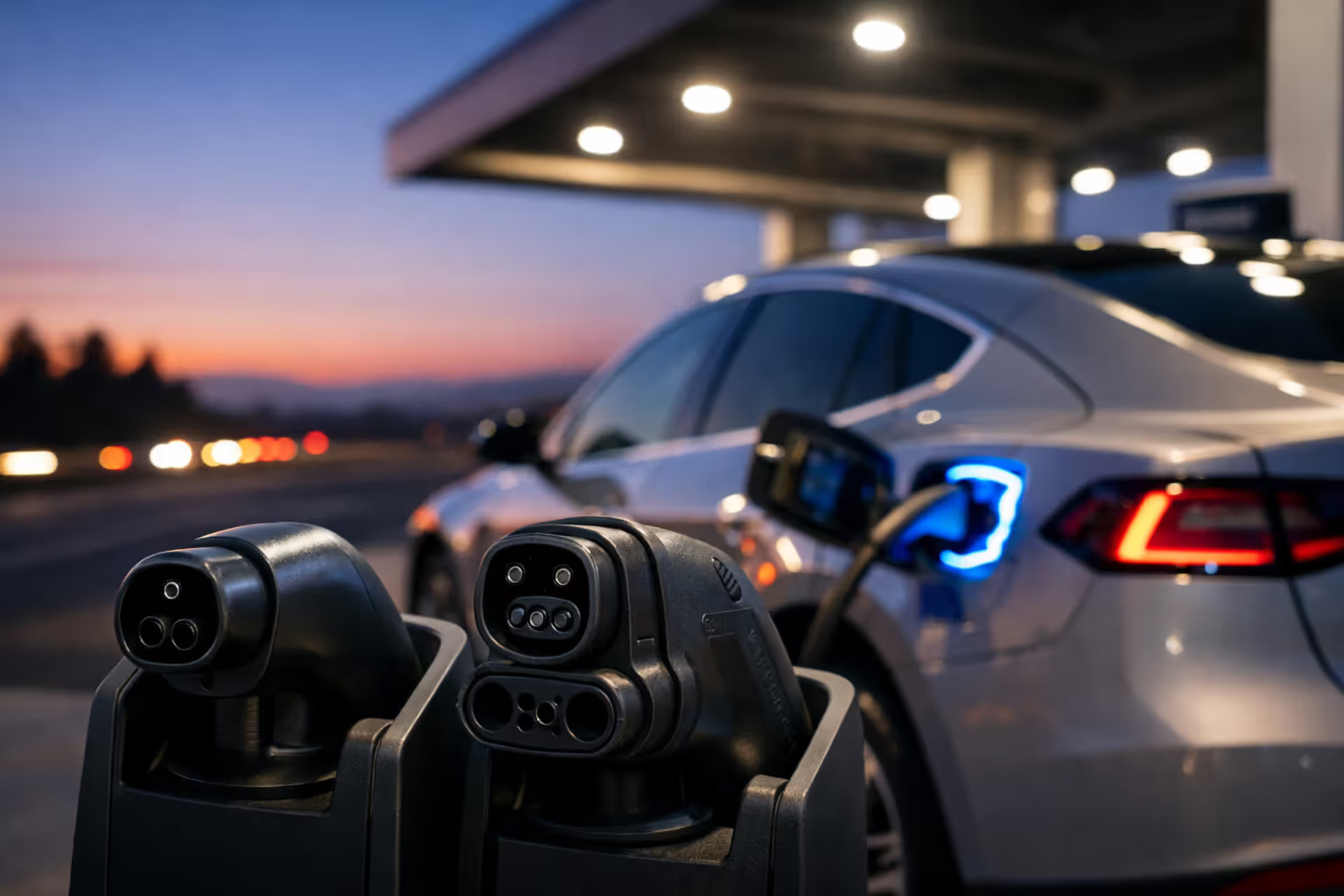
EVs depend on public charging infrastructure for road trips. DC fast chargers (Level 3) deliver 150-350 kW, adding 150-200 miles in 30 minutes for vehicles with 800-volt architecture like the Hyundai Ioniq 6. Older EVs with 400-volt systems charge slower—a Nissan Leaf maxes out at 50 kW, requiring an hour to add 150 miles.
Network fragmentation complicates planning. Tesla's Supercharger network covers 45,000+ stalls nationwide with consistent reliability, but only recently opened to non-Tesla vehicles with adapters. Third-party networks like Electrify America and EVgo show spotty availability in rural corridors. A route from Denver to Yellowstone might have chargers every 75 miles, while a drive through West Texas could stretch 150 miles between stations.
Author: Brianna Lowell;
Source: shafer-motorsports.com
Upfront Purchase Price vs. 5-Year Ownership Costs
The initial sticker shock favors PHEVs. The Honda CR-V hybrid starts at $38,000, while the plug-in Sport Touring trim jumps to $46,000. The fully electric Chevy Blazer EV begins at $48,800. That $10,000-15,000 premium for battery capacity takes years to recover through fuel savings.
Federal tax credits narrow the gap—up to $7,500 for qualifying EVs and PHEVs—but strict assembly and battery sourcing rules disqualify many models. The Inflation Reduction Act requires final assembly in North America and battery components sourced from US free-trade partners. As of 2024, only about 20 EV and PHEV models qualify for the full credit.
| Cost Category | Typical PHEV | Typical EV |
| Purchase price (after incentives) | $38,000 | $41,000 |
| Annual fuel/electricity | $1,200 | $650 |
| Maintenance (annual average) | $850 | $550 |
| Insurance (annual average) | $1,650 | $1,800 |
| Estimated 5-year resale value | $18,000 | $17,000 |
| Total 5-year cost | $49,250 | $48,000 |
Assumptions: 12,000 miles/year, $3.50/gallon gas, $0.14/kWh electricity, 70% electric driving for PHEV
The cost comparison long term reveals tight margins. EVs save $550 annually on fuel and $300 on maintenance, but higher insurance premiums (reflecting pricier repairs) eat into those gains. Over five years, the EV edges ahead by roughly $1,250—meaningful but not transformative.
Electricity rates dramatically shift this calculation. California's $0.32/kWh average makes EV charging cost nearly as much as gasoline on a per-mile basis, while Louisiana's $0.09/kWh makes EVs far cheaper to operate. Run your local utility rates through a cost calculator before assuming EVs automatically save money.
Expert Insight: "The break-even point between PHEVs and EVs depends heavily on charging access and driving patterns," notes Kelley Blue Book's senior editor Matt DeLorenzo. "Buyers who can't charge at home often spend more on public charging than they'd save versus gasoline, erasing the EV's cost advantage."
Money-Saving Tip: Some states stack incentives on top of federal credits. Colorado adds $5,000 for EV purchases, while California offers up to $7,500 in rebates for income-qualified buyers. Check the Alternative Fuels Data Center for your state's current programs before finalizing your purchase.
Range Anxiety Reality Check: When Fuel Backup Matters
The typical American drives 37 miles daily according to the Federal Highway Administration—well within any EV's range. A Tesla Model 3 Long Range covers 358 miles, a Nissan Leaf manages 212 miles, and even budget-focused models like the Chevy Bolt EUV deliver 247 miles. For daily commuting and errands, range concerns are largely psychological.
Road trips expose the fuel backup comparison differences. A PHEV exhausts its 30-mile electric range in the first half-hour, then operates as a regular hybrid achieving 35-40 mpg for the remaining 500 miles to your destination. You refuel in five minutes at any gas station.
Author: Brianna Lowell;
Source: shafer-motorsports.com
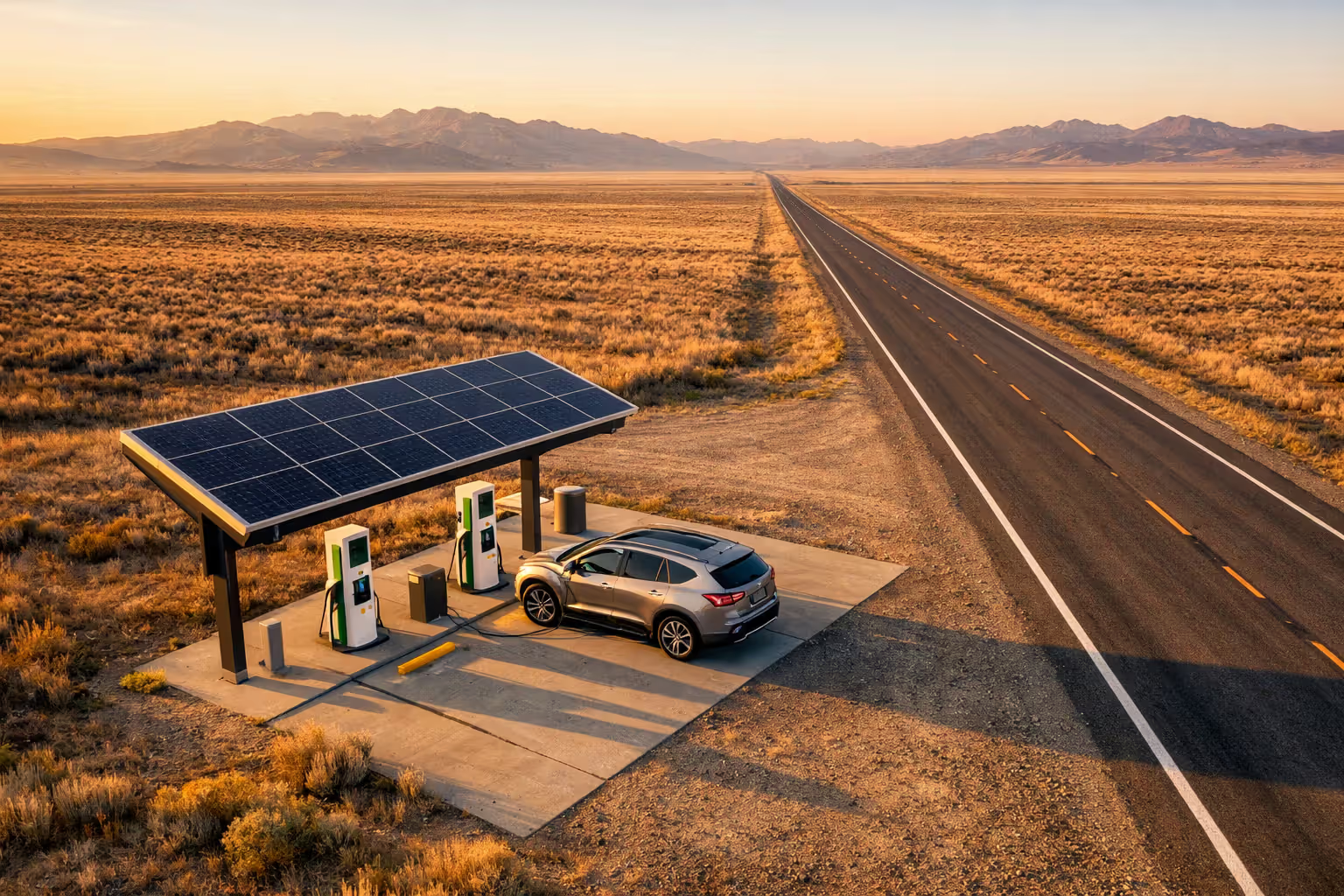
An EV requires charging stops every 200-300 miles depending on highway speed and weather. That Denver-to-Yellowstone trip mentioned earlier demands at least two 30-minute charging sessions, adding an hour to your travel time. Winter driving in Montana could require three stops if temperatures drop below 20°F and you're running the heater.
Regional infrastructure gaps remain significant. The southeastern US has robust charging networks along I-95 and I-75, but venture into rural Alabama or Mississippi and fast chargers thin out. The upper Midwest faces similar gaps—northern Wisconsin and Michigan's Upper Peninsula offer limited charging options outside major highways.
PHEVs eliminate this planning burden. You'll burn more gas and produce more emissions than an EV, but you're never calculating whether you can reach the next charger before your battery hits zero. For drivers who regularly visit family in rural areas or take spontaneous weekend trips, that fuel backup provides genuine peace of mind rather than just psychological comfort.
The electric car is not a luxury. It is a necessity. The question is not whether we will transition, but how wisely each driver navigates that transition
— Bob Lutz
Maintenance Schedules and Repair Costs: Comparing Powertrains
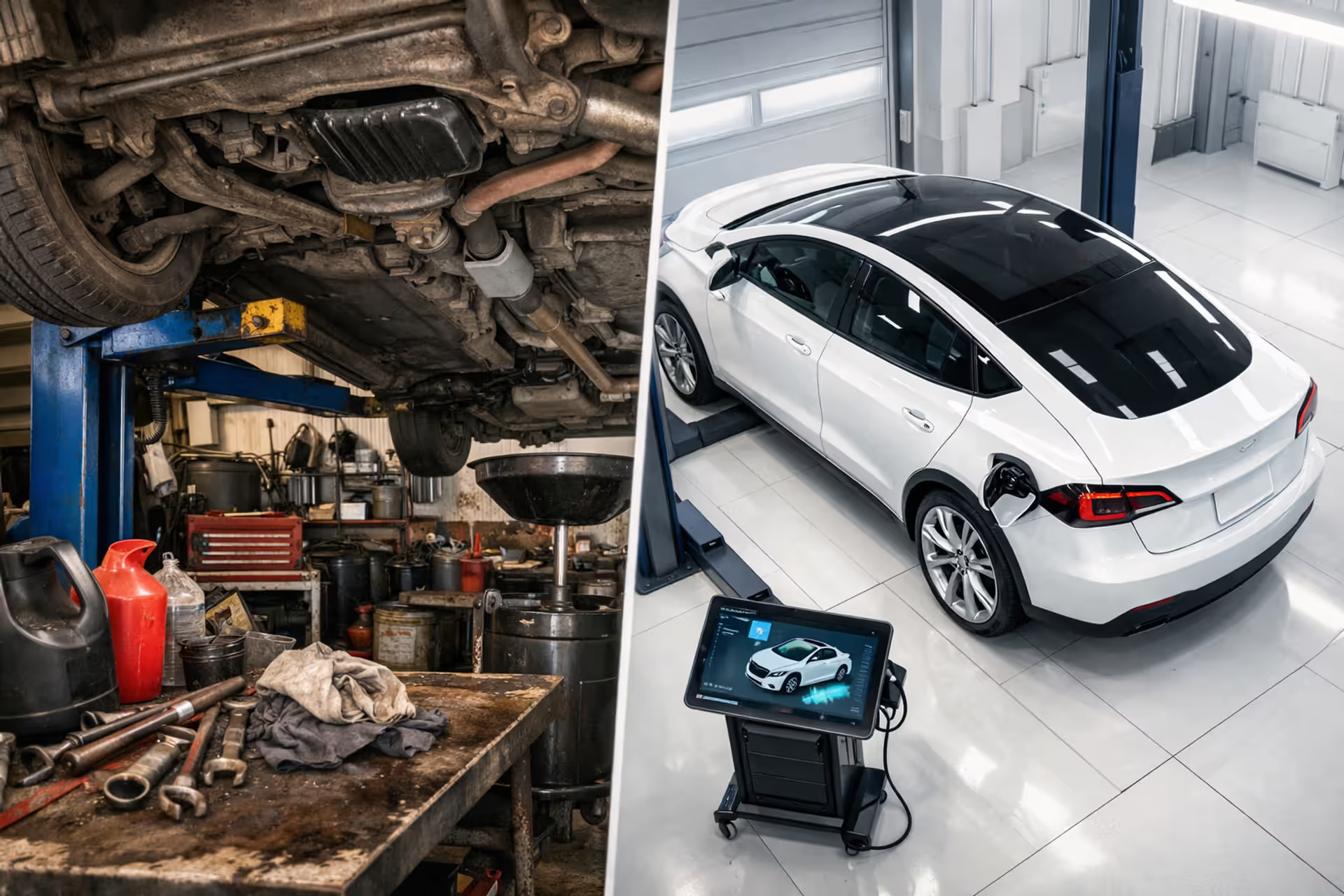
EVs deliver on their promise of reduced maintenance. No oil changes, no transmission fluid, no spark plugs, no timing belts, no exhaust system repairs. Regenerative braking reduces brake pad wear—many EV owners report original pads lasting 100,000+ miles. You'll rotate tires, replace cabin air filters, and top off washer fluid. Annual maintenance averages $550 compared to $850 for conventional vehicles.
Battery warranties provide long-term security: most manufacturers cover 8 years/100,000 miles, guaranteeing at least 70% capacity retention. Real-world data from Tesla and Nissan shows battery degradation averaging 2-3% in the first year, then leveling to 1% annually. A 300-mile EV might lose 20-30 miles of range over eight years—noticeable but not crippling.
PHEVs carry maintenance differences due to their dual powertrain. You'll still change oil every 5,000-7,500 miles, though less frequently than conventional cars since the electric motor reduces engine runtime. The gasoline engine needs periodic exercise—letting it sit unused for months risks fuel system issues and engine degradation. Most PHEVs automatically run the engine briefly if it hasn't operated in several weeks.
Author: Brianna Lowell;
Source: shafer-motorsports.com
Brake service, transmission fluid changes, and cooling system maintenance follow conventional schedules. The added complexity means more potential failure points: you could face both a battery pack issue and a transmission problem, whereas an EV eliminates half those systems entirely.
Repair costs favor EVs for routine work but flip for major damage. A fender bender that damages the battery pack can total an EV due to replacement costs ($10,000-20,000), while a PHEV might only need body panel repairs. Insurance rates reflect this risk—EVs average 9% higher premiums than comparable PHEVs.
Key Consideration for Apartment Dwellers: Without home charging, you'll rely on workplace or public Level 2 chargers that cost $0.25-0.50/kWh—double or triple home electricity rates. This pricing eliminates most of the EV's fuel savings advantage. A PHEV lets you charge opportunistically when convenient but doesn't leave you stranded when charging isn't available. If your apartment complex has no EV infrastructure plans, a PHEV provides electrified driving without the charging dependency.
Which Vehicle Type Matches These 6 Driver Profiles
Apartment dwellers without dedicated parking: PHEV wins decisively. You can charge occasionally at public stations or work, enjoying partial electric operation, but the gas engine prevents charging logistics from dominating your life. An EV forces you into dependence on public charging networks for every electron, turning "fueling" into a 45-minute errand instead of a five-minute stop.
Long-distance commuters (60+ miles each way): EV takes this category if you have home charging. A 120-mile daily round trip depletes most PHEV batteries twice over, forcing gas engine operation for 80+ miles daily. An EV with 250+ miles of range handles the commute with charge to spare, and you'll recover the full battery overnight on Level 2. Annual fuel savings reach $1,800-2,200 versus gasoline.
I think the biggest mistake people make is buying a vehicle based on what they think they’ll need once a year, rather than what they actually need 350 days a year
— Sandy Munro
Frequent road trippers: PHEV advantages become clear on multi-state drives. The fuel backup eliminates charging anxiety, route planning complexity, and time spent waiting at chargers. You'll sacrifice the EV's lower operating costs during those trips, but you'll arrive on your own schedule without weather or charger reliability concerns derailing your timeline.
Suburban families with two vehicles: Split the difference—one EV for the primary commuter with predictable daily mileage, one PHEV or conventional vehicle for flexibility. This strategy maximizes electric driving where it works best while maintaining gasoline backup for unpredictable needs. Many families report the EV becomes the preferred vehicle for daily use, leaving the backup car for road trips and hauling duties.
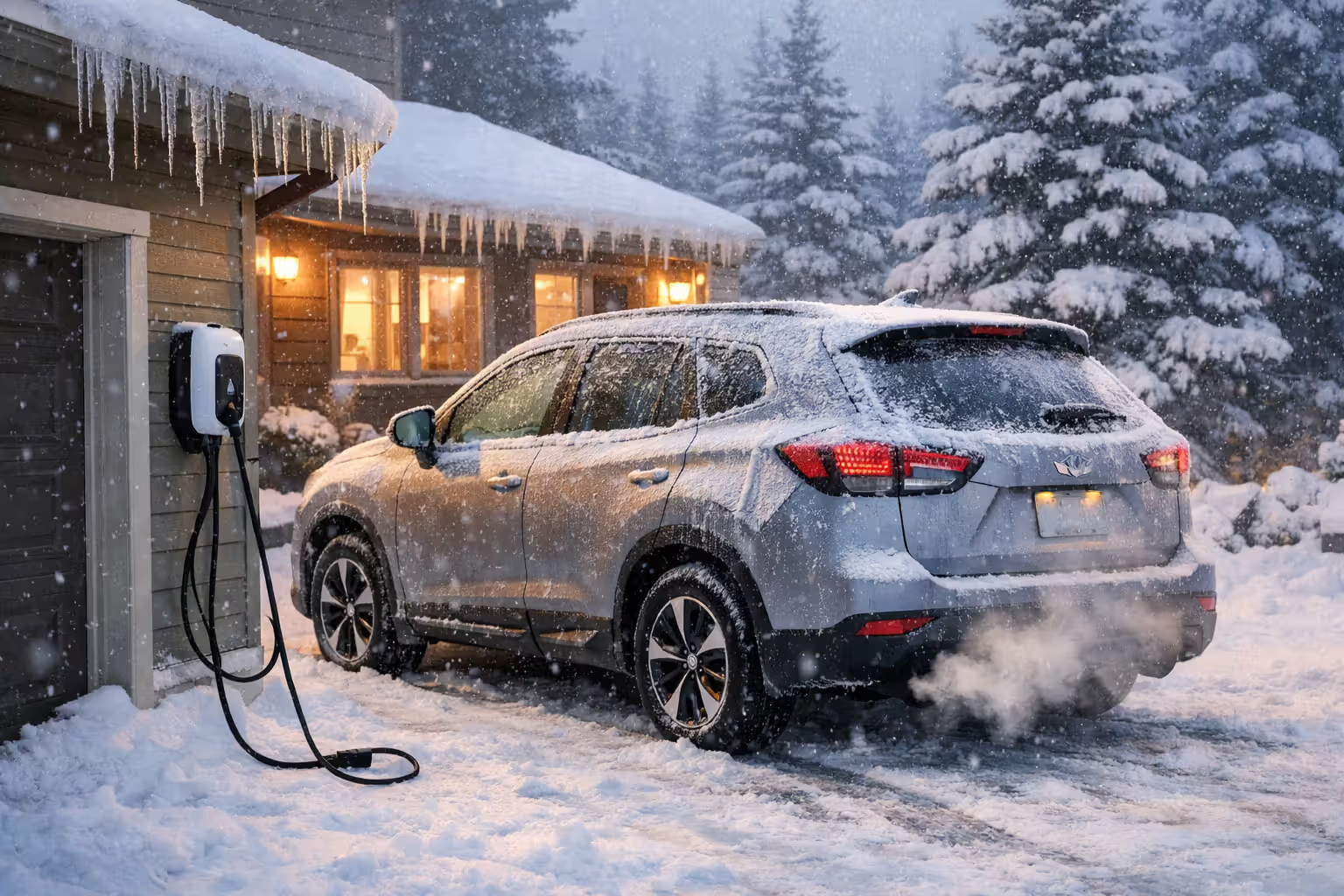
Cold-climate drivers in northern states: PHEVs soften the winter range hit. When your EV's 280-mile summer range drops to 180 miles in January, the anxiety creeps back in. A PHEV's reduced electric range (30 miles becoming 20 miles) matters less because the gas engine seamlessly compensates. Cabin heating also draws less from the battery since the engine generates waste heat. Minnesota and Maine drivers consistently report higher satisfaction with PHEVs than EVs for this reason.
Author: Brianna Lowell;
Source: shafer-motorsports.com
Eco-conscious buyers maximizing emissions reduction: EV wins if you charge from renewable sources or live in regions with clean grid electricity (Pacific Northwest hydropower, California solar). A PHEV running on gasoline 40% of the time produces roughly 60% lower emissions than a conventional car—meaningful but not zero. An EV charged from coal-heavy grids (West Virginia, Wyoming) produces emissions equivalent to a 35-40 mpg hybrid, so the PHEV's advantage shrinks in those regions.
FAQ: Plug-In Hybrid and EV Ownership Questions
Making Your Decision With Eyes Wide Open
The plug in hybrid vs EV decision hinges on three concrete factors: your charging access, your typical driving distances, and your tolerance for planning around infrastructure limitations. Neither vehicle type is universally superior—they solve different problems for different drivers.
Choose an EV if you have reliable home charging, drive predictable daily routes within the vehicle's range, and rarely take spontaneous long trips. The lower operating costs and simplified maintenance justify the higher purchase price over five years, and you'll enjoy instant torque and quiet operation that makes conventional cars feel dated.
Choose a PHEV if you rent without charging access, regularly drive beyond 200 miles in a single trip, live in regions with sparse charging infrastructure, or simply want the security of gasoline backup. You'll capture most daily driving in electric mode while maintaining the flexibility of conventional vehicles for everything else.
The worst decision is buying an EV when your lifestyle doesn't support it, then growing to resent the charging logistics that dominate your routine. The second-worst is buying a PHEV and never plugging it in, paying extra for capability you ignore. Match the technology to your actual needs rather than aspirational ones, and either choice will serve you well.
Related Stories
Read more
Read more

The content on Auto Insights is provided for general informational and educational purposes only. It is intended to offer guidance on car buying, vehicle ownership, finance, insurance, EVs, maintenance, accessories, reviews, and related topics, and should not be considered professional financial, legal, insurance, mechanical, or investment advice.
All information, tools, calculators, comparisons, and recommendations presented on this website are for general guidance only. Individual financial situations, driving habits, vehicle conditions, insurance policies, and market factors vary, and actual results or costs may differ from estimates provided.
Auto Insights makes no guarantees regarding accuracy, completeness, or current applicability of the information, as automotive markets, regulations, incentives, interest rates, and vehicle specifications may change over time.