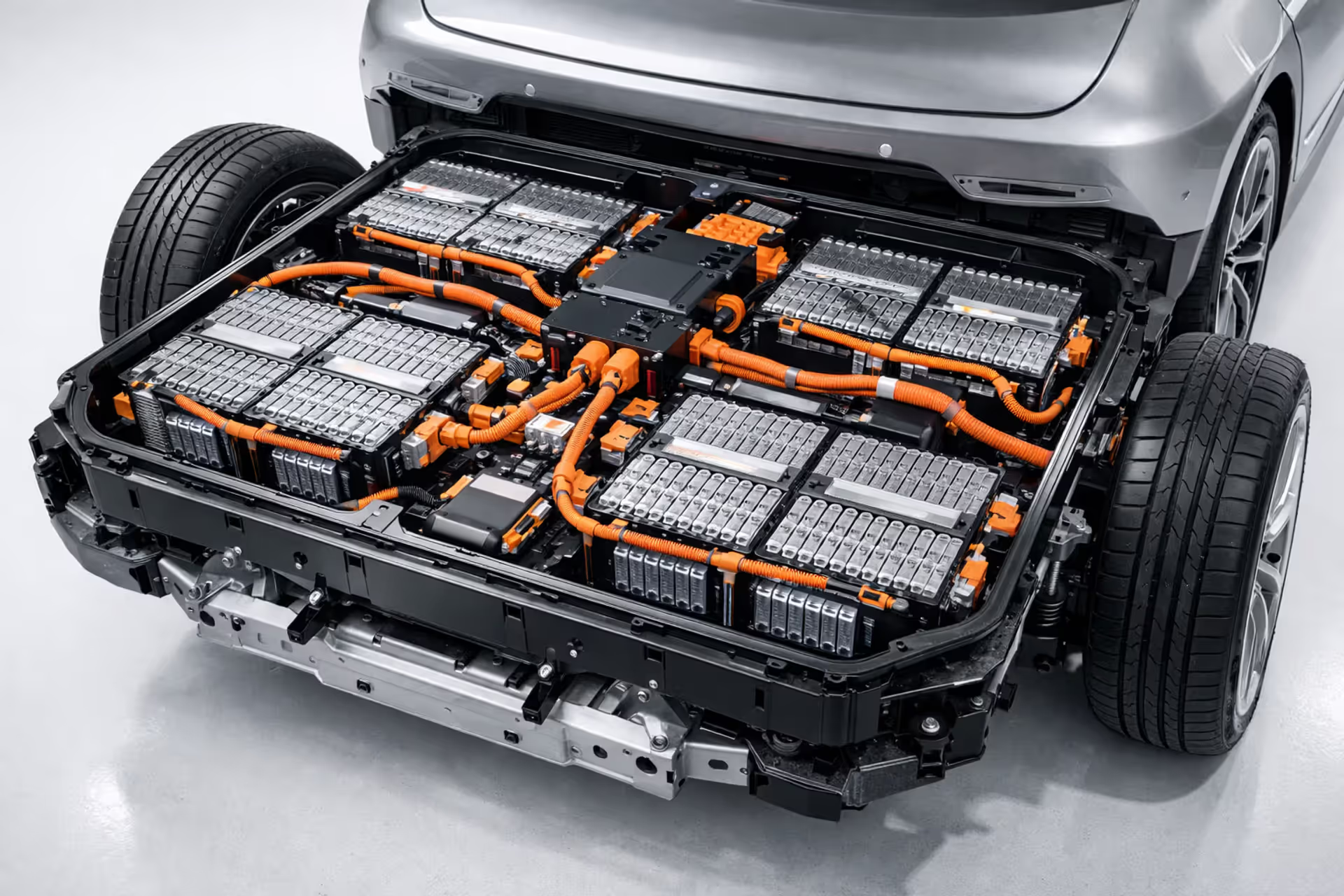
EV battery pack installed on electric vehicle chassis showing individual battery cells and high-voltage wiring
How Long Do EV Batteries Last? Understanding EV Battery Lifespan

Content
Electric vehicle batteries represent the single most expensive component in your car, often accounting for 30-40% of the vehicle's total cost. Understanding how long they last isn't just academic curiosity—it directly impacts your ownership costs, resale value, and whether going electric makes financial sense for your situation.
Most EV batteries are engineered to outlast the useful life of the vehicle itself, typically retaining 70-80% of their original capacity after 200,000 miles. But that's a broad generalization. Real-world performance depends on dozens of variables, from your local climate to how often you charge to 100%. Some owners report minimal degradation after five years, while others see noticeable range loss within 30,000 miles.
The gap between best-case and worst-case scenarios is where most buyers get lost. This guide breaks down exactly what determines battery longevity, what the actual data shows across different manufacturers, and how your daily habits can add years to your battery's useful life.
What Determines How Long an EV Battery Lasts?
Lithium-ion batteries degrade through two distinct mechanisms that operate simultaneously. Understanding both helps explain why two identical vehicles can show vastly different degradation patterns.
Battery aging factors include everything from cell chemistry to manufacturing quality, but the dominant forces are how you use the battery (cycle aging) and simply how much time passes (calendar aging). Modern EV batteries use either nickel-manganese-cobalt (NMC) or lithium-iron-phosphate (LFP) chemistry. NMC cells offer higher energy density—more range in a smaller package—but degrade faster at high temperatures. LFP cells sacrifice some energy density for superior longevity and thermal stability, which is why you'll find them in many newer Tesla Model 3 Standard Range vehicles and various Chinese EVs entering the US market.
Each full discharge-recharge cycle causes microscopic structural changes in the battery's electrodes. Lithium ions move back and forth between the anode and cathode during charging and discharging, and this movement gradually breaks down the electrode materials and forms resistive layers that reduce capacity. A "cycle" doesn't mean running from 100% to 0%—charging from 40% to 80% counts as 0.4 cycles.
Calendar Aging vs. Cycle Aging
Calendar aging happens whether you drive the car or not. Chemical reactions inside the battery continue at all times, slowly degrading the electrolyte and forming solid-electrolyte interface (SEI) layers on the anode. Park your EV for six months at 100% charge in a hot garage, and you'll lose more capacity than someone who drives daily but follows optimal charging practices.
This creates a counterintuitive situation: driving your EV regularly with moderate charging habits often preserves the battery better than letting it sit unused. The exception is extreme cycle counts—if you're putting 50,000 miles per year on your vehicle with multiple daily charges, cycle aging will dominate.
Cycle aging accelerates based on depth of discharge and charge level. Repeatedly charging to 100% and discharging to 10% stresses the battery far more than staying between 20% and 80%. Think of it like repeatedly stretching a rubber band to its limit versus gentle stretching—the material fatigues faster under extreme stress.
Temperature and Climate Impact
Battery chemistry operates optimally between 60-80°F. Outside this range, degradation accelerates significantly.
In hot climates like Phoenix or Las Vegas, batteries parked in direct sunlight can reach 120°F or higher. At these temperatures, the chemical reactions that cause calendar aging speed up exponentially. Studies show EVs in hot climates can experience 2-3 times faster degradation than identical vehicles in moderate climates. Active thermal management systems (liquid cooling) help, but they can't completely eliminate the effect when ambient temperatures stay high for months.
Cold weather presents different challenges. Below 40°F, lithium-ion batteries lose temporary capacity—range drops, but the capacity returns when the battery warms up. However, charging a cold battery, especially with fast charging, causes lithium plating on the anode, which permanently reduces capacity. This is why most modern EVs include battery preconditioning that warms the pack before fast charging.
Minnesota and North Dakota EV owners often report accelerated degradation not from the cold itself, but from repeatedly fast-charging cold batteries during winter road trips. The battery management system allows this to prevent you from getting stranded, but it comes at a cost.
The biggest enemy of a lithium-ion battery is not usage — it’s prolonged exposure to high temperatures and high states of charge. If you manage those two variables, the battery will outlive the car
We're seeing real-world data that well-managed EV batteries in moderate climates regularly exceed 300,000 miles while retaining 80% capacity. The technology has matured beyond early concerns about rapid degradation.
— Dr. Anna Stefanopoulou, Director of the University of Michigan Energy Institute
Average Degradation Rates: What the Data Shows
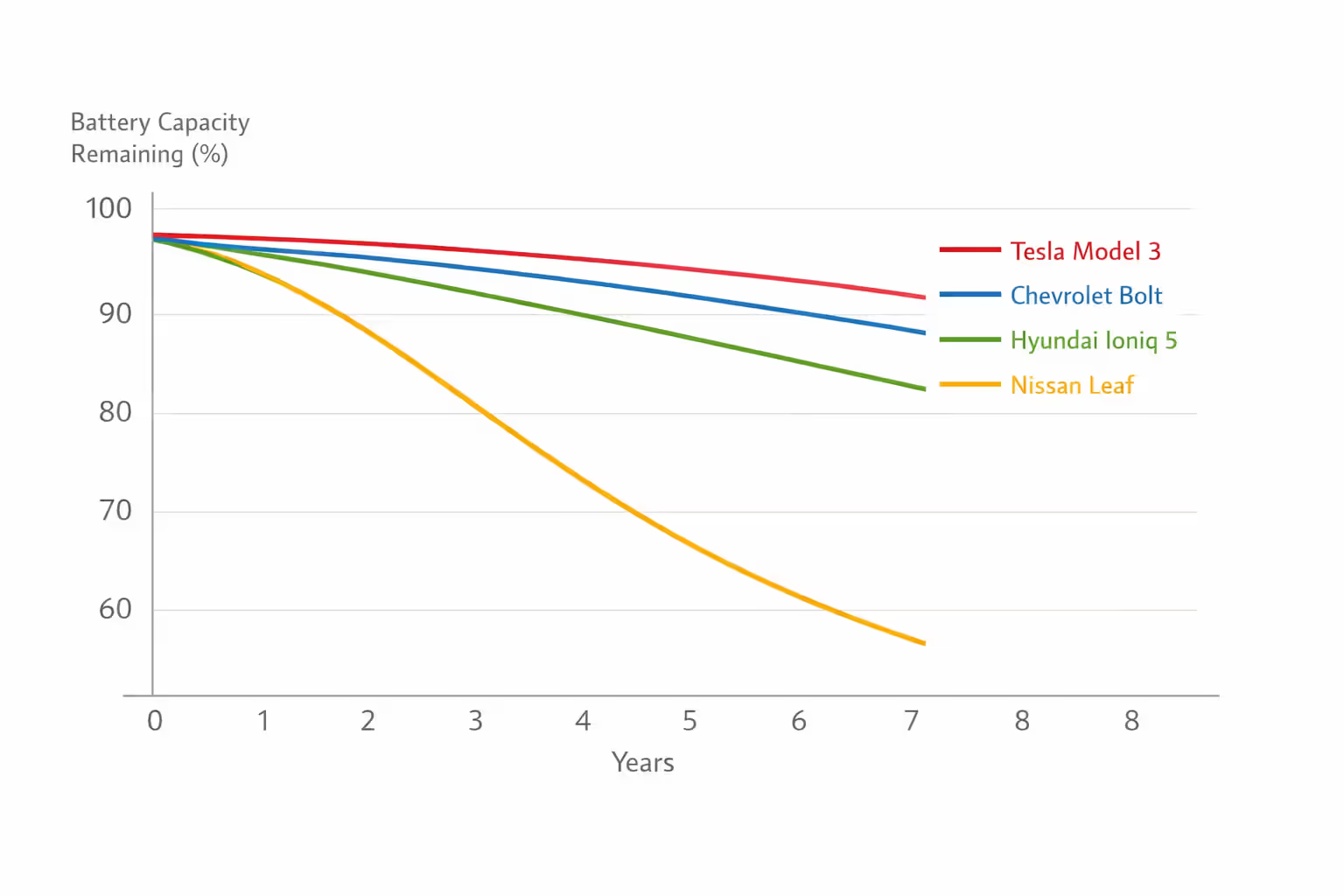
Aggregated data from thousands of vehicles provides a clearer picture than manufacturer claims. The numbers vary considerably by brand, model year, and battery chemistry.
| Manufacturer/Model | Warranty Period | Average Degradation After 5 Years | Average Degradation After 8 Years | Sample Size/Data Source |
| Tesla Model 3/Y (NMC) | 8 years/120,000 mi | 8-10% | 12-15% | 15,000+ vehicles, Recurrent Auto |
| Tesla Model S/X (NMC) | 8 years/150,000 mi | 10-12% | 15-18% | 8,000+ vehicles, Recurrent Auto |
| Chevrolet Bolt | 8 years/100,000 mi | 9-11% | 14-17% | 3,500+ vehicles, Recurrent Auto |
| Nissan Leaf (passive cooling) | 8 years/100,000 mi | 15-20% | 25-30% | 12,000+ vehicles, FleetCarma |
| Ford Mustang Mach-E | 8 years/100,000 mi | 7-9% | Insufficient data | 1,200+ vehicles, Recurrent Auto |
| Hyundai Ioniq 5 | 10 years/100,000 mi | 6-8% | Insufficient data | 800+ vehicles, early data |
The Nissan Leaf's higher degradation stems from its passive air cooling system rather than liquid cooling. In moderate climates, Leafs perform reasonably well, but in hot regions like Arizona, some owners reported 20% degradation within three years. This single factor explains why active thermal management became standard on virtually all EVs released after 2018.
Newer vehicles with LFP chemistry are showing even slower degradation rates, but insufficient long-term data exists for definitive conclusions. Early indicators suggest 5-6% degradation after five years, which would be remarkable.
Most manufacturers design their battery management systems to maintain a buffer—when your display shows 0% and 100%, the actual battery cells aren't at their absolute minimum and maximum. This buffer, typically 5-10% on each end, protects the cells from extreme stress and extends lifespan expectations EV owners can reasonably have.
Author: Brianna Lowell;
Source: shafer-motorsports.com
How Your Charging Habits Affect Battery Longevity
Your daily charging routine has more impact on battery health than almost any other factor you can control.
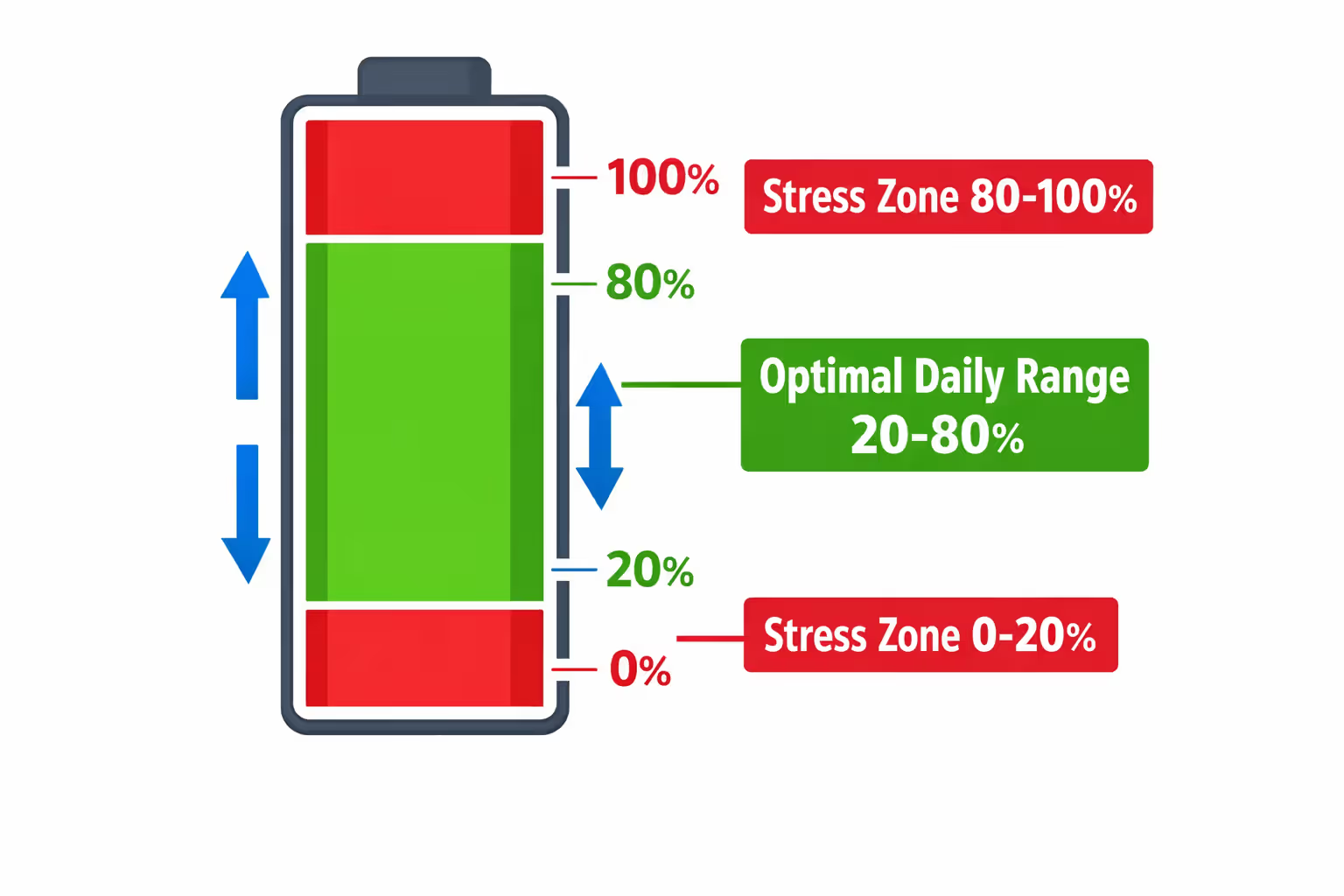
Keeping your battery between 20% and 80% for daily use minimizes stress on the cells. When you charge to 100%, you're compressing maximum lithium ions into the cathode structure, creating mechanical stress. Similarly, draining to near 0% forces lithium ions out of the anode structure. Both extremes accelerate degradation.
For daily commuting, set your charge limit to 70-80%. Most EVs include software settings for this. Reserve 100% charges for road trips when you actually need the full range. If you charge to 100%, try to depart soon afterward rather than letting the battery sit at full charge for hours or days.
Fast charging generates heat, and heat accelerates degradation. The battery management system tries to mitigate this by limiting charging speed when the battery is hot, but repeated fast charging still causes more wear than slow charging at home. One or two fast charging sessions per week won't significantly impact your battery, but daily fast charging can increase degradation rates by 10-20% over several years.
The relationship between charging habits battery health isn't binary—it's cumulative. Occasional "bad" charging behavior won't ruin your battery. It's the patterns repeated hundreds of times that matter.
Author: Brianna Lowell;
Source: shafer-motorsports.com
Some specific mistakes to avoid:
Charging to 100% and leaving it plugged in for days. If you're going on vacation, leave the battery around 50-60%, not fully charged. Calendar aging accelerates at high charge states.
Repeatedly fast charging in extreme temperatures without preconditioning. Let the battery management system warm or cool the pack before initiating a fast charge session when possible.
Letting the battery sit at very low charge for extended periods. If you're not driving for a week, keep the battery above 20%. Some EVs will automatically maintain a minimum charge level, but older models may not.
Ignoring manufacturer recommendations for your specific battery chemistry. LFP batteries can be charged to 100% regularly without the same degradation penalty as NMC batteries. Check your owner's manual.
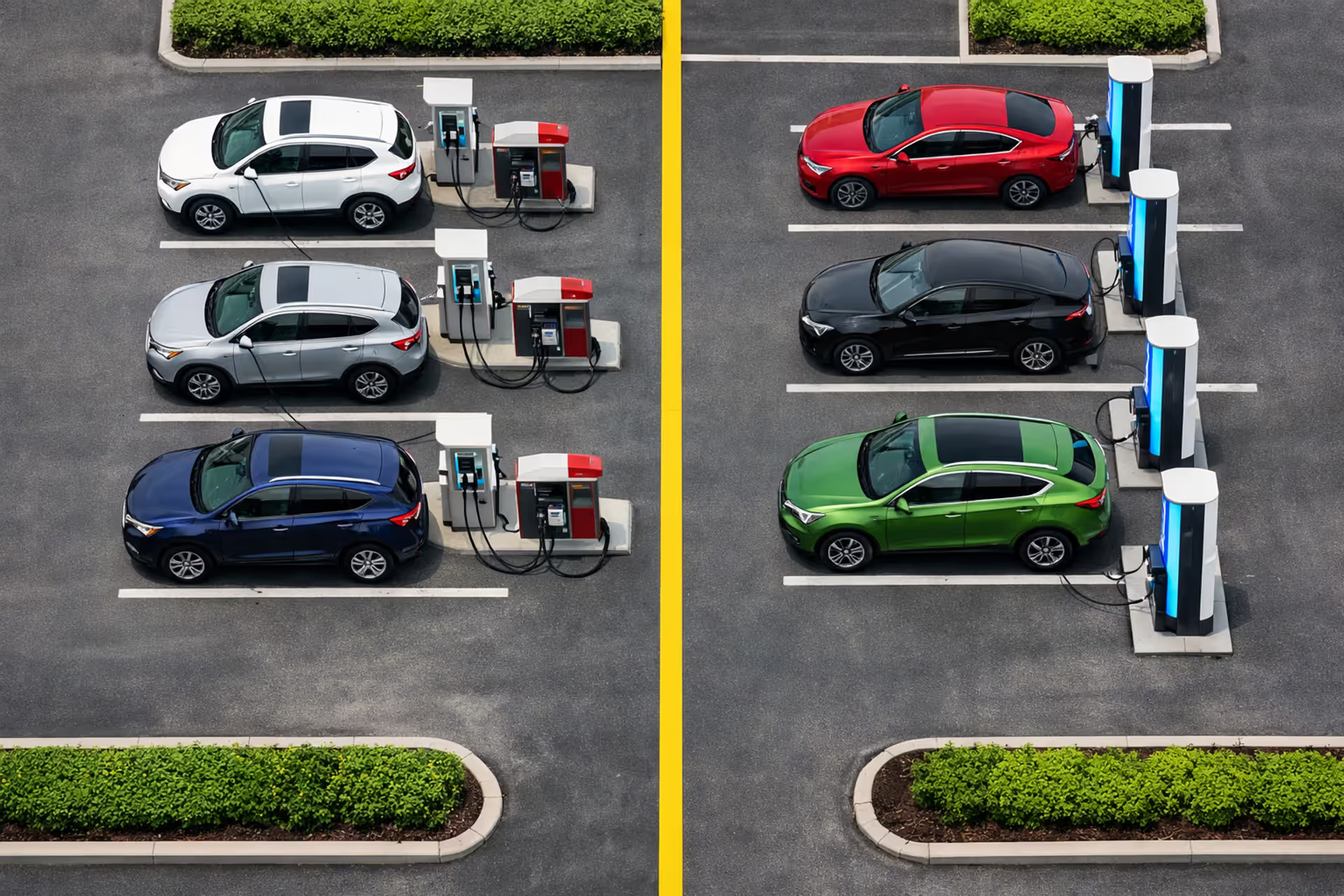
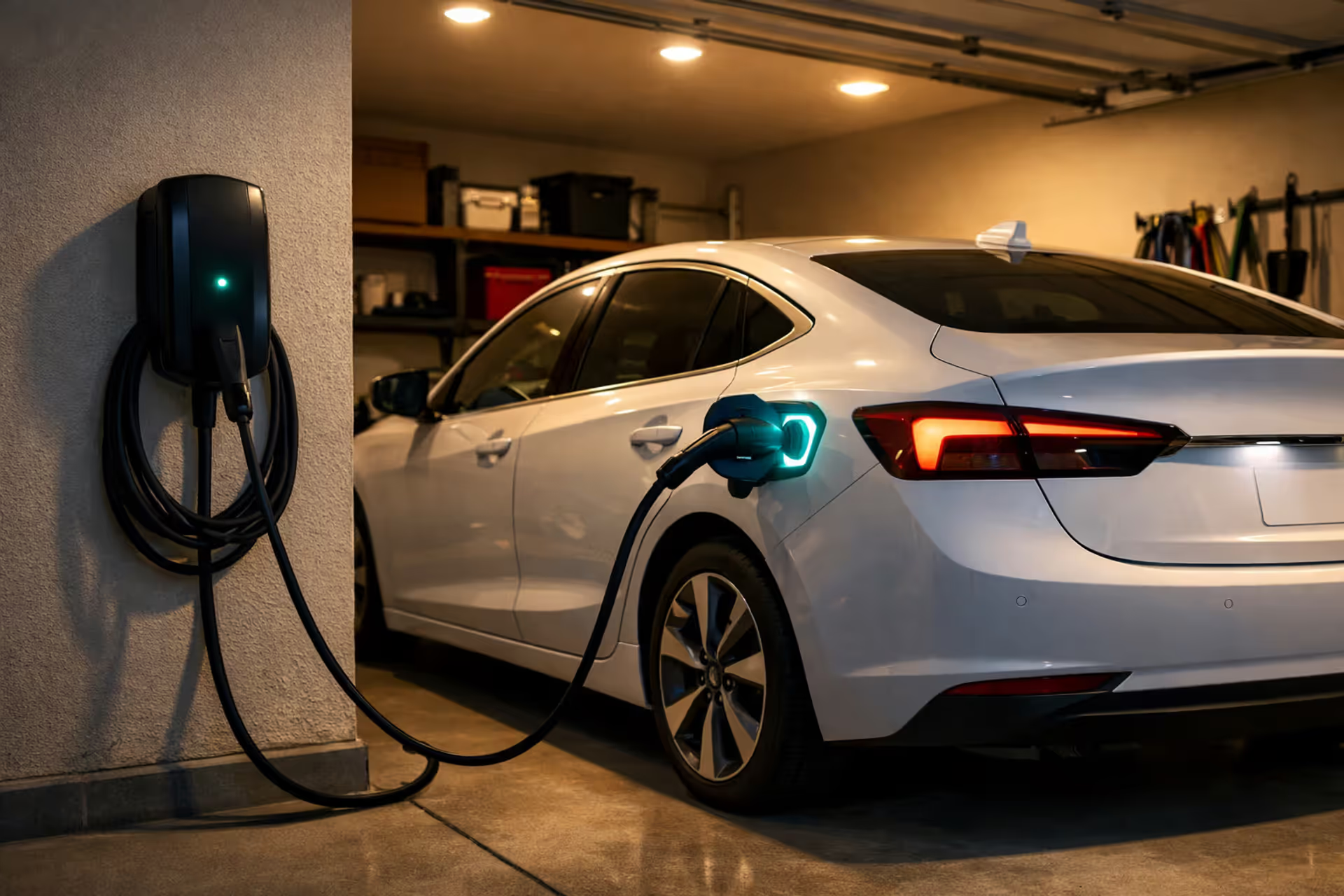
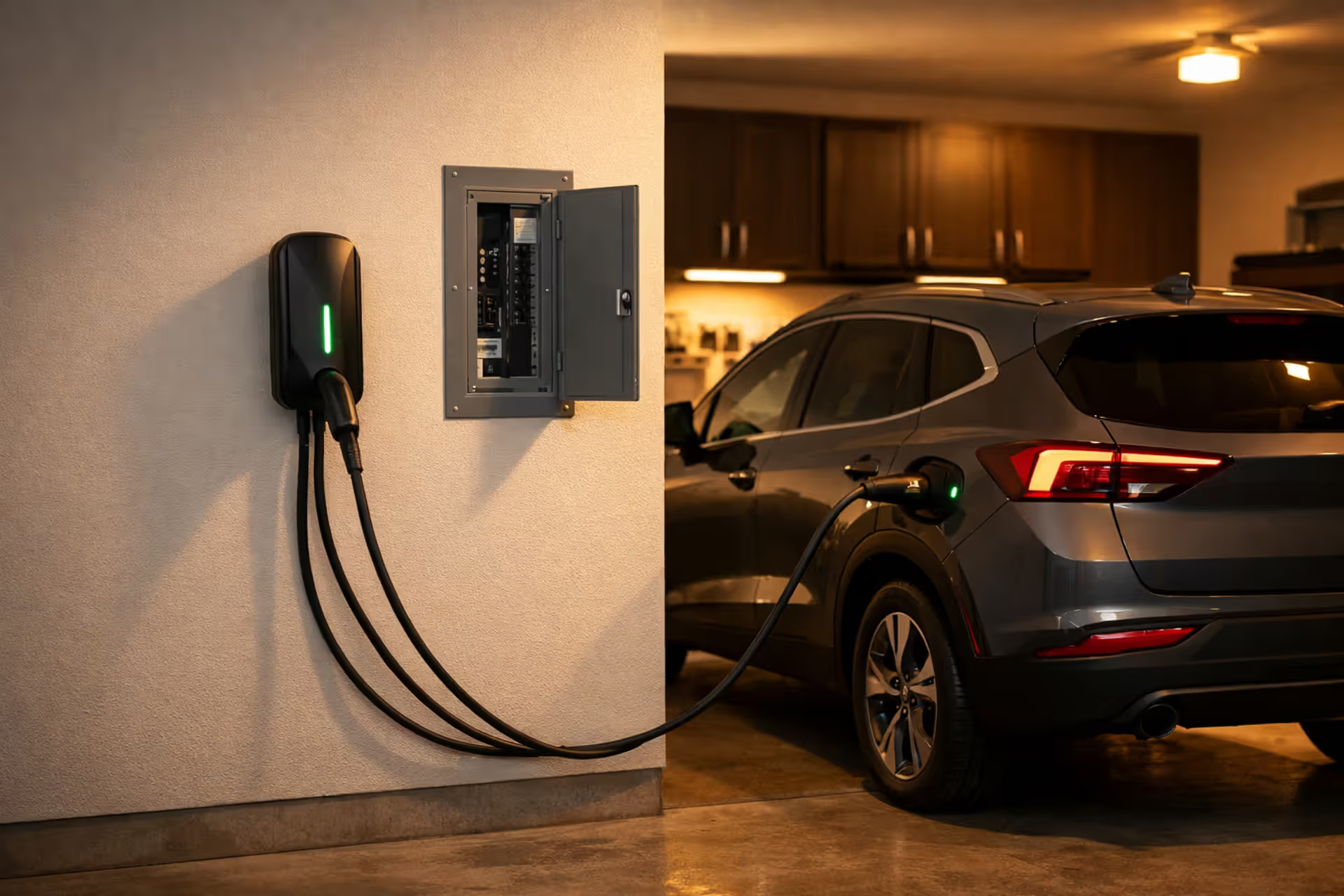
Home Level 2 charging at 7-10 kW represents the sweet spot for battery longevity. It's fast enough to be convenient but slow enough to minimize heat generation. If you can charge overnight, there's rarely a reason to fast charge for daily use.
Charging behavior is the single most controllable factor in battery longevity. The difference between an owner who charges to 80% daily and one who charges to 100% daily can be 10–15% more capacity retained over the life of the vehicle
— Dr. Venkat Srinivasan
EV Battery Warranty Coverage: What's Actually Protected
Understanding your battery warranty coverage prevents expensive surprises and helps you make informed decisions about charging habits and maintenance.
Most manufacturers offer 8-year/100,000-mile warranties, though some extend to 10 years or 150,000 miles. The critical detail isn't the duration—it's the capacity threshold. Most warranties only cover defects or degradation below 70% of original capacity. If your battery degrades to 71% capacity, you're not covered even if that happens in year two.
| Manufacturer | Warranty Duration | Mileage Cap | Capacity Retention Guarantee | Notable Exclusions |
| Tesla | 8 years | 100,000-150,000 mi* | 70% | Degradation from "abuse or misuse" |
| General Motors | 8 years | 100,000 mi | 70% | Commercial use, racing |
| Ford | 8 years | 100,000 mi | 70% | Modified software, salvage title |
| Hyundai/Kia | 10 years | 100,000 mi | 70% | Lack of maintenance, non-OEM parts |
| Nissan | 8 years | 100,000 mi | 75%** | Heat damage from climate (disputed) |
| Rivian | 8 years | 175,000 mi | 70% | Off-road damage, submersion |
Varies by model: Standard Range 100k, Long Range 120k, Performance/Plaid 150k
*Nissan increased to 75% after early Leaf degradation issues
The "abuse or misuse" exclusion gives manufacturers significant discretion. Repeatedly fast charging to 100% in extreme heat probably won't void your warranty, but if you're modifying charging parameters through third-party software or ignoring persistent warning messages, you're in murky territory.
One often-overlooked aspect: the warranty covers the battery pack, but labor costs for diagnosis and replacement are sometimes excluded or capped. Read the fine print. Some manufacturers cover everything, others cap labor reimbursement at a few hundred dollars while the actual labor cost runs $2,000-3,000.
If you're buying used, battery warranty coverage typically transfers to subsequent owners, but verify this before purchase. Some manufacturers require the transfer to be registered, and missing this step can void coverage.
The 70% threshold exists because EVs remain functional below this point—you just have reduced range. A vehicle that originally had 300 miles of range still offers 210 miles at 70% capacity, which exceeds many people's daily needs. However, resale value drops significantly once degradation becomes noticeable.
When Batteries Fail: Replacement Costs and Options
Battery replacement represents the worst-case scenario, but understanding the costs helps you evaluate whether an older EV with a degraded battery is worth keeping or if warranty coverage is adequate.
Replacement cost EV battery packs vary dramatically by vehicle size and manufacturer:
Compact EVs (40-65 kWh): $8,000-$15,000 for the battery pack, plus $1,000-$2,500 labor
Mid-size EVs (65-85 kWh): $12,000-$20,000 for the pack, plus $1,500-$3,000 labor
Large EVs/Trucks (100+ kWh): $20,000-$30,000+ for the pack, plus $2,000-$4,000 labor
These prices reflect out-of-warranty replacement. Under warranty, you pay nothing if degradation exceeds the threshold or a defect is proven.
The good news: battery costs have dropped 89% since 2010 and continue falling. Industry projections suggest replacement costs will drop another 30-40% by 2030 as manufacturing scales and new chemistries mature.
Several alternatives to full pack replacement exist:
Module replacement: EV batteries consist of multiple modules. If only one module fails or degrades significantly, some manufacturers and third-party shops can replace individual modules for $2,000-$5,000. Not all battery architectures support this, and finding matching modules can be challenging.
Remanufactured packs: Companies like Greenbat and Fenix Battery specialize in rebuilding packs with new cells in the original housing. Costs run 40-60% less than new OEM packs, typically with 1-3 year warranties. Quality varies, so research the specific rebuilder carefully.
Aftermarket upgrades: For older EVs with small batteries, some companies offer upgraded capacity packs. A Nissan Leaf owner might replace a degraded 24 kWh pack with a 40 kWh pack for $8,000-$10,000, gaining both restored capacity and additional range.
The decision tree for replacement depends on vehicle value. Replacing a $15,000 battery in a vehicle worth $20,000 makes questionable financial sense unless you have strong non-economic reasons to keep it. But replacing a $10,000 battery in a vehicle you otherwise love that's worth $30,000 can be rational.
Insurance typically doesn't cover gradual degradation, only sudden failure from accidents or defects. If your battery is damaged in a collision, comprehensive coverage should apply, but verify your policy includes battery coverage explicitly.
Battery replacement costs have fallen so dramatically that what was once the greatest financial risk of EV ownership is becoming a manageable maintenance expense — not unlike replacing a transmission in a conventional vehicle
— Dr. Gregory Offer
Extending Your EV Battery's Useful Life: Proven Strategies
Small changes in how you operate and maintain your EV can add years to battery life without sacrificing convenience.
Optimize your charge limits. Set daily charge limits to 70-80% and only charge to 100% when you need the range within the next few hours. Most EVs let you schedule this—set 80% as default and override to 100% the night before a long trip.
Precondition before fast charging. If your EV has a navigation-based preconditioning feature, use it. Tell the nav system you're going to a fast charger, and it will warm or cool the battery to optimal temperature before arrival. This reduces stress during the charging session.
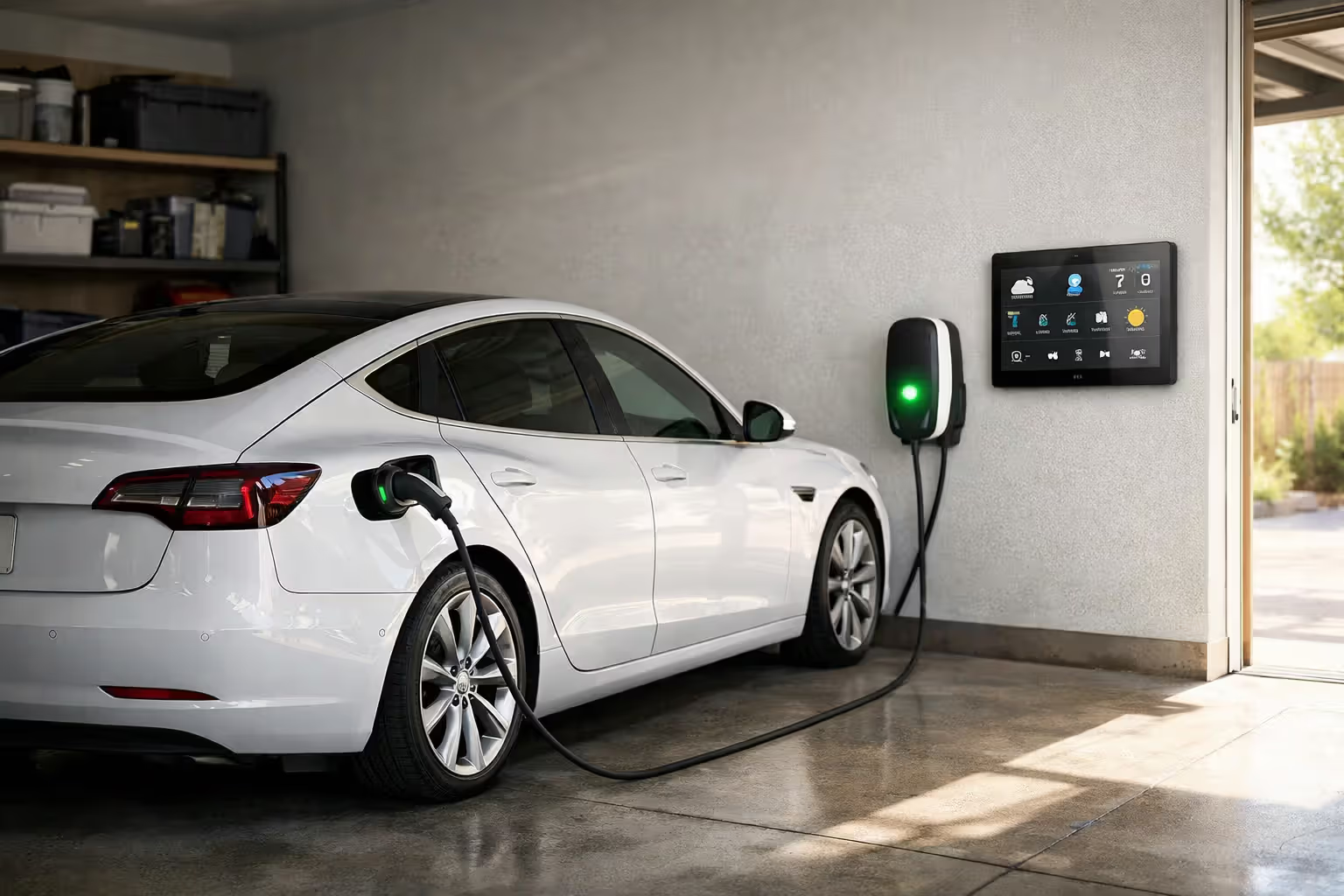
Park in shade or garages when possible. Keeping the battery cooler, especially in hot climates, significantly slows calendar aging. Even a carport or tree shade helps. If you must park in direct sun, some EVs have "cabin overheat protection" features that also help manage battery temperature.
Author: Brianna Lowell;
Source: shafer-motorsports.com
Maintain software updates. Manufacturers continuously refine battery management algorithms. Updates often include improvements to charging strategies, thermal management, and cell balancing. Enable automatic updates or check quarterly.
Avoid leaving the battery at extreme charge states. If you're not driving for a week, keep the battery between 40-60%. Some EVs will maintain this automatically, but older models require manual monitoring.
Drive efficiently. Aggressive acceleration and high-speed driving generate more heat and require more frequent charging, both of which accelerate wear. You don't need to drive like you're hypermiling, but moderate driving habits help.
Monitor battery health. Many EVs display battery health metrics in the settings menu. Third-party apps like Recurrent or TezLab provide more detailed tracking. Catching unusual degradation early might identify a warranty-covered defect.
One counterintuitive tip: don't baby the battery excessively. Using your EV normally—including occasional fast charging and full-range trips—is fine. The goal is avoiding consistently bad habits, not eliminating every possible stress factor. An EV that sits unused at 100% charge in a hot garage degrades faster than one driven daily with reasonable charging practices.
For long-term storage (more than a month), charge to 50-60% and disconnect the 12V battery if possible to prevent parasitic drain. Some EVs enter a "deep sleep" mode automatically, but check your manual.
Frequently Asked Questions About EV Battery Lifespan
Making Battery Longevity Work for You
EV battery lifespan has evolved from a major concern to a minor consideration for most buyers. Data from hundreds of thousands of vehicles demonstrates that modern batteries, when reasonably maintained, easily outlast traditional vehicle ownership periods.
The practical takeaway isn't that you need to obsess over every charging decision. It's that a few simple habits—avoiding regular 100% charges, minimizing fast charging when convenient alternatives exist, and parking in moderate temperatures when possible—can add years of useful life without meaningfully impacting your daily routine.
For most drivers, the battery will retain adequate capacity long after other factors (technology obsolescence, changing needs, normal wear on other components) make vehicle replacement attractive. Warranty coverage provides additional protection during the critical early ownership years when degradation matters most for resale value.
The economics continue improving as replacement costs fall and battery technology advances. Vehicles entering the market today with LFP chemistry or next-generation NMC cells will likely show even better longevity than the already-impressive data from current EVs.
Understanding these fundamentals lets you make informed decisions about EV ownership, maintenance, and whether concerns about battery longevity should influence your purchase decision. For the vast majority of use cases, the answer is clear: battery life shouldn't be a barrier to going electric.