
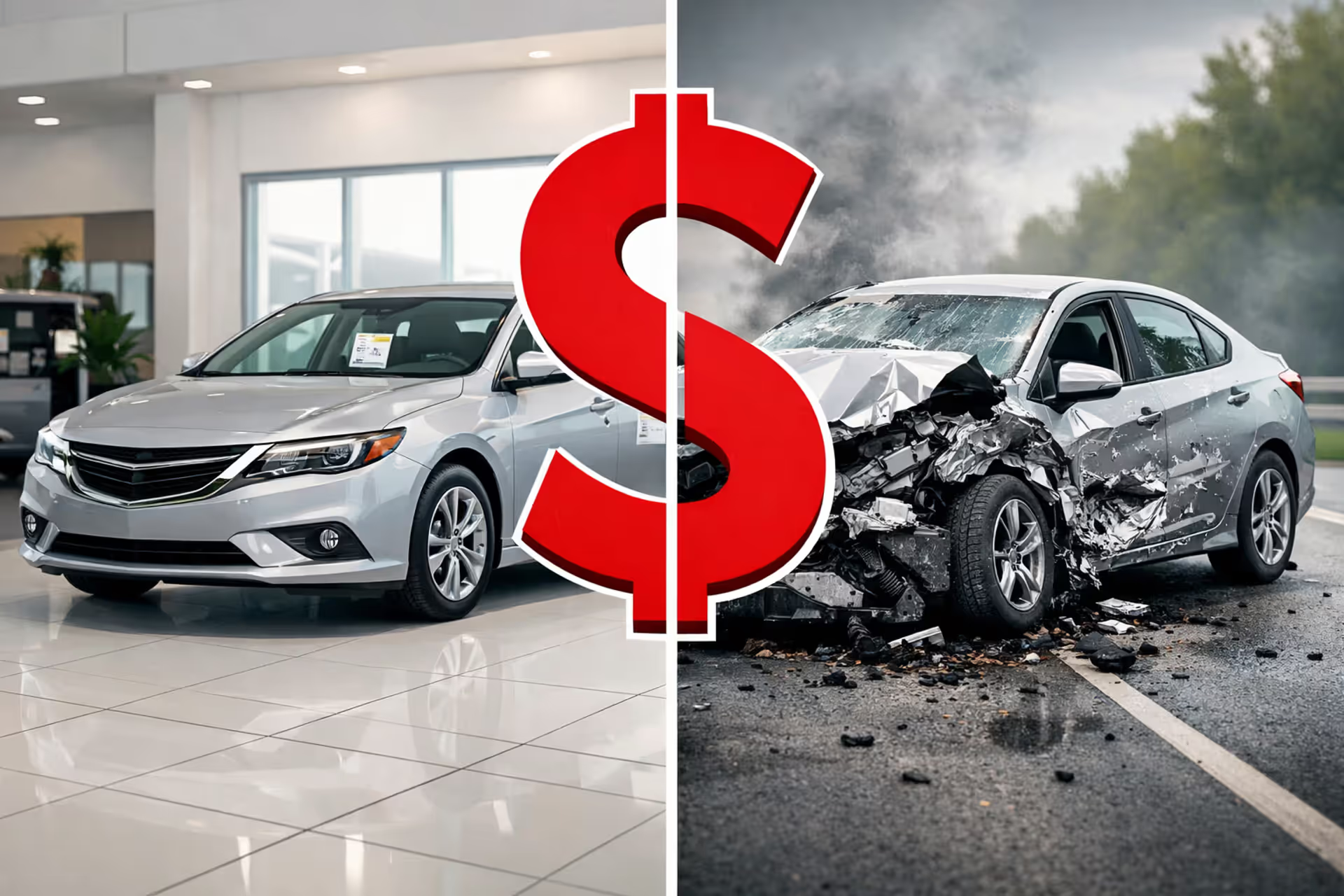
New car in showroom versus totaled car after accident with dollar gap symbol between them
Gap Insurance Explained: What It Covers and Who Actually Needs It

Content
Content
Picture this: You're six months into owning your dream car. The loan paperwork shows you owe $32,000. Then a distracted driver plows into you at an intersection, and the adjuster totals your vehicle. You're expecting a check that covers your loan, right?
Wrong.
The insurance company cuts you a check for $27,500—the current market value of your wrecked car. You still owe the bank $32,000. That's a $4,500 problem you'll be paying off while shopping for your next set of wheels.
Thousands of Americans face this exact scenario every year. The good news? A specific type of coverage exists to eliminate this financial nightmare, and it costs far less than most people expect.
What Gap Insurance Is and How It Protects Your Wallet
Gap insurance handles the difference separating your vehicle's current market value from your outstanding loan or lease balance. The acronym stands for "Guaranteed Asset Protection," though most people just remember it as covering the "gap" between two numbers that should match but rarely do.
Think of it this way: When you file a claim after a total loss, your regular car insurance looks at what your vehicle would sell for today. They consider the miles you've driven, the condition it's in, and how much similar cars are selling for in your area. That's your actual cash value, and it drops the second you leave the dealership parking lot.
Your auto loan? It doesn't budge based on market conditions. You borrowed a specific amount, and the bank expects that exact figure back, plus interest.
Take Marcus, who put $3,000 down on a $38,000 pickup truck. Eight months later, a hailstorm destroyed the vehicle beyond repair. The insurance adjuster valued the damaged truck at $29,500. Marcus still had $34,200 left on his note. His regular policy sent $29,500 to the lender. Without gap coverage, Marcus would've been writing personal checks for $4,700 while simultaneously shopping for a replacement vehicle.
Because he'd purchased gap coverage, that $4,700 evaporated. The gap policy covered every penny of the difference, zeroing out his loan entirely.

Author: Kevin Thornton;
Source: shafer-motorsports.com
How Gap Insurance Works When Your Car Is Totaled or Stolen
Your primary auto policy always pays first. After a total loss, the insurance company investigates, determines your vehicle's market value, deducts your deductible, then issues payment. This sequence happens whether you're dealing with accident damage, theft, or any other covered total loss.
Gap coverage enters the picture only after that initial settlement closes. The gap carrier reviews your outstanding loan amount, verifies what your primary insurance already paid, then covers whatever's left (within your policy's terms).
| Scenario | Amount Owed | Current Market Value | Primary Insurance Check | Gap Picks Up | What You Pay Without Gap |
| Sedan at 6 months | $28,500 | $24,000 | $23,500 (minus $500 deductible) | $5,000 | $5,000 out of pocket |
| Truck at 18 months | $35,000 | $31,000 | $30,500 (minus $500 deductible) | $4,500 | $4,500 out of pocket |
| SUV at 36 months | $18,000 | $19,000 | $18,500 (minus $500 deductible) | Nothing (you're ahead) | $0 either way |
Watch how this plays out in real time:
- An accident totals your vehicle
- Your insurer determines it's worth $22,000 in current condition
- Your $500 deductible gets subtracted
- The insurance company sends your lender $21,500
- Your loan payoff statement shows $26,000 owed
- Gap insurance writes a check for the $4,500 shortfall
- Your loan balance hits zero
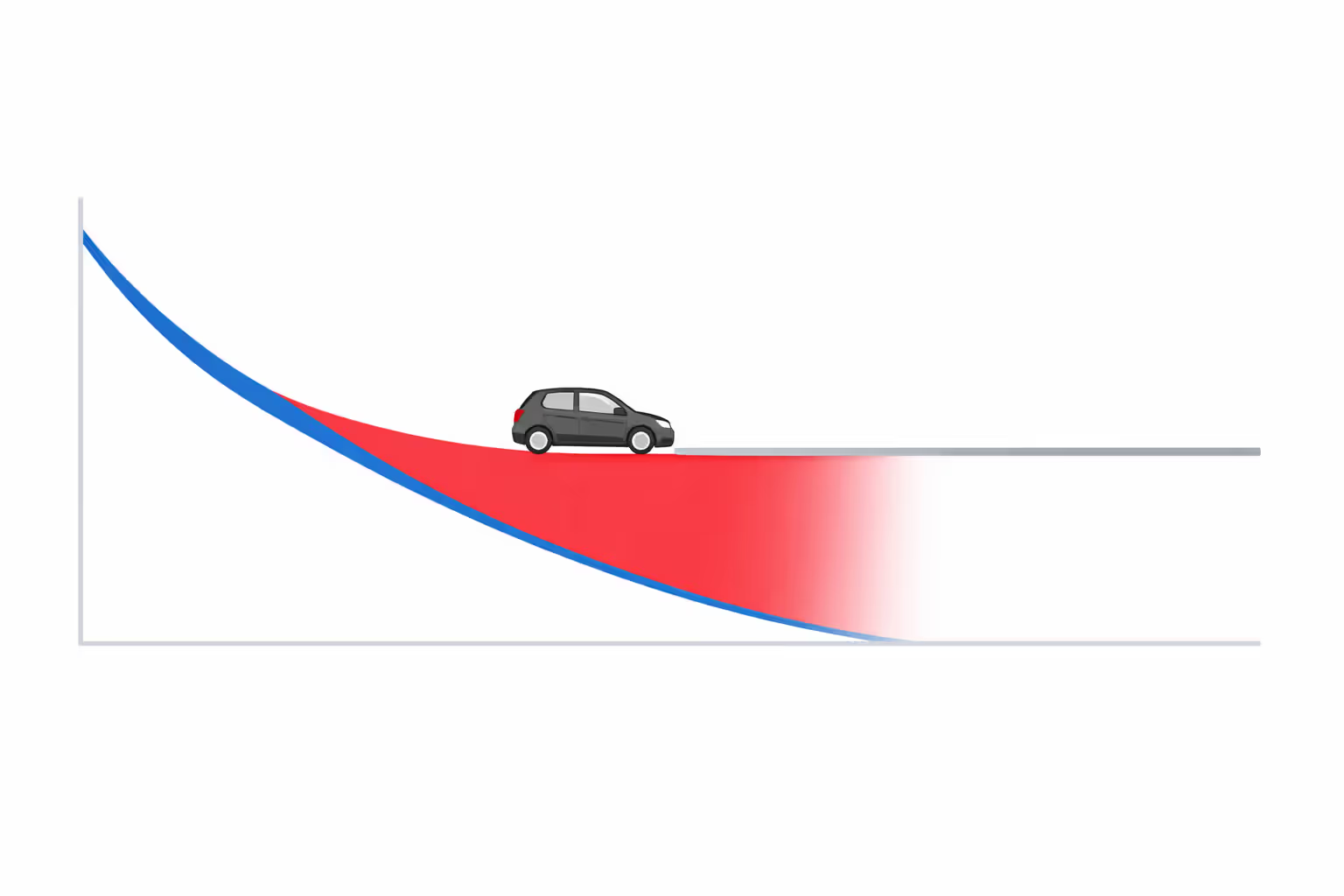
Most drivers find themselves exposed to these coverage shortfalls during their first 24 months of ownership. Depreciation hits hardest during this window, while your loan balance barely moves.
Notice that third scenario? Once your vehicle's worth exceeds what you owe, gap insurance becomes useless. You've crossed into positive territory, and the danger has passed.
The moment you drive a new car off the lot, you’ve already lost money. The question isn’t whether depreciation will hit you — it’s whether you’re prepared when it does
— Dave Ramsey
Five Situations When Gap Insurance Is Worth Buying
Gap insurance isn't universal. Some buyers don't need it. Others would be foolish to skip it. Here's when the math clearly favors purchasing this protection:
You made a minimal down payment: Putting down 5% or less means you're underwater before the first payment comes due. A $32,000 vehicle with $1,000 down might fetch $26,000 in a private sale the next day. You're already $6,000 behind before anything bad happens.
Your loan stretches beyond five years: Seventy-two-month and 84-month financing has exploded in popularity, but these extended terms create a dangerous mismatch. Your vehicle sheds value much faster than your payment schedule reduces the principal. A six-year loan on a car that loses half its value in three years guarantees you'll be upside-down for years.
You're leasing instead of buying: Many lease contracts bundle gap protection into the agreement automatically, but plenty don't. Read your paperwork carefully. If gap coverage isn't explicitly mentioned, you're exposed. Leased vehicles carry identical risk—you're on the hook for the difference if the car gets totaled and the payout falls short of the buyout amount.
Your specific vehicle depreciates aggressively: Certain categories lose value at frightening speeds. Luxury sedans can drop 35-45% in year one. Some electric vehicles depreciate even faster. If you're financing a vehicle with a reputation for steep value loss, skipping negative equity protection is gambling with serious money.
You rolled negative equity forward: Trading in a car when you're still upside-down means that shortfall gets added to your new loan. If you rolled $4,000 of previous negative equity into your current financing, you're starting $4,000 deeper in the hole than the sticker price suggests. Gap insurance covers this rolled debt if your car gets totaled.
Plenty of buyers check multiple boxes here simultaneously—zero down, 72-month term, luxury brand. That combination can create a gap exceeding $10,000 during your first year of ownership.
Author: Kevin Thornton;
Source: shafer-motorsports.com
Where to Buy Gap Insurance and What It Actually Costs
Three primary sources sell this protection, and the cost differences are dramatic enough to affect your decision.
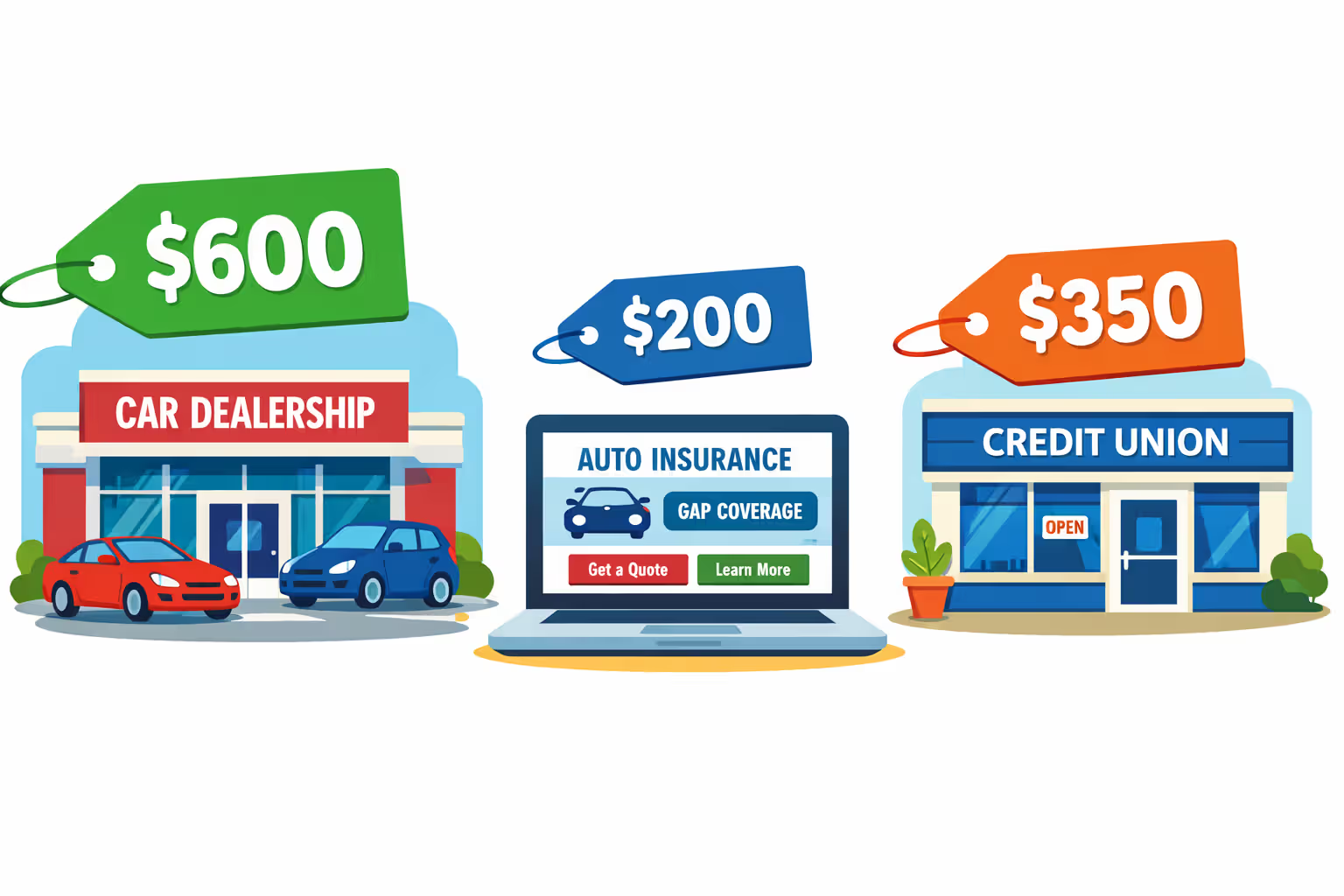
Dealership gap products get added during your purchase closing. The F&I manager presents the option, you sign, and it's done. Dealers usually price their gap coverage between $500-$700. The appeal is obvious—everything gets handled in one sitting. The drawback? You're financing this cost, which means you'll pay interest on it throughout your loan term. A $600 gap fee financed at 6% APR over 60 months actually costs you around $690 total.
Dealerships also mark up their gap insurance significantly compared to other channels. You're paying for convenience and their profit margin. Some dealership policies include extras like deductible reimbursement that other options don't offer, so compare the actual coverage, not just the price.
Adding gap to your existing auto policy delivers the best value for most people. Expect to pay $20-$40 annually—a fraction of dealership pricing. You'll pay month-to-month or annually rather than financing the full amount upfront. The limitation: most insurers require you to add gap coverage when you first insure the vehicle or within a tight window afterward. Wait six months, and many carriers won't let you add it to an existing policy.
| Where You Buy It | Typical Price Range | How You Pay | Getting Money Back If You Cancel |
| Car Dealership | $500-$700 total | Financed into your loan | Partial refund based on time remaining |
| Your Auto Insurer | $20-$40 each year | Added to regular premium | Just remove it; no refund necessary |
| Credit Union/Bank | $300-$500 total | Lump sum or financed | Depends on institution policy |
Credit unions and banks offer gap insurance when you finance through their institution, typically priced competitively with insurance companies. Budget $300-$500 for coverage lasting your entire loan term. Some credit unions automatically include gap protection with specific loan products, making it an outstanding value if you qualify.
Refund policies matter significantly because you should cancel gap coverage once you're no longer underwater. Dealership gap insurance typically refunds unused portions if you cancel early or pay off your loan ahead of schedule. Insurance company gap coverage simply stops when you remove it—no refund needed since you've been paying as you go. Bank and credit union policies vary wildly—some refund, others don't.
A driver maintaining gap coverage for three years pays $60-$120 through their auto insurance company versus $500+ at the dealership. If you trade vehicles frequently or refinance loans, the savings multiply.
Author: Kevin Thornton;
Source: shafer-motorsports.com
Common Mistakes That Leave Drivers Financially Exposed
Thinking "full coverage" includes gap protection: This misunderstanding costs people thousands every year. Comprehensive and collision coverage handle vehicle damage and total losses, but both only pay market value. Gap protection is always separate. Even policies people call "full coverage" don't automatically include this protection.
Delaying the purchase too long: Gap insurance requires buying it at purchase time or shortly after. You can't suddenly buy it 14 months into your loan after realizing you're $6,000 underwater. Insurers and lenders restrict purchase windows to 30 days from vehicle purchase, sometimes shorter. Miss that deadline, and you're gambling without protection for however long you remain upside-down.

Author: Kevin Thornton;
Source: shafer-motorsports.com
Continuing to pay after you've crossed into positive equity: Once your vehicle's worth exceeds your outstanding balance, gap insurance becomes worthless. You're paying premiums for coverage that can't possibly benefit you. Compare your loan balance to your car's current value every 12 months. When your car's worth more than you owe, cancel the coverage immediately and claim your refund (if you bought through a dealer) or stop paying premiums (if through your insurer).
Accepting the first offer without comparison shopping: The dealer will pitch gap insurance during your closing appointment, and it's tempting to accept just to finish the paperwork. Call your auto insurance company before you buy. Get their quote. Compare it to the dealer's price. That five-minute call frequently saves $400-$600.
Recognizing these mistakes before you make them means understanding the real risks you're facing. People who assume they're already covered or who put off buying gap insurance discover their error at the worst possible moment—when they're already processing a total loss claim.
Risk comes from not knowing what you’re doing. The biggest losses happen not from bad luck, but from poor preparation
— Warren Buffett
Frequently Asked Questions About Gap Insurance Coverage
Making the Right Decision: Is Gap Insurance Necessary for Your Situation?
Here's a straightforward decision framework: Look up what your vehicle would sell for today (check multiple valuation tools for accuracy), then pull up your current loan payoff amount. If you owe more than the car's worth, you're sitting on negative equity and should maintain gap coverage. If your car's value exceeds your loan balance, you don't need it.
Skip gap insurance entirely if: You dropped 20% or more as a down payment, you're financing for 48 months or less, you're buying a used vehicle that's already absorbed the steepest depreciation, or you maintain substantial emergency savings that could absorb a potential gap without creating financial hardship.
Figure out your current exposure by subtracting your vehicle's market value from your loan payoff amount. If that number would hurt financially—if losing that amount would cause genuine stress—you need gap insurance. A $1,200 gap might be manageable. An $8,000 gap could wreck your finances.
Marcus Chen, a certified financial planner based in Austin, puts it this way: "Roughly 60% of new car buyers benefit from gap insurance, particularly anyone financing more than 90% of the purchase price. The annual cost is minimal compared to the protection it delivers. That said, once you've paid down enough principal to build real equity in the vehicle, continuing gap coverage wastes money. I tell clients to review their situation every year and cancel the moment they're ahead."
The decision ultimately breaks down to math and risk tolerance. Gap insurance runs roughly $20-$40 per year when purchased through your auto insurer. If you're underwater by $3,000 or more, that's cheap insurance. If you're carrying $8,000 of negative equity on a 72-month loan, gap coverage isn't optional—it's critical financial protection.
Most new car buyers need gap insurance for their first two to three years, especially when combining minimal down payments with extended loan terms. Purchase it through your auto insurance company instead of the dealership to maximize savings, check your equity position every year, and cancel the moment you're no longer underwater. This approach delivers protection exactly when you need it while avoiding payment for coverage that can't help you.
Related Stories
Read more
Read more

The content on Auto Insights is provided for general informational and educational purposes only. It is intended to offer guidance on car buying, vehicle ownership, finance, insurance, EVs, maintenance, accessories, reviews, and related topics, and should not be considered professional financial, legal, insurance, mechanical, or investment advice.
All information, tools, calculators, comparisons, and recommendations presented on this website are for general guidance only. Individual financial situations, driving habits, vehicle conditions, insurance policies, and market factors vary, and actual results or costs may differ from estimates provided.
Auto Insights makes no guarantees regarding accuracy, completeness, or current applicability of the information, as automotive markets, regulations, incentives, interest rates, and vehicle specifications may change over time.