
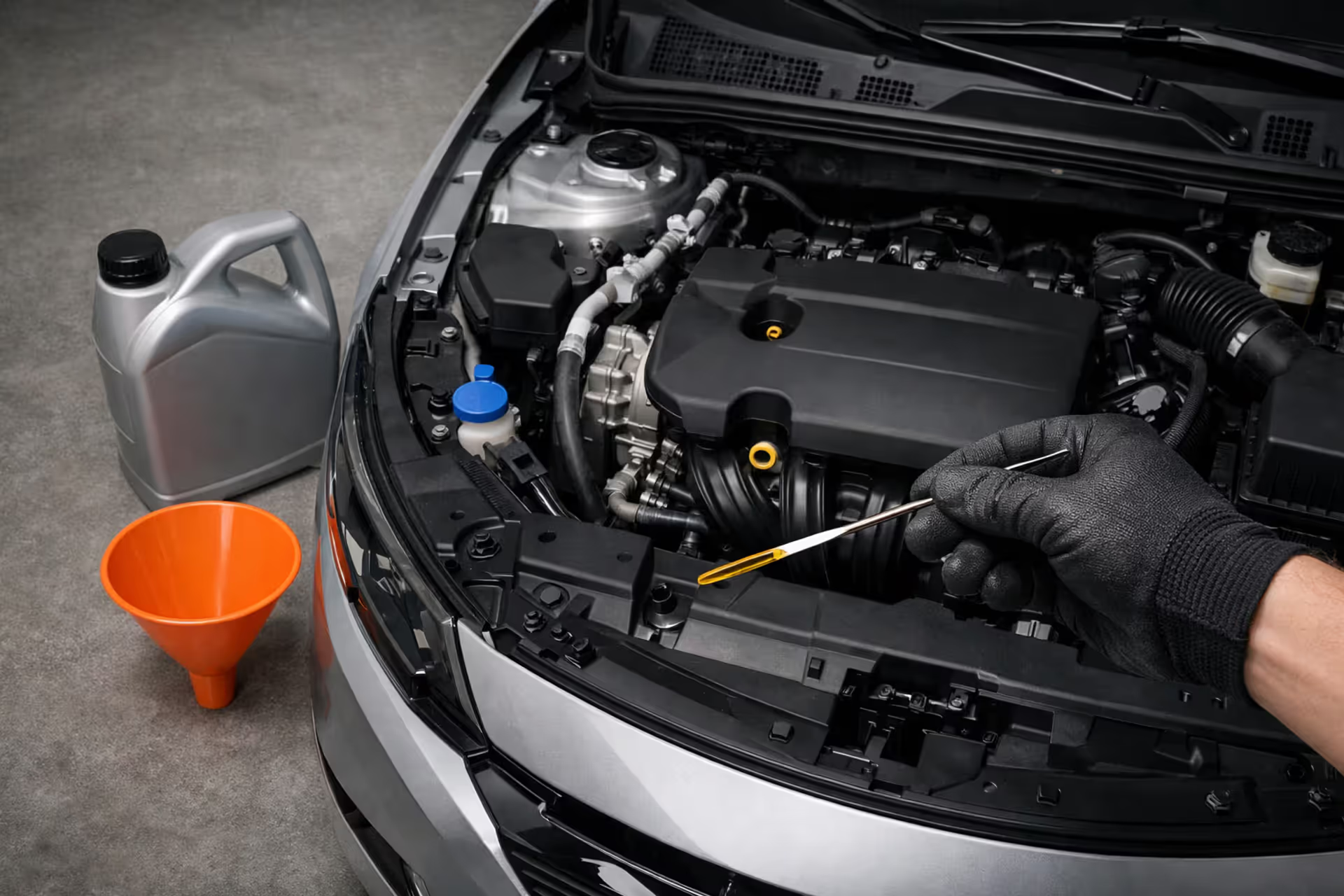
Mechanic hand in black glove holding engine oil dipstick over modern car engine bay with synthetic oil bottle nearby
How Often to Change Oil: A Data-Driven Guide for Modern Vehicles

The 3,000-mile oil change? Dead and buried. Yet somehow, everyone you ask has a different answer. Your neighbor changes his oil twice a year no matter what the odometer says. The quick-lube place slaps a sticker on your windshield demanding you return in three months. Your dashboard hasn't complained once in 8,000 miles. Meanwhile, your mechanic mumbles something about 5,000-mile intervals.
Someone's definitely wrong here. But who?
Here's the thing: there's no one-size-fits-all answer, though figuring out your vehicle's sweet spot isn't rocket science. Today's engines run tighter tolerances than ever. Oil chemistry has evolved past what engineers imagined possible in the 1990s. And your daily commute—whether you're crawling through downtown traffic or cruising rural highways—plays a bigger role than most people suspect. Get this decision wrong and you'll either waste hundreds on premature changes or face a repair bill that'll make your eyes water.
What Your Owner's Manual Actually Says About Oil Changes
That book collecting dust in your glove box? It contains your manufacturer oil schedule—the one developed after engineers tortured test engines for thousands of cycles, analyzed oil samples until their eyes crossed, and calculated exactly how long their powerplant stays protected.
These aren't conservative guesses. They're not designed to sell you extra services. They represent the intervals your engine was engineered to handle, backed by warranty obligations worth millions if the manufacturer gets it wrong.
Pick up any owner's manual printed after 2010, and you'll find recommended intervals clustering between 7,500 and 10,000 miles for everyday driving with the specified oil grade. European brands push boundaries further—BMW and Mercedes often hit 10,000 miles or one year, whichever arrives first. Some VW and Audi models stretch to 10,000 miles. Honda usually lands at 7,500. Toyota calls for 10,000 on many models running synthetic.

Author: Derek Fulton;
Source: shafer-motorsports.com
Finding this goldmine of information takes thirty seconds. Pop open your glove compartment, or Google "
owner's manual PDF." Navigate to "Maintenance Schedule" or "Service Intervals." You'll spot two columns: "Normal" and "Severe" driving conditions. That split between categories? It affects your wallet more than the difference between conventional and synthetic oil.Here's where it gets serious: ignore these guidelines and kiss your warranty goodbye. When your engine grenades itself at 45,000 miles and service records show you've been stretching 7,500-mile intervals to 15,000, expect your claim to get rejected faster than a bad Tinder profile. Dealerships pull maintenance records during every major repair. Keep every receipt, or establish a pattern with one trusted shop that maintains digital records.
One detail trips up even careful owners: the manual doesn't just specify mileage—it lists exact oil grades like 0W-20 or 5W-30. Using 10W-30 when the manufacturer demands 5W-20 causes just as many problems as skipping changes entirely. Go thicker than specified, and you'll accelerate wear during cold starts when your engine needs oil flowing immediately. Go thinner, and you risk inadequate protection once everything reaches operating temperature.
Modern synthetic oils are formulated to protect engines for intervals that would have destroyed engines 30 years ago. The additive packages in today's synthetics maintain their protective properties far longer than the base oil itself degrades.
— Mike Allen, Former Automotive Editor, Popular Mechanics
Conventional vs. Synthetic: How Oil Type Changes the Timeline
Your choice between conventional and synthetic oil fundamentally rewrites your maintenance calendar. The chemistry difference isn't marketing fluff—it's molecular engineering that changes how quickly oil loses its protective mojo.
How Long Synthetic Oil Really Lasts
The synthetic oil lifespan blows conventional formulas out of the water, thanks to molecular structure that would make a chemistry teacher weep with joy. While conventional oil contains hydrocarbon chains of wildly varying lengths that degrade at different rates (creating a messy breakdown process), synthetic oil features precisely engineered molecules that stay uniform and stable.
Real-world lab testing backs up the hype. Synthetic oil maintains proper viscosity and keeps its additive package functioning for 10,000 to 15,000 miles under typical use. Certain full synthetics carry formulations rated for 20,000 miles, though most manufacturers hesitate to recommend such lengthy intervals because contamination from combustion and environment accumulates regardless of oil condition.
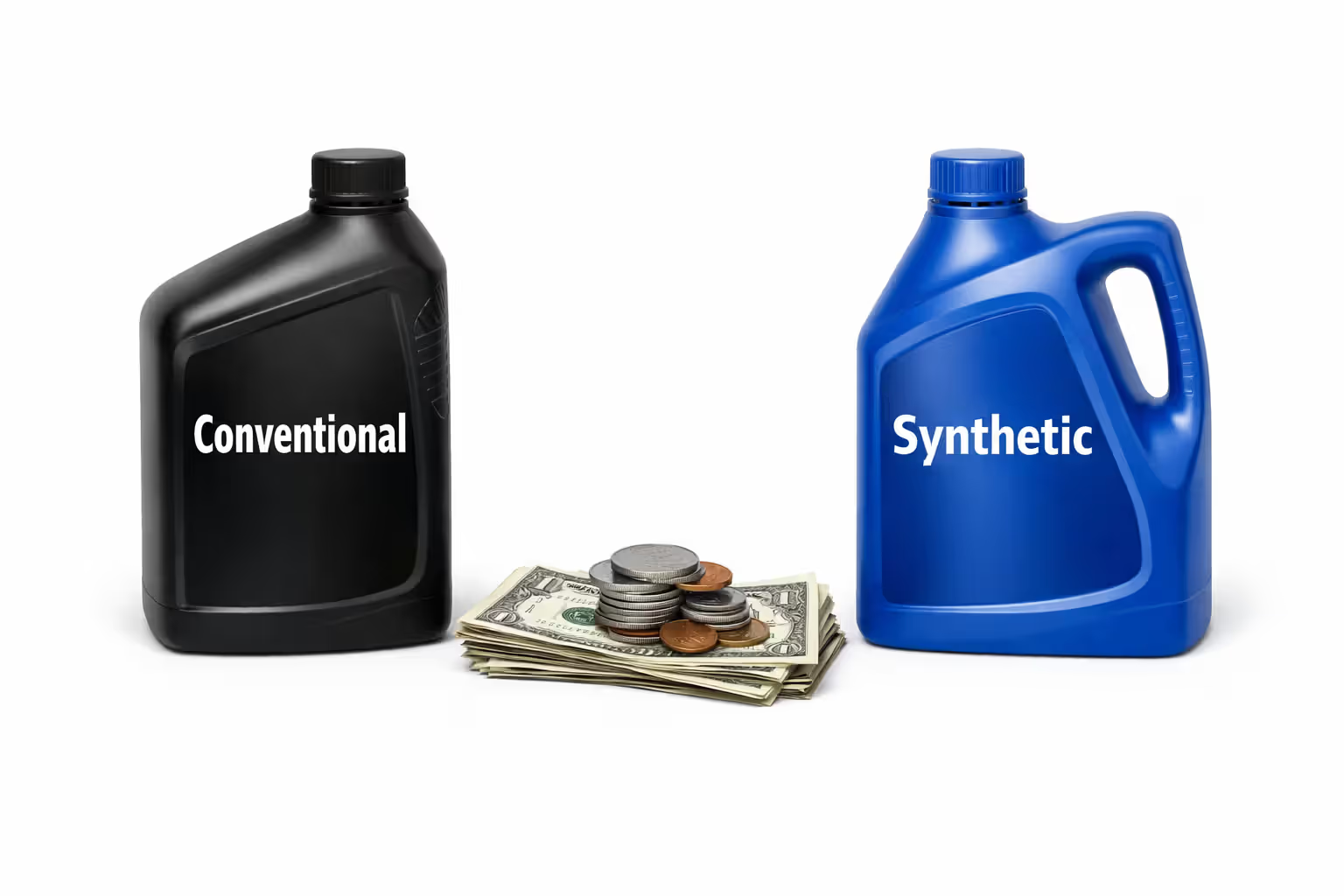
Let's talk money—because that's what actually matters. A $75 synthetic change every 10,000 miles breaks down to $7.50 per thousand miles. Compare that to a $45 conventional change every 5,000 miles: you're paying $9.00 per thousand miles. Plus you're making half as many appointments, which means fewer Saturday mornings spent in waiting rooms that smell like burnt coffee and broken dreams.
Author: Derek Fulton;
Source: shafer-motorsports.com
Beyond longevity, synthetic delivers measurably better cold-start protection, maintains stability at higher temperatures, and typically improves fuel economy by 1-2% compared to conventional oil. Run the numbers on a vehicle driven 15,000 miles yearly, getting 25 mpg, with gas at $3.50 per gallon: that efficiency gain saves you $30-60 annually in fuel costs alone.
When Conventional Oil Still Makes Sense
Conventional oil hasn't become obsolete—it's just found a narrower niche. Older vehicles (think pre-2000 models), high-mileage engines weeping oil from tired seals, and situations where severe conditions demand frequent changes anyway make conventional oil the smarter economic choice.
Engines built before modern tight-tolerance manufacturing don't benefit as dramatically from synthetic's superior properties. Your 1995 pickup with 200,000 miles burning a quart every 1,500 miles? Splurging on synthetic makes about as much sense as putting premium fuel in a lawnmower. You're adding fresh oil so frequently—compensating for consumption—that oil degradation becomes a secondary concern.
High-mileage conventional formulas (engineered for engines past 75,000 miles) include seal conditioners that can actually reduce minor leaks by softening dried-out gaskets. These specialized formulas cost substantially less than synthetic while addressing problems that synthetic won't solve.
If your driving patterns fall into severe categories requiring 3,000-4,000 mile changes regardless of oil type, conventional's lower price point makes practical sense. Changing oil six times yearly? Synthetic's longevity advantage just evaporated.
The engine is the heart of an airplane, but the pilot is its soul. The same applies to cars — your driving habits determine engine longevity far more than the brand of oil you pour into the crankcase. Understanding your conditions is understanding your machine
— Carroll Smith
Driving Conditions That Shorten Oil Life
Manufacturers base their standard schedules on "normal" driving—a category most Americans confidently assume they fall into. Plot twist: most of us actually qualify as "severe" drivers based on manufacturer definitions. The driving condition oil change classification you land in matters more than whether your car has 30,000 or 130,000 miles on the odometer.
Severe driving encompasses: - Trips under 10 miles when temps hover below freezing - Trips under 5 miles in moderate weather - Stop-and-go traffic where idling time exceeds cruising time - Sustained highway speeds above 80 mph - Regular towing or heavy load hauling - Dusty, muddy, or unpaved road exposure - Extreme heat environments with consistent temps above 90°F
These conditions trash oil through different mechanisms. Short trips never let the engine reach full operating temperature, which means moisture and unburned fuel contaminate your oil without getting cooked off. That creates sludge and corrosive acids that eat away at metal surfaces.
City driving keeps engines grinding in high-stress, low-efficiency operating zones. Constant acceleration from stops generates more combustion byproducts that sneak past piston rings into the crankcase. Your engine works overtime while oil never gets hot enough to burn away contaminants naturally.
Highway cruising at steady speeds? That's actually the easiest work oil can do. The engine hums along efficiently at optimal temperature, avoiding the thermal cycling that stresses lubricants. A vehicle racking up 15,000 highway miles yearly can safely push intervals beyond one grinding out 10,000 city miles.
Towing essentially doubles engine stress. Your powerplant operates under high load and temperature while the oil system struggles to manage increased heat. If your manual recommends 10,000 miles for normal use, slash that to 5,000-6,000 when you're regularly pulling a trailer.
Climate extremes play havoc with oil too. Sustained sub-zero temperatures prevent oil from reaching optimal operating ranges. Desert heat accelerates the oxidation process that turns oil into sludge. Phoenix or Minneapolis resident? Follow the severe schedule without question.
| Oil Change Intervals by Driving Condition and Oil Type |
| Driving Condition |
| Normal conditions (steady highway cruising, moderate temps) |
| Severe conditions (city commuting, short trips, temperature extremes) |
| Extreme use (towing, racing, consistent heavy loads) |
| Dusty/off-road environments |

Author: Derek Fulton;
Source: shafer-motorsports.com
Five Oil Change Myths That Cost You Money
Oil change interval myths survive like cockroaches because quick-lube chains profit handsomely from frequent service, and misinformation spreads faster than truth on social media. These persistent misconceptions drain billions from American wallets annually.
Myth 1: The 3,000-Mile Rule Applies to All Vehicles
This dinosaur of automotive advice dates back to an era when engines had tolerances measured with a ruler rather than a micrometer, and oil lacked the additive packages we take for granted today. Following 3,000-mile intervals made perfect sense in 1975. Today? You might as well burn money for entertainment.
The 3,000-mile myth persists because service centers make bank from unnecessary maintenance. If your manufacturer specifies 7,500 miles, changing at 3,000 provides zero benefit to your engine. You're literally dumping money—roughly $150 per year for an average driver—into completely unnecessary services.
Myth 2: Only Dealerships Can Service Your Car Without Voiding Warranty
The Magnuson-Moss Warranty Act—federal law since 1975—explicitly prevents manufacturers from requiring dealer-only service as a warranty condition. You can wrench on your own vehicle or visit any qualified independent shop, provided you stick to manufacturer specifications and document everything properly. Dealerships love implying otherwise, but they're banking on your legal ignorance. Independent shops typically charge 20-40% less for identical oil changes.
Myth 3: Engines Need Regular Flush Services
Here's the truth: properly maintained engines never accumulate enough sludge to warrant flushing. If you've kept up with recommended intervals, deposits don't build up. Flush services can actually cause problems by dislodging chunks of deposit that then clog narrow oil passages, strangling oil flow to critical components. The lone exception? A severely neglected engine with documented sludge issues might benefit, but consistent maintenance eliminates this scenario entirely.
Myth 4: Oil Color Tells You When to Change
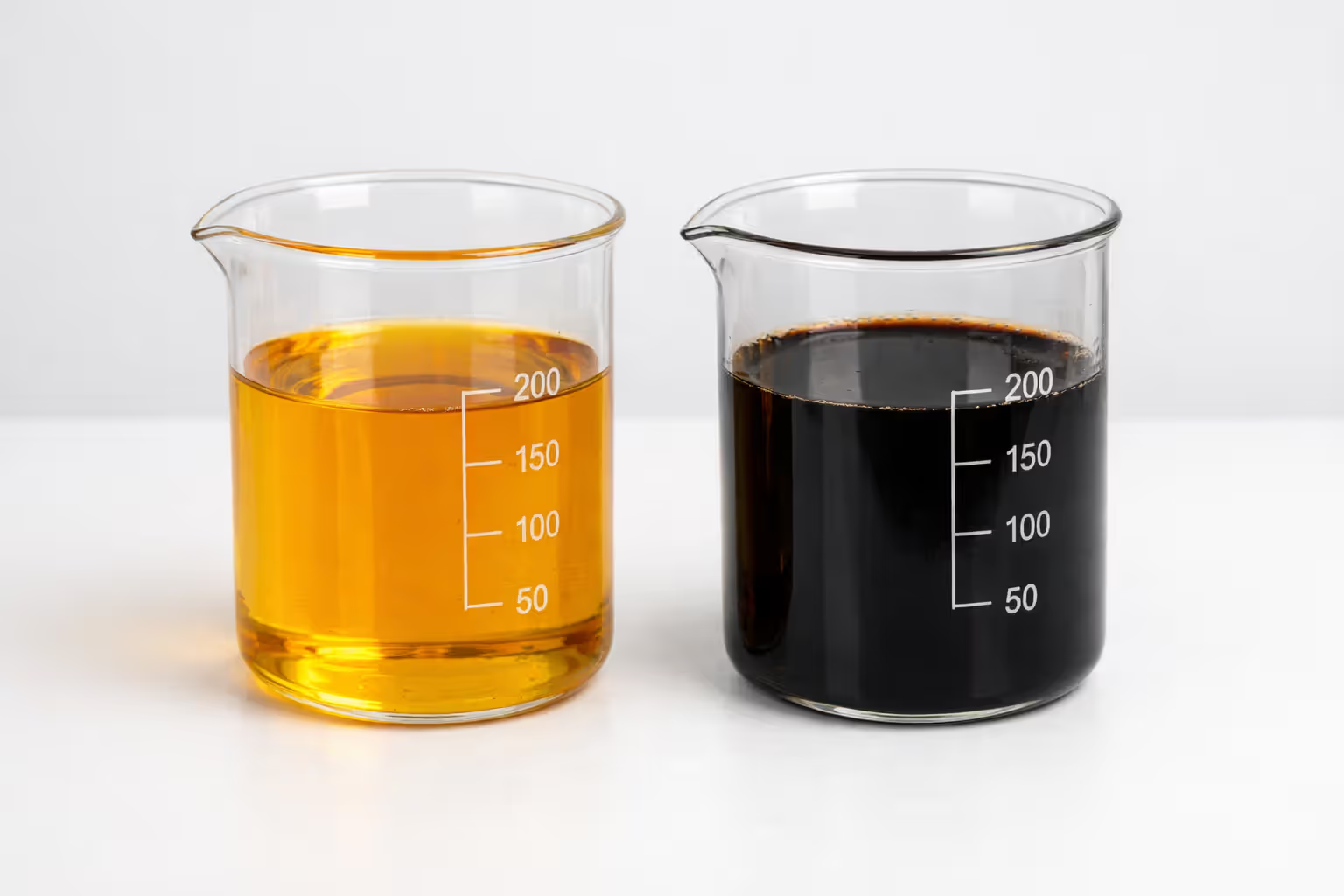
Oil turns dark because it's doing exactly what you paid for—suspending contaminants and combustion byproducts in solution. Dark oil isn't automatically degraded oil. Diesel engines blacken oil within a few hundred miles. Color reveals nothing about remaining additive protection or viscosity breakdown. Changing oil based on appearance alone is like judging a book by whether the cover looks old.
Myth 5: Every Vehicle Needs Identical Service Intervals
A Honda Civic used for grocery runs and a Ford F-250 work truck exist in completely different mechanical universes. Engine architecture, oil capacity, operating stresses, and manufacturer engineering vary so dramatically that universal recommendations border on meaningless. Your specific vehicle combined with your actual driving patterns determines the correct interval. Anyone offering blanket advice for all vehicles doesn't understand automotive engineering.
Maintenance is not about following a calendar or a number on an odometer. It is about understanding the specific demands placed on a specific machine in specific conditions. There are no universal answers — only universal principles applied with individual precision
— Bob Weber
Warning Signs Your Engine Oil Needs Immediate Attention
Between scheduled changes, specific symptoms scream that your oil needs attention right now—not next week. Recognizing these warning signs represents essential engine protection basics that prevent five-figure repair bills.
An illuminated oil pressure warning light? Stop immediately—and I mean immediately. That red symbol indicates dangerously low oil level or pressure, and continuing to drive risks engine seizure within literal minutes. Find the nearest safe spot to pull over, let the engine cool for five minutes, then check your dipstick. If you're low, add the correct grade until you reach the full mark. If the level looks fine but the light persists, call a tow truck. Don't drive another inch.
Check engine lights sometimes illuminate due to oil-related gremlins—faulty oil pressure sensors, variable valve timing issues caused by degraded oil, or oil control valve problems. Stop by any auto parts store (most read codes free) to determine what's triggering the light.
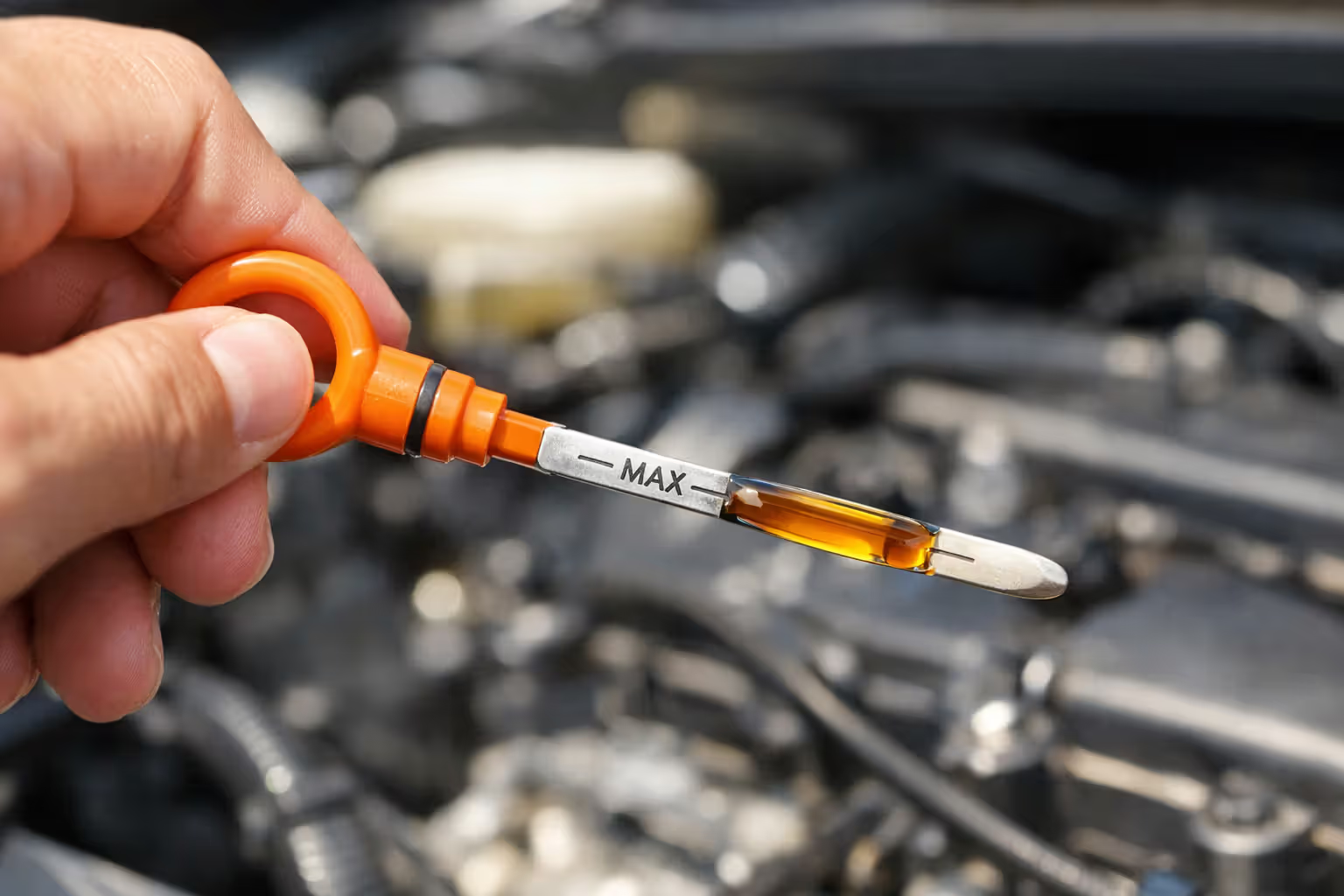
Monthly dipstick checks should become as routine as checking your mailbox. Yank the dipstick out, wipe it clean with a rag, shove it back in completely, then pull it out to read the level. Oil should sit somewhere between the min and max marks. Pay attention to consistency rather than fixating on color. If oil feels gritty when rubbed between your fingers, particles are contaminating it. If it's weirdly thin or reeks of gasoline, combustion gases are leaking into the crankcase.
Author: Derek Fulton;
Source: shafer-motorsports.com
Today's oil life monitoring systems run algorithms based on engine revolutions, temperature cycles, and operating time to calculate remaining oil life. These systems generally nail accuracy within 10%. When your indicator drops to 10-15% remaining, schedule service. Don't wait until it hits 0%—that represents the absolute deadline, not the ideal maintenance point.
Strange engine noises—ticking, knocking, grinding—can signal oil starvation. Hydraulic valve lifters start ticking when oil pressure drops. Rod bearings knock when lubrication fails catastrophically. These sounds demand immediate investigation.
Excessive oil consumption—more than one quart per 1,000 miles—points to worn piston rings or valve seals. Sure, you can keep topping off indefinitely, but that signals deeper issues requiring attention. Plus, constantly adding fresh oil means you're diluting old, contaminated oil rather than replacing it entirely.
How Oil Breaks Down: The Science Behind Change Intervals
Understanding oil degradation factors illuminates why change intervals exist and why they vary so dramatically based on use. Oil doesn't hit its expiration date at a specific mileage like milk going bad on schedule—it deteriorates through multiple simultaneous chemical and physical processes.
Oxidation happens when oil molecules hook up with oxygen at elevated temperatures. This reaction accelerates dramatically above 240°F (typical operating temp runs 180-220°F). Oxidation spawns acidic compounds and increases viscosity, gradually transforming oil into engine-choking sludge. Synthetic oil resists oxidation far better than conventional formulas because its molecular structure stays stable under stress.
Thermal breakdown occurs when extreme heat literally snaps hydrocarbon chains apart. This viscosity reduction compromises protective capability. Engines running hot—from towing, aggressive driving, or failing cooling systems—accelerate thermal degradation exponentially. High-performance applications often add oil coolers specifically to manage this heat stress.
Contamination arrives from multiple entry points simultaneously. Combustion gases containing acids and water vapor squeeze past piston rings into the crankcase through a process called blow-by. Fuel dilution happens during cold starts and short trips when fuel doesn't combust completely. Dirt infiltrates through the air intake despite filtration. Microscopic wear metals from engine components accumulate gradually over thousands of miles.
Additive depletion slowly undermines oil's protective effectiveness. Detergents keep contaminants suspended instead of clumping into sludge. Anti-wear compounds (like zinc dialkyldithiophosphate or ZDDP) protect metal-on-metal contact points. Viscosity index improvers maintain proper thickness across temperature swings. These additives sacrifice themselves protecting your engine, gradually depleting until they can't perform their jobs anymore.
Author: Derek Fulton;
Source: shafer-motorsports.com
Moisture builds up when engines never reach full operating temperature consistently. Water from combustion condenses in the crankcase, mixing with oil to create corrosive acids and sludge. Short trips wreak havoc precisely because the engine never gets hot enough for the PCV system to evaporate accumulated moisture properly.
Oil filters capture particles but hold limited capacity. Once saturated, the bypass valve opens to prevent oil starvation—which means unfiltered oil starts circulating through your engine. Most filters are engineered to last exactly one oil change interval, not longer. Changing oil while keeping the old filter means you're leaving contaminated oil pooled in the filter housing.
These degradation mechanisms operate simultaneously at different speeds depending on how you drive. Severe conditions accelerate every single process. Normal driving slows contamination accumulation and keeps the engine operating in optimal temperature bands where oil lasts longest.
Frequently Asked Questions About Oil Change Timing
Determining proper oil change frequency stops being complicated once you understand the actual variables at play. Start with your owner's manual recommendation as baseline. Adjust based on real-world driving conditions. Use quality oil meeting manufacturer specifications exactly. Monitor level and condition between services. Document everything for warranty protection.
Money saved avoiding unnecessary changes accumulates to hundreds of dollars across vehicle ownership. Money saved preventing premature engine wear through appropriate maintenance reaches far higher. Neither extreme serves your interests—changing every 3,000 miles religiously wastes resources, while pushing to 15,000 miles regardless of conditions courts disaster.
Today's engines deliver remarkable durability when you maintain them properly. They also cost a fortune to replace when neglected. The correct oil change interval for your specific vehicle balances protection, cost, and convenience using engineering data rather than marketing hype or outdated conventional wisdom. Follow manufacturer guidance, adjust for your driving reality, and your engine will deliver hundreds of thousands of miles without complaint.
Related Stories
Read more
Read more


The content on Auto Insights is provided for general informational and educational purposes only. It is intended to offer guidance on car buying, vehicle ownership, finance, insurance, EVs, maintenance, accessories, reviews, and related topics, and should not be considered professional financial, legal, insurance, mechanical, or investment advice.
All information, tools, calculators, comparisons, and recommendations presented on this website are for general guidance only. Individual financial situations, driving habits, vehicle conditions, insurance policies, and market factors vary, and actual results or costs may differ from estimates provided.
Auto Insights makes no guarantees regarding accuracy, completeness, or current applicability of the information, as automotive markets, regulations, incentives, interest rates, and vehicle specifications may change over time.