
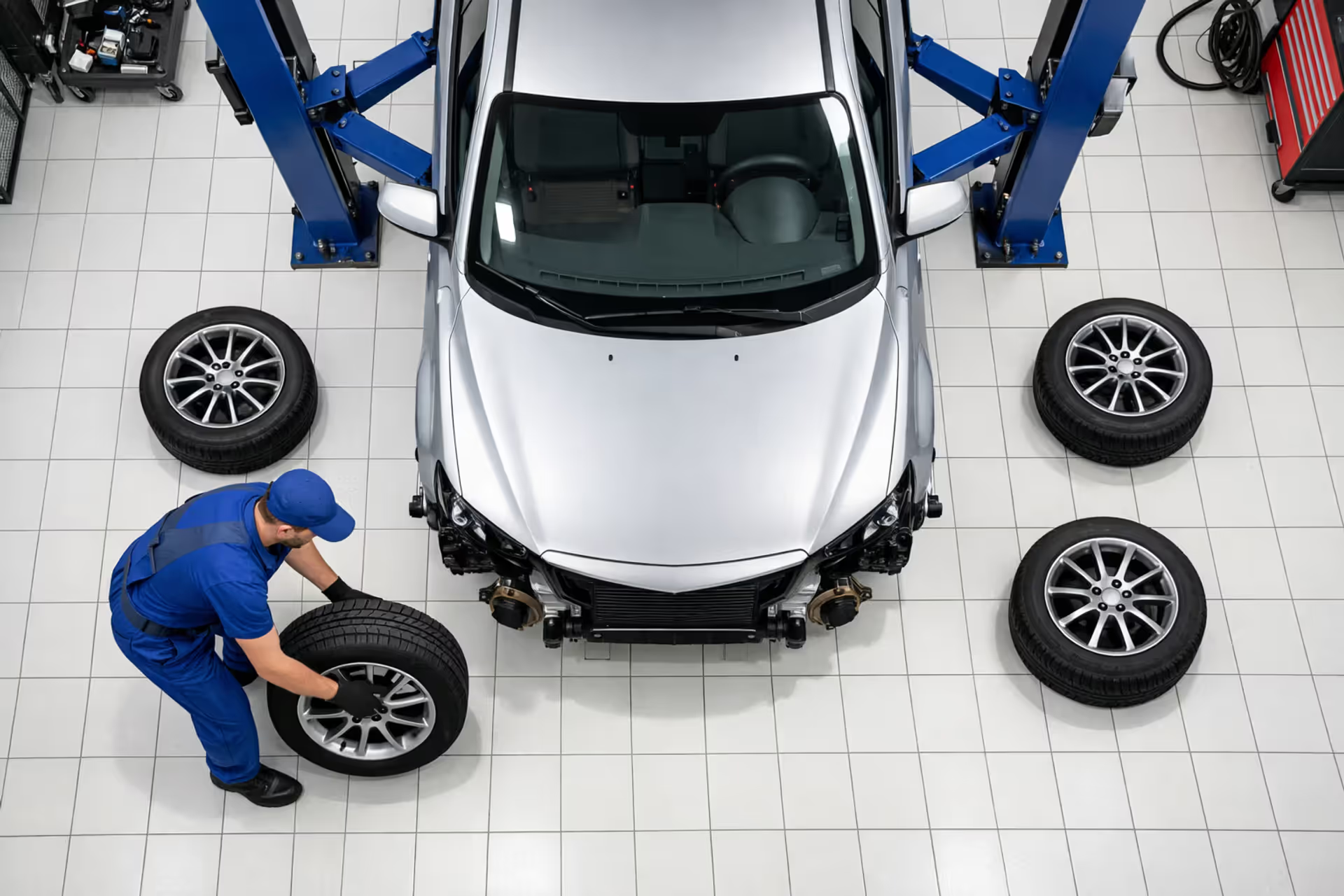
Mechanic rotating tires on a car lifted on a hydraulic lift in a professional auto service shop
Tire Rotation Explained: How This Simple Service Extends Tire Life by Thousands of Miles

Your front tires don't wear the same way as your rear tires. It's a simple mechanical reality that costs American drivers billions in premature tire replacements every year. Most vehicles place different loads on each axle, and steering forces concentrate wear on specific edges. Without intervention, you'll replace tires 15,000 to 20,000 miles earlier than necessary.
Tire rotation redistributes these wear forces before they create permanent damage. The process takes 20 minutes and costs less than a tank of gas, yet it routinely doubles the usable life of a tire set. Understanding when and how to rotate transforms this maintenance item from a vague suggestion into a measurable return on investment.
What Happens During a Tire Rotation and Why Your Car Needs It
Tire rotation means moving each tire to a different position on your vehicle according to a specific pattern. A technician removes all four wheels, then reinstalls them in new locations designed to equalize wear across the entire set.
The mechanical need stems from weight distribution and drivetrain forces. Front tires on most vehicles carry 60% of the vehicle's weight because engines sit up front. Add steering forces—the constant scrubbing that happens when you turn the wheel—and front tires wear 25-30% faster than rears on average. Drive wheels face additional stress from acceleration torque, which tears microscopic rubber particles from the tread surface with every start from a stoplight.
Temperature differences accelerate the problem. Front brakes generate more heat than rear brakes during normal driving, and heat degrades rubber compounds. The result: front tires might show 6/32" of remaining tread while rears still measure 9/32", creating a dangerous traction imbalance during emergency braking or wet-weather driving.
Rotation interrupts this cycle before differences become permanent. Move a rear tire to the front before it develops a wear pattern, and it adapts to new forces while still retaining structural integrity. Wait too long, and the tire "remembers" its old position—cupped shoulders won't flatten out, and feathered edges remain noisy even after moving to a different axle.
How Uneven Tire Wear Develops and What Each Pattern Tells You
Tire wear patterns work like diagnostic codes written in rubber. Each distinct pattern points to specific mechanical issues or maintenance neglect.
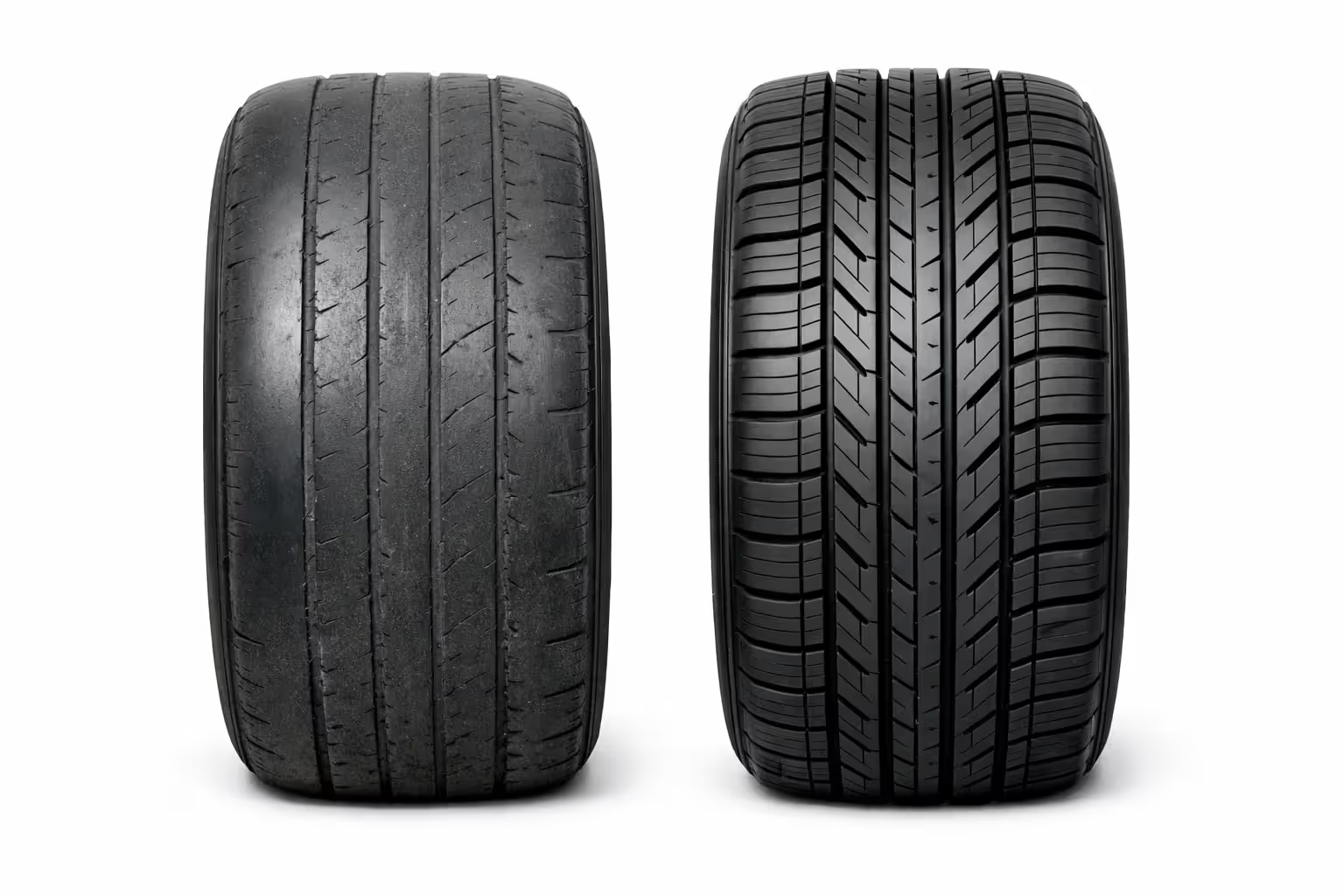
Center wear creates a bald strip down the middle of the tread while shoulders remain relatively deep. Overinflation causes this—the tire balloons in the center, lifting the edges off the pavement. Check your door jamb sticker; most drivers run 3-5 PSI over the recommended pressure, thinking it improves fuel economy.
Edge wear shows the opposite problem: shoulders worn bare while the center remains thick. Underinflation allows sidewalls to flex excessively, rolling the tire onto its outer edges during cornering. This pattern also appears on front tires of heavy vehicles where load exceeds tire capacity.
Cupping creates rhythmic high and low spots around the circumference, producing a distinctive thumping sound at highway speeds. Worn suspension components allow the tire to bounce rather than maintain constant road contact. Each bounce slaps a small section of tread against pavement, grinding it down faster than surrounding areas.
Feathering means tread blocks feel smooth from one direction but sharp from the other, like running your hand across bird feathers. Misalignment causes this—the tire scrubs sideways as it rolls forward. Feathering develops quickly, sometimes within 2,000 miles of a hard curb impact that knocks alignment out of specification.
The only thing more expensive than maintenance is neglect
— Harvey Mackay
Front-Wheel Drive vs. Rear-Wheel Drive: Where Wear Happens First
Front-wheel drive vehicles concentrate every stress on the front axle. Those tires steer, brake, and transmit engine power simultaneously. Expect front tires to wear 40% faster than rears in typical suburban driving—even more in hilly terrain where constant acceleration and braking magnify torque forces.
Rear-wheel drive spreads the workload differently. Front tires still handle steering and most braking force, but the rear axle manages acceleration torque. Wear rates balance more evenly, though front tires still degrade faster due to steering scrub. The gap narrows to about 20% in normal conditions.
All-wheel drive creates the most complex wear patterns. Torque distribution varies by manufacturer—some systems send 60% rearward, others favor the front axle until slippage occurs. Performance AWD setups with aggressive rear biases can actually wear rear tires faster, particularly during spirited driving on dry pavement.
Author: Lena Prescott;
Source: shafer-motorsports.com
Warning Signs You've Waited Too Long Between Rotations
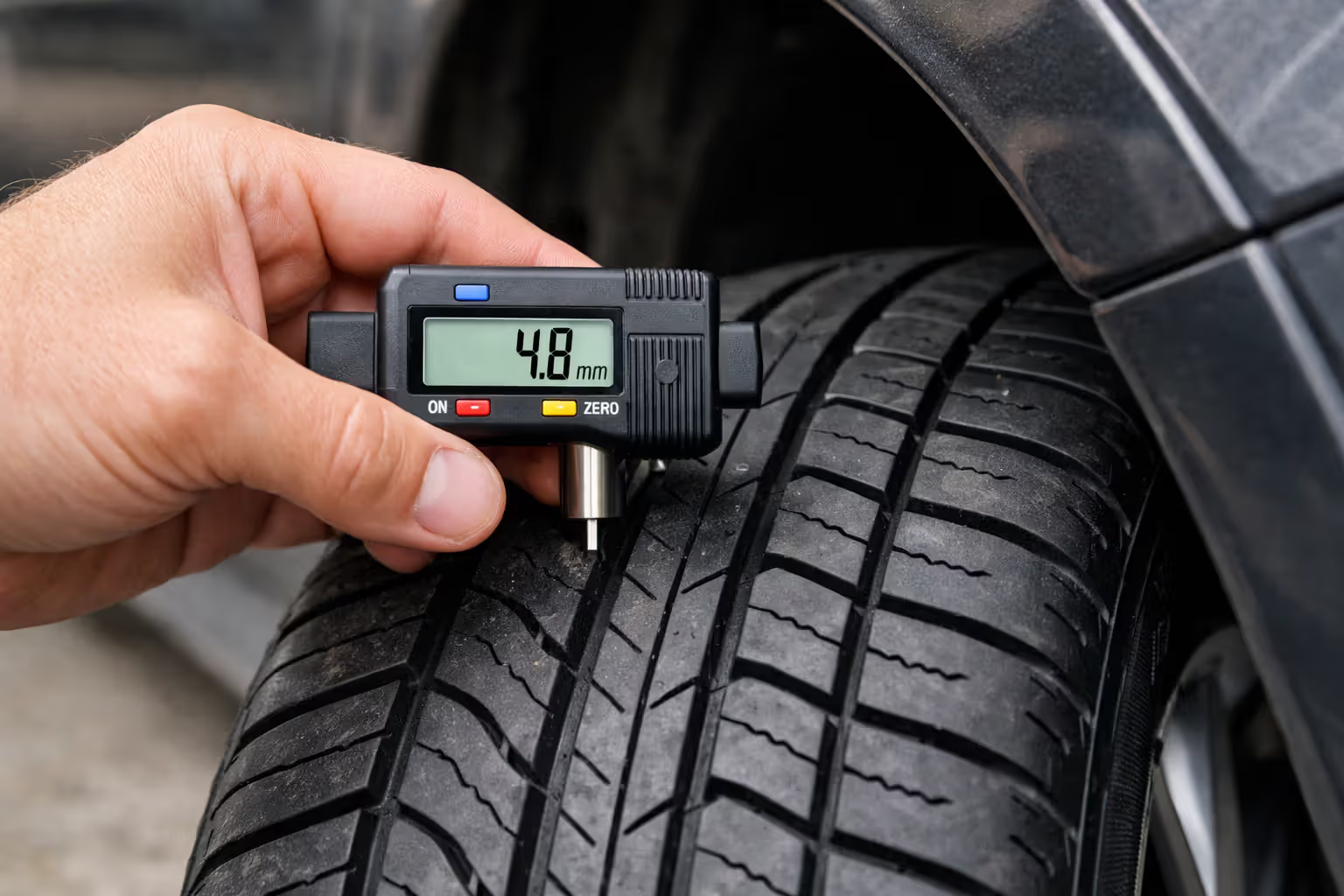
Visual tread depth differences exceeding 3/32" between axles signal overdue rotation. Measure with a tread depth gauge at the center of each tire—if fronts read 5/32" while rears show 8/32", you've already sacrificed potential lifespan.
Vibration that appears around 50 mph and intensifies with speed indicates cupping from delayed rotation. Once cupping develops, rotation won't eliminate the vibration; the damage is permanent. You'll need replacement sooner than planned.
Pulling during braking suggests uneven traction between left and right tires, often from asymmetric wear that rotation would have prevented. The vehicle drifts toward the side with better tread because that tire grips harder when you apply brakes.
Tire Rotation Patterns: Matching the Right Method to Your Vehicle
The rotation pattern matters as much as the rotation itself. Use the wrong pattern, and you'll accelerate wear instead of preventing it.
Forward cross moves rear tires straight to the front, then crosses front tires to opposite rear corners. This pattern suits front-wheel drive vehicles because it transitions the harder-worked front tires to the less-stressful rear positions while bringing fresh rear tires forward to face maximum wear forces.
Rearward cross reverses the process: front tires move straight back, rear tires cross to opposite front corners. Rear-wheel drive vehicles benefit most because rear tires face acceleration torque and need to move forward where they'll work primarily as steering/braking tires during their second rotation cycle.
X-pattern crosses all four tires to opposite corners. This works for four-wheel and all-wheel drive vehicles where all positions experience similar stress levels. The pattern ensures each tire experiences every position over multiple rotations, averaging out wear forces completely.
Side-to-side swaps left and right tires on the same axle. This pattern applies exclusively to directional tires—those with tread designs that must roll in one direction for proper water evacuation. Asymmetric tires (different inner and outer tread designs) also require side-to-side rotation unless dismounting and remounting on opposite wheels.
| Vehicle Drivetrain | Tire Type | Recommended Pattern | Diagram Description |
| Front-wheel drive | Non-directional | Forward cross | Rear tires move straight forward; front tires cross to opposite rear positions |
| Rear-wheel drive | Non-directional | Rearward cross | Front tires move straight back; rear tires cross to opposite front positions |
| AWD/4WD | Non-directional | X-pattern | All four tires cross to opposite corners |
| Any drivetrain | Directional tread | Side-to-side | Left front ↔ Right front; Left rear ↔ Right rear (same axle only) |
| Performance/Sport | Staggered sizes | Front-to-front, Rear-to-rear | Left front ↔ Right front; Left rear ↔ Right rear (cannot cross axles due to size differences) |
Staggered fitments—larger rear tires than front—present special challenges. You can only swap side-to-side on each axle. This limitation cuts rotation benefits roughly in half because tires never escape their axle's specific wear forces. Budget an extra $200-300 per year for more frequent replacements.
The 5,000-Mile Rule and Other Rotation Schedule Guidelines
Five thousand miles serves as the default interval recommendation, but it's not universal. This number emerged from average American driving patterns: 15,000 annual miles split between highway and city, moderate climate, proper inflation maintenance. It works for most drivers most of the time.
Manufacturer recommendations override generic rules. Check your owner's manual—some automakers specify 7,500-mile intervals for highway-biased driving profiles, while others mandate 3,000-5,000 miles for performance vehicles with soft compound tires. Following manufacturer guidance protects tire warranty coverage; many warranties explicitly require rotation records at specified intervals.
Time-based rotation matters for low-mileage drivers. Rubber degrades from UV exposure, ozone, and temperature cycling even when parked. If you drive fewer than 7,500 miles annually, rotate every six months regardless of mileage. This prevents the stationary flat-spotting and weather checking that plague garage-kept vehicles.
Driving habits modify ideal timing significantly. Aggressive acceleration, hard cornering, and frequent heavy loads accelerate wear. Drop to 3,000-4,000 mile intervals if you regularly: - Tow trailers or haul maximum payload - Drive mountain roads with sustained grades - Experience stop-and-go traffic during rush hour commutes - Use summer performance tires with treadwear ratings below 300
Highway-dominated driving extends intervals safely. Steady-state cruising at consistent speeds produces minimal wear compared to urban driving's constant acceleration and braking cycles. Bump intervals to 7,500 miles if 80% of your driving happens at highway speeds above 55 mph.
Author: Lena Prescott;
Source: shafer-motorsports.com
Seasonal tire swaps count as rotations. If you switch between winter and summer sets, rotate within each set during the changeover. This doubles your rotation frequency automatically—spring and fall swaps plus mid-season rotations hit the 5,000-mile target even with 15,000 annual miles.
How Proper Rotation Timing Protects Your Wallet and Your Safety
A $30 rotation every 5,000 miles costs $180 over 60,000 miles. Skip rotations and you'll replace tires at 40,000 miles instead of 60,000—that's $800 for a mid-grade tire set arriving 20,000 miles early. The math is straightforward: spend $180 to avoid spending $800.
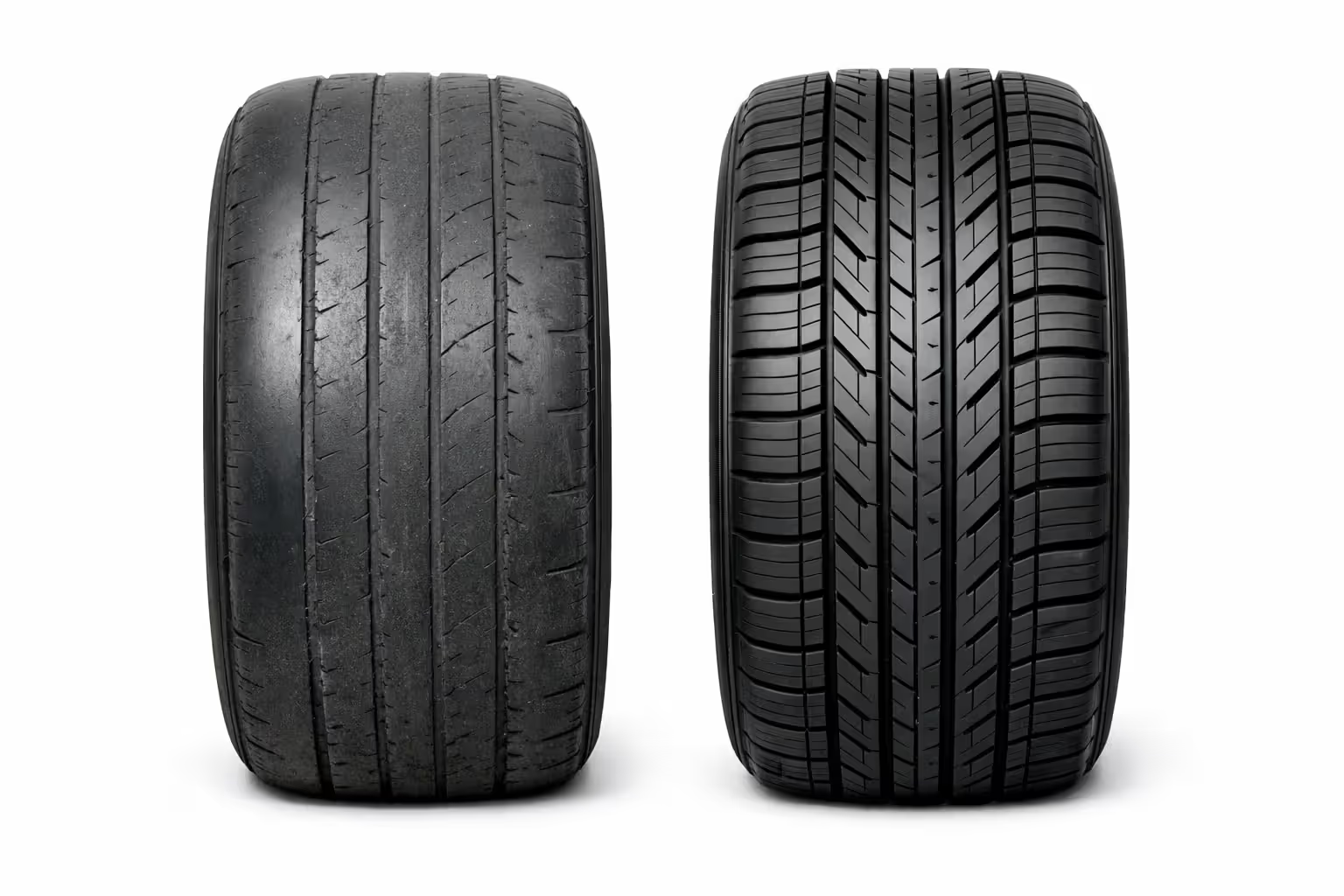
Traction differences between axles create genuine safety hazards. When front tires measure 4/32" and rears show 8/32", the rear end will break loose first during emergency maneuvers. Your brain expects front-wheel slides that you can correct by reducing steering input; rear slides require opposite steering lock and precise throttle control that most drivers can't execute under stress. Rotation keeps tread depths within 2/32" across all positions, maintaining predictable handling.
Hydroplaning risk increases exponentially with tread depth variation. Tires below 4/32" lose wet traction rapidly—a worn front tire might hydroplane at 45 mph while a deeper rear tire maintains contact until 60 mph. This speed mismatch creates rotational forces that spin the vehicle. Even tread depths mean all four tires hydroplane simultaneously at the same speed, maintaining directional stability.
"I've inspected thousands of vehicles after weather-related crashes, and uneven tire wear appears in about 60% of single-vehicle loss-of-control accidents," explains Mike Thornton, ASE Master Technician with 23 years at a Chicago-area dealership. "Drivers think they're fine because they check one tire and it looks decent. They don't realize the other three are at different levels. When that first tire lets go, they're not prepared for how quickly things go wrong."
Warranty compliance requires documentation. Most tire manufacturers void treadwear warranties without proof of rotation at specified intervals. Keep every service receipt. When you file a warranty claim for tires worn at 30,000 miles instead of the warranted 60,000, the manufacturer will demand rotation records. No records means no prorated replacement credit—you'll pay full price for new tires.
Fuel economy improves slightly with rotation. Underinflated or unevenly worn tires increase rolling resistance. While the effect is modest—perhaps 0.2-0.4 mpg on average—it compounds over time. That's 12-24 gallons saved over 60,000 miles at 30 mpg, worth $40-80 at $3.50 per gallon.
Author: Lena Prescott;
Source: shafer-motorsports.com
Five Mistakes That Undermine Your Tire Rotation Strategy
Ignoring rotation until tread depth differences become visible defeats the entire purpose. By the time you can see wear differences, the damage is done. Tires develop wear patterns in their rubber structure before tread depth changes become obvious. Rotate on schedule, not on appearance.
An ounce of prevention is worth a pound of cure
— Benjamin Franklin
Using the wrong pattern for your tire type accelerates wear. Mounting directional tires backward ruins their water evacuation channels and creates noise. Crossing asymmetric tires to the wrong sides puts the stiff outer shoulder on the inside where it can't handle cornering loads properly. Verify your tire type before choosing a rotation pattern.
Skipping alignment checks when rotation reveals uneven wear wastes the rotation. If you rotate tires already showing feathering or edge wear, you've just moved the problem to a new location. The underlying alignment issue continues destroying rubber. Rotate and align together when wear patterns indicate suspension geometry problems.
Rotating damaged tires spreads problems across all four positions. Inspect carefully during rotation—look for sidewall bulges, tread separations, embedded objects, and irregular wear. A tire with internal damage might seem fine in a low-stress rear position but fail catastrophically when moved to the front where steering forces increase stress.
DIY rotation without proper torque procedures creates safety hazards. Wheel nuts require specific torque values—typically 80-100 ft-lbs for passenger vehicles—applied in a star pattern to seat wheels evenly against hubs. Over-torquing warps brake rotors and breaks studs; under-torquing allows wheels to loosen during driving. If you rotate at home, invest in a proper torque wrench and follow manufacturer specifications exactly.
Frequently Asked Questions About Tire Rotation
Conclusion
Tire rotation stands out among maintenance tasks for its exceptional return on investment. Twenty minutes and $30 every few months prevents $800 premature replacements while maintaining the balanced traction that keeps you safe during emergency maneuvers. The mechanical reality is simple: different positions create different wear forces, and rotation neutralizes those differences before they become permanent.
Track your mileage and set reminders at 5,000-mile intervals, adjusting for your specific driving patterns and manufacturer recommendations. Inspect tires during each rotation for damage and unusual wear patterns that signal alignment or suspension problems. Match the rotation pattern to your drivetrain and tire type, and keep service records to protect warranty coverage.
The tires you rotate today will still be on your vehicle 20,000 miles from now, saving money and maintaining the safety margin you need when weather or road conditions turn challenging. That's not marketing—it's physics, economics, and preventive maintenance working exactly as designed.
Related Stories
Read more

Read more


The content on Auto Insights is provided for general informational and educational purposes only. It is intended to offer guidance on car buying, vehicle ownership, finance, insurance, EVs, maintenance, accessories, reviews, and related topics, and should not be considered professional financial, legal, insurance, mechanical, or investment advice.
All information, tools, calculators, comparisons, and recommendations presented on this website are for general guidance only. Individual financial situations, driving habits, vehicle conditions, insurance policies, and market factors vary, and actual results or costs may differ from estimates provided.
Auto Insights makes no guarantees regarding accuracy, completeness, or current applicability of the information, as automotive markets, regulations, incentives, interest rates, and vehicle specifications may change over time.