
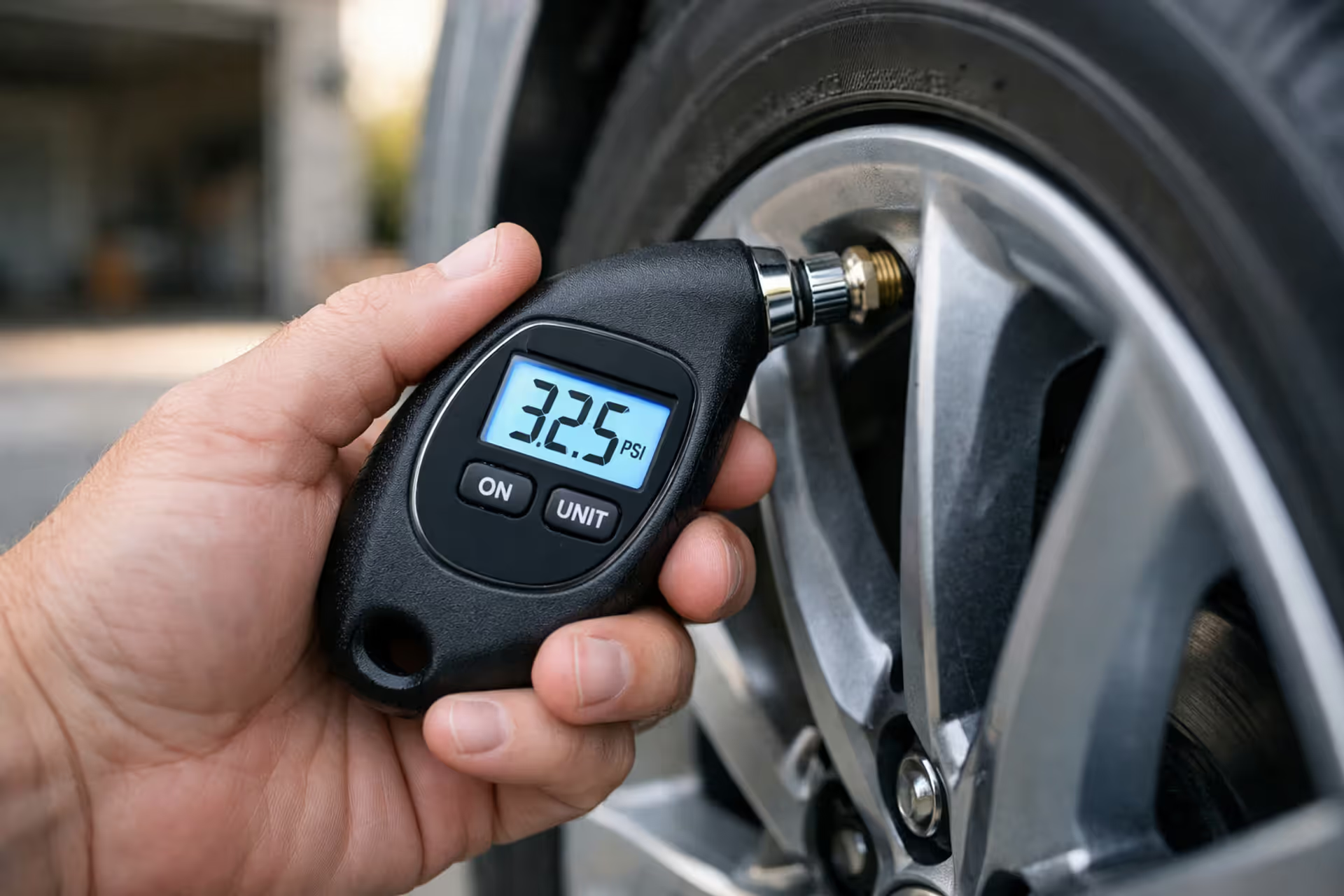
Driver pressing a digital tire pressure gauge onto a car tire valve stem showing PSI reading in a home garage setting
Why Tire Pressure Matters More Than Most Drivers Think

Your tires lose about one PSI per month under normal conditions. Miss three months of checks, and you're driving around on rubber that's significantly underinflated—costing you money, safety, and tire life without any obvious warning signs until it's too late.
Most drivers glance at their tires, see they look fine, and assume everything's good. But a tire can lose 25% of its pressure and still appear normal to the naked eye. That's when the problems start piling up: your fuel economy drops, your tread wears unevenly, and your stopping distance increases just when you need every foot in an emergency.
The real issue isn't that drivers don't care about tire pressure importance. It's that the consequences play out slowly enough that most people never connect the dots between their lazy tire maintenance and the $800 tire replacement bill that hits two years earlier than it should have.
How Under-Inflated Tires Cost You Money at the Pump
Drop your tire pressure by 10 PSI below the recommended level, and you'll lose roughly 3-4% of your fuel efficiency. That might sound minor until you run the actual numbers on your annual driving.
For a vehicle that normally gets 25 MPG driving 12,000 miles per year with gas at $3.50 per gallon, proper tire pressure means you'll spend about $1,680 on fuel. Let those tires drop 10 PSI below spec, and you're now looking at $1,747—an extra $67 per year literally rolling away beneath you. Over five years of ownership, that's $335 wasted because you couldn't be bothered to spend three minutes per month with a tire gauge.
The fuel efficiency tire pressure relationship exists because underinflated tires increase rolling resistance. More of the tire's surface contacts the road, creating additional friction that your engine must overcome. Your vehicle works harder to maintain the same speed, burning more fuel in the process. The flexing sidewalls also generate more heat, which further wastes energy.
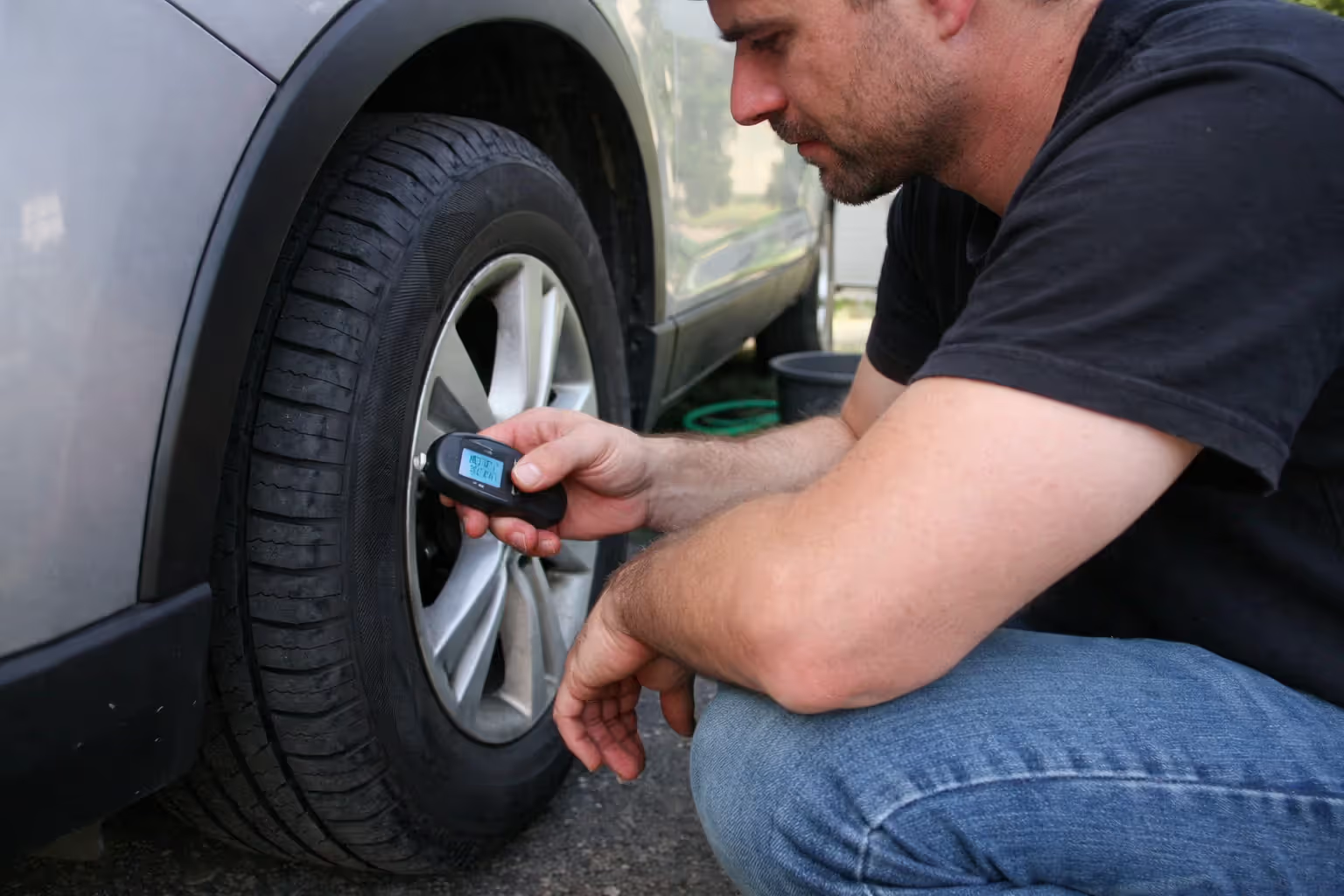
Author: Brianna Lowell;
Source: shafer-motorsports.com
Here's where it gets worse: most drivers don't catch underinflation at exactly 10 PSI low. They let it slide further. At 15 PSI below spec, you're losing 6-8% fuel economy. That same vehicle now costs you about $1,814 annually in gas—$134 extra per year, or $670 over five years. And that's assuming you catch it before the tire fails completely or wears out prematurely.
The Hidden Connection Between Tire Pressure and Uneven Tread Wear
Tires wear out eventually—that's unavoidable. But pressure problems accelerate the process and create distinctive patterns that telegraph exactly what went wrong.
What Your Wear Patterns Are Telling You
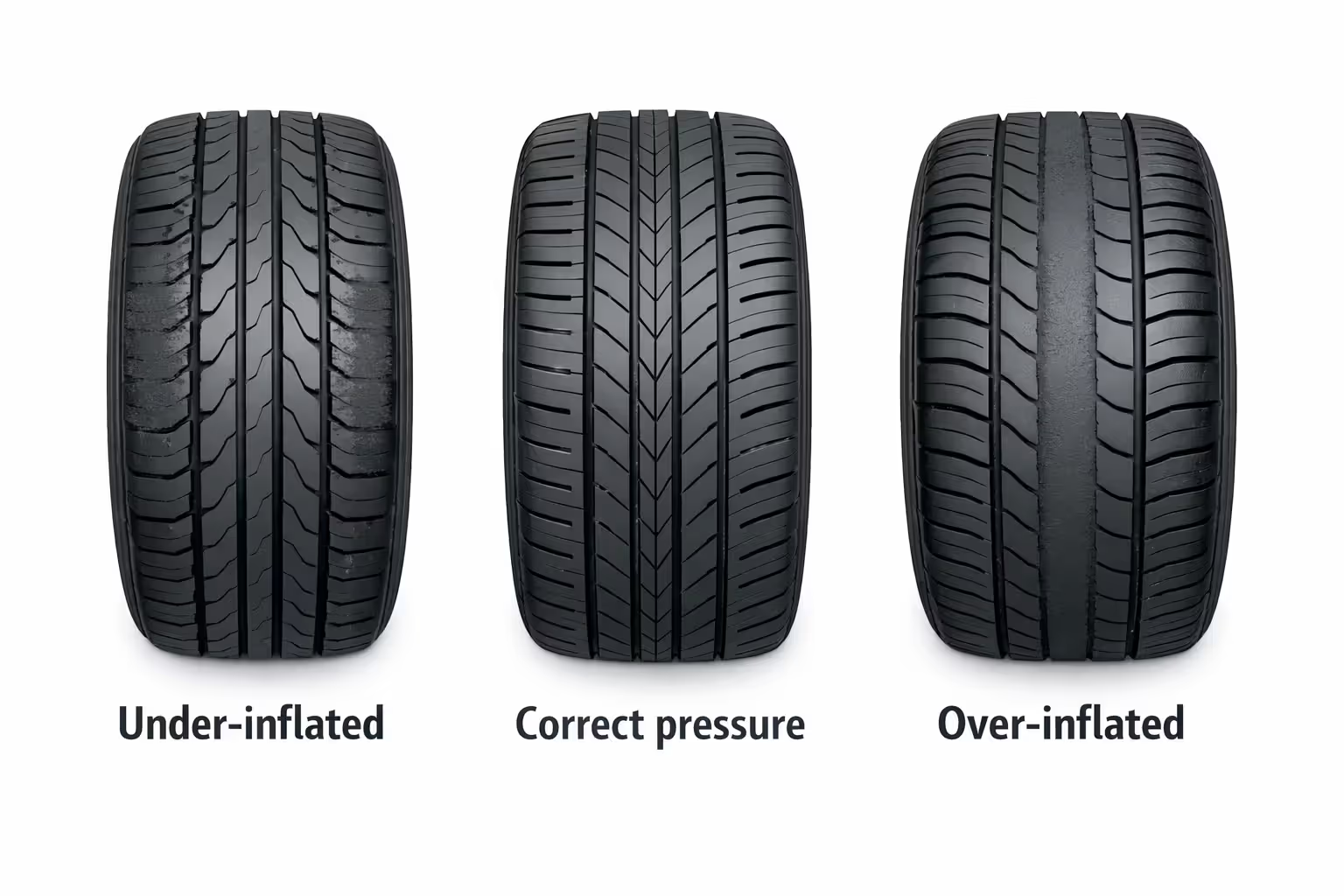
Underinflated tires wear heavily on the outer edges of the tread. The center of the contact patch carries less weight because the tire's shape sags outward, forcing the shoulders to do disproportionate work. Run your hand across the tread of a chronically underinflated tire and you'll feel the edges are noticeably more worn than the center.
This uneven wear prevention tires strategy matters because a tire with 50% tread remaining in the center but 20% on the edges needs replacement based on the worst measurement. You've essentially thrown away half the tire's potential lifespan. A tire rated for 60,000 miles might need replacement at 35,000 miles when pressure issues create edge wear.
Overinflated tires do the opposite: the center of the tread bulges outward and carries most of the vehicle's weight. The edges barely touch the road. You'll see accelerated wear down the middle of the tire while the shoulders look nearly new. Same problem, different pattern, identical result—premature replacement.
Author: Brianna Lowell;
Source: shafer-motorsports.com
How Over-Inflation Damages Tires Differently Than Under-Inflation
Beyond wear location, overinflation creates a harsher ride because the tire can't absorb road impacts properly. That firm, bouncy feeling isn't just uncomfortable—it's your tire taking punishment it wasn't designed to handle. Hit a pothole with overinflated tires and you're more likely to damage the tire's internal structure or even crack the wheel.
Underinflation, meanwhile, generates excessive heat from the constant flexing of the sidewalls. Heat is the enemy of rubber compounds and internal tire construction. Run tires significantly low for extended periods and you risk internal separation—where the layers of the tire begin to delaminate. This type of failure can happen suddenly at highway speeds, which brings us to the safety implications.
Tire Pressure's Direct Impact on Vehicle Handling and Braking Distance
Imagine you're merging onto a highway when traffic suddenly slows. You brake hard, and your ABS system pulses under your foot. Properly inflated tires might bring you to a complete stop with two feet to spare. Those same tires at 8 PSI low? You've just rear-ended the car in front of you.
Underinflated tires increase braking distance because the mushy contact patch can't transmit braking force as efficiently. The tire squirms and flexes rather than gripping firmly. Tests have shown that tires at 20% below recommended pressure can add 10-15 feet to your stopping distance from 60 mph. In emergency situations, that's the difference between a close call and a collision.
The safety handling pressure relationship becomes even more critical in corners and evasive maneuvers. Try to swerve around an obstacle with underinflated tires and you'll experience delayed response and reduced stability. The tire sidewalls flex excessively, creating a vague, disconnected feeling in the steering. Your vehicle's handling becomes less predictable precisely when you need maximum control.
Wet conditions amplify every pressure-related handling problem. Underinflated tires can't channel water away from the contact patch as effectively, increasing hydroplaning risk. The tire's footprint shape changes, disrupting the tread pattern's designed water evacuation channels. You'll lose grip sooner and with less warning than you would on properly inflated tires.
Highway stability suffers too. Ever felt your vehicle wander slightly in its lane at highway speeds, requiring constant minor steering corrections? Before you blame alignment or wind, check your tire pressure. Underinflation allows the tire sidewalls to flex and roll, making the vehicle less stable and more susceptible to crosswinds and passing trucks.
The tire is the only part of the vehicle that touches the road. Everything—steering, braking, accelerating—depends on that one contact patch doing its job. When tire pressure is wrong, every safety system on the car is compromised before it even activates
— Carroll Smith
Why Your Tire Pressure Changes With the Seasons
You checked your tire pressure in September when temperatures were in the 70s. Everything looked perfect at 35 PSI. Now it's January, the thermometer reads 20°F, and your TPMS light is glowing. You didn't develop a leak—you experienced basic physics.
Tire pressure changes approximately 1-2 PSI for every 10°F temperature swing. That 50-degree temperature drop from fall to winter means your tires lost roughly 5-10 PSI just from the cold air. The air molecules inside your tires move more slowly in cold temperatures, reducing pressure. The reverse happens when temperatures climb—your PSI increases as the air heats up.
These seasonal pressure changes tires experience are predictable and manageable, but only if you adjust for them. The recommended tire pressure listed on your door jamb assumes a "cold" tire—one that hasn't been driven for at least three hours. This cold pressure spec needs to be your target regardless of season, which means you'll need to add air when temperatures drop and possibly release some when they spike.
Spring and fall create the most pressure variability because daily temperature swings can be dramatic. Your tires might be at 33 PSI when you check them on a cool morning, then effectively at 36 PSI by afternoon when temperatures climb 30 degrees. This is normal and doesn't require adjustment—the pressure recommendation accounts for normal operational temperature increases.
What you should watch for are the transitions between seasons. When the first cold snap hits in fall, check your pressure within a few days. Same thing when spring arrives and temperatures consistently rise. These transition periods are when your tires will be furthest from their target pressure if you don't intervene.
There is no such thing as a maintenance-free tire. The air inside it is constantly changing, and the driver who ignores that fact is gambling with the most basic element of vehicle safety
— Harvey Firestone
Understanding Your TPMS Warning Light (And When to Ignore It)
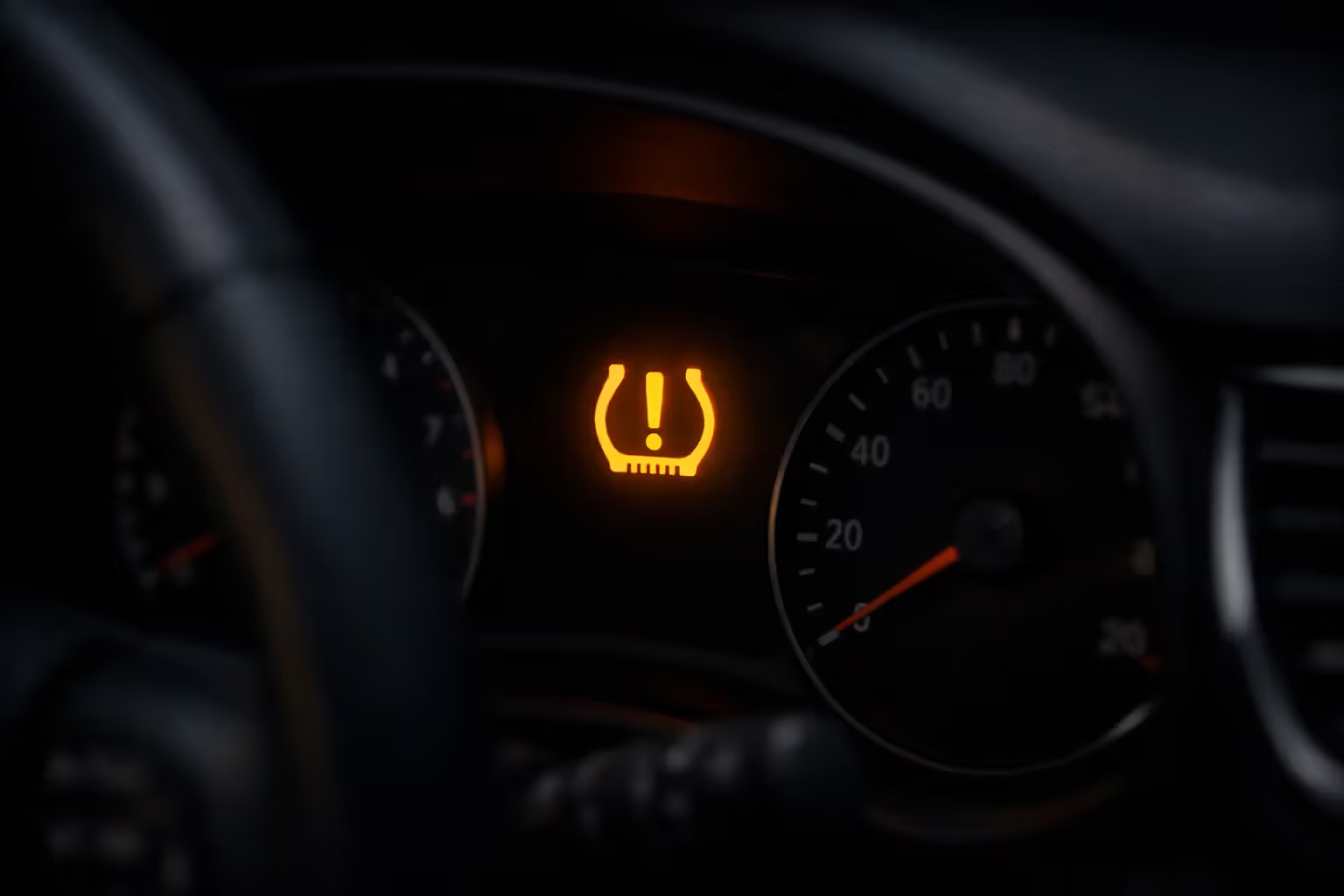
That glowing tire symbol on your dashboard is supposed to be your early warning system. Sometimes it works exactly as intended. Other times it creates panic over nothing or fails to alert you when there's an actual problem.
How TPMS Sensors Actually Work
Modern TPMS systems use sensors mounted inside each wheel that measure pressure and transmit data wirelessly to your vehicle's computer. These sensors typically trigger a warning when any tire drops 25% below its recommended pressure. For a tire that should be at 35 PSI, the light illuminates around 26 PSI.
That 25% threshold is mandated by federal safety regulations, but it's also the system's biggest weakness. By the time your TPMS light comes on, you've already been driving on significantly underinflated tires for who knows how long. You've already lost fuel economy, increased tire wear, and compromised safety. The TPMS monitoring basics you need to understand: this system is a last-resort warning, not a substitute for regular manual pressure checks.
The sensors themselves run on batteries that typically last 7-10 years. When a sensor battery dies, you'll get a TPMS warning that won't clear even after you adjust pressure. Replacing a single sensor costs $50-100 at most shops, and many drivers face this expense without realizing the sensors were even there.
Common TPMS False Alarms and Real Warnings
Your TPMS light illuminates on a cold morning after temperatures dropped overnight. You check the pressure and find you're 3-4 PSI low—enough to trigger the warning. You add air, the light goes off, and everything's fine. That's the system working correctly, even if the timing feels inconvenient.
A false alarm looks different. The light comes on, you check all four tires and they're at proper pressure, but the light won't clear. This usually indicates a sensor malfunction rather than a pressure problem. Sometimes simply driving for a few miles allows the system to reset. If the light persists with verified correct pressure, you're looking at a sensor issue that requires professional diagnosis.
The most dangerous scenario is when you have a slow leak that drops pressure just slowly enough that you adapt to the gradually degrading handling. Your TPMS finally triggers when pressure hits that 25% threshold, but by then you might have been driving on a compromised tire for weeks. This is why manual pressure checks matter—you catch problems at 5 PSI low instead of 9 PSI low.
One quirk worth knowing: TPMS systems don't monitor your spare tire unless you have a full-size spare that's part of a tire rotation schedule. That compact spare in your trunk could be completely flat and your dashboard would never tell you. More on that in the FAQ section.
Author: Brianna Lowell;
Source: shafer-motorsports.com
Building a Tire Pressure Checking Routine That Actually Works
You don't need an elaborate system. You need a habit simple enough that you'll actually do it consistently. Here's what works for most people: check your tire pressure on the first weekend of every month, first thing in the morning before you drive anywhere.
Why monthly? Because tires naturally lose 1-2 PSI per month through normal permeation—air molecules slowly escaping through the rubber. Monthly checks catch this gradual loss before it becomes significant. Why morning? Because that's when your tires are truly "cold" and you'll get accurate readings that match the manufacturer's specifications.
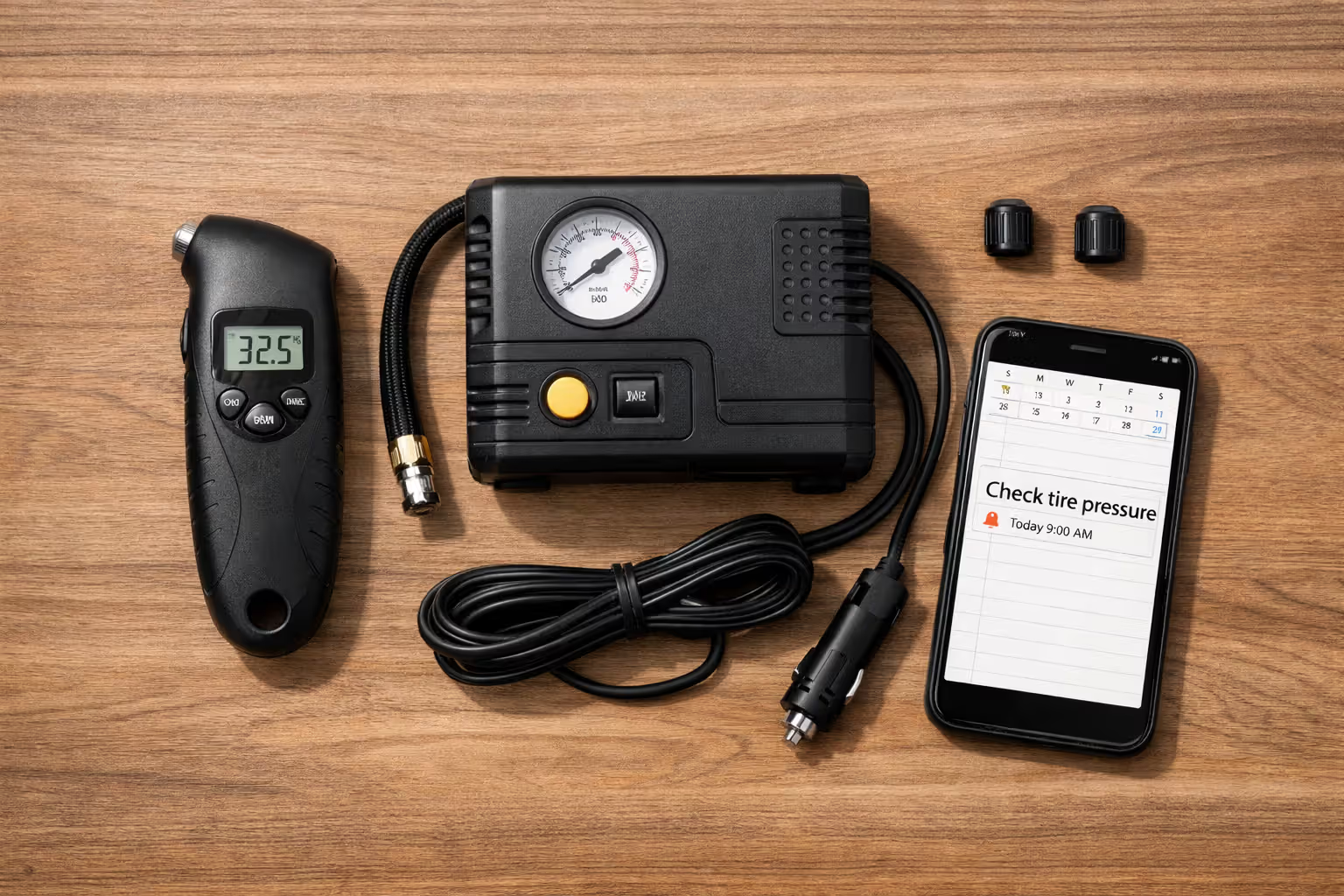
The maintenance habit tire care routine requires exactly one tool: a quality digital tire pressure gauge. Spend $15-25 on a gauge with a digital readout and you'll get consistent, easy-to-read measurements. The pencil-style gauges are cheap but harder to read accurately. The dial gauges are fine but can lose calibration over time. Digital gauges are worth the small investment.
Here's the actual process:
Find your vehicle's recommended tire pressure on the sticker inside the driver's door jamb. Ignore the maximum pressure listed on your tire sidewall—that's the tire's limit, not your vehicle's recommendation. The door jamb spec accounts for your vehicle's weight distribution and handling characteristics.
Author: Brianna Lowell;
Source: shafer-motorsports.com
Remove the valve cap from one tire and press your gauge firmly onto the valve stem. You should hear a brief hiss as the gauge seals, then the reading will stabilize. If you hear continuous hissing, you're not getting a good seal—try again.
Compare the reading to your door jamb spec. If you're within 1 PSI, you're fine. If you're 2 or more PSI low, add air. If you're 2 or more PSI high, release some air by pressing the small pin inside the valve stem with your gauge or a pen cap.
Repeat for all four tires. The whole process takes three minutes once you've done it a few times.
Keep a small portable air compressor in your garage or trunk. The 12V models that plug into your vehicle's power outlet cost $25-40 and mean you never have to make a special trip to a gas station to add air. Fill your tires at home, on your schedule, in your pajamas if you want.
Tire Pressure Effects Comparison Chart
| Metric | Under-Inflated (8-10 PSI Low) | Properly Inflated | Over-Inflated (8-10 PSI High) |
| Fuel Economy Impact | -3% to -4% MPG | Baseline (optimal) | -1% to -2% MPG |
| Typical Tread Life | 35,000-45,000 miles | 60,000-70,000 miles | 40,000-50,000 miles |
| Braking Distance Change (from 60 mph) | +10 to +15 feet | Baseline (optimal) | +5 to +8 feet |
| Handling Characteristics | Mushy, vague steering response; excessive body roll; delayed reactions | Precise, predictable, stable | Harsh, bouncy ride; reduced grip; skittish on rough roads |
| Tire Temperature | Elevated (increased wear and failure risk) | Normal operating range | Slightly elevated center, cooler edges |
"Tire pressure is the single most neglected aspect of vehicle maintenance, yet it affects nearly every performance and safety metric drivers care about," says Jennifer Martinez, Senior Automotive Engineer at Continental Tire. "We design tires to perform optimally at specific pressures. Deviate from that spec by even 10% and you're compromising the tire's capabilities across the board—from fuel economy to emergency braking to tread life. The irony is that maintaining proper pressure is also the easiest and least expensive maintenance task a driver can perform."
Frequently Asked Questions About Tire Pressure
Tire pressure sits at the intersection of safety, economy, and convenience. Get it right and your tires last longer, your fuel economy improves, and your vehicle handles predictably in emergencies. Neglect it and you're paying more at the pump, replacing tires prematurely, and compromising your family's safety.
The good news is that proper tire pressure maintenance requires minimal time and effort—just a few minutes monthly with a $20 gauge. Set a recurring reminder on your phone for the first weekend of each month. Keep a digital gauge and portable compressor in your garage. Check pressure before the morning coffee kicks in, when your tires are cold and you can get accurate readings.
Your vehicle's performance depends on the four contact patches connecting you to the road. Each contact patch is roughly the size of your hand. Proper tire pressure ensures those small patches of rubber do their job effectively. Miss a few months of pressure checks and you'll eventually pay the price—whether that's $67 per year in wasted fuel, a $800 tire replacement bill that comes two years early, or that extra 12 feet of braking distance you needed but didn't have.
Related Stories
Read more
Read more

The content on Auto Insights is provided for general informational and educational purposes only. It is intended to offer guidance on car buying, vehicle ownership, finance, insurance, EVs, maintenance, accessories, reviews, and related topics, and should not be considered professional financial, legal, insurance, mechanical, or investment advice.
All information, tools, calculators, comparisons, and recommendations presented on this website are for general guidance only. Individual financial situations, driving habits, vehicle conditions, insurance policies, and market factors vary, and actual results or costs may differ from estimates provided.
Auto Insights makes no guarantees regarding accuracy, completeness, or current applicability of the information, as automotive markets, regulations, incentives, interest rates, and vehicle specifications may change over time.